
Distributing a single 4K source to dozens of TVs over existing coax cable without running new wires or sacrificing picture quality is the central challenge this category solves. An HDMI modulator encodes a video signal into a QAM or ATSC channel that any TV with a digital tuner can tune into, turning a single media player into a whole-home broadcast.
I’m Min — the co-founder and writer behind Gadgets Feed. I’ve spent countless hours researching encoder chipsets, streaming protocols, and RF modulation tiers to identify which units actually deliver a usable 4K path and which still drop to 1080p on the output side.
Whether you need to send a 4K stream across a LAN or inject an HDMI feed into a legacy coax distribution system, this guide breaks down the hardware behind the best 4k hdmi modulator for your specific infrastructure.
How To Choose The Best 4K HDMI Modulator
Every 4K HDMI modulator does two things: encode the video stream and then either modulate it onto a coax RF channel or output it as a network IP stream. The critical difference between these two paths defines which product you need.
RF Modulator vs IP Encoder
An RF modulator takes the HDMI signal and outputs a QAM or ATSC channel over coax so any TV with a digital tuner can find it without a set-top box. An IP encoder outputs the video as an RTMP, RTSP, or SRT stream over Ethernet. Some units do both. If you already have coax running through the walls, an RF modulator like the Thor Broadcast or MINIMOD 2 saves you from having to add a media player at every screen.
4K Input vs 4K Output
Many modulators accept a 4K 60p signal at the HDMI input but downscale it to 1080p before modulation. The encoding chip, not the input port, decides the final resolution. Look for units that specify 4K support on the encoder side — the URayCoder models and the ZowieBox explicitly maintain 4K throughout the chain for IP streaming.
Encoding Standard: H.265 vs H.264
H.265 (HEVC) delivers the same quality as H.264 at roughly half the bitrate. For LAN distribution, that means lower network strain and smoother playback on Wi-Fi. For coax modulation, the RF standard (ATSC 1.0 or QAM) caps the bitrate, so H.265 cannot fully express its advantage — but it still reduces artifacting on complex motion.
Latency Considerations
Real-time encoding adds latency. IP encoders typically add 200 ms to 600 ms. RF modulators add another 300 ms for the modulation and demodulation cycle. If you need lip-sync precision or live camera switching, look for units with low-latency H.264 profiles or NDI HX3 certified encoders.
Quick Comparison
On smaller screens, swipe sideways to see the full table.
| Model | Category | Best For | Key Spec | Amazon |
|---|---|---|---|---|
| ZowieBox | IP Encoder/Decoder | Live production & NDI workflow | NDI HX3 certified, 4Kp30 IP stream | Amazon |
| URayCoder UHE265-4-4K | 4-Ch IP Encoder | Multi-stream platforms | 4 simultaneous 4K IP streams | Amazon |
| URayCoder UHE265-1S-4K | Single IP Encoder | Reliable 4K IP streaming | H.265/H.264 4Kp30, lifetime support | Amazon |
| URayCoder UHE265-1L-4K (B07D78L3SZ) | Single IP Encoder | Wide protocol compatibility | 4Kp30, H.265, SRT/WebRTC | Amazon |
| URayCoder UHE265-1L-4K (B07CP3G86L) | Single IP Encoder | Reliable 24/7 IP streaming | 4Kp30, HEVC, low-latency profile | Amazon |
| OREL 4×4 Matrix Switch | HDMI Matrix | Multi-display local switching | 4K@60Hz, 18Gbps, downscaling | Amazon |
| SiliconDust HDHomeRun | Network Tuner | Whole-home OTA TV distribution | 2x ATSC 1.0 tuners, IP stream | Amazon |
| Thor Broadcast H-HDMI-RF-PETIT | RF Modulator | Coax distribution of 1080p HDMI | 1080p QAM/ATSC, F-type coax output | Amazon |
| PVI MINIMOD 2 | RF Modulator | RV/coax legacy distribution | 1080p Dolby, front-panel channel set | Amazon |
In‑Depth Reviews
1. ZowieBox NDI HX3 Encoder/Decoder

The ZowieBox is the most versatile unit in this roundup because it works as both an encoder and a decoder with NDI HX3 certification. Accepting 4Kp60 at the HDMI input, it can loop out 4Kp60 locally while streaming at 4Kp30 over IP and decoding IP streams back to HDMI on the receiving end. The tally light and web UI give you live preview and dashboard control without installing software.
Its PoE and USB-C power options make it easy to mount on a tripod or SLR for mobile production. The NDI substream feature works with Tricaster and OBS dock integrations, which is exactly what live event rigs need. The metal chassis stays cool even during long encoding sessions, and the included cold shoe mount adds to its field-ready flexibility.
One limitation: the unit does not support uncompressed full NDI SHQ, so Tricaster multiview may show artifacts with certain setups. Also, the internal Wi-Fi antenna is shielded by the metal enclosure, so best results come from a wired Ethernet connection. For a production-grade encoder that also decodes, this is the most flexible pick.
Why it’s great
- NDI HX3 certified with bidirectional encoder/decoder modes
- PoE, USB-C, and DC out for versatile field power
- Web UI with live preview and PTZ camera control
Good to know
- Internal Wi-Fi antenna may need wired Ethernet for stability
- No uncompressed full NDI support
2. URayCoder UHE265-4-4K 4-Channel IP Encoder
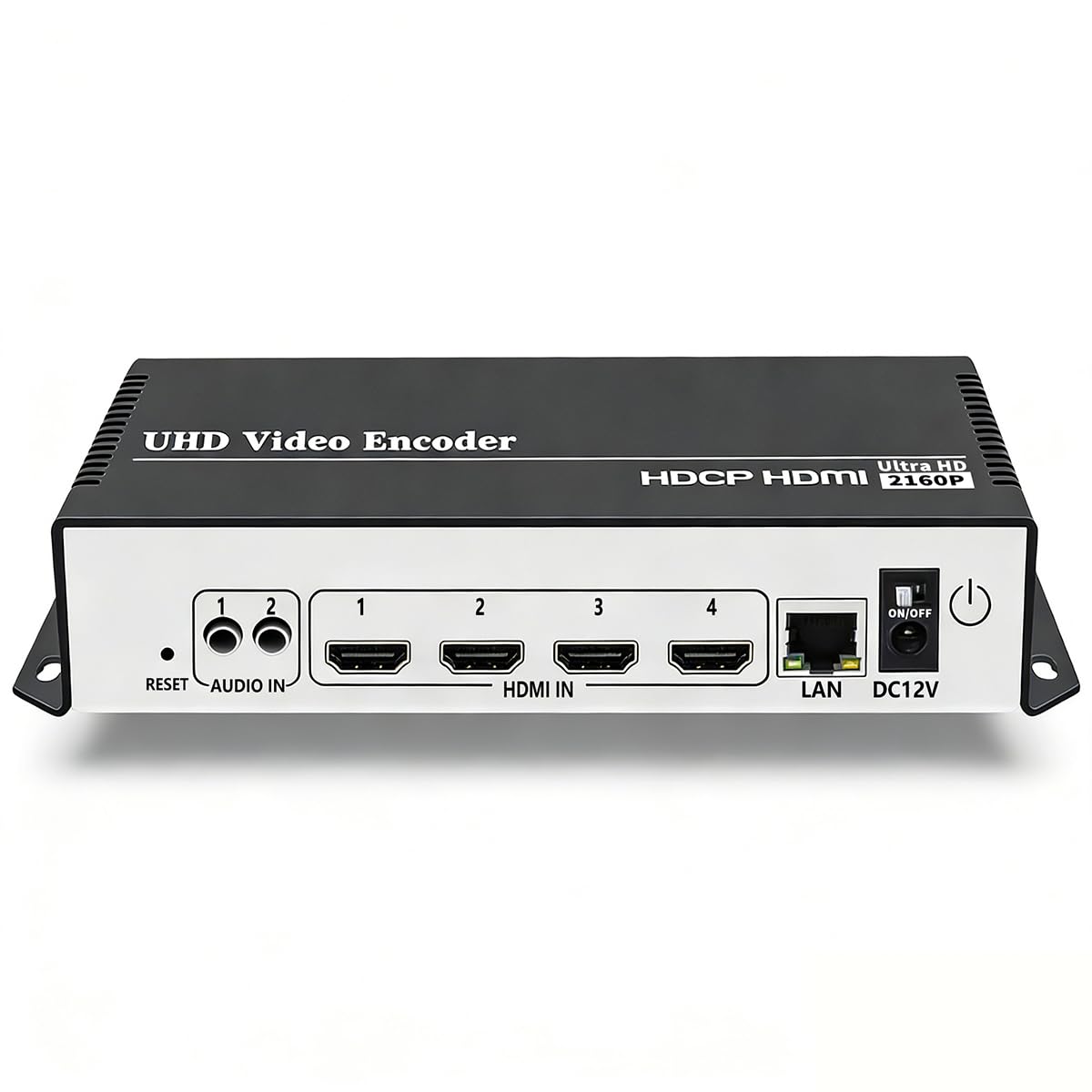
The URayCoder UHE265-4-4K is the multi-stream powerhouse of this list. It encodes a single 4Kp30 HDMI input into four simultaneous IP streams using different protocols — you can push RTMP to YouTube, SRT to a private server, HLS for a web player, and WebRTC for low-latency viewing all at the same time. The H.265/H.264 dual encoding chip delivers clean 4K images at bitrates as low as 6 Mbps.
Users consistently report rock-solid 24/7 operation with almost no reboots needed. The web interface gives you cropping, rotation, and overlay options for logos or scrolling text, which is useful for live event branding. Firmware updates are handled through the GUI and the vendor sends updated files within a couple days of a request.
Setup requires some networking knowledge — the default static IP must be matched or changed via direct connection. The instruction manual has translation issues, but the tech support team (Linda and Allen are frequently mentioned) responds quickly. It lacks an HLS output for YouTube specifically, and the encoder has no physical on/off switch, so you power-cycle by unplugging the adapter.
Why it’s great
- Simultaneous 4K output to four different streaming protocols
- On-screen overlay and cropping tools built into the web UI
- Excellent vendor support with firmware updates by request
Good to know
- No power switch; must be unplugged to reset
- Default static IP requires direct PC connection for first setup
3. URayCoder UHE265-1S-4K Single IP Encoder
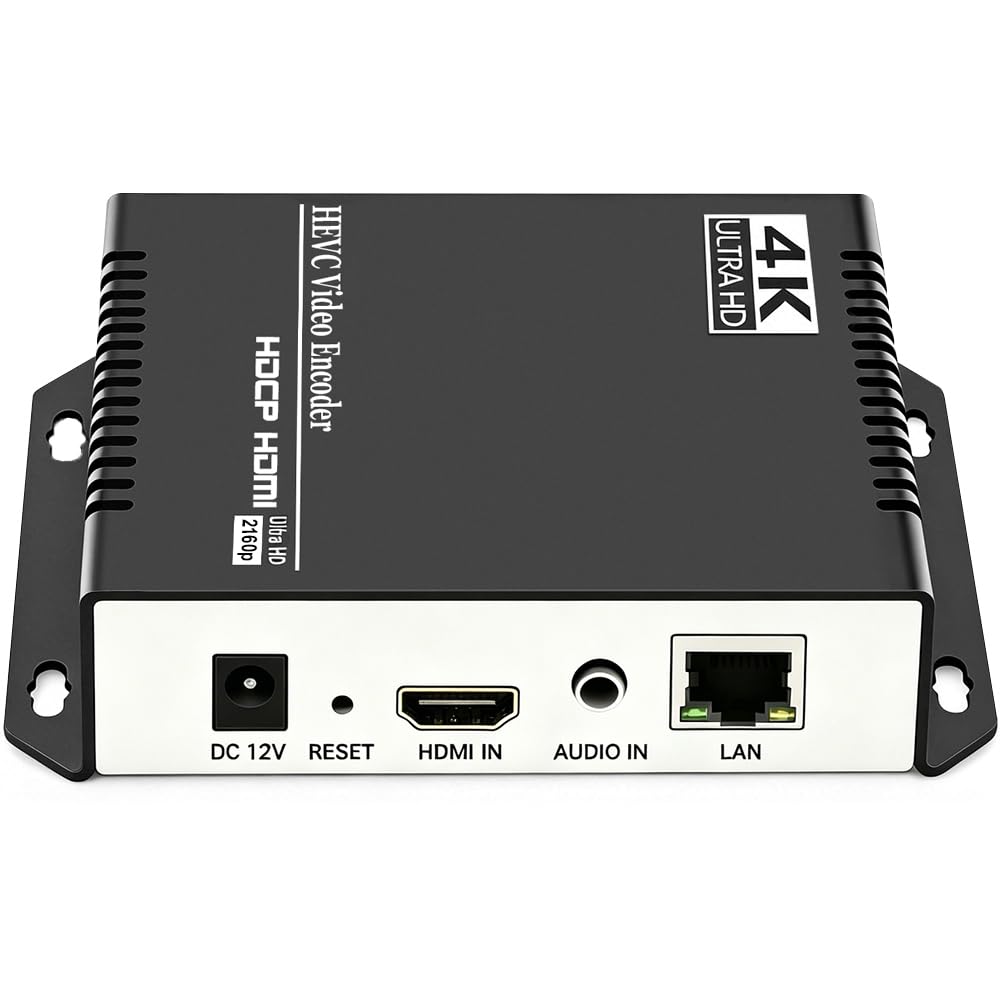
The UHE265-1S-4K is the encoder that users run for months without touching. With 4Kp30 H.265 encoding and support for RTMP(S), SRT, HLS, WebRTC, and ONVIF, it pushes stable streams to YouTube, Facebook, and private servers. It also decodes HDCP 1.4, so most consumer media sources connect without a separate stripper.
Picture quality is exceptional for the price range — one user tested 2200 kbps H.265 with 64 kbps AAC audio over 9 months with no drift. The device supports up to 120 fps at 1080p, making it suitable for slow-motion capture workflows. Its aluminum shell stays cool even when crammed into a rack with other gear.
The unit ships without a power supply in some batches, which is a notable oversight at this price point. It also lacks a remote control, so all configuration happens through the web GUI. The bundled instruction manual is thin, but lifetime tech support fills the gap reliably, often responding within hours.
Why it’s great
- Stable 24/7 encoding with very low bitrate at excellent quality
- Lifetime warranty and responsive tech support
- HDCP 1.4 decryption eliminates need for separate stripper
Good to know
- Power supply may not be included in the box
- No physical remote control included
4. URayCoder UHE265-1L-4K (B07D78L3SZ)
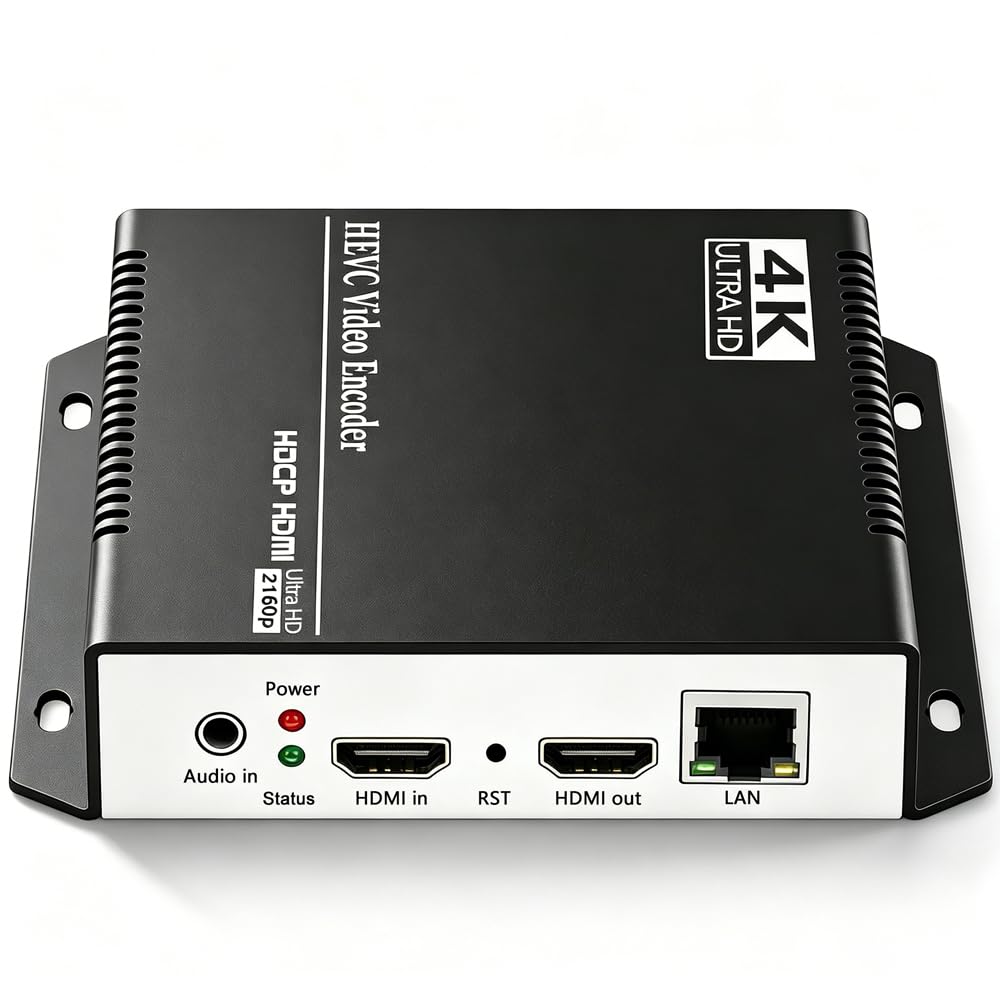
The UHE265-1L-4K is essentially the same single-channel encoder as the 1S model but with a focus on broad protocol support including WebRTC and ICECAST. It handles 4Kp30 input with H.265/H.264 dual encoding and outputs simultaneously to RTMP, RTSP, SRT, HLS, and FLV. The matte aluminum enclosure is compact at just over 5 inches wide.
Multiple users cite the responsive tech support as a standout feature — one had an HDMI sync issue resolved via remote TeamViewer session and received three free power adapters for different regions. The device streams to multiple endpoints at once without stuttering, and it works with OBS, vMix, and Wirecast.
There is no physical power switch, so the encoder runs continuously once plugged in. Users who need to stop streaming on the fly find this inconvenient because the only way is to unplug the adapter. The default IP configuration also requires a direct Ethernet link for initial access if your LAN is not on the 192.168.1.x subnet.
Why it’s great
- Multiple simultaneous protocol outputs from one 4K source
- Excellent after-sale support with remote troubleshooting
- Compact aluminum design runs cool in continuous operation
Good to know
- No on/off switch; must unplug to stop streaming
- Initial IP configuration may not match existing network
5. URayCoder UHE265-1L-4K (B07CP3G86L)
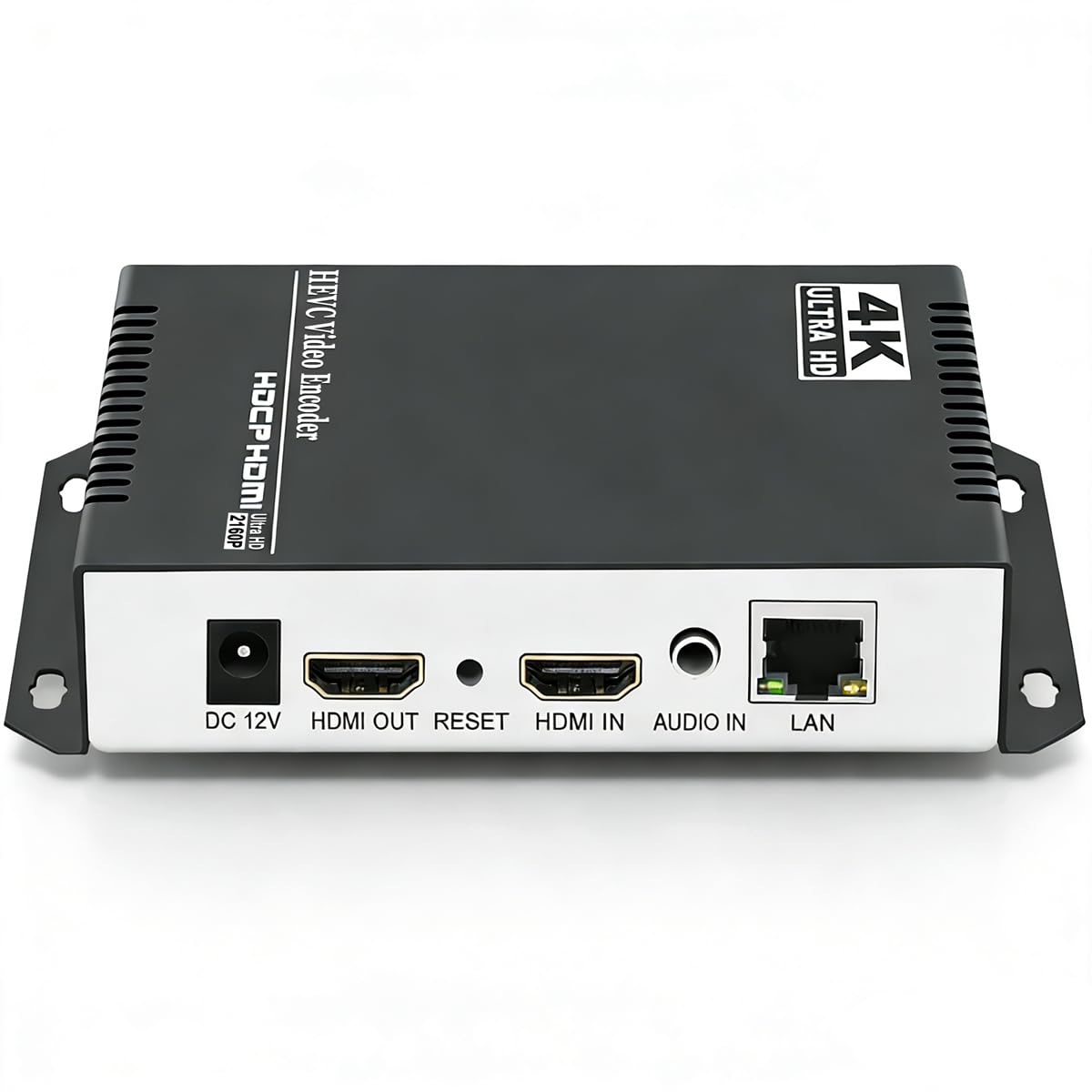
This variant of the URayCoder single-channel encoder is built for users who need 4K H.265 streaming with near-zero-latency profiles. It supports all the same protocols as its siblings but adds a low-latency encoder mode that cuts delay to roughly 200 ms. Users have run this unit 24/7 for nearly a year with no dropped connection, connecting it directly to an AV receiver for remote viewing.
The default settings produce excellent quality out of the box, and the web UI includes an NTP server sync so timestamps stay accurate across long streams. The unit also outputs a preview video through the web dashboard, which helps with framing adjustments before going live. It stays cool even without active ventilation.
HDCP support covers standard HD but not 4K protected sources, so some 4K streaming stick signals may fail without an external HDCP stripper. Audio output is limited to stereo via the HDMI embedded channel, and there are no audio level meters in the web UI. The hard-coded default IP of 192.168.1.168 requires a direct connection to configure DHCP.
Why it’s great
- Low-latency mode with ~200 ms delay for live production
- NTP sync and web preview for accurate remote framing
- Proven 24/7 uptime of nearly a year in real-world use
Good to know
- HDCP only supports standard HD, not 4K protected content
- Audio limited to stereo embedded HDMI; no level meters
6. OREI 4×4 HDMI Matrix Switch/Splitter

The OREI 4×4 is not a modulator — it is an HDMI matrix switch that lets four sources go to four displays independently. It supports 4K@60Hz 4:4:4 with 18 Gbps bandwidth and includes a downscaling feature for mixed 4K and 1080p displays. Use it when you need to route multiple 4K sources locally without encoding them into a network stream.
The remote control and IR extender make source switching easy, and HDCP 2.2 compliance ensures modern streaming devices and game consoles work without handshake issues. The unit handles 7.1-channel Dolby Digital and DTS-HD Master Audio, so audio fidelity stays full resolution on the local output.
The power connector wire is fragile — owners warn that it disconnects easily if the unit is moved. Also, the matrix is incompatible with Rokid Max AR glasses, so check your downstream devices if you are using an unusual display type. It works reliably with standard TVs, projectors, and AV receivers.
Why it’s great
- Downscales 4K to 1080p for mixed-display setups
- HDMI 2.0a with HDR and 18 Gbps bandwidth
- 4 independent 4K output paths with remote switching
Good to know
- Fragile power connector can detach when moved
- Not compatible with Rokid Max AR glasses
7. SiliconDust HDHomeRun Flex Duo HDFX-2US

The HDHomeRun Flex Duo is a network tuner, not a modulator. It converts two ATSC 1.0 OTA signals into IP streams that any device on your LAN can access via apps for Roku, Fire TV, Apple TV, iOS, Android, and PC. It is the best solution for distributing live broadcast TV without a coax modulator, and it also acts as a whole-home DVR when you attach a USB drive.
Setup is straightforward: connect an antenna, plug in Ethernet, and scan channels. The web interface provides real-time signal strength readings for antenna positioning. Third-party apps like Kodi and Plex integrate with it, and the free DVR software includes recording scheduling with an optional guide subscription.
The unit is not compatible with ATSC 3.0 (NextGen TV) or encrypted cable signals, so it only works with unencrypted OTA broadcasts. Multiple users reported units failing after a year, though warranty support was responsive. The Ethernet-only connection means no Wi-Fi option, so it must sit near your router.
Why it’s great
- Distributes live OTA TV to any device on the LAN
- DVR capability with USB storage and no subscription required
- Real-time signal meter in web UI for antenna alignment
Good to know
- Not compatible with ATSC 3.0 or encrypted cable
- Ethernet-only; no built-in Wi-Fi
8. Thor Broadcast H-HDMI-RF-PETIT Coax Modulator
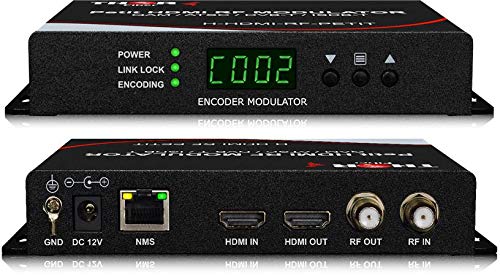
When you need to send a single HDMI source to every TV over existing coax, the Thor Broadcast RF modulator is the answer. It encodes 1080p HD video with Dolby AC3 audio and outputs it as a QAM or ATSC channel on your chosen RF frequency. Any TV with a digital tuner picks it up immediately after a channel scan.
The unit is compact at just 4 inches wide, with front-panel buttons and a web GUI for configuration. It accepts HDMI input and allows you to set the output channel, modulation standard, and RF level. Users in RVs and motorhomes praise it for turning a single Roku or satellite receiver into a whole-coach broadcast without running new cables.
Latency is roughly 600 ms due to the encode plus modulate cycle, so lip sync can be noticeable if you also watch the source directly. The device is capped at 1080p input — there is no 4K path through the RF modulation stage. The included GUI is proprietary to Thor and requires a PC with Ethernet to configure the unit.
Why it’s great
- Converts any HDMI source into a digital TV channel over coax
- Works with QAM and ATSC tuners on any TV
- Compact metal chassis with both front-panel and web control
Good to know
- Only 1080p input; no 4K pass-through
- ~600 ms latency may cause lip sync issues
9. PVI MINIMOD 2 Vecoax HDMI to Coax Modulator

The MINIMOD 2 is the most user-friendly RF modulator for coax distribution. It takes an HDMI input and outputs a 1080p digital QAM or ATSC channel with Dolby audio onto your existing coax cable plant. The front-panel color display lets you set the channel number and name without needing a computer, which is a huge time-saver in RV and church installs.
Users in RVs report successful integration with antenna boosters and OTA feeds, using the adjustable gain and attenuation settings to balance the MINIMOD 2 output with incoming broadcast signals. The unit combines with existing antenna or cable signals so you keep all your regular channels and the new modulated one. The HDMI input from a NUC or satellite receiver produces clean HD with only the compression artifacts typical of cable broadcast.
Picture quality is noticeably softer than direct HDMI because the encoding and modulation chain adds compression. One user described slight shadows and blurriness compared to a straight HDMI connection. The unit is also expensive compared to IP-based encoders, so it makes sense only when coax is already in place and you must avoid adding set-top boxes at each display.
Why it’s great
- Front-panel color display for channel number and name setup
- Combines with OTA antenna signal on the same coax
- Adjustable RF gain for balancing with weak antenna signals
Good to know
- 1080p output only; image softer than HDMI direct
- Premium price compared to IP-based encoder alternatives
FAQ
Can any 4K HDMI modulator output 4K over coax?
What is the latency difference between an IP encoder and an RF modulator?
Does HDCP cause problems with HDMI modulators?
Final Thoughts: The Verdict
For most users, the best 4k hdmi modulator winner is the ZowieBox because it combines NDI HX3 certification with bidirectional encoder/decoder modes and 4K IP streaming. If you want to distribute a single HDMI source over existing coax and avoid adding media players at each TV, grab the Thor Broadcast. And for 4K multi-protocol streaming to YouTube and Facebook simultaneously, nothing beats the URayCoder UHE265-4-4K.