
The jump from a smartphone to a dedicated 4K HDR camcorder is the moment your video stops looking like a home movie and starts looking like footage. Real optics, real optical zoom, and a sensor large enough to capture wide dynamic range without crushing your shadows or blowing out your highlights — that is the promise of this category. Whether you are filming a wedding ceremony, documenting a wildlife trip, or producing interview content for a channel, the right camcorder fixes the two things a phone cannot: sustained recording without overheating and genuine telephoto reach that does not pixelate.
I’m Min — the co-founder and writer behind Gadgets Feed. My analysis of this category spans dozens of hours comparing sensor sizes, bit rates, codec support, and real-world HDR implementation across every major camcorder line, so you know exactly where your budget gets you the most dynamic range and resolution.
Your next production tool must balance sensor performance, optical zoom range, and codec flexibility — which is why I built this guide around the best 4k hdr camcorder picks that actually deliver on their high-dynamic-range promises without hidden trade-offs in low light or stabilization.
How To Choose The Best 4K HDR Camcorder
Every camcorder in the 4K HDR space makes a trade-off. Some prioritize a large sensor for dynamic range but limit zoom range. Others go long on optical reach with a smaller sensor that struggles in HDR highlight roll-off. Your choice depends on where you shoot and how you grade.
Sensor Size and Dynamic Range
The single biggest differentiator is whether the camcorder uses a 1-inch type sensor or a smaller 1/2.3-inch sensor. A 1-inch sensor captures roughly four times the light area, which directly translates to wider dynamic range — the ability to hold detail in bright windows and dark shadows simultaneously. If HDR is your priority, push toward a 1-inch sensor or a model that offers V-Log or HLG gamma profiles. These log and hybrid-log formats preserve highlight and shadow data that standard consumer profiles crush.
Optical Zoom vs Digital Zoom
8 out of 10 buyers overvalue the digital zoom number printed on the box. A 250x digital zoom is unusable — it crops and interpolates until your 4K image looks like 480p. What matters is the optical zoom range: 20x optical zoom on a quality lens array maintains full 4K resolution through the entire range. Pair that with a balanced optical image stabilization system (not digital stabilization that crops your frame) and you get usable telephoto footage without a tripod.
Codec Support and Bit Rate
Recording 4K HDR at 60 frames per second requires high bit rates — look for 100 Mbps or higher in the main recording mode. Camcorders that support 10-bit 4:2:2 internal recording give you significantly more color grading flexibility than 8-bit 4:2:0. If you plan to color correct HDR footage in DaVinci Resolve or Premiere, 10-bit recording is non-negotiable. Also check if the camcorder records in MP4, MOV, or both — MP4 is universally compatible, but MOV with ProRes or similar intra-frame codecs edits far more smoothly.
Quick Comparison
On smaller screens, swipe sideways to see the full table.
| Model | Category | Best For | Key Spec | Amazon |
|---|---|---|---|---|
| Panasonic HC-X2 | Pro Camcorder | Professional event and broadcast | 1-inch sensor, 4K 60p, V-Log, 10-bit 4:2:2 | Amazon |
| Canon VIXIA HF G70 | Consumer Pro | Enthusiast videography and events | 20x optical zoom, Hybrid AF, UVC streaming | Amazon |
| Sony FDR-AX43 | Consumer Handycam | Family events and travel | Balanced OIS, 20x optical zoom, 4K UHD | Amazon |
| Sony ZV-1 | Compact Vlog | Vlogging and b-roll | 1-inch sensor, 24-70mm f/1.8-2.8, HLG | Amazon |
| OBSBOT Tail Air | PTZ Streaming | Live streaming and church production | AI tracking, NDI, 4x digital zoom | Amazon |
| Arlo Ultra 3 | Security Camera | Outdoor security monitoring | 180° FOV, 4K HDR, battery powered | Amazon |
| Acuvar 6K Camcorder | Budget Kit | Beginners and vlog starters | 6K upscaled, 18x digital zoom, LED light | Amazon |
In‑Depth Reviews
1. Panasonic HC-X2

The Panasonic HC-X2 is a professional shoulder-mount camcorder built around a 1-inch 15-megapixel MOS sensor that records 4K at 60p with 10-bit 4:2:2 chroma subsampling internally. That combination puts it in a different league from consumer models — the larger sensor delivers genuine HDR latitude through V-Log and HLG gamma, giving you over 13 stops of dynamic range for grading. The 24.5mm wide-angle lens paired with a 20x optical zoom (32x i.ZOOM in FHD) covers everything from wide establishing shots to tight close-ups without swapping glass.
Professionals will appreciate the dual SDI/HDMI simultaneous output, built-in Ethernet for reliable live streaming, and dual XLR audio inputs with independent level control. The 5-axis Hybrid O.I.S. stabilization keeps handheld walk-and-talk shots smooth, while the face detection AF locks onto subjects quickly even in backlit conditions. The camera supports HEVC (H.265) recording, which delivers the same quality at roughly half the bit rate of H.264 — critical for long event recordings on 128GB cards.
The HC-X2 is not a consumer toy. It demands a proper tripod rig for heavy use, and the battery is not included in the box, which adds an upfront accessory cost. But for documentary crews, wedding videographers, and corporate production teams who need reliable 4K HDR with broadcast-ready connectivity, this camcorder justifies every bit of its premium positioning through sheer image quality and workflow integration.
Why it’s great
- 1-inch sensor provides true HDR dynamic range with V-Log and HLG
- 10-bit 4:2:2 internal recording for serious color grading flexibility
- Simultaneous SDI/HDMI output, Ethernet, and dual XLR audio
Good to know
- Battery not included — requires separate purchase of battery and charger
- Heavier shoulder-mount form factor not ideal for casual run-and-gun
- Premium pricing places it firmly in professional production budgets
2. Canon VIXIA HF G70

The Canon VIXIA HF G70 sits in the sweet spot for enthusiasts who want genuine 4K UHD recording with a powerful 20x optical zoom but cannot justify pro camcorder pricing. Its 1/2.3-inch CMOS sensor paired with the DIGIC DV 6 image processor delivers sharp 4K video at up to 30fps, with an 8-blade aperture that produces cinematic bokeh in defocused backgrounds — a rarity at this price tier. The Hybrid AF system with face detection locks onto subjects quickly, and the adjustable focus speed ring gives you manual control over rack focus pulls.
One standout feature is the built-in UVC livestreaming via USB, which lets you use the camera as a high-quality 1080p webcam for Zoom calls or live streaming without a capture card. The dual SD card slots allow relay recording, so you can capture long events without interruption. The On-Screen Display Time Stamp recording embeds date, time, and timecode directly into the footage — indispensable for legal depositions, evidence gathering, or educational content where timing documentation matters.
Low-light performance is the HF G70’s main limitation — the smaller sensor introduces noticeable noise above ISO 1600, and the gain softens detail significantly by 10 dB. The HDMI output and USB webcam mode are also capped at 1080p rather than 4K, which limits live streaming resolution. But for outdoor daytime events, hunting trips, and well-lit studio productions, this Canon delivers exceptional value with reliable autofocus and optical reach that budget camcorders cannot match.
Why it’s great
- 20x optical zoom maintains 4K sharpness throughout the range
- Dual SD card slots for relay recording without card swap gaps
- UVC livestreaming works as plug-and-play 1080p webcam
Good to know
- 1/2.3-inch sensor struggles in low light above ISO 1600
- HDMI output and webcam mode limited to 1080p, not 4K
- No internal V-Log or HLG profile for advanced HDR grading
3. Sony FDR-AX43

The Sony FDR-AX43 is the consumer Handycam flagship that prioritizes practical shooting over raw specs. Its Balanced Optical SteadyShot system uses a built-in gimbal mechanism that physically stabilizes the lens unit, producing visibly smoother handheld footage than any digital stabilization can achieve — particularly noticeable during walking shots at full 20x optical zoom. The 1/2.5-inch Exmor R CMOS sensor captures 4K UHD video with Sony’s signature color science, and the 26.8mm wide-angle Zeiss Vario-Sonnar T lens gives you a genuinely wide field of view for indoor family events.
The Fast Intelligent AF tracking system keeps moving subjects — children, pets, sports players — in focus even when they cross in front of busy backgrounds. Sony’s Highlight Movie Maker automatically pulls your best clips into a short montage, which is convenient for casual users who want shareable content without editing. The built-in Wi-Fi and NFC allow you to transfer clips to a smartphone using the Imaging Edge Mobile app, and the camera supports up to 512GB SD cards for hours of continuous 4K recording.
The AX43 lacks 10-bit recording and does not include any log or HLG profile, so its HDR capability is limited to the camera’s internal tone-mapping rather than user-graded HDR. The battery pack protrudes from the back, making it awkward on some tripod plates and selfie sticks. The menu system is also dense with Sony’s proprietary terminology. But for families, travel vloggers, and event recorders who want the most stable 4K footage possible from a camcorder under a premium budget, this Handycam delivers exactly that.
Why it’s great
- Balanced Optical SteadyShot provides gimbal-level handheld stabilization
- 20x optical zoom with Zeiss Vario-Sonnar T lens maintains optical quality
- Fast Intelligent AF tracks moving subjects reliably through busy frames
Good to know
- No 10-bit recording or log/HLG profile for advanced HDR grading
- Protruding battery makes tripod mounting less balanced
- Menu system uses Sony-specific terminology that requires learning
4. Sony ZV-1

The Sony ZV-1 is not a traditional camcorder — it is a compact fixed-lens camera optimized entirely for vlogging and content creation, but its 1-inch stacked Exmor RS CMOS sensor makes it one of the most capable compact 4K HDR devices available. The 20.1-megapixel sensor with DRAM reads out fast enough to deliver 4K HDR video via HLG (Hybrid Log-Gamma), which preserves highlights and shadows in an HDR-compatible format that plays back directly on HDR TVs without grading. The Zeiss 24-70mm f/1.8-2.8 Vario-Sonnar T lens is fast — f/1.8 at the wide end provides genuine shallow depth-of-field for background defocus.
The ZV-1’s real innovation is the way it packages professional video features into a pocketable body. The Product Showcase setting transitions focus from your face to an object held up to the lens — a killer feature for review channels and unboxing content. The side flip-out 3-inch touchscreen works intuitively for selfie framing, and the forward-directional on-board microphone with the included deadcat windscreen captures usable audio in moderate environments. The 3.5mm mic jack and MI shoe expand audio options for lavaliers and shotgun mics.
The small form factor means the built-in stabilization cannot match a camcorder’s gimbal system — expect some micro-jitters when walking. The battery life sits at roughly 2 hours of continuous recording, and overheating can occur during extended 4K HDR sessions in warm environments. The fixed 24-70mm equivalent zoom range is adequate for vlogging but limiting for events where you need 10x or 20x optical reach. For seated interviews, YouTube B-roll, and product reviews where HDR quality matters most in a small package, the ZV-1 excels.
Why it’s great
- 1-inch sensor with HLG delivers true HDR out of the box
- Product Showcase mode transitions focus to held objects instantly
- Compact body with flip-out screen and f/1.8 lens fits in a sling bag
Good to know
- Fixed 24-70mm zoom lacks telephoto reach for distant subjects
- Battery lasts only ~2 hours of continuous recording
- Overheating risk during long 4K HDR clips in warm conditions
5. OBSBOT Tail Air

The OBSBOT Tail Air is a PTZ streaming camera squeezed into a chassis smaller than a soda can, and it brings AI-driven subject tracking as its headline feature. The camera records 4K UHD at up to 30fps and supports HDMI, USB-C, Ethernet, and wireless connectivity — plus an optional NDI license key for network-based video transport that eliminates long cable runs. The AI tracking system can follow humans, animals, or objects with gesture control, making it ideal for houses of worship, lecture halls, and solo creators who move around their shooting space without a dedicated operator.
The 1/2.3-inch sensor (approximately 50MP effective still resolution) delivers decent 4K quality in controlled lighting, and the 23mm f/1.8 lens provides a moderately wide field of view. The Obsbot Start companion app gives you full manual control over ISO, shutter speed, and white balance, plus preset position recall for multi-camera setups. The camera also functions as a UVC plug-and-play webcam when you set it to that mode, bypassing the need for a capture card entirely.
The Tail Air has a critical long-term reliability issue: the internal battery is not user-replaceable, and multiple reports indicate the battery fails after roughly 13 months, at which point the camera will not power on even when plugged into USB power. This is a deal-breaker for permanent installations or anyone expecting multi-year service. The 4x digital zoom also degrades image quality noticeably compared to optical zoom camcorders. For live streaming environments where AI tracking and compact PTZ control are essential and you budget for eventual replacement, the Tail Air is effective while it lasts.
Why it’s great
- AI tracking for humans, animals, and objects works reliably in good light
- Multiple connectivity options include NDI, HDMI, USB-C, and Ethernet
- Gesture control and remote app allow solo operation without a camera operator
Good to know
- Internal battery fails after roughly 13 months and is not user-replaceable
- 4x digital zoom degrades image quality — no optical zoom range
- NDI license key requires separate purchase for network streaming
6. Arlo Ultra 3 (2025)
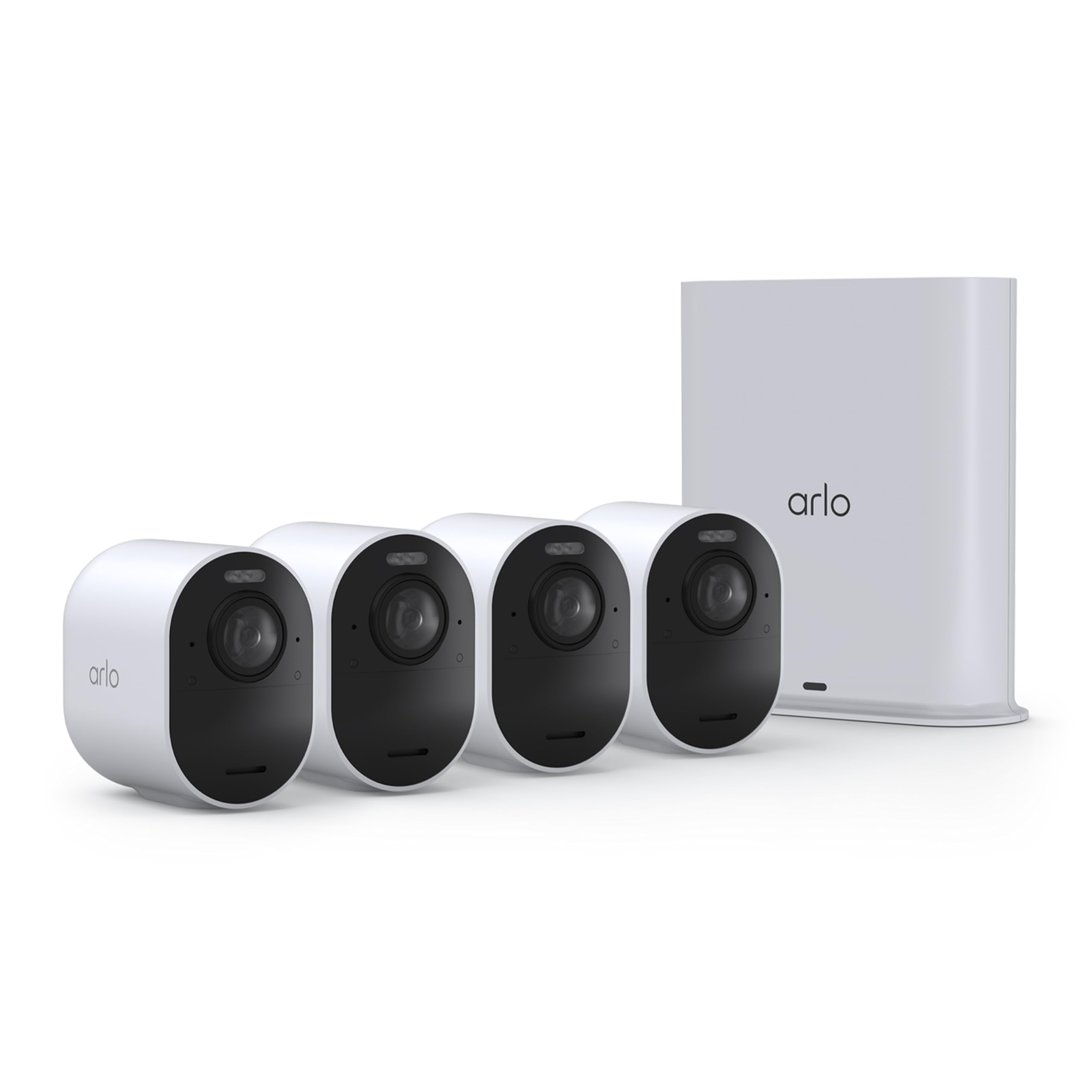
The Arlo Ultra 3 is a wireless security camera that captures 4K HDR video with an expansive 180-degree field of view, making it the only product in this roundup purpose-built for outdoor surveillance rather than content creation. The 4K HDR sensor handles high-contrast scenes — direct sunlight through a doorway, backlit faces at night — better than any previous Arlo generation, preserving detail in both bright and dark areas simultaneously. Color night vision, auto zoom and tracking, and a 12x digital zoom let you identify license plates and faces from across the yard.
The included SmartHub improves Wi-Fi range and battery life compared to earlier models, and the system supports dual-band Wi-Fi for reliable connectivity. The app lets you trigger emergency response directly to police, fire, or medical services tied to the camera’s location, with pre-filled details for faster dispatch. The magnetic mount makes installation simple, and the USB-C solar charging accessory (sold separately) keeps the battery topped up indefinitely in sunny locations.
The critical catch is that advanced features — AI detection, 60-day video history, emergency response — require an Arlo Secure subscription starting at per month. Without it, you are limited to live view and basic motion alerts, which defeats the purpose of buying a 4K HDR security system. The battery-powered design also means you cannot record continuously — only on motion-triggered events. For homeowners who want the best image quality for outdoor security and are willing to pay for cloud services, the Ultra 3 delivers unmatched HDR clarity in its category.
Why it’s great
- 4K HDR sensor with 180° FOV captures extreme wide-angle detail in high contrast
- Color night vision and auto zoom tracking improve identification at night
- Emergency response feature ties camera location to dispatch services
Good to know
- Advanced AI and cloud recording require ongoing monthly subscription
- Battery powered — no continuous recording, only motion-triggered clips
- Designed for security monitoring, not usable as a handheld camcorder
7. Acuvar 4K/6K Camcorder

The Acuvar 4K/6K camcorder kit targets budget-conscious beginners who want a complete filming setup out of the box. The package includes the camera body, a 50-inch tripod, two 64GB SD cards, an external LED fill light, a shotgun microphone, a dual battery charger with two 4500mAh batteries, a carrying case, and assorted cleaning tools. At its price tier, this is an astonishing amount of hardware for someone testing the waters of video creation without wanting to piece together accessories separately.
The camera claims 6K video resolution and 64MP still photos, but real-world testing shows the effective output sits closer to 1080p at maximum quality settings — the “6K” label is upscaled from a lower native sensor resolution. The 18x digital zoom, like all digital zooms, crops into the sensor and introduces significant pixelation and noise at even moderate zoom levels. The auto focus struggles in moderate contrast scenes and is virtually unusable in low light without the LED fill light on full power.
The microphone included in the kit captures thin, hollow audio with pronounced sibilance, and several customer reports mention the external mic performing worse than the on-board mic. The camera body feels plasticky and the tripod is lightweight — adequate for a desk setup but not stable outdoors in wind. For a young creator filming well-lit, static, close-range vlogs or unboxing videos who needs a zero-friction all-in-one kit, this Acuvar bundle works as a learning tool. Anyone expecting genuine 4K HDR quality needs to budget at least three times this price.
Why it’s great
- Complete kit includes tripod, SD cards, mic, LED light, and dual batteries
- Low price barrier makes it accessible for absolute beginners
- Webcam function works for live streaming without additional hardware
Good to know
- “6K” is upscaled from a lower native resolution — real output is 1080p class
- Digital zoom degrades image quality immediately beyond 1x
- Auto focus and microphone quality are significantly below mid-range camcorders
FAQ
Is HLG better than S-Log for HDR camcorder shooting?
What bit rate do I need for 4K HDR recording?
Can a headphone jack determine HDR monitoring accuracy?
Final Thoughts: The Verdict
For most users, the best 4k hdr camcorder winner is the Panasonic HC-X2 because its 1-inch sensor and 10-bit 4:2:2 internal recording deliver professional HDR latitude that consumer models cannot touch. If you want the most value for enthusiast work, grab the Canon VIXIA HF G70 for its reliable 20x optical zoom and solid autofocus at a mid-range budget. And for a compact HDR tool that fits in a pocket with HLG output, nothing beats the Sony ZV-1.