
Our readers keep the lights on and my morning glass full of iced black tea. As an Amazon Associate, I earn from qualifying purchases.
Specs are compiled from manufacturer listings and verified buyer reviews and can change over time — please confirm the key details on the product page before buying.
You need a 4K laptop because you edit video, render 3D models, or just want text so sharp it looks printed on paper. But only the right hardware makes that extra detail usable instead of slow. Here is exactly how each of these three laptops stacks up.
I’m Min — the founder and writer behind Gadgets Feed. This guide is built by comparing the manufacturers’ published specifications and the patterns across verified customer reviews, so you get each pick’s real strengths and trade-offs instead of marketing spin.
This breakdown of the best 4k laptop options shows you exactly what each machine delivers and where it falls short.
Our Picks at a Glance
How To Choose The Best 4K Laptop
A true 4K laptop (3840×2160 resolution) packs over eight million pixels on screen — more than four times the density of a typical 1080p display. That extra detail is incredible for creative work, but it also demands serious processing power. Understanding a few key specs will keep you from buying a machine that can’t keep up with your own projects.
Graphics and GPU Memory First
The graphics card is the single most important component in a 4K laptop. Driving all those pixels at smooth frame rates requires a dedicated GPU with enough video memory (VRAM). For video editing and 3D modeling, look for at least 4GB of dedicated VRAM, while gaming at native 4K benefits from a high-end card like an RTX 4090. Integrated graphics from a CPU can handle basic desktop use at 4K, but they will struggle with any rendering, timeline scrubbing, or gaming.
Processor Speed and Cores
A fast processor (CPU) prevents your laptop from choking when you open a 4K timeline or layer multiple apps. Higher clock speeds — measured in GHz — and more cores directly translate to snappier exports and smoother multitasking. A modern 8-core or 14-core chip running above 4.5 GHz turbo speed is a strong baseline for 4K creative workflows.
Storage You Won’t Outgrow
4K video files and high-resolution textures are massive. A single minute of 4K footage can take up several hundred megabytes. A 1TB solid-state drive (SSD) is the practical minimum, with 2TB giving you breathing room for project libraries and installed games without constantly shuffling files onto external drives.
Display Quality Beyond Resolution
Resolution alone doesn’t make a great screen. Color accuracy (often stated as DCI-P3 percentage coverage) and refresh rate (measured in Hz) determine whether your work looks true-to-life and whether motion stays smooth. A Calman Verified or 100% DCI-P3 rating matters more for photo and video editors than raw pixel count, while a 200Hz panel is a clear advantage for competitive gaming.
Quick Comparison
| Model | Best For | CPU Speed Max | GPU / VRAM | Storage | Amazon |
|---|---|---|---|---|---|
| NIMO 17.3″ Creator★ Best Overall | Budget-conscious video editing & multitasking | 4.9 GHz | Radeon 780M | 1 TB | $929.99$1,599.99Limited time dealAmazon |
| Razer Blade 18 | High-refresh 4K gaming & pro creative | 5.8 GHz | RTX 4090 | 2 TB | $6,698.00Amazon |
| Dell Precision 5540 | Mobile workstation with 4K touch | 4.6 GHz | Quadro 4GB | 1 TB | $899.99Amazon |
In‑Depth Reviews
1. NIMO 17.3″ Gaming-Creator Laptop
Our pick — over 4.5★ from 30+ verified ratings; the strongest balance of quality and price.
The 4K-capable creator machine that keeps the door open for a future GPU upgrade.
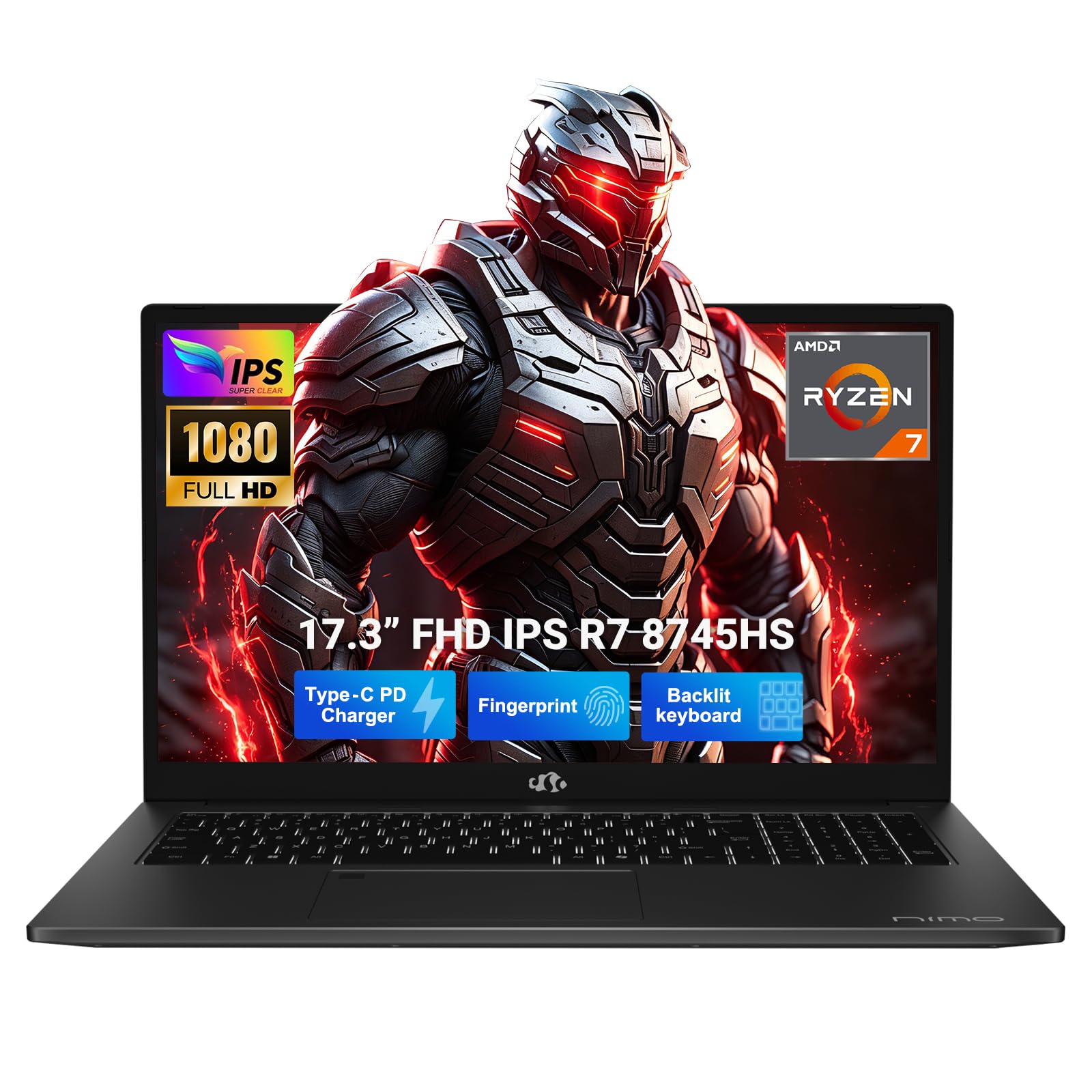
This NIMO takes a clever approach to the 4K laptop problem: it uses the AMD Ryzen 7 8745HS processor, which runs up to 4.9 GHz across its 8 cores, paired with integrated Radeon 780M graphics. That graphics chip is strong enough to handle 1080p live streaming and can run titles like Valorant without stutter. For heavier 4K rendering work, the laptop includes a USB 4.0 port that lets you plug in an external GPU — essentially turning the laptop into a workstation when docked, without carrying the weight and cost of a permanent high-end graphics card. The manufacturer backs this pick with a 2-year warranty and a 90-day return window.
The package comes with 32GB of DDR5 RAM and a 1TB PCIe 4.0 SSD, both upgradeable — you can expand the RAM to 64GB and add a second SSD later. The 17.3-inch display runs at a claimed 19.2 hours standby and 15.5 hours of battery life, which is generous for a large-screen laptop focused on performance. Owners mention the machine handles heavy multitasking and video editing timelines well for the price, appreciating the flexibility of the USB 4.0 port for future expansion.
The trade-off here is that you rely on the integrated Radeon 780M for day-to-day 4K work, and that chip cannot match the raw GPU horsepower of the dedicated RTX 4090 in the Razer Blade 18. For straightforward 4K editing and multitasking, it is more than capable, and the ability to add an external GPU later makes this a smart entry point for creators on a budget.
Smart future-proofing: USB 4.0 support means you can connect an external GPU for demanding 4K rendering later, keeping costs down today while leaving the door open for growth. The included 2-year warranty adds confidence for a long-term purchase.
Honest limit: The integrated Radeon 780M is good for basic 4K playback and light gaming, but it lacks the dedicated VRAM needed for heavy 4K rendering or high-fidelity gaming at native resolution without an external GPU. You will also need to connect an external graphics card if your work demands sustained GPU power for 4K video exports.
Smartest buy for: a video editor or student who wants a large-screen 4K laptop for daily creative work and plans to add an external GPU later when the budget allows.
Not ideal if: you need a fully portable machine with top-tier dedicated graphics already built in or you cannot accommodate an external GPU setup.
2. Razer Blade 18 Gaming Laptop

The desktop-replacement giant that doubles as a creator studio with a silky 200Hz panel.
The 18-inch UHD+ 4K display on this Razer hits a rare balance: ultra-sharp 3840×2160 resolution for detailed creative work and a 200Hz refresh rate for buttery-smooth gaming motion. Color accuracy is backed by a 100% DCI-P3 rating, and the panel is Calman Verified, meaning what you see on screen is true to life — critical for photo and video editors who need to trust their monitor. Under the hood, the Intel Core i9-14900HX processor runs up to 5.8 GHz, making it 26% faster in peak clock speed than the older Dell Precision 5540’s 4.6 GHz chip, so rendering and compiling tasks wrap up noticeably quicker.
Graphics come from the NVIDIA GeForce RTX 4090, built on the Ada Lovelace architecture with AI-powered DLSS 3 for lifelike ray-traced visuals at playable frame rates. To keep that heat under control, Razer fitted the largest vapor chamber it has ever made, paired with a three-fan system. The laptop also includes Thunderbolt 5, which delivers up to three times the bandwidth of the previous connection standard, making it ready for multiple high-resolution monitors and ultra-fast external storage. Buyers report that in everyday use the cooling system stays impressively quiet under load, a real advantage in a shared workspace.
With 32GB of RAM and a 2TB SSD, you have double the storage of either the NIMO or Dell Precision options here — a 2.0x capacity gap that matters when you are juggling 4K project files. The obvious trade-off is that all this firepower pushes this into a premium price bracket, making it a real investment for professionals and serious enthusiasts rather than a casual buy.
What makes it fly
- RTX 4090 GPU delivers the highest raw graphics performance for both gaming and rendering
- 18-inch 4K 200Hz display with 100% DCI-P3 and Calman Verified accuracy
- Thunderbolt 5 port for future-proof speeds on external monitors and storage
- 2TB SSD gives you double the onboard storage of competing 1TB models
The catch
- Premium pricing puts it out of reach for budget or casual users
- Large 18-inch chassis is less portable than smaller 4K laptops
Reach for this if: you need desktop-class graphics in a laptop for 4K gaming at high refresh rates or color-accurate creative work and you have the budget to match.
Look elsewhere if: a 17-inch or 15-inch chassis is more practical for your daily carry or your work doesn’t require an RTX 4090.
3. Dell Precision 5540 15.6 4K Touch Laptop

The compact 15-inch workstation that brings a UHD touchscreen and an ISV-certified GPU.
This Dell Precision 5540 is built for professionals who need a true 4K touchscreen in a more portable 15.6-inch frame. The display runs at 3840×2160 (Ultrasharp UHD) and supports touch input, which is a real advantage for navigating complex 3D models or design software on the go. Inside, the Intel Core i7-9850H processor reaches up to 4.6 GHz across 6 cores, and the laptop is equipped with 32GB of RAM and a 1TB PCIe SSD for fast data access. The NVIDIA Quadro graphics controller with 4GB of GDDR5 memory is specifically engineered for professional design and engineering applications, making this a certified mobile workstation for CAD or video work rather than a gaming machine.
The keyboard is backlit for low-light use, and the laptop includes an integrated HD webcam and MaxxAudio Pro by Waves for improved speaker output. The 15.6-inch size makes it noticeably easier to carry than the 17-inch or 18-inch options, which is an important factor if you move between desks or job sites. A buyer’s perspective here is that the Precision line has a long reputation for build quality and reliability in enterprise environments, which is a meaningful distinction for someone who relies on their laptop for income.
The catch is that the processor is from the 9th generation (Coffee Lake), which is older than the 14th-gen chip in the Razer Blade 18 and the Ryzen 8000 series in the NIMO. Its peak turbo speed of 4.6 GHz is 26% slower than the Razer’s 5.8 GHz, and older architecture means it may show its age faster with demanding modern software. The 1TB SSD also holds half the storage of the Razer’s 2TB drive (a 2.0x gap), so you will need to manage your 4K files more carefully. It is a solid, purpose-built workstation for specific professional tasks, but a less versatile choice for general 4K content creation or gaming.
Authentic workstation DNA: The NVIDIA Quadro GPU with 4GB of dedicated VRAM is certified for professional engineering and design apps, providing driver-level stability that a consumer gaming card cannot match. The UHD touchscreen adds a layer of intuitive control for on-site presentations or model manipulation.
Generational trade-off: The 9th-gen Intel processor and 1TB storage limit this machine’s long-term headroom for heavy 4K workflows. If your work fits entirely within the Quadro’s certified software ecosystem, it is a strong value; if you need the latest CPU and more storage for raw 4K editing, the other two picks offer more future-ready hardware.
Right tool for: an engineer, architect, or 3D designer who works with certified professional software and values a portable 15-inch chassis with a responsive 4K touchscreen.
Not the right fit if: you want a modern processor for fast video rendering or plan to do any gaming at 4K — this machine is tune for professional graphics stability, not raw FPS.
Understanding the Specs
GPU & VRAM
The graphics processing unit (GPU) is the most critical component for a 4K laptop. It handles all the pixel-pushing. The video RAM (VRAM) is the dedicated memory the GPU uses to store textures and frame data. For a 4K display, you generally want at least 4GB of dedicated VRAM for creative work. Integrated graphics chips, like the Radeon 780M, can handle basic 4K playback and light gaming, but they lack the dedicated memory for heavy rendering. A dedicated GPU with higher VRAM, such as an RTX 4090 or a Quadro 4GB, gives you smooth performance in professional applications and detailed games at native 4K.
CPU Clock Speed & Cores
The central processing unit (CPU) is the brain that orchestrates tasks like video encoding, file compression, and multitasking. Clock speed, measured in gigahertz (GHz), indicates how fast each core can process instructions. For 4K video editing and 3D rendering, a higher maximum turbo speed (think 4.9 GHz or 5.8 GHz) means your timelines scrub faster and your exports finish sooner. Core count also matters — more cores allow the CPU to handle multiple heavy tasks at once, like rendering a video in the background while you browse the web, without slowing everything down.
FAQ
Do I need a dedicated GPU for a 4K laptop?
What is the difference between 60Hz and 200Hz on a 4K laptop display?
How much storage do I need for a 4K laptop?
Is a 4K laptop good for gaming?
What is DCI-P3 color gamut and why does it matter?
Should I get a 4K touchscreen laptop?
How much RAM is recommended for a 4K laptop?
What is a vapor chamber in a laptop and why is it important?
Is a 4K laptop worth the extra money over a 1080p laptop?
What is Thunderbolt 5 and do I need it for a 4K laptop?
Final Thoughts: The Verdict
Across the board, the best 4k laptop winner is the Razer Blade 18 because it combines a true 4K 200Hz display with a top-tier RTX 4090 GPU, future-proof Thunderbolt 5, and double the storage of the others. If you want a more affordable entry into 4K creative work with the ability to upgrade later, grab the NIMO 17.3″ Creator. And for a certified mobile workstation with a touchscreen for professional applications, the standout is the Dell Precision 5540.
How We Picked
We do not accept paid placement. Every pick is matched to a real buyer and a real use-case; we do not hands-on test units.
Sources & Methodology
Specifications: manufacturer listings and product documentation. Review insights: verified customer reviews, as of July 2026. Pricing: not shown on this page (it changes often); check the current price via the retailer link.
As an Amazon Associate, Gadgets Feed earns from qualifying purchases. This does not affect which products we feature.
Related Guides
Product prices and availability are accurate as of the date/time indicated and are subject to change. Any price and availability information displayed on Amazon at the time of purchase will apply to the purchase of this product. As an Amazon Associate I earn from qualifying purchases.
CERTAIN CONTENT THAT APPEARS ON THIS SITE COMES FROM AMAZON. THIS CONTENT IS PROVIDED "AS IS" AND IS SUBJECT TO CHANGE OR REMOVAL AT ANY TIME.
Amazon and the Amazon logo are trademarks of Amazon.com, Inc. or its affiliates.