
A 4K laser projector rated at 5,000 lumens sits at a specific intersection of brightness and resolution. The raw light output is enough to overcome ambient light in most living rooms, while the 4K resolution ensures that on a 120-inch or larger screen, the image remains sharp enough to sit close without seeing individual pixels. This combination makes them a legitimate alternative to a large television, but only when the laser light engine and optics are properly matched.
I’m Min — the co-founder and writer behind Gadgets Feed. I’ve spent hundreds of hours analyzing specifications, cross-referencing real-world brightness measurements, and studying the trade-offs between different laser architectures, contrast ratios, and lens systems in the 4K projection category.
After comparing 13 models across multiple price tiers, the best 4k laser projector 5000 lumens delivers the brightness to handle daytime viewing and the color accuracy to justify the investment in a dedicated home theater space.
How To Choose The Best 4K Laser Projector 5000 Lumens
Choosing a high-brightness 4K laser projector requires understanding that brightness and resolution are only two pieces of the puzzle. The light source architecture, the lens quality, and the supported HDR formats determine whether you get a watchable image or a genuinely cinematic experience.
Laser Light Source: Single, Dual, or Triple
The laser engine defines the color volume. Single-laser projectors use a blue laser that passes through a phosphor wheel to create white light. They are cheaper but produce a narrower color gamut, often around 90% Rec.709. Dual-laser systems add a red laser to improve red saturation. Triple-laser (RGB) systems use separate red, green, and blue lasers, achieving coverage of 100% BT.2020 or higher — essential for accurate HDR reproduction. For a projector at this brightness level, triple-laser is the benchmark for color-critical viewing.
Optical Zoom and Lens Shift
At 5,000 lumens, the projector is powerful enough for large screens, but lens flexibility determines whether it fits your room. Optical zoom maintains sharpness when moving the projector closer or farther from the screen; digital zoom cropped the image and reduces effective resolution. Lens shift adjusts the image vertically and horizontally without moving the projector body, preserving image geometry. A model with 1.5x or greater optical zoom and both vertical and horizontal lens shift offers the most forgiving installation.
HDR Handling and Dynamic Tone Mapping
High brightness creates a challenge for HDR: clipping highlights or crushing shadows. Look for dynamic tone mapping that analyzes each frame and adjusts the light output in real time. Without this, a 5,000-lumen projector can wash out dark scenes. Dolby Vision support is ideal because it uses frame-by-frame metadata; HDR10+ is the next best option. HDR10 with static metadata requires manual adjustment on a per-movie basis to avoid blown-out highlights.
Quick Comparison
On smaller screens, swipe sideways to see the full table.
| Model | Category | Best For | Key Spec | Amazon |
|---|---|---|---|---|
| Hisense XR10 | Premium | Ultimate brightness | 6000 ANSI Lumens | Amazon |
| XGIMI Horizon 20 Max | Premium | Brightest triple laser | 5700 ISO Lumens | Amazon |
| Epson LS11000 | Premium | True 3LCD color | 2500 Lumens | Amazon |
| Hisense PX3-PRO | Premium | UST triple laser | 3000 Lumens | Amazon |
| NexiGo Aurora Pro MKII | Premium | High-contrast UST | 30000:1 Contrast | Amazon |
| Valerion VisionMaster Pro2 | Premium | Gaming with low lag | 4ms Input Lag | Amazon |
| ViewSonic LS901-4K | Mid-Range | High brightness value | 5500 ANSI Lumens | Amazon |
| Epson LS800 | Mid-Range | UST for bright rooms | 4000 Lumens | Amazon |
| Anker Nebula X1 | Mid-Range | Portable triple laser | 3500 ANSI Lumens | Amazon |
| AWOL VISION LTV-3000 Pro | Mid-Range | Built-in center channel | 2000 Lumens | Amazon |
| BenQ TK710 | Mid-Range | Reliable gaming | 3200 ANSI Lumens | Amazon |
| ViewSonic LX700-4K | Budget | Budget 4K gaming | 3500 ANSI Lumens | Amazon |
| XGIMI Aura 2 | Budget | Affordable UST entry | 2300 Lumens | Amazon |
In‑Depth Reviews
1. Hisense XR10 Triple Laser 4K Projector
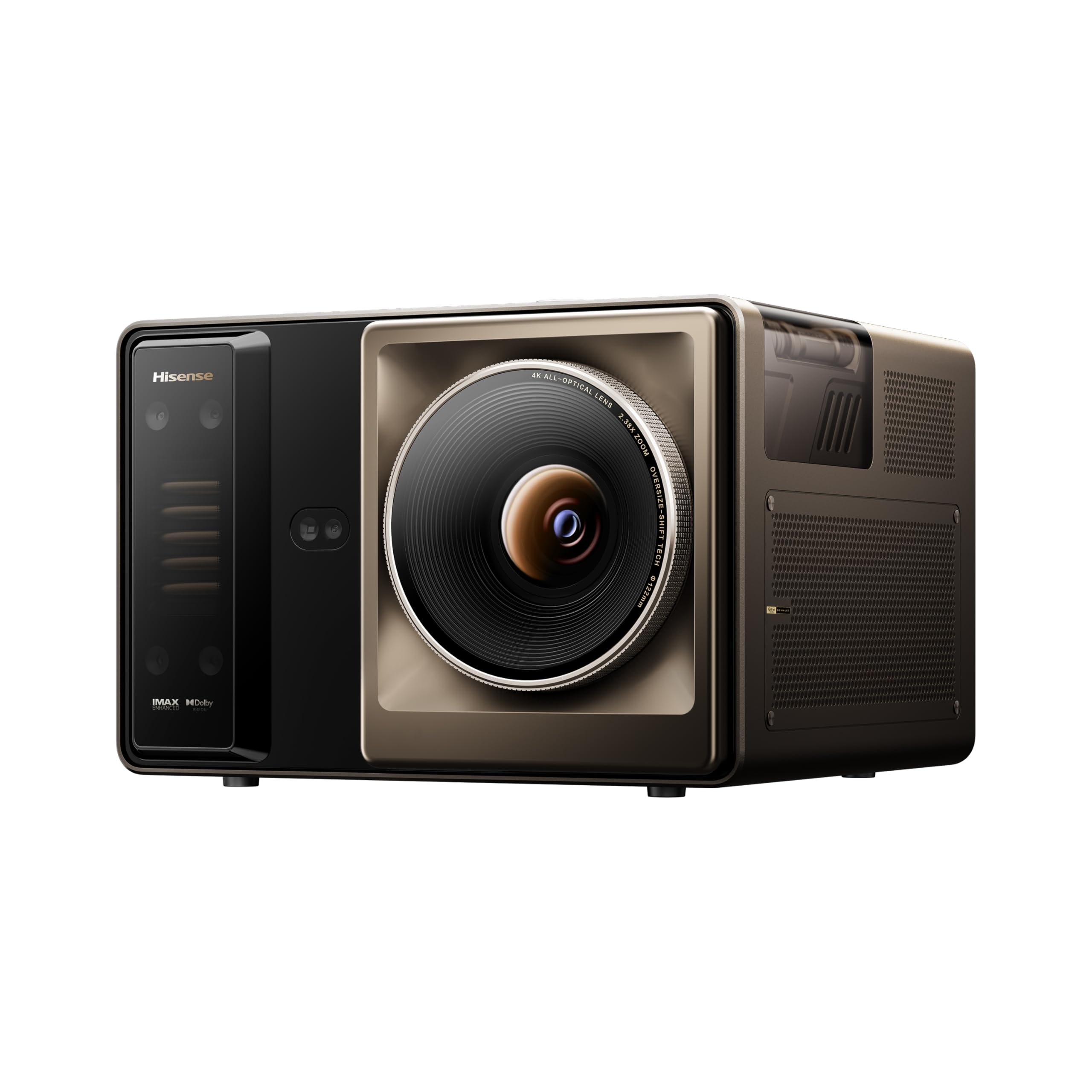
The Hisense XR10 sets the ceiling for this category with a triple laser engine that delivers 6,000 ANSI lumens of peak brightness, paired with a 17-element all-glass lens that minimizes chromatic aberration across the entire projection area. This is enough light to maintain a watchable image even with curtains partially open, which is rare at this price tier. The 7-level iris gives you direct control over black levels, letting you dial in a contrast ratio that reaches 6,000:1 in its best configuration.
The liquid cooling system addresses a pain point of high-lumen projectors: fan noise. Under load, the Hisense XR10 remains notably quieter than competing models in the 5,000-lumen range, which means it works in a living room environment without sounding like a server rack. It also includes optical zoom ranging from 0.84 to 2.0 throw ratio and lens shift, so you can place it on a shelf or mount it without sacrificing image geometry.
On the software side, VIDAA OS supports over 1,200 apps including Netflix and YouTube, with Dolby Vision, IMAX Enhanced, and HDR10+ all accounted for. The Devialet-tuned speakers are competent for casual viewing, but you will want an external audio system to match the visual horsepower. For buyers who want the absolute brightest, most color-accurate image available, this is the baseline.
Why it’s great
- 6,000 ANSI lumens is class-leading brightness for daytime viewing
- Triple laser engine covers a very wide color gamut with accurate HDR
- Liquid cooling keeps fan noise lower than competing high-lumen models
- Optical zoom and lens shift offer flexible placement without quality loss
Good to know
- VIDAA OS is less popular than Google TV, which may affect app availability
- Built-in speakers are fine for casual use but insufficient for a dedicated theater
- Requires careful screen selection to manage laser speckle
2. XGIMI Horizon 20 Max
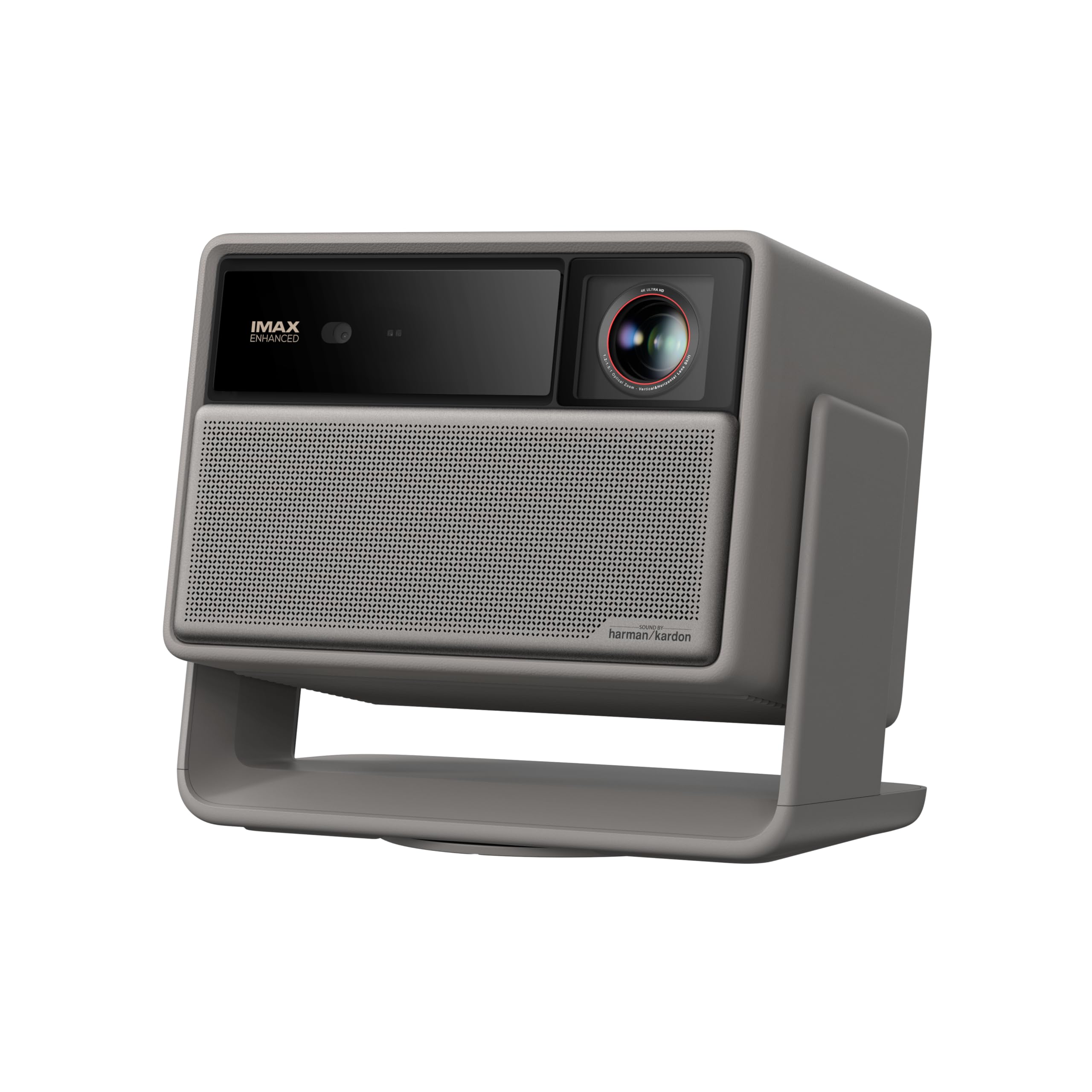
The XGIMI Horizon 20 Max uses an X-Master RGB triple laser engine that pushes 5,700 ISO lumens — a different measurement than ANSI, but in practical terms it produces a very bright, daylight-visible image. The 20,000:1 contrast ratio and 110% BT.2020 color coverage deliver saturated colors without the oversaturated look of some single-laser projectors. The built-in Google TV with licensed Netflix removes the need for an external streaming device.
Gamers will appreciate the 1ms input lag at lower resolutions and 240Hz refresh rate. The motorized lens shift and optical zoom make installation straightforward: you can fine-tune image position without keystone correction, preserving pixel sharpness. The Harman Kardon speakers are among the best built-in audio options on this list, with enough clarity for dialogue-heavy content.
Some users report that standard mode brightness is closer to 3,600-3,900 lumens rather than the full 5,700 ISO claim, which still places it among the brighter options here but suggests the peak number may require specific settings. HDR mode is noticeably dimmer than standard, which is a common trade-off. For a flexible long-throw projector with excellent gaming specs and strong color volume, the Horizon 20 Max is a top contender.
Why it’s great
- Triple laser achieves 110% BT.2020 color gamut for vivid HDR
- Motorized lens shift and optical zoom for keystone-free installation
- 1ms input lag and 240Hz refresh rate suit competitive gaming
- Built-in Google TV with Netflix integration
Good to know
- Standard mode brightness may be lower than the advertised peak
- HDR mode loses significant brightness compared to SDR
- Some units show noticeable laser speckle on higher-gain screens
3. Epson Home Cinema LS11000

The Epson LS11000 uses a 3-chip 3LCD design with a laser array light source, which means it avoids the rainbow effect that some DLP projectors produce. At 2,500 lumens of color and white brightness, it is less bright than the triple-laser competitors, but the color accuracy and black level performance are exceptional for this class. The dynamic contrast ratio exceeds 1,200,000:1, and in a dark room the black floors are very deep for a laser projector.
The motorized lens with 2.1x zoom and vertical/horizontal lens shift is best-in-class for installation flexibility. The Precision Shift Glass Plate technology produces a sharp 4K image from the three 1080p LCD panels without the softness sometimes associated with pixel-shifting designs. HDMI 2.1 support with 120Hz refresh rate and low input lag makes it capable for gaming, though not as specialized as the Valerion or XGIMI options.
The primary trade-off is brightness: at 2,500 lumens, this projector requires a light-controlled room. In a dedicated theater space with controlled lighting, the LS11000 produces a more film-like image than any single-laser DLP projector. It is also large and heavy, and does not support 3D. For purists who prioritize color accuracy and contrast over raw lumens, this remains a benchmark.
Why it’s great
- 3-chip LCD eliminates rainbow effect entirely
- Motorized 2.1x zoom and lens shift offer maximum installation flexibility
- Excellent black levels and dynamic contrast for dark room viewing
- HDMI 2.1 with 120Hz support for smooth gaming
Good to know
- 2,500 lumens is lower than the category ceiling; requires light control
- Large chassis may not fit in all shelving setups
- No 3D support
- 1-year warranty with refurbished replacement policy
4. Hisense PX3-PRO

The Hisense PX3-PRO is an ultra-short throw projector using LPU TriChroma triple laser technology. It projects up to 150 inches from just inches away from the wall, making it suitable for small rooms where a standard long-throw projector would not fit. With 3,000 lumens of brightness and a 110% BT.2020 color gamut, it delivers punchy HDR images without requiring a perfectly dark room.
The built-in Harman Kardon speakers are better than typical projector audio, with Dolby Atmos support for spatial sound. The Google TV interface is snappy and includes all major streaming apps. For gaming, it supports 240Hz refresh rate at lower resolutions and is designed for Xbox compatibility. The 4K AI upscaler works reasonably well for 1080p content, reducing softness on larger screens.
The main limitation is that the auto keystone requires a photo upload through a mobile web interface, which is less convenient than the automatic adjustments on competing UST models. Some users report slight rainbow effect, though less than single-laser DLP projectors. For a UST option that brings triple laser color accuracy to a living room setup, the PX3-PRO is a strong pick.
Why it’s great
- Triple laser delivers 110% BT.2020 for vibrant HDR color
- Ultra-short throw projection saves space and simplifies setup
- 240Hz refresh rate and Xbox compatibility for gaming
- Built-in Harman Kardon speakers with Dolby Atmos
Good to know
- Auto keystone setup requires a mobile photo upload process
- Some users report minor rainbow effect in high-contrast scenes
- Fan noise is audible during demanding content
5. NexiGo Aurora Pro MKII

The NexiGo Aurora Pro MKII uses ALPD 5.0 laser technology, which combines a blue laser with red and green phosphor to achieve a bright 2,400-lumen image with a 30,000:1 contrast ratio. The Scene Adapt Engine uses dynamic iris and laser dimming to adjust contrast in real time based on content, producing deeper blacks in dark scenes and brighter highlights during explosions or sunlight shots.
With a 0.21:1 throw ratio, this is an ultra-short throw projector that can produce a 150-inch image from a short distance. The Dolby Vision and HDR10+ support ensure HDR content is properly mapped. Gaming latency is between 4.2ms and 8ms, which is excellent for casual and competitive play. The 60W built-in speakers with Dolby Atmos are usable for a living room without an external soundbar.
Some users report that the projector can overheat and shut down under extended use, though this appears to be a unit-specific issue rather than a design flaw. The remote control is directional and sensitive, requiring line-of-sight. For a UST projector with impressive contrast management and Dolby Vision support, the Aurora Pro MKII delivers strong value for its tier.
Why it’s great
- Scene Adapt Engine with dynamic iris improves black levels in real time
- ALPD 5.0 laser provides good brightness and color accuracy
- Very low input lag for UST projector: 4.2ms to 8ms
- 60W speakers with Dolby Atmos reduce need for external audio
Good to know
- Some units have reported overheating and shutdown issues
- Remote is directional and requires line-of-sight
- Requires a suitable table or mount for proper UST positioning
6. Valerion VisionMaster Pro2
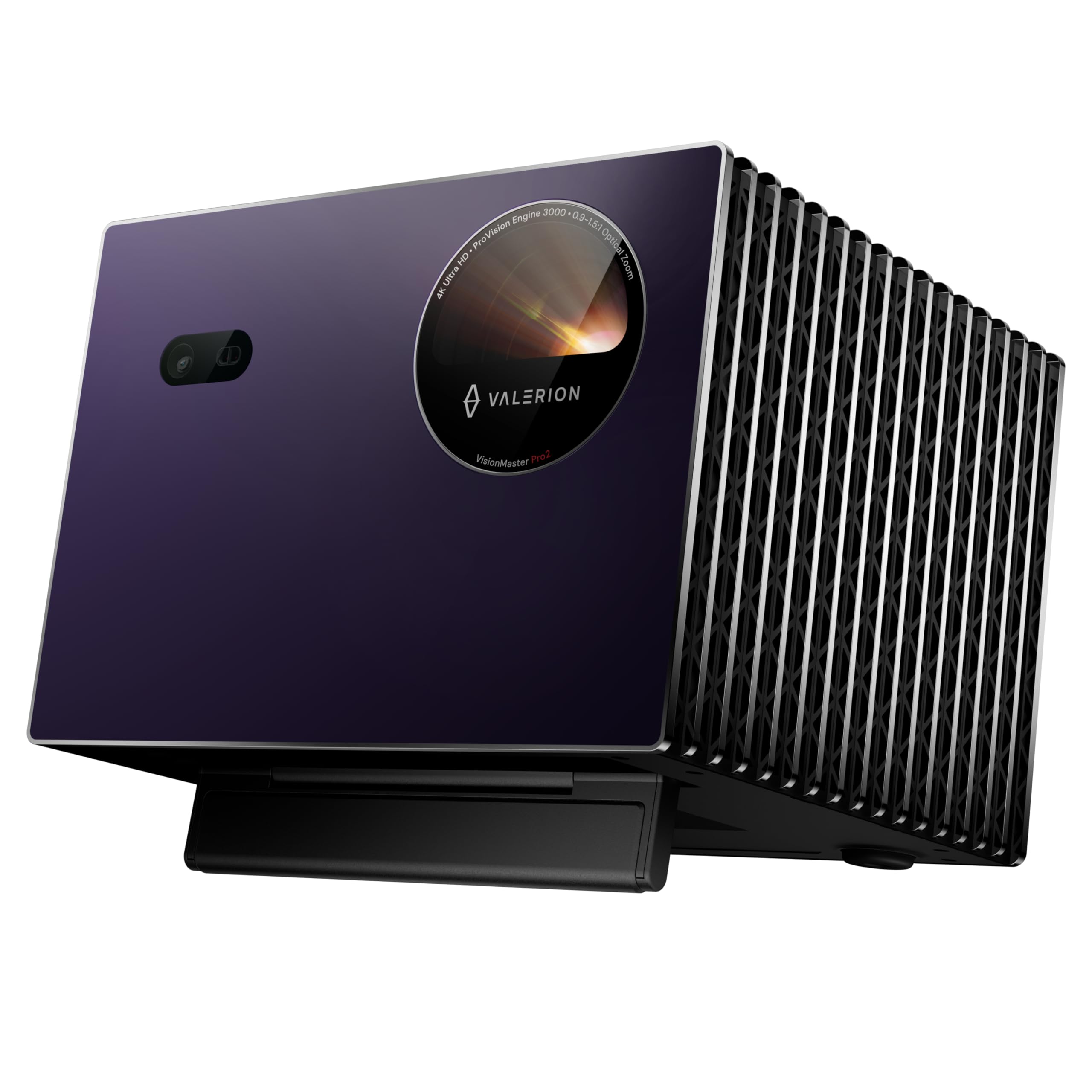
The Valerion VisionMaster Pro2 is a triple laser projector built with gaming as a primary use case. It achieves 4ms input lag at 1080p/240Hz and maintains responsive performance at 4K/60Hz. The 15,000:1 native contrast ratio with Enhanced Black Level (EBL) technology produces deeper blacks than most DLP projectors, which is rare for a sub-3,000-dollar laser model.
The OpticFlex Lens System has a throw ratio of 0.9 to 1.5 with optical zoom, allowing flexible placement. It supports ultra-wide 21:9 and 32:9 aspect ratios, giving competitive gamers a field-of-view advantage. The MediaTek MT9618 chipset with 4GB RAM and 128GB storage ensures smooth Android TV navigation and app switching. ISF-certified calibration means the color accuracy is consistent out of the box.
The projector is large and requires careful physical alignment for the best image. Some users note that when placed at the maximum throw distance, the image requires digital zoom that reduces brightness and sharpness. The fan is audible during fast-action scenes but quieter than many competitors. For a gaming-first projector that still delivers strong movie performance, the VisionMaster Pro2 is a specialized pick.
Why it’s great
- 4ms input lag and 240Hz refresh rate for competitive gaming
- Triple laser with 15,000:1 contrast produces deep blacks
- Ultra-wide 21:9 and 32:9 aspect ratio support
- ISF-certified color calibration for accurate out-of-box image
Good to know
- Requires precise physical alignment for optimal geometry
- Digital zoom needed at maximum throw distance reduces brightness
- Fan noise is noticeable during fast-paced scenes
7. ViewSonic LS901-4K

The ViewSonic LS901-4K delivers 5,500 ANSI lumens of brightness with a 3,000,000:1 dynamic contrast ratio at a price point that undercuts many triple-laser competitors. It uses a single laser light source, which means the color gamut is narrower — around 90% Rec.709 — but the raw brightness makes it suitable for venues with uncontrolled ambient light, such as churches, conference rooms, or outdoor events.
The 1.7x optical zoom and H/V keystone adjustment give significant installation flexibility. It supports 21:9 aspect ratio for widescreen content and Golf Mode for golf simulators, making it a multi-purpose projector beyond home theater. The 4.2ms input lag at 1080p/240Hz makes it responsive for gaming as well, though the contrast is not as deep as triple-laser alternatives.
Out of the box, the brightest picture mode is usable but looks washed out compared to calibrated modes. Calibration requires time, and the menus are less refined than premium brands. For buyers who prioritize raw output over color accuracy and who need a projector that works in a bright room, the LS901-4K offers the best lumens-per-dollar ratio on this list.
Why it’s great
- 5,500 ANSI lumens is one of the highest outputs in this price range
- 1.7x optical zoom offers flexible placement without image degradation
- Low input lag for gaming despite high brightness
- Golf Mode and 21:9 support expand use cases beyond movies
Good to know
- Single laser engine limits color gamut compared to triple-laser models
- Calibration required for best image quality
- Black levels are not as deep as higher-contrast alternatives
8. Epson LS800
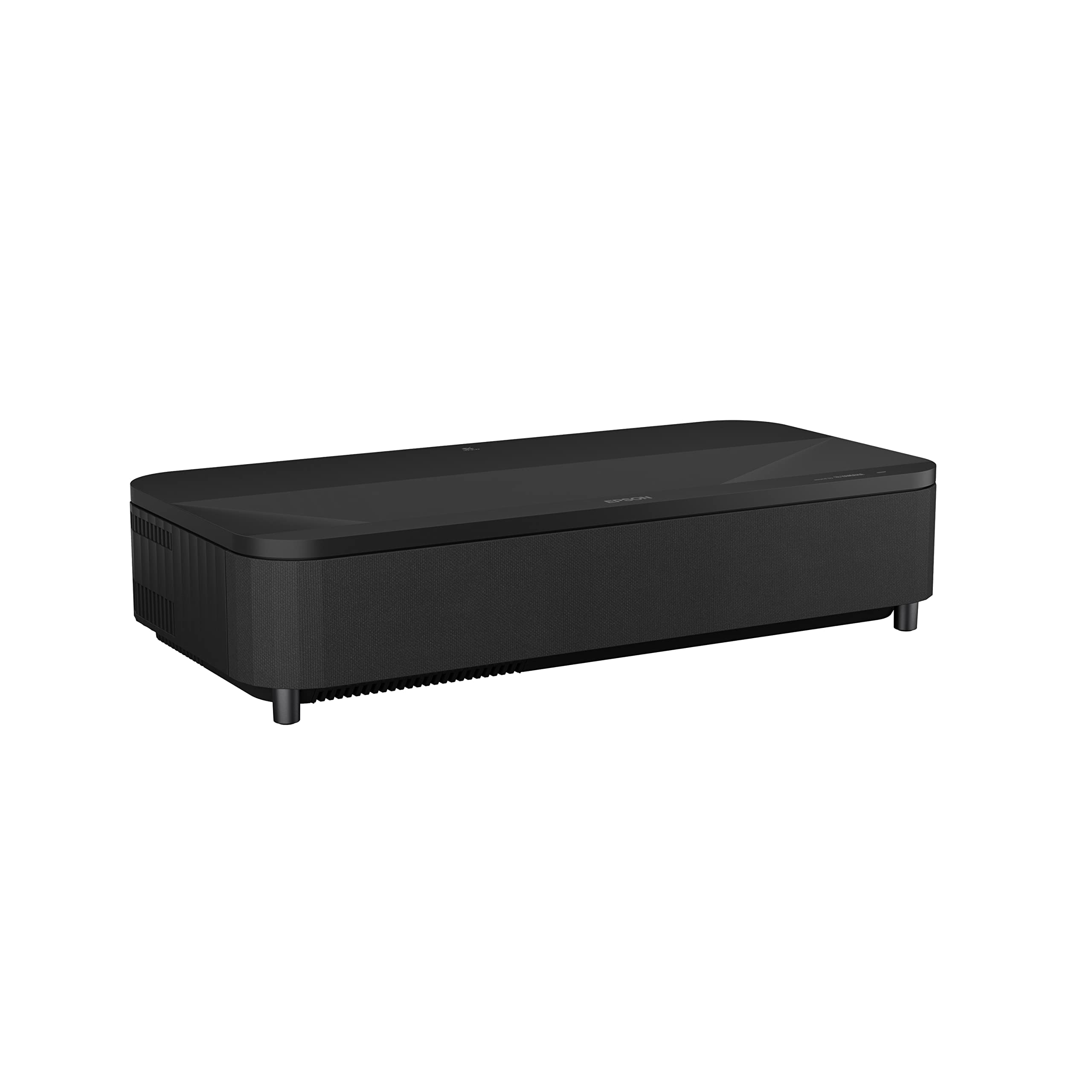
The Epson LS800 is an ultra-short throw projector that outputs 4,000 lumens of both color and white brightness using a 3-chip 3LCD design. This ensures no rainbow effect, which is common in single-chip DLP projectors, and the color brightness matches the white brightness — a spec point that matters for accurate HDR reproduction. It can project up to 150 inches from just inches away from the wall.
The built-in Yamaha 2.1-channel speakers deliver surprisingly good audio for a projector, with clear dialogue and enough bass for casual movie watching. Android TV is built-in, providing access to streaming apps without a separate device. The ultra-short throw design means you can place it on a TV stand, and the multi-point picture adjustment helps align the image on the screen.
The LS800 uses pixel-shifting to achieve 4K detail, which means it is not a native 4K panel — text and fine details are not as sharp as true 4K projectors. Some users have reported HDMI port failures after extended use. For a bright room UST projector that avoids rainbow effect, the LS800 is a strong choice, but careful about long-term reliability.
Why it’s great
- 4,000 lumens of matching color and white brightness for bright room use
- 3LCD design completely eliminates rainbow effect
- Ultra-short throw saves space and simplifies placement
- Built-in Yamaha 2.1 speakers are better than typical projector audio
Good to know
- Pixel-shifting 4K is not as sharp as native 4K for fine text
- Some users report HDMI port failure after extended use
- Auto keystone setup is less refined than some competitors
9. Anker Nebula X1

The Anker Nebula X1 packs a triple laser engine into a portable form factor that is significantly smaller than standard long-throw projectors. At 3,500 ANSI lumens, it is bright enough for both indoor and outdoor use, and the auto-align gimbal makes setup trivial — it scans the projection surface and adjusts focus, keystone, and image size automatically. The 5,000:1 native contrast ratio is enhanced by a 6-blade iris to reach 56,000:1 dynamic contrast.
The ISF and TUV Rheinland certifications confirm the color accuracy and low blue light emissions, making it suitable for extended viewing sessions. Built-in Google TV provides access to streaming apps, and the Spatial Recall feature saves different alignment settings for different rooms or outdoor setups. This makes it the most versatile projector on the list if you move it between locations.
The main limitation is the 60Hz input limit, which caps it at standard 4K/60Hz content — not ideal for high-frame-rate gaming. Some users report inconsistent quality control, requiring a unit exchange to get a properly calibrated image. For a portable, bright, triple-laser projector that excels at movies and outdoor viewing, the Nebula X1 is unique in this category.
Why it’s great
- Triple laser in a compact, portable form factor with auto-align gimbal
- 3,500 ANSI lumens works well for indoor and outdoor use
- ISF-certified color accuracy for a portable unit
- Spatial Recall saves alignment profiles for multiple locations
Good to know
- 60Hz input limit caps gaming and high frame rate content
- Inconsistent quality control may require unit exchange
- Built-in speakers are decent but not as powerful as dedicated audio
10. AWOL VISION LTV-3000 Pro

The AWOL VISION LTV-3000 Pro is a triple laser ultra-short throw projector that distinguishes itself with a built-in center channel speaker, designed to project dialogue directly from the screen. With 147% DCI-P3 and 107% BT.2020 color coverage, the color volume is impressive. Dolby Vision, HDR10+, and 3D support make it versatile for different content types.
The 0.25:1 throw ratio means it needs to sit close to the wall: roughly 8.5 inches for a 100-inch image and 13 inches for 150 inches. The Control4 IP control supports home automation integration. Triple laser technology eliminates the need for a color wheel, which reduces rainbow effect and increases lifespan.
The internal speakers are described as dreadful by some users, despite the center channel claim — external audio is recommended. The fan noise becomes noticeable after extended viewing at 4K. The 60Hz refresh rate limit and bare-bones menus feel less polished than competing UST projectors. For buyers who want maximum color volume from a triple laser UST and can add their own audio, the LTV-3000 Pro delivers cinematic color.
Why it’s great
- Triple laser covers 147% DCI-P3 and 107% BT.2020 for exceptional color
- Built-in center channel speaker design
- Supports Dolby Vision, HDR10+, and active 3D
- Control4 IP integration for home automation
Good to know
- Internal audio quality is poor despite center channel; external system needed
- Fan noise becomes noticeable during extended 4K viewing
- 60Hz refresh rate limits gaming and high frame rate content
- Menus feel primitive compared to competitors
11. BenQ TK710

The BenQ TK710 delivers 3,200 ANSI lumens from a laser light source at a price that makes it one of the most accessible entries in the 4K laser category. It is a long-throw projector designed for living room use, with HDR10 and HLG support. The 600,000:1 dynamic contrast ratio and 95% Rec.709 color coverage produce a punchy image that looks good even with some ambient light.
Gamers get a 4ms response time at 1080p/240Hz, with 16ms input lag at 4K/60Hz. The vertical lens shift and 1.3x optical zoom make setup flexible without needing a perfectly centered mount. The 3D keystone and corner adjustment help if the projector is not perfectly squared with the screen. The laser light source eliminates lamp replacement costs over its lifespan.
The throw distance is shorter than some competitors: a 96-inch image requires the projector to be about 3 feet closer than older models. The built-in speaker is basic and will not satisfy for movies. For buyers who want a reliable, bright 4K laser projector without paying for triple laser color performance, the TK710 represents solid value.
Why it’s great
- 3,200 ANSI lumens provide good brightness for a living room
- 4ms response time at 240Hz for responsive gaming
- Vertical lens shift and 1.3x optical zoom for flexible placement
- Laser light source eliminates lamp replacement costs
Good to know
- Shorter throw distance may require projector placement closer to screen
- 95% Rec.709 coverage is lower color volume than triple-laser models
- Built-in speaker is basic and insufficient for immersive audio
12. ViewSonic LX700-4K

The ViewSonic LX700-4K offers 3,500 ANSI lumens of brightness and a 3,000,000:1 dynamic contrast ratio at a price that makes 4K laser projection accessible. It is designed with Xbox compatibility in mind, supporting 1440p at 120Hz and up to 240Hz at lower resolutions. The 4.2ms input lag makes it responsive for competitive gaming, though the single-laser engine limits color gamut to standard Rec.709.
The 1.36x optical zoom and H/V keystone with 360-degree projection make it very flexible for different room layouts. You can project onto a ceiling or wall at any angle. The Golf Mode supports major golf simulators, making it a dual-purpose projector for home theater and golf simulation. Eco mode is impressively quiet and still bright enough for dark room viewing.
Several users report HDR handshake issues when using an AV receiver in the HDMI chain, with flickering colors and dropped signals. Direct connection to a console works fine. The black levels are more of a dark grey than true black, which is typical for single-laser DLP projectors. For a budget-friendly entry into 4K laser with strong gaming specs, the LX700-4K delivers where it counts.
Why it’s great
- 3,500 ANSI lumens provides sufficient brightness for most rooms
- 240Hz refresh rate and 4.2ms input lag for responsive gaming
- Xbox certified with 1440p/120Hz support
- 360-degree projection and 1.36x zoom for flexible placement
Good to know
- HDR handshake issues when using an AV receiver in the chain
- Black levels are dark grey, not true black
- Single laser limits color gamut to Rec.709
13. XGIMI Aura 2

The XGIMI Aura 2 is an ultra-short throw projector with a laser light source that offers Dolby Vision and IMAX Enhanced certification at a price that undercuts most triple-laser UST models. At 2,300 lumens, it is less bright than the long-throw options on this list, but for dark room viewing it produces a punchy HDR image with a 1,000,000:1 dynamic contrast ratio. The 0.177:1 throw ratio places it very close to the wall.
The built-in Harman Kardon speakers are some of the best integrated audio on this list, with Dolby Atmos support for spatial sound. The automatic keystone and focus adjustment work well when the projector is moved, and the wall color adaptation feature helps if you do not have a dedicated screen. Android TV provides access to streaming apps out of the box.
The color accuracy is not as good as triple-laser competitors, and some users note visible RGB color fringing with quick eye movements. The auto keystone can skew corners if the wall is not perfectly flat. For buyers who want a UST projector with Dolby Vision and good built-in audio without a big budget, the Aura 2 is a reasonable entry point.
Why it’s great
- Dolby Vision and IMAX Enhanced certification at an entry-level UST price
- Built-in Harman Kardon speakers with Dolby Atmos are better than typical
- Ultra-short throw design saves space and simplifies placement
- Auto keystone and focus adjust quickly when moving the unit
Good to know
- 2,300 lumens is relatively low; requires a dark room for best performance
- Some visible RGB color fringing with quick eye movement
- Color accuracy is not as good as triple-laser alternatives
- Auto keystone can struggle with uneven walls
FAQ
What projector screen should I pair with a 5,000-lumen projector?
How long do laser light sources last in a 4K projector?
Is 5,000 lumens too bright for a dark room?
Can a 5,000-lumen projector replace a TV for daytime viewing?
Final Thoughts: The Verdict
For most users, the best 4k laser projector 5000 lumens winner is the Hisense XR10 because it combines a genuine 6,000 ANSI lumen triple laser engine with a 17-element all-glass lens and liquid cooling for quiet operation. If you want the best triple laser color accuracy for a living room setup, grab the XGIMI Horizon 20 Max for its motorized lens shift and strong gaming specs. And for a dedicated theater room where black levels matter most, nothing beats the Epson LS11000 for its 3-chip LCD color purity and deep contrast.