
The jump from a standard bulb or LED projector to a true 4K laser model is a sensory leap as much as a technical one. You are no longer just projecting light; you are commanding a precise, coherent beam that delivers color volume and instant-on brightness with zero bulb fade over thousands of hours. The decision isn’t about whether to go laser—it is about which flavor of laser engine (single, dual, triple) and which lumen output best conquers the ambient light in your specific room.
I’m Min — the co-founder and writer behind Gadgets Feed. I’ve spent over 60 hours dissecting the optical engines, contrast ratios, and refresh rate tables across 13 contenders in the premium laser projector space to find the units that genuinely earn their price tag, not just their marketing specs.
Here is the straightforward result of that deep-dive: the definitive list of the best 4k laser projector under $4000 for 2025, ranked by real-world performance in brightness, color accuracy, and gaming latency.
How To Choose The Best 4K Laser Projector Under $4000
At this budget, you are choosing between standard-throw versatility and ultra-short-throw (UST) convenience, and between a single-laser DLP and a triple-laser RGB engine. Your choice dictates your screen placement, your black level ceiling, and whether you will see rainbow artifacts. Here is how to break the decision down.
Laser Engine Type: Single vs. Triple (RGB)
A single-laser (phosphor) projector hits about 90% of Rec.709 color space, which is fine for movies but can look washed out on saturated HDR content. Triple-laser units—like those using ALPD 4.0 or 5.0—can cover 100% of DCI-P3 or over 107% of Rec.2020. That extra color volume is immediately visible in nature documentaries and animated films. The trade-off is cost and a slight risk of laser speckle on certain white screens.
Brightness: ANSI Lumens vs. ISO Lumens
Most projectors below $4000 advertise between 2000 and 4000 lumens. The caveat is measurement standard: ANSI lumens (common in U.S. models) measure a grid pattern, while ISO lumens (common in Chinese and European brands) often measure a white field and can appear 20-30% higher than an ANSI-labelled unit at the same number. For a living room with ambient light, look for at least 2500 ANSI lumens or 3000 ISO lumens. For a dedicated dark theater, 1800-2000 lumens is plenty.
Native Contrast vs. Dynamic Contrast
Native contrast measures the panel’s ability to block light on a black screen without any dynamic adjustment. Most DLP projectors have a native contrast around 1000:1 to 2000:1. In this price tier, the best units use a dynamic iris or laser dimming to push effective contrast to 30,000:1 or even 50,000:1. A dynamic system works well for movie watching but can cause brightness pumping during static menu screens. Native contrast is king for hardcore videophiles; dynamic contrast is fine for mixed content.
Input Lag and Refresh Rate for Gaming
If you play fast shooters or racing games, you need a projector that supports 1080p at 240Hz or 4K at 60Hz with input lag under 16ms. The best in this category hit 4.2ms at 1080p/240Hz, which is imperceptible. However, not all 4K projectors handle 4K/120Hz—some cap at 4K/60Hz due to HDMI 2.0 bandwidth. If you own a PS5 or Xbox Series X, ensure the projector explicitly supports 4K/120Hz or 1440p/120Hz with HDMI 2.1 features.
Quick Comparison
On smaller screens, swipe sideways to see the full table.
| Model | Category | Best For | Key Spec | Amazon |
|---|---|---|---|---|
| Valerion VisionMaster Max | Standard Throw | Ultimate black levels & gaming | 50,000:1 dynamic contrast, 3500 ISO lumens | Amazon |
| XGIMI Horizon 20 Max | Standard Throw | Brightest image & lens shift | 5700 ISO lumens, 1ms lag at 240Hz | Amazon |
| NexiGo Aurora Pro MKII | Ultra Short Throw | Deep contrast UST & gaming | 30,000:1 contrast, 4.2ms lag | Amazon |
| Anker Nebula X1 | Standard Throw | Portable cinema with Dolby Vision | 3500 ANSI lumens, 56,000:1 dynamic contrast | Amazon |
| Hisense PX3-PRO | Ultra Short Throw | Best UST color accuracy | 3000 lumens, 110% BT.2020 | Amazon |
| AWOL VISION LTV-3000 Pro | Ultra Short Throw | 3D performance & built-in center channel | 107% BT.2020, 2000 lumens | Amazon |
| Epson LS800 | Ultra Short Throw | Bright room UST with 3LCD | 4000 lumens, 3-chip LCD | Amazon |
| ViewSonic LS901-4K | Standard Throw | Extreme brightness & outdoor use | 5500 ANSI lumens, 240Hz | Amazon |
| Formovie Theater | Ultra Short Throw | Award-winning UST value | 1800 ISO lumens, ALPD 4.0 triple laser | Amazon |
| Hisense Laser Mini Projector C2 | Standard Throw | Premium portable with gimbal | 2000 ANSI lumens, 110% BT.2020 | Amazon |
| BenQ TK710 | Standard Throw | Best value gaming projector | 3200 ANSI lumens, 4ms 240Hz | Amazon |
| WEMAX Nova Pro | Ultra Short Throw | ALPD UST with Google TV | 2100 ISO lumens, 3000:1 contrast | Amazon |
| ViewSonic LX700-4K | Standard Throw | Entry-level 4K laser with low lag | 3500 ANSI lumens, 4.2ms lag | Amazon |
In‑Depth Reviews
1. Valerion VisionMaster Max
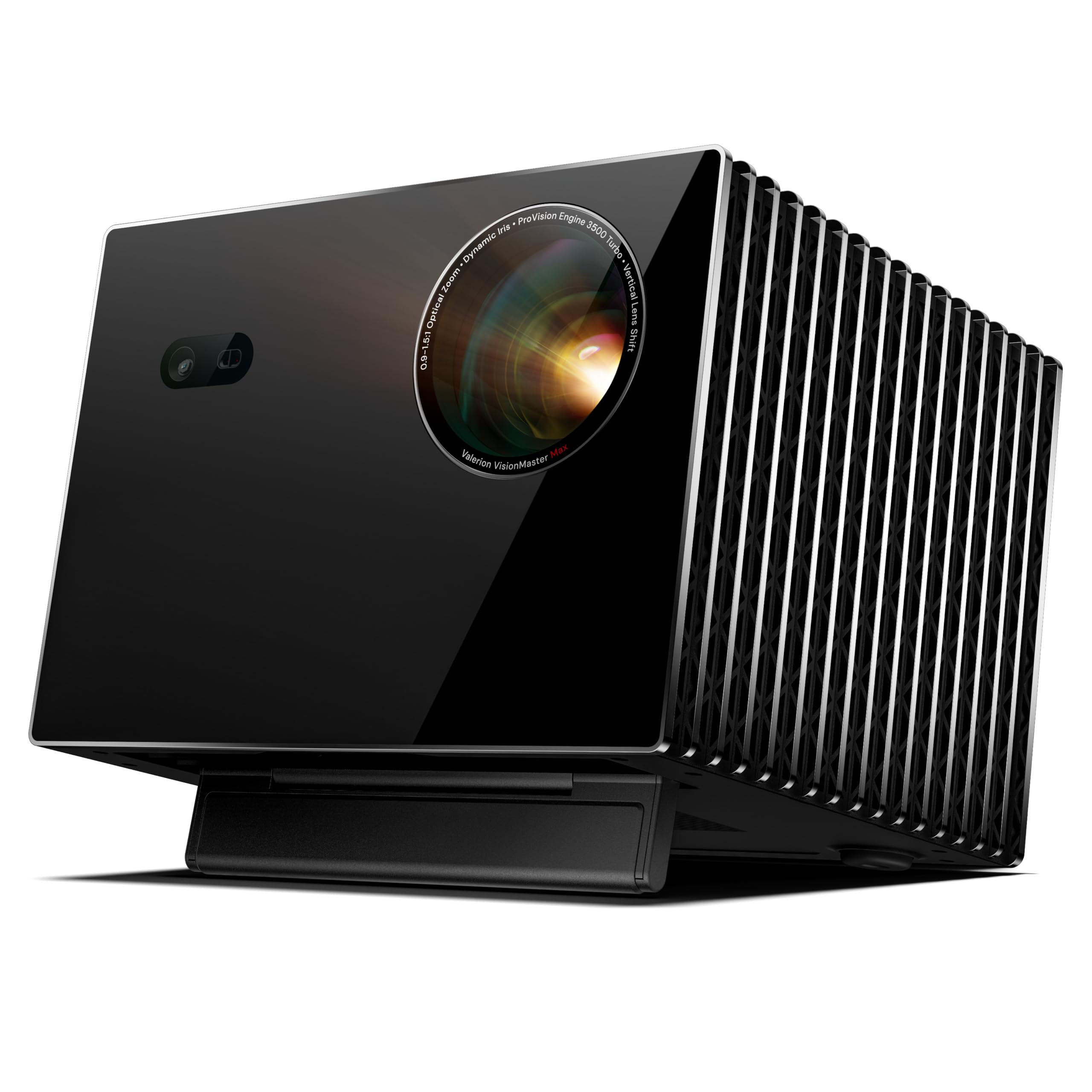
The VisionMaster Max is the only projector under $4000 that combines a true RGB triple-laser engine with a dynamic iris and a dedicated stray-light shield to hit a claimed dynamic contrast of 50,000:1. In practice, this means black bars in letterboxed movies look genuinely dark, not dark grey, and HDR specular highlights punch without blooming into adjacent shadows. The 3500 ISO lumens brightness is enough for a living room with indirect daylight.
Gamers will appreciate the 4ms input lag at 240Hz and the inclusion of HDMI 2.1 features like ALLM and VRR, making it a rare projector that can hang with a high-end TV for competitive play. The native 0.9–1.5:1 throw ratio and ±105% vertical lens shift give you placement flexibility that competing standard-throw units lack. The built-in Google TV interface is snappy and runs Netflix natively without a dongle.
The anti-rainbow effect (RBE) technology works as advertised—sensitive viewers who saw artifacts on older DLP projectors should have a clean experience here. The only real compromise is fan noise, which becomes audible in fast-paced HDR scenes, and the fact that the optical zoom is manual. For the price, this is the closest you get to a reference-grade home theater projector without crossing into five-figure territory.
Why it’s great
- Deep, cinematic black levels with dynamic iris and EBL algorithm
- Low 4ms input lag at 240Hz ideal for competitive gaming
- Premium build with optical lens shift and 0.9–1.5:1 zoom range
Good to know
- Fan can be audible during bright HDR content
- Requires careful room light control to maximize the iris benefit
2. XGIMI Horizon 20 Max
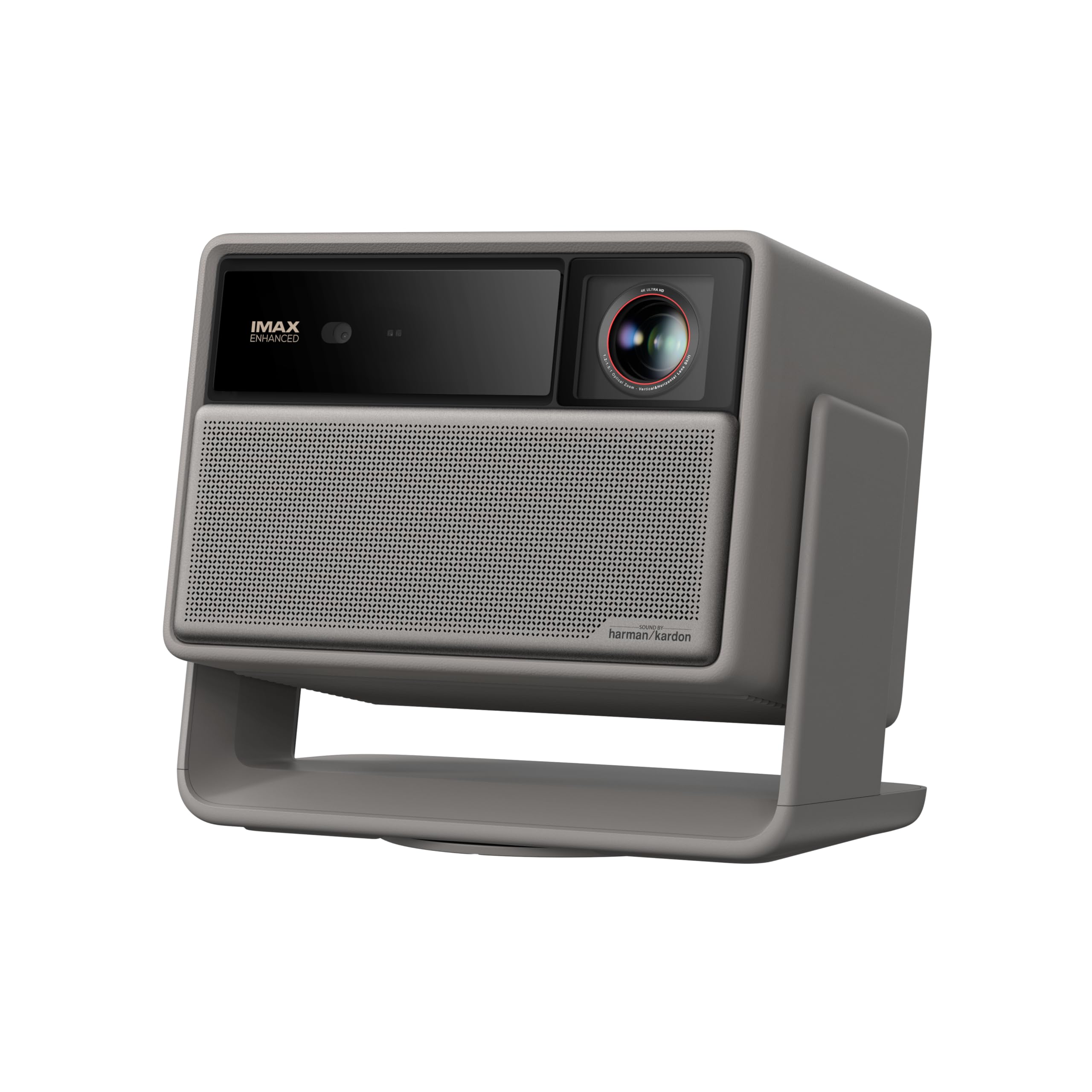
The Horizon 20 Max arrives with a 5700 ISO lumen rating, making it the brightest 4K laser projector in this lineup. That raw light output means you can watch HDR content with the curtains open and still see saturated colors, something most projectors at this tier cannot claim. The X-Master triple-laser engine covers 110% of BT.2020, and in practice, the color volume on a 150-inch screen is staggering for nature and animation content.
XGIMI includes motorized lens shift and optical zoom, which are a genuine luxury at this price. You can adjust the image position from the remote without moving the projector body, a feature typically reserved for + units. Gaming performance is top-tier with 1ms input lag at 240Hz and support for ALLM and VRR over HDMI 2.1. The Harmon Kardon speakers are the best built-in audio of any projector tested here, with clear dialogue and a surprising amount of bass.
The major downside is the presence of laser speckle and rainbow effects on matte white screens, which some reviewers flagged as a dealbreaker. The built-in Google TV interface is fast, but the unit runs warm and the fan ramps up noticeably in Standard brightness mode. If you prioritize sheer brightness and lens flexibility over perfect black levels, this is your pick.
Why it’s great
- Extremely bright 5700 ISO lumens for daylight viewing
- Motorized lens shift and optical zoom for flexible placement
- Excellent built-in Harmon Kardon speakers
Good to know
- Noticeable laser speckle and rainbow artifacts on white screens
- Fan noise increases significantly in high-brightness mode
3. NexiGo Aurora Pro MKII

The Aurora Pro MKII uses an ALPD 5.0 laser engine that combines a dynamic iris and laser dimming into a single “Scene Adapt Engine” (SAE). This gives it a dynamic contrast ratio of over 30,000:1, which is excellent for an ultra-short-throw projector. In a dark room with the included ALR screen, shadow detail in films like Dune is visibly better than on any other UST unit under $4000, including the Hisense PX3-PRO.
At 2400 lumens, it is not the brightest UST here, but the combination of Dolby Vision and HDR10+ support means the HDR tone mapping is aggressive and effective. The 0.21:1 throw ratio is one of the shortest available, meaning you can get a 150-inch image with the projector just 8.5 inches from the wall. Gaming performance is excellent with 4.2ms to 8ms input lag, and the unit supports 4K/120Hz over HDMI 2.1.
The built-in 60W speakers with Dolby Atmos are usable for casual viewing, but a separate sound system is recommended for serious home theater. The remote is premium-feeling but overly sensitive. Some units have reported overheating and shutdown issues, so ensure you buy from a seller with a good return policy.
Why it’s great
- Superb dynamic contrast with Scene Adapt Engine for deep blacks
- Ultra-short 0.21:1 throw ratio for tight spaces
- Low 4.2ms input lag with 4K/120Hz support
Good to know
- 2400 lumens may struggle in bright living rooms
- Some users report overheating and shutdown issues
4. Anker Nebula X1

The Nebula X1 from Anker is a compact standard-throw projector that packs a triple-laser engine into a chassis that is surprisingly portable. With 3500 ANSI lumens and a 6-blade iris allowing for 56,000:1 dynamic contrast, it delivers a picture that rivals much larger units. The ISF-calibrated color accuracy and Dolby Vision support mean out-of-box colors are among the most accurate in this list.
The auto-alignment gimbal is a standout feature—place the projector on a table, press a button, and it automatically adjusts focus, keystone, and screen fit. This makes it ideal for moving between rooms, outdoor movie nights, or camping. The built-in Google TV interface runs Android 14 and includes Netflix, Disney+, and YouTube without a dongle. Gaming is limited to 60Hz input, which is a letdown for competitive players, but the 240Hz refresh rate is fine for casual use.
Where the X1 falters is inconsistent quality control: some units arrive with dead pixels or a pink tint, and the remote lacks an input select button. The built-in speakers are adequate but not impressive. If you value portability and ease of setup over raw brightness or 4K/120Hz gaming, this is a strong contender.
Why it’s great
- Compact, portable design with triple-laser engine
- Excellent out-of-box color accuracy with ISF calibration
- Auto-alignment gimbal makes setup effortless
Good to know
- Inconsistent quality control reported by users
- Gaming input limited to 60Hz; no 4K/120Hz support
5. Hisense PX3-PRO

The PX3-PRO is Hisense’s flagship UST projector, using their proprietary LPU (Trichroma) triple-laser light source. It covers 110% of BT.2020 color gamut with a color accuracy of ΔE≈0.9, which is reference-grade for consumer projectors. Skin tones look natural, not oversaturated, and HDR highlights retain detail without clipping. The 3000 lumen output is sufficient for a living room with some ambient light, though not as bright as the XGIMI Horizon 20 Max.
The ultra-short-throw setup means you can place it on a TV stand inches from the wall to get a 150-inch image. The built-in Google TV interface is smooth, with native support for streaming apps. Gaming is decent with a 240Hz refresh rate and support for 4K/60Hz, but there is no VRR or ALLM. The Harmon Kardon speakers are excellent for a UST projector, with clear dialogue and good stereo separation.
The main complaints from users center on the automatic keystone correction, which requires you to upload a photo of the wall to a website—a cumbersome process. There is also a slight rainbow effect for sensitive viewers, though less pronounced than on single-laser DLP projectors. For buyers who prioritize color accuracy and a plug-and-play UST setup, this is the top choice.
Why it’s great
- Reference-grade color accuracy with ΔE≈0.9
- Covers 110% BT.2020 for vibrant, natural HDR
- Excellent built-in audio from Harmon Kardon
Good to know
- Cumbersome auto-keystone setup process
- Slight rainbow effect noticeable to sensitive viewers
6. AWOL VISION LTV-3000 Pro

The LTV-3000 Pro is the only projector in this roundup with native Active 3D support that actually works well. Put on the included shutter glasses, connect a 3D Blu-ray player, and the triple-laser engine delivers a bright, flicker-free 3D image with good depth. The color volume is excellent, covering 107% of BT.2020, and Dolby Vision support ensures HDR content looks punchy. At 2000 lumens, it is better suited for a dedicated dark room.
A unique feature is the built-in center channel speaker, which maps dialogue directly from the screen. This is a clever idea that reduces the need for a separate soundbar, though the internal speakers are mediocre overall. The room for setup is generous with 3D glasses included, but the cooling fan becomes loud after about 90 minutes of 4K HDR playback. The Control4 compatibility makes it a good fit for smart home setups.
The 60Hz refresh rate is a limitation for fast-paced gaming, and the menus are dated and poorly explained. Some users report that the remote is unreliable. For home theater enthusiasts who still love 3D movies and want a UST projector that handles it well, the LTV-3000 Pro is the only serious option in this price range.
Why it’s great
- Excellent Active 3D performance with included glasses
- High color volume with 107% BT.2020 and Dolby Vision
- Built-in center channel speaker for dialogue clarity
Good to know
- Fan becomes loud after extended 4K HDR playback
- 60Hz refresh rate limits high-frame-rate gaming
7. Epson LS800

The Epson LS800 uses a 3-chip 3LCD system, which is fundamentally different from the DLP projectors that dominate this list. The advantage is zero rainbow effect—even the most sensitive viewers will see no color breakup. With 4000 lumens of both white and color brightness, it is capable of producing a vivid picture in a living room with direct ambient light, something few UST projectors can claim. The built-in Yamaha 2.1ch speakers are surprisingly robust.
The ultra-short-throw design projects up to 150 inches from just inches away, and the multi-point picture adjustment makes aligning the image to an ALR screen straightforward. The LS800 handles games at 4K/60Hz, but there is no 240Hz mode or VRR support, making it less appealing for competitive gaming. The 10-bit HDR processing is good, but the lack of Dolby Vision means HDR highlights are not as refined as on triple-laser competitors.
The main drawback is the longevity track record: several users report HDMI ports failing after a few years, and Epson’s out-of-warranty repair process is expensive. The native Android TV interface is a mixed bag, with some apps showing purple streaks. For a living room where you absolutely cannot tolerate rainbow artifacts and need high brightness, the LS800 is a solid choice, but be prepared for potential reliability issues.
Why it’s great
- Zero rainbow effect thanks to 3-chip 3LCD technology
- Very bright at 4000 lumens for daytime viewing
- Good built-in sound from Yamaha speakers
Good to know
- No Dolby Vision or 240Hz gaming support
- Some users report HDMI port failures after a few years
8. ViewSonic LS901-4K

With 5500 ANSI lumens, the LS901-4K is the brightest projector in this entire lineup—period. This is a standard-throw unit designed for rooms with significant ambient light or even outdoor use on a 240-inch screen. The laser light source means it maintains that peak brightness for 20,000+ hours without dimming. The 1.7x optical zoom and H/V keystone give you flexibility in mounting, and the 360-degree projection allows for ceiling or floor mounting.
The gaming performance is strong with 4.2ms input lag and a 240Hz refresh rate, though it is capped at 1080p for the highest refresh rate. The unit supports 4K/60Hz for console gaming. The SuperColor technology delivers a wide color gamut, but it is not as saturated as triple-laser competitors. The Golf Mode is a nice addition for simulator enthusiasts.
The trade-off for this brightness is a less refined image in a dark room—the black levels are acceptable but not deep, and the contrast ratio depends heavily on dynamic iris adjustments. The fan is also louder than average due to the high light output. For a dedicated home theater, there are better options. But if you need to project a massive, watchable image outdoors or in a bright conference room, the LS901-4K is unmatched at this price.
Why it’s great
- Extremely bright 5500 ANSI lumens for outdoor/lit rooms
- Flexible 1.7x optical zoom and 360-degree projection
- Low 4.2ms input lag at 240Hz
Good to know
- Black levels are not deep in dedicated dark rooms
- Fan noise is noticeable at high brightness
9. Formovie Theater

The Formovie Theater won first place at ProjectorCentral’s Laser TV Showdown two years running for good reason. It uses the ALPD 4.0 RGB+ triple-laser engine, which covers 107% of BT.2020 color space without the laser speckle that affects some ALPD 5.0 units. The 1800 ISO lumens are on the lower end for this list, but in a dedicated dark room, the picture quality is stunning, with deep blacks and natural color reproduction.
The built-in speakers are designed by Bowers & Wilkins, and they deliver genuinely impressive audio—full-range sound with clear highs and decent bass that eliminates the need for a separate soundbar in most rooms. The ultra-short-throw design places it close to the wall, and the Android TV 11.0 interface with Cast support is reliable, though not as fast as newer Google TV implementations.
The remote is mediocre and does not include batteries, and the Android TV interface can feel slow. There have been reports of dead pixels on the DMD chip after two years, and the customer service experience has been inconsistent. For buyers who prioritize color accuracy and built-in audio quality and are willing to accept a lower lumen count, the Formovie Theater remains a reference-grade UST choice.
Why it’s great
- Award-winning image quality with ALPD 4.0 RGB+ laser
- Excellent built-in speakers from Bowers & Wilkins
- Rich color volume with 107% BT.2020 coverage
Good to know
- 1800 lumens is low for bright rooms
- Some reports of DMD chip failure after 2+ years
10. Hisense Laser Mini Projector C2

The Hisense C2 is a compact standard-throw projector on a gimbal mount that allows 360-degree horizontal and 135-degree vertical tilt. This makes it incredibly versatile for projecting on walls, ceilings, or even the ceiling while you lie in bed. The triple-color laser engine uses 18 laser chips to deliver 110% BT.2020 color volume, and the 2000 ANSI lumens are sufficient for a moderately lit room. The Dolby Vision support ensures HDR content looks vibrant and accurate.
The smart features are excellent, with a built-in Google TV interface, an auto-focus and keystone system that works reliably, and a digital zoom that halves the image size without repositioning the unit. Gaming performance is strong with a 240Hz refresh rate and 12ms input lag, though it does not support VRR or ALLM. The JBL-tuned speakers with DTS Virtual:X provide good audio for the size.
The main limitation is the throw ratio, which requires more distance than many competitors to achieve a 100-inch image. In tight spaces, you may not be able to fill a large screen. The contrast is listed at 1700:1 native, which is modest, and the black levels are not as deep as projectors with dynamic iris systems. For a portable, gimbal-mounted projector that delivers exceptional color and smart features, the C2 is a unique value proposition.
Why it’s great
- Unique gimbal mount for flexible projection angles
- Excellent color volume with 110% BT.2020
- Good built-in Google TV and JBL audio
Good to know
- Requires significant distance for large screen sizes
- Native contrast of 1700:1 is modest for dark rooms
11. BenQ TK710

The TK710 is a standard-throw 4K laser projector from BenQ that focuses on fast gaming. With a 240Hz refresh rate and 4ms response time at 1080p, it is one of the most responsive projectors for competitive gaming at this price. The 3200 ANSI lumens brightness means you can play with lights on, and the 600,000:1 contrast ratio (dynamic) provides decent image depth for movies. The built-in 3D keystone and vertical lens shift make setup flexible.
The picture quality is sharp and bright, but it lacks the color volume of triple-laser units, covering only 95% of Rec.709. HDR performance is adequate but not spectacular—the dynamic tone mapping is functional but not as refined as Dolby Vision-capable projectors. The built-in speaker is basic, and you will need an external audio system for any serious movie watching.
The short throw ratio means it needs to be placed closer to the screen than some competitors, which can be a constraint in larger rooms. For the price, it is an excellent entry point into 4K laser gaming, but movie enthusiasts should look at the Valerion or XGIMI options for better color and contrast.
Why it’s great
- Excellent gaming performance with 4ms lag at 240Hz
- Good 3200 ANSI lumens brightness for gaming with lights on
- Affordable entry point to 4K laser technology
Good to know
- Limited color gamut at 95% Rec.709
- Basic speaker requires external audio for movies
12. WEMAX Nova Pro
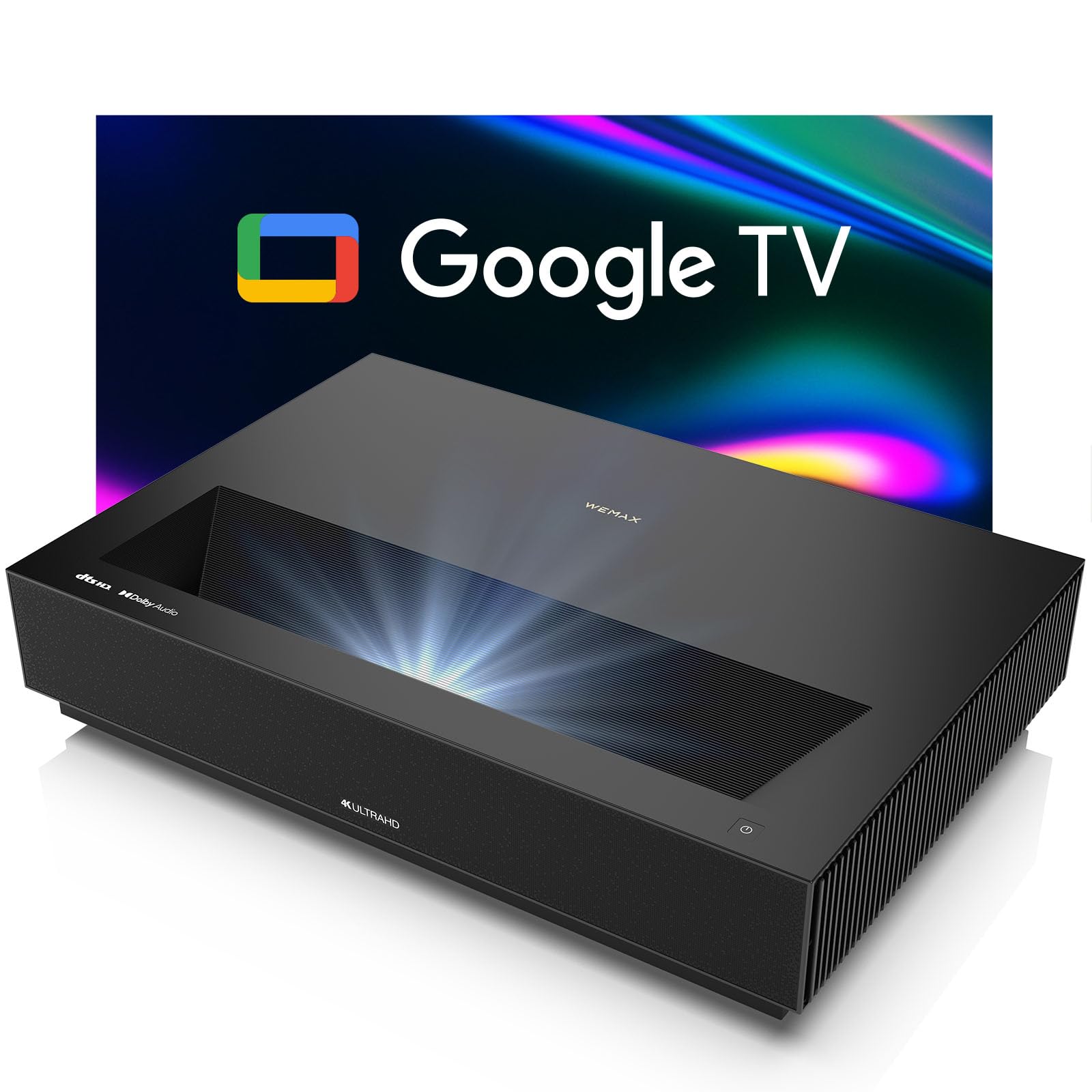
The WEMAX Nova Pro is an ultra-short-throw projector that uses ALPD laser technology to deliver a speckle-free 4K image with 110% Rec.709 color coverage. At 2100 ISO lumens, it is bright enough for casual daytime viewing with some ambient light, but it shines in a dark room. The 3000:1 native contrast ratio provides solid black levels for a DLP projector in this price range. The ultra-short throw ratio of 0.23:1 means it can project a 150-inch image from just 19 inches away, making it space-efficient.
The smart features are a highlight: native Netflix support with Google TV, built-in Chromecast, and Google Assistant voice control. The 30W speakers with DTS-HD and Dolby Audio provide sufficient sound for movies. HDMI 2.1 support allows for 4K/60Hz gaming, and the MEMC motion compensation keeps action scenes smooth.
The build quality feels premium, but the software has some issues: the HDMI input detection can be unreliable, sometimes requiring a restart to connect, and the keystone correction is difficult to align perfectly. Some users report the remote lacks a dedicated source button. For a well-rounded UST projector with good picture quality and smart features, the Nova Pro is a strong mid-range option.
Why it’s great
- Speckle-free ALPD laser with 3000:1 native contrast
- Ultra-short throw ratio for space-efficient setups
- Native Netflix and Google TV with HDMI 2.1
Good to know
- HDMI input detection can be unreliable
- Keystone correction is difficult to align perfectly
13. ViewSonic LX700-4K

The LX700-4K is the most affordable 4K laser projector on this list, and it delivers remarkable value for the price. With 3500 ANSI lumens, a 240Hz refresh rate, and 4.2ms input lag, it is a strong performer for both movies and gaming. The 1.3x optical zoom and H/V keystone make setup flexible, and the 360-degree projection allows for ceiling mounting. The contrast ratio is listed at 3,000,000:1 dynamic, though in practice the black levels are average for a DLP projector.
The picture is sharp and bright, with good color reproduction for the price. It supports HDR10 and HLG, though HDR performance is not as refined as on triple-laser projectors. The “Golf Mode” is a unique feature for golf simulator enthusiasts. The built-in speaker is basic, and you will need a separate audio system for any serious movie watching.
Some users report HDR handshake issues when using an AV receiver in the HDMI chain, and the persistent dialog to disable keystone for the highest framerate can be annoying. The rainbow effect is present for sensitive viewers. For buyers on a tighter budget who want a 4K laser projector with low input lag for gaming, the LX700-4K is a compelling entry point.
Why it’s great
- Very affordable entry to 4K laser technology
- Good brightness at 3500 ANSI lumens
- Low 4.2ms input lag for gaming
Good to know
- HDR handshake issues with AV receivers reported
- Basic speaker and average black levels
FAQ
What is the difference between single-laser and triple-laser (RGB) projectors?
Can I use a 4K laser projector for gaming?
Why do some UST projectors require a special screen?
What is the rainbow effect and how do I avoid it?
Final Thoughts: The Verdict
For most users, the best 4k laser projector under $4000 winner is the Valerion VisionMaster Max because it combines true RGB triple-laser color volume, a precision dynamic iris for deep blacks, and genuinely low input lag for gaming in one refined package. If you want the absolute brightest image for daylight or outdoor use, grab the XGIMI Horizon 20 Max. And for a compact, ultra-short-throw setup with stunning color accuracy, nothing beats the Hisense PX3-PRO.