
Choosing a camera for 4K photography means hunting for a body that balances high-resolution stills with reliable, artifact-free 4K video capture—a dual threat that few cameras truly nail. The sensor size, bit depth, codec support, and autofocus system must all pull in the same direction, or you end up with a stills camera that overheats during video or a video camera that delivers mediocre photos.
I’m Min — the co-founder and writer behind Gadgets Feed. I’ve spent countless hours digging into technical datasheets, comparing dynamic range numbers across sensor generations, and analyzing 4K crop factors and recording limits to separate the true hybrid performers from the marketing claims.
After deep research into sensor readout speeds, codec support, and autofocus reliability, I’ve curated this selection of the best options to help you find the ideal 4k photography camera for your creative work.
How To Choose The Best 4K Photography Camera
Selecting a hybrid shooter requires weighing sensor resolution, video bitrate, autofocus speed, and ecosystem support. Not every 4K camera handles photography and video with equal competence, so understanding where compromises exist is essential.
Assess Sensor Size and Resolution Trade-offs
Full-frame sensors offer superior low-light performance and shallow depth of field, but not all full-frame bodies read out the sensor fully for 4K—some crop to a Super 35mm area. Micro Four Thirds and APS-C sensors can read the full sensor area more easily, reducing crop artifacts and rolling shutter. Consider whether you prioritize maximum pixel count (45MP+) for stills or a more balanced resolution like 24-33MP for faster burst rates and cleaner video.
Examine 4K Recording Specs in Detail
Check for 4K at 60fps with full pixel readout, 10-bit internal recording, and low rolling shutter. A camera that oversamples from 5.7K or 6K to 4K produces sharper, more detailed footage with less aliasing. Also verify the recording limits—some bodies stop after 20 or 30 minutes, which can be a dealbreaker for long interviews or events. The availability of a headphone jack and clean HDMI output matters for serious video work.
Evaluate Autofocus and Stabilization Capabilities
Real-time Eye AF for both humans and animals, phase-detection coverage across most of the frame, and in-body image stabilization (IBIS) rated at 4.5 stops or higher separate capable hybrids from the rest. Reliable subject tracking during 4K video and fast burst shooting removes frustration and keeps your focus on composition rather than missed shots.
Quick Comparison
On smaller screens, swipe sideways to see the full table.
| Model | Category | Best For | Key Spec | Amazon |
|---|---|---|---|---|
| Sony Alpha 7 IV | Full-Frame Mirrorless | Best all-around hybrid | 33MP / 4K 60p 10-bit | Amazon |
| Sony a7 III | Full-Frame Mirrorless | Best value full-frame | 24.2MP / 4K 30p 8-bit | Amazon |
| Sony FX30 | APS-C Cinema Line | Best for serious videographers | 20.1MP / 6K oversampled 4K | Amazon |
| Canon EOS R5 | Full-Frame Mirrorless | Best resolution & 8K video | 45MP / 8K RAW internal | Amazon |
| Nikon Z 6II | Full-Frame Mirrorless | Best for stills-first hybrids | 24.5MP / 4K 60p | Amazon |
| Canon 5D Mark IV | Full-Frame DSLR | Best DSLR for photography | 30.4MP / 4K Motion JPEG | Amazon |
| Nikon D850 | Full-Frame DSLR | Best high-res DSLR | 45.7MP / 4K 30p | Amazon |
| Blackmagic Pocket 4K | Cinema Camera | Best raw video quality | 4/3” sensor / 13 stops DR | Amazon |
| Panasonic G85 | Mirrorless MFT | Best mid-range value | 16MP / 4K 30p / IBIS | Amazon |
| OM System E-M10 Mark IV | Mirrorless MFT | Best compact/entry-level | 20MP / 4K 30p / 4.5 stop IBIS | Amazon |
| Panasonic G100 | Mirrorless MFT | Best budget vlogging/hybrid | 20MP / 4K 30p / Tracking mic | Amazon |
In‑Depth Reviews
1. Sony Alpha 7 IV Full-frame Mirrorless Camera

The Sony Alpha 7 IV strikes the hardest balance in the mirrorless market, pairing a 33MP back-illuminated full-frame sensor with a BIONZ XR processor that enables 4K 60fps recording in 10-bit 4:2:2. The 7K oversampling delivers almost noise-free 4K at 30fps, and the Real-time Eye AF for humans, animals, and birds locks focus reliably even in dim conditions. For stills, the 33MP resolution offers generous cropping headroom without the massive file sizes of 45MP bodies.
The body design improves ergonomics over the a7 III with a deeper grip, a fully articulating touchscreen, and dual card slots that accept CFexpress Type A and UHS-II SD cards. In-body stabilization rated at 5.5 stops keeps handheld 4K footage smooth, and the S-Cinetone color profile straight out of camera reduces grading time for video projects. The shutter is rated to 200,000 actuations, reinforcing its durability for regular professional use.
Battery life exceeds 2,000 shots per charge thanks to the NP-FZ100 pack, and the USB-C port supports charging and power delivery during livestreams or long recording sessions. The main trade-off is the 1.5x crop applied in 4K 60fps Super 35mm mode, which some users consider limiting for wide-angle work. Overall, the a7 IV sets the benchmark for hybrid performance under the premium tier.
Why it’s great
- 7K oversampled 4K at 30fps produces exceptionally sharp footage
- Real-time Eye AF tracks subjects reliably in video and stills
- 5.5-stop IBIS enables stable handheld shooting
- Excellent battery life and dual card slots for professional workflow
Good to know
- 4K 60fps introduces a 1.5x crop that limits wide-angle use
- No built-in flash or electronic ND filter
- Menu system can feel dense despite improvements
2. Sony a7 III Full-frame Mirrorless Camera

The Sony a7 III remains a powerhouse for hybrid shooters on a mid-range budget thanks to its 24.2MP back-illuminated full-frame sensor and 693 phase-detection AF points covering 93% of the frame. The 4K 30fps video uses full pixel readout with no pixel binning, delivering clean and detailed footage, while the 15-stop dynamic range pulls impressive shadow detail in both stills and video. Its silent mechanical shutter at up to 10fps is a legitimate tool for event photographers.
The body is compact enough for long carry sessions, packing 5-axis in-body stabilization that works alongside optically stabilized lenses to eliminate shake in handheld 4K clips. Battery life is exceptional due to the NP-FZ100 pack—easily lasting a full day of mixed shooting. The kit lens (28-70mm f/3.5-5.6) is respectable for starting out, but pairing the a7 III with faster primes or sharper zooms unlocks the sensor’s full potential.
For 4K photography, the a7 III lacks 10-bit internal recording and a fully articulating screen—two features that newer competitors offer. The menu system is layered and can slow down on-the-fly adjustments. However, for stills-first hybrid users who want full-frame depth without overspending on the latest generation, the a7 III still delivers professional-grade results in a very capable package.
Why it’s great
- Full-frame 24.2MP sensor with excellent low-light performance
- 693-point AF system with reliable Real-time tracking
- Exceptional battery life (710 shots CIPA standard)
- 5-axis IBIS stabilizes legacy and adapted lenses
Good to know
- 4K video limited to 8-bit 4:2:0 internal recording
- No flip-out articulating screen for vlogging
- Kit lens is functional but not optically inspiring
3. Sony Cinema Line FX30 Super 35 Camera

The Sony FX30 is a dedicated cinema camera built around a 20.1MP APS-C sensor, but its video-first design does not neglect stills performance—you can capture clean 20MP stills with S-Cinetone color applied in-camera. The real story is the 6K oversampled 4K output with 14+ stops of dynamic range and dual base ISO (800 and 2500) that keeps noise minimal across lighting conditions. Active cooling prevents overheating, making it reliable for long-form 4K recording without recording limits.
The FX30 includes professional connectors: full-size HDMI, dual CFexpress Type A/SD card slots, a multi-interface shoe, and a USB-C port for external recording. The autofocus system is virtually identical to the FX6, with reliable phase-detection across 495 points and Real-time Eye AF for animals and humans. S-Cinetone and a selection of Cine EI shooting modes allow consistent color matching across Sony’s Cinema Line for multi-camera productions.
For stills photography, the FX30 lacks a mechanical shutter (it uses an electronic shutter) and does not prioritize burst rate for action shots. Battery life for hybrid shooting is average at under two hours, so a V-Mount battery plate or multiple NP-FZ100 packs are necessary for full-day event coverage. The FX30 is the correct choice for videographers who occasionally need stills rather than photographers needing great video.
Why it’s great
- 6K oversampled 4K with 14+ stops dynamic range
- Dual base ISO delivers clean footage in low light
- Active cooling prevents overheating during long recordings
- S-Cinetone and Cine EI modes for professional color grading
Good to know
- No mechanical shutter—still images are captured electronically
- Battery life under 2 hours for combined photo/video use
- Requires external battery solutions for event work
4. Canon EOS R5 Mirrorless Camera

The Canon EOS R5 sets the highest bar for hybrid resolution with a 45MP full-frame stacked CMOS sensor and the ability to record 8K RAW internally at 27.7MB per frame. For 4K photography, the oversampling from 8K down to 4K produces the cleanest, most detailed footage available, and 4K up to 120fps allows silky slow motion. The Dual Pixel CMOS AF II covers 100% of the frame with 1,053 AF points and includes eye-control focusing for instantaneous subject acquisition.
In-body stabilization rated at 8 stops works in concert with RF lenses for handheld shots that look like tripod captures, and the mechanical shutter fires at up to 12fps while the electronic shutter reaches 20fps. The weather-sealed magnesium alloy body feels substantial in the hand, and the fully articulating touchscreen enables complex camera angles for both photo and video. The DIGIC X processor powers fast EVF refresh and minimal blackout during burst shooting.
The primary concern for hybrid users is the overheating limitation during 8K and 4K High Quality recording—Canon’s firmware updates have improved recording times, but it can still cut out in warm environments after extended use. Battery life is around 650 shots per charge, requiring spare LP-E6NH packs for all-day jobs. For photographers who need the maximum resolution paired with professional video tools, the R5 is unmatched despite these thermal constraints.
Why it’s great
- 45MP stacked sensor with 8K RAW internal recording capability
- 8-stop IBIS provides incredible handheld stability
- Dual Pixel CMOS AF II covers 100% frame with eye control
- 4K up to 120fps for high-quality slow motion
Good to know
- Overheating can restrict 8K/4K HQ recording in hot conditions
- Battery life is average—carry spares for long shoots
- CFexpress Type B cards required for full video potential
5. Nikon Z 6II Full-frame Mirrorless Camera

The Nikon Z 6II is a refined full-frame mirrorless body that delivers 24.5MP stills with Nikon’s excellent color science and a 4K 60fps video mode using full pixel readout from the full sensor width. The 273-point phase-detection AF system is reliable in good light, with Eye-Detection AF performing well for people and animals.
In-body 5-axis stabilization rated at 5 stops works effectively for handheld photography and smooth 4K video, and the body is weather-sealed against dust and moisture for outdoor work. The Z 6II accepts both CFexpress/XQD and UHS-II SD cards in dual slots, giving flexibility for backup or overflow. The EVF is large and bright, and the tilting touchscreen adds convenience for low-angle and overhead shots.
Video autofocus is noticeably slower than Sony’s Real-time tracking, especially in low-contrast scenes, and the Z 6II lacks 10-bit internal recording—requiring an external recorder via HDMI for Log footage. The Z lens lineup, while growing, remains smaller than Sony’s E-mount or Canon’s RF selection. For photographers who prioritize stills quality and ergonomics but need solid 4K capability, the Z 6II is a very strong, comfortable tool.
Why it’s great
- 24.5MP BSI sensor with excellent dynamic range and color science
- Dual card slots (CFexpress/XQD + UHS-II SD) for workflow flexibility
- 5-stop IBIS supports stable handheld video and stills
- Comfortable grip and intuitive control layout
Good to know
- No 10-bit internal video recording without external recorder
- Video autofocus is not as responsive as Sony or Canon
- Z-mount lens ecosystem is still expanding
6. Canon EOS 5D Mark IV DSLR Camera
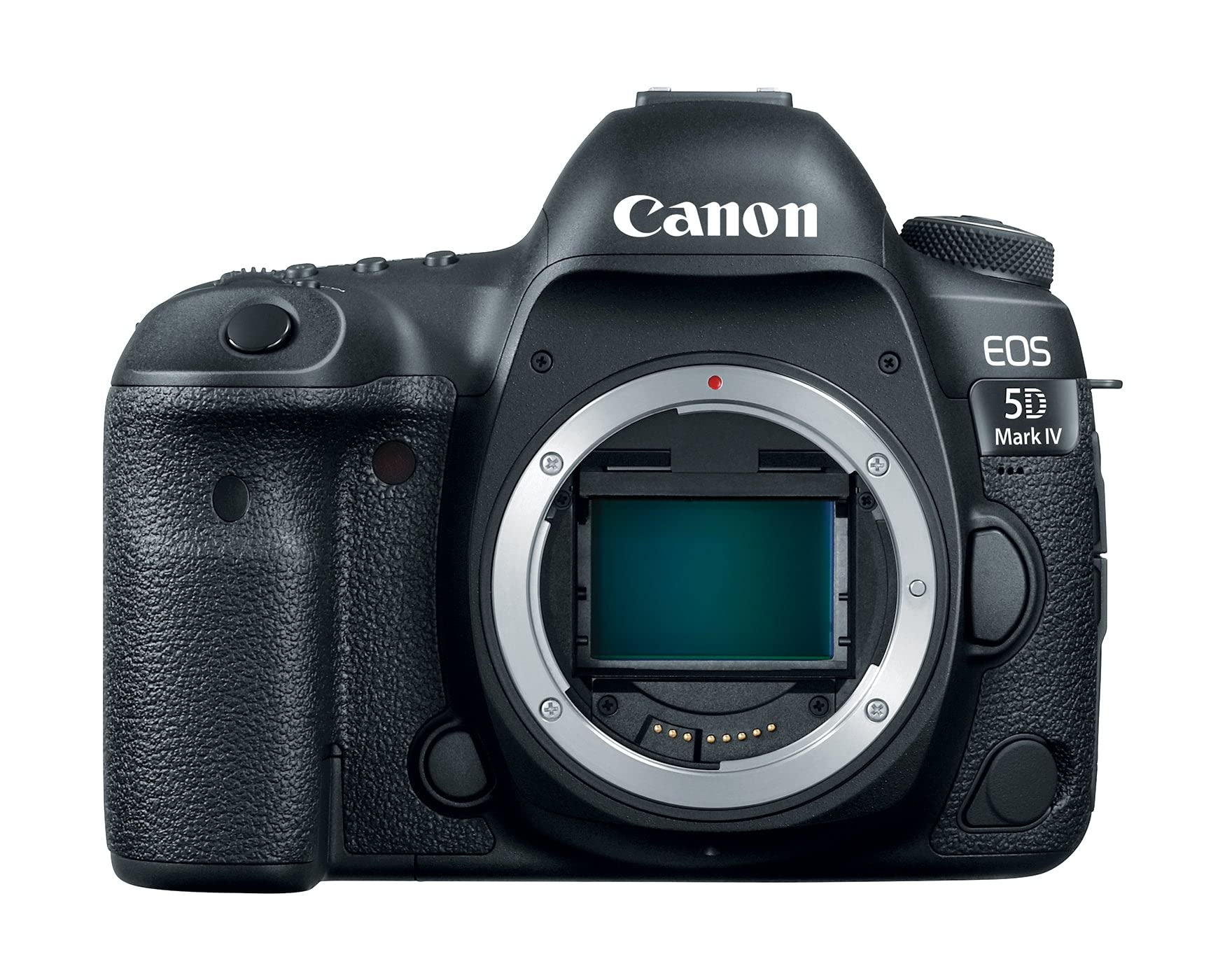
The Canon 5D Mark IV is a legendary full-frame DSLR that still competes admirably for hybrid work due to its 30.4MP sensor and Dual Pixel CMOS AF for smooth Live View focusing during 4K video. The DIGIC 6+ processor enables 7fps continuous shooting with a deep buffer, while the 61-point phase-detection AF system covers the optical viewfinder with high precision for fast subjects. For many professionals, the 5D Mark IV remains the optical viewfinder standard for reliability in demanding lighting conditions.
4K video is captured in Motion JPEG at 30fps, which produces huge file sizes and lacks 60fps options—a major limitation compared to the mirrorless competition. The 4K crop factor is a tight 1.74x, making wide-angle framing difficult without expensive wide-angle lenses. However, Full HD video up to 60fps is clean and well-supported, and the touchscreen interface during Live View is intuitive for focus pulls. The built-in GPS geotagging is a plus for location-based photography workflows.
The OVF-based design gives unlimited battery life—one LP-E6N pack easily lasts a full wedding or event day. The camera lacks a flip-out screen, which makes video monitoring at odd angles cumbersome. At this premium price, the 5D Mark IV is purchased primarily for its stills prowess and legendary Canon color, with 4K video as a secondary capability rather than a primary feature.
Why it’s great
- 30.4MP full-frame sensor with superb Canon color and dynamic range
- Legendary optical viewfinder with 61-point AF system
- Exceptional battery life for all-day professional stills
- Solid weather sealing and durable magnesium alloy body
Good to know
- 4K video is Motion JPEG with severe 1.74x crop
- No 4K 60fps or 10-bit internal recording
- No flip-out touchscreen for vlogging or overhead shooting
7. Nikon D850 FX-Format DSLR Camera

The Nikon D850 remains one of the highest-resolution DSLRs ever produced, with a 45.7MP back-illuminated full-frame sensor that rivals medium format in sharpness and dynamic range. The 153-point phase-detection AF system covers a wide area with excellent subject acquisition, and continuous shooting reaches 9fps at full resolution with the battery grip. For stills photography, the D850 is arguably the finest DSLR ever made—the image quality, focus accuracy, and low-light performance at ISO 64 set a benchmark.
4K video recording at 30fps uses the full sensor width with no crop, and the D850 supports 4K time-lapse in-body and slow motion 1080p at 120fps. The tilting touchscreen is responsive, and the illuminated buttons are appreciated in low-light video setups. Video AF, however, is contrast-detect in Live View and struggles to keep up with moving subjects compared to mirrorless peers, making manual focus or external follow-focus units a near-necessity for serious video work.
The camera is heavy and large—a consequence of the optical viewfinder and robust construction—and the Snapbridge WiFi implementation is slower than modern mirrorless solutions. File sizes from the 45.7MP sensor strain storage and post-processing workflows, requiring high-speed CFexpress or XQD cards and powerful computers. For photographers who demand maximum stills resolution and need decent 4K as a bonus, the D850 is still a premium choice that will out-resolve most lenses.
Why it’s great
- 45.7MP BSI sensor with class-leading dynamic range and no OLPF
- Stunning low-light performance at native ISO 64
- 153-point AF system for excellent stills tracking
- Full-frame 4K time-lapse and 120fps slow motion
Good to know
- Video autofocus is contrast-detect and unreliable for moving subjects
- Large, heavy body—harder to gimbal-mount for video
- Snapbridge WiFi is slow and cumbersome for quick transfers
8. Blackmagic Design Pocket Cinema Camera 4K

The Blackmagic Pocket Cinema Camera 4K is a cinema camera first and a stills camera a distant second—it does not capture JPEG or RAW stills natively, but its 4/3” sensor with 13 stops of dynamic range produces video frames that can be pulled as high-quality stills in post-production. The camera records Blackmagic RAW and Apple ProRes internally at 4K DCI (4096 x 2160) up to 60fps, with dual native ISO up to 25,600 for clean low-grain footage. The 5-inch LCD touchscreen is bright enough to serve as an external monitor replacement.
The MFT lens mount opens up extensive lens choices, from vintage manual glass to modern micro four-thirds zooms and adapted EF/PL cinema lenses via speed boosters. The mini XLR input with phantom power allows professional audio capture directly into the camera, and the USB-C port records directly to external SSDs for massive file storage without expensive CFast cards. The camera ships with a full DaVinci Resolve Studio license, making the post-production workflow seamless from the moment you start recording.
Battery life is poor—a single LP-E6 cell lasts around 30 minutes of recording—making V-mount batteries, dummy batteries, or external power indispensable for any real shoot. There is no autofocus beyond contrast detection, no in-body stabilization, and the screen is nearly unreadable in direct sunlight at its peak brightness (~250 nits). This is a tool for directors and cinematographers who want uncompromising image quality and are ready to build a rig around it.
Why it’s great
- 13 stops of dynamic range with Blackmagic RAW internal recording
- USB-C direct-to-SSD recording for large, affordable storage
- Mini XLR with phantom power for professional audio input
- Includes full DaVinci Resolve Studio license for post-production
Good to know
- Extremely poor battery life—rig external power solutions required
- No reliable autofocus or in-body stabilization
- Not a dedicated stills camera; frames must be exported from video
9. Panasonic LUMIX G85 4K Digital Camera

The Panasonic G85 is an underrated mid-range mirrorless camera that offers class-leading in-body stabilization at a price that undercuts most competitors. The 16MP Micro Four Thirds sensor delivers solid stills quality, and the 5-axis dual I.S. 2 (in-body plus lens stabilization) keeps handheld 4K video remarkably stable, even when walking. The 12-60mm Power O.I.S. kit lens is a versatile all-rounder with good sharpness across the frame.
4K video recording at 30fps uses the full sensor without a pixel crop, and the G85 supports Panasonic’s 4K Photo mode, which extracts 8MP stills from 4K video at 30fps—a useful feature for capturing fast action moments. The camera body is weather-sealed with a magnesium alloy front panel, giving it a build quality that punches above its price tier. The OLED live viewfinder with 2.36M dots is bright and clear, and the articulating touchscreen improves composition flexibility.
Autofocus is contrast-detection based, which can hunt in low light for both video and stills, and burst shooting at 6fps with continuous AF is slower than phase-detect competitors. The 16MP sensor limits cropping ability and fine detail compared to higher-resolution bodies. For budget-conscious photographers entering the MFT system, the G85 offers exceptional value with stabilization that rivals cameras costing twice as much.
Why it’s great
- Class-leading 5-axis dual I.S. 2 for extremely stable 4K handheld video
- Weather-sealed magnesium alloy body for durable outdoor use
- Versatile 12-60mm kit lens included in the package
- 4K Photo mode captures 8MP stills from video at 30fps
Good to know
- Contrast-detect AF hunts in low-light conditions
- 16MP sensor limits cropping and fine detail vs. 20MP+ sensors
- No headphone jack for audio monitoring
10. OM System Olympus E-M10 Mark IV

The OM System E-M10 Mark IV is the most portable 4K hybrid camera in this guide, weighing under 400g with the 14-42mm pancake zoom lens attached. The 20MP Live MOS Micro Four Thirds sensor produces excellent image quality with vibrant colors, and the 5-axis in-body image stabilization rated at 4.5 shutter speed steps compensates for the compact size, allowing sharp handheld shots in low light. The flip-down monitor with dedicated selfie mode makes it a strong choice for casual vloggers and travel photographers.
4K video at 30fps is captured with the full sensor, and the camera includes 16 Art Filters (including a new Instant Film mode) for creative looks straight out of camera. Bluetooth and OI Share app provide always-on connection for geotagging and wireless image transfer. The 121-point contrast-detect AF system is fast in good light but can struggle in dim conditions. The compact size and retro design make it a stylish everyday carry that won’t intimidate beginners.
The 14-42mm f/3.5-5.6 EZ pancake lens is a good starting zoom but is optically unremarkable, and upgrading to a lens like the OM System 12-45mm f/4 PRO significantly improves sharpness at the cost of added weight. The camera charges via micro-USB rather than USB-C, and the battery charger is not included—a noticeable oversight. For beginners looking to step up from smartphone photography without breaking the bank, the E-M10 Mark IV offers an engaging, lightweight experience with reliable 4K video.
Why it’s great
- Extremely compact and lightweight—ideal for travel and everyday carry
- 4.5-stop 5-axis IBIS for steady handheld shots
- Flip-down selfie screen with dedicated mode for vlogging
- Retro design with 16 Art Filters for creative fun
Good to know
- Kit lens is optically average—upgrade recommended for better results
- Charges via micro-USB with no included external charger
- Contrast-detect AF struggles in low-light conditions
11. Panasonic LUMIX G100 4K Mirrorless Camera

The Panasonic G100 is designed specifically for content creators who need a simple, compact camera with excellent audio and 4K video. The 20MP Micro Four Thirds sensor delivers good stills, while the advanced 360-degree tracking microphone automatically adjusts pickup patterns to follow the subject—a standout feature for vloggers and one-person productions. The camera includes iA (Intelligent Auto) mode for beginners, plus manual controls for when you want to grow into the system.
4K video at 30fps uses the full sensor, and the 5-axis Hybrid I.S. (in-body plus electronic) smooths out handheld shake for walk-and-talk videos. The camera includes frame markers for social media aspect ratios (1:1, 4:5, 9:16), making it easy to compose for Instagram or TikTok directly on the LCD. The flip-out screen is good for self-framing, and USB-C connectivity lets you use the G100 as a high-quality webcam for livestreams and video calls.
The kit 12-32mm lens is very compact but has a small maximum aperture that limits low-light performance—a faster prime like the Panasonic 25mm f/1.7 is a popular upgrade. The camera auto-stops recording after 20 minutes, and the battery lasts only about 5 hours of mixed use, plus the camera cannot charge while filming. The plastic body feels less premium than the G85. For the price-conscious creator prioritizing built-in audio quality and social-ready features, the G100 is a solid entry-level tool.
Why it’s great
- Integrated tracking microphone with 360-degree audio pickup
- Frame markers for social media aspect ratios on LCD
- USB-C webcam functionality for professional video calls
- Compact and lightweight with flip-out screen for vlogging
Good to know
- Auto-stops recording after 20 minutes; no charging while recording
- Kit lens is dark—requires faster prime for low-light work
- Plastic body lacks the ruggedness of the G85
FAQ
Do I need a full-frame sensor for professional 4K photography?
Does the 4K crop factor affect photo resolution on hybrid cameras?
Can I use my existing DSLR lenses on a mirrorless 4K camera?
Final Thoughts: The Verdict
For most users, the 4k photography camera winner is the Sony Alpha 7 IV because it delivers the most balanced package of 33MP stills resolution, 10-bit 4K video, and reliable autofocus in a weather-sealed body. If you want the best dynamic range for color grading without sacrificing portability, grab the Sony a7 III. And for resolution-obsessed photographers who also need top-tier video, nothing beats the Canon EOS R5.