
Finding a camera that slips into a jacket pocket yet delivers true cinematic 4K footage feels like hunting for a unicorn. The challenge isn’t just the high resolution — it’s cramming a capable sensor, reliable stabilization, and decent battery life into a body that doesn’t bulge your coat. For creators who want to capture life without hauling a backpack full of gear, the trade-offs between sensor size, frame rate, and lens versatility define the entire buying decision.
I’m Min — the co-founder and writer behind Gadgets Feed. I’ve spent hundreds of hours parsing technical datasheets, comparing sensor readout speeds, stabilization algorithms, and bitrate ceilings across dozens of compact camera models to build this guide.
After analyzing image quality, gimbal mechanics, and real-world low-light performance, this roundup cuts through the noise to deliver actionable recommendations for the best 4k pocket camera available today.
How To Choose The Best 4K Pocket Camera
The true test of a pocket 4K camera isn’t just whether it can record at 3840×2160 — it’s whether it does so without overheating, without crippling battery drain, and with enough stabilization to make the footage usable. Here are the three specs that separate a genuinely useful compact from a gimmick.
Sensor Size and Low-Light Ceiling
A 1/2.3-inch sensor might fit in a thinner body, but its small photosites struggle to gather light, producing noisy 4K footage even in moderate indoor lighting. A 1-inch CMOS sensor captures roughly four times more light area, which directly translates to cleaner shadows, less grain at higher ISOs, and a more filmic depth-of-field separation from the background. For any pocket camera intended for evening street scenes or indoor vlogging, the 1-inch sensor is the minimum viable baseline for decent 4K.
Stabilization Type: Gimbal vs. Electronic vs. Optical
Optical image stabilization (OIS) can smooth out micro-jitters from hand-holding, but it cannot compensate for the full-body sway of walking. Electronic stabilization (EIS) crops into the frame and often leaves a wobble artifact known as the “jello effect.” A 3-axis mechanical gimbal physically counter-rotates the camera module, eliminating walking bob and pan judder without cropping or warping the image. If your primary use case involves moving while recording — walking through a market, following a pet, filming a bike ride — a gimbal-equipped pocket camera is the only serious choice.
Bit Depth and Color Science for Grading
8-bit video (the default on many entry-level models) stores only 256 levels of luminance per channel, which can lead to visible banding in skies or shadows when you push the exposure in post. 10-bit video (and especially 10-bit with a flat log profile like D-Log M or X-Log) preserves up to 1024 levels per channel, giving editors the headroom to correct exposure, recover highlights, and grade creatively without introducing posterization. For anyone who plans to do even light color correction, 10-bit internal recording should be a priority spec — and it’s a feature that directly correlates with higher price tiers.
Lens Focal Range and Aperture
A fixed wide-angle lens (around 19mm to 24mm equivalent) is ideal for vlogging and selfie-style shooting, but it leaves you without reach for details or compressed portraits. A zoom lens, even a modest 24-70mm equivalent, adds versatility at the cost of a slightly larger body profile. The maximum aperture also matters: an f/1.8 lens lets in more than twice the light of an f/2.8 at the same focal length, which makes the difference between usable indoor footage and noisy darkness. Decide whether your shooting favors tight self-framing or flexible composition before choosing the lens system.
Quick Comparison
On smaller screens, swipe sideways to see the full table.
| Model | Category | Best For | Key Spec | Amazon |
|---|---|---|---|---|
| DJI Osmo Pocket 3 | Premium Compact | Stabilized walk-and-talk vlogging | 1″ CMOS, 4K/120fps, 3-axis gimbal | Amazon |
| Fujifilm X100VI | Premium Fixed-Lens | High-end photo and video hybrid | 40MP APS-C, 6.2K, IBIS 5-axis | Amazon |
| Blackmagic Pocket Cinema 4K | Cinema Camera | Professional filmmaking in a compact rig | MFT sensor, 13 stops DR, RAW | Amazon |
| Sony RX100 VII | Premium Compact | Ultra-versatile zoom in a pocket | 24-200mm zoom, 0.02s AF, 4K | Amazon |
| DJI Osmo Nano (128GB) | Action/POV | Ultra-light magnetic body cam | 1/1.3″ sensor, 143° FOV, 200-min battery | Amazon |
| Sony ZV-1 | Vlogging Compact | Content creation with one-hand ease | 1″ sensor, 24-70mm f/1.8-2.8, 4K | Amazon |
| Xtra Muse | Gimbal Compact | Budget-friendly gimbal 4K | 1″ CMOS, 4K/120fps, 3-axis gimbal | Amazon |
| Canon PowerShot V10 | Ultra-Compact Vlog | Pocketable simplicity for beginners | 1″ sensor, fixed 19mm, 4K/30fps | Amazon |
| Canon EOS R100 Kit | Interchangeable Lens | Entry-level mirrorless with lens options | 24.1MP APS-C, 4K/24fps, Dual Pixel AF | Amazon |
| Panasonic LUMIX TZ99 | Travel Zoom | Concert and wildlife reach | 24-720mm zoom, 4K/30p, tilt screen | Amazon |
| Panasonic LUMIX FZ80D | Budget Bridge | Extreme zoom on a budget | 60x zoom, 4K Photo/Video, OIS | Amazon |
In‑Depth Reviews
1. DJI Osmo Pocket 3 (Capture More Combo)

The DJI Osmo Pocket 3 sets the benchmark for the category by pairing a 1-inch CMOS sensor with a true 3-axis mechanical gimbal in a body that disappears into a cargo pocket. It records up to 4K resolution at 120 frames per second, giving you silky smooth slow-motion capability without sacrificing resolution. The 2-inch rotatable touchscreen flips between horizontal and vertical framing instantly, making it equally suited for YouTube landscape content and TikTok portrait clips.
Active Track 6.0 locks onto a subject and keeps them centered even as they move unpredictably, which is invaluable for solo creators who shoot themselves walking or demonstrating a product. The built-in stereo microphones are usable, but the combo includes a wireless lavalier mic that dramatically improves vocal clarity by separating the speaker’s voice from ambient room noise. Battery life reaches up to 166 minutes, though real-world use at 4K/60fps with gimbal active will bring that closer to 90 minutes — still enough for a full day of casual shooting.
The single notable omission is waterproofing — there’s no IP rating, so using it in rain or near splash zones requires caution. The digital zoom tops out at 2x before quality degrades visibly, so if you need reach, this isn’t your camera. For anyone who prioritizes butter-smooth stabilized 4K in a genuinely pocketable form factor, the Pocket 3 remains the gold standard that rivals like the Xtra Muse are measured against.
Why it’s great
- 3-axis mechanical gimbal eliminates walking shake completely without cropping
- 1-inch sensor delivers clean 4K/120fps footage with excellent dynamic range
- Rotatable screen makes vertical/horizontal switching effortless for social media
Good to know
- No weather sealing or waterproof rating limits all-weather use
- Digital zoom drops quality quickly beyond 2x magnification
2. Fujifilm X100VI

The Fujifilm X100VI is a luxury compact that transcends the typical pocket camera by mounting a 40-megapixel APS-C X-Trans sensor with a fixed 23mm f/2 lens. It overshoots 4K entirely by recording 6.2K video at 30p in 10-bit 4:2:2 color internally, giving editors an enormous crop-and-zoom buffer while maintaining true 4K output. The in-body image stabilization (IBIS) provides up to 6 stops of shake correction, which is remarkable for a body this thin and lets you shoot handheld in dim environments where smaller sensors fail.
The hybrid viewfinder — optical and electronic — is a Fujifilm signature that allows you to compose shots with zero lag or with a real-time exposure preview overlayed. The film simulation modes (Provia, Velvia, Classic Chrome) apply directly to video, reducing or eliminating the need for color grading. Build quality is outstanding: the magnesium-alloy top plate and textured leatherette grip feel substantial without adding bulk.
The trade-offs are significant for video-first users. The fixed 23mm f/2 lens (35mm equivalent) offers no zoom flexibility, so framing is entirely footwork-based. The autofocus, while improved from earlier X100 models, still occasionally hunts in low-contrast scenes compared to Sony’s phase-detect systems. Battery life hovers around 2 hours of mixed use, and the price positions it firmly in enthusiast territory. For the photographer who wants serious video capability in a beautiful, pocketable body, the X100VI is unmatched — but it asks a premium for the privilege.
Why it’s great
- APS-C sensor and 6.2K oversampling produce class-leading 4K sharpness
- 5-axis IBIS enables handheld shooting in very low light
- Built-in film simulations deliver gorgeous color science straight out of camera
Good to know
- Fixed 23mm f/2 lens offers no zoom flexibility for distance subjects
- Autofocus can hesitate in low-contrast or backlit scenarios
3. Blackmagic Design Pocket Cinema Camera 4K

The Blackmagic Pocket Cinema Camera 4K is a true cinema camera that happens to be compact — it’s not a lifestyle vlogging tool but a professional capture device for filmmakers who need 13 stops of dynamic range and RAW internal recording. The Micro Four Thirds sensor delivers native 4096 x 2160 resolution, and the dual native ISO (up to 25,600) means it handles extreme low-light environments without introducing heavy noise. Recording options include Blackmagic RAW and Apple ProRes up to 4K, and the included DaVinci Resolve Studio activation key provides a complete post-production pipeline.
The 5-inch LCD touchscreen is large and bright, eliminating the need for an external monitor in most scenarios, and the multifunction handgrip puts the most critical controls under your thumb. The mini XLR input with phantom power is a professional staple that allows you to connect broadcast-grade microphones directly — a feature no other sub- pocket camera offers. The built-in SSD recording via USB-C is clever, letting you use inexpensive 1TB SSDs instead of pricey CFAST cards.
This camera is not for casual users. It has no in-body stabilization, no continuous autofocus worth relying on, and the battery life is famously short — expect around 30 minutes per LP-E6 cell. The MFT mount requires manual lenses or adapters to get the most out of the sensor’s character. For serious filmmakers who view the body as the centerpiece of a modular rig (cage, rods, external monitor, V-mount battery), the Pocket 4K delivers image quality that competes with cameras costing three times as much.
Why it’s great
- Internal 12-bit Blackmagic RAW provides maximum grading flexibility in post
- 13 stops of dynamic range and dual native ISO handle extreme lighting scenarios
- Mini XLR input with phantom power for professional audio workflows
Good to know
- No image stabilization of any kind — requires a gimbal or tripod for smooth video
- Battery life is approximately 30 minutes; multiple spares or external power is essential
4. Sony RX100 VII
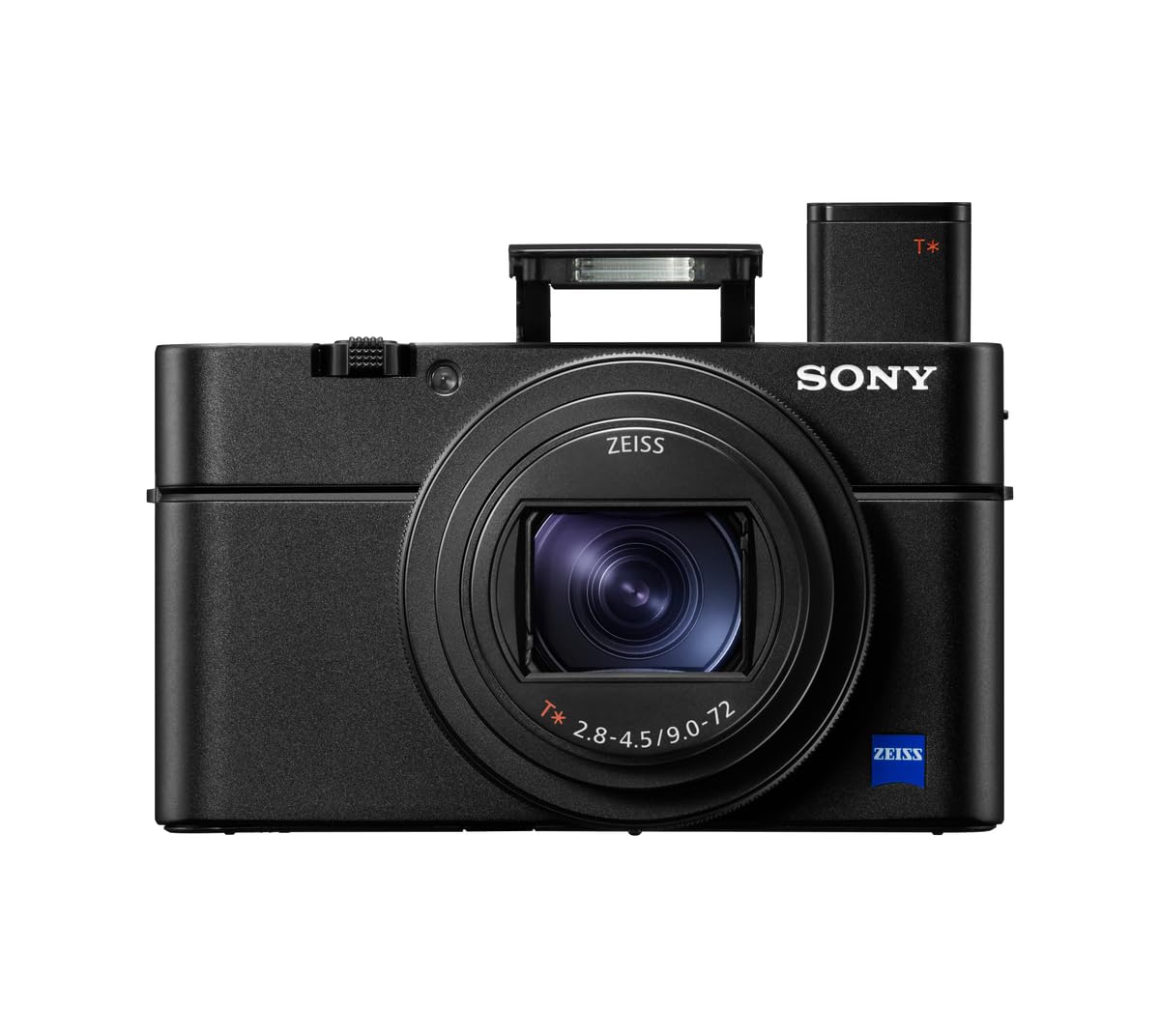
The Sony RX100 VII packs a 1-inch stacked CMOS sensor and a ZEISS Vario-Sonnar T* 24-200mm f/2.8-4.5 zoom lens into a body that genuinely fits in a jeans pocket — it’s the most versatile optic in the compact camera space. The 0.02-second autofocus speed with 357 phase-detection points covers almost the entire frame, and Real-time Eye AF for both humans and animals locks onto subjects with uncanny precision that rivals full-frame mirrorless cameras. The 4K video recording includes HLG and S-Log3 profiles for serious color grading, and the active image stabilization mode smooths handheld footage significantly.
The 24-200mm range covers everything from wide-angle group shots to compressed telephoto portraits, and the pop-up electronic viewfinder lets you compose shots in bright sunlight when the rear LCD washes out. The single-shot burst rate of 20fps with no blackout is impressive for capturing fleeting moments. The microphone jack gives audio-conscious creators the ability to upgrade sound without relying on Sony’s hot-shoe adapter.
The primary compromises are the lens’s narrower variable aperture (f/2.8 at the wide end, f/4.5 at the tele end) compared to fixed-lens competitors, and the lack of a flip-out front-facing screen makes selfie-style vlogging awkward. The touchscreen is functional but limited — many menu operations still require the physical buttons. Battery life is decent at around 260 shots per charge, but 4K video recording will drain it much faster. For the traveler or event shooter who demands both pocketability and a versatile zoom, the RX100 VII remains the undisputed king.
Why it’s great
- 24-200mm zoom range is unmatched for pocketable versatility
- Lightning-fast 0.02-second autofocus with reliable eye tracking
- S-Log3 and HLG profiles provide professional-grade grading flexibility
Good to know
- No front-facing screen makes self-framing for vlogging difficult
- F/2.8-4.5 aperture is slower than fixed-lens competitors in low light
5. DJI Osmo Nano Standard Combo (128GB)
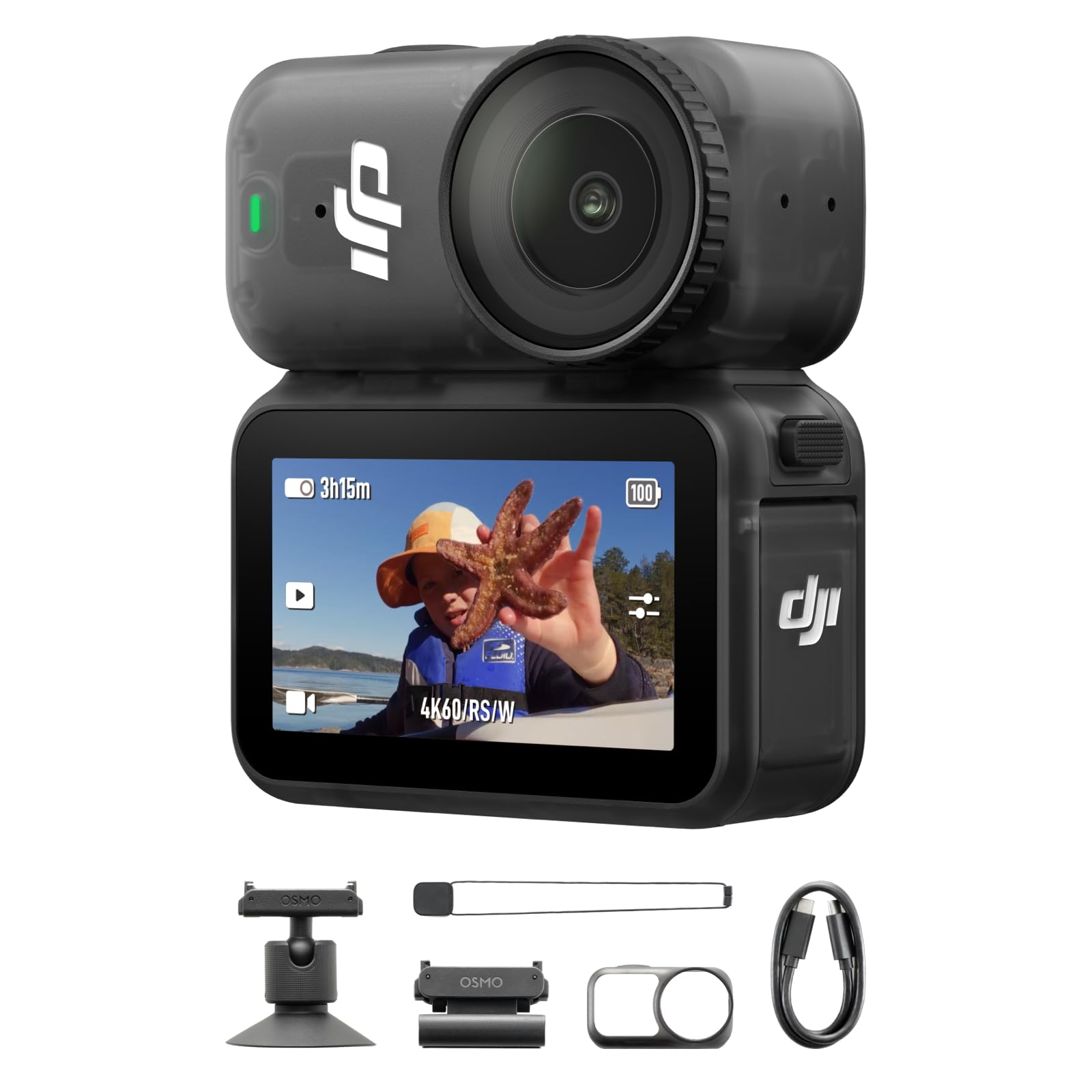
The DJI Osmo Nano reimagines the pocket cam as a magnetic action camera, weighing so little that the included lanyard mount feels like wearing a lightweight pendant. The 1/1.3-inch sensor captures 4K/60fps video with a 143-degree ultra-wide field of view that’s ideal for first-person POV shots — biking, walking a dog, or cooking from the cook’s perspective. The magnetic attachment system clicks onto a hat clip, a lanyard, or a ball-joint adapter, letting you mount it hands-free on your body or gear without the bulk of a chest harness.
The 128GB of internal storage means you can start recording immediately without buying a memory card, and the optional microSD expansion provides extra runway for long shoots. DJI claims up to 200 minutes of battery life when using the Vision Dock, and the IPX4 splash resistance and 10-meter waterproofing (with the dock) give it confidence for outdoor use in light rain. The 10-bit D-Log M color profile preserves enough dynamic range for subtle grading in post, and the OsmoAudio system directly connects to DJI wireless microphones for clean audio.
The lack of a built-in screen (the Vision Dock provides a basic viewfinder, but it’s not a touchscreen) means framing takes some practice, and you’re relying on the DJI Mimo app for composition previews. The fixed ultra-wide lens distorts close-up faces and renders them less flattering than a standard 24mm equivalent. For creators who need an invisible, wearable 4K camera that captures immersive POV footage, the Nano is brilliant — but if you need to frame yourself in selfie mode, the Pocket 3 or Xtra Muse is a better fit.
Why it’s great
- Magnetic lanyard and clip mounts enable truly hands-free POV recording
- 200-minute extended battery life with Vision Dock covers full-day outings
- 128GB built-in storage eliminates immediate memory card purchase
Good to know
- No built-in touchscreen makes precise framing difficult without the phone app
- 143-degree wide FOV distorts close-up faces and selfies
6. Sony ZV-1 Compact 4K Vlogging Camera
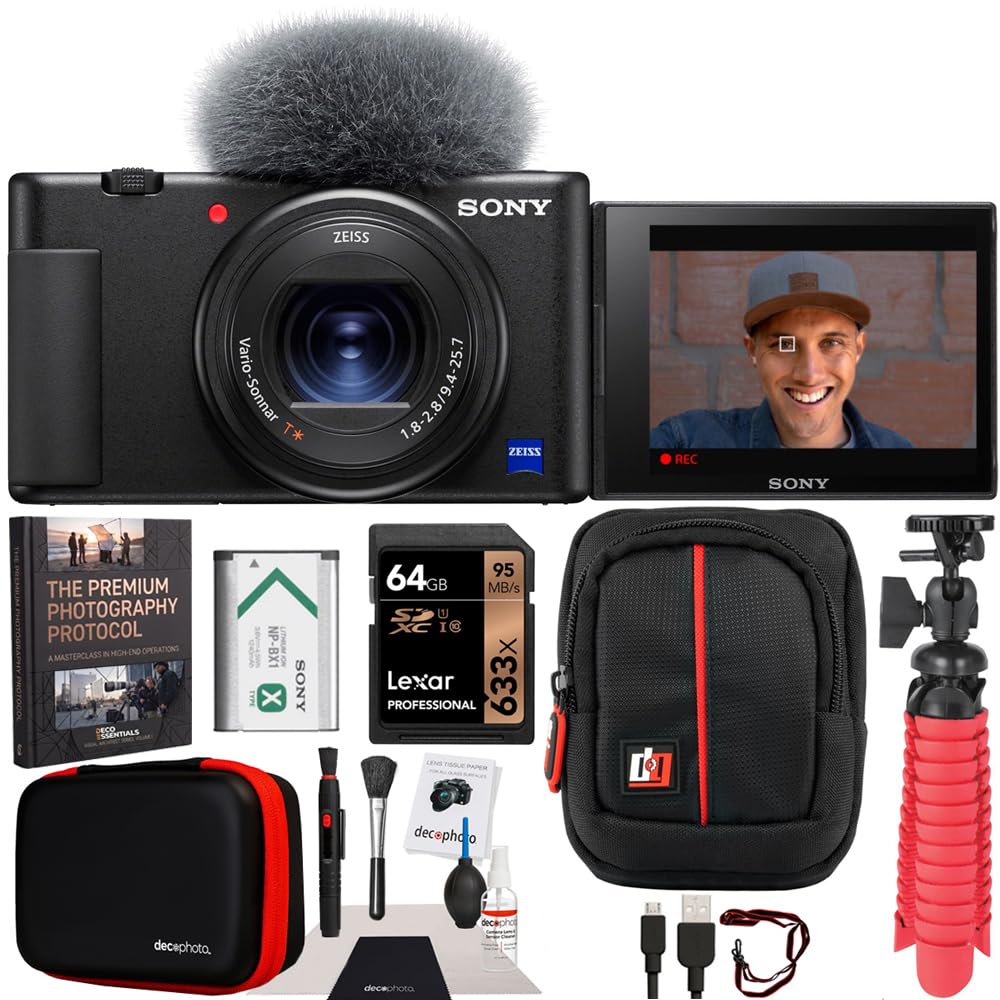
The Sony ZV-1 was designed from the ground up for vloggers, and it shows in every detail — the side-articulating flip screen, the directional 3-capsule microphone with a dead-cat windscreen, and the dedicated Bokeh Switch that instantly opens the aperture for shallow depth-of-field backgrounds. The 1-inch stacked Exmor RS sensor and 24-70mm f/1.8-2.8 ZEISS lens combine to produce sharp 4K video with excellent subject separation, and the Real-time Eye AF tracks a face even when the subject moves across the frame. The Product Showcase Setting is a clever addition that shifts focus from a face to an object held up to the lens, which is immensely useful for unboxing and review content.
The image stabilization is rated as “Active Mode” and works well for slight hand sway, but it cannot match a mechanical gimbal for serious walking shots — expect some bob if you run or descend stairs. The slow-motion recording at 120fps in Full HD is useful for B-roll, and the 4K HDR mode (via HLG) provides a wider color gamut for modern HDR displays. The bundle includes a tripod grip, a carrying case, and a 64GB memory card, which provides good out-of-box value.
The most common complaint is battery life — the NP-BX1 cell lasts roughly 2 hours of mixed use, and 4K recording burns through it faster than Full HD. The lens’s 24-70mm zoom range is standard portrait-to-wide, but f/2.8 at the telephoto end is f/2.8, not f/1.8, so low-light performance at the zoomed setting drops off. For a beginner or intermediate content creator who wants a dedicated, easy-to-use vlogging camera with Sony’s excellent autofocus, the ZV-1 delivers a compelling package at its price tier.
Why it’s great
- Side-articulating flip screen is ideal for selfie-style vlogging without obstruction
- Fast f/1.8 maximum aperture at wide end produces true bokeh separation
- Product Showcase mode transitions focus from face to handheld object seamlessly
Good to know
- Active stabilization cannot compensate for walking motion as well as a gimbal
- Battery life is below average; extra cells are strongly recommended
7. Xtra Muse Vlogging Camera with 1” CMOS & 4K/120fps

The Xtra Muse is a direct challenger to the DJI Pocket 3, offering a 1-inch CMOS sensor, 4K/120fps recording, and a built-in 3-axis gimbal stabilizer at a significantly lower price point. The gimbal keeps footage smooth even during active motion like running or rapid panning, and the 2-inch touchscreen makes settings adjustment straightforward. The Master Follow function locks the camera onto a subject — useful for staying centered while moving — and the face/object tracking is reliable enough for solo creators who shoot on tripods.
The 10-bit X-Log color profile allows for a billion-color palette in post-production, giving editors latitude to grade sunrises and sunsets without banding. The 161-minute battery life comfortably outlasts the DJI Pocket 3’s real-world endurance, and the included carrying bag and 1/4-inch threaded handle make it ready for tripod mounting out of the box. Build quality feels solid for its class, and the compact form factor slides easily into a small sling bag or large coat pocket.
The touchscreen interface is responsive but occasionally lags when switching between shooting modes, and the app ecosystem is less polished than DJI’s Mimo platform. Some user reviews report that DJI accessories (like the Pocket 3’s case and tripod) physically fit the Xtra Muse, which is a cost-saving perk if you already own those accessories. For budget-conscious creators who need true 3-axis gimbal stabilization and 4K/120fps capability without spending on the premium leader, the Xtra Muse offers the best value in the gimbal compact space.
Why it’s great
- True 3-axis mechanical gimbal delivers smooth footage during active movement
- 10-bit X-Log color profile provides excellent grading headroom in post
- 161-minute battery life is among the best in the gimbal compact category
Good to know
- Touchscreen interface can feel less responsive than the category leader
- App ecosystem and firmware update support are less mature than DJI’s
8. Canon PowerShot V10 Compact Vlogging Camera

The Canon PowerShot V10 is one of the most genuinely pocketable 4K cameras on the market — it resembles a small rectangular bar of soap and weighs just a few ounces. The 1-inch 15.2-megapixel back-illuminated CMOS sensor captures crisp 4K/30fps video, and the retractable front-facing screen makes selfie framing intuitive for vlogging beginners. The built-in folding stand is a clever inclusion that lets you prop the camera on a table for hands-free recording without needing a separate tripod.
The fixed 19mm wide-angle lens (35mm equivalent) captures a broad field of view that’s forgiving for self-recording — your face stays in frame even with arm-length shooting. The three-microphone array with a central noise-cancelling element picks up clear audio that reduces ambient rumble, which is impressive for a body this small. The USB-C charging is convenient, and the micro-HDMI output allows real-time monitoring on an external screen.
The most significant limitation is the lack of optical zoom — you have to physically walk closer or farther to change composition. The battery life is noticeably short; most users report between 40 and 60 minutes of continuous 4K recording, so outings require a power bank for USB-C top-ups. The image stabilization helps with minor hand shake but cannot eliminate the bobbing of walking footage. For absolute beginners who want the smallest possible 4K camera for table-top vlogging or casual daily clips, the V10 is a unique option — but its limitations become apparent quickly as skills progress.
Why it’s great
- Extremely compact and lightweight — truly pocketable for everyday carry
- Built-in folding stand enables tripod-free tabletop recording
- 1-inch sensor provides solid image quality for its tiny size class
Good to know
- Fixed 19mm lens offers zero zoom — all framing is physical movement
- Short battery life requires USB-C power bank for extended shoots
9. Canon EOS R100 Mirrorless Camera with RF-S18-45mm Kit

The Canon EOS R100 is the smallest and lightest body in Canon’s EOS R mirrorless system, offering a 24.1-megapixel APS-C sensor and 4K video recording (at 24fps) with Dual Pixel CMOS AF. The kit lens, the RF-S18-45mm F4.5-6.3 IS STM, provides a useful 29-72mm equivalent zoom range for everyday shooting, and the DIGIC 8 processor keeps up with continuous shooting at 6.5 frames per second. The human and animal eye-detection autofocus works reliably for both stills and video, making it easy to keep a moving subject in focus without manual intervention.
The compact body weighs under 12 ounces with the kit lens attached, and the deep grip provides a secure hold despite the small size. The built-in Wi-Fi and Bluetooth let you transfer images wirelessly to your phone for quick social sharing, and the RF mount opens up the entire Canon RF lens catalog for future upgrades. For a beginner learning photography who also wants 4K video capability, the R100 is a logical entry point into a serious system.
The 4K video is limited to 24fps (not 30 or 60), which means you cannot smoothly convert to 24p without re-encoding, and there’s a noticeable crop factor in 4K mode compared to Full HD. The LCD screen is fixed and not touch-capacitive, so selfie framing is guesswork, and navigating the menu requires physical buttons. The electronic viewfinder is adequate but small. As a stills-first camera that can also do 4K video, the R100 serves its beginner audience well — but video-focused creators should look at dedicated pocket cameras with higher frame rates and articulating screens.
Why it’s great
- Lightest and most affordable RF-mount body with an APS-C sensor
- Dual Pixel CMOS AF provides reliable face and eye tracking
- Interchangeable lens system offers a clear upgrade path
Good to know
- 4K video is capped at 24fps with a prominent crop factor
- LCD screen is fixed and non-touch, making self-recording difficult
10. Panasonic LUMIX ZS99 (TZ99) Compact Camera

The Panasonic LUMIX ZS99 (TZ99) is built for the traveler who wants a pocketable camera with serious range: a Leica DC Vario-Elmar lens that stretches from 24mm wide-angle to 720mm telephoto (30x optical zoom) and still fits in a jacket pocket. The 1/2.3-inch 20.3-megapixel MOS sensor captures 4K/30p video, and the 5-axis Hybrid OIS stabilization keeps the far end of the zoom relatively steady. The tiltable 1,840k-dot touchscreen helps compose shots from high or low angles, and Bluetooth v5.0 with a dedicated Send Image button streamlines phone transfers.
The zoom is the star here — 720mm equivalent reach lets you capture distant subjects like stage performers at a concert or wildlife across a field that would be invisible to a 24mm or 50mm lens. The stepped zoom feature snaps to pre-set focal lengths, and the Lens Position Resume remembers where you left the zoom between power cycles. The USB-C charging is universal and fast, and the battery life of around 2 hours is respectable for a compact zoom with a tiny sensor.
The small sensor size fundamentally limits image quality: in anything less than bright daylight, noise appears at base ISO, and the f/3.3-6.4 aperture forces high ISO indoors. The slow aperture at the telephoto end (f/6.4) also means the stabilization has to work harder, and motion blur is common in dim concert lighting. The autofocus is a basic contrast-detection system with only 1 zone, which can hunt in low contrast. For the traveler who prioritizes reach over absolute image quality and wants a one-lens solution for day trips, the ZS99 is a capable companion — but the 4K video quality will not match a 1-inch sensor camera.
Why it’s great
- 30x optical zoom range (24-720mm) is unmatched in any true pocket body
- Tiltable touchscreen and USB-C charging improve travel usability
- Bluetooth v5.0 and Send Image button simplify smartphone transfers
Good to know
- Small 1/2.3-inch sensor limits low-light performance and dynamic range
- Contrast-detect autofocus with single zone can hunt in dim scenes
11. Panasonic LUMIX FZ80D Point and Shoot

The Panasonic LUMIX FZ80D is a bridge camera that slots above a point-and-shoot and below a full-sized telephoto rig, offering a staggering 60x optical zoom (20-1200mm equivalent) in a body that’s still manageable for hiking. The 18.1-megapixel 1/2.3-inch MOS sensor records 4K video and includes the 4K Photo mode that lets you extract 8-megapixel stills from video bursts — useful for capturing fast action where timing is critical. The POWER OIS (Optical Image Stabilizer) is specifically tuned to suppress hand-shake vibration at the extreme telephoto end, where even small tremor becomes visible at 1200mm equivalent.
The large 2,360K-dot Live View Finder (LVF) is bright enough to compose shots in full sunlight without squinting, and the POST FOCUS feature lets you change the focus point after you’ve already taken the picture — a useful tool for macro and product shots where precise focus is tricky. The camera includes a built-in flash and supports full manual control for exposure, so you can grow into the camera as your skills develop.
The small sensor is the primary bottleneck: at 1200mm, the maximum aperture narrows to f/8.0, which forces high ISO in anything other than bright daylight, resulting in grain that’s increasingly visible. Reviews consistently note that this camera performs well only in good light, and the image quality at the telephoto end is soft compared to larger-sensor alternatives. The lack of Wi-Fi or Bluetooth means all file transfers require a physical cable or memory card reader. For a budget traveler or nature observer who wants to reach distant subjects without spending thousands, the FZ80D provides extraordinary zoom power — but the 4K video quality is limited by the sensor size and lens speed.
Why it’s great
- 60x optical zoom reaches 1200mm equivalent for distant wildlife and sports
- POWER OIS effectively stabilizes the frame at extreme telephoto lengths
- 4K Photo mode allows frame-by-frame extraction of fast-action stills
Good to know
- Small 1/2.3-inch sensor results in grainy images in dim lighting
- No built-in Wi-Fi or Bluetooth; all file transfers require wired methods
FAQ
Is a 1-inch sensor absolutely necessary for a 4K pocket camera or can I get good results from a smaller sensor?
What battery life should I realistically expect from a pocket 4K camera during continuous recording?
Can I use the DJI Pocket 3 accessories with the Xtra Muse gimbal camera?
How important is 4K/120fps for slow motion versus Full HD at 120fps?
Does a pocket 4K camera with a zoom lens produce lower image quality than a fixed wide-angle lens pocket camera?
Final Thoughts: The Verdict
For most users, the best 4k pocket camera winner is the DJI Osmo Pocket 3 because its combination of a 1-inch sensor, 3-axis mechanical gimbal, and 4K/120fps capability covers the widest range of real-world shooting scenarios with minimal compromise. If you want the most versatile zoom range in the smallest package, grab the Sony RX100 VII. And for budget-conscious creators who need a gimbal-stabilized 4K/120fps camera without paying a premium, nothing beats the Xtra Muse.