
The gap between a washed-out, dim entry-level projector and true cinematic immersion has never been narrower, and the “4K Projector Under $1000” category now delivers genuine pixel-shifted 4K UHD resolution, respectable lumen counts, and HDR support that was exclusive to + models just three years ago. The real challenge isn’t finding a projector that claims 4K — it’s separating the models that effectively deliver sharp, bright, and color-accurate images from those that simply accept a 4K signal and downscale it to 1080p.
I’m Min — the co-founder and writer behind Gadgets Feed. Over the past several weeks, I’ve analyzed the technical specifications, real-world performance data, and customer feedback across the top contenders in this exact price tier to identify which projectors actually deliver on their 4K promise at under .
To help you navigate this crowded market, I’ve assembled this guide to the best 4k projector under $1000, breaking down the crucial specs that separate a livable home theater from a disappointing purchase.
How To Choose The Best 4K Projector Under $1000
A 4K projector at this price is a significant investment in your home entertainment, and the wrong choice can mean poor black levels, audible fan noise, or a light source that dims too quickly. Focus on the three pillars that define this category: the nature of the 4K resolution, the brightness measured in usable lumens, and the light source technology that dictates your long-term cost of ownership.
Pixel-Shifted 4K vs. True Native 4K
At the sub- price point, every model you’ll encounter uses pixel-shifting technology (XPR or similar) to create a 3840 x 2160 image from a lower native resolution DLP chip. This technique rapidly shifts the micro-mirror array diagonally to double the perceived pixel count. When executed well — as it is in the ViewSonic PX701-4K and the Optoma UHZ36 — the resulting image is incredibly sharp and indistinguishable from native 4K at normal viewing distances. The key spec to look for is a high contrast ratio (12,000:1 or better) and a high native refresh rate (240Hz), as these ensure the pixel-shifted image remains stable and crisp during fast motion.
Brightness: Lumens and Real-World Conditions
ANSI lumens and ISO lumens are not interchangeable. ANSI lumens measure white brightness across nine points of the screen, while ISO lumens are a stricter Japanese standard. For a living room with some ambient light, you want no less than 1,800 ANSI lumens. The ViewSonic PX701-4K hits 3,200 ANSI lumens, making it genuinely usable with windows open. The NEBULA Cosmos 4K SE, at 1,800 ANSI lumens, is better suited for a darkened or light-controlled room. Do not confuse “LED brightness” claims with ANSI or ISO lumens — always look for the standardized measurement.
Light Source: Lamp, LED, or Laser
Most projectors under use a traditional UHP lamp, which delivers high brightness but has a limited lifespan (3,000–5,000 hours in high mode) and requires periodic replacement bulbs costing –. The NEBULA Cosmos 4K SE uses a hybrid LED-laser engine (HybridBeam) rated for 50,000 hours, eliminating bulb replacements. The Optoma UHZ36 uses a dedicated laser light source rated for 30,000 hours. For a primary home theater projector, a laser or hybrid light source offers lower long-term cost and more consistent color over its lifetime, though it adds to the upfront price.
Quick Comparison
On smaller screens, swipe sideways to see the full table.
| Model | Category | Best For | Key Spec | Amazon |
|---|---|---|---|---|
| XGIMI HORIZON 20 | Premium Laser | Cinematic immersion & gaming | 3200 ISO Lumens, Triple Laser | Amazon |
| BenQ TK710 | Laser Gaming | Competitive gaming & bright rooms | 3200 ANSI Lumens, 4ms | Amazon |
| Valerion VisionMaster Pro2 | Triple Laser Flagship | Ultra-high contrast & smart features | 15,000:1 Contrast, 3000 ISO | Amazon |
| Epson LS11000 | 3LCD Premium | Color accuracy & lens flexibility | 1,200,000:1 Dyn. Contrast | Amazon |
| Epson Lifestudio Flex Plus | Smart Lifestyle | Portability & all-in-one simplicity | 1000 Lumens (Color), Bose Audio | Amazon |
| ViewSonic PX701-4K | Budget Gaming | High brightness & low input lag | 3200 ANSI Lumens, 240Hz | Amazon |
| NEBULA Cosmos 4K SE | Hybrid Light Source | Smart features & long lamp life | 1800 ANSI Lumens, Dolby Vision | Amazon |
| Optoma UHZ36 | Laser Value | Pure laser brightness & HDR | 3500 Lumens, 30K Hrs Laser | Amazon |
In‑Depth Reviews
1. XGIMI HORIZON 20 4K RGB Triple Laser Home Projector
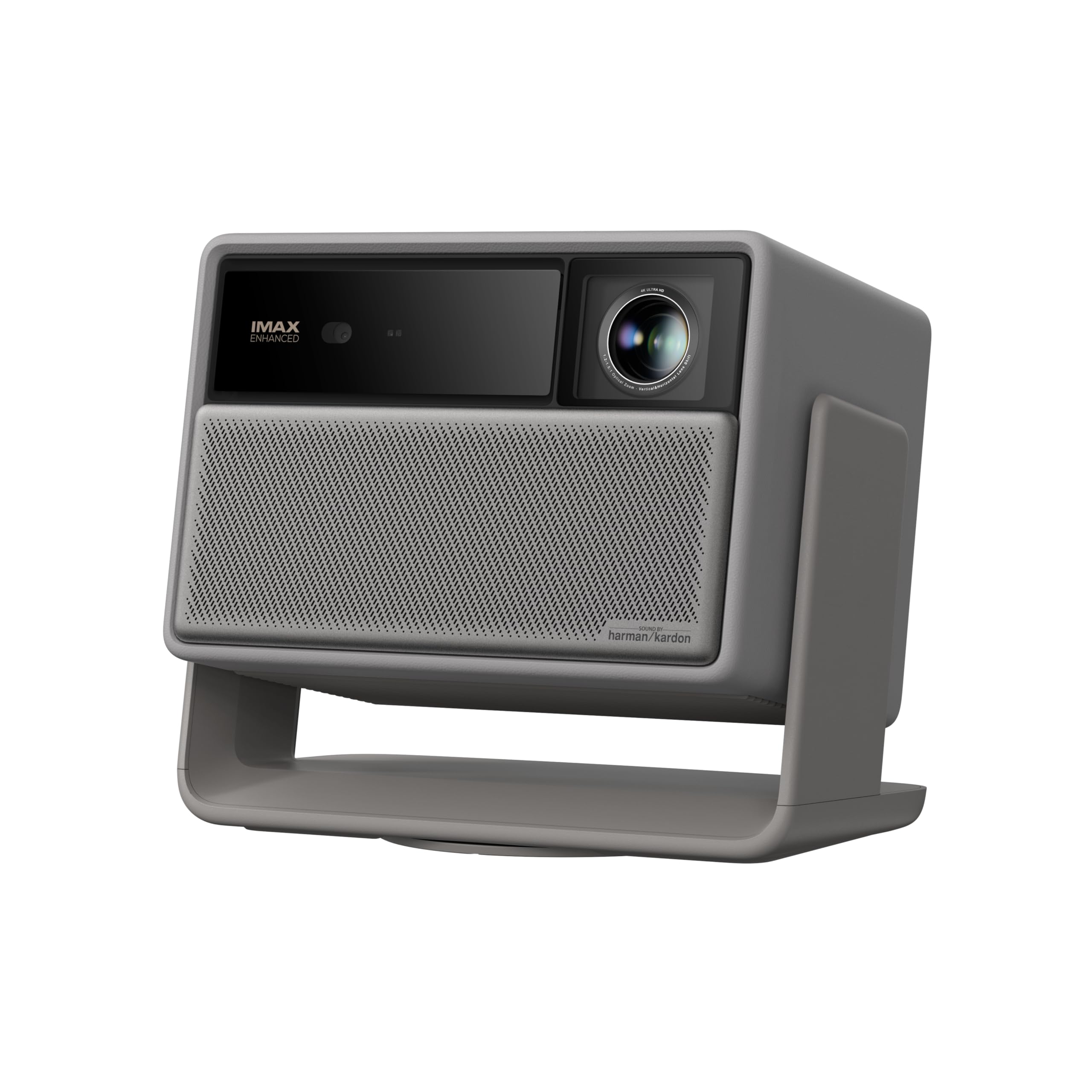
The XGIMI HORIZON 20 is a category outlier — a triple-laser 4K projector with a native 100,000:1 contrast ratio and 3200 ISO lumens that delivers IMAX Enhanced and Dolby Vision certification at a price that challenges the very definition of “under $1000.” Its X-Master RGB triple laser engine produces a color gamut and black depth that lamp-based DLP projectors cannot match, and the inclusion of both optical zoom and flexible lens shift means you can place this in nearly any room without sacrificing image integrity.
Gamers will appreciate the 1ms input lag at 240Hz, complete with VRR and ALLM support, making this one of the few lifestyle projectors that can double as a competitive gaming display. The built-in Google TV interface and Harman Kardon speakers deliver an all-in-one experience out of the box, though the sound quality, while clear, won’t replace a dedicated soundbar for serious home theater use.
Real-world reviews consistently praise its ability to produce a crisp, vibrant image even with overhead lights on, and the mechanical lens shift is repeatedly cited as a standout feature that prevents the need for digital keystone correction. The only consistent criticism is that the auto-keystone can initially misfire, but manual alignment resolves this quickly.
Why it’s great
- Triple laser engine delivers unmatched color & contrast at this price
- Optical zoom and lens shift for flexible, distortion-free placement
- 240Hz refresh rate with 1ms input lag for serious gaming
Good to know
- Auto-keystone can be inconsistent; manual alignment recommended
- Internal speakers are adequate but not a surround-sound replacement
2. ViewSonic PX701-4K 3200 Lumens 4K Projector

The ViewSonic PX701-4K is the benchmark for raw brightness in the sub- category. At 3,200 ANSI lumens, this DLP projector is genuinely usable with windows open, a claim very few competitors can match. Its 4.2ms input lag at 1080p/240Hz makes it a serious contender for competitive gaming, and the SuperColor technology paired with HDR10/HLG support delivers a wide color gamut that looks punchy and detailed on screens from 80 to 150 inches.
The pixel-shifted 4K (3840 x 2160) image is excellent for movies and games, but users report that 1080p text is actually sharper than 4K text due to a slight fuzziness inherent in the pixel-shifting algorithm. This is a trade-off common in this price tier, and most owners are willing to accept it for the massive brightness and low latency. The 1.1x optical zoom and auto vertical keystone make setup relatively painless, though the remote is old-fashioned and the power cord is short.
Customer feedback over nearly three years confirms that image quality is stunning for the price, but bulb life is a real consideration — one reviewer’s bulb failed after 1.5 years of use, well under the advertised lifespan. Replacement bulbs are affordable at around -, but it’s a recurring cost to factor into long-term ownership.
Why it’s great
- Industry-leading 3200 ANSI lumens for bright-room viewing
- Ultra-low 4.2ms input lag and 240Hz for competitive gaming
- Excellent HDR support and SuperColor technology
Good to know
- Lamp-based light source with limited lifespan (replace every 1-2 years)
- 1080p text can appear sharper than 4K text due to pixel shifting
3. Optoma UHZ36 4K UHD Laser HDR Home Theater Projector
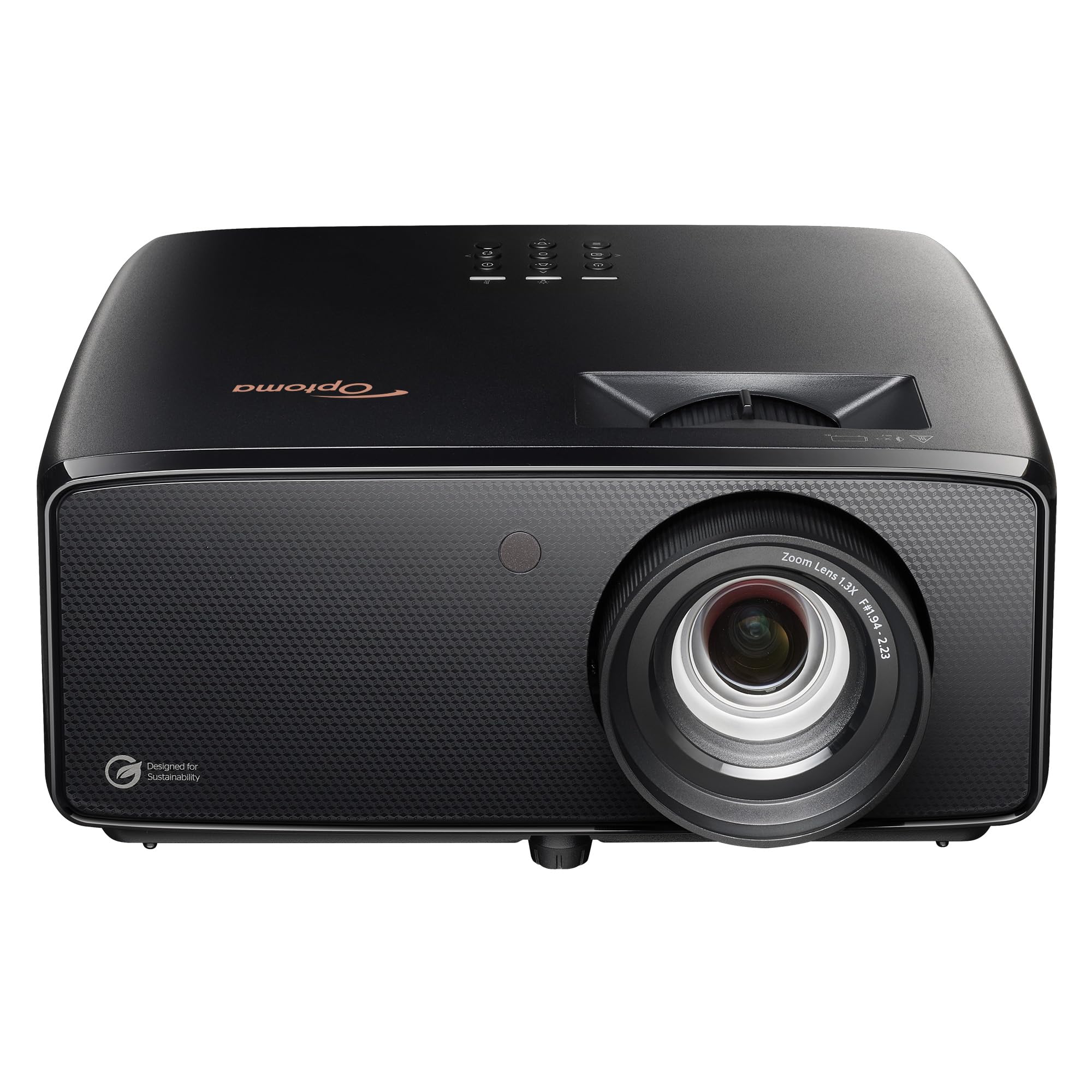
The Optoma UHZ36 offers a pure laser light source — rated for 30,000 hours — combined with a massive 3,500 lumens of white brightness, making it one of the brightest projectors that can deliver a 4K UHD image without the oversaturated color of lamp-based units. Its Filmmaker Mode preserves the director’s original intent by disabling motion smoothing and maintaining correct color temperature, a feature rarely seen at this price and highly valued by cinephiles.
The DLP engine produces sharp, detailed images with a 1,500,000:1 dynamic contrast ratio, though achieving true deep blacks requires a light-controlled room. The fan noise is reported as virtually inaudible when ceiling-mounted, and the rainbow effect is minimal with this generation of DLP chips. However, the UHZ36 lacks built-in smart features — it has no Google TV or Android OS — meaning you will need an external streaming device (Apple TV, Roku, Fire Stick) to access Netflix or Disney+.
Customer reviews are polarized: owners who pair it with a proper screen and source device rave about the bright, crisp, and low-noise picture, while a smaller group report HDMI connectivity issues and find the lack of built-in apps inconvenient. It is a no-compromise projector for the picture itself, but it demands that you provide the rest of the ecosystem.
Why it’s great
- Pure laser light source with 30,000-hour lifespan
- Extremely bright 3500 lumens with excellent HDR support
- Filmmaker Mode for accurate, artifact-free cinema playback
Good to know
- No built-in smart OS; requires external streaming device
- Some units have reported HDMI source connection issues
4. BenQ TK710 4K Laser 3200 Lumens Gaming Projector

The BenQ TK710 is purpose-built for gamers who refuse to sacrifice input speed for image quality. With a 4ms response time at 1080p/240Hz and a 16ms input lag at 4K/60Hz, it competes directly with high-refresh-rate monitors while delivering a 4K UHD image at 3200 ANSI lumens. Its laser light source eliminates bulb replacements and delivers a 600,000:1 contrast ratio, providing deep blacks and vivid colors for HDR gaming on PS5, Xbox Series X, and PC.
The TK710 includes vertical lens shift and 1.3x optical zoom, giving you significant placement flexibility compared to fixed-lens competitors. The 3D keystone and 4-corner adjustment ensure the image can be perfectly aligned even in awkward room layouts. The only catch is that the throw distance is shorter than older 1080p BenQ models — you will need to place it about 3 feet closer to achieve a 96-inch picture.
Owner feedback is overwhelmingly positive, with long-time BenQ users (some upgrading from 12-year-old W1070 units) immediately noticing the brightness, vivid colors, and sharpness. The picture adjustment options — including corner adjustments — are consistently described as best-in-class for the price. It is not a short-throw projector, so plan your room layout carefully.
Why it’s great
- 4ms response time with 240Hz for lag-free gaming
- Laser light source with 600,000:1 contrast ratio
- Vertical lens shift and 1.3x zoom for flexible placement
Good to know
- Shorter throw than older BenQ models; measure your space
- Primarily a gaming projector; less suited for full smart features
5. NEBULA Cosmos 4K SE Smart Projector

The NEBULA Cosmos 4K SE is the first hybrid LED-laser projector (HybridBeam) that combines standard lamp longevity with laser brightness, rated at 1,800 ANSI lumens and a 50,000-hour lifespan. It is one of the few projectors in this bracket to support Dolby Vision natively, resulting in stunning contrast and true-to-life colors that go beyond standard HDR10. The Google TV interface with built-in 4K Netflix means zero reliance on external dongles — it is a true all-in-one entertainment system.
The NebulaMaster Image Engine and IEA 4.0 intelligent setup handle autofocus, keystone correction, obstacle avoidance, and screen fit automatically, making this genuinely portable and easy to reposition between rooms or even take outdoors. The built-in speakers from Anker are far better than most built-in projector audio, providing clear, room-filling sound that eliminates the need for a separate speaker in casual viewing scenarios.
Customer reviews highlight the impressive image quality even with lights on, but the auto-keystone is a weak point — it performs poorly when used with a projection screen instead of a blank wall. Bluetooth audio pairing issues and the single HDMI port are recurring frustrations for users who want to connect multiple sources or a soundbar wirelessly. It is excellent for casual streaming, but less ideal for complex multi-device setups.
Why it’s great
- Hybrid LED-laser engine with 50,000-hour lifespan
- Dolby Vision support and Google TV with built-in Netflix
- Excellent built-in speakers from Anker
Good to know
- Auto-keystone is unreliable with projection screens
- Only one HDMI port and Bluetooth audio can be unstable
6. Epson Lifestudio Flex Plus 4K PRO-UHD Lifestyle Projector
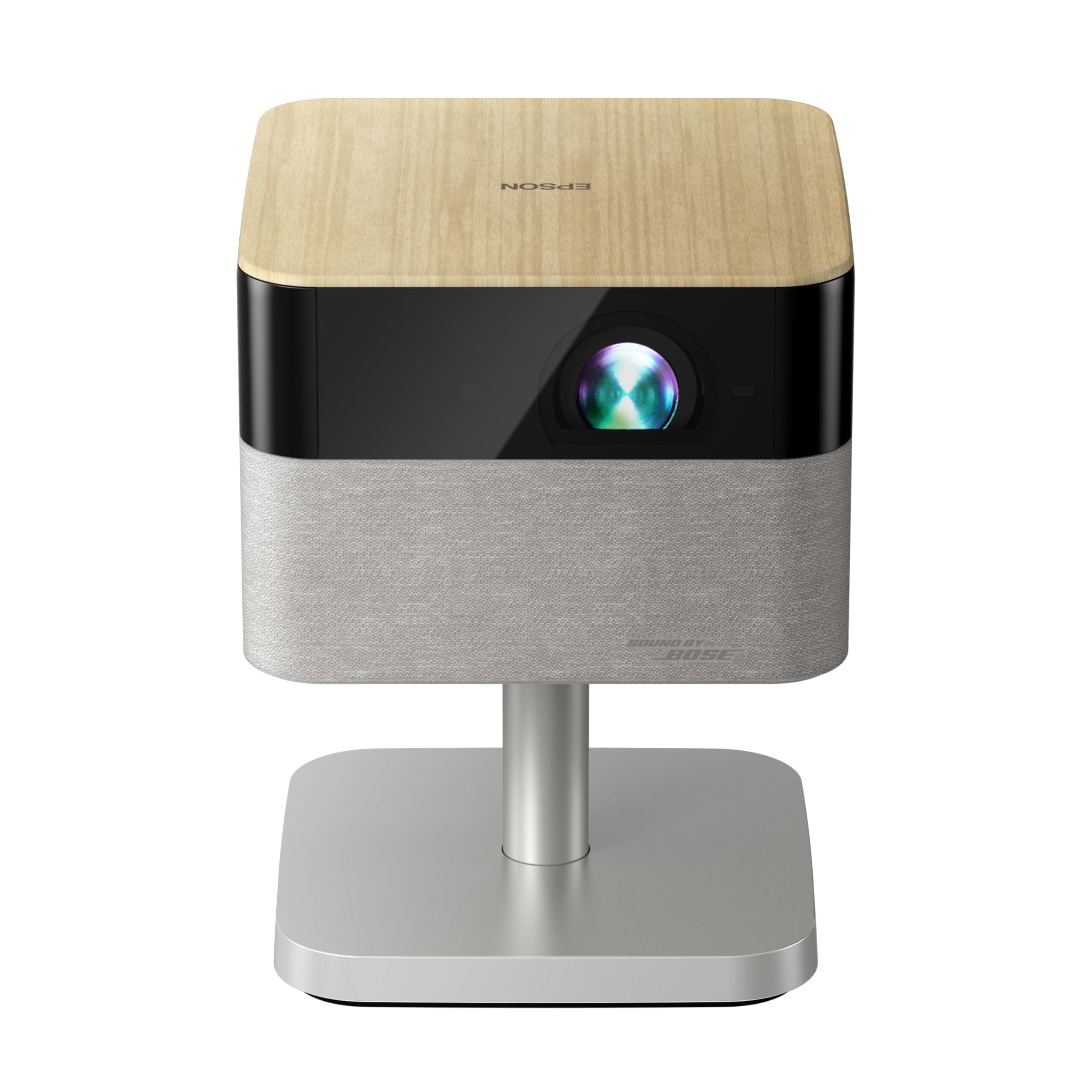
The Epson Lifestudio Flex Plus is a 3-chip 3LCD projector that delivers 1,000 lumens of color brightness and 1,000 lumens of white brightness (ISO rated), ensuring that color saturation does not drop when the image gets bright — a common weakness of single-chip DLP projectors. This Epson uses a 4K PRO-UHD pixel-shifting engine with 3840 x 2160 resolution, and its Sound by Bose integrated stereo system is genuinely impressive, providing crystal-clear room-filling audio that eliminates the need for external speakers in most living rooms.
This is a lifestyle projector designed for casual setups and portability. The EpiqSense 2.0 auto-setup provides precise focus, color, and alignment in seconds, and the compact form factor (7.5″ x 7.5″ x 9.7″) with a built-in handle makes it easy to reposition. The built-in Google TV with licensed Netflix gives you instant access to all major streaming services without additional hardware.
Customer feedback is very positive, with owners praising the high-quality construction, easy setup, and the fact that it is bright enough to use with some ambient light. The only drawback is the lack of optical zoom — you must physically move the projector to resize the image, which limits placement options. It is a strong choice for users who prioritize convenience and audio quality above maximum brightness.
Why it’s great
- 3-chip 3LCD ensures balanced color and white brightness
- Excellent built-in audio from Bose, no external speaker needed
- Compact, portable design with fast auto-setup
Good to know
- No optical zoom; image resizing requires physically moving the unit
- Only 1000 lumens; best used in a light-controlled room
7. Valerion VisionMaster Pro2 Triple Laser Projector

The Valerion VisionMaster Pro2 is a triple laser DLP projector with an industry-leading 15,000:1 native contrast ratio (with Enhanced Black Level technology) and 3,000 ISO lumens of brightness, delivering deep blacks and vibrant colors without any rainbow effect. Its OpticFlex Lens System with a 0.9-1.5x throw ratio and full auto-adjustment (focus, keystone, obstacle avoidance, screen alignment) makes it one of the most feature-rich projectors in its class, projecting images up to 300 inches with crisp clarity.
This projector is powered by the MT9618 chipset with 4GB RAM and 128GB ROM, enabling seamless multitasking and fast app switching in Google TV. It supports IMAX Enhanced, HDR10+ with Dynamic Tone Mapping, and Dolby Vision/Atmos. For gamers, it offers a 4ms input lag at 240Hz, plus ultra-wide 21:9 and 32:9 aspect ratios, custom game modes (RPG, FPS, RCG), and enhanced FPS crosshairs.
Early adopters are effusive in their praise, describing the picture as “cinematic with almost 3D-like depth” and noting that the black levels rival high-end TVs. The only cautions relate to physical placement — the short throw ratio may require digital zoom at longer distances, slightly reducing brightness and sharpness — and the need for careful initial alignment to minimize keystone correction. It is a legitimate contender for best all-around projector under , punching well above its price.
Why it’s great
- Triple laser with 15,000:1 contrast delivers incredible black depth
- 4GB/128GB smart platform for lag-free streaming
- Ultra-wide 21:9 gaming support with 240Hz and 4ms input lag
Good to know
- Short throw ratio may require digital zoom at long distances
- Auto-keystone can initially struggle; manual alignment preferred
8. Epson Home Cinema LS11000 4K PRO-UHD Laser Projector

The Epson Home Cinema LS11000 is the reference standard for 3-chip 3LCD laser projection, delivering 2,500 lumens of color and white brightness with zero rainbow effect — a critical advantage for viewers sensitive to DLP artifacts. Its Precision Shift Glass Plate technology creates a 3840 x 2160 image with exceptional sharpness, and the 1,200,000:1 dynamic contrast ratio, powered by true multi-array laser diodes, produces black levels that rival dedicated home theater projectors costing twice as much.
The Epson Cinema Lens is a fully motorized unit with zero light leakage, using multi-element precision glass for edge-to-edge focus uniformity. The generous motorized lens shift (vertical and horizontal) and 2.1x optical zoom give you unmatched placement freedom, ideal for dedicated theater rooms with fixed ceiling mounts. With HDMI 2.1 support and 120Hz refresh rate, it handles high-frame-rate gaming smoothly, though the input lag is higher than dedicated gaming projectors at around 20ms at 4K/60Hz.
Experienced home theater enthusiasts who own the LS11000 consistently describe it as a reliable, long-term investment with phenomenal image quality, outstanding motion handling, and balanced color. The only significant caveats are the high cost and the 1-year warranty with refurbished replacement units, which some owners feel does not match the premium price. The LS11000 is the best choice for users who prioritize color accuracy and lens flexibility above all else.
Why it’s great
- 3-chip 3LCD delivers superior color accuracy and zero rainbow effect
- Fully motorized lens with generous shift, zoom, and focus
- Dynamic contrast exceeding 1,200,000:1 for true home theater black levels
Good to know
- Premium pricing requires careful budget evaluation
- 1-year warranty with refurbished replacement may not meet all expectations
FAQ
Can I use a 4K DLP projector from this category as a computer monitor?
How important is HDR support in a 4K projector under $1000?
What is the difference between DLP and 3LCD technology for projectors?
Is a laser light source worth the extra cost over a lamp-based projector?
Final Thoughts: The Verdict
For most users, the best 4k projector under $1000 winner is the ViewSonic PX701-4K because it delivers unbeatable 3,200 ANSI lumens brightness and 240Hz refresh rate at a price that leaves room for a quality screen and a soundbar. If you want the deepest black levels and a laser light source that will last a decade, grab the Optoma UHZ36. And for an all-in-one smart projector with Dolby Vision and outstanding built-in sound, nothing beats the NEBULA Cosmos 4K SE.