
The jump to a 4K QLED Smart TV is one of the most visible upgrades you can make in your home, but the real-world difference between a decent panel and a great one comes down to how it handles light—both the light it produces and the light in your room. Quantum Dot technology has become the baseline for vibrant color, but the factors that separate a merely bright screen from a genuinely immersive viewing experience are far more technical: local dimming zone density, peak brightness in nits, native refresh rate capability, and the processor’s ability to upscale sub-4K content without introducing artifacts.
I’m Min — the co-founder and writer behind Gadgets Feed. I’ve spent hundreds of hours analyzing side-by-side comparisons of backlight configurations, refresh rate handling, and HDR format support to separate marketing jargon from performance that actually survives real-world use.
Each model in this guide has been scrutinized for measurable performance metrics and user-reported reliability. This analysis is designed to help you confidently choose the right 4k qled smart tv without falling for misleading spec sheets or inflated contrast claims.
How To Choose The Best 4K QLED Smart TV
Selecting a 4K QLED Smart TV requires looking beyond the sticker to understand how backlight technology, refresh rates, and HDR format support align with the content you actually watch. A TV that excels for dimly lit movie nights may falter in a bright living room, and a gaming-focused panel might sacrifice color accuracy for motion speed. This section breaks down the key technical trade-offs you need to evaluate.
Backlight Architecture: Standard LED vs. Mini-LED
The most impactful hardware difference between mid-range and premium QLED TVs is the backlight system. Standard LED-backlit QLED sets rely on edge-lit or basic full-array designs, which struggle with blooming around bright objects on dark backgrounds. Mini-LED sets pack hundreds or thousands of smaller LEDs into the backlight, allowing for far more local dimming zones. More zones mean tighter control over light bleed, delivering deeper blacks and higher contrast without the halo effect that plagues standard LED panels. For HDR content, a Mini-LED panel with over 200 zones dramatically outperforms a standard QLED that relies on edge-lit dimming.
Native Refresh Rate and Gaming Features
A 4K QLED Smart TV’s refresh rate is one of its most frequently misrepresented specs. Many entry-level sets claim a “120Hz effective” refresh rate through frame interpolation, but this creates motion smoothing artifacts that break the cinematic feel. True native 120Hz or 144Hz panels are essential for smooth gameplay on PS5, Xbox Series X, or PC gaming, enabling low-latency variable refresh rate (VRR) support through technologies like AMD FreeSync Premium Pro. Look for sets that explicitly state “native 120Hz” or “native 144Hz” in their specifications to avoid software-trickery that leaves games looking smeared.
HDR Format Support and Peak Brightness
HDR performance is defined by two things: which HDR formats the TV supports natively, and how much peak brightness it can sustain. Dolby Vision IQ and HDR10+ Adaptive are the two leading dynamic metadata formats, and a TV that supports both gives you maximum compatibility across streaming services. Peak brightness, measured in nits, determines how well the TV can produce specular highlights without washing out. For a room with ambient light, look for a peak brightness above 600 nits; for dedicated home theater use, aim for 800–1,000 nits or more. HGiG (HDR Gaming Interest Group) mode is another useful feature for calibrating game HDR without crushing highlights.
Quick Comparison
On smaller screens, swipe sideways to see the full table.
| Model | Category | Best For | Key Spec | Amazon |
|---|---|---|---|---|
| TCL 55″ QM7K | Mini-LED QLED | Best Overall Value | Up to LD2500 dimming zones | Amazon |
| Samsung 55″ Neo QLED QN70F | Mini-LED QLED | Bright Room Viewing | NQ4 AI Gen2 Processor | Amazon |
| Toshiba 55″ Z670R | Mini-LED QLED | All-Round Performance | Native 144Hz Panel | Amazon |
| Hisense 55″ U7 | Mini-LED ULED | High-End Gaming | Native 165Hz, 3000 nits peak | Amazon |
| Sony 55″ BRAVIA 7 | Mini-LED QLED | Cinematic Accuracy & PS5 | XR Processor + XR Triluminos Pro | Amazon |
| Hisense 50″ S7 CanvasTV | QLED Art TV | Art Display & Living Room | Hi-Matte Anti-Glare Panel | Amazon |
| Amazon Ember 85″ Mini-LED | Mini-LED QLED | Massive Screen for Gaming | 144Hz, 512 dimming zones | Amazon |
| Samsung 85″ QLED Q8F | Standard QLED | Massive Screen with 100% Color Volume | 100% Color Volume with Quantum Dot | Amazon |
| Sony 85″ BRAVIA 7 | Mini-LED QLED | Premium Home Theater | XR Backlight Master Drive | Amazon |
| TCL 55″ Q7 | Standard QLED | Budget Gaming Entry | Native 120Hz, Full Array Pro | Amazon |
| Amazon Ember 65″ QLED | Standard QLED | Budget-Friendly Fire TV | Full-Array Local Dimming | Amazon |
In‑Depth Reviews
1. TCL 55 Inch Class QM7K Mini-LED QLED (55QM7K)
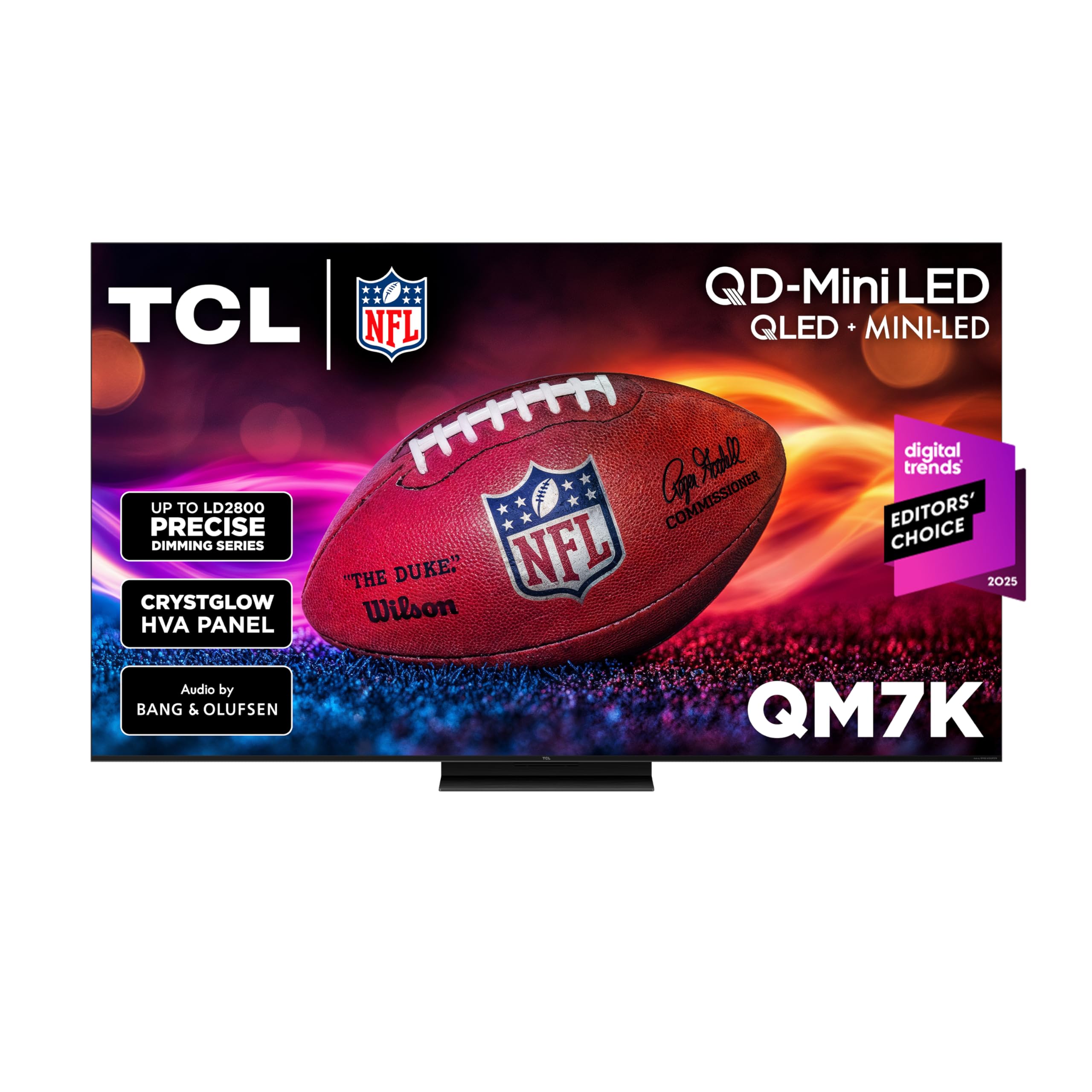
The TCL QM7K represents a serious step forward in the mid-range segment, combining Quantum Dot and Mini-LED backlighting in a package that delivers near-OLED black levels for a fraction of the price. The Halo Control System manages the thousands of mini LEDs with the kind of granularity usually reserved for panels costing twice as much, virtually eliminating blooming on high-contrast content like letterboxed movies or bright subtitles on a dark screen. With up to 2,500 local dimming zones on the larger sizes, the QM7K produces punchy HDR highlights that hold up well even in rooms with ambient daylight.
The CrystGlow HVA panel adds an anti-reflective layer that effectively cuts down mirror-like reflections, making it a strong contender for bright living rooms. Gaming performance is robust: the native 144Hz panel supports VRR and low input lag, and the 240Hz variable gaming refresh rate mode handles fast-paced competitive titles without noticeable tearing. The downside is the built-in audio—the Bang & Olufsen collaboration produces a sound that’s merely adequate, and pairing this TV with a soundbar reveals how much headroom the panel’s imaging has beyond what the internal speakers can deliver.
Google TV serves as the smart platform, offering a clean interface with access to all major streaming apps, though some users report that the default bloatware can slow down the home screen over time. The included remote feels slightly cheap compared to the premium build of the TV itself, but voice control works reliably. For buyers who want mini-LED contrast, strong HDR brightness, and a high refresh rate without crossing into four-figure territory, the QM7K is the clear all-around winner in the current market.
Why it’s great
- Excellent black level and minimal blooming for a Mini-LED panel
- Native 144Hz panel with VRR support for smooth gaming
- Effective anti-reflective screen works well in bright rooms
Good to know
- Built-in audio from B&O is underwhelming; a soundbar upgrade is nearly mandatory
- Google TV interface can feel sluggish after extended use due to pre-installed apps
- Remote build quality feels cheap compared to the TV’s chassis
2. Samsung 55-Inch Neo QLED QN70F (2025)

The Samsung Neo QLED QN70F uses a large array of Mini LEDs driven by the NQ4 AI Gen2 processor, a chipset that deploys 20 neural networks to analyze every frame in real time. The result is exceptional upscaling of lower-resolution content—old cable broadcasts and 1080p streams gain visible texture and sharpness without the oversharpened halo effect common on cheaper processors. Quantum Matrix Technology gives the Mini LEDs precise spatial control, producing bright highlights that retain detail even in sunlit daytime scenes, where edge-lit QLEDs typically wash out.
Motion handling is another strong suit: the Motion Xcelerator 144Hz delivers a clean, artifact-free image during fast camera pans and sports broadcasts. The AI-enhanced sound optimization uses the processor to analyze audio content and adjust output accordingly, and the built-in speakers produce clear dialogue without the tinny resonance that plagues many slim-panel TVs. The Samsung Tizen smart platform is fast and responsive, with personalized recommendations and a vast library of free channels through Samsung TV Plus. Some users find the interface busy with promoted content, but the core streaming experience is fluid.
The only meaningful compromise is that the QN70F does not support Dolby Vision, relying instead on HDR10+ for dynamic metadata. For most streaming content, HDR10+ is widely available on Prime Video and YouTube but absent on many Dolby Vision-supported Netflix titles. If your viewing diet leans toward Dolby Vision content, this is a spec limitation worth noting. Buyers willing to trade Dolby Vision for exceptional brightness, AI-driven picture processing, and a polished smart platform will find this to be one of the best-executed Mini-LED TVs in its class.
Why it’s great
- Excellent AI upscaling with 20 neural network processing
- High peak brightness with precise Mini-LED contrast control
- Fast and responsive Tizen smart platform with free channel library
Good to know
- No Dolby Vision support; relies on HDR10+ for dynamic metadata
- Narrow viewing angle (around 30 degrees) before contrast drops off
- Built-in voice remote feels small and lacks backlight
3. Toshiba 55″ Z670R Mini-LED (55Z670R, 2026)

The Toshiba Z670R is a statement product from a brand re-establishing itself in the premium space, and the numbers back it up. The REGZA Engine ZRi Gen3 handles AI picture processing developed by Toshiba’s engineering team in Japan, and it delivers natural-looking colors without the oversaturated look that some QLED panels default to. The Full Array Local Dimming with Mini LEDs produces deep blacks and bright highlights with minimal blooming, and the Total HDR Solution Pro covers Dolby Vision IQ, HDR10+, HDR10+ Adaptive, and HLG, ensuring compatibility across every major HDR format.
The native 144Hz panel is paired with Game Mode Pro, which includes AMD FreeSync Premium and VRR up to 144Hz, making it a strong candidate for both console and PC gaming. Input lag stays low enough to feel responsive in shooters without noticeable delay. The REGZA Power Audio Pro system includes a dedicated bass woofer that delivers genuinely surprising low-end for a flat-panel TV—dialog remains clear even at lower volumes, and the built-in audio will satisfy viewers who don’t want to add a soundbar immediately. The ALIS Light Sensor Pro adjusts brightness and color temperature based on ambient lighting, reducing eye strain during extended viewing sessions.
The Fire TV platform is integrated seamlessly, and the ability to use Alexa voice commands hands-free works reliably. Toshiba has also delivered on design: the bezel is slim, the rear panel is clean, and the overall aesthetic feels premium. Some users have reported that the optical implementation of the MEMC motion smoothing can introduce slight artifacts in fast-moving content if not turned off. Buyers who value accurate HDR, a high-refresh panel for gaming, and solid built-in audio without needing to spend extra on a soundbar will find the Z670R to be a top-tier contender.
Why it’s great
- Native 144Hz panel with FreeSync Premium and low input lag
- Dedicated bass woofer provides impressive built-in sound
- Supports both Dolby Vision IQ and HDR10+ Adaptive for full HDR coverage
Good to know
- MEMC motion smoothing can cause artifacts in fast content if left on
- Bluetooth is version 5.0, not the newer 5.3/5.4 found on competitors
- Fire TV interface can be ad-heavy for some users
4. Hisense 55″ U7 Mini-LED ULED (55U7SG, 2026)
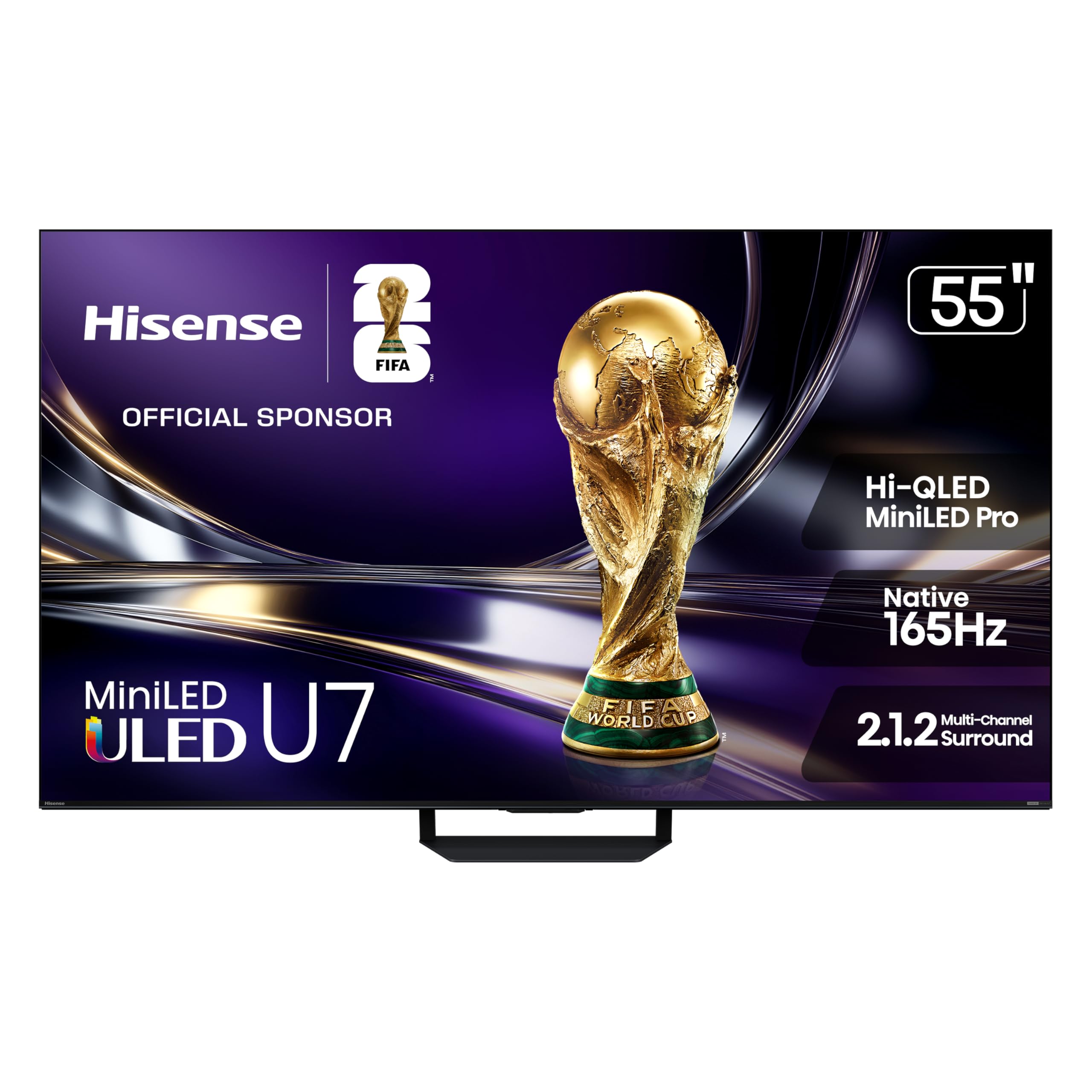
The Hisense U7 is built from the ground up for high-refresh gaming, and its spec sheet leads the pack with a native 165Hz panel that beats the 120Hz and 144Hz competition for raw frame rate headroom. Hi-QLED Mini-LED Pro technology with up to 3,000 local dimming zones and a peak brightness of up to 3,000 nits makes this one of the most capable HDR gaming displays outside of dedicated gaming monitors. The Anti-Reflection & Glare-Free coating uses a dual-layer treatment that handles overhead lights and sunny windows without washing out the image, a rare feature in this price range.
The Hi-View AI Engine Pro processor analyzes content in real time and adjusts color, contrast, and detail. In practice, this means that streaming SDR content looks punchy without looking artificial, and native 4K HDR gaming content—especially on PS5 and Xbox Series X—takes advantage of the full brightness potential to produce blindingly bright highlights and true black floors in shadowy scenes. Filmmaker Mode is included, which automatically disables motion smoothing and preserves the original frame rate and color temperature for cinema purists. The built-in 2.1.2 channel audio system delivers a wide soundstage with decent bass presence, though serious gamers will still want a separate gaming headset for positional audio.
Google TV provides a customizable interface, and the included voice remote works reliably with Google Assistant for quick app launching and content search. Some users have noted that the screen’s anti-glare layer introduces a slight softening in direct reflections, but this is a trade-off for the reflection handling that makes it usable in brightly lit rooms. The U7 is the strongest choice for PC and console gamers who want the highest possible frame rate, peak brightness, and dimming zone count.
Why it’s great
- Best-in-class native 165Hz panel for ultra-smooth gaming
- Up to 3,000 nits peak brightness with 3,000 dimming zones
- Excellent anti-glare coating for bright room use
Good to know
- Anti-glare layer can subtly soften direct reflections
- Built-in 2.1.2 audio is good but benefits from a soundbar upgrade
- Google TV can slow down with heavy app usage over time
5. Sony 55 Inch BRAVIA 7 Mini LED (K-55XR70)

The Sony BRAVIA 7 is a showcase for Sony’s XR Backlight Master Drive, a proprietary algorithm that controls the thousands of Mini LEDs with exceptional granularity. This approach delivers the kind of pixel-precise contrast that approaches OLED territory, particularly with specular highlights and deep blacks in Dolby Vision content. The XR Triluminos Pro system produces over a billion colors that are calibrated to look natural rather than oversaturated, and the XR Clear Image upscaling is widely regarded as the best in the industry for breathing life into 1080p and lower-resolution content.
Exclusive PlayStation 5 integration is a major draw: Auto HDR Tone Mapping and Auto Genre Picture Mode seamlessly detect when a PS5 is connected and apply optimal picture settings for gaming and streaming without manual calibration. The Game Menu aggregates all gaming-specific picture settings and assist features into one accessible menu. The Acoustic Multi-Audio system uses extra speakers positioned to make sound appear to come directly from the on-screen action, creating a convincing sense of immersion that heightens dialogue clarity during quiet scenes. The panel also supports Dolby Vision, Dolby Atmos, IMAX Enhanced, and DTS:X, making it one of the most format-complete TVs available.
The main drawback is the price: the BRAVIA 7 sits at the premium end of the QLED spectrum, and buyers pay a significant premium for the processor and processing algorithms over the equally bright competition from TCL and Hisense. Some users have reported that the viewing angle narrows noticeably beyond 30 degrees, and the screen lacks a dedicated anti-reflective coating, leading to visible reflections in brightly lit rooms. For the home theater enthusiast or PS5 owner who prioritizes image processing accuracy above all else, the Sony BRAVIA 7 justifies its price with unmatched picture fidelity.
Why it’s great
- Industry-leading XR processor upscales all content to near-4K quality
- Excellent PS5 integration with Auto HDR Tone Mapping
- Supports Dolby Vision, IMAX Enhanced, and DTS:X
Good to know
- Narrow viewing angle (around 30 degrees) limits off-axis seating
- No dedicated anti-reflective coating; visible reflections in bright rooms
- Premium price places it well above Mini-LED competitors with similar brightness
6. Hisense 50″ Hi-QLED S7 CanvasTV (50S7SG, 2026)
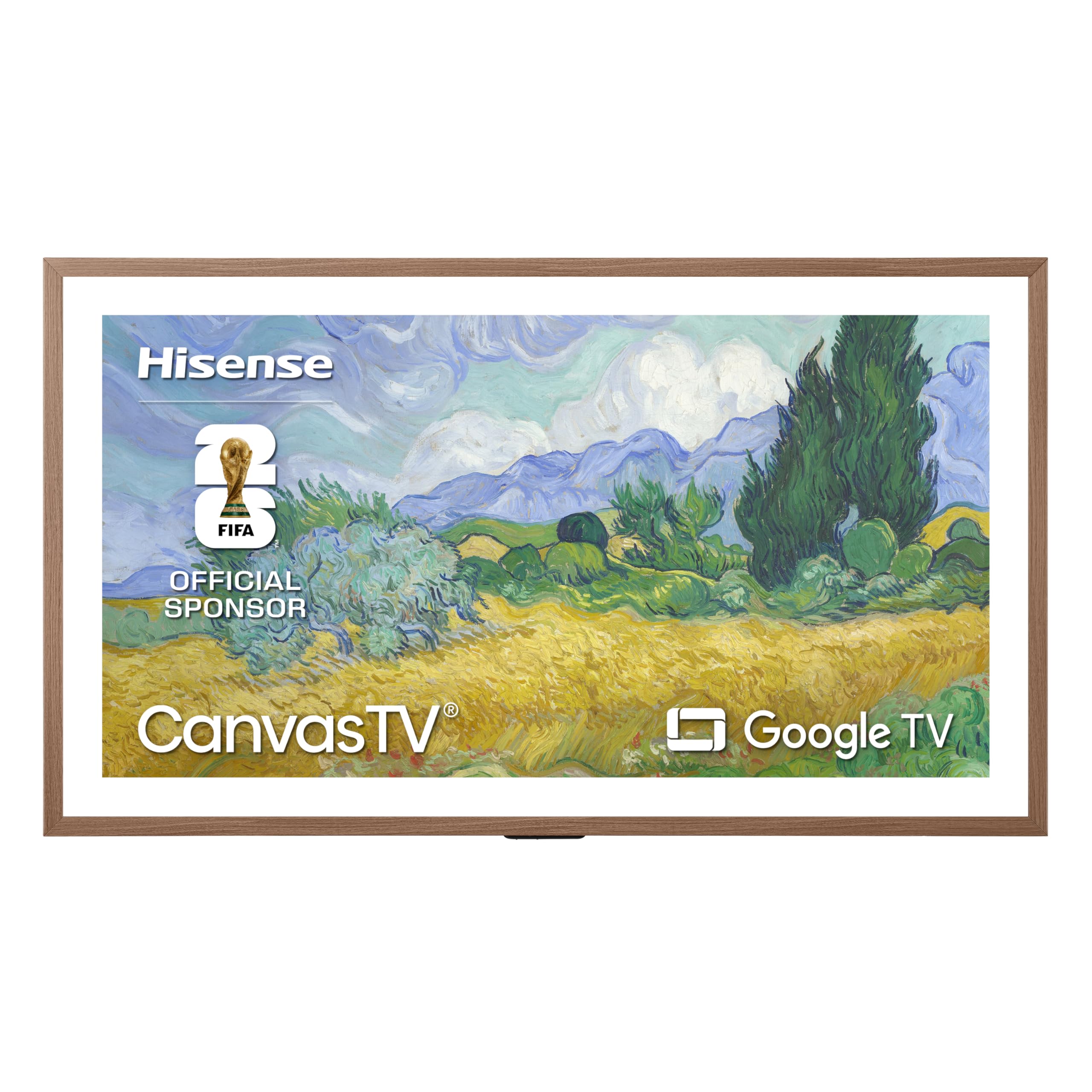
The Hisense S7 CanvasTV is a unique proposition in the QLED space: a high-quality 4K television that prioritizes art display when idle, competing directly with Samsung’s The Frame. The Hi-Matte anti-glare panel uses a matte finish that reduces reflections better than standard glossy screens, making displayed artwork look like a real canvas print rather than a glowing monitor. The included teak-style magnetic frame snaps onto the bezel, and the UltraSlim Wall Mount sits flush against the wall, creating a convincing gallery look that blends into the room decor.
When it’s time to watch content, the 4K Hi-QLED panel delivers vibrant colors and deep contrast, though it lacks the local dimming sophistication of the Mini-LED U7 series. The Color accuracy is solid out of the box, and the AI Ambient Light Sensor adjusts brightness and color temperature based on room lighting, ensuring the art mode always looks natural regardless of the time of day. The built-in Motion Detector wakes the display when someone enters the room and dims when the room empties, a thoughtful energy-saving feature that enhances the living-gallery experience.
The CanvasTV is not a gaming powerhouse: its refresh rate is standard 60Hz, and there is no VRR support for high-refresh gaming. The audio system—2.0.2 multi-dimensional sound with DTS Virtual:X—is adequate for casual viewing but lacks bass depth for cinematic experiences. Some early units have been reported with backlight bleeding or light leak near the edges, though this appears to be an isolated quality control issue. Buyers who want a TV that doubles as a convincing art display for their living room or kitchen, and who prioritize aesthetics over gaming performance, will find the CanvasTV to be a stylish and functional choice.
Why it’s great
- Hi-Matte anti-glare panel makes art mode look authentically like a canvas
- Includes teak frame and ultra-slim flush wall mount for seamless installation
- AI light sensor and motion detector enhance the living-gallery experience
Good to know
- 60Hz panel with no VRR; not suitable for competitive gaming
- Some units have reported backlight bleeding or light leak
- Built-in sound lacks bass; a soundbar is recommended for movies
7. Amazon Ember 85″ Mini-LED Series (Newest Model)
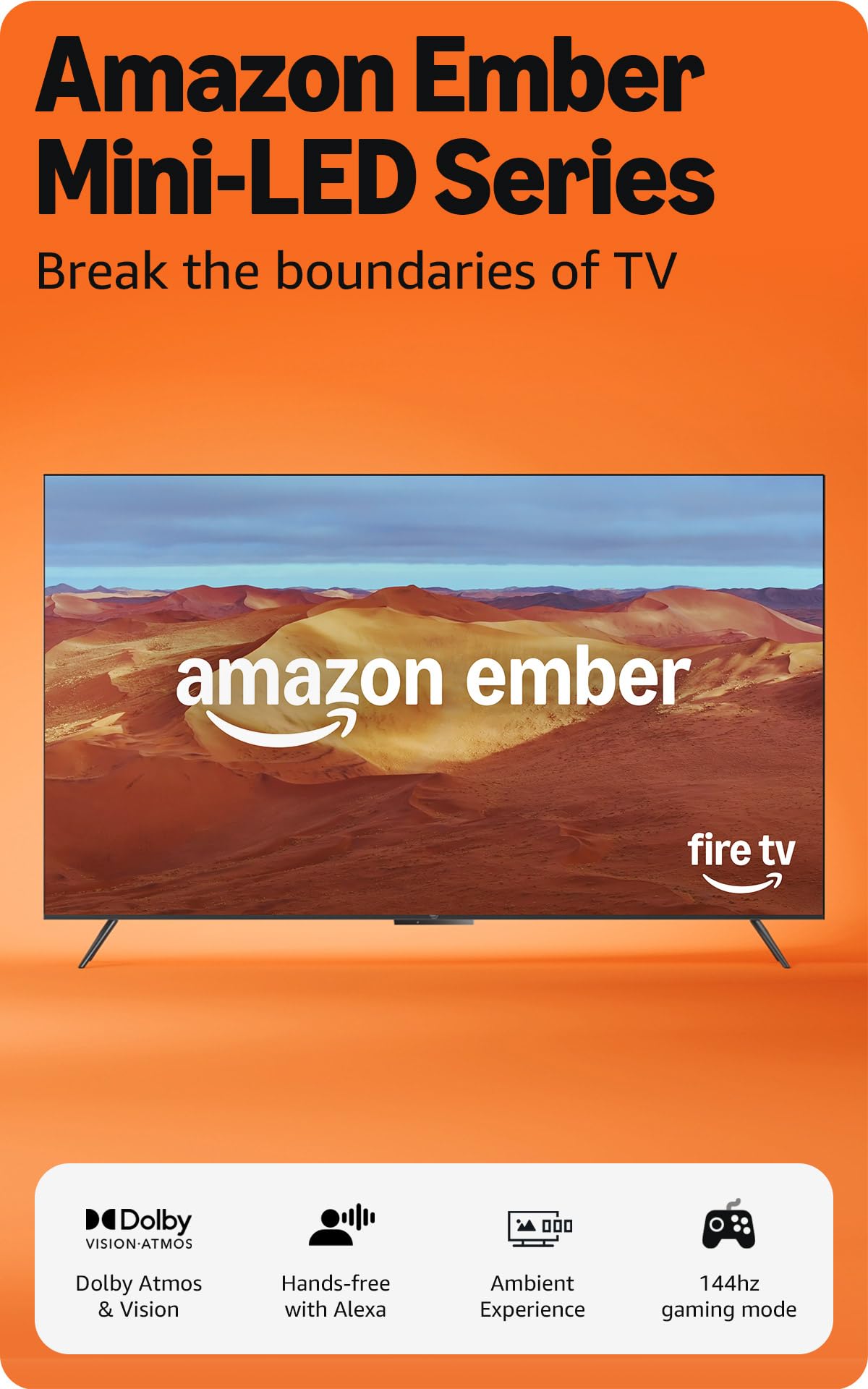
The Amazon Ember 85-inch Mini-LED brings a massive panel size into the premium QLED tier with a compelling feature set that punches well above its price point. The 4K QLED Mini-LED display uses 512 local dimming zones and reaches a peak brightness of up to 1,400 nits, producing punchy HDR highlights and solid black levels that approach the performance of sets costing significantly more per inch. The Dolby Vision IQ and HDR10+ Adaptive support ensures that HDR content from multiple streaming services looks optimized for the room’s current lighting conditions.
Gaming performance is handled by a native 144Hz panel that is AMD FreeSync Premium Pro certified, meaning smooth, tear-free gameplay even at high frame rates. The built-in Fire TV Intelligent Picture processor automatically adjusts scenes based on content type and ambient light, and the 2.1 Dolby Atmos audio system includes a subwoofer that delivers noticeably better bass response than the average integrated speaker. The Omnisense technology wakes the display when you enter the room and can show artwork when idle, adding a premium convenience feature.
The main trade-off for the large size is that the Fire TV interface has drawn criticism for occasional sluggishness, particularly after firmware updates when the system is re-indexing. Some users report random reboots and menu stuttering, though these issues seem to improve with subsequent updates. The interface is also heavily laden with Amazon ads and recommendations, which can feel intrusive. For buyers who prioritize a massive screen size with Mini-LED contrast and gaming-grade refresh rates over a perfectly polished smart interface, the Ember 85-inch is a formidable value.
Why it’s great
- Massive 85-inch screen with Mini-LED backlighting at a competitive price
- Native 144Hz panel with FreeSync Premium Pro certification
- 1,400 nits peak brightness and 512 dimming zones for solid HDR
Good to know
- Fire TV interface can be sluggish and ad-heavy after updates
- Occasional random reboots reported by multiple users
- Built-in audio is decent but still outclassed by a dedicated soundbar
8. Samsung 85-Inch Class QLED Q8F (2025)

The Samsung Q8F is a standard QLED panel, not Mini-LED, but it compensates with 100% Color Volume technology, which ensures that the billion-plus colors from the Quantum Dot layer stay accurate even as brightness levels change throughout a scene. The Q4 AI Processor handles upscaling and noise reduction effectively, and the 4K 144Hz VRR capability provides smooth motion for gaming and sports. The AirSlim design gives the TV an incredibly thin profile that sits close to the wall, making it a visually clean addition to any room.
The Samsung Tizen platform is fast and responsive, offering access to 2,700+ free channels through Samsung TV Plus without requiring a subscription. The built-in Alexa integration allows voice control of the TV and connected smart home devices, and the remote is a slim, rechargeable unit that eliminates the need for disposable batteries. For a standard QLED, the contrast is decent, but the lack of Mini-LED local dimming means that blooming is more visible in high-contrast scenes, particularly with subtitles on a black background.
Motion handling is smooth thanks to the Motion Xcelerator Turbo+ technology, which uses both software interpolation and the 144Hz panel to reduce blur. Viewing angles are wide enough for a large family room, but off-axis contrast does drop off more noticeably than on IPS-based panels. The Q8F is best suited for buyers who want a large 85-inch screen with strong color accuracy, a fast smart platform, and a slim design, and who are willing to accept that blooming in dark scenes is a trade-off for the absence of Mini-LED dimming.
Why it’s great
- 100% Color Volume ensures vibrant, accurate colors at any brightness level
- Slim AirSlim design and rechargeable remote for a clean setup
- Fast Tizen platform with 2,700+ free channels available
Good to know
- Standard QLED backlight lacks local dimming; visible blooming in dark scenes
- Off-axis contrast drops more than IPS-based panels
- Motion smoothing can introduce soap opera effect if not disabled
9. Sony 85 Inch BRAVIA 7 Mini LED (K-85XR70)

The 85-inch Sony BRAVIA 7 takes everything that makes the 55-inch version exceptional and scales it up to true home theater proportions. The XR Backlight Master Drive controls the thousands of Mini LEDs with precision that keeps blooming to a minimum even in pitch-black scenes with bright subtitles—a common pain point on large Mini-LED panels. The XR Triluminos Pro produces natural, lifelike colors that avoid the exaggerated look of other panels, and the XR Clear Image upscaling is unmatched for making 1080p and even 720p content look almost native 4K on a screen this large.
PlayStation 5 owners benefit from Auto HDR Tone Mapping and Auto Genre Picture Mode that automatically adjust picture settings based on the content being displayed, and the Game Menu puts all gaming settings in one accessible location. The Acoustic Multi-Audio system uses speakers placed on the side and bottom of the panel to create the illusion of sound coming from the picture itself, a feature that significantly improves dialogue clarity and spatial awareness without requiring an external sound system. The Sony Pictures CORE app includes 5 credits for 4K UHD movie rentals and 12 months of access to hundreds of classic films.
Viewing angle remains a concern: off-axis seating loses contrast and color saturation, which limits the ideal seating arrangement to directly in front of the screen. The lack of a dedicated anti-reflective coating means that direct light sources will cause noticeable reflections in dark content. The price is the highest in this roundup, demanding a premium that only makes sense if you value Sony’s processing, color science, and PS5 integration above all else. For the dedicated cinephile and PlayStation gamer who wants the best large-format QLED image processing available, the 85-inch BRAVIA 7 is the ultimate expression of that philosophy.
Why it’s great
- Best-in-class XR processor for industry-leading upscaling and color accuracy
- Deep Mini-LED contrast with minimal blooming for a large panel
- Seamless PS5 integration with Auto HDR Tone Mapping
Good to know
- Narrow viewing angle limits off-axis seating arrangements
- No anti-reflective coating; reflections visible in bright rooms
- Highest price in the roundup; premium over competing Mini-LED brands
10. TCL 55-Inch Q7 QLED (55Q750G, 2023)

The TCL Q7 is a full-array standard QLED that delivers native 120Hz performance with VRR support, making it the most affordable entry point for console gaming at high frame rates. The Full Array Pro Local Dimming uses over 200 zones to produce deep blacks with minimal blooming for a standard LED panel, and the HDR Ultra system supports Dolby Vision IQ, HDR10+, and HLG for broad HDR format compatibility. The Motion Rate 480 with MEMC frame insertion keeps motion smooth during fast action, though purists will want to disable the interpolation for film content.
The Game Accelerator 240 mode uses a combination of the native 120Hz panel and software techniques to achieve up to 240Hz VRR, a feature usually reserved for more expensive sets. AMD FreeSync compatibility ensures tear-free gameplay on both console and PC. The Google TV interface is snappy out of the box, though some users report that it slows down after several months of use as the cache fills. The auto backlit remote is a welcome premium touch at this price point.
The Q7’s audio is average for its class—dialogue is clear, but the bass response is thin and the soundstage is narrow. This is a TV that strongly benefits from even a budget soundbar to unlock its full potential. The panel is slightly thicker than modern Mini-LED competitors, and the stand is wide, requiring a larger TV console. For buyers on a strict budget who want a true native 120Hz 4K QLED gaming TV with Dolby Vision and good local dimming, the Q7 remains a standout value proposition.
Why it’s great
- Native 120Hz with Game Accelerator 240 for high-refresh gaming
- Over 200 local dimming zones for solid HDR contrast
- Excellent price-to-performance ratio for a QLED with Dolby Vision
Good to know
- Built-in audio is thin; a soundbar is highly recommended
- Google TV interface can slow down over time with cache buildup
- Panel is slightly thicker and stand is wider than modern Mini-LED sets
11. Amazon Ember 65″ QLED Series (Newest Model)
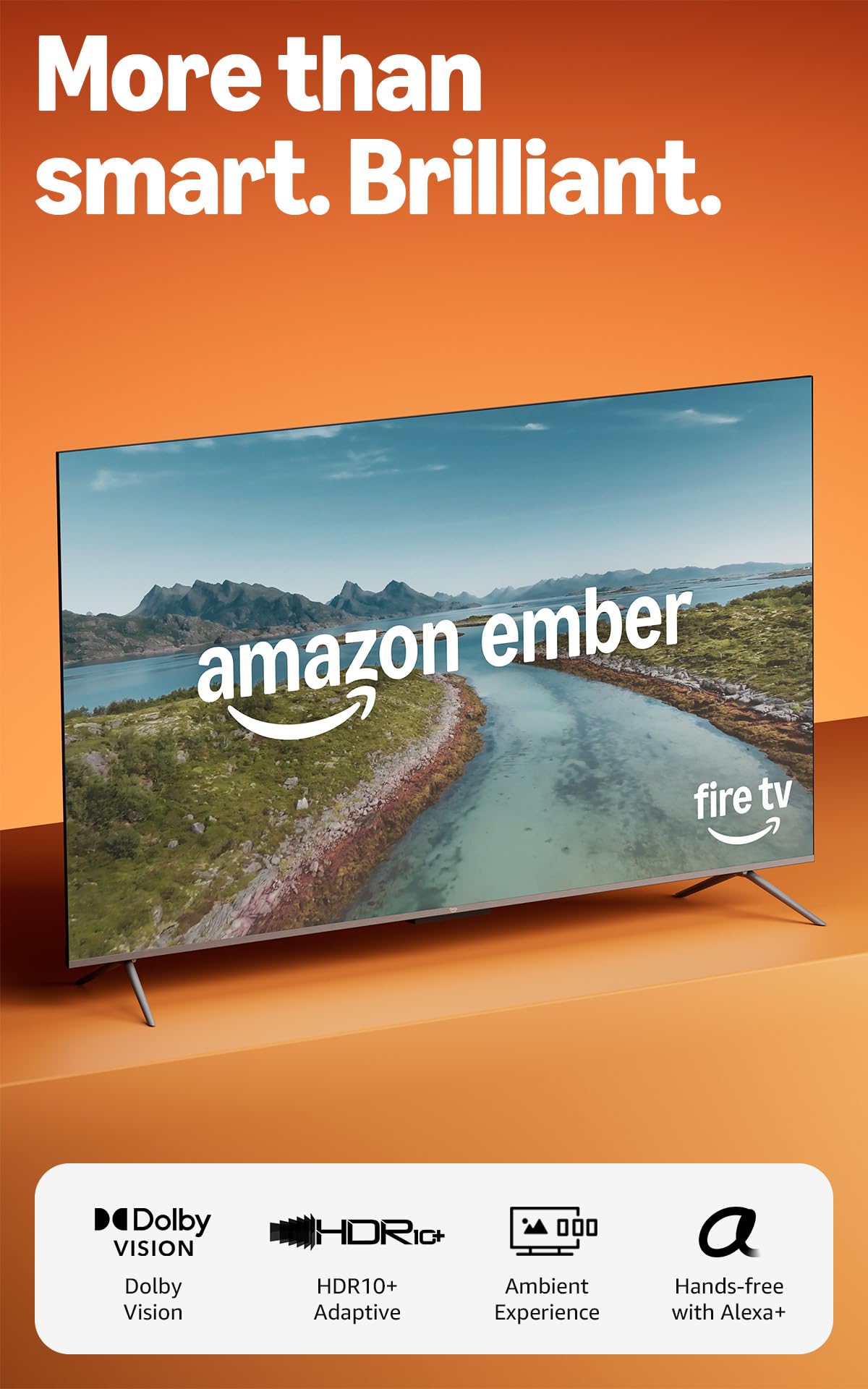
The Amazon Ember 65-inch QLED positions itself as a budget-friendly entry into the QLED space, offering a 4K Quantum Dot panel with full-array local dimming and support for Dolby Vision and HDR10+ Adaptive. The quad-core processor and Wi-Fi 6 connectivity ensure that apps load quickly and streaming remains smooth, and the Omnisense technology wakes the display when you enter the room—a convenience feature that feels premium at this price point. The new Alexa integration with Alexa+ allows for natural language search across streaming services and smart home devices.
For casual gaming, the TV supports a standard 60Hz refresh rate, and the input lag is acceptable for single-player titles but will feel sluggish for competitive shooters. The built-in 2.0.2 Dolby Audio system delivers clear dialogue and reasonable stereo separation, but the bass is noticeably absent and the overall audio quality is thin compared to the competition. The full-array dimming helps with black levels, but the number of zones is significantly lower than even the TCL Q7, resulting in more visible blooming in dark scenes.
The Fire TV interface is the strongest argument for this TV: it integrates seamlessly with Amazon services, offers hands-free Alexa control, and provides access to Amazon Luna and Xbox Game Pass for cloud gaming without a console. However, the UI is also the most ad-heavy of any platform, with prominent sponsored content and a home screen that can feel cluttered. Some users report that the TV occasionally stutters or reboots. The Ember QLED is a reasonable choice for budget-conscious Prime subscribers who want a large QLED screen with smart features, but buyers who prioritize gaming or built-in audio quality will want to look elsewhere.
Why it’s great
- Large 65-inch QLED screen at a very accessible price point
- Full-array local dimming for improved contrast in its class
- Deep Fire TV integration with hands-free Alexa and cloud gaming support
Good to know
- 60Hz panel with no VRR; not suitable for competitive gaming
- Fire TV interface is ad-heavy and can feel cluttered
- Built-in audio is thin; a soundbar is necessary for a decent experience
FAQ
Is QLED better than OLED for a bright room?
What is the difference between Dolby Vision IQ and HDR10+ Adaptive?
What is the minimum native refresh rate for a good gaming TV?
Does a higher number of local dimming zones always mean better picture quality?
Final Thoughts: The Verdict
For most users, the 4K QLED Smart TV winner is the TCL QM7K because it delivers genuine Mini-LED contrast, a native 144Hz panel, and excellent anti-reflective performance at a price that undercuts the competition by a wide margin. If you want the absolute best image processing and PlayStation 5 integration, grab the Sony BRAVIA 7. And for massive screen size with gaming-grade refresh rates, nothing beats the Amazon Ember 85-inch Mini-LED.