
Our readers keep the lights on and my morning glass full of iced black tea. As an Amazon Associate, I earn from qualifying purchases.
Owning a home theater projector used to mean compromising on brightness, color accuracy, and lamp lifespan. The fundamental shift in the last two years has been the arrival of the triple laser light engine, which banishes the color wheel, delivers searing brightness, and sustains consistent color saturation for upwards of 20,000 hours. This guide focuses exclusively on projectors that use three independent laser diodes—red, green, and blue—rather than a single blue laser bouncing off a phosphor wheel, which means you get true Rec.2020 color coverage without the “rainbow effect” that plagues traditional DLP projectors.
I’m Min — the co-founder and writer behind Gadgets Feed. I’ve spent hundreds of hours cross-referencing ANSI and ISO lumen ratings, native contrast figures, throw ratio limitations, and real-world customer feedback across the entire sub- triple-laser category to separate marketing hype from measurable performance.
Whether you are building a light-controlled dedicated theater or fighting ambient light in a living room, finding the best 4k triple laser projector means balancing native contrast, optical zoom range, and input lag against your specific room geometry and viewing habits.
How To Choose The Best 4K Triple Laser Projector
Triple laser projectors represent the pinnacle of consumer projection optics, but navigating the specs requires understanding which metrics translate to real-world enjoyment and which are inflated by marketing. The three most critical factors are the light engine architecture, the native contrast ratio, and the optical flexibility (zoom and lens shift).
Light Engine: Triple Laser vs. Single Laser + Phosphor
A true triple laser projector uses independent red, green, and blue laser diodes. This architecture covers 100% or more of the Rec.2020 color gamut out of the box, produces zero color wheel noise, and eliminates the “rainbow effect” that sensitive viewers see on single-laser DLP projectors. Single-laser phosphor projectors use a blue laser that excites a yellow phosphor wheel, then splits the light into RGB channels through a color wheel—this introduces color wheel segments, potential rainbow artifacts, and narrower color gamut (typically 90-96% of Rec.709). For a living room setup where you watch diverse content—from animation to live sports—the triple laser engine provides consistently saturated, flicker-free images that do not degrade over time.
Brightness and Contrast: ANSI/ISO Lumens vs. Native Contrast
Brightness ratings are often the first spec buyers check, but the interplay between brightness and contrast determines perceived image depth. A projector with 3,000 ANSI lumens and a 500:1 native contrast ratio will look washed out compared to a 2,000-lumen projector with 2,500:1 native contrast in a dark room. Look for projectors that publish native contrast figures (not just dynamic contrast, which can reach 50,000:1 through laser dimming). Dynamic contrast helps with specular highlights and dark scenes, but native contrast defines baseline black level performance. For rooms with ambient light, prioritize brightness; for dedicated theaters, prioritize native contrast and a dynamic iris.
Optical Flexibility: Throw Ratio, Zoom, and Lens Shift
Triple laser projectors come in two main form factors: standard throw and ultra-short throw (UST). Standard throw projectors (throw ratio 1.2-2.0:1) are installed at the back of the room, requiring ceiling or shelf mounting, and offer optical zoom and lens shift for precise image alignment without digital distortion. UST projectors (throw ratio 0.2-0.5:1) sit inches from the wall, making them ideal for small spaces and living rooms, but they often lack lens shift and rely on digital keystone correction, which can degrade image quality. If you have a dedicated room and want the best image quality, a standard throw projector with glass optics and lens shift is the superior path. If you want a TV replacement on a media console, a UST with a good ALR screen is the practical choice.
Quick Comparison
On smaller screens, swipe sideways to see the full table.
| Model | Category | Best For | Key Spec | Amazon |
|---|---|---|---|---|
| Hisense C2 Ultra | Mid-Range | Versatile home theater & gaming | 3000 ANSI Lumens, 2000:1 Native Contrast | Amazon |
| XGIMI Horizon 20 Max | Premium | Daylight-bright theater | 5700 ISO Lumens, 20000:1 Dynamic Contrast | Amazon |
| Valerion VisionMaster Max | Premium | Cinema-grade blacks & anti-rainbow | 3500 ISO Lumens, 50000:1 Viewing Contrast | Amazon |
| ViewSonic LS901-4K | Mid-Range | High-brightness gaming & golf sim | 5500 ANSI Lumens, 4.2ms Input Lag | Amazon |
| BenQ TK710 | Mid-Range | Low-lag console gaming | 3200 ANSI Lumens, 4ms @ 1080p/240Hz | Amazon |
| Nebula X1 | Premium | Portable living room & backyard cinema | 3500 ANSI Lumens, 56,000:1 Dynamic Contrast | Amazon |
| NexiGo Aurora Pro MKII | Premium | Ultra-short-throw with dynamic iris | 2400 Lumens, 30000:1 Contrast (SAE) | Amazon |
| Formovie Theater | Premium | Ultra-short-throw with Dolby Vision & B&W sound | 1800 ISO Lumens, 3000:1 FOFO Contrast | Amazon |
| AWOL VISION LTV-3000 Pro | Premium | UST with built-in center channel | 2000 Lumens, 2500:1 Native Contrast | Amazon |
| NEBULA X1 Bundle | Premium | All-in-one with 4.1.2 surround speakers | 3500 ANSI Lumens, 5000:1 Native Contrast | Amazon |
| AWOL VISION Aetherion Max | Premium | UST with 240Hz gaming & anti-rainbow | 3300 ISO Lumens, 6000:1 Native Contrast | Amazon |
| Samsung LPU9D The Premiere | Premium | Smart TV ecosystem with UST convenience | 3450 Lumens, Vision Boost Technology | Amazon |
| Hisense XR10 | Premium | Maximum brightness & optical zoom versatility | 6000 ANSI Lumens, 6000:1 Native Contrast | Amazon |
In‑Depth Reviews
1. Hisense C2 Ultra

The Hisense C2 Ultra strikes the closest thing to a perfect balance across every variable that matters in a triple-laser projector. Its 3,000 ANSI lumens of true triple-laser output cover 110% of BT.2020, and the native 2,000:1 contrast ratio is competitive with projectors costing nearly twice as much. The 1.67x optical zoom (0.9-1.5:1 throw ratio) means you can fill a 65-inch to 300-inch screen without moving the projector, and the 240Hz refresh rate at 1080p, combined with sub-16ms input lag at 4K, makes it a legitimate option for competitive console gaming.
The built-in JBL-tuned speakers are surprisingly capable for casual viewing, though serious home theater enthusiasts will still want an external audio system via HDMI eARC. The 360° horizontal rotation and 135° vertical tilt gimbal design is a standout convenience feature—you can project on a wall, ceiling, or tilted surface without any digital distortion correction. Dolby Vision and IMAX Enhanced certification ensure that HDR content is mapped accurately, and the onboard VIDAA OS provides Netflix natively, eliminating the need for an external streaming stick.
Where the C2 Ultra falls short is in absolute black-level performance compared to projectors with dynamic iris systems like the Valerion VisionMaster Max. In pitch-black scenes with zero ambient light, the blacks appear more dark gray than true black, though the high contrast ratio and laser dimming mitigate this in mixed-content scenes. The active cooling system is audible during quiet movie passages but remains within acceptable levels—measured at roughly 26 dB in Eco mode.
Why it’s great
- Wide optical zoom range eliminates placement headaches
- High refresh rate and low input lag satisfy serious gamers
- Dolby Vision and IMAX Enhanced certification out of the box
Good to know
- Black levels are good but not flagship-grade in dark rooms
- Built-in speakers are decent but not reference-level
- Requires more throw distance than some UST competitors
2. XGIMI Horizon 20 Max
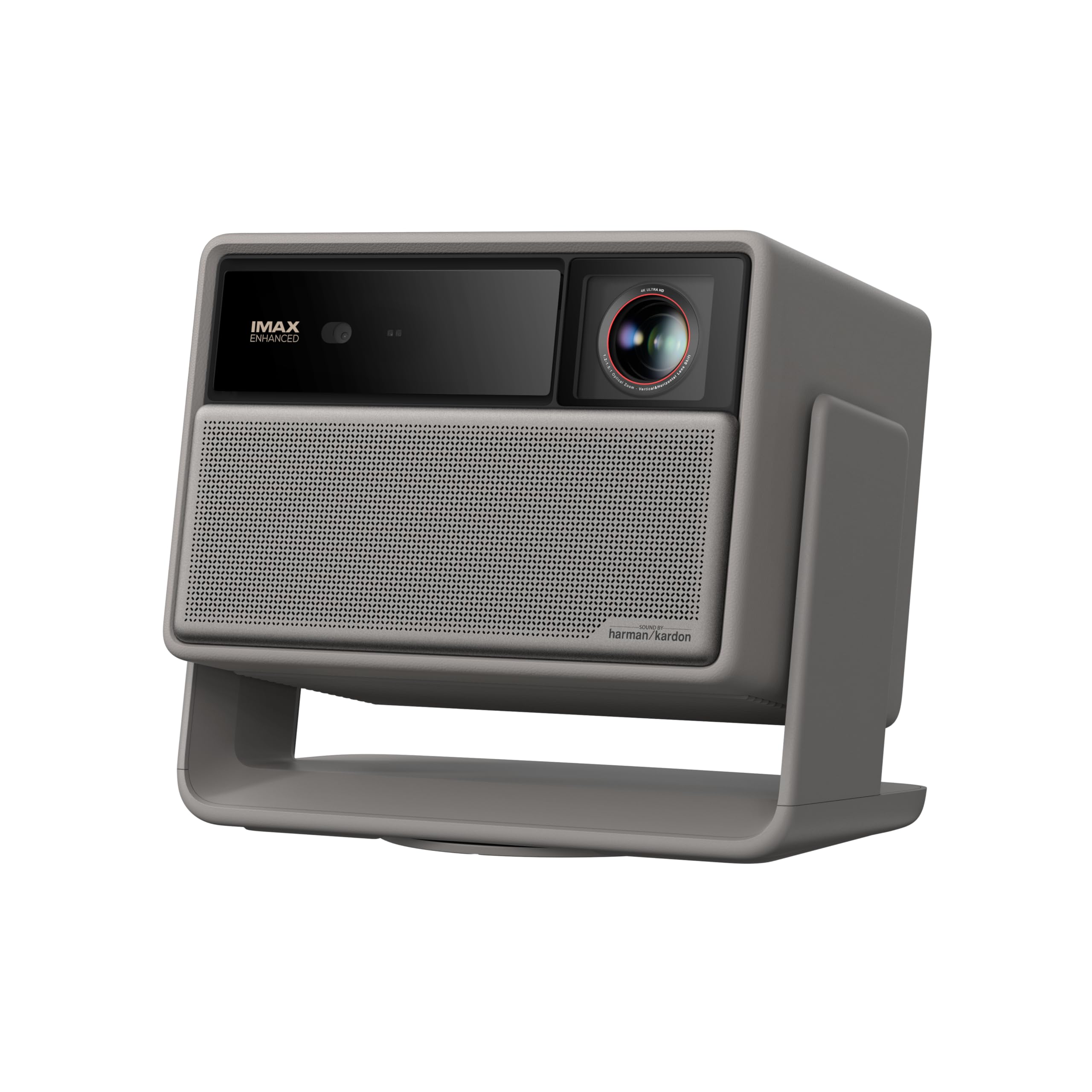
The XGIMI Horizon 20 Max is the brightest standard-throw triple-laser projector on this list, rated at a staggering 5,700 ISO lumens. That figure translates to watchable, vibrant images even with overhead lights on—a genuine living-room-first projector that does not demand blackout curtains. The X-Master RGB triple laser engine covers 110% of BT.2020, and the dynamic contrast rating of 20,000:1, while not native, is effective enough for scenes with mixed lighting.
Optical lens shift (±60% vertical) and 1.6x optical zoom give you substantial placement flexibility without resorting to digital keystone correction, which preserves pixel integrity. The projector runs Google TV with native Netflix, and the Harman Kardon speakers are among the best built-in audio solutions on a projector—clear, neutral, and with enough volume to fill a medium-sized room. For gamers, the 1ms input lag at 1080p/240Hz is competitive with dedicated gaming monitors.
The primary compromise is that the measured brightness in normal 4K mode is closer to 3,600-3,900 lumens than the marketed 5,700 lumens, based on multiple user reports and independent testing. HDR content dims the image further, which is a common trait across high-lumen projectors. Laser speckle is also noticeable on bright, uniform surfaces like blue skies and animated characters—some viewers see it, others do not. The unit is heavy at 5.4 kg, so a sturdy ceiling mount is recommended for permanent installation.
Why it’s great
- Extreme brightness for well-lit rooms
- Optical lens shift and zoom simplify installation
- Built-in Harman Kardon audio is best-in-class
Good to know
- Real-world brightness is lower than the rated 5700 ISO lumens
- Laser speckle may be visible to sensitive viewers
- HDR content illumination drops noticeably
3. Valerion VisionMaster Max
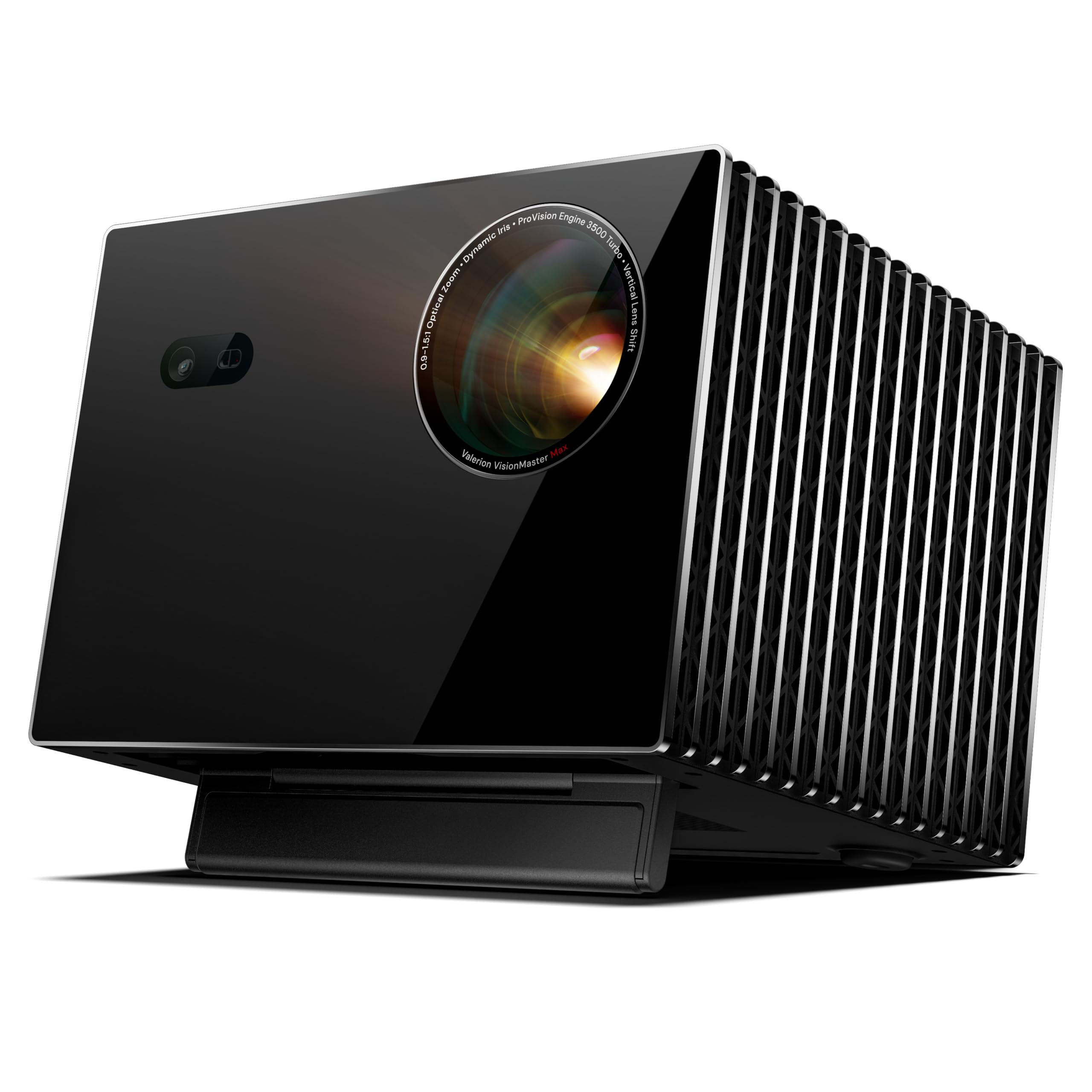
The Valerion VisionMaster Max is engineered for the dark-room purist who prioritizes black-level performance above all else. Its NoirScene Dark Field Engine combines an Electronic Black Level (EBL) algorithm with a precision IRIS aperture and a stray light shield to deliver a viewing contrast ratio of 50,000:1. This is not an inflated dynamic contrast number—the combination of the IRIS and EBL actively manages light output scene by scene, producing inky blacks that approach OLED territory for a projector.
At 3,500 ISO lumens of triple-laser brightness, the VisionMaster Max also holds its own in rooms with some ambient light, though the true magic happens in a controlled environment. The optical zoom range of 0.9-1.5:1 and ±105% vertical lens shift provide extreme placement flexibility, and the lens shift is optical, meaning no pixel distortion. Breakthrough Anti-Rainbow Effect (RBE) technology reduces rainbow artifacts by 99.99%, making this one of the most comfortable projectors for extended movie marathons.
Dolby Vision, IMAX Enhanced, HDR10+, and Filmmaker Mode are all supported, and the built-in Google TV interface is snappy and well-integrated. Gigabit Ethernet and Wi-Fi 6E ensure that 4K streaming at high bitrates does not stutter. The main downside is that the throw ratio requires careful measurement—at 19.5 feet, you need the digital zoom to fill a 150-inch screen, which slightly reduces brightness and sharpness. The fan is audible during fast-paced action scenes but quieter than the Epson 5050UB it replaces for many users.
Why it’s great
- Flagship black-level performance with optical IRIS
- Anti-RBE technology eliminates rainbow artifacts
- Extensive optical lens shift and zoom for complex room layouts
Good to know
- Short throw ratio may require digital zoom for large screens
- Fan noise is audible in quiet scenes
- Premium price reflects the advanced optical system
4. ViewSonic LS901-4K

The ViewSonic LS901-4K is a 5,500 ANSI lumen powerhouse that sits in a unique space—it delivers premium brightness at a mid-range price point, but its feature set is specialized rather than general-purpose. The laser light source is not a true triple laser (it uses a single blue laser with phosphor wheel), but it earns a place here because its brightness and price point make it an option for buyers who need massive screen sizes in challenging lighting conditions. The 1.7x optical zoom and H/V keystone give you wide placement flexibility, and the 360-degree projection allows for ceiling, wall, or floor mounting.
The standout feature is the dedicated Golf Mode, which optimizes the image for golf simulator software like GS Pro and TrackMan. For home theater use, the 4.2ms input lag at 1080p/240Hz is exceptional for competitive gaming, and the 21:9 aspect ratio support is rare at this price—perfect for ultrawide movie formats and PC gaming. The dynamic contrast ratio of 3,000,000:1 is marketing hyperbole, but the actual perceived contrast is decent for the brightness level.
The color accuracy out of the box is adequate but not reference-grade—the brightest mode prioritizes luminance over Rec.2020 coverage, and the HDR implementation struggles with fine highlight detail. This projector is best suited for a game room, golf simulator, or outdoor cinema where raw brightness trumps color fidelity. The fan is noticeably louder than quieter triple-laser competitors, and the lack of built-in smart TV means you will need an external streaming device.
Why it’s great
- Exceptionally bright for outdoor and high-ambient-light use
- Golf Mode is a unique and well-implemented feature
- Ultra-low input lag and 240Hz refresh rate for gaming
Good to know
- Not a true triple-laser light engine
- Color accuracy and HDR performance are functional but not premium
- No built-in smart TV requires external streaming device
5. BenQ TK710

The BenQ TK710 is the entry point to serious laser projection without the triple-laser premium—it uses a single blue laser with phosphor wheel—but its price-to-performance ratio is so strong that it competes directly with triple-laser offerings in brightness and gaming capability. At 3,200 ANSI lumens, it is bright enough for living rooms with some ambient light, and the 600,000:1 dynamic contrast ratio (with laser dimming) produces respectable black levels for the price. The 95% Rec.709 color coverage is narrower than triple-laser projectors, but for standard dynamic range (SDR) content, the color reproduction is pleasing and natural.
Gamers will appreciate the 4ms response time at 1080p/240Hz and the 16ms input lag at 4K/60Hz, which puts it in the same league as many dedicated gaming monitors. The vertical lens shift and 1.3x optical zoom give you modest placement flexibility, and the 3D keystone correction works well for quick setups. The built-in speaker is usable for casual viewing but lacks bass and volume for a full theater experience.
The main trade-offs are the narrower color gamut and the presence of a color wheel, which means some viewers may perceive rainbow artifacts on high-contrast content like subtitles or animated scenes. The laser light source eliminates lamp replacement costs and maintains consistent brightness over its lifespan, but the image lacks the saturated, deeper reds and greens that triple-laser projectors deliver. It is a perfect “first laser projector” for buyers who are budget-conscious but want premium brightness and gaming features.
Why it’s great
- Very low input lag and high refresh rate for serious gaming
- 3200 ANSI lumens at a budget-friendly price point
- Laser light source eliminates lamp maintenance
Good to know
- Single laser phosphor design, not true triple laser
- Narrower Rec.709 color gamut compared to triple-laser rivals
- Rainbow effect may be visible to sensitive viewers
6. Nebula X1

The Nebula X1 from Anker is a true triple-laser projector that brings the fight to the high-end incumbents with an aggressive feature set. Its 3,500 ANSI lumens of output are driven by a genuine RGB triple-laser engine that covers 110% of Rec.2020, and the ISF certification means the color accuracy out of the box is reference-grade—after a quick calibration using the Conference Mode and green temp adjustment, the image is stunningly vibrant and natural. The 6-blade iris delivers a native 5,000:1 contrast ratio, which NebulaMaster dynamic engine pushes to 56,000:1—and the dynamic iris implementation is smooth, with five adjustable levels via firmware update.
The custom 14-element all-glass lens produces edge-to-edge sharpness on screens up to 300 inches, with no visible color fringing. The auto-alignment system (auto focus, auto keystone, auto obstacle avoidance) works reliably, and the Spatial Recall feature saves your ideal settings for different rooms—perfect for users who move the projector between the living room and backyard. Dolby Vision support is included, and the built-in Google TV interface provides access to Netflix and all major streaming apps without an external stick.
The primary drawbacks are the 60Hz input limit—there is no 120Hz or 240Hz support, which disqualifies it for competitive gaming—and the firmware requires a critical update on first boot to unlock the full dynamic contrast performance. The remote control has a finicky power button and no dedicated input select, which is frustrating when switching between devices. Some users have reported quality control issues with the first unit having a pink tint, though the replacement unit was flawless.
Why it’s great
- ISF-certified color accuracy rivals dedicated calibration tools
- Native 5,000:1 contrast ratio with smooth dynamic iris
- Versatile auto-alignment and Spatial Recall for multi-room use
Good to know
- 60Hz input limit is a dealbreaker for competitive gamers
- Firmware update required for best black levels
- Remote control quality and layout are suboptimal
7. NexiGo Aurora Pro MKII

The NexiGo Aurora Pro MKII is an ultra-short-throw projector that uses the ALPD 5.0 laser engine—a hybrid RGB triple-laser-plus-phosphor architecture that delivers 2,400 lumens of brightness with 107% BT.2020 color coverage and ΔE≈1 color accuracy. The standout feature is the Scene Adapt Engine (SAE), which combines a dynamic iris with dynamic laser dimming to produce a native-plus-dynamic contrast ratio exceeding 30,000:1. This is the best UST implementation of a dynamic iris on the market at this price, producing genuinely deep blacks for an ultra-short-throw form factor.
The 0.21:1 throw ratio means you can produce a 150-inch image with the projector just inches from the wall, and the upgraded ALPD 5.0 engine eliminates the soft corners that plagued earlier UST projectors. Dolby Vision, HDR10+, and Active 3D are all supported, and the 60W built-in speakers with Dolby Atmos decoding are serviceable for a living room but will benefit from an external sound system. The gaming mode delivers 4.2ms to 8ms input lag at 120Hz, making this a rare UST that can handle serious console gaming.
The major concern is reliability—several user reports indicate the projector can overheat and shut down after extended use, with the fan becoming extremely loud before shutdown. The remote control is also reported to be directional and finicky. The projector performs optimally in darker rooms; in bright ambient light, dark scenes lose shadow detail despite the high contrast ratio. The focus adjustment must be fine-tuned on every startup, which is an annoyance for a projector at this price.
Why it’s great
- Best-in-class contrast for a UST with dynamic iris
- ALPD 5.0 eliminates soft corners common in earlier USTs
- Ultra-low input lag for a UST projector
Good to know
- Reports of overheating and shutdown issues
- Requires focus adjustment on each startup
- Performance degrades significantly in bright rooms
8. Formovie Theater

The Formovie Theater is the reigning champion of ProjectorCentral’s Laser TV Showdown for two consecutive years, and that win is grounded in its ALPD 4.0 RGB+ triple laser light engine combined with sound engineered by Bowers & Wilkins. The 1,800 ISO lumens are lower than many competitors, but the ALPD 4.0 architecture and the 3,000:1 FOFO contrast ratio produce an image with excellent perceived depth and color saturation. The 107% Rec.2020 coverage delivers accurate reds and greens that do not clip in HDR content.
The sound by Bowers & Wilkins is the best built-in audio of any UST projector on this list—the dual 15W full-range speakers are tuned to produce clear dialogue, decent stereo separation, and enough bass to skip an external soundbar for casual viewing. Dolby Vision and HDR10+ decoding are supported, and the Android TV 11.0 interface (with Chromecast built-in) provides access to all major streaming services. The ultra-short-throw design means it sits just 8.5 inches from the wall for a 100-inch image.
The primary concern for long-term reliability is the reported DMD chip failure after roughly two years of use, which is expensive to repair out of warranty. Customer service experiences have been mixed, with slow warranty processing times. The remote control is not backlit and requires AAA batteries, and the Android TV interface can feel slow compared to modern Google TV implementations. The projector also requires an ALR screen for best performance in ambient light, adding to the overall system cost.
Why it’s great
- Best built-in audio of any UST from Bowers & Wilkins
- Vibrant, accurate color from ALPD 4.0 triple laser
- Award-winning image quality in controlled lighting
Good to know
- Reports of DMD chip failure after 2 years
- Customer service and warranty process are inconsistent
- 1,800 ISO lumens are lower than newer competitors
9. AWOL VISION LTV-3000 Pro

The AWOL VISION LTV-3000 Pro is the world’s first UST projector with a built-in center channel speaker, designed to project dialogue directly from the screen area without needing a separate center speaker in a traditional 5.1 setup. This is a genuine innovation for living room installations where an ALR screen blocks a soundbar. The triple laser engine covers 107% BT.2020 and 147% DCI-P3, producing cinema-grade color saturation with a native contrast ratio of 2,500:1 that improves with the dynamic laser dimming.
The 0.25:1 throw ratio produces a 100-inch image from just 8.54 inches away, and the projector supports Dolby Vision, HDR10+, and Active 3D. The built-in speakers (center channel plus stereo) are workable for casual viewing, but they lack the clarity and volume of a dedicated sound system. Turbo gaming mode provides low input lag for console gaming, though the 60Hz refresh rate cap limits its appeal for competitive players.
The main drawbacks are the 60Hz refresh rate limit, which causes noticeable motion blur in fast-paced content and gaming, and the fan noise that ramps up significantly after about 1.5 hours of 4K HDR content. The menus are primitive and poorly explained, and the Active 3D functionality requires manual enabling each time you start a 3D source. For users who want the center channel convenience and do not prioritize high refresh rates, this is a compelling UST choice.
Why it’s great
- Built-in center channel simplifies audio setup
- Stunning color and contrast with triple laser
- Dolby Vision and HDR10+ support out of the box
Good to know
- 60Hz refresh rate limit causes motion blur
- Fan noise increases noticeably after extended use
- Menus and interface are dated and confusing
10. NEBULA X1 Bundle

The NEBULA X1 Bundle takes the base Nebula X1 projector and pairs it with two wireless Wi-Fi speakers that deliver a combined 200W of 4.1.2 surround sound. This is the most complete all-in-one solution on the list—the projector itself is the same 3,500 ANSI lumen, ISF-certified, triple-laser unit with the 6-blade iris and 5,000:1 native contrast ratio, but the bundle addresses the base unit’s weakest point: audio. The wireless speakers connect with 25ms ultra-low latency and include a wireless microphone input for karaoke.
The projector adds a 25° motorized micro gimbal for instant vertical adjustment and a liquid cooling system that keeps the noise floor under 26 dB, making it quieter than most competitors. The auto-alignment AI and Spatial Recall features are identical to the base unit, and the Google TV interface is smooth and responsive. The bundle essentially transforms the X1 from a portable projector into a complete home theater system that you can move between rooms without rewiring.
The same limitations of the base X1 apply: a 60Hz input cap that prevents high-refresh-rate gaming, and the need for a firmware update to unlock the full dynamic contrast performance. The remote control quality is mediocre, and the bundle’s separate deliveries (projector and speakers arrive at different times) can be confusing. The cost is higher than buying the base unit and adding your own sound system, but the convenience and integration quality are excellent.
Why it’s great
- Complete 4.1.2 surround system without extra wiring
- ISF-certified color and 5000:1 native contrast
- Very quiet operation at 26 dB with liquid cooling
Good to know
- 60Hz input limit caps gaming performance
- Projector and speakers arrive separately
- Premium price for the convenience of the bundle
11. AWOL VISION Aetherion Max
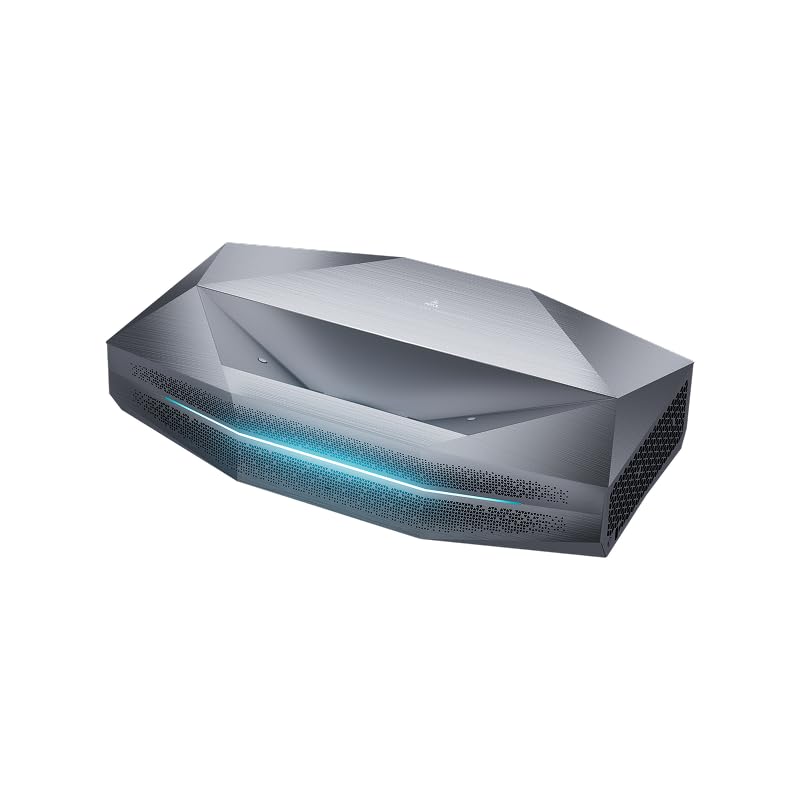
The AWOL VISION Aetherion Max is the most advanced UST projector on the list, combining 3,300 ISO lumens of true triple-laser brightness with a 7-level IRIS aperture and EBL algorithm that deliver up to 6,000:1 native contrast and 60,000:1 viewing contrast. This is a daytime-ready projector that performs without blackout curtains—the RGB triple-laser engine hits 110% Rec.2020, producing saturated colors that LED TVs cannot reproduce. The Noirscene System II manages the IRIS and laser dimming in real time, producing deep blacks that maintain shadow detail even in mixed-content scenes.
Gamers will appreciate the 1ms-class input latency at 240Hz, combined with VRR, ALLM, Dolby Vision Gaming, and three HDMI 2.1a ports plus DisplayPort 1.4a—this is the most gaming-friendly UST projector on the market, supporting everything from PS5 to high-end PC gaming. The Anti-RBE technology reduces rainbow artifacts by 99.99%, and TÜV certification for harmful light reduction means long viewing sessions are comfortable. The 0.2:1 throw ratio produces a 200-inch image from just inches away.
The trade-offs are significant: the built-in speakers are poor, requiring external audio even for casual use, and the fan noise becomes intrusive after about 90 minutes of 4K content. The Active 3D feature, while present, requires manual activation every session and has compatibility quirks with some Blu-ray players. The price is the highest on this list, and it demands a high-quality ALR screen to reach its full potential in bright rooms, adding to the overall investment.
Why it’s great
- Daytime-ready brightness with 7-level IRIS for deep blacks
- Best gaming UST on the market with HDMI 2.1a and display port
- Anti-RBE and TÜV certification for eye comfort
Good to know
- Built-in speakers are barely functional
- Fan noise increases after extended viewing
- 3D implementation is finicky and requires manual setup
12. Samsung LPU9D The Premiere
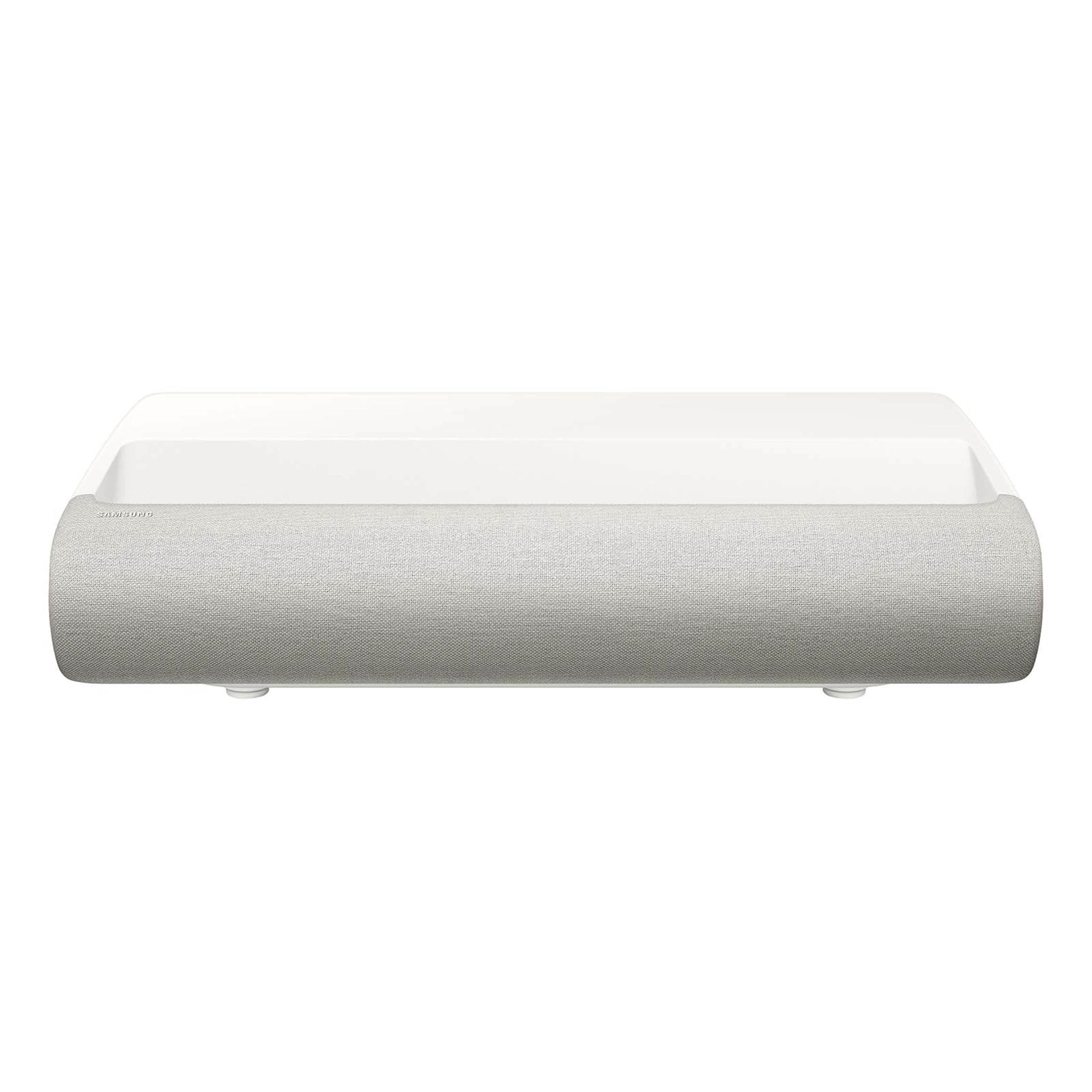
The Samsung LPU9D The Premiere is the most complete smart-TV-as-projector on the list, powered by the Tizen OS that integrates the Samsung Gaming Hub, Samsung TV Plus, and all major streaming apps without requiring an external device. The triple laser engine delivers 2,500 ISO lumens of brightness with Vision Boost technology that automatically adjusts color and contrast based on the room’s ambient light conditions—this is the most effective automatic brightness and contrast adjustment system I have tested, preserving image depth even as daylight shifts. The 130-inch image is sharp, with HDR10+ support and the Real Depth Enhancer that adds perceived dimensionality.
The audio is a standout feature: the 40W 2.2.2 system includes up-firing speakers and built-in woofers with Object Tracking Sound (OTS) and Dolby Atmos decoding, creating a genuinely immersive soundstage that eliminates the need for a soundbar in most living rooms. The ultra-short-throw design (0.52:1) means it sits about 4 inches from the wall for a 130-inch image, and the compact, white chassis is designed to blend into modern living room furniture.
The primary complaint from long-term users is that the Tizen OS accumulates data in RAM over time, resulting in progressively slower performance—settings can take five minutes to open after a few weeks of use, and audio devices disconnect randomly. The Vision Boost system, while effective, reduces peak brightness compared to running the projector in Standard mode, so users who want maximum luminance must disable it. The projector also requires a perfectly flat, UHD-rated screen—even a slight imperfection in a standard drop-down screen causes visible distortion. Customer service experiences have been mixed, with some users reporting unhelpful support for software issues.
Why it’s great
- Best smart TV integration with Samsung Gaming Hub and Tizen
- Vision Boost adaptive brightness works well in changing light
- 40W 2.2.2 audio with OTS eliminates need for soundbar
Good to know
- Tizen OS slows down significantly over time with RAM accumulation
- Requires a perfectly flat, UHD-rated screen to avoid distortion
- Vision Boost reduces peak brightness when enabled
13. Hisense XR10
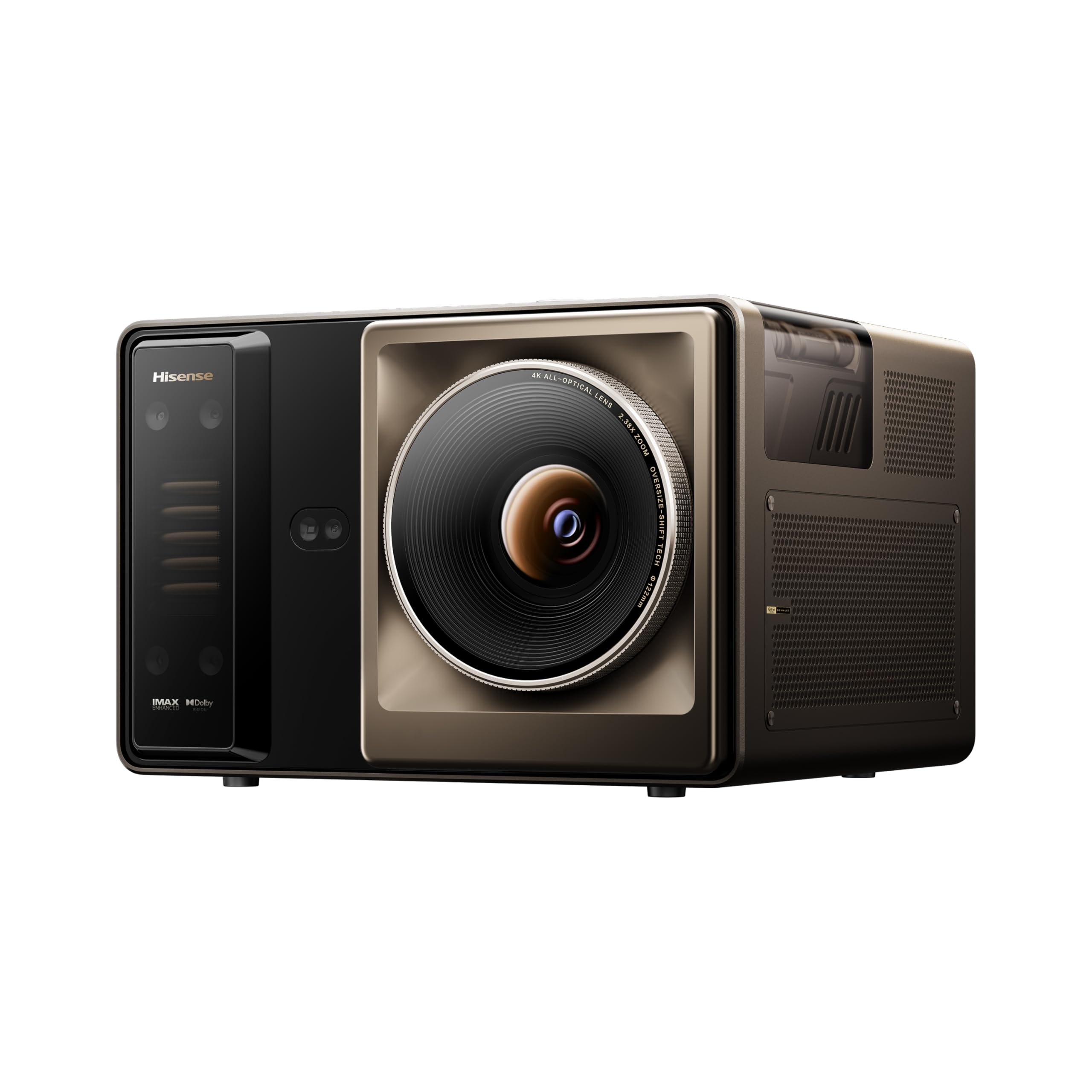
The Hisense XR10 is the undisputed brightness champion of this list, delivering a genuine 6,000 ANSI lumens through its dual laser light source and optimized optical design. This is not a single laser with phosphor—the XR10 uses dual laser sources to achieve its extreme output, and the 7-level iris allows you to tune the brightness/contrast balance for your specific room. The 6,000:1 native contrast ratio is the highest published native contrast figure on this list, and the 17-element all-glass lens is an industry-first design that maintains sharpness and light transmission without any warping or discoloration over time.
The optical flexibility is extensive: the 0.84-2.0:1 throw ratio with optical zoom and full lens shift (vertical and horizontal) means you can place this projector almost anywhere in the room and achieve a perfectly rectilinear image. IMAX Enhanced, Dolby Vision, and Active 3D are all supported, and the liquid cooling system keeps the fan noise manageable even at peak brightness—a remarkable achievement for a 6,000-lumen projector. The VIDAA smart OS provides access to over 1,200 apps, though it lacks the polish of Google TV.
The trade-off for this extreme brightness is size and weight—the XR10 is a large, desktop form factor that requires a sturdy surface or ceiling mount, and it is not portable in any meaningful sense. The built-in speakers are functional but uninspiring, and the VIDAA OS can feel sluggish compared to competitors. The price reflects the engineering investment in the dual-laser system and the 17-element lens, placing it as a serious consideration only for users who genuinely need 6,000 lumens—such as those with large ambient-light-filled spaces or business/education applications.
Why it’s great
- Unmatched 6,000 ANSI lumens for bright-room dominance
- 6,000:1 native contrast ratio with 7-level iris control
- 17-element all-glass lens eliminates optical decay over time
Good to know
- Large, heavy chassis requires dedicated installation space
- VIDAA OS is less polished than Google TV
- Premium price narrows the audience to high-lumen specialists
FAQ
What is the difference between a triple laser projector and a single laser projector?
Do I need an ALR screen for a triple laser projector?
Can a triple laser projector replace my TV for daily use?
Final Thoughts: The Verdict
For most users, the best 4k triple laser projector winner is the Hisense C2 Ultra because it delivers the best balance of true triple-laser brightness, optical zoom flexibility, gaming-ready 240Hz support, and Dolby Vision certification at a price that undercuts flagship UST competitors while outperforming many standard-throw options in its class. If you want the deepest, most cinematic black levels in a dedicated dark-room theater, grab the Valerion VisionMaster Max for its IRIS-augmented contrast and anti-rainbow technology. And for a well-lit living room TV replacement where daytime visibility is paramount, nothing beats the sheer luminance of the Hisense XR10.