
Our readers keep the lights on and my morning glass full of iced black tea. As an Amazon Associate, I earn from qualifying purchases.
Specs are compiled from manufacturer listings and verified buyer reviews and can change over time — please confirm the key details on the product page before buying.
You want a movie screen that keeps dark scenes dark and bright scenes clean at the same time. The Roku 55-Inch Pro Series does that better than anything else on this list for the money. If your living room is bright, with windows behind the couch, lean toward the Hisense models instead. Below, you can see which 4K panel fits your room, your seating, and your viewing habits.
I’m Min — the founder and writer behind Gadgets Feed. This guide is built by comparing the manufacturers’ published specifications and the patterns across verified customer reviews, so you get each pick’s real strengths and trade-offs instead of marketing spin.
Movie night depends on more than resolution alone. You need to know which panel holds black levels in a dark room, which one fights glare, and which one renders motion without smearing a car chase. This breakdown covers all of it so you can pick a 4k tv for movies that matches how you actually watch.
Our Picks at a Glance
How To Choose The Best 4K TV For Movies
A movie-first TV is judged on one thing above all: how it handles a dark scene. Space battles, night chases, and dim interiors are where cheap panels fall apart — the blacks turn grey, the shadows smear, and detail vanishes. The panel technology and its dimming zones matter more here than the pixel count.
Backlight technology: mini-LED versus OLED
Mini-LED sets pack thousands of tiny LEDs behind the screen, grouped into local dimming zones — areas that can brighten or darken independently. The more zones a set has, the tighter the contrast around bright objects against dark backgrounds. OLED panels light each of their 8 million pixels on their own, so black is genuinely off and contrast is total. On the other hand, OLED tends to be dimmer overall, so a sunlit room can wash one out.
HDR formats and what they do for films
HDR stands for high dynamic range — it lets a scene show both a bright window and a dark corner without crushing either one. Dolby Vision, HDR10+, and HLG are different versions of that. Dolby Vision IQ adds an ambient light sensor that adjusts brightness to your room, which is genuinely useful for evening movie watching. HDR10+ Adaptive does something similar. If a set supports several of these formats, you’re covered no matter which streaming service you use.
Motion handling and the soap-opera effect
MEMC (motion estimation and motion compensation) inserts extra frames to smooth fast action. It helps a race scene or a football pass stay readable, but it can make a 24-frame film look like a home video if cranked too high. A set with a Filmmaker Mode gives you a one-button way to switch all processing off and watch movies the way the director shot them.
Room brightness and seating distance
The single most common mistake buyers make is buying the biggest screen they can afford and putting it in a bright room with a reflective screen. A mini-LED with high brightness handles a daylight room well; an OLED with a glare-free coating does too, but needs care with reflections. Also check your wall space — a 77-inch set needs a genuinely large living room to sit comfortably in.
Quick Comparison
| Model | Best For | Display Tech | Refresh Rate | Screen Size | Amazon |
|---|---|---|---|---|---|
| Roku 55-Inch Pro Series★ Best Overall | Best Overall | QLED Mini-LED | 120Hz | 55 inches | Amazon |
| Samsung 65-Inch M70H SeriesBest Value | Best Value | Mini-LED | 120Hz (DLG) | 65 inches | Amazon |
| TCL 55-Inch R7D SeriesBudget Champion | Budget Champion | QLED LED | 60Hz | 55 inches | Amazon |
| Toshiba 65″ Z670R Series | Best for Gaming | QLED Mini-LED | 144Hz | 65 inches | Amazon |
| Hisense 55″ U7 Series | Brightest Room Pick | Hi-QLED Mini-LED | 165Hz | 55 inches | Amazon |
| Hisense 85″ E7 Cinema Series | Big Screen Pick | Hi-QLED Mini-LED | 144Hz | 85 inches | Amazon |
| TCL 65″ QM8L Series | Most Versatile | SQD-Mini LED | 144Hz | 65 inches | Amazon |
| Sony 65″ BRAVIA 6 OLED | Cinematic OLED | OLED | 120Hz | 65 inches | Amazon |
| Sony 65″ BRAVIA XR8B OLED | Top Performer | OLED | 120Hz | 65 inches | Amazon |
| Samsung 77″ S90H Series | Premium Pick | OLED | 165Hz | 77 inches | Amazon |
| LG 77″ OLED evo C6 | Best for Dolby Vision | OLED | 120Hz | 77 inches | Amazon |
In-Depth Reviews
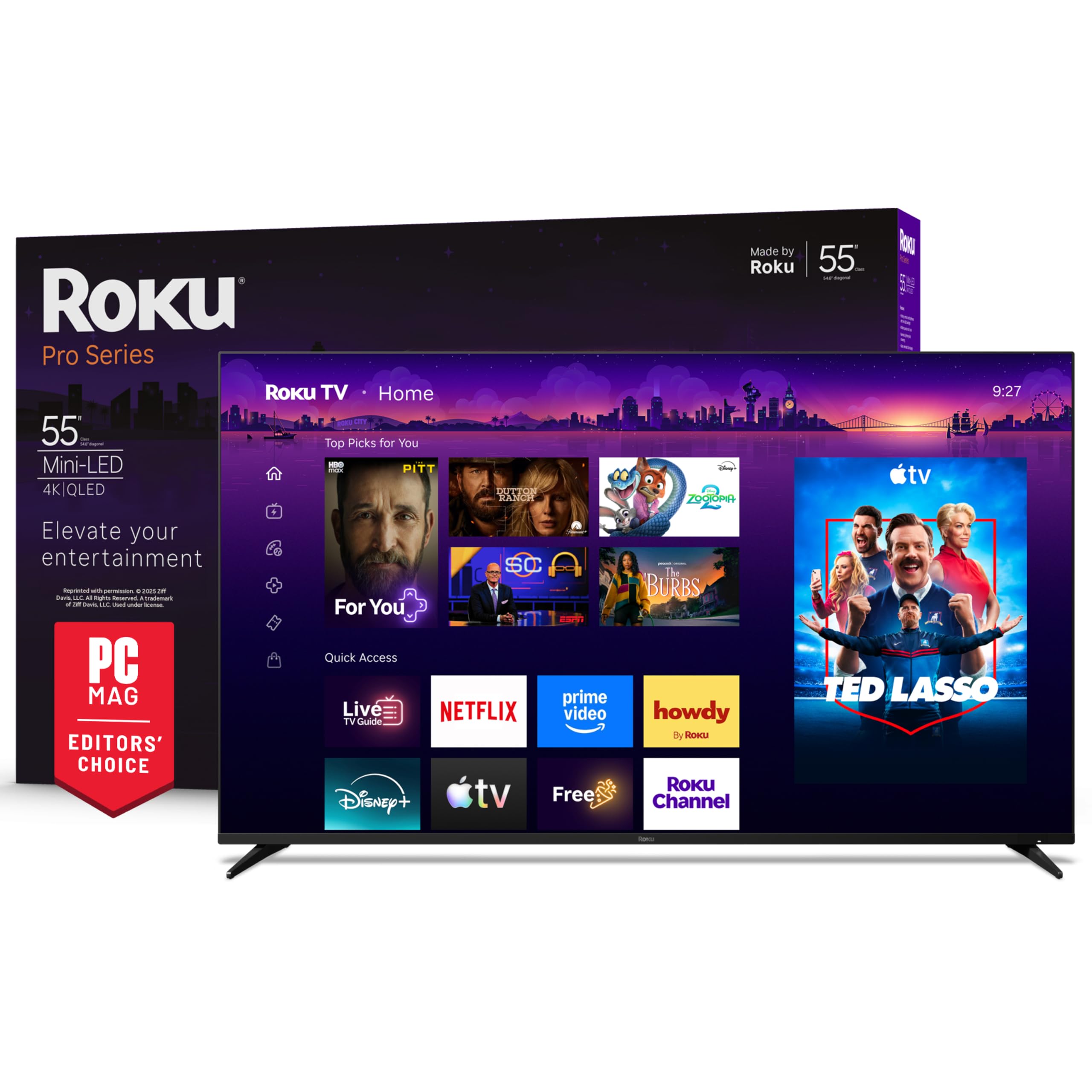
1. Roku 55-Inch Pro Series Smart TV – 4K QLED Mini-LED TV – RokuTV
Our pick — 4.5+★ from 300+ verified ratings; the strongest balance of quality and price.
Hundreds of mini-LEDs and near-OLED black levels make this the movie-first bargain.
The Roku Pro Series does the thing that matters most for movie watching on a mid-range panel: it gets dark scenes genuinely dark. Thousands of mini-LEDs sit behind the QLED screen — tiny individually controlled lights, not one big edge light — so a dim basement scene holds detail instead of turning grey. Owner consensus describes black levels that come close to OLED, and for a 55-inch set that is remarkable.
You also get Dolby Vision IQ here, which reads the light in your room and reworks the tone mapping on the fly. A 7 p.m. movie with the curtains open will not have the same washed-out highlights you’d get from a standard HDR set. The screen refreshes at 120Hz, so a fast pan across a city street stays clean. It is also the more efficient set of the two mini-LED competitors: 238 kilowatt_hours_per_1000_hours against the Samsung M70H’s 80 kilowatt_hours_per_1000_hours, so if you care about running cost the Samsung wins that column clearly.
The Roku part of the equation is where a lot of buyers end up relieved. Setup takes minutes, the home screen is uncluttered, and the remote is fully rechargeable with backlit buttons and a finder — press a button on the side of the TV and the remote chimes. Sound is more usable than most built-in speaker systems thanks to side-firing speakers and Dolby Atmos, though a soundbar will still beat it for a real movie night. Its 4.5+ stars across 320+ ratings make it the best-reviewed set here. The honest catch: 55 inches is on the smaller side for a deep living room, and its 238 kilowatt_hours_per_1000_hours running cost is the highest of the quick-jump picks in its class here.
Where it shines
- Mini-LED backlight with near-OLED blacks gives dark film scenes real depth
- Dolby Vision IQ adapts tone mapping to your room light level
- 120Hz refresh keeps action films and sports sharp
- Rechargeable backlit remote with a finder button built in
Where it bites
- 238 kilowatt_hours_per_1000_hours is the heavier energy draw next to the Samsung M70H’s 80
- 55 inches will feel small at long viewing distances
- Built-in sound is decent but a soundbar still earns its place
Go for it if: you want dark-room movie performance with a genuinely simple smart interface and a remote you won’t lose.
Think twice if: you’re seating across a big room — go 65 inches or larger instead.
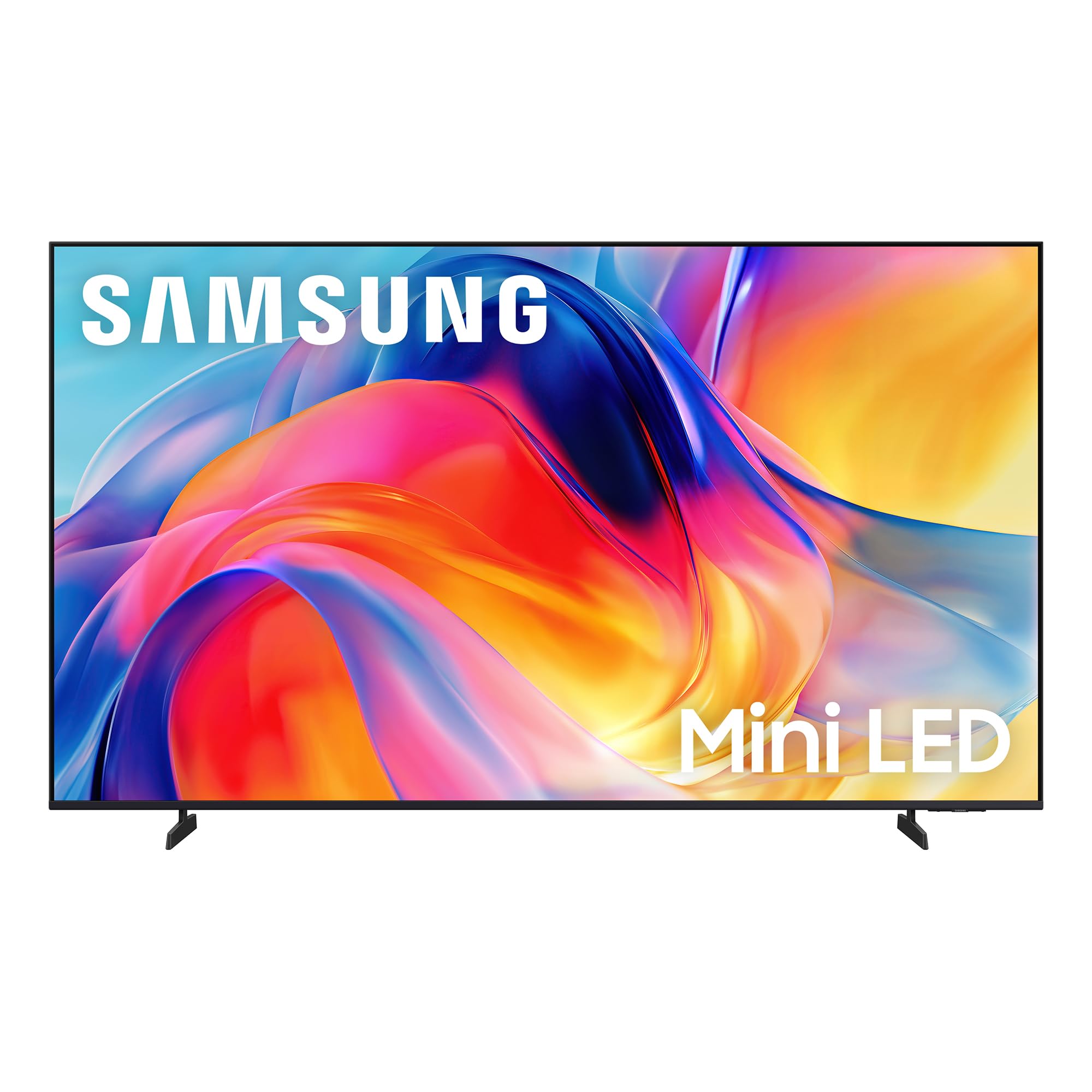
2. Samsung 65-Inch Class M70H Series, Mini LED, 4K, Smart TV, 2026 Model
65 inches of mini-LED at a genuinely modest outlay — with the lightest energy draw here.
This is the set to consider if you want a 65-inch screen without stretching the budget. The Mini LED backlight gives it brighter highlights and deeper blacks than a standard LED, and its Colour Booster drives one billion shades — plenty of punch for a loud action film. The energy figure is the real standout though: 80 kilowatt_hours_per_1000_hours against the Roku’s 238, so over years of movie nights the Samsung quietly runs cheaper.
You also get Samsung TV Plus, with 2,700+ free streaming options including 750+ subscription-free channels on the home screen. That is genuinely useful if you’re between subscriptions and still want something on. There’s a Gaming Hub too, pulling your console and cloud games into one page, and a Soccer Mode that Samsung claims sharpens motion and boosts grass colours — useful for sports fans sharing the TV.
The honest question is whether the 65-inch mini-LED frame holds up in a dark room. Mini LED is generally good at that, but this set is not a full-array local-dimming monster like the deeper-pocket options here. The 120Hz number is a DLG refresh rate (a doubled figure that smooths motion rather than a native panel speed), so purists may notice a touch of blur in fast pans. Still, 4.0+ stars across a decent spread of owners shows the picture quality wins most buyers over.
What you get: a 65-inch Mini LED panel with Samsung’s colour processing, 80 kilowatt_hours_per_1000_hours running cost, and native access to a huge free streaming library.
Where it asks a question: the 120Hz figure is DLG rather than a native panel rate, so this is a comfortable everyday movie set rather than a purist’s fast-motion one.
Ideal for: anyone who wants a big 65-inch mini-LED with cheap running cost and a lot of free streaming built in.
Look elsewhere if: you demand native 120Hz or deeper dimming for a pitch-black home theatre.
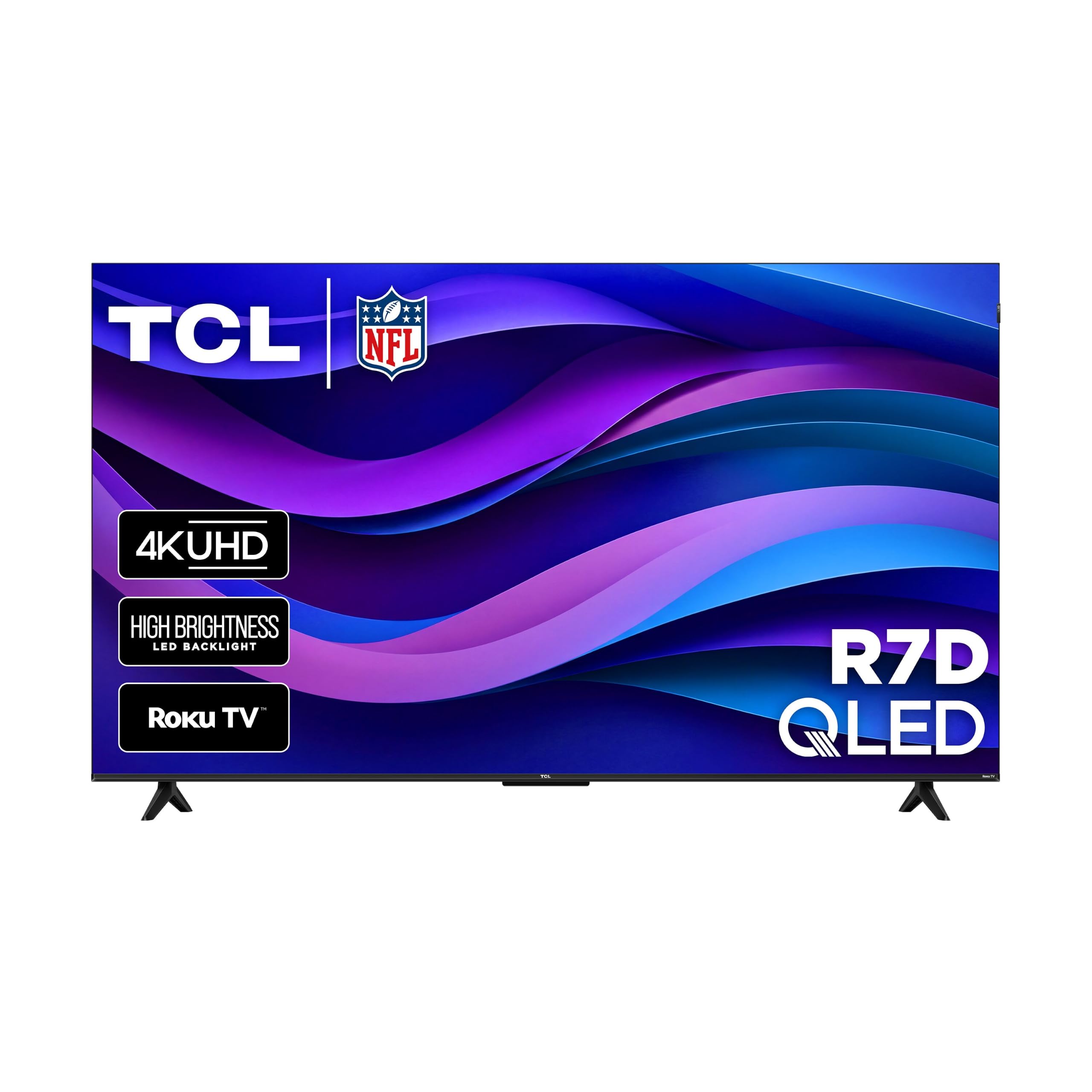
3. TCL 55-Inch R7D Series QLED 4K UHD HDR Smart Roku TV, 55R7D (2026)
The entry point that still speaks fluent movie — QLED colour and a Roku brain for less.
A 55-inch QLED that handles HDR in four formats — Open HDR, HDR10, HDR10+, and HLG — gives you sharp, richly coloured 4K without asking much at all. The 3840×2160 native panel is a true 4K resolution, not a boosted 1080p, which means the detail is real. Motion Rate 240 with MEMC keeps a car chase readable, and it is a meaningful step over a standard 60Hz set for action.
The Roku home screen is baked in, so no separate streaming stick hangs off a dangling HDMI port. That is a genuinely tidy solution for a living-room film setup, and the set plays nicely with Alexa, Google Home, and Apple HomeKit, plus AirPlay 2 and Google Cast if you mirror a trailer from your phone. Three HDMI inputs, one of them ARC/eARC, cover a soundbar and a console at the same time.
Here’s the honest catch: this is LED backlighting, not mini-LED or OLED, so the contrast is more modest than the sets sitting above it here. Dark scenes are still good for the price, but a basement blackout session will show some light bleed. The reliability is also the most-discussed trade-off in the picture-quality cluster — a few buyers report units that stop working while plenty of owners have no trouble. What nobody argues about is the quality of the picture it produces for the outlay.
What earns its keep
- True 4K panel with HDR10, HDR10+, and HLG support
- Roku TV built in — no extra streaming box needed
- Three HDMI inputs including ARC/eARC
- Works with Alexa, Google Home, and Apple HomeKit
What to know going in
- Standard LED backlight — contrast won’t match mini-LED or OLED
- 60Hz panel refresh puts motion smoothing on the software
- Durability is the recurring note in the mixed reviews
Worth buying if: your budget is the deciding factor and you still want a proper 4K QLED with all the major HDR formats.
Pass if: you’re chasing deep blacks or fast-motion clarity at a competitive level.
4. Toshiba 65″ Class Z670R Series Mini-LED 4K UHD Smart Fire TV (65Z670R, 2026 New)
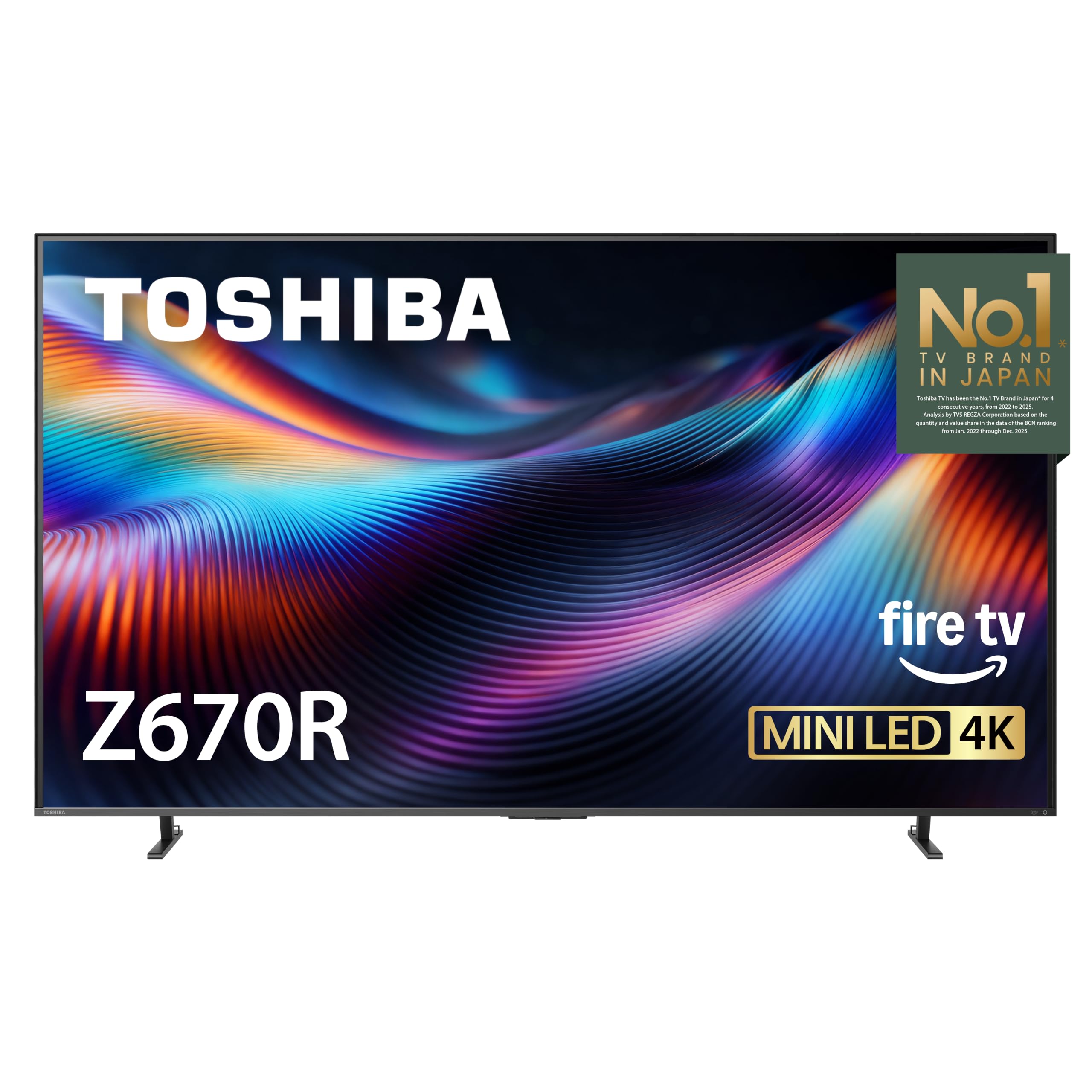
A 65-inch mini-LED with a native 144Hz panel — a movie set that keeps up with a console.
If film night is only half the schedule, this is the pick. On top of that it throws a QLED colour layer over thousands of mini-LEDs with full-array local dimming, so dark scenes hold their depth. REGZA Engine ZRi Gen3 is Toshiba’s processing engine, tuned to adjust clarity and contrast scene by scene.
Dolby Vision IQ, HDR10+, HDR10+ Adaptive, and HLG all get supported, so no matter which streaming service you use your films look right. The REGZA Power Audio Pro system includes a bass woofer and dual clear-direct speakers, and the built-in AI Light Sensor adjusts brightness to the room. It is also the largest-capacity screen in this sub-premium group at 65 inches against the Roku’s 55 inches.
The honest caveat is durability. Some units failed after a month of use in customer reports, and performance reliability is a mixed note in the review picture. That’s not a universal problem — plenty of owners are delighted — but if a warranty matters, hold onto that paperwork. The rest of the package, with its picture quality and sound, gets consistently strong feedback from owners.
Picture first: full-array local dimming on a mini-LED panel with Dolby Vision IQ gives deep blacks and easy tone mapping in any room.
The honest caveat: a subset of units have failed early, so the warranty card is worth keeping somewhere you’ll find it.
Built for: the buyer who wants 65 inches of mini-LED and a native 144Hz panel for film plus console gaming.
Not the one for: the exclusively-movies viewer who values a bulletproof track record above all.
5. Hisense 55″ U7 Mini-LED ULED 4K UHD Smart Fire TV (55U7SF, 2026 New)
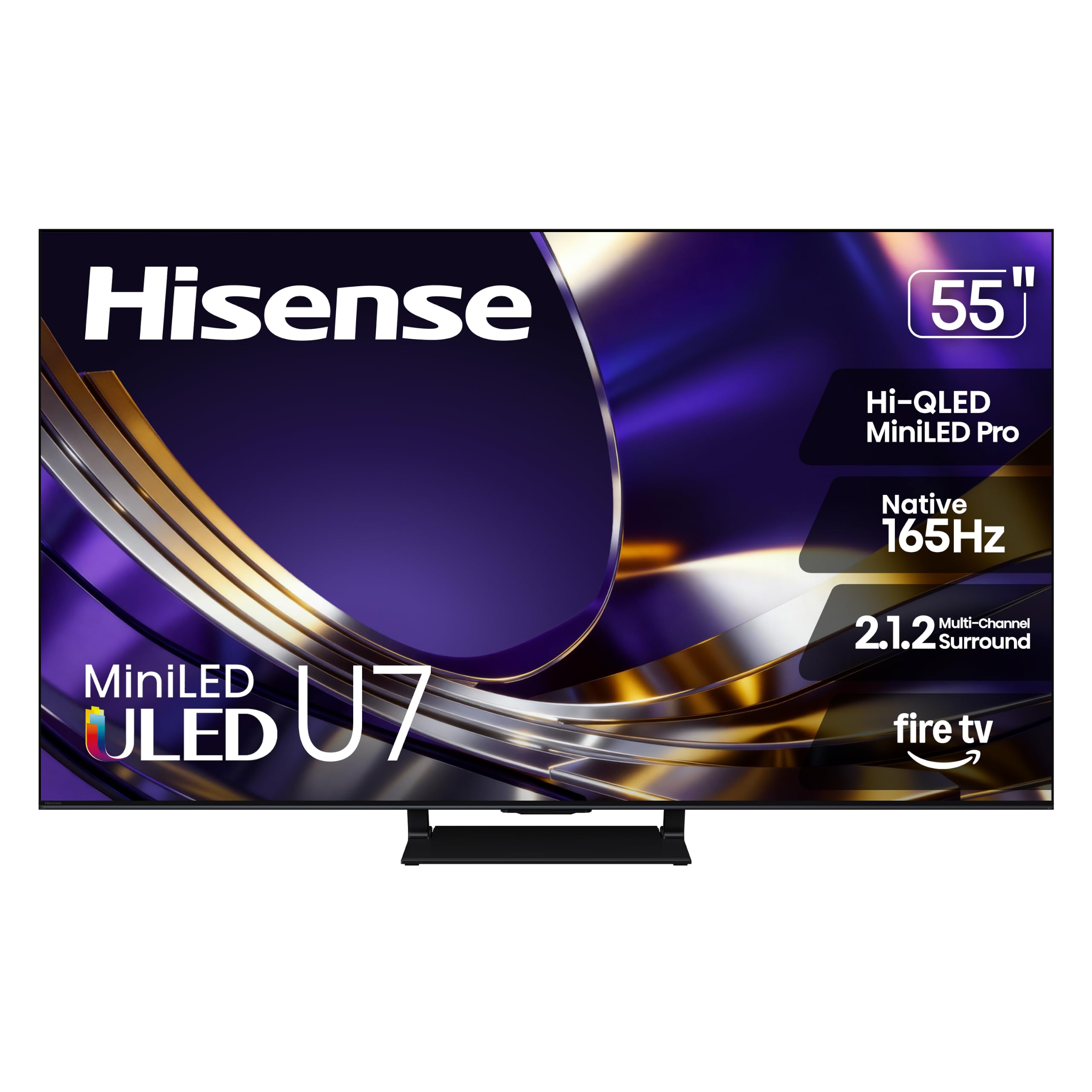
The glare-killer — up to 3000 nits of peak brightness makes a sunlit room a non-issue.
If your movie screen sits beside a window, this is the set to think hardest about. The U7 packs up to 3000 local dimming zones and up to 3000 nits of peak brightness — a light output figure that lets it fight daylight without washing out. The anti-reflection layer is dual-layer rather than single-layer, so overhead lights and afternoon sun land as soft glows rather than mirror copies of your lamps. Owners describe a picture that stays crisp and readable even in a bright room.
The native 165Hz refresh rate handles sports and fast action without blur, and Hi-View AI Engine Pro is the in-house processor that adjusts colour, contrast, and detail constantly as the scene changes. Dolby Vision IQ and Dolby Atmos both come along, plus IMAX Enhanced certification. The 2.1.2 channel speaker array is tuned by Devialet — the audio brand behind a lot of premium speaker gear — which explains why owners are unusually warm about the built-in sound.
This is also the most-discussed-for-value pick on the whole list. The quality of its picture gets praise ahead of every other attribute, and the deep blacks and vivid colours it produces on a mini-LED panel rival far more expensive screens. At 4.0+ stars across a big spread of owners, it is the set to beat for a bright lounge. The catch is that the minimum 3000-zone figure is an “up to” claim, and the U7SF is a 55-inch set — not ideal for a long throw across a big room.
The bright-room case
- Dual-layer anti-reflection keeps the picture readable in daylight
- Up to 3000 nits peak brightness and up to 3000 dimming zones
- Native 165Hz panel for fast motion
- Devialet-tuned 2.1.2 channel audio with Dolby Atmos
Worth noting
- 55 inches — consider a 65-inch or above for deep rooms
- Full brightness headroom requires a source that supports HDR
- Peak-zone figures are “up to” claims, not guaranteed minimums
Right choice for: a bright, window-heavy living room where reflections normally ruin movie night.
Keep looking if: you sit far back and want a screen that fills the wall.
6. Hisense 85″ E7 Cinema Series Hi-QLED Mini-LED 4K UHD Smart Fire TV (85E7SF, 2026 NEW)
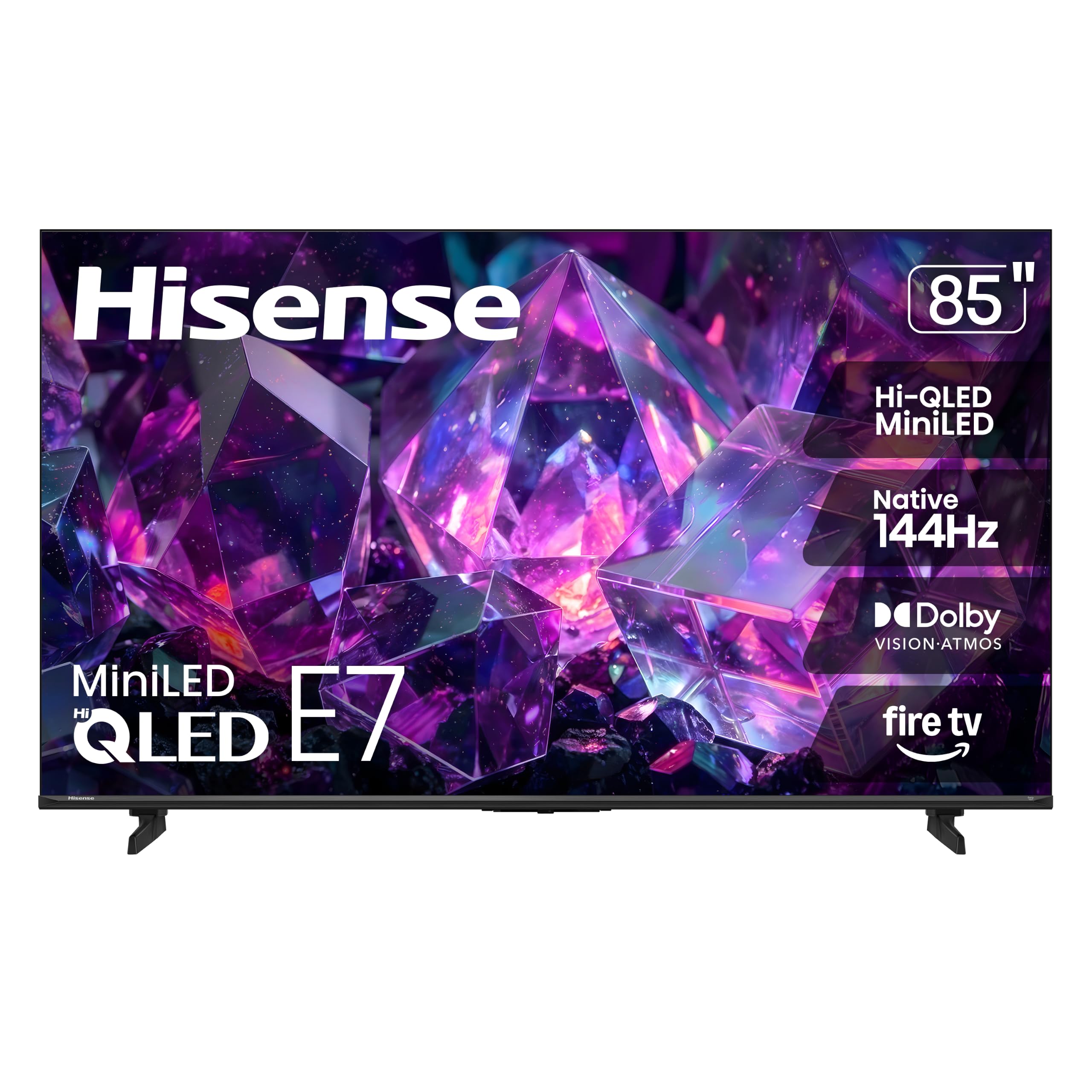
An 85-inch mini-LED with Filmmaker Mode — the home theatre centrepiece if your wall can take it.
If your living room can take it, this is the movie-first choice of the whole page. The 85-inch Hi-QLED Mini-LED panel is enormous, and its thousands of precise light zones do the heavy lifting on dark scenes. Where this set genuinely earns attention for movie watching is Filmmaker Mode — it preserves the original aspect ratio, colour, frame rate, and sound, so what you watch is closer to what the director signed off on.
Dolby Vision and Dolby Atmos both come along, and Total HDR Solution adds Dolby Vision IQ, HDR10+ Adaptive, HDR10, and HLG for coverage across every streaming service. Native 144Hz keeps motion clean, and AI Smooth Motion with MEMC reduces blur on fast action. The AI Light Sensor adapts brightness to your room, which matters greatly on a panel this large — a small adjustment goes a long way.
There’s a real trade-off to weigh. The reliability note is mixed for a subset of buyers — a few units stopped working unexpectedly — even though picture quality gets strong, consistent praise from the vast majority. And it is worth checking your wall and viewing distance carefully: 85 inches is not a TV you can tuck into a corner. For a dedicated home theatre room, though, the size and the cinematic processing make a compelling package.
The case for it: Filmmaker Mode preserves the director’s framing and colour, and at 85 inches it is the closest thing to a cinema wall in this lineup.
Plan your room first: the 85-inch cabinet demands a big wall and a long throw, and reliability is the most-discussed trade-off for a small subset of units.
Best for: a dedicated home theatre room and a buyer who wants Filmmaker Mode on a genuinely huge screen.
Not for: a compact lounge — this set needs wall real estate and viewing distance.
7. TCL 65 Inch QM8L Series SQD-Mini LED QLED 4K Smart Google TV 65QM8L, 144Hz
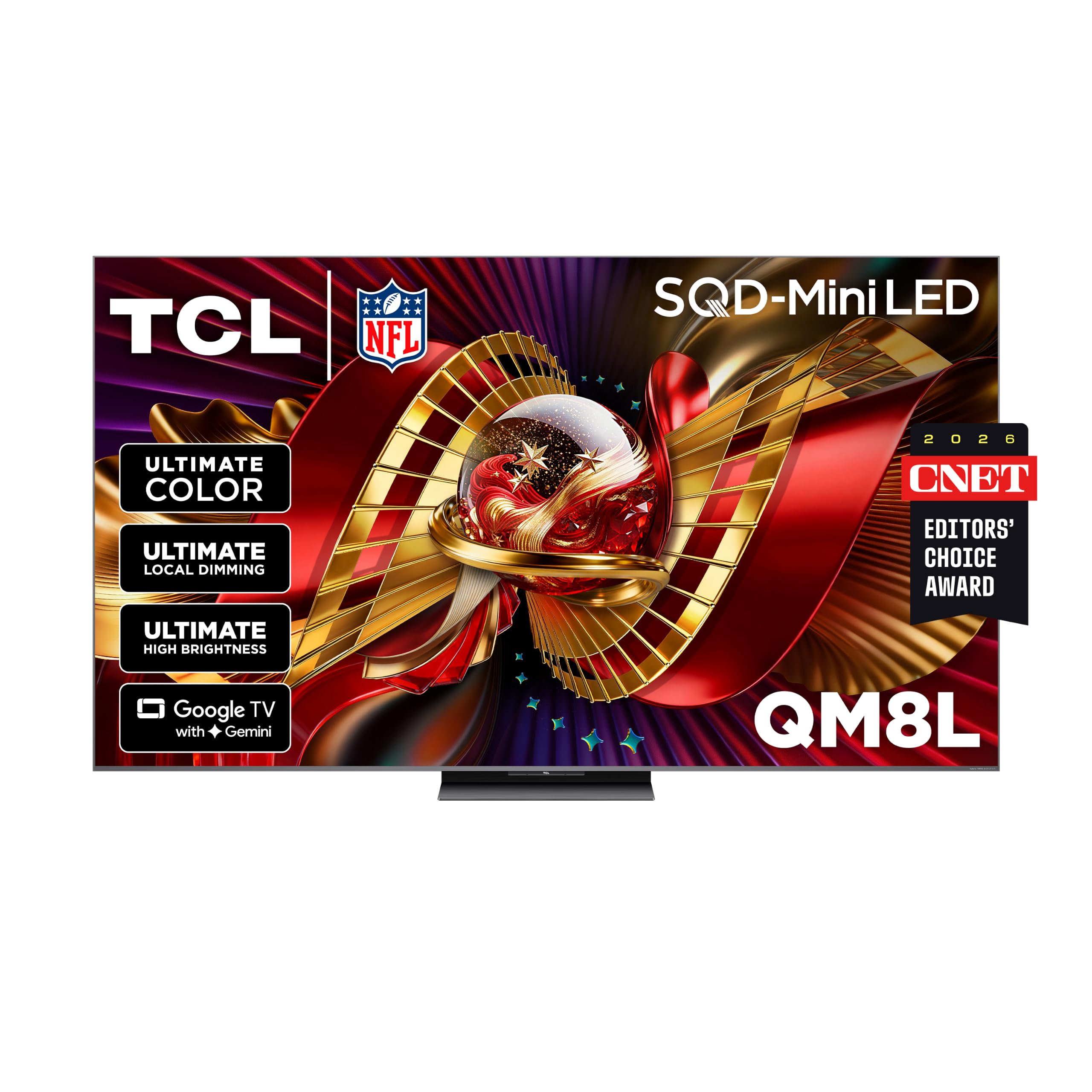
A 7000:1 contrast ratio and up to 6000 peak nits — this is the movie room showpiece.
The headline for this set is contrast. TCL rates the QM8L at a 7000:1 static contrast ratio — the gap between the brightest white and darkest black it can show at the same time — which translates to serious separation in a night scene. On top of that, TCL lists up to 4000+ discrete dimming zones and up to 6000 peak nits of brightness from its SQD-Mini LED panel. Those are the kind of numbers that make a Dolby Vision film look genuinely cinematic.
Google TV with Gemini lives on the home screen, and the chat-style search actually helps if you never remember what you want to watch. The audio is handled by Bang & Olufsen, with support for an optional wireless subwoofer and satellite speakers to build out a real surround rig. If you watch a lot of movies, the combination of a high-contrast panel and B&O-tuned audio is a strong pairing.
The honest question is the reliability note. Performance gets mixed feedback in the reviews, with some buyers reporting issues while many others have no problem at all. At 4.0+ stars, most owners love it, but a small subset reports reliability hiccups. The 144Hz native panel and Game Accelerator 288 VRR also make it a versatile choice if a console finds its way into the living room.
The standout numbers
- 7000:1 static contrast ratio for deep, defined dark scenes
- Up to 4000+ dimming zones and up to 6000 peak nits
- Bang & Olufsen audio with optional wireless subwoofer
- Google TV with Gemini chat-style search built in
Honest limitations
- Performance reliability draws mixed feedback for a subset of units
- Peak-zone and nits figures are “up to” claims
- 65 inches still needs a reasonably wide wall
Pick it for: serious movie watching in a dim room where a 7000:1 contrast panel earns its keep.
Skip if: you want a proven long-term reliability record above all else.
8. Sony 65 Inch BRAVIA 6 OLED 4K HDR Smart Google TV with Gemini (K-65A60)
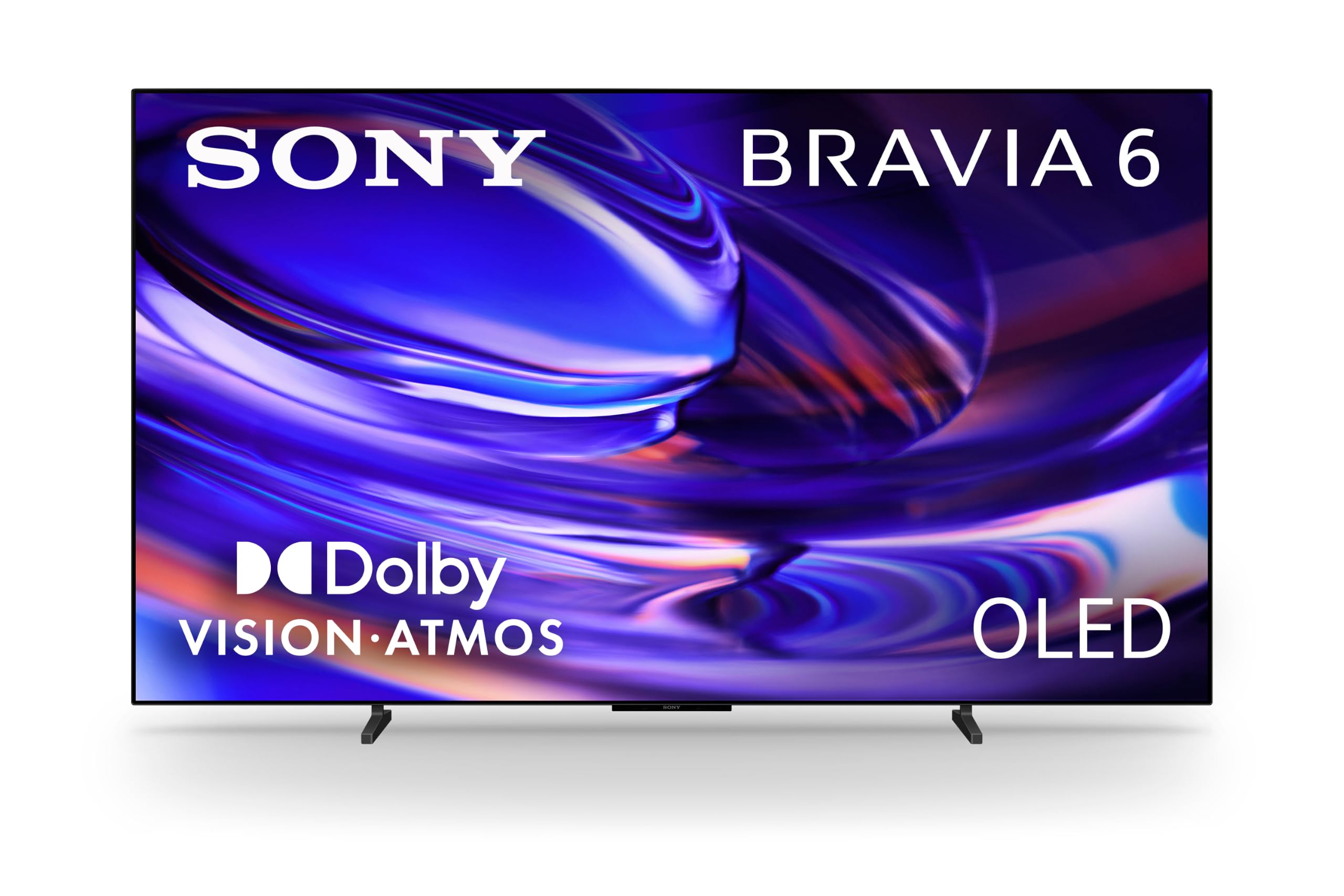
An 8-million-pixel OLED panel with a Sony-tuned image — the movie purist’s set.
OLED is the panel type that wins the dark-room argument, and this Sony is a proper example. Over 8 million self-lit pixels switch off independently, which means pure black is genuinely black — not a very dark grey. Triluminos Pro is Sony’s colour engine, and it drives over a billion accurate colours, which shows up most in skin tones and natural daylight shots. Dolby Vision with Dolby Atmos and DTS:X means the sound also spreads beyond the frame.
Sony Picture CORE includes 5 credits for recent releases plus 12 months of access to a large classic-film library. Netflix and Prime Video stream in studio-calibrated modes, so the TV leans toward how the film was mastered. Four HDMI ports with HDMI 2.1 features cover a console or a PC at the same time as a soundbar. A two-position stand lets you raise the panel for a soundbar underneath, which is a small but genuinely nice touch.
For a dedicated movie room, though, that is not a problem. Sony’s factory calibration — every panel adjusted one by one — keeps colour and contrast consistent. The catch that matters most for movies is simply the brightness ceiling.
Why movie fans love it: self-lit pixels deliver pure black and Sony’s Triluminos Pro colour engine gets skin tones looking right, while the built-in Sony Picture CORE library gives you films to watch immediately.
Plan for a dark room: OLED brightness has a ceiling, so a lounge with unshaded windows is not where this set shows its best side.
Best for: a darkened movie room where absolute black levels mean more than raw brightness.
Maybe not if: your living room is bright and you want headroom against daylight.
9. Sony 65 Inch BRAVIA XR8B OLED 4K HDR Smart Google TV (K-65XR8B)

The Sony that adds a dedicated XR Processor to its OLED panel — and studio calibration to match.
The XR8B is the step up from the BRAVIA 6, and the difference is the XR Processor — a dedicated chip that intelligently enhances colour, contrast, and clarity scene by scene in real time. The 8-million-pixel OLED panel gives you pure black, and the XR Clear Image engine upscales HD content to bring back lost detail. Combine that with XR OLED Motion, and a fast-moving film keeps a sharp, blur-free picture.
Studio Calibrated Modes are the movie feature here. They are tuned to how Netflix and Prime Video master their content, so you watch films close to what the colourist approved. Dolby Vision (a high dynamic range format that keeps bright and dark detail) works with Dolby Atmos and DTS:X (two surround-sound formats) for rich audio. IMAX Enhanced support brings the certified aspect ratio and sound mix for certified films. Four HDMI ports, including HDMI 2.1 (the newer port standard), handle 4K/120 (4K at 120 frames per second), VRR (variable refresh rate, which stops screen tearing), and ALLM (auto low-latency mode, which cuts game lag).
On brightness, this set is honest about its limits. The panel is OLED and the brightness gets mixed feedback from owners — some find it bright, others note it is not ideal for a bright room. If you watch at night or with the blinds down, that is a non-issue. There is also a reliability note: a subset of units randomly turn off and restart, so warranty matters. The picture and sound still gather strong praise from owners, and its studio modes make it a serious cinema-first choice.
Movie-first advantages
- XR Processor enhances every scene in real time
- Studio calibrated modes matched to Netflix and Prime Video
- Dolby Vision, Dolby Atmos, DTS:X, and IMAX Enhanced
- 8 million self-lit OLED pixels with XR OLED Motion
What to weigh up
- OLED brightness ceiling — best in a dim room
- A subset of units have restarted randomly, so keep the warranty
- Fewer HDMI ports than some competitors, though all four support 2.1 features
Worth it for: the movie lover who wants Sony’s XR processing and studio-calibrated picture on an OLED.
Not ideal for: a bright lounge or a buyer who wants the headroom of a mini-LED panel.
10. Samsung 77-Inch Class S90H Series, OLED, 4K, Smart TV, 2026 Model
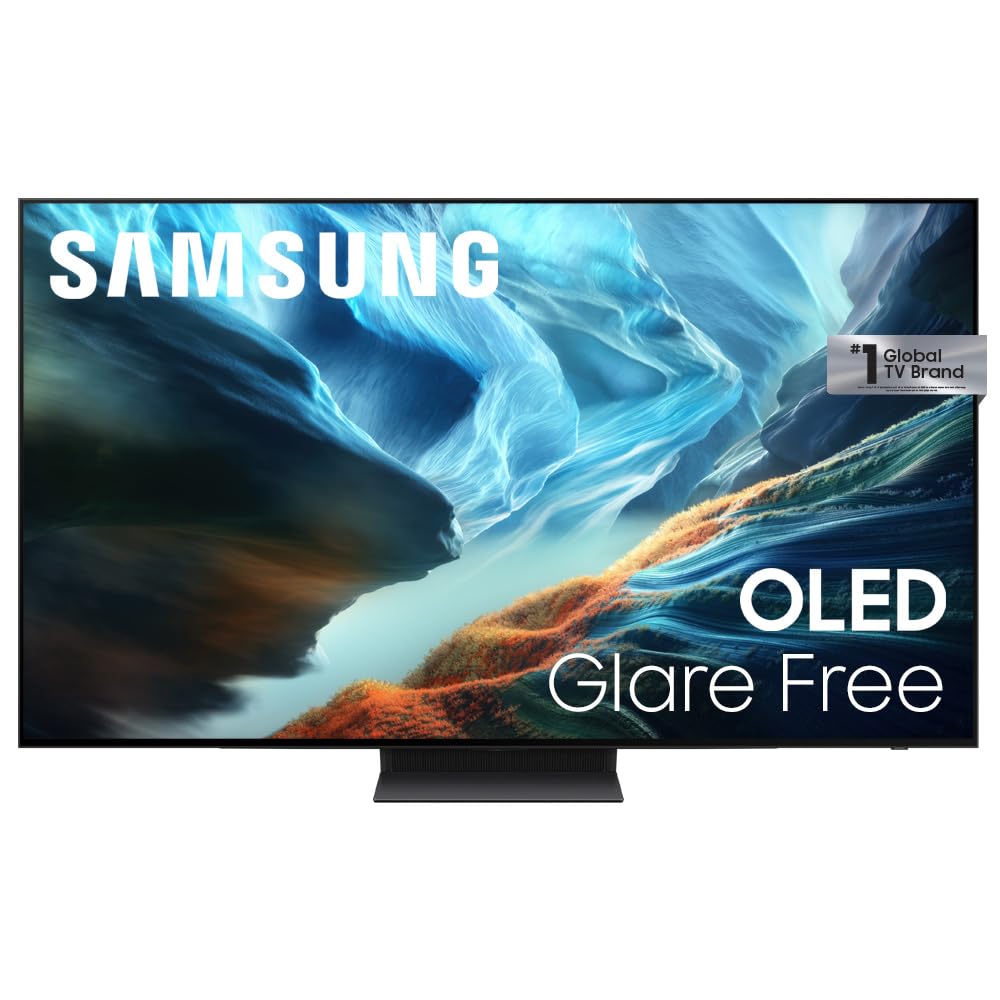
A 77-inch OLED with a glare-free coating — the big-screen movie set for a bright-ish room.
The S90H solves the classic OLED complaint in a clever way: its Glare Free coating eliminates distracting reflections, so an OLED’s brightness ceiling stops being a deal-breaker in a room with lamps or a window at an angle. The 77-inch panel is large enough to fill a proper theatre wall, and the NQ4 AI Gen3 Processor — powered by 128 neural networks — delivers AI-enhanced picture and sound across streaming, gaming, and live sports. Auto HDR Remastering makes older films look more like true HDR, which is quietly useful for a back-catalogue movie night.
4K AI Upscaling Pro uses those same 128 networks to sharpen everything you watch up to 4K, and AI Motion Enhancer Pro reduces blur and flicker on fast pans. For film fans, that means a 1080p classic or a standard-def stream looks closer to a modern 4K film. The OLED HDR+ element keeps brightness and contrast high enough for a genuinely dramatic picture.
The one thing worth saying about this set: OLED panels can struggle in a truly sunlit room even with a good coating, and the smart interface is mixed in owner feedback. There’s also a hardware gaming features overlap that isn’t the core selling point for movie night. The picture quality and anti-glare result are what owners rave about, and at 77 inches the S90H delivers some of the most dramatic on-screen depth available.
The big-screen draw: a 77-inch OLED with a glare-free coating that makes a bright lounge usable without giving up OLED black levels.
Where to be cautious: OLED still has a brightness ceiling and the smart interface draws mixed notes, so this is a preference-driven choice rather than a universal default.
Great match for: someone building a big-screen OLED theatre and wanting real reflection control.
Look elsewhere if: your room is truly sunlit all day and you need maximum brightness headroom.
11. LG 77-Inch OLED evo C6 4K Smart TV, Dolby Vision & Atmos
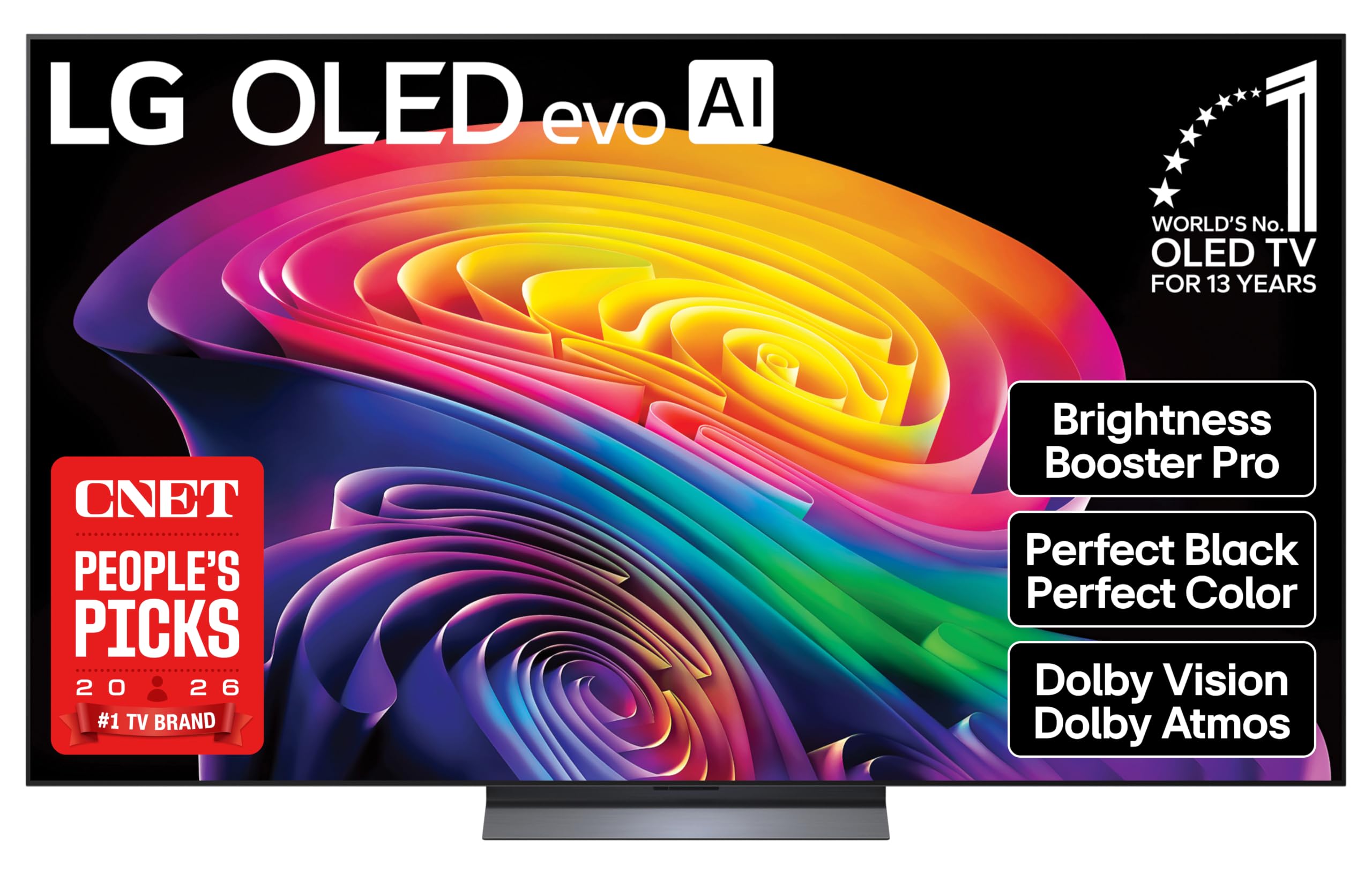
A 77-inch OLED evo with Filmmaker Mode and a 40W 2.2 speaker array built in.
LG’s C6 is a movie-maker’s set. Dolby Vision handles the HDR, and Filmmaker Mode with Ambient Light Technology adjusts the picture to match your room. Dolby Atmos is delivered through a built-in 40W 2.2-channel speaker system, so you get a real surround effect without a soundbar straight away. WOW Orchestra synchronizes the TV speakers with a compatible LG soundbar for a unified front, and eARC handles the wired connection.
The panel is an OLED evo, which means each pixel turns off to produce true black. Colours sit deep and vibrant, and owners rave about rich colours and deep blacks. Brightness Booster Pro is LG’s brightness-boosting layer, but OLED still tends to be dimmer than mini-LED overall, and this set draws mixed feedback on reflection handling. Check the reflection angle if your windows sit opposite the screen.
The honest catch this time isthe remote and the interface. LG’s Magic Remote and its webOS interface draw notably negative feedback — plenty of owners find the pointer-style remote fussy and the menus harder to navigate than rivals. That does not touch the picture, but it does affect how quickly you get to a film, so consider adding a streaming stick if you hate pointer remotes. On the picture itself, owners are largely delighted, and the 77-inch OLED evo panel with Dolby Vision is a genuinely cinematic combination.
The cinema case
- Dolby Vision and Dolby Atmos with a built-in 40W 2.2-channel system
- Filmmaker Mode with Ambient Light Technology for director-intent viewing
- OLED evo pixels deliver true black and rich colour
- WOW Orchestra syncs the TV with a compatible LG soundbar
The friction points
- Magic Remote and webOS menus draw notably negative owner feedback
- OLED brightness ceiling and mixed notes on reflection handling
- Wall-mount hardware is sold separately
Made for: a film-first viewer with a dark room who wants Dolby Vision and real built-in Atmos without adding a soundbar.
Consider the Sony instead if: a simple, predictable menu system matters as much to you as the picture.
Understanding the Specs
Local Dimming Zones and Peak Nits
A local dimming zone is a small area of the backlight that can brighten or darken on its own. More zones mean tighter contrast — a bright candle flame against a dark room stays crisp instead of blooming into a haze. Peak nits is a measure of how bright the screen can push a highlight, and sets like the Hisense U7 list up to 3000 nits, which is what lets a picture survive a sunlit room. Both figures are usually quoted as “up to” maximums, so treat them as ceilings rather than guaranteed everyday performance.
Contrast Ratio and OLED Black
Contrast ratio describes the gap between the brightest white and the darkest black a panel can show at once — the TCL QM8L rates 7000:1, which is a strong figure for an LED-backlit set. OLED works differently: each of its 8 million pixels switches off entirely, so its black is effectively absolute rather than a very dark grey. That is why OLED suits a dark movie room and mini-LED suits a bright one, where the extra light output matters more than perfect blacks.
Refresh Rate and MEMC
Refresh rate is how many times per second the screen redraws — 120Hz means 120 times. Higher rates keep fast pans clean, which is why the 144Hz and 165Hz panels here suit both action films and gaming. MEMC is the processing that inserts extra frames between existing ones to smooth motion. It helps live sports and fast action, but push it too hard on a 24-frame film and the picture starts to look like a home video, so a Filmmaker Mode that disables it is worth having.
HDR Formats Explained
HDR10 is the baseline high dynamic range format, HDR10+ adds scene-by-scene brightness metadata, and HLG is the version broadcasters use. Dolby Vision is a premium version with more precise tone mapping, and Dolby Vision IQ adds an ambient light sensor so the TV adjusts to your room automatically. Sets that support several formats — the Hisense E7 and the Toshiba Z670R cover most of them — mean you’re not caught out when a streaming service uses a format your TV doesn’t recognise.
FAQ
Is OLED or mini-LED better for watching movies in a dark room?
What does Dolby Vision IQ actually do differently from standard Dolby Vision?
Will a 120Hz refresh rate make movies look different from a standard TV?
How much space do I need for a 77-inch TV like the Samsung S90H or LG C6?
Do I need a soundbar if I buy one of these TVs?
What is Filmmaker Mode and why does it matter for movies?
Is a higher peak brightness number worth paying more for?
Can I use one of these movie TVs for gaming as well?
How many HDMI ports do I need on a movie TV?
Should I worry about burn-in on an OLED movie TV?
Final Thoughts: The Verdict
For most rooms, the 4k tv for movies that gets the balance right is the Roku 55-Inch Pro Series. Its mini-LED backlight (many tiny LEDs behind the screen) produces near-OLED blacks, so night scenes stay deep. Dolby Vision IQ adjusts the picture to your room’s light, and the rechargeable remote with a finder button is a small daily pleasure. If your lounge is bright, reach for the Hisense 55-Inch U7. Its anti-reflection layer and up to 3000 nits of peak brightness (a measure of screen brightness) keep the picture readable in daylight. For a dedicated dark theatre with a big wall, the Hisense 85-Inch E7 gives you Filmmaker Mode (a setting that turns off motion smoothing) and a screen that genuinely fills the room.
The Roku wins on 4.5+ stars across hundreds of owners, a record that backs up its near-OLED blacks. Whatever you choose, buy for the room you actually watch in — brightness for a sunlit lounge, blacks for a blackout theatre.
How We Picked
We do not accept paid placement. Every pick is matched to a real buyer and a real use-case; we do not hands-on test units.
Sources & Methodology
Specifications: manufacturer listings and product documentation. Review insights: verified customer reviews, as of November 2026. Pricing: not shown on this page (it changes often); check the current price via the retailer link.
As an Amazon Associate, Gadgets Feed earns from qualifying purchases. This does not affect which products we feature.