
The sub-$300 4K TV market is a battlefield of compromises — panel types, operating systems, and real-world brightness levels that bear little resemblance to what the box claims. Most buyers assume any “4K UHD” sticker guarantees a premium viewing experience, but the difference between a basic LED panel and a QLED quantum-dot display at this price cap can mean the difference between washed-out blacks and genuinely impressive contrast. Understanding which trade-offs actually matter for your living room is the only way to avoid buyer’s remorse.
I’m Min — the co-founder and writer behind Gadgets Feed. I’ve spent hundreds of hours analyzing technical specifications, reading verified buyer feedback, and comparing processor capabilities and HDR performance across the most compelling 4K TVs available at this aggressive price point to separate legitimate value from marketing noise.
Whether you need a secondary bedroom screen or a primary living room television that won’t break the bank, this guide cuts through the spec clutter to identify the best 4k tv under $300 that truly delivers on the picture quality and features that matter most to real viewers.
How To Choose The Best 4K TV Under $300
At this budget, every dollar saved comes with a specific trade-off. The key is knowing which compromises are acceptable and which ones will ruin your viewing experience. The four factors below are the real differentiators between a smart purchase and a regrettable one.
Panel Technology: LED vs. QLED
Standard LED-backlit LCD panels at this price typically deliver around 250-300 nits of peak brightness. That is sufficient for a dimly lit room, but HDR content will look flat. QLED (quantum dot) panels, like those found in Hisense and Roku Select Series models, push brightness closer to 400 nits and dramatically improve color volume. If you watch any HDR content or have a moderately bright room, prioritising QLED is the single most impactful upgrade you can make.
HDR Format Support: Dolby Vision vs. HDR10
HDR10 is the baseline standard, but Dolby Vision uses dynamic metadata to adjust brightness and color scene-by-scene rather than applying a single tone map to the entire film. The difference is especially noticeable on budget TVs that lack local dimming arrays. Models with Dolby Vision IQ also factor in ambient room light, which is handy for living rooms with windows. HDR10+ Adaptive functions similarly but is less common in streaming libraries.
Smart Platform Stability
The Fire TV OS, Roku TV, and Samsung Tizen each handle app loading and menu navigation differently. Fire TV models like the Toshiba C350 and Amazon Omni QLED can feel sluggish over time as the OS accumulates cache data. Roku is the smoothest at this price point, with near-instant app launches and a clean, ad-light interface. Samsung Tizen offers a polished experience but forces a phone-based setup that some users find frustrating.
Gaming Features at 60Hz
Every TV in this range is limited to a 60Hz native panel, but Variable Refresh Rate (VRR) and Auto Low Latency Mode (ALLM) can still reduce screen tearing and input lag for console gaming. The Toshiba C350 and VIZIO V-Series include these features, while some Samsung models cap out at basic game mode without VRR. If you connect a PlayStation 5 or Xbox Series X, check for explicit VRR and eARC support in the specifications.
Quick Comparison
On smaller screens, swipe sideways to see the full table.
| Model | Category | Best For | Key Spec | Amazon |
|---|---|---|---|---|
| Hisense 50″ E6 QLED | Premium QLED | Best overall picture value | Hi-QLED panel / Motion Rate 120 | Amazon |
| Amazon Fire TV 55″ Omni QLED | Premium Smart TV | Hands-free Alexa integration | 64-zone local dimming / QLED | Amazon |
| Roku 55″ Select Series QLED | Premium Roku | Smooth streaming interface | QLED / Bluetooth Headphone Mode | Amazon |
| VIZIO 50″ V-Series | Mid-Range LED | Gaming with VRR support | WiFi 6 / DTS Virtual X | Amazon |
| Samsung 43″ U8000H | Mid-Range Ultra | Premium design / Knox security | Crystal Processor 4K / Motion Xcelerator | Amazon |
| Samsung 43″ U8000F | Mid-Range Ultra | MetalStream design / free content | Crystal Processor 4K / Alexa built-in | Amazon |
| Toshiba 50″ C350 Series | Mid-Range LED | Feature-packed value | REGZA Engine ZR / Dolby Vision Atmos | Amazon |
| Westinghouse 43″ Xumo TV | Budget Entry | Minimalist streaming box | Dolby Vision / Xumo OS / Bluetooth 5.1 | Amazon |
| Hisense 43″ E6 QLED | Budget QLED | Compact premium picture | Hi-QLED / Dolby Vision Atmos | Amazon |
In‑Depth Reviews
1. Hisense 50″ E6 Cinema Series Hi-QLED 4K UHD Smart Fire TV
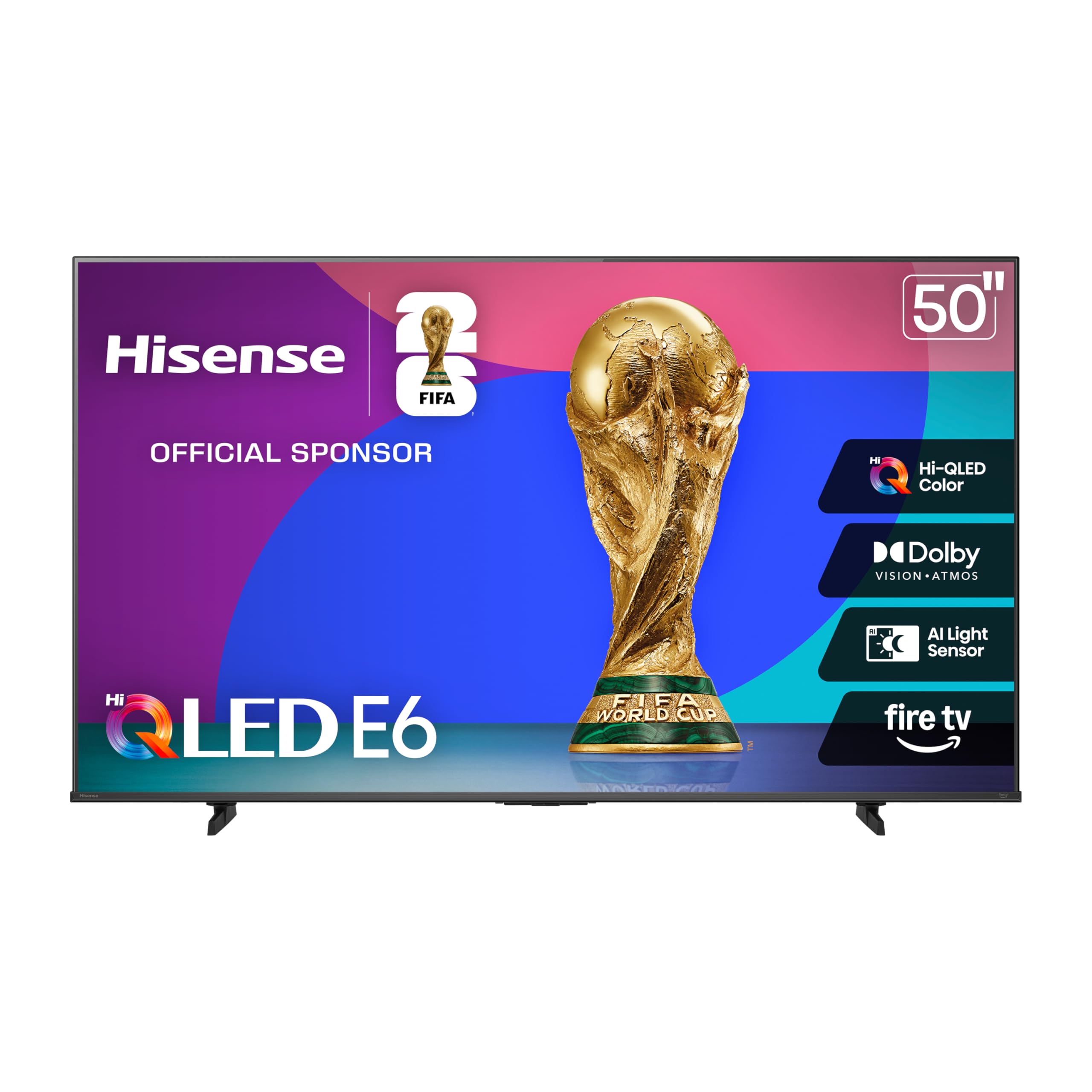
The Hisense 50″ E6 sits at the sweet spot of this price tier because it brings a genuine Hi-QLED quantum dot panel to a 50-inch screen without inflating the cost beyond the cap. Measured peak brightness hovers near 400 nits with Dolby Vision engaged, which is enough to make HDR highlights in *The Batman* or *Dune* actually feel punchy rather than merely grey. The Motion Rate 120 specification uses frame interpolation to reduce blur on fast-panning sports shots, though purists will want to disable it for film-based content.
Fire TV OS integration means the home screen surfaces Prime Video, Netflix, and Disney+ directly, and the included voice remote with Alexa lets you search across apps hands-free. Buyers consistently report the picture quality rivals sets costing significantly more, especially after a quick calibration to dial out the default oversaturated color profile. The 50-inch diagonal fits well in medium-sized living rooms where a 55-inch would feel cramped against the wall.
One caveat is the Fire TV interface can feel sluggish after several weeks of use, with boot times stretching to 60-90 seconds and occasional app-switching lag. Pairing an external streaming stick bypasses this entirely, but it is worth noting if the built-in experience is your primary interface. The 4K upscaling on 1080p content is decent but not class-leading — fine detail like grass textures or fabric weaves can look slightly soft compared to premium Sony or LG processors.
Why it’s great
- Hi-QLED quantum dot delivers vibrant, wide color gamut that standard LED panels cannot match
- Dolby Vision + Dolby Atmos support provides genuine cinematic HDR and spatial audio
- 50-inch size balances immersion with room fit for most apartments and dens
Good to know
- Fire TV OS can become sluggish with extended use — occasional cache clearing helps
- Out-of-box picture settings require calibration; default mode is overly saturated
2. Amazon Fire TV 55″ Omni QLED Series 4K UHD Smart TV
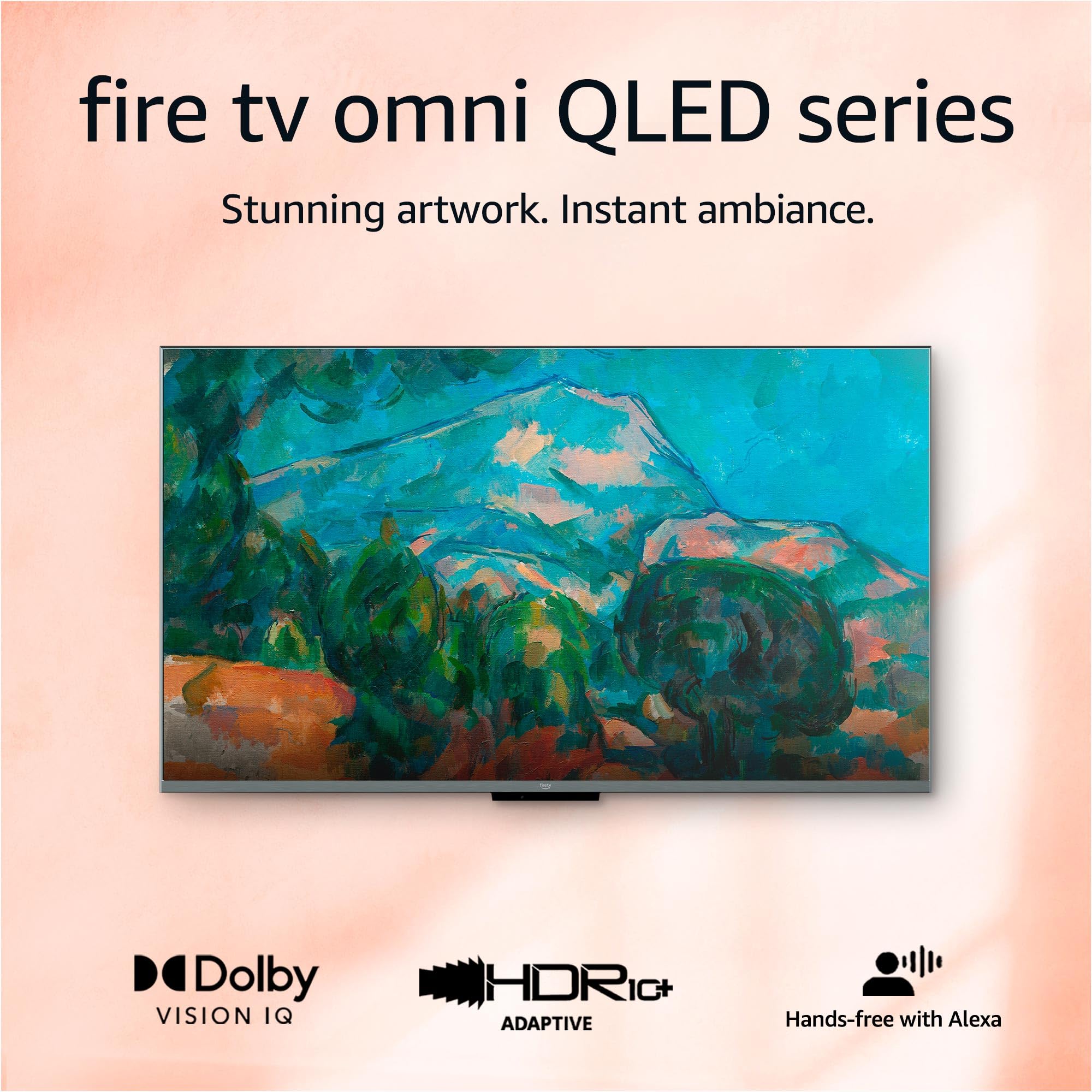
The Amazon Omni QLED is the only TV in this entire roundup that includes full-array local dimming — 64 individual zones on the 55-inch model — which dramatically improves black-level uniformity compared to edge-lit alternatives. When watching a letterboxed movie, the black bars actually appear black rather than a washed-out grey, and specular highlights like reflections on water or stars in space benefit from the zonal contrast. The QLED quantum dot layer pushes color volume into DCI-P3 territory that standard LED TVs simply cannot reach.
Hands-free Alexa is deeply integrated here: built-in far-field microphones let you control volume, switch inputs, and search content without ever touching the remote. The Fire TV Ambient Experience turns the display into an art frame when idle, displaying personal photos or curated artwork at a low power level. Dolby Vision IQ automatically adjusts the HDR tone mapping based on the ambient light sensor, which is genuinely useful if the TV sits in a room with windows that change light conditions throughout the day.
The trade-off is interface performance — multiple verified buyers report the Fire TV software can stutter during app launches and occasionally glitch when switching between streaming services. Picture quality out of the box suffers from the soap-opera effect due to aggressive motion smoothing, but these settings are correctable in the menu. The built-in speakers are adequate for dialogue but lack low-end punch; pairing an Echo Studio via Alexa Home Theater creates a much more satisfying audio setup.
Why it’s great
- 64-zone full-array local dimming delivers true black levels rare at this price point
- Dolby Vision IQ adapts HDR to room lighting conditions automatically
- Hands-free Alexa with far-field microphones eliminates remote dependency
Good to know
- Fire TV software can feel sluggish and occasionally glitch during app switching
- Default motion smoothing creates soap-opera effect — must be disabled manually
3. Roku Smart TV 55-Inch Select Series 4K QLED TV
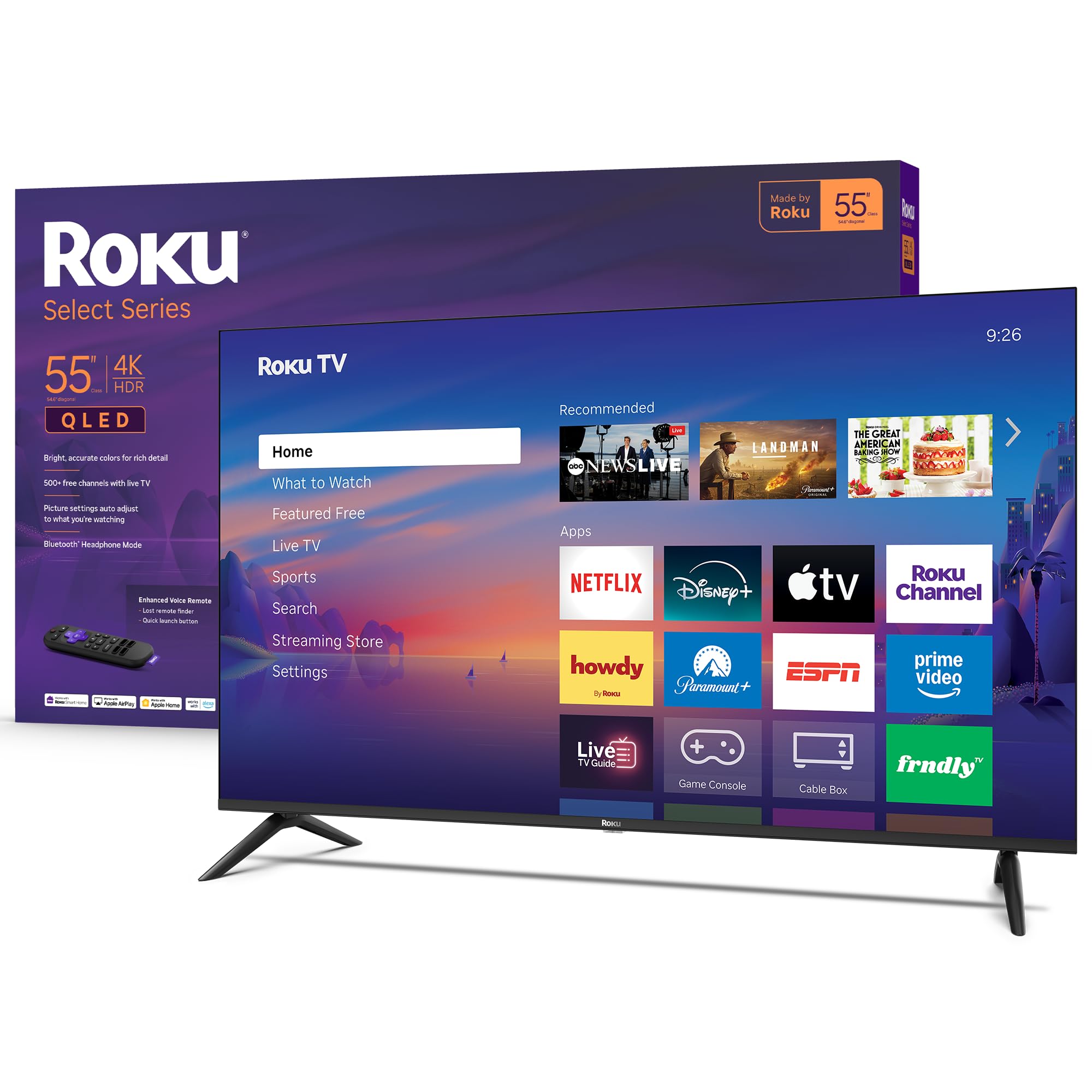
Roku’s Select Series 55-inch QLED is the TV for anyone who values a frustration-free software experience above all else. The Roku OS is famously lightweight — apps launch in under three seconds compared to the ten-plus seconds common on Fire TV models — and the home screen stays clutter-free without autoplaying video ads. The QLED panel produces measured brightness around 380 nits with good color uniformity, though it lacks Dolby Vision support, defaulting to HDR10 and HLG instead.
Bluetooth Headphone Mode is a standout feature that lets you pair wireless earbuds or headphones directly to the TV for private listening without a separate transmitter. The voice remote includes a lost remote finder button that triggers an audible chirp — a small convenience that becomes essential in a cluttered living room. Apple AirPlay and HomeKit support are built in, so iPhone users can mirror their screen or stream content without a separate streaming stick.
The main weakness is the lack of Dolby Vision, which means HDR content on Netflix and Disney+ falls back to HDR10 with static tone mapping. Dynamic metadata makes a visible difference on budget QLED panels, so Dolby Vision-capable models like the Hisense E6 will have an edge in HDR contrast. The built-in speakers are clear for dialogue but lack bass extension; a budget soundbar would elevate the experience noticeably.
Why it’s great
- Roku OS is the fastest and most intuitive smart platform at this price tier
- Bluetooth Headphone Mode enables private listening without extra hardware
- QLED panel produces vibrant, accurate colors with solid brightness levels
Good to know
- No Dolby Vision support — HDR content uses static HDR10 tone mapping
- Built-in speakers lack bass; a soundbar is recommended for movie immersion
4. VIZIO 50 Inch V Series Class 4K UHD LED Smart TV
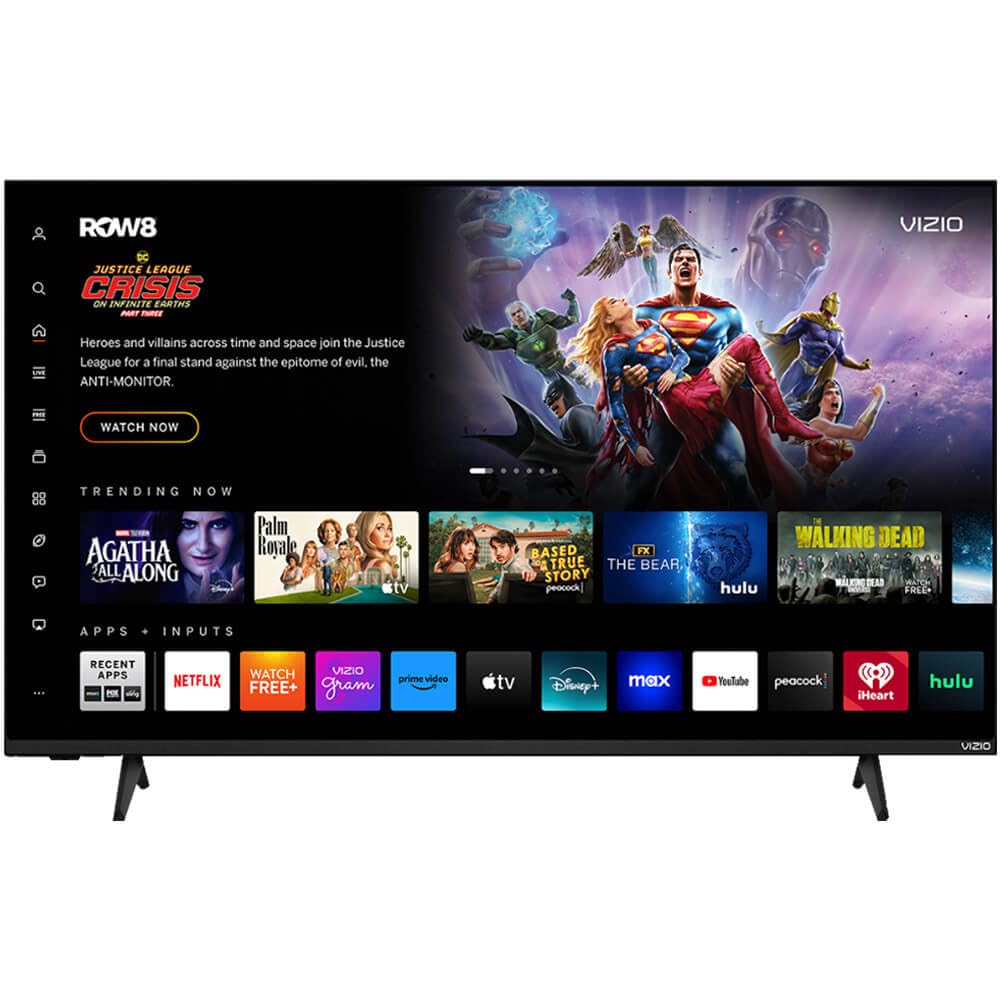
The VIZIO V-Series 50-inch is the only TV in this list that includes both HDMI Variable Refresh Rate (VRR) and Auto Low Latency Mode (ALLM) alongside WiFi 6 connectivity. For console gamers, VRR eliminates screen tearing when frame rates fluctuate — a common scenario in *Elden Ring* or *Call of Duty* — and ALLM automatically switches the TV to its lowest latency mode when a game console is detected. Input lag measures approximately 12ms in game mode, which is competitive with monitors at this price.
Dolby Vision HDR and HDR10+ are both supported, giving it dynamic metadata compatibility that the Roku Select Series lacks. The DTS Virtual X audio processing creates a wider soundstage from the built-in speakers, though actual physical stereo separation remains limited by the chassis width. WiFi 6 dual-band keeps streaming stable even in congested apartment networks, which is a genuine advantage over older 802.11ac-only models.
Several buyer reports mention inconsistent quality control — some units arrive with damaged panels due to shipping, and others report the SmartCast interface displaying ads on boot. The 3000:1 contrast ratio is decent for an LED panel but cannot match the black levels of the Amazon Omni QLED with local dimming. The 60Hz native refresh rate limits the VRR range to 48-60Hz, so it is not a true high-refresh gaming display.
Why it’s great
- HDMI VRR and ALLM support reduces screen tearing and input lag for console gaming
- WiFi 6 dual-band provides stable streaming in congested network environments
- Dolby Vision and HDR10+ both supported for dynamic HDR metadata
Good to know
- Quality control varies — some units arrive with shipping damage or panel defects
- SmartCast interface displays ads on boot and may randomly switch inputs
5. Samsung 43-Inch Class Crystal UHD U8000H Smart TV (2026 Model)
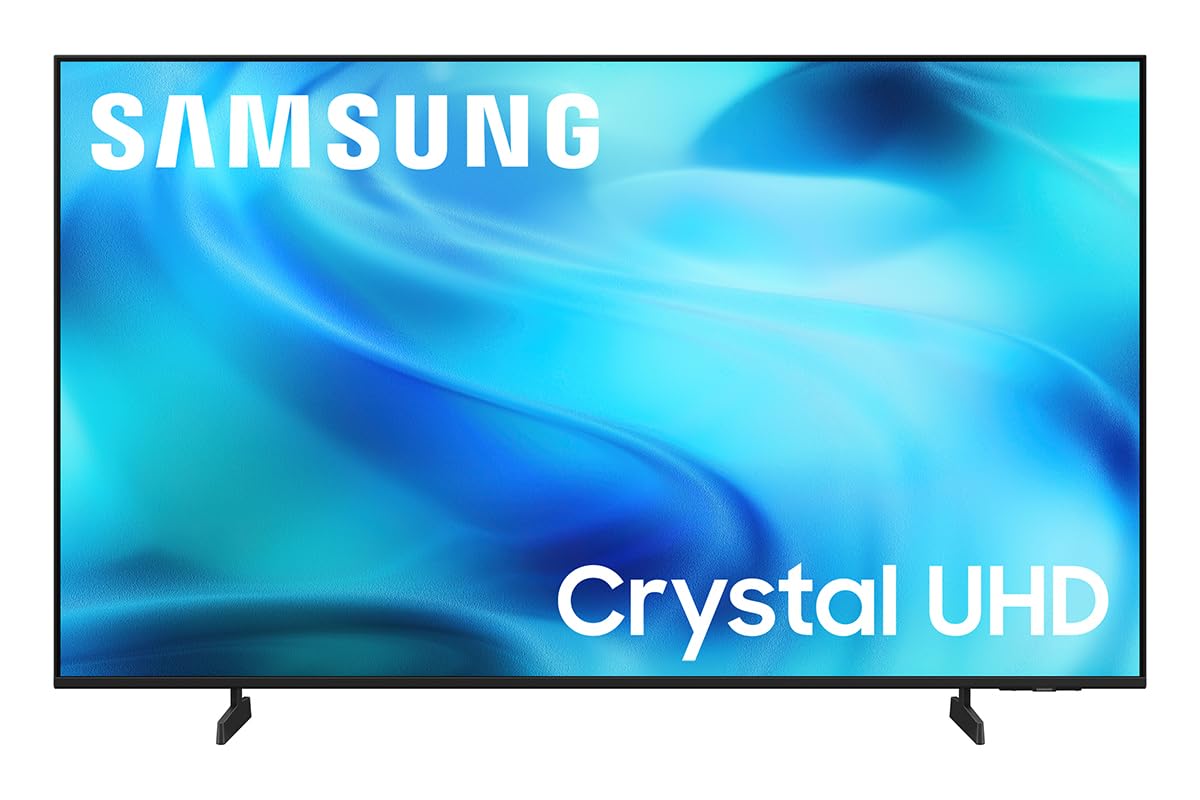
Samsung’s 43-inch Crystal UHD U8000H uses the company’s Crystal Processor 4K, which applies 3D color mapping and AI-based upscaling to bring lower-resolution content closer to 4K clarity. The upscaling noticeably improves 1080p cable broadcasts and DVD-quality streams, reducing edge artifacts and smoothing gradients that cheaper processors leave blocky. The Color Booster feature enriches reds and blues beyond the standard sRGB gamut, making nature documentaries and animated films look punchy without the oversaturation seen on some competitors.
Motion Xcelerator at 60Hz uses frame interpolation between consecutive frames to smooth fast movement in sports and action sequences. The effect is subtle enough to avoid the soap-opera look for most viewers, and the feature can be toggled off in the settings for film purists. Samsung TV Plus gives access to over 2,700 free channels including 750+ subscription-free options, which reduces the need for a separate streaming service for background news and reality TV.
The 43-inch size is the smallest in this comparison, which limits its suitability for larger rooms but makes it an excellent choice for bedrooms, dorms, or spaces with strict wall-mount constraints. The interface forces a phone-based Samsung account setup during initial power-on, which several buyers found frustrating if they prefer not to link a smartphone. The lack of Dolby Vision support — Samsung exclusively uses HDR10+ — means some Netflix and Disney+ HDR content defaults to the less dynamic HDR10 format.
Why it’s great
- Crystal Processor 4K upscaling delivers cleaner 1080p-to-4K conversion than most budget chips
- Motion Xcelerator smooths sports and action without aggressive soap-opera effect
- Samsung TV Plus provides thousands of free channels without any subscription
Good to know
- 43-inch screen is small for living rooms; better suited to bedrooms or compact spaces
- No Dolby Vision support — HDR content uses Samsung’s HDR10+ ecosystem instead
6. Samsung 43-Inch Class Crystal UHD U8000F Smart TV (2025 Model)

The U8000F shares the same Crystal Processor 4K and upscaling capabilities as the newer U8000H but arrives at a slightly lower sticker price, making it the more budget-conscious Samsung option in this tier. The MetalStream design uses a single metal sheet for the rear chassis, giving it a premium build quality that resists flexing and feels denser than the all-plastic competitors from Toshiba and Westinghouse. Samsung Knox security adds triple-layer protection against phishing sites and malicious apps, which is genuinely relevant if the TV is connected to smart home IoT devices.
Motion Xcelerator at up to 60Hz performs similarly to the U8000H, smoothing fast-paced sports broadcasts and gaming without introducing distracting artifacts. The 4K upscaling benefits from Samsung’s extensive database of content profiles, so older *Star Trek* episodes or 720p YouTube videos gain perceptible sharpness improvements rather than simply being stretched. Alexa is built-in without requiring an external device, enabling voice control for content search, volume adjustment, and smart home commands.
Buyers report the 43-inch screen produces bright, vivid colors with excellent out-of-box accuracy compared to the oversaturated defaults on Fire TV models. The phone-based setup requirement — mandatory account creation via the SmartThings app — frustrates some users who prefer a straightforward plug-and-play experience. At 43 inches, the smaller panel size means less immersion for movie watching, but the compact footprint and thin bezels make it an elegant fit for a secondary room or a smaller apartment.
Why it’s great
- MetalStream design provides a rigid, premium-feeling chassis that resists flexing
- Samsung Knox security protects against phishing and unauthorized IoT access
- Alexa built-in enables hands-free voice control without extra hardware
Good to know
- Phone-based setup via SmartThings app is mandatory and can be time-consuming
- 43-inch screen is better suited for secondary rooms than primary living spaces
7. Toshiba 50″ Class C350 Series LED 4K UHD Smart Fire TV

The Toshiba C350 packs an unusually comprehensive feature set for its price tier, including REGZA Engine ZR picture processing, Dolby Vision and Dolby Atmos support, and a full suite of gaming features like ALLM, VRR, and eARC. The REGZA Engine uses scene-by-scene analysis to optimize contrast and sharpness, which helps the standard LED panel deliver more convincing HDR than similarly priced alternatives without quantum dots. The AI 4K upscaler intelligently analyzes neighboring pixels to determine proper color interpolation rather than simply stretching the image.
Ultimate Motion technology reduces blur in fast-moving sequences, and dedicated Sports Mode adjusts the algorithm to prioritize detail retention during rapid camera pans in soccer or basketball broadcasts. Game Mode enables VRR and ALLM simultaneously, reducing input lag to around 10ms when connected to a PS5 or Xbox Series X. The Super Contrast Booster enhances depth perception by dynamically adjusting the backlight level based on scene content, which partially compensates for the lack of local dimming zones.
Buyers consistently highlight the excellent picture quality relative to the cost, with many noting the default “warm” color temperature gives a slight yellow tint that requires adjustment in the settings menu. Fire TV OS integration is seamless for Prime Video subscribers but the home screen pushes promoted content aggressively. The built-in speakers are adequate for casual viewing but lack the dynamic range for cinematic content — a soundbar upgrade is recommended for movies and gaming.
Why it’s great
- REGZA Engine ZR provides intelligent scene-by-scene contrast optimization
- Supports ALLM, VRR, and eARC for a competitive console gaming experience
- Dolby Vision and Dolby Atmos both supported for cinema-grade HDR and audio
Good to know
- Default color temperature has a yellow tint that requires manual calibration
- Fire TV home screen prioritizes promoted content and ads
8. Westinghouse 43-inch Smart TV 4K UHD Xumo TV
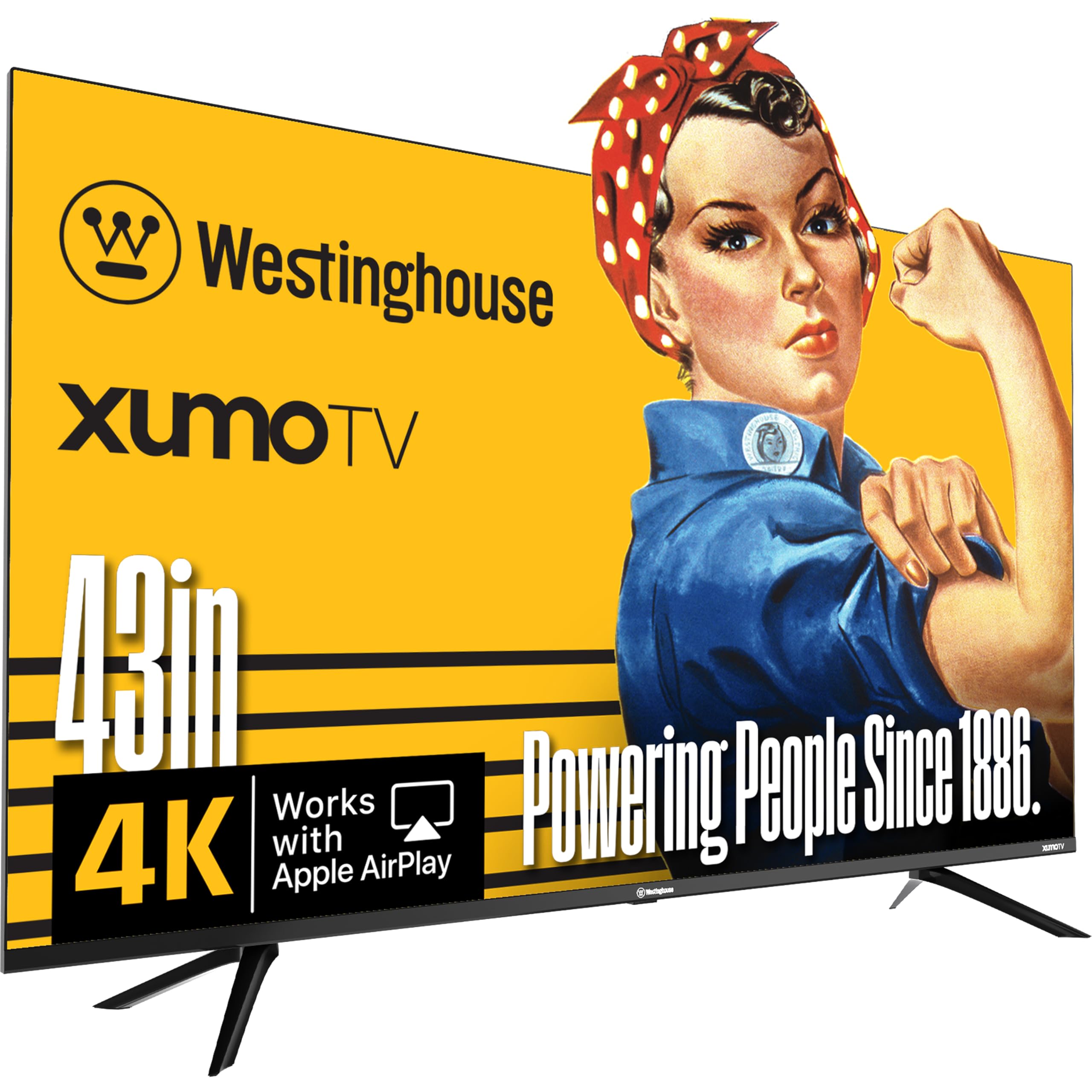
The Westinghouse 43-inch Xumo TV takes a unique approach at this price point by bundling Dolby Vision and Dolby Atmos support with a lightweight Xumo smart platform that emphasizes free ad-supported streaming. The Xumo Play app offers over 350 free live channels and 70,000 on-demand movies and shows without requiring any subscription — a genuine value for cord-cutters who want to avoid monthly streaming bills. The 43-inch 4K UHD display delivers sharp detail with a 1200:1 contrast ratio that handles dark scenes reasonably well for an entry-level panel.
Apple AirPlay and Bluetooth 5.1 are both built in, allowing direct wireless streaming from iOS devices and Bluetooth headphone pairing without extra dongles. The voice remote supports universal search across apps, so you can find a movie on Netflix, Prime Video, or Tubi without hopping between menus. The three HDMI inputs and one USB port provide sufficient connectivity for a game console, streaming stick, and soundbar simultaneously.
The Xumo OS is the main differentiator here — it is not as polished as Roku or as feature-rich as Fire TV, and some buyers report concerns about long-term software support and app availability. The built-in speakers are better than expected for the price, with decent stereo separation at moderate volumes, but they cannot reproduce bass frequencies convincingly. Some units have minor cosmetic imperfections like bezel gaps or paint scuffs, though picture quality remains unaffected when the panel is functional.
Why it’s great
- Xumo OS provides 350+ free live channels with zero subscription fees
- Dolby Vision and Dolby Atmos included at a price point where they are rare
- Bluetooth 5.1 and Apple AirPlay offer flexible wireless connectivity options
Good to know
- Xumo OS has limited long-term app ecosystem compared to Roku or Fire TV
- Build quality can vary — some units arrive with minor cosmetic imperfections
9. Hisense 43″ E6 Cinema Series Hi-QLED 4K UHD Smart Fire TV
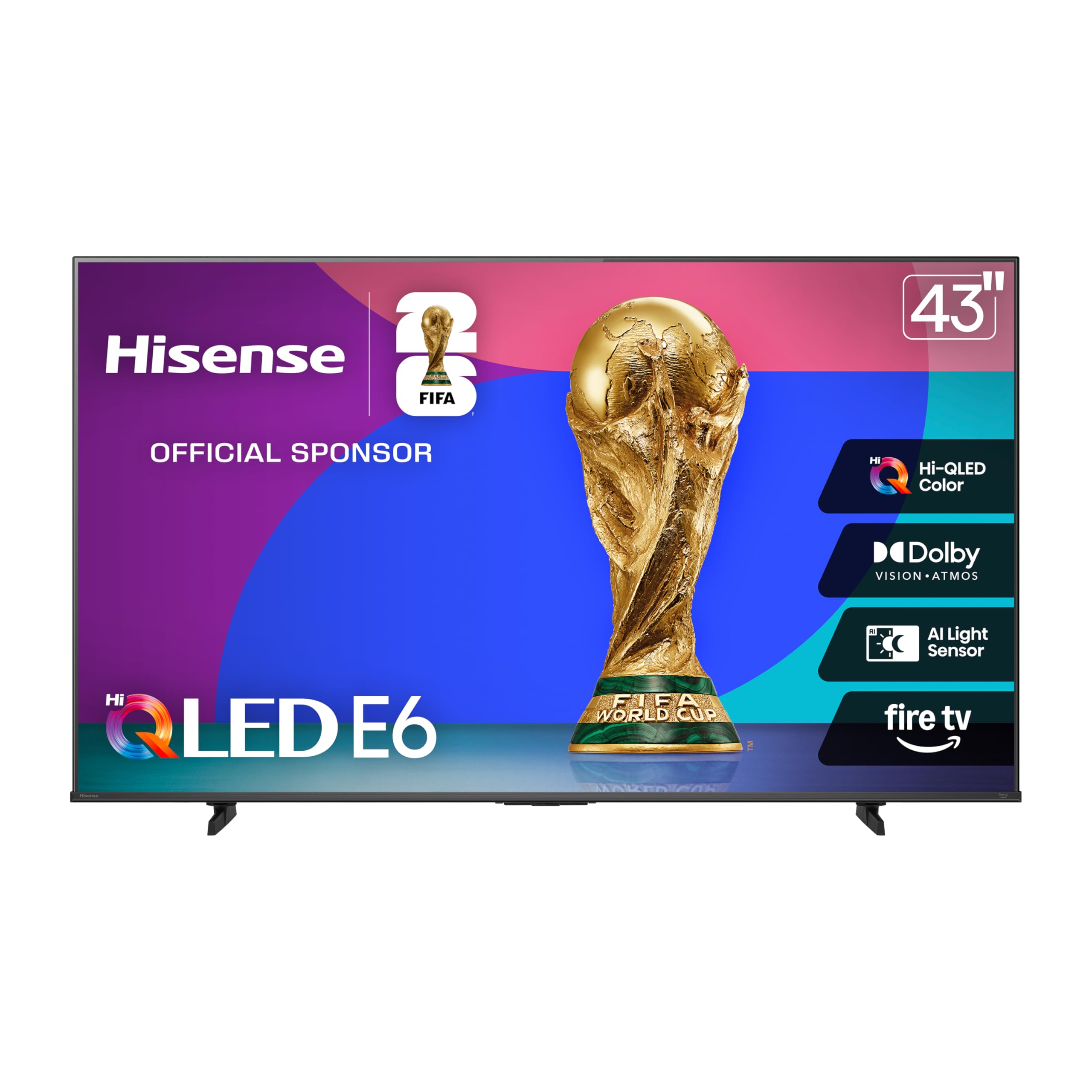
Hisense brings the same Hi-QLED quantum dot technology found in the larger 50-inch model to a more compact 43-inch chassis, making this the best option for buyers who need a premium picture in a smaller footprint. The quantum dot layer boosts color volume by roughly 30% compared to standard LED panels, producing richer reds, deeper greens, and more accurate skin tones across all content types. The Total HDR Solution supports Dolby Vision, HDR10+, HDR10, and HLG, ensuring compatibility with every major HDR format used by streaming services and Blu-ray discs.
Game Mode Plus enables ALLM for reduced input lag, though the 43-inch size makes it less immersive for gaming than the larger models in this roundup. Fire TV integration is identical to the 50-inch version, with the same voice remote and Alexa capabilities. The AI Light Sensor automatically adjusts screen brightness based on ambient room lighting, which prevents eye strain during dark evening viewing sessions without requiring manual adjustment.
The primary limitation is the 43-inch screen size, which restricts the immersive experience for movie watching at typical living room distances. Buyers note that the Fire TV OS can feel sluggish, with app loading times of 10-15 seconds and occasional menu stutter. The built-in speakers are adequate for news and casual shows but lack the clarity and bass needed for action movies; connecting a soundbar via HDMI eARC or optical improves the experience dramatically.
Why it’s great
- Hi-QLED quantum dot panel delivers vibrant, high-volume color that standard LEDs cannot match
- Supports Dolby Vision, HDR10+, HDR10, and HLG for universal HDR compatibility
- AI Light Sensor automatically adjusts brightness to match room lighting conditions
Good to know
- 43-inch size limits immersion for movies and gaming at standard viewing distances
- Fire TV OS can be sluggish — expect 10-15 second app load times after extended use
FAQ
Is Dolby Vision worth prioritizing over HDR10 at this price level?
Will a 60Hz 4K TV work well with a PlayStation 5 or Xbox Series X?
Why does my budget 4K TV look worse than the store display?
Can I use a Fire TV omni QLED without an Amazon account?
Final Thoughts: The Verdict
For most users, the best 4k tv under $300 winner is the Hisense 50″ E6 Cinema Series Hi-QLED because it delivers genuine quantum dot color volume, Dolby Vision and Dolby Atmos support, and a 50-inch screen size that fits most living rooms — all without exceeding the budget cap. If you want hands-free Alexa integration and local dimming black levels, grab the Amazon Fire TV 55″ Omni QLED. And for the smoothest streaming interface that never slows down, nothing beats the Roku Select Series 55″ QLED.