
A 4K TV sits at the center of your living room for five to seven years, so the decision on which one to bring home carries real weight. The visual gap between a well-calibrated Mini-LED panel and a budget QLED is far wider than most shoppers realize, and the wrong choice wastes hundreds of hours of potential picture fidelity you paid for but never got to enjoy.
I’m Min — the co-founder and writer behind Gadgets Feed. My approach to this guide relies on hundreds of hours cross-referencing contrast ratios, local dimming zone counts, native refresh rates, gaming input lag, and AI upscaling performance across the latest 4K TV models to separate genuine performance from marketing hype.
Navigating the overlapping claims of Mini-LED, QD-OLED, and standard QLED panels makes finding the best 4k tv for your room a challenge that demands clear performance benchmarks.
How To Choose The Best 4K TV
Buying a 4K TV means balancing panel technology, processing power, refresh rate, and smart platform features against the actual conditions of your viewing room. A TV that looks dazzling in a showroom may disappoint in your own space without the right specifications.
Panel Technology: OLED vs. Mini-LED vs. QLED
OLED panels deliver per-pixel black levels and infinite contrast because each pixel generates its own light and can turn off completely. Mini-LED uses thousands of tiny LEDs behind an LCD panel to dim specific zones, achieving deep blacks without OLED’s burn-in risk. Standard QLED uses a larger LED backlight with quantum dot color enhancement—better contrast than entry-level LED but noticeably inferior to Mini-LED or OLED in dark room performance.
Refresh Rate and Gaming Features
For console gaming and fast sports, native 120Hz panels provide smooth motion without the soap opera effect of interpolated 60Hz sets. Native 144Hz or 165Hz panels add headroom for PC gaming and variable refresh rate (VRR) support. Check that the TV supports HDMI 2.1 bandwidth for full 4K 120Hz input—older HDMI 2.0 ports cap at 4K 60Hz.
Local Dimming Zone Count
Mini-LED TVs with fewer than 200 local dimming zones struggle with blooming—halos of light around bright objects on dark backgrounds. Premium models with 1,000+ zones achieve near-OLED contrast. If you watch movies in a dark room, prioritize higher zone counts over peak brightness.
Quick Comparison
On smaller screens, swipe sideways to see the full table.
| Model | Category | Best For | Key Spec | Amazon |
|---|---|---|---|---|
| Roku Smart TV Plus Series 55″ | Mini-LED QLED | Streaming with Dolby Vision | Mini-LED backlight / Dolby Vision / Dolby Atmos | Amazon |
| TCL T7 Series 55″ | QLED 120Hz | Gaming at 120Hz | Native 120Hz panel / MEMC / 4x HDMI | Amazon |
| Hisense U7 55″ | Mini-LED 165Hz | Bright room gaming | Native 165Hz / Anti-Reflection / 3000 dimming zones | Amazon |
| Samsung S85F OLED 55″ | OLED 4K | Cinema-grade contrast | OLED / NQ4 AI Gen2 / Pantone Validated | Amazon |
| Asus ROG Swift PG27UCDM 27″ | QD-OLED 240Hz | High-end PC gaming | 240Hz / 0.03ms / DP 2.1a UHBR20 | Amazon |
| Sony Bravia XR8B OLED 55″ | OLED 120Hz | PS5 gaming and movies | 120Hz / XR Processor / Dolby Vision | Amazon |
| TCL QM85 98″ | QD-Mini LED | Home theater immersion | 5000 dimming zones / 5000 nits / 144Hz | Amazon |
In‑Depth Reviews
1. Roku Smart TV – 55-Inch Plus Series, Mini-LED TV
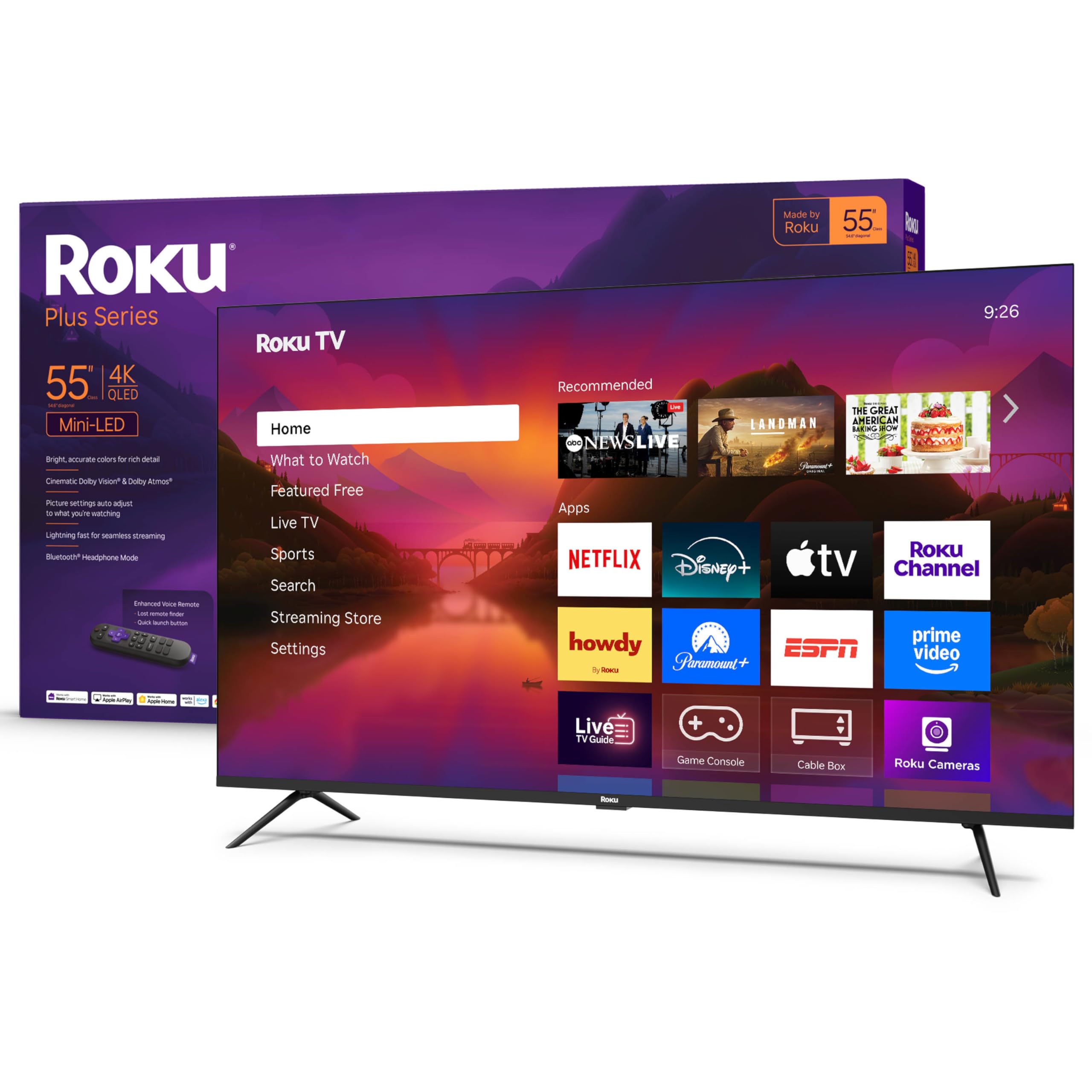
The Roku Plus Series packs Mini-LED backlighting and a QLED quantum dot layer into a 55-inch frame at a price point that undercuts most competitors’ standard LED offerings. The 4K panel produces deep blacks and vibrant highlights thanks to Dolby Vision support, and the built-in subwoofer delivers sound with more bass presence than typical flat-panel speakers. The Roku interface remains the most intuitive smart TV platform on the market, with automatic software updates and 500+ free channels built in.
Gaming performance is respectable with VRR support and a Game Mode that cuts input lag, though the panel’s native refresh rate targets streaming and movies rather than competitive 120Hz gameplay. The Enhanced Voice Remote includes a lost remote finder and programmable app shortcuts, while Bluetooth Headphone Mode lets you watch without disturbing others. The AI-driven Roku Smart Picture Max automatically optimizes color and sharpness per scene.
Dolby Atmos processing widens the soundstage beyond what most TVs in this tier attempt. The metal feet add a premium feel, and the contrast ratio from the Mini-LED zones competes with far more expensive models. For buyers who prioritize streaming quality and ease of use over raw gaming refresh rates, this is the most balanced package available at this size.
Why it’s great
- Mini-LED backlight delivers excellent contrast for the price tier
- Built-in subwoofer provides better bass than most TV speakers
- Roku OS is fast, simple, and regularly updated
Good to know
- Panel is limited to a standard 60Hz refresh rate
- Settings menu lacks advanced calibration tweaks found on premium TVs
2. TCL 55-Inch T7 Series 4K QLED HDR TV
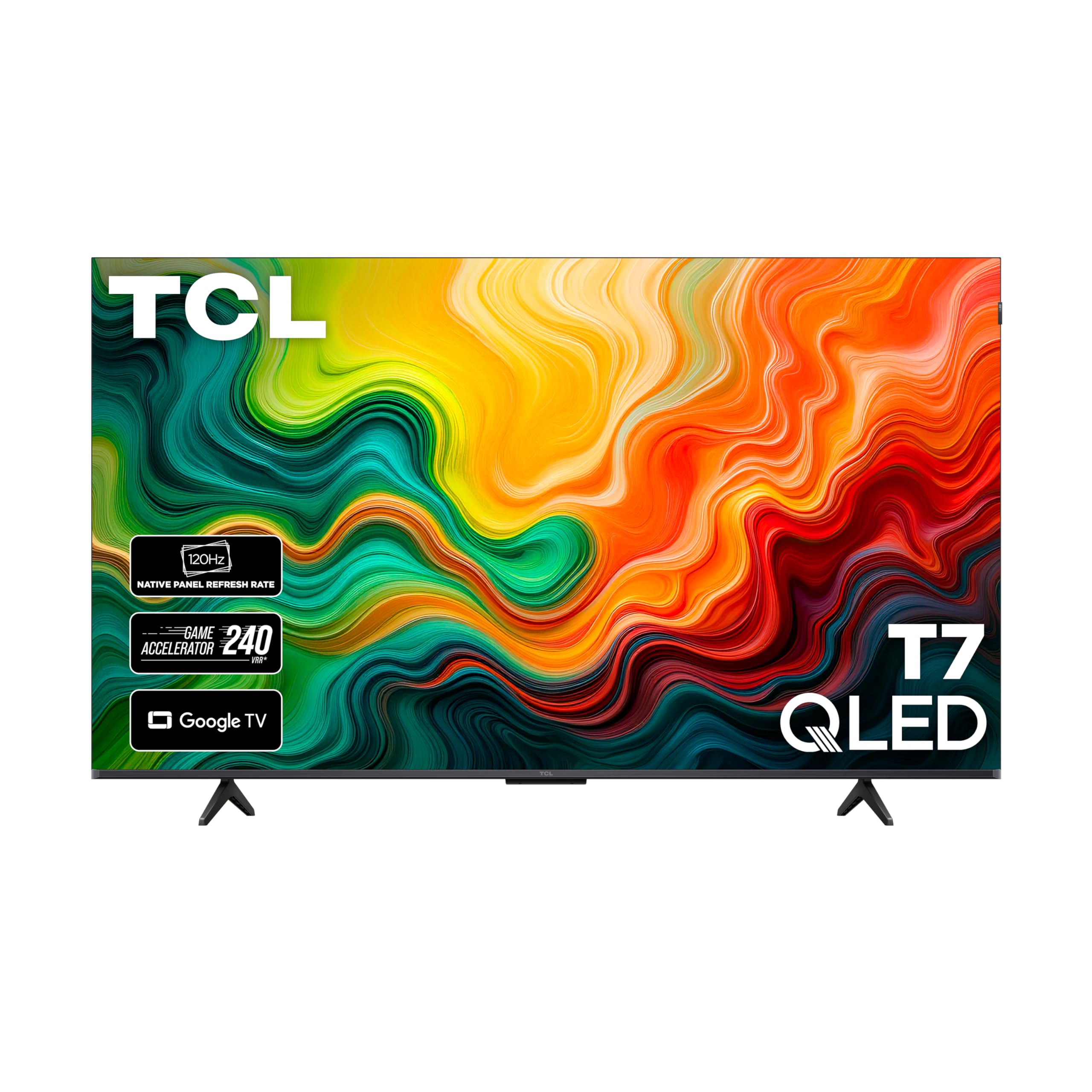
The TCL T7 series brings a native 120Hz panel and QLED quantum dot color to the mid-range segment, making it a strong contender for gamers who want smooth motion without jumping to an OLED budget. The 2025 model includes a 240Hz variable gaming refresh rate mode for reduced input lag, and the TCL AIPQ Pro processor handles AI upscaling of lower-resolution content. The 4K QLED panel covers most of the DCI-P3 color space, producing saturated reds and greens that standard LED panels cannot match.
Four HDMI inputs, including one with eARC, allow simultaneous connection of a console, PC, soundbar, and streaming box without swapping cables. Motion Rate 480 with MEMC frame insertion smooths fast-moving sports and action scenes. Google TV integration provides hands-free voice control via Alexa, Google Assistant, or Apple HomeKit, and built-in Chromecast lets you cast directly from a phone. The bezel-less design keeps the footprint minimal.
Brightness levels are sufficient for most living rooms, though direct sunlight on the glossy screen can introduce reflections. The sound quality is acceptable for casual viewing, but a dedicated sound system will be necessary for immersive audio. The 2025 T7 delivers the refresh rate and color performance that gamers need at a price that undercuts dedicated gaming monitors of comparable specs.
Why it’s great
- Native 120Hz panel with 240Hz VRR for console and PC gaming
- QLED quantum dot color covers nearly full DCI-P3 gamut
- Four HDMI inputs with eARC provide excellent connectivity
Good to know
- Glossy screen finish picks up reflections in bright rooms
- Built-in speakers are adequate but lack low-end punch
3. Hisense 55″ U7 Mini-LED ULED 4K TV
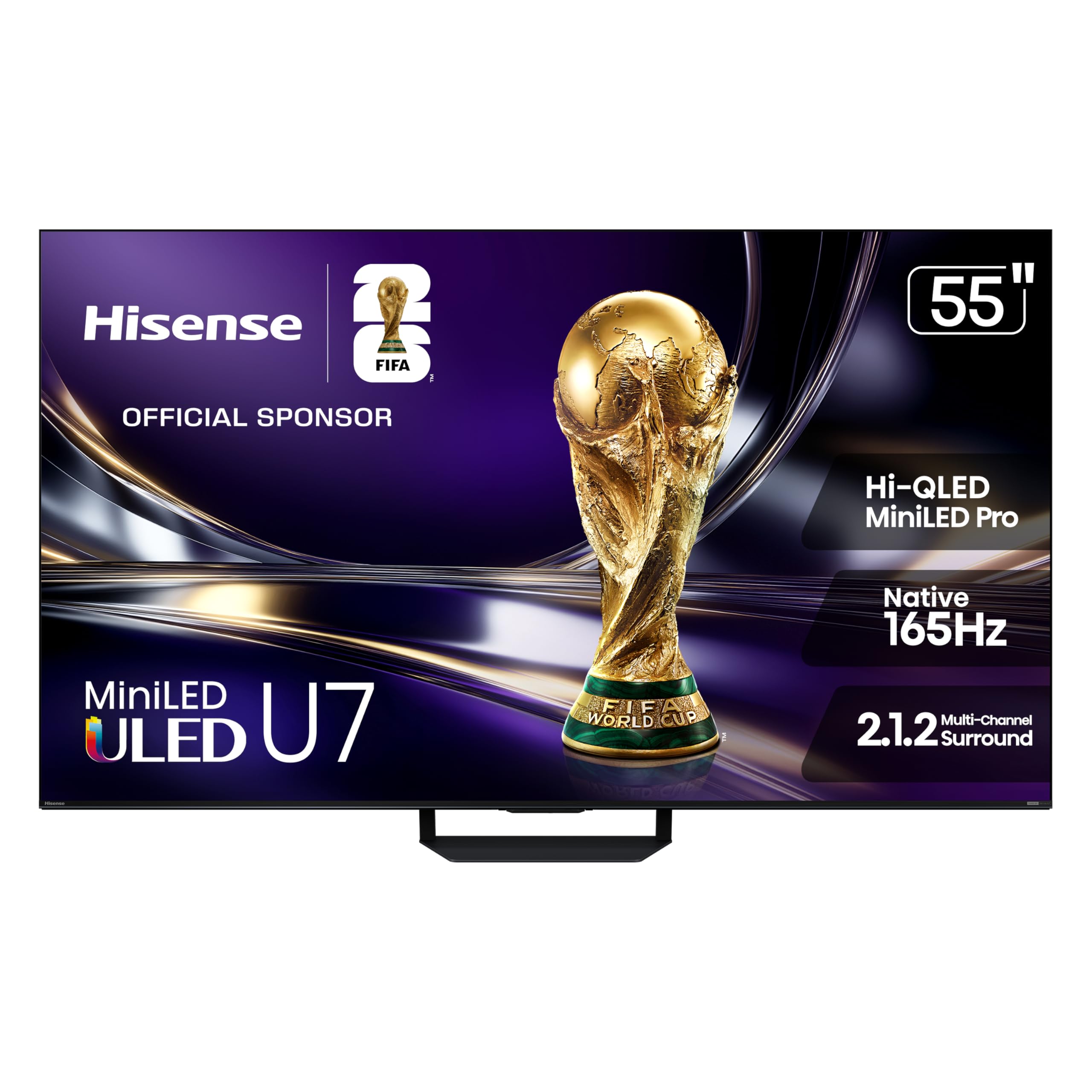
The Hisense U7 raises the bar for gaming-oriented 4K TVs with a native 165Hz refresh rate—faster than most competitors’ 120Hz panels—and a VRR range that extends to 330Hz for compatible sources. The Hi-QLED Mini-LED Pro backlight uses thousands of local dimming zones to deliver measured peak brightness up to 3000 nits and near-OLED black levels. The anti-reflection and glare-free screen treatment uses a dual-layer design that preserves contrast even when the TV is positioned opposite windows or overhead lights.
The Hi-View AI Engine Pro processor analyzes each scene in real time, adjusting color, contrast, and detail automatically. Filmmaker Mode preserves the director’s intended picture without AI enhancement for movie purists. Dolby Vision IQ and HDR10+ support ensure compatibility with the widest range of HDR content. The 2.1.2 channel audio system provides fuller sound than most built-in speaker arrays, though a soundbar remains recommended for true Dolby Atmos immersion.
Panel uniformity is excellent with minimal blooming thanks to the high zone density. Google TV integration makes app navigation smooth, and Bluetooth 5.4 ensures low-latency connection to wireless headphones. The U7 competes directly with TVs costing significantly more, making it the strongest option for buyers who prioritize pure gaming performance and bright-room viewing.
Why it’s great
- Native 165Hz refresh rate exceeds standard 120Hz gaming TVs
- Anti-reflection screen maintains picture quality in bright rooms
- Thousands of Mini-LED dimming zones deliver exceptional contrast
Good to know
- Built-in audio is good but still benefits from an external soundbar
- Peak brightness can be overwhelming in a fully dark room without calibration
4. Samsung 55″ OLED 4K S85F Series TV
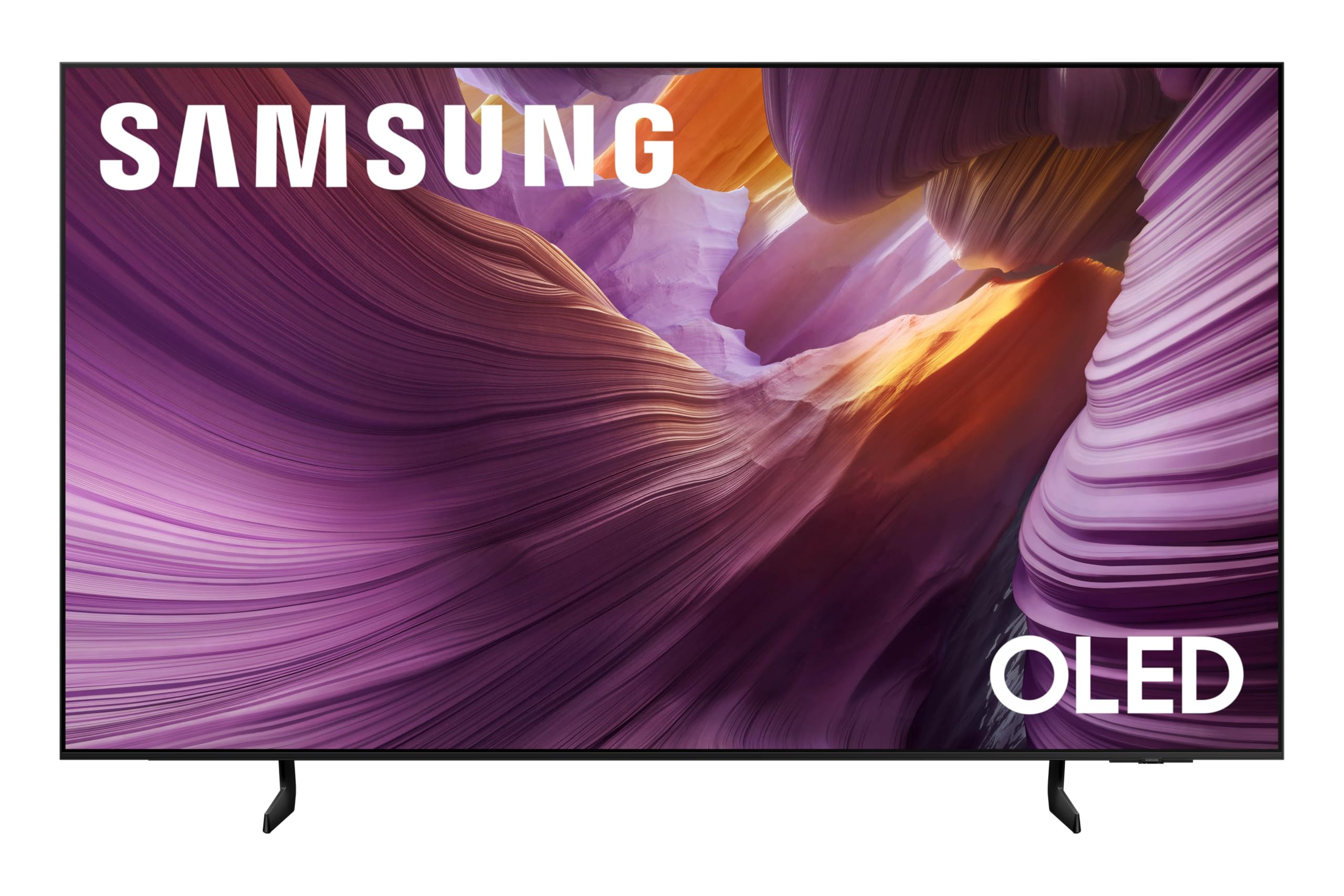
The Samsung S85F OLED delivers true per-pixel black levels that Mini-LED cannot quite replicate, with infinite contrast that makes HDR content in a dark room look spectacular. The NQ4 AI Gen2 processor uses 20 neural networks to upscale HD and SDR content to near-4K quality, and Pantone-validated color ensures skin tones and natural scenes appear accurate. The 2025 model features Object Tracking Sound Lite with Dolby Atmos, creating a virtual surround effect that follows on-screen action.
The contour design uses smooth curved lines rather than sharp edges, making the TV blend into the room as a design piece. The AI-enhanced 4K upscaling is noticeably superior to lower-tier processors, preserving detail in streaming content that would otherwise look soft on a large 4K panel. Samsung’s Tizen smart platform includes Alexa built-in and supports Apple AirPlay 2 for easy casting from Apple devices.
OLED burn-in risk is lower on modern panels with pixel-refresh cycles, but the S85F lacks the advanced heat sink found on Samsung’s higher-end S90D series. Brightness is sufficient for dim to moderately lit rooms but falls short of Mini-LED peak output in direct sunlight. The S85F is the right choice for cinephiles who watch mostly in the evening and value contrast perfection over raw brightness.
Why it’s great
- Infinite OLED contrast with perfect blacks and no blooming
- NQ4 AI Gen2 processor delivers excellent upscaling of lower-resolution content
- Pantone-validated color accuracy for realistic skin tones
Good to know
- Peak brightness is lower than Mini-LED competitors for bright rooms
- No advanced heat sink for extended static content protection
5. ASUS ROG Swift 27″ 4K QD-OLED Gaming Monitor (PG27UCDM)

The ASUS ROG Swift PG27UCDM uses a 4th-gen QD-OLED panel that combines a 240Hz refresh rate with a 0.03ms response time, making it the fastest 4K display in this lineup. The DisplayPort 2.1a UHBR20 connection provides full 80Gbps bandwidth, enabling uncompressed 4K at 240Hz without chroma subsampling. The QD-OLED technology delivers deeper blacks than W-OLED panels and wider color gamut coverage at 99% DCI-P3 with true 10-bit color.
OLED Care Pro includes a Neo Proximity Sensor that detects when the user leaves and automatically switches to a black screen to reduce burn-in risk. The custom heat sink improves thermal management for longer panel lifespan. Dolby Vision support and VESA DisplayHDR 400 True Black compliance ensure accurate HDR reproduction in games and video content. The included DisplayWidget Center software allows mouse-controlled adjustment of OLED Care functions and monitor settings.
The 27-inch diagonal and 4K resolution produce a pixel density of 163 PPI for exceptionally sharp text and detail. The KVM switch and USB-C port with 90W power delivery simplify multi-device setups. The lack of built-in speakers and the triangular QD-OLED subpixel layout causing minor text fringing in Windows are the primary trade-offs. For PC gamers with a high-end GPU, this is the definitive 4K gaming display.
Why it’s great
- 240Hz refresh rate with 0.03ms response for uncompromised gaming motion clarity
- DisplayPort 2.1a UHBR20 enables uncompressed 4K 240Hz signal
- Neo Proximity Sensor provides automatic burn-in protection
Good to know
- No built-in speakers require external audio solution
- QD-OLED subpixel layout can cause text fringing in Windows applications
6. Sony 55″ OLED BRAVIA XR8B Smart Google TV

The Sony BRAVIA XR8B combines OLED’s perfect black levels with Sony’s proprietary XR processor, which intelligently enhances color, contrast, and clarity in real time. Over 8 million self-lit pixels produce pure black alongside high brightness for OLED standards. The TV includes exclusive features for PlayStation 5, including Auto HDR Tone Mapping that optimizes HDR settings automatically when the console is connected, and Auto Genre Picture Mode that switches between Game and Cinema modes based on content.
Google TV provides access to all major streaming apps, and the XR Clear Image upscaling brings HD and streaming content closer to 4K quality. XR OLED Motion keeps fast-moving sports and action scenes blur-free. The Acoustic Surface Audio+ system uses the OLED panel itself as a speaker, creating sound that feels like it originates from the on-screen action rather than separate drivers. Dolby Vision, Dolby Atmos, IMAX Enhanced, and DTS:X are all supported.
The panel supports 4K 120Hz on two HDMI 2.1 ports with VRR, making it fully compatible with current-generation consoles. The Sony Bravia has been studio-calibrated for Netflix and Prime Video modes, matching the creator’s intended look. The price is higher than comparable Mini-LED TVs, but the combination of OLED contrast, Sony processing, and PS5 integration justifies the premium for the target audience.
Why it’s great
- Auto HDR Tone Mapping and Auto Genre modes are exclusive to PS5
- Acoustic Surface Audio+ creates immersive, directional on-screen sound
- Studio-calibrated picture modes for Netflix and Prime Video
Good to know
- Only two HDMI ports support full 4K 120Hz with VRR
- Best performance in darker rooms; OLED brightness limited vs. Mini-LED
7. TCL 98-Inch QM85 QLED 4K QD-Mini LED TV

The TCL QM85 is a 98-inch behemoth that uses QD-Mini LED technology with up to 5,000 local dimming zones and a peak brightness of 5,000 nits, making it one of the most capable HDR TVs available at any price. The TCL AIPQ Pro processor with deep learning AI optimizes color, contrast, and clarity across the massive panel, and the 120Hz native refresh rate with 144Hz variable refresh rate support ensures smooth motion for gaming and sports. The 4K QLED quantum dot layer covers nearly the entire DCI-P3 color space for vibrant, saturated images.
HDR Ultra supports Dolby Vision IQ, HDR10+, HDR10, and HLG, ensuring compatibility with every major HDR format. Motion Rate 480 with MEMC frame insertion eliminates judder in fast-moving scenes. Auto Game Mode with ALLM and AMD FreeSync Premium Pro provides low input lag for gaming. Google TV is built in, and the included voice remote works with Alexa. The 98-inch screen creates an immersive experience that smaller TVs cannot replicate, with black levels that approach OLED performance.
The sheer size requires careful installation planning—the TV weighs over 120 pounds and may require professional mounting. Built-in speakers are decent for dialog but a separate sound system is essential for an experience matching the visual scale. The 2024 model benefits from mature software and firmware updates that have addressed early motion-handling issues. For buyers with the space and budget, the QM85 delivers cinema-level immersion in a single panel.
Why it’s great
- 5000 local dimming zones and 5000 nits peak brightness produce reference-level HDR
- 98-inch screen size provides true theater-scale immersion at home
- QD-Mini LED achieves near-OLED black performance without burn-in risk
Good to know
- Extremely large and heavy, requiring professional installation and dedicated space
- Built-in audio is underwhelming for the screen size—a sound system is a must
FAQ
Does a higher native refresh rate always produce better motion clarity?
What is the practical difference between Dolby Vision and HDR10 for a 4K TV buyer?
Can Mini-LED TVs truly match OLED black levels in real-world viewing?
Final Thoughts: The Verdict
For most users, the 4k tv winner is the Roku Smart TV 55-inch Plus Series because its Mini-LED backlight, Dolby Vision, and intuitive Roku OS deliver the best balance of picture quality and ease of use at a mid-range price. If you want native 120Hz gaming with QLED color, grab the TCL T7 Series. And for PC gaming at 240Hz with uncompromised QD-OLED performance, nothing beats the ASUS ROG Swift PG27UCDM.