
Our readers keep the lights on and my morning glass full of iced black tea. As an Amazon Associate, I earn from qualifying purchases.
Specs are compiled from manufacturer listings and verified buyer reviews and can change over time — please confirm the key details on the product page before buying.
Standing in the TV aisle (or scrolling endlessly online) is brutal because every screen screams “4K,” but the real difference is in how a TV handles light, motion, and your actual room—not just the sticker on the box. This guide cuts through the noise and matches each TV to a real living situation, so you stop guessing and start watching.
I’m Min — the founder and writer behind Gadgets Feed. This guide is built by comparing the manufacturers’ published specifications and the patterns across verified customer reviews, so you get each pick’s real strengths and trade-offs instead of marketing spin.
Whether you are outfitting a dim den for cinema nights or a bright living room for sports and gaming, the right 4k uhd tv depends on matching the display technology to your lighting and how you use it, not just chasing the biggest number.
Our Picks at a Glance

How To Choose The Best 4K UHD TV
Picking a TV is about matching the screen to your room’s light, what you watch, and how much you want to tweak the settings. Here are the three specs that make the biggest real-world difference.
The Display Technology: LED, QLED, Mini-LED, or OLED
This is the single biggest choice. Standard LED is fine for a bright room on a budget but will look gray in dark scenes. QLED adds a layer of quantum dots (tiny particles that create more colors) for vibrant, punchy images that work well in almost any light. Mini-LED shrinks the backlight into thousands of tiny zones, which lets the TV turn off specific areas to create deep blacks without the halo glow you sometimes see around bright objects. OLED is the king of contrast—each pixel lights itself, so blacks are truly black—but it is not as bright, making it better suited for a room where you can control the light.
Refresh Rate: 60Hz vs 120Hz vs 144Hz
The refresh rate (measured in Hz, or how many times the picture refreshes per second) determines how smooth motion looks. A standard 60Hz panel (60 refreshes per second) is fine for news and dramas. A 120Hz panel (120 refreshes per second) cuts motion blur in half for sports and action movies. A 144Hz panel (144 refreshes per second) is the current ceiling for PC and console gaming, matching the highest frame rates a modern graphics card can push.
Smart Platform: Fire TV, Google TV, or Roku OS
This is the interface you will tap every day. Fire TV (Amazon) puts Prime Video front and center and works deeply with Alexa. Google TV organizes content from across your subscriptions into one clean row. Roku OS is the simplest, with a no-nonsense grid of apps and automatic software updates. Pick the one whose home screen feels fastest to you.
Quick Comparison
| Model | Best For | Display Tech | Refresh Rate | Smart OS | Amazon |
|---|---|---|---|---|---|
| INSIGNIA F50 Series 55″★ Best Overall | Budget Entry | LED | 60Hz | Fire TV | $349.99Amazon |
| Hisense 65″ U8 SeriesAlso Great | Cinephile & Gamer | Mini-LED QLED | Native 165Hz | Google TV | from $1,298.99Amazon |
| TCL 55″ QM6K SeriesPremium Pick | Value Performer | Mini-LED QLED | Native 144Hz | Google TV | $547.99Amazon |
| Sony BRAVIA 5 85″ | PS5 & Cinema | Mini-LED | 120Hz | Google TV | $2,199.99Amazon |
| Panasonic Z8 Series 77″ | Pure Blacks | OLED | 144Hz | Fire TV | $1,399.99Amazon |
| Samsung 55″ The Frame | Interior Design | QLED | 144Hz | Smart Hub | $897.99$1,097.99Amazon |
| TCL 55″ T7 Series | Lag-Free Gaming | QLED | 144Hz variable | Google TV | $449.99Amazon |
| Sony BRAVIA 2 II 43″ | Compact Quality | LED | 60Hz | Google TV | $399.99Amazon |
| Roku Plus Series 55″ | Ease of Use | Mini-LED QLED | 60Hz | Roku OS | $369.99$499.99Amazon |
In‑Depth Reviews
1. INSIGNIA 55-inch Class F50 Series LED 4K UHD Smart Fire TV (NS-55F501NA26)
Our pick — over 4★ from 10,000+ verified ratings; the strongest balance of quality and price.
The cheapest 55-inch 4K you can buy, but the reliable picture is locked behind a famously frustrating setup routine.
At the bottom of the price ladder, this INSIGNIA F50 Series gets you a 55-inch 4K screen with HDR10 support and a Fire TV smart platform. It includes DTS Virtual-X sound (a virtualizer that creates a wider, 3D-like soundstage from the built-in speakers) and supports HDMI eARC for passing lossless audio to a soundbar. The VESA 200×200 mount pattern means you can wall-mount it easily. On paper, it is a good value for the size.
The reality from buyer reviews is mixed. Many call it “sharp, bright, colorful” and an “excellent value,” but one detailed 1-star review describes a “miserable setup” with remote pairing issues, an endless update cycle, an invalid serial number, and a sluggish interface. A separate buyer reports the TV auto-shuts off on pause and has blacked-out app icons. This pattern of software frustration is unique to this model among the picks here, and it is a real risk if you are not comfortable troubleshooting.
Compared to the Roku Plus Series above, the INSIGNIA lacks Mini-LED and QLED technology, so blacks look gray in a dark room and colors are less vibrant. It is a budget compromise that works if you get a lucky unit, but the odds of a headache are higher than with any other TV on this list.
The Size-for-Price King
- Lowest cost to get a 55-inch 4K screen with HDR
- Fire TV platform integrates well with Amazon services and Alexa
- DTS Virtual-X sound creates a wider soundstage than basic stereo
The Software Gamble
- Significant number of shoppers say a miserable setup and sluggish performance
- Standard LED backlight shows gray blacks in dark scenes, not vibrant in bright light
- 60Hz panel, no gaming features beyond the basics
Reach for this if you absolutely need the largest screen for the lowest possible price and you are comfortable dealing with potential software bugs.
The honest warning: the setup and reliability issues reported by a portion of buyers make this a riskier pick than the Roku Plus Series, which costs a bit more for a far smoother experience.
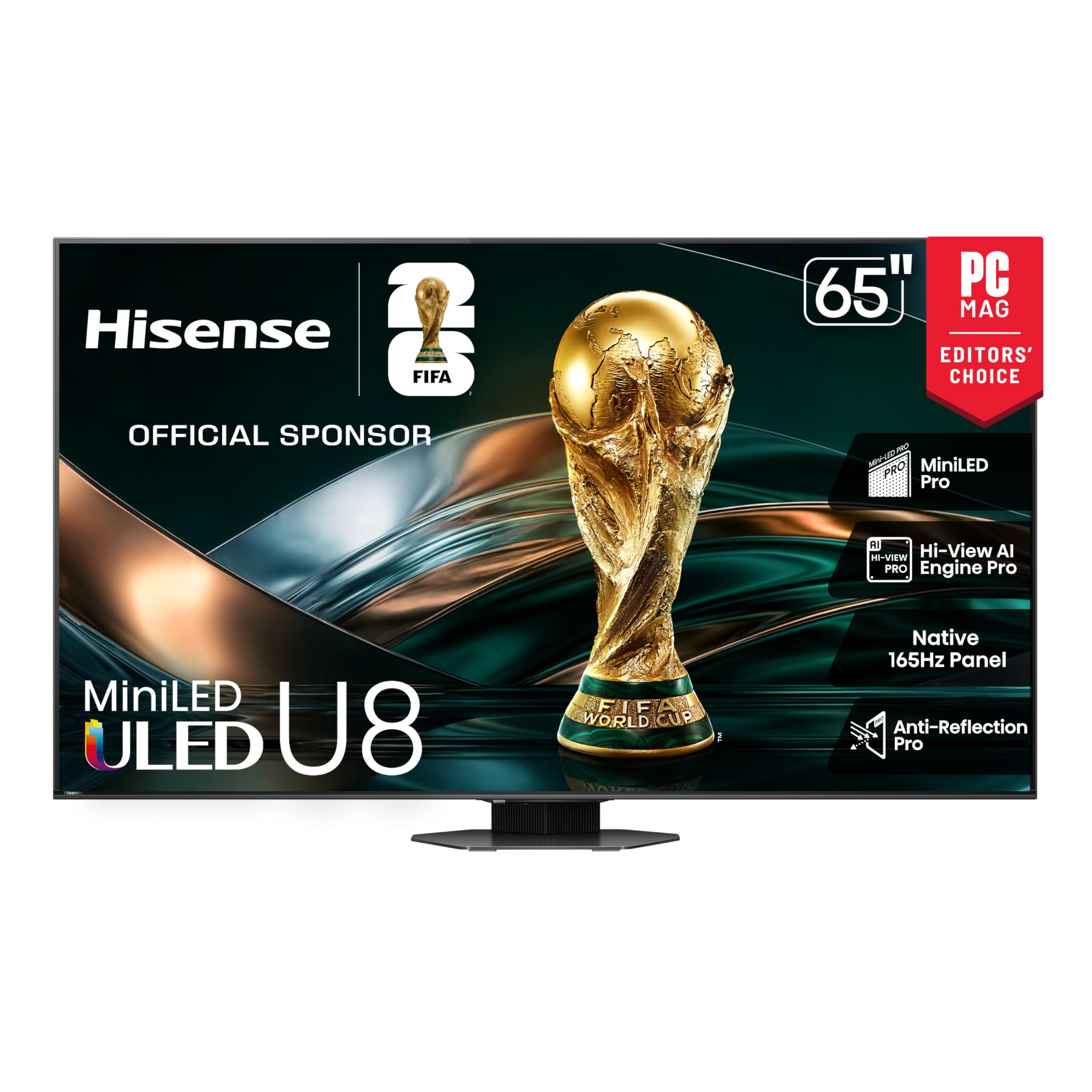
2. Hisense 65″ U8 Series ULED Mini-LED 4K UHD Smart Google TV (65U8QG)
The 65-inch powerhouse that brings cinema-level brightness to your living room without emptying your savings.
This TV dominates the list because it packs a Mini-LED ULED panel (a setup with thousands of tiny backlight zones) that hits up to 5000 nits peak brightness—that is roughly 5000 candles’ worth of light per square meter, so sunlit scenes in movies like *Dune* look blindingly real. With up to 5600 local dimming zones, the TV can turn off individual LEDs behind dark areas, creating deep blacks without the glow that cheaper TVs show around bright objects.
Gamers get a native 165Hz panel with a Variable Refresh Rate that goes from 48Hz to 165Hz, which buyers report makes gameplay on a PS5 or PC feel near-instant with no screen tearing. The 4.1.2 channel sound system (speakers on the left, right, surround, and two up-firing) with Dolby Atmos projects audio above you, so you hear rain on the roof without adding a soundbar. Owners mention that the built-in speakers are not audiophile-grade and that pairing a Hisense soundbar fixes it cheaply.
At 65 inches and featuring an anti-reflection coating that customers note virtually eliminates glare, this is the pick for a bright room where you watch both hard-hitting HDR movies and competitive games.
The Bright Room Winner
- 5000 nits peak brightness and 5600 local dimming zones for extreme HDR contrast
- Native 165Hz panel with VRR 288 for buttery-smooth gaming
- Anti-Reflection Pro coating keeps the picture clear even in direct sunlight
The Soundbar Nudge
- Built-in speakers are decent but not powerful enough for large rooms
- A few reviewers point out rare software crashes requiring a factory reset
Reach for this if you want a bright, Mini-LED TV with a fast 165Hz panel for both movies and gaming without stepping into OLED prices.
The honest catch: the sound is adequate but will disappoint anyone used to a proper surround system, and a small number of owners experienced Google TV bugs.
3. TCL 55 Inch Class QM6K Series Mini LED QLED 4K HDR Smart Google TV (55QM6K)

A 55-inch Mini-LED that punches well above its price, delivering deep blacks and smooth motion for under.
While the Hisense above takes the crown, this TCL brings Mini-LED’s best trick—eliminating the halo glow behind bright objects—to a 55-inch screen at a mid-range price. The QD-Mini LED combines ultra-precise Mini LEDs with quantum dots (tiny crystals that produce over a billion colors), so reds pop and blacks sink deep. It is a 28% smaller screen than the Hisense 65-inch, but the picture quality is close enough that most buyers in smaller rooms will not notice the difference.
The native 144Hz refresh rate (thanks to the TCL Halo Control System that manages the mini LEDs) makes it ideal for sports and PC gaming, where fast pans stay fluid. Two of the HDMI ports support 144Hz, and shoppers say the motion-activated remote backlight is a welcome touch. Reviewers specifically say the anti-reflective screen is crisp and that the picture-off feature (audio-only mode) is great for listening to music without the screen on.
Buyers report the sound may need a soundbar in a large room, but for a bedroom or medium living space, the built-in Onkyo audio system is surprisingly solid.
Mini-LED Without the Sticker Shock
- 144Hz native refresh rate for ultra-smooth motion in games and sports
- QD-Mini LED technology gives deep blacks and vibrant, accurate colors
- Motion-activated backlit remote is a convenient touch
Sound Ceiling
- Internal speakers lack the punch for a large, open living room
- May require a soundbar upgrade for an rich audio experience
Best suited for the buyer who wants Mini-LED picture quality and a 144Hz gaming panel on a 55-inch screen without paying a premium.
Look elsewhere if your room is large and you want room-filling sound from the TV itself, as you will likely need a soundbar.
4. Sony BRAVIA 5 85 Inch TV, Mini LED, 4K Smart Google TV, XR Processor (K-85XR50)

An 85-inch cinema screen that uses Sony’s AI processor to make everything—even old DVDs—look crisp and clean.
At 85 inches, this is the biggest screen on the list and the one that most closely mimics a theater wall. The XR Processor with AI technology (a chip that analyzes each scene in real time) intelligently boosts color, contrast, and clarity—so a grainy HD stream of a 1990s movie looks noticeably sharper than on any other TV here. The Mini LED backlight, controlled by Sony’s XR Backlight Master Drive, keeps bright explosions bright and dark rooms pitch-black without halos around text, unlike the TCL QM6K which can show slight haloing in extreme contrast scenes.
For PlayStation 5 owners, this TV has exclusive features: Auto HDR Tone Mapping (the TV adjusts its brightness to match the PS5’s HDR signal) and Auto Genre Picture Mode (it automatically switches to Game Mode when you start playing). Reviewers call the picture with the PS5 “fantastic” and say the Dolby Vision HDR on Apple TV 4K is impressive. A subtle but real drawback: only 2 of the 4 HDMI ports support HDMI 2.1, so if you have a PS5, an Xbox, and a soundbar, you may need to pick which devices get the full 120Hz treatment.
Buyers specifically praise the superb upscaling of DVDs and old games, and note the built-in sound is good but not great—a worthy trade-off for the sheer screen real estate.
The Big-Screen Specialist
- XR Processor with AI delivers exceptional 4K upscaling of older content
- Exclusive PS5 features for tune HDR and auto genre switching
- Dolby Vision and Atmos support for a true theater experience at home
HDMI 2.1 Limitation
- Only two of four HDMI ports are HDMI 2.1, limiting high-bandwidth devices
- Remote lacks backlighting, which buyers point out as a miss at this price
Reach for this if you want a massive screen with Sony’s best processing and you own a PS5 you want to pair with it perfectly.
The honest catch: you will have to manage which two devices get the HDMI 2.1 ports, and the remote is not backlit, which is annoying in a dark theater room.
5. Panasonic Z8 Series (2025) 77-inch OLED 4K Ultra HD Smart Fire TV (77Z8BAP)
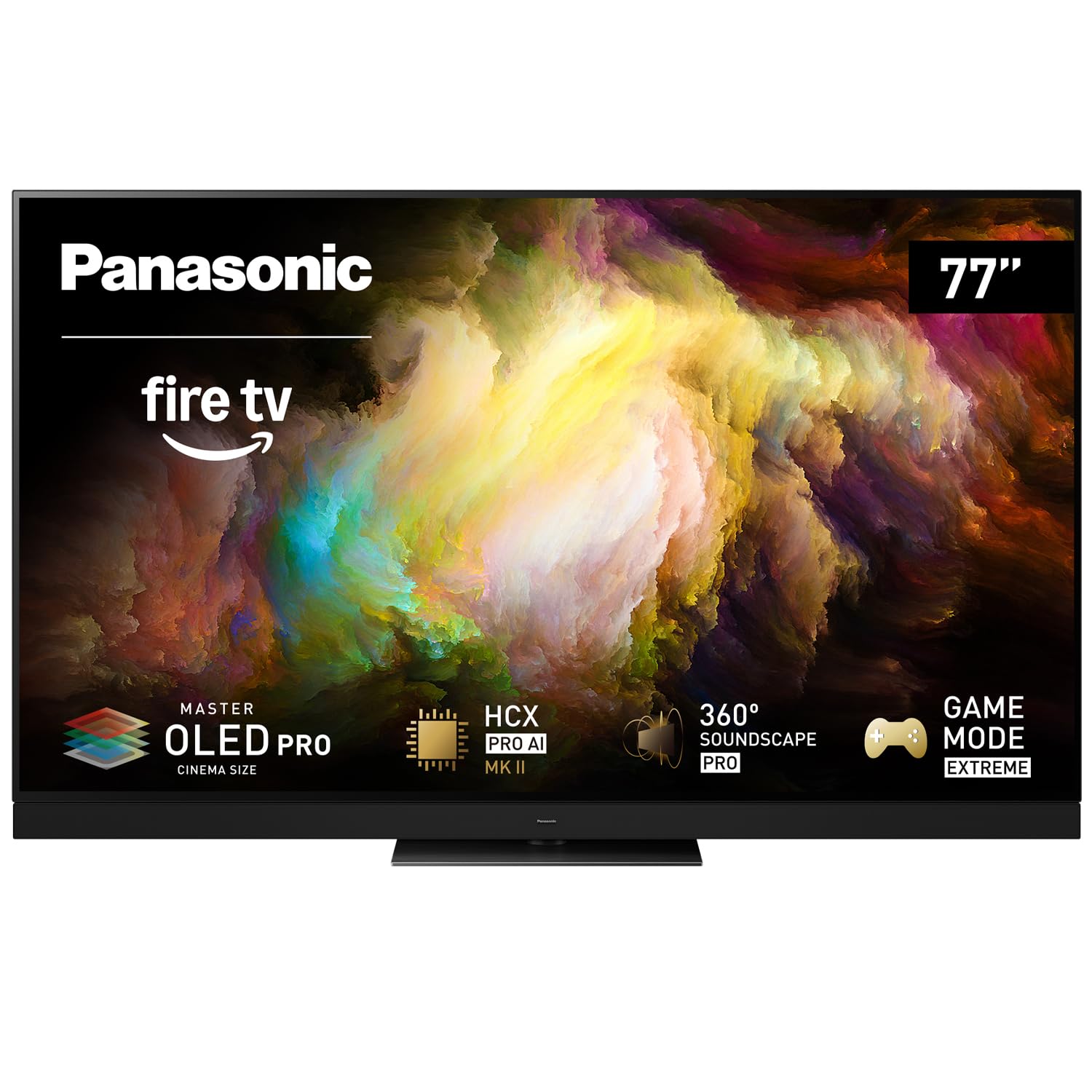
A 77-inch OLED that delivers true blacks and cinematic contrast, but only if you can control the light in your room.
This is the only OLED on the list, and it earns its spot with pixel-level dimming: each of the 8.3 million pixels can turn off completely, producing blacks that are truly black (not dark gray) and contrast that LEDs cannot match. The Master OLED PRO panel uses a micro-lens-array (a layer of tiny lenses that increase light output) to deliver enhanced brightness compared to older OLEDs, though it still is not as bright as the Hisense’s 5000 nits Mini-LED. The HCX Pro AI Processor MKII handles motion and upscaling beautifully.
Gamers get a 144Hz refresh rate with HDMI 2.1, VRR, AMD FreeSync Premium, and NVIDIA G-SYNC compatibility. The Game Mode Extreme lets you choose between two gaming sound modes and check settings on the Game Control Board. Buyers rave about the “superb color and picture” and call it “the absolute best bang for your buck today” for an OLED. However, the TV is very heavy—buyers mention it is about 80 to 100 lbs—so you absolutely need two or three people for setup.
The catch: this Panasonic is not the brightest OLED out there, and in a room with direct sunlight, you will lose contrast. It is best for a dedicated theater room.
The Theater Star
- True OLED blacks with pixel-level dimming for outstanding contrast
- 144Hz panel with HDMI 2.1, VRR, FreeSync Premium, and G-SYNC for elite gaming
- 360 Soundscape Pro tuned by Technics provides excellent built-in audio
The Light Hater
- Not bright enough for rooms with direct sunlight or lots of ambient light
- Extremely heavy (80-100 lbs), requiring a careful unpacking and setup process
Reach for this if you have a light-controlled room and want the best possible contrast and color accuracy that OLED provides, with low input lag for gaming.
skip it if your living room is bright or you need a team to safely lift and mount a 77-inch, 80+ lb TV.
6. Samsung 55-Inch Class The Frame LS03F 4K QLED Smart TV (2025 Model)

A TV that masquerades as wall art, but it makes a real trade-off in raw picture quality for that design trick.
The Frame is unlike anything else here because its mission is to disappear when turned off. It uses a slim, flush-to-wall mount and a virtually glare-free matte screen (a panel with a subtle matte texture that scatters light, making art look like a real print on paper) to mimic a framed painting. When you are not watching, it displays curated artwork from the Art Store or your own photos. The NQ4 AI Gen2 processor powers the picture when it is on, and Samsung claims a 144Hz VRR for gaming.
Buyers are divided. Those who bought it for the design love how it “blends into the room like art” and call it “a great TV/art display combo.” One reviewer who upgraded from the 2024 model says the 2025 model has a faster processor with a snappy UI and better deep blacks. However, the critical review is harsh: one owner says the TV “sacrifices TV video quality for art,” noting poor definition and motion, and that the art gallery feature requires a /year subscription for the full library. It is decent for video, but it does not match the TCL QM6K or Sony BRAVIA 5 for raw picture quality.
The single-cable One Connect box keeps the wall clean, and the included thin black frame is basic—custom bezels cost extra. This is a design-first TV, and picture quality is a close second.
The Living Room Mural
- Flush-to-wall mount and nearly glare-free matte screen look like real art
- One Connect box hides cables with a single thin wire to the TV
- 144Hz VRR for decent gaming performance when you want it
The Art Tax
- Picture quality is not as sharp or vibrant as a standard Mini-LED or OLED at this price
- Full art library requires a paid subscription, not a one-time feature
- Wall mount system has been criticized as poorly designed by some buyers
Best for the homeowner who values aesthetics and wants the TV to blend into the decor, and who watches mostly HD content, not demanding HDR movies.
Look elsewhere if picture quality and motion handling are your top priority, as the Sony and TCL options deliver visibly superior images for the money.
7. TCL 55 Inch Class T7 Series 4K QLED HDR Lag-free Smart Google TV (55T7)
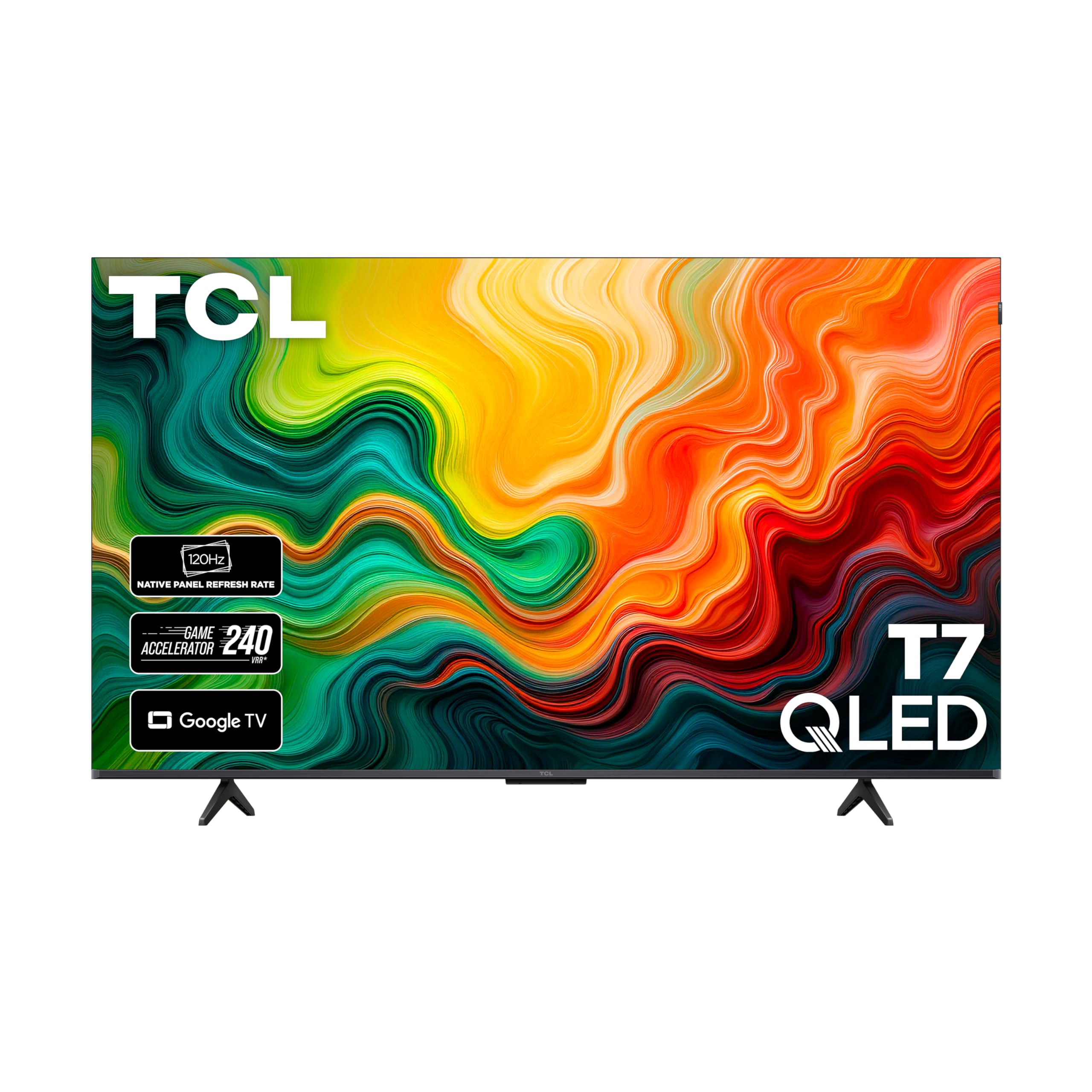
A 55-inch gaming monitor in disguise, with a 120Hz panel that pushes to 144Hz for ultra-smooth PC play.
This TCL is built for lag-free gaming. The 120Hz panel refresh rate with a 240Hz variable gaming refresh rate and MEMC Frame Insertion (a technology that inserts extra frames between the original ones, making fast motion appear smoother) ensures that a game like *Ghost of Yotei* on PS5 feels incredibly fluid. The AIPQ Pro Processor intelligently tune color and contrast for gaming. The QLED quantum dot layer covers nearly the entire DCI-P3 color space (the color standard used in digital cinema), meaning the reds in a sunset in *Red Dead Redemption 2* look richer than on the standard LED INSIGNIA below.
Buyers confirm it is “perfect for gaming on console/PC” but note that you must enable the Game feature on the TV to avoid input lag. One reviewer who uses it as a PC monitor via HDMI reports a quirk: the TV does not wake properly from power save mode, requiring an HDMI unplug/replug. For movies, 4K discs like *Blade Runner* and *John Wick* look “stunning” and “crisp.” The sound is adequate but not a highlight.
Compared to the TCL QM6K above, the T7 is slightly less bright and lacks the Mini-LED backlight, so dark scenes can show some halo glow around bright objects, but the gaming-specific features make up for it.
The Gamer’s Choice
- 120Hz panel with variable 240Hz gaming refresh rate for lag-free play
- QLED quantum dot technology delivers vibrant, cinema-grade color
- 4 HDMI inputs (one with eARC) for multi-device setups
The PC Monitor Quirk
- May struggle to wake from power save when used as a PC monitor
- Standard LED backlight shows minor haloing in high-contrast dark scenes
Reach for this if you are a console or PC gamer who wants a high refresh rate 4K panel with QLED color and does not need Mini-LED’s perfect blacks.
The honest catch: the power-save wake issue when connected to a PC is a real annoyance, and the standard LED backlight is a step down from Mini-LED in dark rooms.
8. Sony BRAVIA 2 II 43 Inch 4K Ultra HD LED Smart TV with Google TV (K-43S20M2)
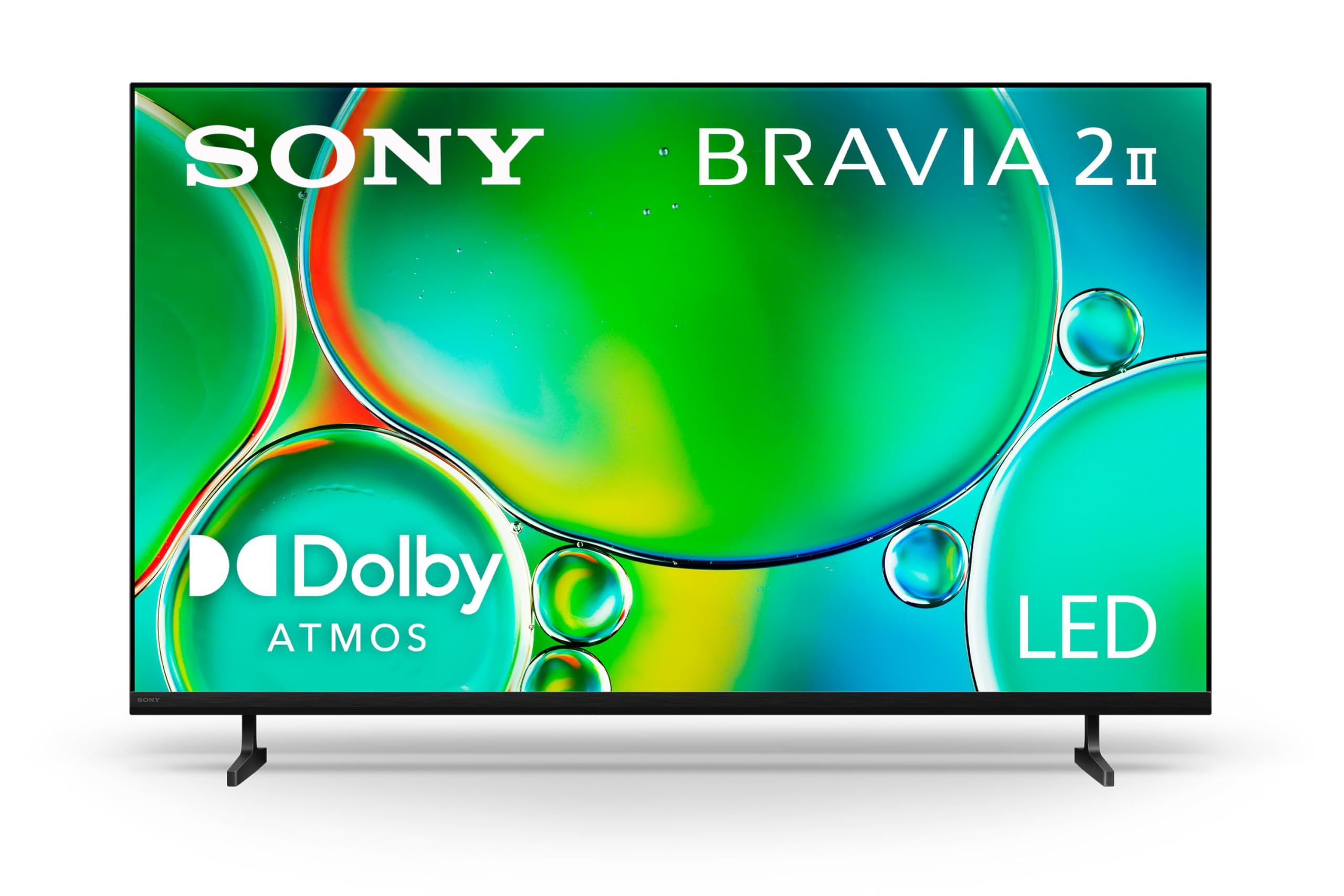
A compact 43-inch Sony that fits a small room and delivers the brand’s famous color accuracy, but its 60Hz panel is for casual viewing only.
This is the smallest TV in the list, and it is ideal for a bedroom, kitchen, or small apartment. The 4K Processor X1 (Sony’s entry-level 4K processor) delivers a lifelike picture with rich colors and sharp details, and owners mention “great Sony picture that they’re known for” with “great color, balance, and accuracy.” For PlayStation 5 owners, it has exclusive features like Auto HDR Tone Mapping and Auto Genre Picture Mode, which automatically tune the picture when you switch between a game and a movie.
The Motionflow XR technology keeps fast-moving sports and action movies blur-free, but the panel is a standard 60Hz, so it falls short of the TCL T7’s 120Hz for competitive gaming. One reviewer warns of a “frequent freezing requiring unplugging” and WiFi dropouts, which is a concerning pattern among a small subset of buyers. The 43-inch screen is also 28% smaller than the TCL T7 series, so you lose the rich feel for movies.
If your space is tight and you want Sony’s reliable picture processing, this is a tidy choice. If you plan to game or watch movies in a dark room, the TCL QM6K or Hisense U8 are much better investments.
The Bedroom Specialist
- Compact 43-inch size fits small rooms, desks, or kitchens
- Sony’s 4K Processor X1 provides balanced, accurate colors
- Exclusive PS5 features for tune HDR and picture modes
The Speed Bump
- 60Hz panel makes it less suitable for fast-paced gaming than 120Hz alternatives
- A small number of customers note freezing and WiFi issues
Reach for this if you need a small, reliable Sony for a bedroom or guest room and your main use is streaming movies and shows, not competitive gaming.
Look elsewhere if you want a 120Hz+ panel for sports or gaming, or if the reported freezing issues are a dealbreaker for a primary TV.
9. Roku Smart TV – 55-Inch Plus Series, Mini-LED TV (RokuTV with Enhanced Voice Remote)
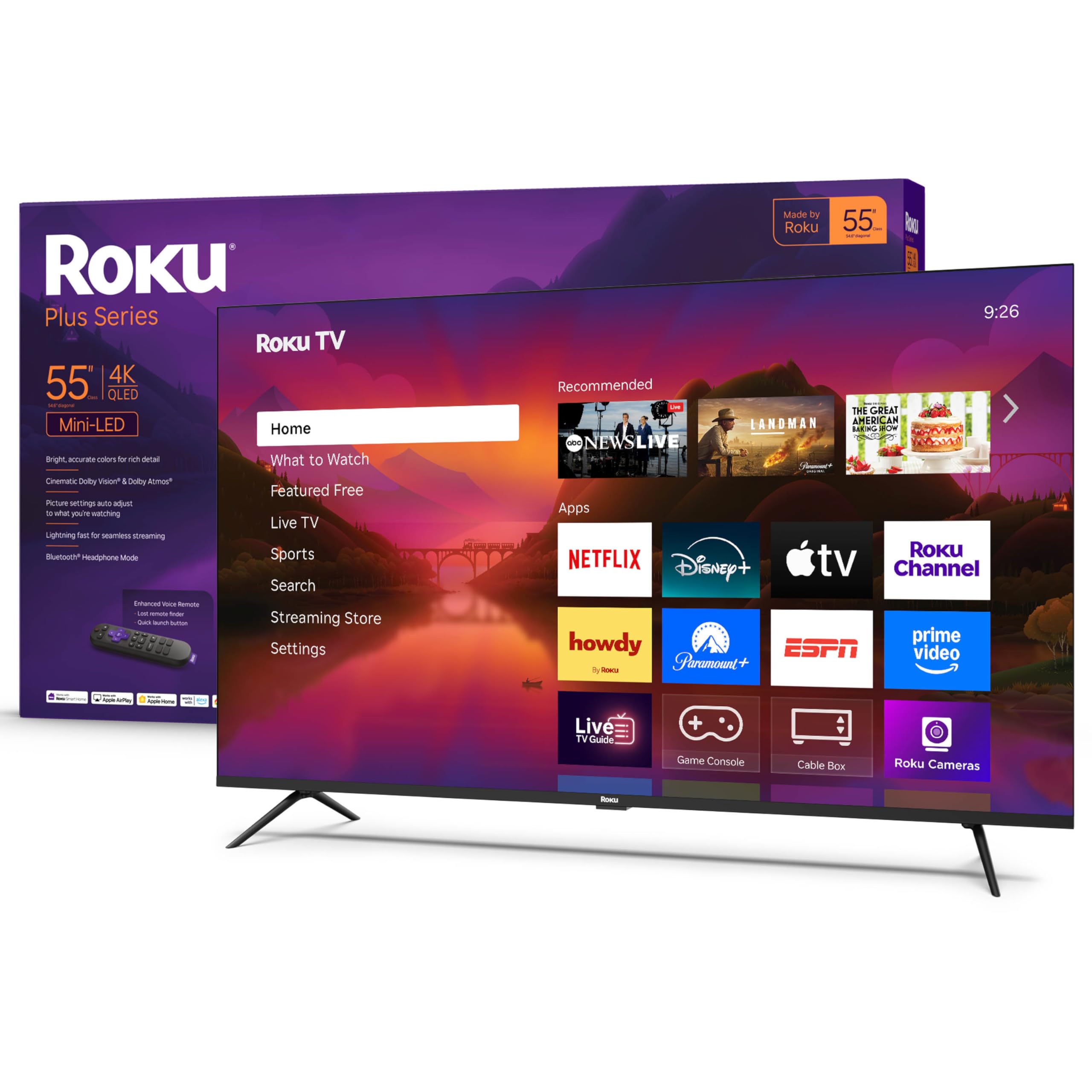
The Mini-LED TV that runs the simplest operating system on the market, making it perfect for anyone who hates complicated menus.
This Roku TV delivers Mini-LED backlighting (the same technology that makes the TCL QM6K look so good) in a 55-inch panel with a QLED screen and Dolby Vision. That means deep blacks and vibrant colors that rival the TCL T7. But its standout feature is the Roku OS (the operating system known for its clutter-free, easy-to-navigate home screen). Buyers call the OS “very intuitive, so very easy to use,” and one reviewer specifically notes the “Plus model far superior to Select.”
The Enhanced Voice Remote includes a lost remote finder and lets you search apps with your voice. The TV also has Dolby Atmos technology with a built-in subwoofer, and reviewers point out the sound is “exceptional throughout the range with strong bass.” A minor flaw: one reviewer noticed a USB port quirk where bias lights stay on for about 10 minutes after the TV is turned off, regardless of the setting.
At 55 inches with Mini-LED, it is a serious value. It lacks the high refresh rate of the TCL T7 (it is a 60Hz panel), so hardcore gamers should look at the TCL or Hisense options, but for a family room used for streaming and casual viewing, this is a fantastic and easy-to-live-with choice.
The User-Friendly Champion
- Roku OS is the simplest, most intuitive smart platform on the market
- Mini-LED + QLED + Dolby Vision deliver impressive picture quality for the price
- Enhanced voice remote with lost remote finder is a clever convenience
The Slow Lane
- 60Hz panel is not suited for fast-paced competitive gaming
- USB port quirk keeps bias lights on for 10 minutes after shutdown
Best for families or anyone who wants a great picture without learning a complex interface, and who watches mostly movies, news, and streaming shows.
pass on it if you are a competitive gamer who needs a 120Hz+ panel, as the TCL T7 or Hisense U8 are far better suited for that.
10. INSIGNIA 55-inch Class F50 Series LED 4K UHD Smart Fire TV (NS-55F501NA26)
The cheapest 55-inch 4K you can buy, but the reliable picture is locked behind a famously frustrating setup routine.
At the bottom of the price ladder, this INSIGNIA F50 Series gets you a 55-inch 4K screen with HDR10 support and a Fire TV smart platform. It includes DTS Virtual-X sound (a virtualizer that creates a wider, 3D-like soundstage from the built-in speakers) and supports HDMI eARC for passing lossless audio to a soundbar. The VESA 200×200 mount pattern means you can wall-mount it easily. On paper, it is a good value for the size.
The reality from buyer reviews is mixed. Many call it “sharp, bright, colorful” and an “excellent value,” but one detailed 1-star review describes a “miserable setup” with remote pairing issues, an endless update cycle, an invalid serial number, and a sluggish interface. A separate buyer reports the TV auto-shuts off on pause and has blacked-out app icons. This pattern of software frustration is unique to this model among the picks here, and it is a real risk if you are not comfortable troubleshooting.
Compared to the Roku Plus Series above, the INSIGNIA lacks Mini-LED and QLED technology, so blacks look gray in a dark room and colors are less vibrant. It is a budget compromise that works if you get a lucky unit, but the odds of a headache are higher than with any other TV on this list.
The Size-for-Price King
- Lowest cost to get a 55-inch 4K screen with HDR
- Fire TV platform integrates well with Amazon services and Alexa
- DTS Virtual-X sound creates a wider soundstage than basic stereo
The Software Gamble
- Significant number of shoppers say a miserable setup and sluggish performance
- Standard LED backlight shows gray blacks in dark scenes, not vibrant in bright light
- 60Hz panel, no gaming features beyond the basics
Reach for this if you absolutely need the largest screen for the lowest possible price and you are comfortable dealing with potential software bugs.
The honest warning: the setup and reliability issues reported by a portion of buyers make this a riskier pick than the Roku Plus Series, which costs a bit more for a far smoother experience.
11. Roku Smart TV – 55-Inch Plus Series, Mini-LED TV (RokuTV with Enhanced Voice Remote)
The Mini-LED TV that runs the simplest operating system on the market, making it perfect for anyone who hates complicated menus.
This Roku TV delivers Mini-LED backlighting (the same technology that makes the TCL QM6K look so good) in a 55-inch panel with a QLED screen and Dolby Vision. That means deep blacks and vibrant colors that rival the TCL T7. But its standout feature is the Roku OS (the operating system known for its clutter-free, easy-to-navigate home screen). Buyers call the OS “very intuitive, so very easy to use,” and one reviewer specifically notes the “Plus model far superior to Select.”
The Enhanced Voice Remote includes a lost remote finder and lets you search apps with your voice. The TV also has Dolby Atmos technology with a built-in subwoofer, and reviewers point out the sound is “exceptional throughout the range with strong bass.” A minor flaw: one reviewer noticed a USB port quirk where bias lights stay on for about 10 minutes after the TV is turned off, regardless of the setting.
At 55 inches with Mini-LED, it is a serious value. It lacks the high refresh rate of the TCL T7 (it is a 60Hz panel), so hardcore gamers should look at the TCL or Hisense options, but for a family room used for streaming and casual viewing, this is a fantastic and easy-to-live-with choice.
The User-Friendly Champion
- Roku OS is the simplest, most intuitive smart platform on the market
- Mini-LED + QLED + Dolby Vision deliver impressive picture quality for the price
- Enhanced voice remote with lost remote finder is a clever convenience
The Slow Lane
- 60Hz panel is not suited for fast-paced competitive gaming
- USB port quirk keeps bias lights on for 10 minutes after shutdown
Best for families or anyone who wants a great picture without learning a complex interface, and who watches mostly movies, news, and streaming shows.
pass on it if you are a competitive gamer who needs a 120Hz+ panel, as the TCL T7 or Hisense U8 are far better suited for that.