
That grainy, pixelated image during your Zoom presentation isn’t your internet — it’s your webcam’s tiny sensor struggling to catch enough light. A true 4K UHD webcam doesn’t just deliver four times the resolution of a 1080p camera; it fundamentally changes how colleagues, clients, and audiences perceive you. The jump from a standard built-in laptop camera to a dedicated 4K UHD unit is the single most impactful upgrade you can make for remote work, streaming, or content creation.
I’m Min — the co-founder and writer behind Gadgets Feed. I’ve spent hundreds of hours analyzing the technical specifications of dozens of 4K webcams, pouring over sensor sizes, autofocus systems, compression algorithms, and real-world performance data to separate the genuinely superior units from the marketing hype.
Whether you’re a remote executive who needs to command a boardroom or a streamer chasing that perfect frame, this guide cuts through the noise to help you find the best 4k uhd webcam for your specific setup and budget.
How To Choose The Best 4K UHD Webcam
Purchasing a 4K UHD webcam is more complex than just picking the highest megapixel count. You need to balance sensor technology, autofocus speed, frame rate requirements, and audio quality. Here are the critical spec categories to evaluate before you buy.
Sensor Size & Low-Light Performance
The physical size of the image sensor is the single most important determinant of image quality in a 4K UHD webcam. Larger sensors like the 1/1.2″ or 1/1.5″ class capture significantly more light per pixel, resulting in cleaner, less noisy video in dimly lit home offices and streaming setups. Look for Sony STARVIS or STARVIS 2 sensors, as their back-illuminated architecture delivers superior sensitivity, often allowing the camera to perform well with just a ring light or standard room lighting.
Autofocus Technology: PDAF vs. Contrast Detection
Not all autofocus systems are equal. Phase Detection Autofocus (PDAF) uses dedicated phase-detect pixels on the sensor to calculate focus distance instantly, making it incredibly fast and accurate for tracking movement. Contrast Detection, found in older or budget 4K webcams, hunts back and forth to find sharp focus, often resulting in visible pulsing or blur during active presentations. If you move around while talking or demonstrating products, a PDAF-equipped webcam like the Hollyland Lyra or YOLOLIV YoloCam S3 is mandatory.
Frame Rate vs. Resolution Trade-Offs
A true 4K UHD webcam can output 3840 x 2160 pixels, but the frame rate at which it does so matters immensely. 4K at 30fps is standard and suitable for talking-head interviews and formal meetings. 4K at 60fps, found on models like the Elgato Facecam 4K and Logitech 4k Webcam, delivers fluid, lifelike motion that is critical for gaming streams, fitness demonstrations, or any scenario with rapid hand movements. If you need higher frame rates, remember that many webcams drop to 1080p at 120fps for ultra-smooth slow-motion capture.
Compression, Bitrate, and Connectivity
How a 4K UHD webcam transmits video data to your computer drastically affects final quality. Uncompressed video (YUY2/NV12) preserves maximum detail but requires a high-bandwidth USB 3.0 connection. Many webcams use MJPEG or H.264 compression to reduce bandwidth demands, which can introduce artifacts in busy scenes. Also verify compatibility with your platform — Windows offers full software control on most models, while Mac users may find some advanced features locked behind third-party apps or simply unavailable.
Quick Comparison
On smaller screens, swipe sideways to see the full table.
| Model | Category | Best For | Key Spec | Amazon |
|---|---|---|---|---|
| OBSBOT Tiny 3 | Premium | AI PTZ Tracking & Spatial Audio | 1/1.28″ Sensor, 4K@30fps, 3-Mic | Amazon |
| Insta360 Link 2 Pro | Premium | Natural Bokeh & Stream Deck Control | 1/1.3″ Sensor, 4K, AI Tracking | Amazon |
| Razer Kiyo Pro Ultra | Premium | DSLR-Like Low-Light & Color Science | 1/1.2″ STARVIS 2, F/1.7, HDR | Amazon |
| YOLOLIV YoloCam S3 | Mid-Range | Largest Sensor & Full Manual Control | 1/1.28″ Sensor, PDAF, 4K@30fps | Amazon |
| Elgato Facecam 4K | Mid-Range | Studio-Grade Lens Filters & 60fps | Sony STARVIS 2, 4K@60fps, HDR | Amazon |
| Hollyland Lyra | Mid-Range | Direct Wireless Mic & Portrait Mode | 1/1.5″ Sensor, 50MP, PDAF | Amazon |
| Logitech 4k Webcam | Mid-Range | Plug-and-Play Simplicity & Windows Hello | 4K@60fps, HDR, 90fps 1080p | Amazon |
| Logitech BRIO | Mid-Range | Proven Reliability & Business Conferencing | 4K, 5x Digital Zoom, BSI CMOS | Amazon |
| EMEET PIXY | Budget-Friendly | Dual-Camera PTZ & Gesture Control | 1/2.55″ Sony Sensor, 4K, AI Tracking | Amazon |
In‑Depth Reviews
1. OBSBOT Tiny 3
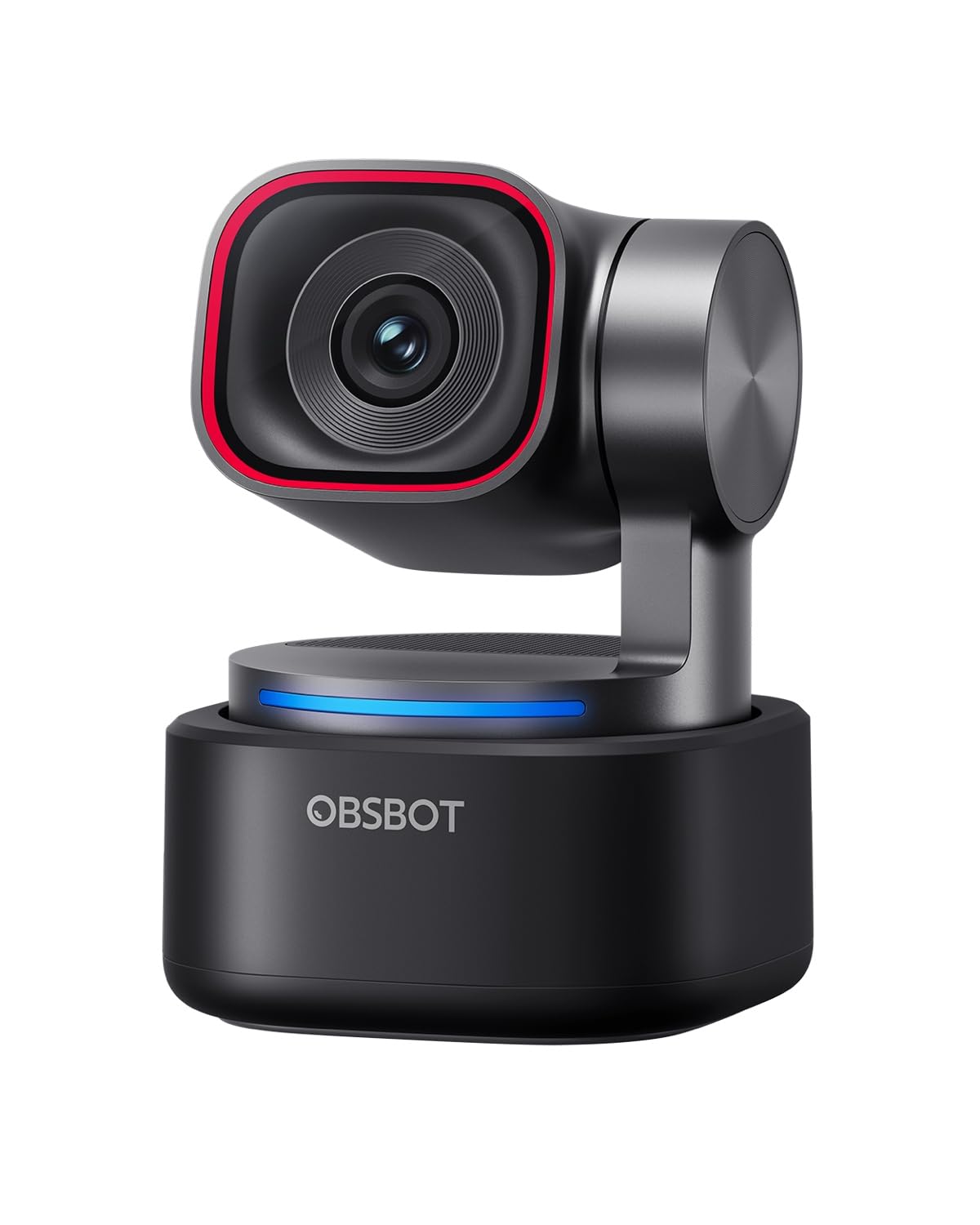
The OBSBOT Tiny 3 packs a massive 1/1.28” CMOS sensor into a chassis that is 48% smaller and 34% lighter than its predecessor. This sensor size allows for excellent low-light performance with a wide ISO domain up to 12800 and DCG HDR, ensuring balanced exposure even in dim home offices or streaming dens. The dual All-Pixel PDAF is exceptionally fast and intelligently switches focus modes depending on lighting, so you never get that distracting focus hunt during a presentation. Its AI Tracking 2.0 system can lock onto a single person, a whole group, or over 200 types of objects, and it physically pans, tilts, and zooms to keep the subject perfectly framed — a feature that truly justifies the premium investment for power users.
The triple-mic array represents a serious upgrade in audio, featuring one omnidirectional mic and two MEMS directional mics that feed five specialized audio modes. The voice and gesture controls work reliably once calibrated, allowing you to command tracking, zoom, and preset switching without touching hardware. The included adjustable mount, USB-C cable, and premium storage case add significant value for professionals who travel between studios or conference rooms. On the software side, OBSBOT Center provides pro-grade tuning like exposure gamma curves and auto white balance offset, making it a versatile tool for everything from board meetings to live streams.
For users who require uncompromising tracking performance, professional multitrack audio, and a compact footprint, the Tiny 3 is the most complete package available. The 4K at 30fps output is crisp and detailed, while 1080p at 120fps opens the door for ultra-smooth slow-motion content. It integrates seamlessly with Elgato Stream Deck for multi-camera workflows, and its whisper-quiet gimbal makes it suitable for high-end audio recordings. This is the webcam to buy if your workflow demands the best AI tracking and spatial audio in one device.
Why it’s great
- 48% smaller than predecessor yet packs a larger 1/1.28″ sensor for stunning low-light clarity
- Triple-mic array with five audio modes delivers professional spatial audio for meetings and streaming
- AI Tracking 2.0 physically pans/tilts/zooms to follow people, groups, or objects smoothly
Good to know
- Premium price that is best justified by heavy tracking or multi-presenter use cases
- Gimbal can run warm during extended 4K streaming sessions
2. Insta360 Link 2 Pro
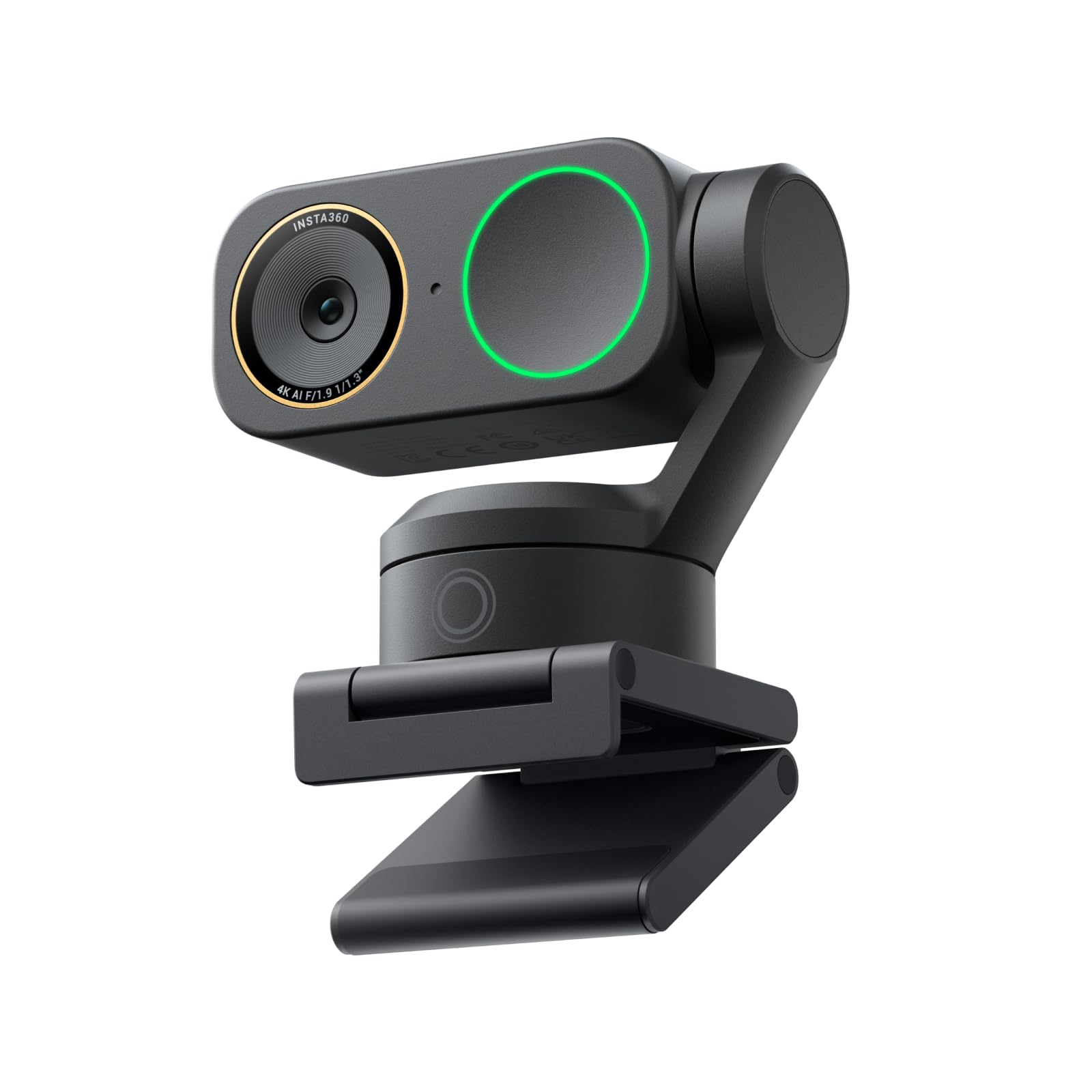
The Insta360 Link 2 Pro builds on the original Link’s reputation by adding a larger 1/1.3″ sensor and a dedicated Natural Bokeh engine that creates a realistic, DSLR-like shallow depth of field without software trickery. This physical bokeh effect beautifully separates you from your background, giving your streams or meetings a distinctly professional look that software blur can’t match. The redesigned dual-mic system uses beamforming directional pickup to isolate your voice from ambient noise, and the AI tracking physically pans and tilts the camera head to keep you framed during active presentations or walk-through demos. At 4K resolution, the video is sharp, with excellent color science that produces natural skin tones straight out of the box.
Connectivity is robust with Elgato Stream Deck integration for multi-camera switching and a dedicated Link Controller software suite that gives you fine-grained control over exposure, white balance, and tracking behavior. The DeskView, Whiteboard, and 4K Portrait modes adapt to specific scenarios, making it a versatile choice for educators, product reviewers, and corporate communicators. The magnetic mount securely attaches to monitors, and the included USB-C cable and adapter cover most modern workflows. The gesture control system for starting tracking or activating Whiteboard Mode is responsive and intuitive once you learn the hand signals.
The Link 2 Pro earns its premium position through its unique combination of physical bokeh, reliable PTZ tracking, and professional audio isolation. It is particularly strong for users who present to camera while standing, as the auto-framing dynamically adjusts to keep multiple speakers or a presenter and whiteboard in view. The primary limitation is software — Mac users currently lack access to advanced features like green screen and skin smoothing, though Windows users get the full suite. If you want a webcam that looks like a dedicated camera and tracks like a robot, this is your pick.
Why it’s great
- Natural Bokeh engine creates realistic background blur without software artifacts
- 1/1.3″ sensor delivers excellent low-light performance and natural skin tones
- Elgato Stream Deck integration streamlines multi-camera production workflows
Good to know
- Mac software lacks advanced features like green screen and color correction at launch
- Short included USB-C cable may require an extension for flexible placement
3. Razer Kiyo Pro Ultra

The Razer Kiyo Pro Ultra houses a 1/1.2″ Sony STARVIS 2 sensor — the largest sensor in this roundup — paired with a custom F/1.7 aperture lens. This combination lets in an enormous amount of light, making it the undisputed champion for low-light scenarios. Even with only standard overhead lighting, the Kiyo Pro Ultra produces clean, noise-free 4K video with excellent dynamic range. The 2.9 μm pixel size means each pixel captures more photons, resulting in footage that looks like it was shot on a dedicated mirrorless camera. The AI-powered video imaging holds focus and adjusts exposure automatically, keeping your face perfectly exposed even as you lean in or move left and right.
For content creators who want total control, the camera supports uncompressed 4K output at 24fps via YUY2 and NV12 formats, as well as compressed H.264 for standard workflows. The HDR mode at 30fps adds visual punch by balancing highlights and shadows, and the lens can artfully blur the background optically without any software intervention. The built-in twist-to-close iris privacy shutter and onboard memory for saving configurations are thoughtful touches for security-conscious professionals. The camera also includes a detachable universal mounting clip, a protective lens cover, and a USB Type-A to Type-C cable. The Razer Synapse software allows deep tuning of ISO, shutter speed, and white balance, though the experience is more polished on Windows than on Mac.
The Kiyo Pro Ultra extracts every last drop of quality from its large sensor, but it demands good software management. Windows users get the full Synapse experience, while Mac users will need to rely on third-party apps like “webcam settings” to access manual controls. The camera body is larger than typical webcams, resembling a DSLR lens, so ensure your monitor mount can accommodate its weight. For streamers, remote professionals, and content creators who frequently work in challenging lighting conditions and demand the most natural-looking image, the Kiyo Pro Ultra is the definitive premium choice.
Why it’s great
- Largest 1/1.2″ Sony STARVIS 2 sensor with F/1.7 aperture for unmatched low-light performance
- Optical background blur creates DSLR- like depth of field without software
- Onboard memory stores your last saved configuration for consistent setup across devices
Good to know
- Mac users lack native Razer software and must rely on third-party apps for manual controls
- Larger body may not fit all monitor mounts; physical size is equivalent to a small prime lens
4. YOLOLIV YoloCam S3
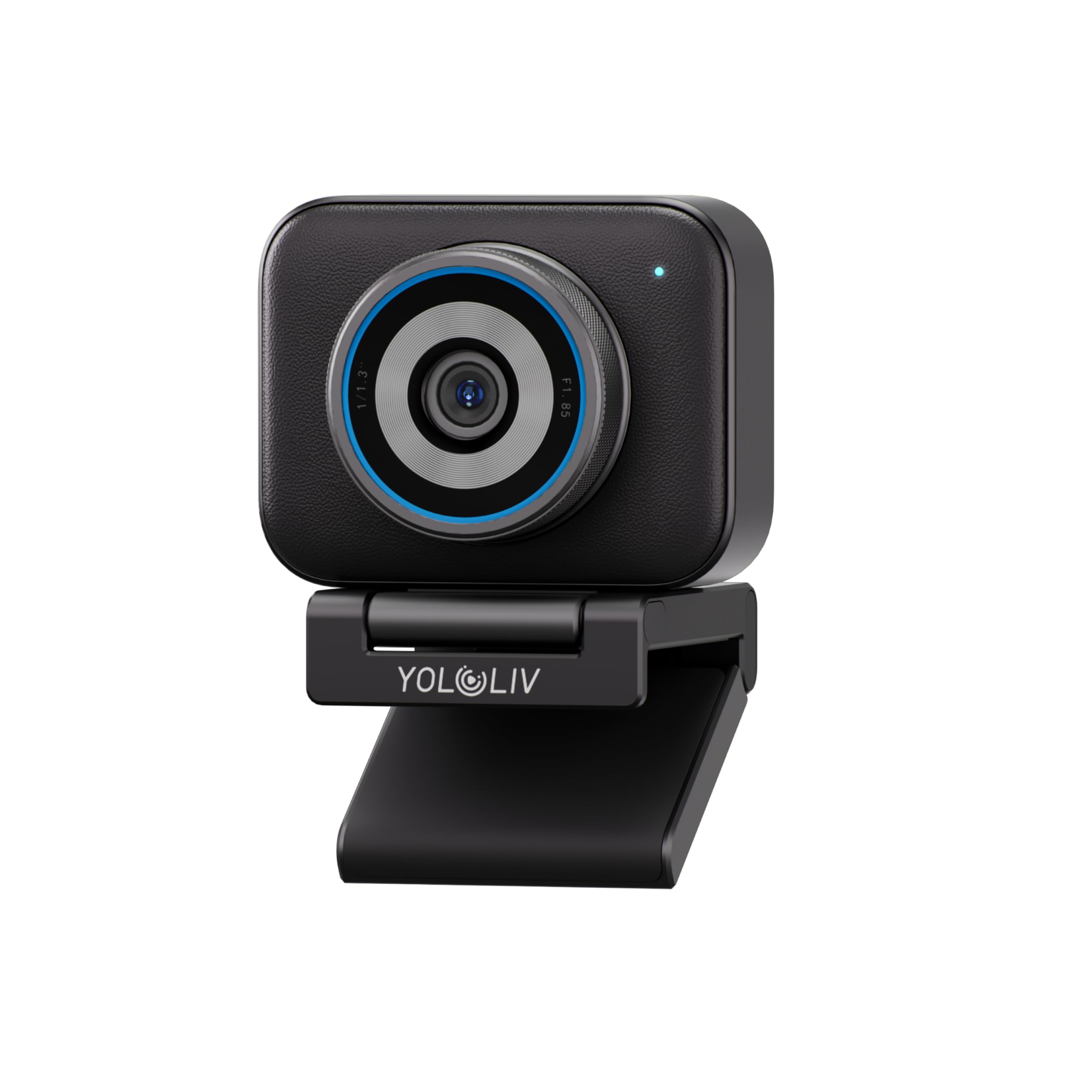
The YoloCam S3 boasts what YOLOLIV calls possibly the largest sensor ever in a webcam: a 1/1.28″ CMOS that captures uncompressed 4K video at 30fps and 1080p at 60fps. This large sensor allows for a naturally shallow depth of field, producing a cinematic background blur that is genuinely photogenic without any digital processing. The PDAF autofocus is instant and zero-lag, locking onto faces even during rapid movement, which is critical for fitness demos, product unboxings, or active presentations. The AI imaging engine auto-tunes exposure, white balance, and HDR to deliver 2.5x clearer faces in low light, and the 82° field of view keeps you perfectly framed without introducing distortion at the edges.
The all-aluminum chassis acts as a massive heat sink, preventing overheating during extended streaming marathons — a common issue with smaller plastic webcams. The magnetic mount system folds easily and includes a 1/4″-20 tripod interface, making it incredibly versatile for monitor, desk, or tripod placement. The 4x digital zoom at 1080p is a standout feature, allowing you to crop into the frame without losing resolution, perfect for close-up demonstrations. The companion software offers full manual control over contrast, sharpness, saturation, and color grading via the Picasso Resolve engine, though this advanced feature set is currently Windows-only, with macOS support promised in a future update.
The YoloCam S3 delivers a compelling value proposition by packing a professional-grade sensor and manual controls at a price point significantly below the high-end PTZ competitors. For streamers, content creators, and remote workers who want DSLR-like quality without the DSLR complexity, this webcam is an outstanding mid-range option. The magnetic vertical orientation switch is a godsend for TikTok and Instagram Reels creators. The only missing feature is internal recording — there is no SD card slot, so you’ll need to rely on your computer or an external recorder. If sensor size and image purity are your top priorities, the YoloCam S3 delivers exceptional results.
Why it’s great
- 1/1.28″ sensor delivers genuine cinematic depth of field and excellent low-light detail
- PDAF autofocus is instant and handles active movement without hunting
- All-aluminum body prevents overheating, enabling 24/7 non-stop streaming
Good to know
- Advanced color grading (Picasso Resolve) is Windows-only for now
- No internal SD card recording; must capture via software on your PC or Mac
5. Elgato Facecam 4K

The Elgato Facecam 4K delivers a rare combination of 4K resolution at 60 frames per second, making it the definitive choice for smooth, fluid motion in gaming streams and professional presentations. At the heart of this camera lies a Sony STARVIS 2 sensor paired with Elgato Prime Lens technology, producing sharp, vibrant video with excellent dynamic range. The HDR support and uncompressed video output ensure that every frame reaches your software without compression artifacts, preserving the full color depth and detail. The 49mm lens filter thread is a unique pro feature — you can screw on ND filters, diffusion filters, or polarizers just like a real cinema lens, giving you creative control over exposure and look that no other webcam in this class offers.
The Camera Hub software from Elgato provides DSLR-like controls over exposure, white balance, ISO, and digital zoom, and it saves all settings to the camera’s internal flash memory. This means you can unplug the Facecam 4K and plug it into a different computer, and your custom look loads instantly — no driver configuration needed. The included monitor mount is sturdy, and the USB-C connection is detachable, making cable management neat. The manual focus ring is a controversial feature; while purists appreciate the precision, it means the camera lacks autofocus, which can be a dealbreaker for users who frequently change distances from the lens. The 20mm wide-angle lens also means you may need to sit closer to fill the frame, and digital zoom to tighten the shot sacrifices the 4K resolution.
The Facecam 4K is a specialized tool for users who prioritize frame rate and color science above all else. If your stream or video conference demands the smoothest 4K motion and you are comfortable setting focus once per session, this camera is unbeatable. The ability to use lens filters opens creative avenues for streamers who want to control bloom or add cinematic diffusion without post-processing. It is less ideal for multi-speaker meetings or active presenters who move around, as the lack of autofocus and narrow field of view can be limiting. For the dedicated streamer who wants the closest thing to a real cinema camera on their monitor, this is the best 60fps 4K webcam money can buy.
Why it’s great
- True 4K at 60fps delivers exceptionally smooth, lifelike motion for gaming and streams
- 49mm lens filter support allows ND, diffusion, and polarizer filters for creative control
- Onboard flash memory saves settings to the camera, not the PC, for instant portability
Good to know
- Manual focus only — no autofocus, which may frustrate users who move around
- 20mm wide-angle lens is quite wide; digital zoom to tighten frame reduces resolution
6. Hollyland Lyra

The Hollyland Lyra punches well above its mid-range price point with a 1/1.5″ CMOS sensor that is 3x larger than standard webcams. This results in true 4K video at 30fps with a naturally blurred background and excellent low-light performance that competes with cameras costing twice as much. The 50MP lens combined with PDAF autofocus ensures sharp focus even as you move, while the smart AI tracking and auto-framing keep you or multiple speakers centered in the frame without requiring a PTZ gimbal. The f/1.8 wide aperture lets in plenty of light, so your face remains well-exposed even in dimly lit home offices or night streaming setups.
The standout feature is the direct wireless microphone pairing with the LARK A1 — it connects without any extra receiver, allowing you to roam up to 33 feet away while maintaining perfect, drop-free audio. This is a game-changer for trainers, lecturers, and product demonstrators who move around a room. The HollyStudio software includes one-click skin smoothing, green screen removal that preserves fine hair details, and the ability to save up to 10 preset camera angles for instant switching during broadcasts. The magnetic base allows instant switching between landscape and portrait orientation, making it ideal for both Zoom calls and TikTok videos. The built-in twist-to-close physical privacy shutter adds an extra layer of security.
The Lyra excels as an all-arounder for creators who want great image quality, professional audio, and intelligent tracking without breaking the bank. The green screen algorithm is genuinely impressive for a webcam at this level, producing clean edges even with wispy hair. The main caveat is that the HollyStudio software’s advanced features (green screen, skin smoothing, color correction magic) are not yet available on macOS — Windows users get the full experience. For Windows-based streamers, teachers, and content creators who need a reliable, feature-rich 4K webcam with wireless audio, the Lyra is the absolute best value proposition in this guide.
Why it’s great
- 1/1.5″ sensor with f/1.8 aperture produces natural background blur and strong low-light performance
- Direct wireless mic pairing with LARK A1 eliminates need for separate receiver
- Magnetic base instantly switches between landscape and portrait orientation
Good to know
- Advanced software features like green screen and skin smoothing are Windows-only
- Built-in microphone is adequate but not as good as the dedicated LARK A1 wireless option
7. Logitech 4k Webcam

The Logitech 4k Webcam delivers 4K resolution at 60fps with Logitech RightLight 3 HDR technology, ensuring you look your best in any lighting condition. The autofocus is reliable and fast, and the 5x HD zoom lets you frame yourself perfectly, whether you are sitting close to the camera or farther back. The dual omnidirectional mics with noise-canceling technology effectively suppress background hums and keyboard clicks, keeping your voice clear during calls. The three field-of-view presets (90°, 78°, or 65°) offer flexibility to include more of your environment or focus tightly on you, selectable via the Logi Tune software.
This webcam’s greatest strength is its cross-platform plug-and-play simplicity. It works immediately with Windows, Mac, and ChromeOS, and integrates seamlessly with Windows Hello for password-free login after a firmware update to version 2.2. The detachable universal mounting clip fits laptops, desktop monitors, and most displays securely. The privacy shade is a simple mechanical flip-up cover that physically blocks the lens when not in use, which is far more reliable than software-based privacy solutions. The USB-C connectivity ensures compatibility with modern laptops, though the cable is permanently attached to the camera body.
The Logitech 4k Webcam is the safest recommendation for anyone who values reliability and ease of use above all else. It does not have the largest sensor or the most exotic features, but it consistently delivers great video in a user-friendly package. It excels in corporate environments where IT needs a standardized camera that works out of the box with all major video conferencing platforms. For users who want a premium, no-fuss 4K webcam with 60fps support and proven reliability, this is the benchmark against which all other versatile webcams are measured. The only real downsides are the high price relative to sensor size and the permanently attached cable.
Why it’s great
- 4K at 60fps with HDR provides smooth, well-lit video in most conditions
- Windows Hello integration offers fast, secure facial login after firmware update
- Three FOV presets and 5x HD zoom give versatile framing options
Good to know
- Permanently attached USB-C cable reduces cable management flexibility
- Sensor is smaller than dedicated streaming webcams, limiting low-light extremes
8. Logitech BRIO

The Logitech BRIO is a long-standing benchmark in the 4K webcam category, known for its rock-solid reliability and excellent color balance in less-than-optimal lighting. Its BSI CMOS sensor and auto-focus system produce sharp, well-exposed video across a wide range of scenarios, from bright office environments to dim home setups. The 5x digital zoom and 90fps capture at 1080p provide flexibility for different use cases, and the USB 3.0 connectivity ensures high-bandwidth throughput for uncompressed video. The carrying pouch is a nice inclusion for mobile professionals who take their webcam between offices.
BRIO’s simplicity is its superpower: plug it in, and it just works with any software. The built-in microphone is clear enough for meetings, though external mics are recommended for professional broadcasts. The monitor mount is functional but limited in vertical adjustment range, so taller monitors may require a third-party mount or tripod. The camera supports pan, tilt, and zoom controls directly within Skype and other compatible apps, giving you remote framing control without needing to touch the camera.
For business users who prioritize stability and consistent quality over the latest AI gimmicks, the Logitech BRIO is still a compelling choice. It does not have the largest sensor or the fanciest tracking, but its drivers are battle-tested and its image quality is excellent for its class. The price has come down significantly since its launch, making it a solid mid-range option that outperforms many cheaper webcams. If you want a 4K webcam that will reliably deliver professional video for years without bugs or compatibility headaches, the BRIO is a safe, proven investment.
Why it’s great
- Proven reliability with rock-solid drivers and consistent performance across platforms
- Excellent color balance and clarity in standard office and home lighting conditions
- 5x digital zoom and 90fps at 1080p offer flexible framing and smooth motion
Good to know
- Monitor mount has limited vertical adjustment; may not suit all display setups
- Sensor technology is older than newer STARVIS 2 competitors
9. EMEET PIXY
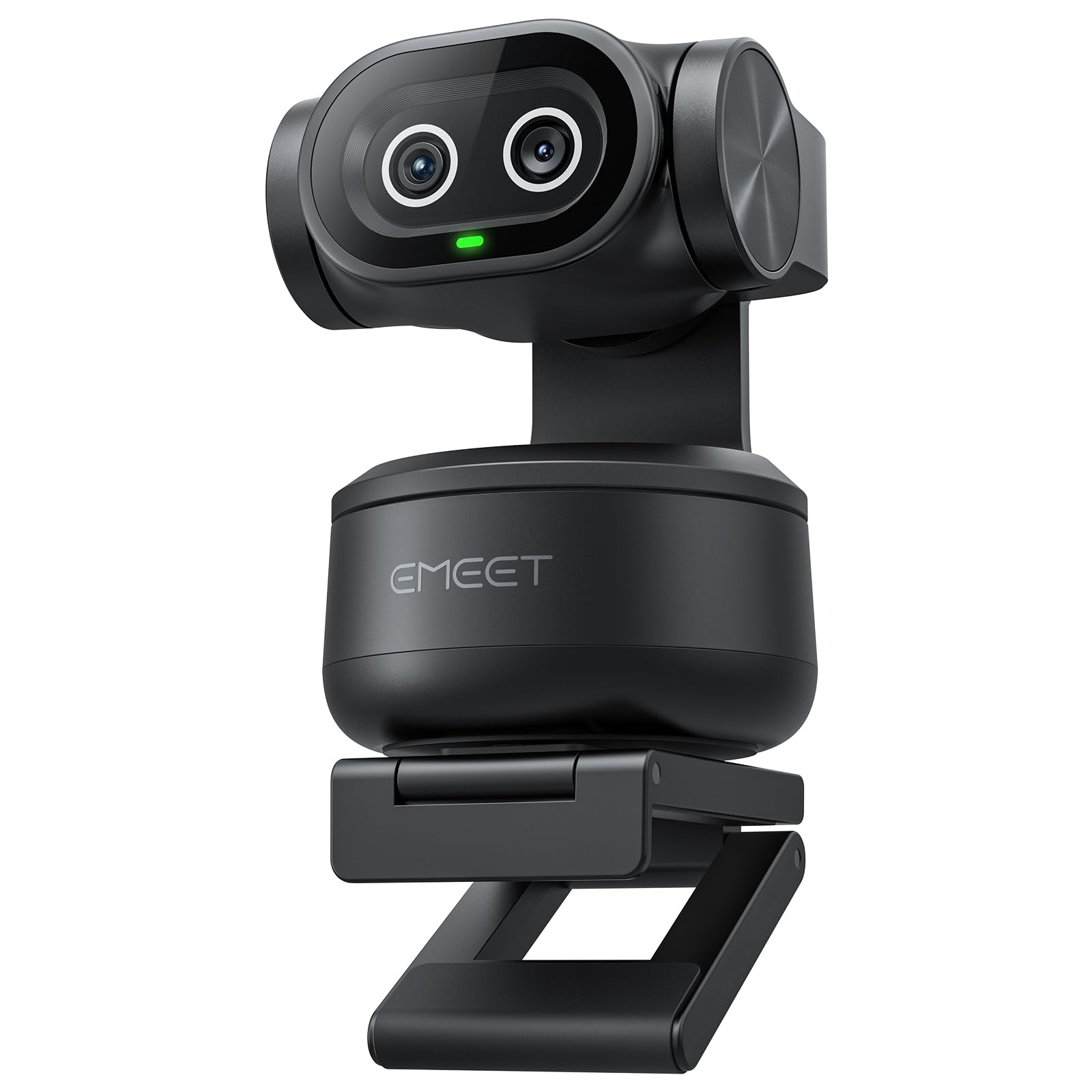
The EMEET PIXY is an ambitious budget-friendly webcam that uses a dual-camera system — a primary 4K imaging camera with a 1/2.55″ Sony sensor and PDAF, plus an auxiliary AI camera that detects face position to optimize autofocus and exposure. The combined PDAF and AI autofocus achieve a claimed 0.2-second focusing speed, significantly faster than the 1.1-second average of typical webcams. The 3-chip AI system splits processing across an imaging chip, an AI assist chip, and a PTZ chip, enabling 310° pan and 180° tilt movement that smoothly tracks you as you move. Gesture control allows you to activate tracking by holding an open palm in the center of the frame for two seconds, which works well once you learn the timing.
The triple-mic array offers three distinct audio modes — Live Mode for filtering steady noise like fans, Noise Canceling Mode for blocking sudden sounds like keyboard clicks, and Original Sound Mode for capturing full ambient detail. The EMEET Studio software provides control over preset positions, whiteboard mode, and privacy settings, and even includes AIGC for creating shot lists. The camera mounts via a clip or a standard tripod thread. At this price point, the motorized PTZ tracking is a remarkable feature that puts it in competition with cameras costing three times as much.
While the EMEET PIXY offers incredible value, it has some rough edges. The AI tracking can be sluggish in poor lighting and may struggle to follow you at a normal walking pace — you need to move slowly. The software interface on Mac has been reported as laggy, and the QR code in the manual leads to a Chinese-language guide. Despite these quirks, for streamers and presenters on a tight budget who absolutely need physical PTZ tracking, the PIXY delivers 85% of the functionality of premium PTZ webcams for a fraction of the cost. It is the clear budget champion for users who want motorized tracking without the premium price tag.
Why it’s great
- Motorized 310° pan and 180° tilt PTZ tracking at a budget-friendly price point
- Dual-camera system with PDAF and AI autofocus achieves fast 0.2s focusing
- Triple-mic array with three audio modes adapts to live, studio, and ambient needs
Good to know
- AI tracking can be slow and struggles in low-light or with fast movement
- Mac software experience is less polished than Windows; instructions can be confusing
FAQ
What is the difference between true 4K and upscaled 4K on a webcam?
Do I need 4K at 60fps for video conferencing with Zoom or Teams?
Can I use a 4K UHD webcam with an older computer?
What is the best mounting method for a 4K PTZ webcam?
Final Thoughts: The Verdict
For most users, the best 4k uhd webcam winner is the OBSBOT Tiny 3 because it combines the largest practical sensor with the most advanced AI tracking and spatial audio in a compact, well-built chassis. If you want creative control and smooth 60fps motion, grab the Elgato Facecam 4K. And for low-light dominance that rivals dedicated cameras, nothing beats the Razer Kiyo Pro Ultra.