
Our readers keep the lights on and my morning glass full of iced black tea. As an Amazon Associate, I earn from qualifying purchases.
Specs are compiled from manufacturer listings and verified buyer reviews and can change over time — please confirm the key details on the product page before buying.
Choosing a 4K video recorder gets tough when every spec sheet bragged about megapixels, frame rates, and sensor sizes. But the right camera makes your footage look easy, and the wrong one leaves you with shaky clips and confusing menus. This guide breaks down nine real options from pocket vloggers to event camcorders. It matches the specs to what you actually shoot.
I’m Min — the founder and writer behind Gadgets Feed. This guide is built by comparing the manufacturers’ published specifications and the patterns across verified customer reviews, so you get each pick’s real strengths and trade-offs instead of marketing spin.
These picks cover the range: a pocket-sized gimbal camera for daily vlogging, a superzoom bridge for wildlife, or a traditional camcorder for events. Read on to find the best 4k video recorder for your specific workflow, budget, and skill level.
Top Picks at a Glance

How To Choose The Best 4K Video Recorder
You see mirrorless cameras, dedicated camcorders, pocket gimbals, and HDMI recorders. The right pick depends on what you film most. A vlogger needs portability and a flip screen. A wedding shooter needs long battery life and reliable autofocus. A musician needs pristine audio inputs. Here is what to look for.
Sensor Size and Low-Light Performance
A larger sensor physically captures more light. A 1-inch CMOS sensor (CMOS stands for complementary metal-oxide-semiconductor, the chip that captures light) like the one in the DJI Osmo Pocket 3 handles dusk and indoor scenes far better than a 1/2.3-inch sensor found in many traditional camcorders. If you shoot in daylight, a smaller sensor is fine. If your events run into evening or dim rooms, prioritize a bigger sensor.
Frame Rate and Resolution Choices
4K at 24 fps (frames per second, the number of still images shown each second) gives a cinematic look. 4K at 30 fps is standard for online content. 4K at 60 or 120 fps lets you slow down the action in editing without losing sharpness. The Canon R100 shoots 4K at 24 fps. The DJI Osmo Pocket 3 does 4K at 120 fps for serious slow-motion. Decide whether smooth motion or creative slowdown matters more to you.
Stabilization: Gimbal, Optical, or Digital
A mechanical gimbal — a motorized pivoting arm that physically counteracts movement — cancels out walking bounce. The DJI Osmo Pocket 3 has a built-in 3-axis gimbal. Optical image stabilization (OIS) shifts lens elements to counter shaky hands. Digital stabilization crops the image and can soften detail. For run-and-gun shooting, built-in gimbal or OIS is a must. For tripod work, it matters far less.
Quick Comparison
| Model | Best For | Sensor | Max 4K FPS | Stabilization | Amazon |
|---|---|---|---|---|---|
| Canon EOS R100★ Best Overall | Beginner Mirrorless | APS-C (24.1MP) | 24 fps | Dual Pixel AF | Amazon |
| DJI Osmo Pocket 3Also Great | Vlogging / Travel | 1” CMOS | 120 fps | 3-Axis Gimbal | Amazon |
| Sony ZV-E10Best for Streamers | Vlogging / Streaming | APS-C (24.2MP) | 30 fps | OSS (Lens) | Amazon |
| Panasonic FZ80D | Long-Zoom / Wildlife | 1/2.3” (18.1MP) | 30 fps | POWER O.I.S. | Amazon |
| ClonerAlliance UHD Pro Max | HDMI Game/Stream Capture | External | 24/25 fps (Passthrough 60) | N/A | Amazon |
| Zoom Q2n-4K | Music / Audio-First Video | 1/2.3” | 30 fps | N/A | Amazon |
| Canon VIXIA HF G70 | Event / Traditional Camcorder | 1/2.3” | 30 fps | 5-Axis Dynamic IS | Amazon |
| Sony FDR-AX43 | Point-and-Shoot 4K | 1/2.5” Exmor R | 30 fps | Balanced Optical SteadyShot | Amazon |
| Canon VIXIA HF G70 Bundle | Pro-Event Camcorder | 1/2.3” | 30 fps | 5-Axis Dynamic IS | Amazon |
In‑Depth Reviews
1. Canon EOS R100 Mirrorless Camera with RF-S18-45mm Lens
Our pick — over 4.5★ from 700+ verified ratings; the strongest balance of quality and price.
Canon’s smallest R-series body that shoots 4K video with a classic DSLR-like grip.
This is the most affordable way into Canon’s RF mirrorless system. The 24.1MP APS-C sensor and DIGIC 8 processor deliver 4K video at up to 24 fps and Full HD at 60 or 120 fps. The Dual Pixel CMOS AF covers 143 zones with human and animal eye detection. Reviewers call that tracking system “impressive” for a beginner body. You can shoot continuously at 6.5 fps with One-Shot AF. One reviewer noted using it to capture a fast-moving arrow at 1/4000 shutter speed. The R100 is the lightest body in the EOS R series, making it comfortable for a full day of shooting. Owners mention the kit lens covers daily needs and wireless photo transfer to a phone is quick. The limitation: 4K video tops out at 24 fps (not 30 or 60), so you give up smoother standard playback compared to the Sony ZV-E10’s 30 fps. If your work is mostly stills with occasional 4K clips, this is a powerhouse. If 4K video is your primary use, the frame-rate cap is a real constraint.
first-time upgraders: a beginner or hybrid shooter who wants Canon color science and a compact body for both photos and 4K clips.
fast action shooters: anyone needing smooth 4K at 30 or 60 fps for primary video work.
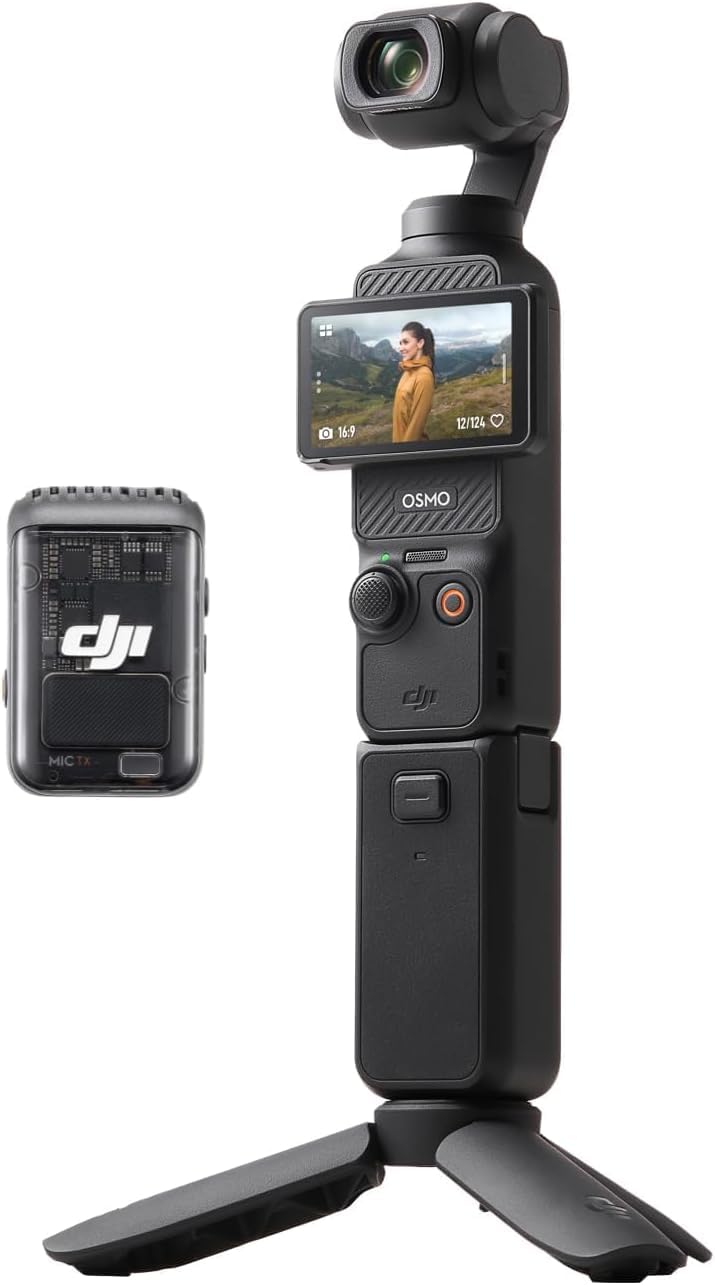
2. DJI Osmo Pocket 3 Creator Combo
A pocket-sized gimbal that turns walking footage into a smooth tracking shot.
The DJI Osmo Pocket 3 captures smooth video because of its built-in 3-axis mechanical gimbal. You get a 1-inch CMOS sensor that handles low-light scenes far better than the smaller sensors on typical camcorders — think evening cityscapes and dimly lit rooms without grain. The video hits 4K at 120 fps, allowing smooth slow-motion while keeping sharp detail. That is a trick the Canon R100 cannot match at its 24 fps ceiling. The 2-inch rotatable touchscreen flips for vertical or horizontal framing. That saves time when you post to both YouTube and TikTok without cropping later. Buyers report the gimbal stability and the included DJI Mic 2 capture clear audio even in wind. The crowd favorite has well over 6,000 ratings. The consensus is that this camera upped their video quality instantly, beating phones by a visible margin. The honest trade-off: the 166-minute battery is decent, but heavy users will want the Battery Handle from the Creator Combo for all-day shoots.
stabilized 4K creator
- 1-inch sensor lifts low-light video quality far above typical camcorder sensors
- 4K at 120 fps allows four-times slow-motion without resolution loss
- 3-axis gimbal stabilization eliminates camera shake during walking shots
limited low-light reach
- Fixed lens means no optical zoom — you zoom digitally or move closer
- Battery handle is needed to reach a full day of event shooting
vloggers on the go: you vlog, travel, or shoot social content and want 4K slow-mo in a jacket pocket.
studio purists: you need an optical zoom lens for sports or wildlife at a distance.
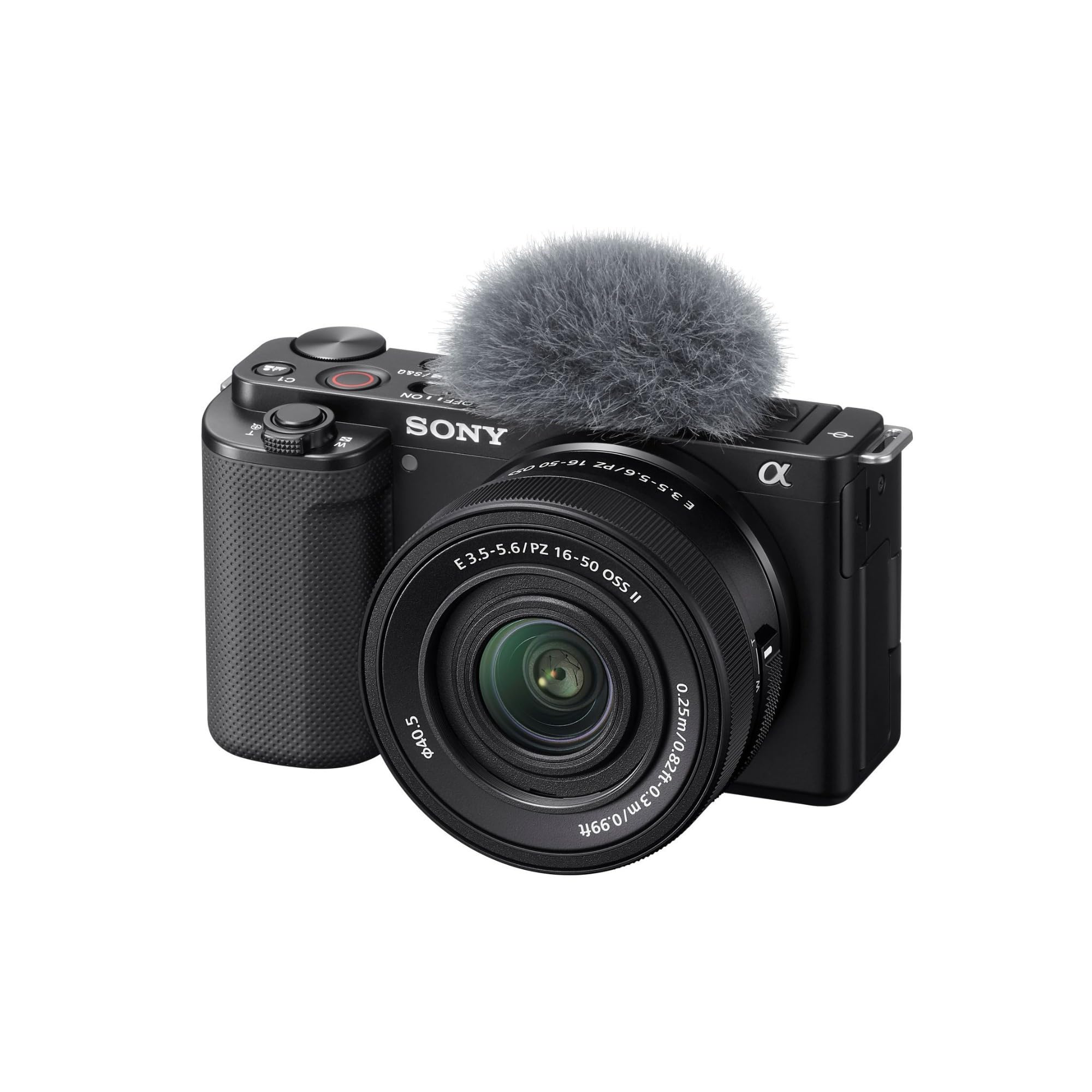
3. Sony ZV-E10 APS-C Mirrorless Camera with 16-50mm Lens
A mirrorless body with a vlogger-friendly flip screen and a one-button blur toggle.
The ZV-E10 packages a 24.2MP APS-C sensor (APS-C stands for Advanced Photo System type-C, a sensor size roughly 1.5 times larger than 1-inch sensors) with a BIONZ X processor. It oversamples 4K from a wider 6K area, which means your footage holds more detail than a standard 4K readout. The 425-point phase-detection autofocus locks onto a face or an animal instantly, saving you from manual pulling. A Product Showcase Setting shifts focus from your eyes to an object you hold up — a dream for tech reviewers and cooking channels. You can stream via a single USB cable with no capture card needed. The Background Defocus button gives you shallow depth-of-field at a press. Owners describe it as a “dream camera” for video over photography. They note that the stock 16-50mm lens does the job for family use, but recommend adding an external stabilizer for professional walking shots. The trade-off: the kit lens aperture narrows to F5.6 at the tele end, so indoor lighting requires a faster prime lens for best results.
hybrid shooters: streamers and YouTubers who want interchangeable lenses and instant face-tracking autofocus.
steady handheld users: you prefer a fixed-lens compact — this needs a lens swap for different shots.
4. Canon VIXIA HF G70 Camcorder

A dedicated camcorder that feels like a point-and-shoot with a 20x manual zoom.
For traditionalists who want a camcorder shape, the HF G70 pairs a 1/2.3-inch 4K UHD CMOS sensor with a DIGIC DV 6 image processor. The 20x optical zoom reaches far for sports or stage performances. The 5-axis Dynamic Image Stabilization keeps telephoto shots steady. The 8-blade aperture creates a rounder, cinema-style blur in out-of-focus areas — rare for a camcorder at this price. You get dual SD card slots for relay recording at long events, an HDMI output for monitoring, and USB-C UVC livestreaming (UVC stands for USB Video Class, a standard that lets the camera act as a plug-and-play webcam) straight to a computer. The on-screen display time stamp embeds date and timecode into the original file — a niche feature useful for evidence or archival footage. Owners praise the video quality as “outstanding” and the handling as simple enough for a one-person crew. The biggest caveat: low-light performance is mediocre — gain (electronic amplification of the sensor signal) climbs above 4 and softens detail by 10 dB (decibels, a measure of signal strength). This is a daylight or well-lit-indoor machine.
event videographers: weddings, school plays, and interviews where you need reliable zoom, long recording times, and no lens swaps.
slow-mo enthusiasts: your shoots often run in dim venues without extra lighting.
5. Sony FDR-AX43 UHD 4K Handycam

A handycam with a built-in gimbal that steadies every zoom punch.
The FDR-AX43 uses a 1/2.5-inch Exmor R CMOS sensor (Exmor R is Sony’s back-illuminated sensor design that improves light capture) tune for 4K 16:9 video, paired with a BIONZ X processor. Its headline feature is Balanced Optical SteadyShot — a lens-shift stabilizer that works like a built-in gimbal, smoothing out handheld pans and zoom moves better than typical OIS. The 20x optical zoom extends to 30x in 4K and 40x in HD using Clear Image Zoom, which is smart upscaling that holds up well on a screen. The ZEISS Vario-Sonnar T lens starts at a wide 26.8mm, so you get broad establishing shots before zooming in. Owners call the construction “very sturdy” and the picture quality “crisp,” noting that every leaf stays sharp at full telephoto. The recurrent minor complaint: the battery pack protrudes from the back, which makes mounting on a compact selfie stick awkward. The lack of a built-in viewfinder is also a notable omission for bright-sun shooting.
family documenters: parents and event shooters who want point-and-shoot simplicity with professional-grade stabilization and zoom.
low-light hunters: vloggers who need a flip-forward screen or a compact carry profile.
6. Canon VIXIA HF G70 4K Camcorder Bundle
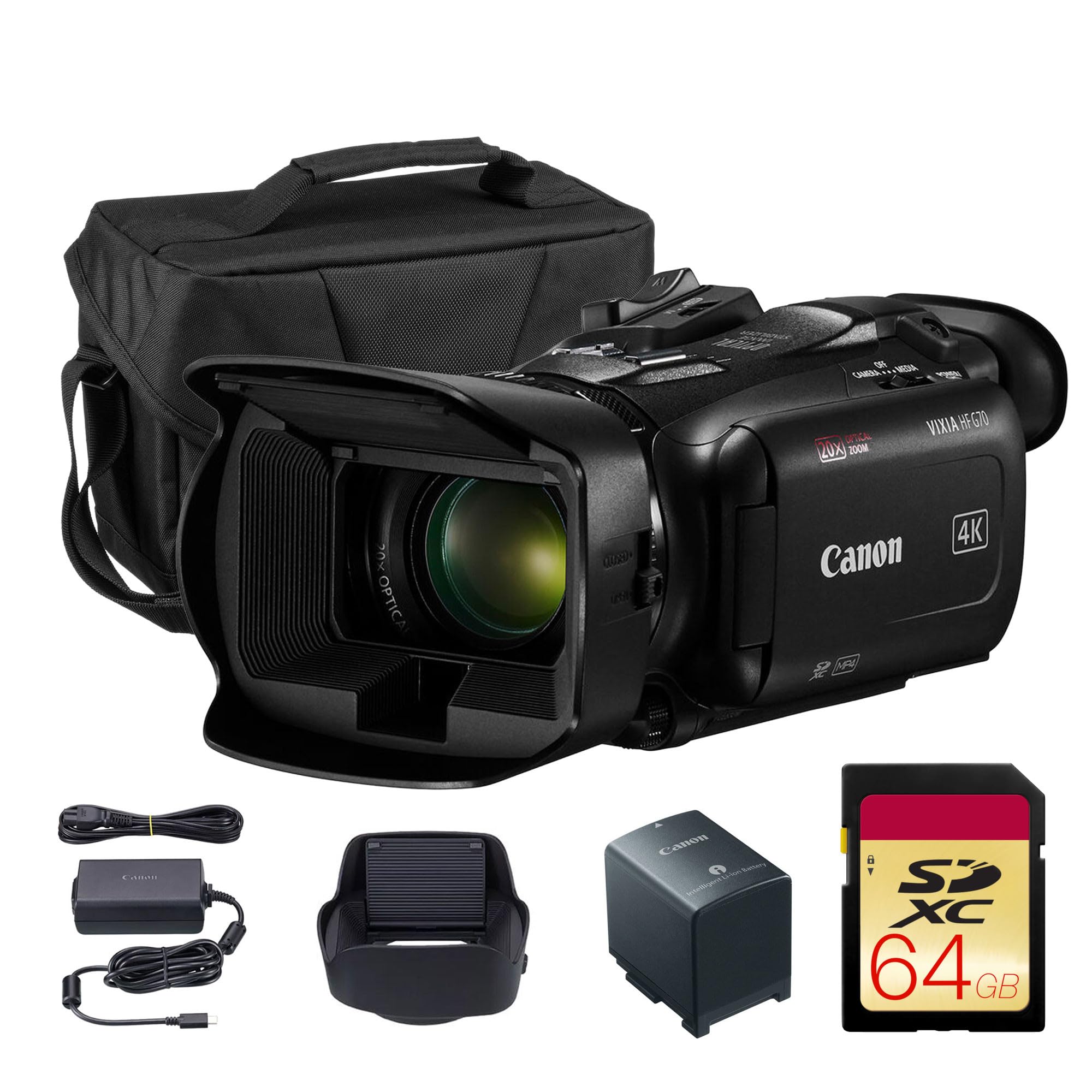
Essentially the G70 plus a shoulder bag and a 64GB memory card to start filming immediately.
This bundle mirrors the standalone VIXIA HF G70 — same 1/2.3-inch 4K UHD CMOS sensor, same 20x optical zoom, same 5-axis Dynamic IS — then adds a 64GB SD card and a padded shoulder bag. Reviewers who use it for high school football and documentaries call the video quality “spectacular” and the color depth exceptional. The dual SD slots allow hot-swapping at long events so you never miss a moment. The touchscreen interface offers both auto and full manual control. Customers note that the image stabilization struggles within 10 feet of large moving objects like trains — expect some shake at close range. The startup takes about 7–8 seconds, which could cost you a spontaneous shot. For a planned event like a graduation or a stage play, the bundle gives you a ready-to-go kit without extra purchases. The included 64GB card is a bit tight for 4K; the reviews recommend upgrading to 256GB or more for longer shoots.
one-stop shoppers: a school, church, or small production team that needs a camcorder, bag, and card in one order.
Who should buy the standalone instead: anyone who already has SD cards and a bag, or wants to choose their own higher-capacity storage.
7. Panasonic LUMIX FZ80D Point and Shoot

A bridge camera that brings the moon close with a 60x zoom lens built in.
The FZ80D packs an 18.1MP 1/2.3-inch MOS sensor with a 60x optical zoom lens (20–1200mm equivalent). That outperforms any phone or kit-lens mirrorless for distant subjects. You can film 4K video at 30 fps and use the 4K Photo mode to pull 8-megapixel stills straight from your video clip. The Post Focus feature lets you tap a different focal point after you press the shutter — handy for macro shots of flowers or insects. POWER O.I.S. (Optical Image Stabilizer) counteracts hand shake at the extreme telephoto end. The 2,360K-dot OLED live viewfinder (an electronic viewfinder using organic light-emitting diode technology, with 2,360,000 tiny dots for sharpness) stays visible in bright sun, unlike a rear LCD. Birders and hikers love it for identification and safe-distance wildlife shots. The honest trade-off: picture quality in low light is mediocre, the interface is not the most intuitive, and there is no built-in WiFi — you will need a memory card reader to get photos onto a phone. It is the king of daylight reach, not a low-light all-rounder.
budget travelers: you shoot birds, wildlife, or distant action in good light and want the longest zoom for the price.
image quality snobs: you shoot indoors, at dusk, or want WiFi transfer and a beginner-friendly menu.
8. ClonerAlliance UHD Pro Max HDMI Recorder
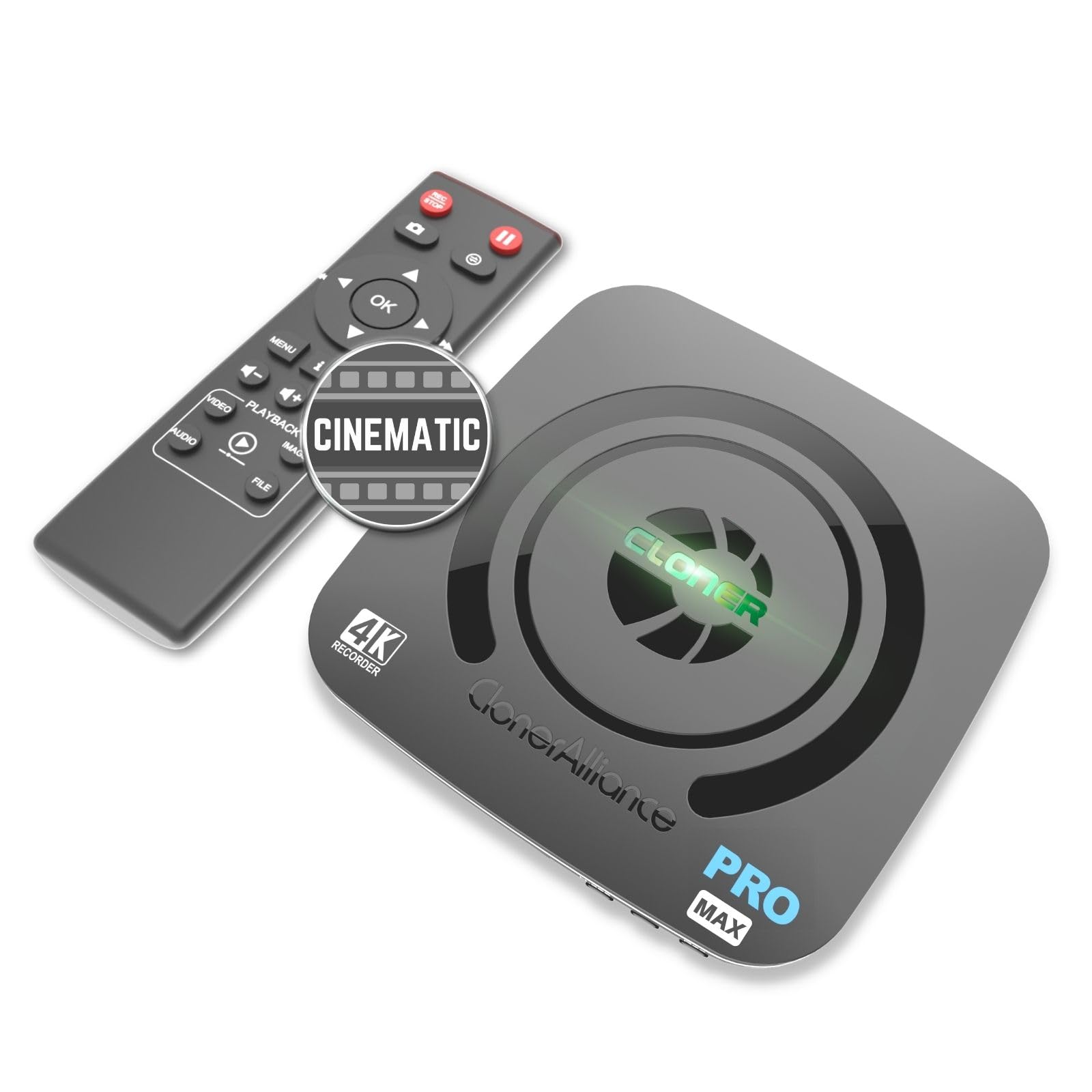
A standalone box that records any HDMI source in true 4K without a computer.
This is not a camera — it is an HDMI recorder that captures video from game consoles, DSLRs, cable boxes, or older MiniDV cameras at up to 4K resolution with a 50Mbps bitrate (megabits per second, the amount of video data saved each second, so higher means better quality). It records in H.264 or H.265 (video compression standards: H.265 saves space better than H.264) at 24 or 25 fps (Cinematic-FPS) and passes through 4K at 60 fps to your TV with no lag. You can pause and resume recording without creating a new file, schedule recordings, and store footage on USB drives, microSD, or an external hard drive up to 8TB. Buyers call it a “must have” for streaming devices and note it even records HDCP-encrypted content from services like Netflix and Disney+ (for your own archival purposes, according to the brand). The main gripes: the remote requires direct line-of-sight, the unit runs warm, and MP4 files in 4K show micro stutters — switching to TS format solves it but uses more storage. It is a niche tool, but unbeatable if you need a PC-free recording station for multi-camera or legacy gear.
streaming setups: creators who record gameplay, convert old tape archives, or need a standalone DVR from any HDMI source.
standalone recorders: handheld video capture — this is a stationary box, not a camera.
9. Zoom Q2n-4K Handy Video Recorder Bundle

A musician’s video tool where the audio quality is the star of the show.
The Q2n-4K is first an audio recorder that happens to shoot video. The stereo X/Y microphones (X/Y cross-coincident pair, two mics at 90 degrees for a natural stereo image) capture up to 24-bit/96 kHz sound and handle 120 dB SPL (decibels of sound pressure level, a measure of how loud a sound it can handle without distortion). That means a loud guitar amp or a full choir does not clip the audio. The 150-degree f/2.8 wide-angle lens covers a whole stage from a single position. Twelve scene modes (Concert Light, Jazz Club, Outdoor) adjust exposure automatically for different venues. The bundle adds 4 AA batteries with a charger, a 64GB microSDXC card, a cleaning kit, a travel bag, and a micro-HDMI cable. For music demos, live-streaming on Facebook or YouTube via USB, or recording a rehearsal to share with the band, this package has everything. The honest catch: battery life is very short — about 30 minutes of 4K recording on two AAs, according to many owners. The video shows a pronounced fisheye effect and the interface feels dated. Several reviewers warn to “avoid this camera if looking to have decent video quality.” For pristine audio capture with a video record, it works. For video-first projects, look at the Sony ZV-E10 or DJI Pocket 3 instead.
musicians: you are a musician documenting performances and want professional audio quality in the same device as the video.
general videographers: 4K video quality is your priority — this is an audio tool first.
Understanding the Specs
Sensor Size and Low-Light Performance
The physical sensor size directly tells you how much light the camera collects at once. A 1-inch sensor (like the DJI Osmo Pocket 3) lets in significantly more light than a 1/2.3-inch sensor (standard camcorders). That means your footage stays cleaner in dim rooms and at dusk. Bigger number = bigger sensor surface. You get less grain and richer color when the sun drops.
Frame Rate (fps) for Slow Motion and Smoothness
Frame rate, measured in frames per second (fps), determines both smoothness and your ability to slow down video. 4K at 24 fps is the classic cinematic look. 4K at 60 or 120 fps lets you slow the playback to half or quarter speed in editing software without jarring stutters. Higher fps eats more storage but gives you creative flexibility you cannot get from 24 or 30 fps.
FAQ
Is 4K at 24 fps good enough for YouTube?
Why does my 4K camcorder look worse in low light than my smartphone?
Can I use a mirrorless camera like the Sony ZV-E10 for livestreaming?
What is the difference between optical zoom and digital zoom?
How much storage do I need for 4K video?
What does HDMI passthrough mean on a recorder?
Which camera is best for an absolute beginner who has never used one?
Can I use the Zoom Q2n-4K as a webcam?
Final Thoughts: The Verdict
For the majority of shoppers, the 4k video recorder winner is the DJI Osmo Pocket 3 because its 1-inch sensor, 120 fps slow-motion, and built-in gimbal deliver professional-looking footage in a pocketable body. If you want interchangeable lenses and UVC streaming in one camera, grab the Sony ZV-E10. For a dedicated camcorder with long optical reach and dual SD reliability, the Canon VIXIA HF G70 is the one to reach for.
How We Picked
We do not accept paid placement. Every pick is matched to a real buyer and a real use-case; we do not hands-on test units.
Sources & Methodology
Specifications: manufacturer listings and product documentation. Review insights: verified customer reviews, as of July 2026. Pricing: not shown on this page (it changes often); check the current price via the retailer link.
As an Amazon Associate, Gadgets Feed earns from qualifying purchases. This does not affect which products we feature.