
Pouring a concrete slab, walkway, or driveway without proper reinforcement is an invitation for ugly cracks. The wrong mesh—or no mesh at all—lets settlement and temperature shifts turn your smooth surface into a spiderweb of fractures. A quality 4×4 wire mesh provides the tensile strength concrete alone lacks, holding the slab together when the ground beneath it shifts.
I’m Min — the co-founder and writer behind Gadgets Feed. After analyzing dozens of wire mesh products, comparing gauge thicknesses, galvanization methods, and weld quality across seven specific contenders, I’ve isolated the models that actually deliver structural integrity without wasting your time on flimsy alternatives.
If you’re serious about a lasting pour, you need the best 4×4 wire mesh for concrete that matches your project’s load requirements and environmental exposure.
How To Choose The Best 4×4 Wire Mesh For Concrete
Selecting wire mesh for concrete reinforcement comes down to three factors: the wire’s thickness (gauge), the protective coating, and the mesh opening size relative to your slab depth. Beginners often overestimate the mesh’s role—it controls cracking from shrinkage and temperature, it doesn’t support heavy vehicle loads. That’s what the subgrade and concrete mix design handle.
Gauge Matters More Than You Think
A lower gauge number means a thicker wire. For typical 4-inch residential slabs like patios and sidewalks, a 10-gauge or 12-gauge wire is standard. For thinner pours (2-3 inches) or non-structural applications like a garden path, a 14-gauge mesh may suffice. The key is matching the wire’s cross-sectional area to the slab’s tensile demands—under-gauged mesh can deform or snap during the concrete pour itself.
Galvanization Prevents Internal Rust
Mesh embedded in concrete is protected from air and moisture by the alkaline environment, but micro-cracks in the slab can let water reach the steel. Hot-dip galvanization after welding (HDG) coats both the parent wire and every weld joint, creating a zinc barrier that resists corrosion for decades. Electro-galvanized or PVC-coated mesh offers less corrosion resistance inside a concrete slab. For exterior slabs or regions with freeze-thaw cycles, HDG is the only real choice.
Mesh Opening Size vs. Slab Thickness
Standard 4×4 inch openings with W2.9 or W4.0 wire diameters are designed for 4-inch to 6-inch slabs. The opening size must allow concrete to flow through and fully encapsulate the wires without creating voids. If the mesh is too tight (like 1/2 inch), it can trap air and create weak pockets. If the openings are too large, the reinforcement effect diminishes. Always confirm the wire diameter (not just the gauge) matches your engineer’s spec—substituting a W1.4 wire (14-gauge) for a W4.0 wire (10-gauge) halves the reinforcement area.
Quick Comparison
On smaller screens, swipe sideways to see the full table.
| Model | Category | Best For | Key Spec | Amazon |
|---|---|---|---|---|
| Dynabyte Black Hardware Cloth | Premium | Larger slabs & long runs | 19 Gauge, 48″ x 100 ft roll | Amazon |
| DWALE Welded Wire Fence (16 Gauge) | Premium | Heavy structural support | 16 Gauge, Hot-dip galvanized | Amazon |
| SANZEUS Hardware Cloth | Mid-Range | Large area garden or slab | 19 Gauge, 48″ x 100 ft roll | Amazon |
| Nueve Deer Hardware Cloth | Mid-Range | Dual-galvanized durability | 19 Gauge, Double-galvanized | Amazon |
| GoldPeak Hardware Cloth | Mid-Range | Below-ground barrier use | 23 Gauge, 1/4″ mesh opening | Amazon |
| TUOKS Hardware Cloth | Value | General lightweight reinforcement | 19 Gauge, 1/2″ square openings | Amazon |
| Galvanized After Welding Hardware Cloth | Value | Small concrete repairs & thin layers | 23 Gauge, 1/4″ mesh opening | Amazon |
In‑Depth Reviews
1. Dynabyte Black Hardware Cloth 1/2 inch 4 ft x 100 ft
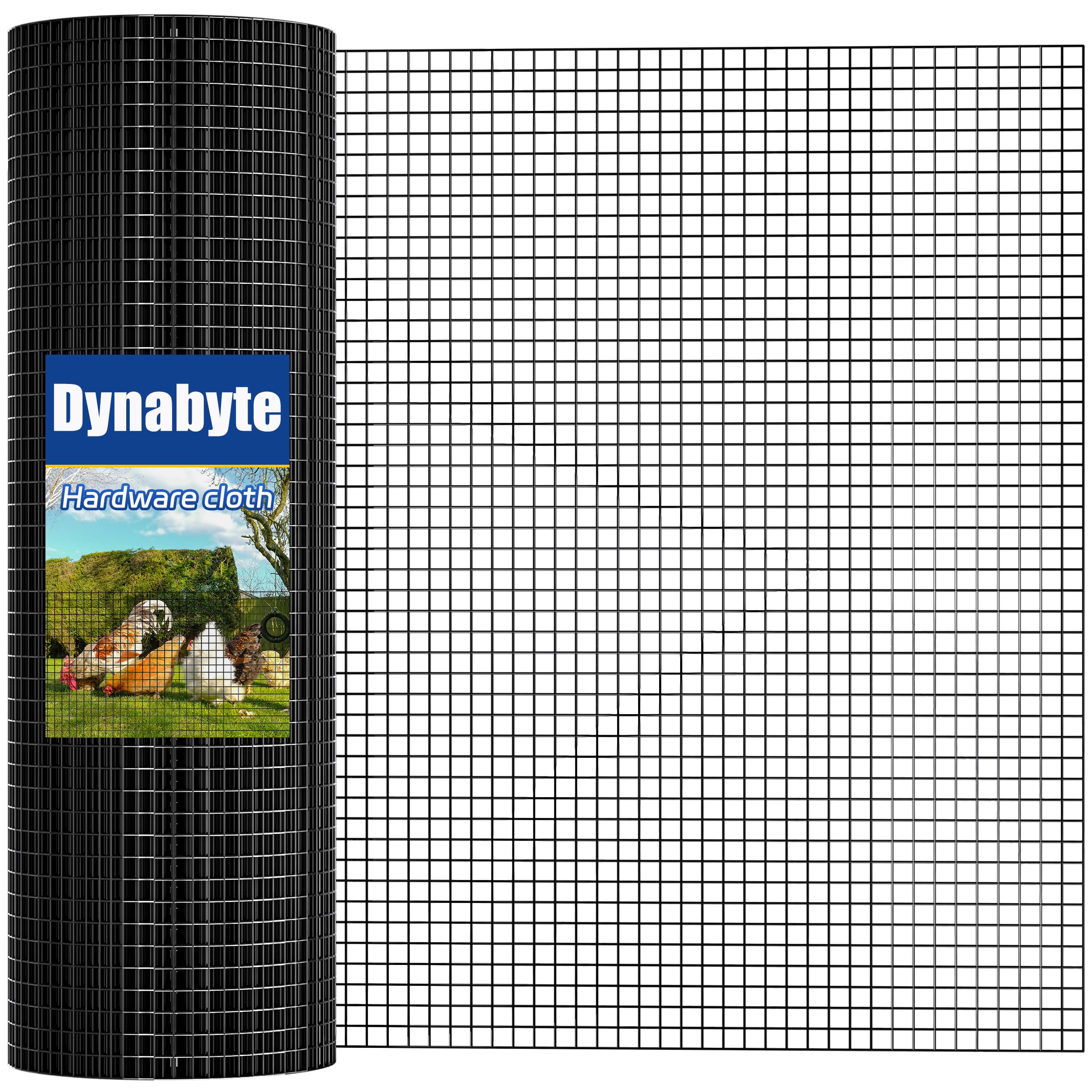
The Dynabyte offers the largest coverage in this lineup at 48 inches wide by 100 feet long, making it ideal for substantial concrete pours or sprawling garden slab projects. Its 19-gauge annealed steel wire is vinyl-coated in black, which not only adds a layer of surface corrosion resistance but also makes the mesh easier to handle without snagging on gloves or tools. Users consistently report that it resists warping during installation and remains flat enough to stay positioned correctly mid-pour.
What separates this mesh from typical commodity rolls is the 20 years of manufacturing experience behind it, reflected in consistently firm welds that don’t pop under tension. The 1/2-inch square openings, while smaller than the 4×4 standard, provide excellent reinforcement density for thinner concrete sections or overlay work where crack bridging is critical. It’s heavy at 43.9 pounds per roll, but that weight translates to a dense, uniform weave that won’t leave weak spots.
For contractors or DIYers who need a large, ready-to-use roll that cuts cleanly with tin snips and holds up to wet concrete without rust blooms, this is the premium choice. The included work gloves are a thoughtful bonus. Just ensure your project can accept the tighter 1/2-inch mesh geometry, as it will require more flowing concrete to completely encapsulate compared to a standard 4×4 opening.
Why it’s great
- Massive 100-foot length reduces seams and overlap waste
- Vinyl coating adds corrosion protection and easier handling
- Consistent, tight welds with no weak joints
Good to know
- The 1/2-inch mesh is too tight for standard 4-inch slab reinforcement; best for thin overlays or high-density crack control
- Heavy roll at almost 44 pounds can be awkward to maneuver alone
2. DWALE Welded Wire Fence 1/2 inch 48 x 50 ft, 16 Gauge
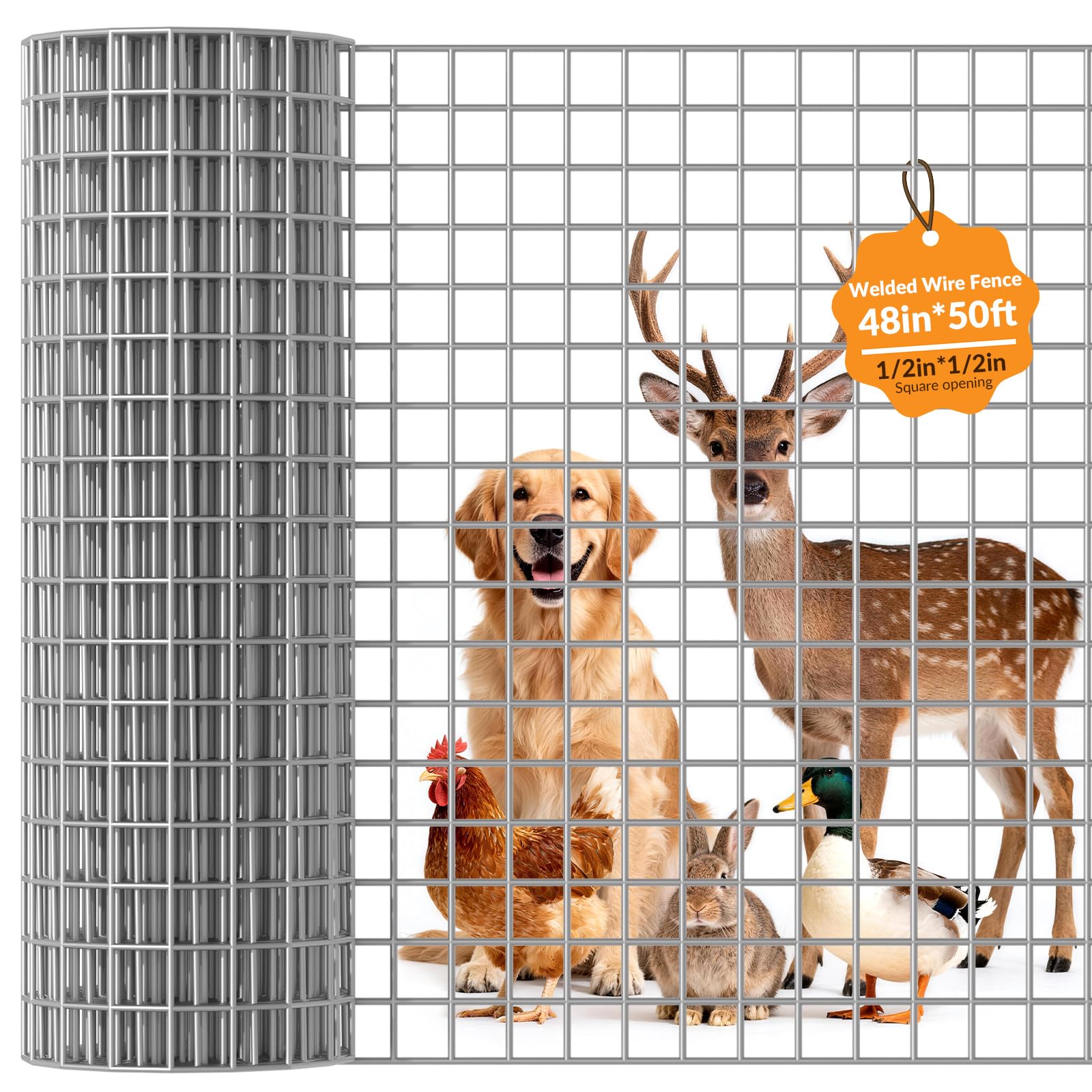
The DWALE mesh is the thickest wire in this comparison at 16 gauge, providing nearly double the cross-sectional area of a standard 19-gauge product. This matters when reinforcing concrete that bears light vehicle traffic or sits on marginal subgrade. The hot-dip galvanizing process after welding ensures every junction is sealed against moisture intrusion, a critical factor for buried reinforcement in driveways or garage slabs.
Buyers praise its rigidity during installation—the heavy 16-gauge wire resists bending out of shape when you unroll it, so it lies flat and stays where you position it inside the form. That structural integrity comes with a trade-off: cutting it requires electric shears or a quality pair of bolt cutters, as standard tin snips will struggle. The 1/2-inch square openings deliver dense reinforcement coverage, which is especially effective for controlling reflective cracking in thin bonded overlays.
The double-dip galvanizing process produces a finish that stands up to harsh environments including coastal salt exposure and freeze-thaw cycles. If your concrete project is exposed to de-icing salts or sits in a climate with frequent frost heave, the added corrosion protection directly translates to a longer service life for the slab. Just plan ahead for the extra cutting effort required.
Why it’s great
- Thickest wire (16 gauge) provides maximum tensile reinforcement
- Double hot-dip galvanized for superior rust resistance in harsh environments
- Stiff roll stays flat during concrete pour, reducing rework
Good to know
- Hard to cut with standard hand tools—requires shears or bolt cutters
- 1/2-inch openings may be too dense for thick, large-aggregate concrete mixes
3. SANZEUS Hardware Cloth 48in x 100ft 1/2in Mesh, 19GA
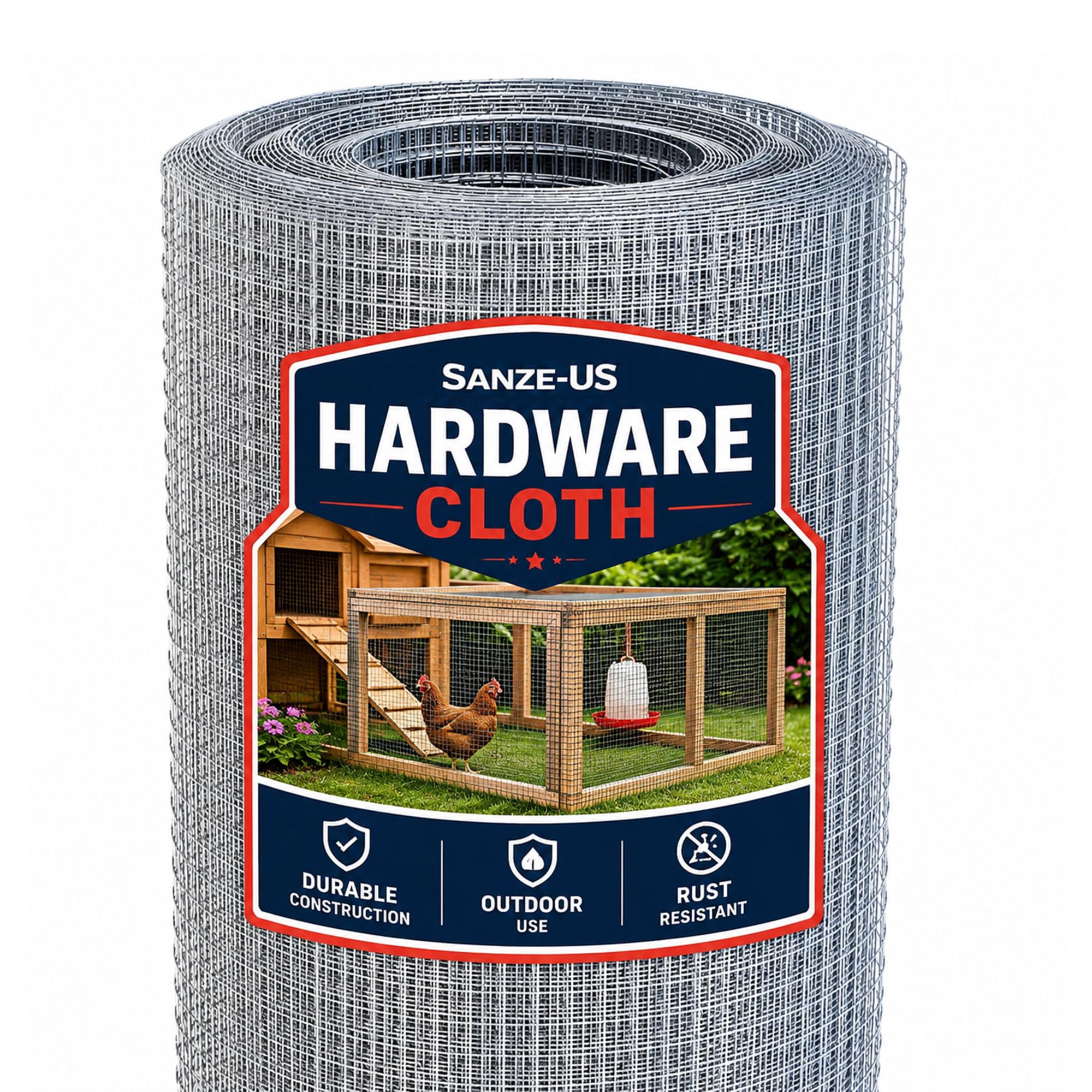
At 100 feet long and 48 inches wide, the SANZEUS delivers premium-scale coverage at a mid-range investment point. The 19-gauge black annealed steel is double-galvanized after welding, meaning every intersection is fully encapsulated in zinc for long-term corrosion protection. Users consistently highlight how effortlessly this mesh cuts with standard wire cutters—a practical advantage when you’re working alone and need clean edges for overlapping sections.
The real differentiator here is the packaging upgrade: SANZEUS wraps each roll in transparent film inside a paper box, preventing the dents and deformation that plague heavier rolls during shipping. When you unroll it, the mesh lies flat immediately without fighting memory curl. This flatness is crucial for concrete reinforcement, because a rolled-up mesh that springs back can shift during the pour and end up too close to the surface.
The 1/2-inch openings make this best suited for thin slab applications, walkways, or as a crack-control layer in concrete overlays rather than a primary structural reinforcement for a 6-inch slab. Multiple reviews note its effectiveness as a barrier against burrowing animals when buried, which confirms the galvanization is robust enough for direct ground contact.
Why it’s great
- Double-galvanized after welding for robust corrosion resistance
- Excellent packaging prevents shipping damage and roll distortion
- Easy to cut and shape with standard wire cutters
Good to know
- 19-gauge wire is less suited for heavy structural loads compared to 16-gauge options
- 1/2-inch mesh is not standard 4×4 reinforcement for thick concrete slabs
4. Nueve Deer Hardware Cloth 1/2 inch 48 x 50 Ft, 19-Gauge

Nueve Deer distinguishes itself through a rigorous quality control process that includes four manual inspections per roll, resulting in extremely low defect rates: less than 0.0003% for welding issues and under 0.1% for galvanization problems. This makes it a commercial-grade option for contractors who cannot afford to stop mid-pour because of a broken weld or a section of mesh that failed to galvanize. The double-galvanizing after welding increases pure zinc coverage by 10% over standard industry practices.
The 19-gauge annealed steel wire is stiff enough to stay in position but flexible enough to conform to curved forms or irregular slabs. Buyers consistently mention the included knit gloves as a helpful safety addition—handling galvanized mesh without protection will lead to cuts from the trimmed ends. The 48-inch width by 50-foot length is the standard size for most residential and light commercial concrete projects, making it easy to plan layouts without excess waste.
For concrete reinforcement specifically, the enhanced weld area (15% larger than typical) means each intersection resists pulling apart under the weight of wet concrete better than entry-level alternatives. The mesh also works as an underground gopher barrier, confirming the corrosion resistance is adequate for direct burial applications. Just be aware the tight 1/2-inch openings will require careful concrete placement to avoid voids.
Why it’s great
- Extremely low defect rate from four-stage inspection process
- 15% larger weld area provides superior joint strength
- Enhanced zinc coverage for robust corrosion resistance
Good to know
- 1/2-inch mesh is not standard 4×4 concrete reinforcement
- Some users reported missing gloves in the package on rare occasions
5. GoldPeak Hardware Cloth 1/4 inch 48” x 50′ 23 Gauge

GoldPeak offers the tightest mesh opening in this lineup at 1/4 inch, combined with a thinner 23-gauge wire. This configuration is not intended for primary structural reinforcement of thick concrete slabs, but it excels in thin-shell applications like concrete countertop overlays, stucco base coats, or as a secondary crack-control layer. The hot-dip galvanization after welding still provides full corrosion protection, and the 5-year warranty adds peace of mind for outdoor projects.
Users report that the mesh arrives flat and straight inside its reinforced carton, with minimal edge curl. The 23-gauge wire cuts cleanly with standard scissors, which is a practical advantage for precise trimming around rebar or form edges. Buyers specifically mention using it under raised garden beds to block moles, confirming its structural integrity for below-grade use despite the thinner wire.
The key limitation for concrete work is the 1/4-inch mesh spacing, which can trap air pockets in thicker pours unless the concrete has a high slump and small aggregate. This mesh is best reserved for shallow pours (under 2 inches) or as a stucco reinforcement where the mesh must fully embed in a thin layer without protruding. It includes a pair of gloves in the package, a welcome safety addition.
Why it’s great
- 5-year warranty indicates manufacturer confidence in longevity
- Tight 1/4-inch mesh excels in thin-shell concrete and stucco applications
- Easy to cut with standard scissors due to 23-gauge wire
Good to know
- 23-gauge wire is too thin for structural slab reinforcement
- Very tight mesh can trap air in thicker concrete pours
6. TUOKS Hardware Cloth 1/2 inch Square Openings, 19 Gauge 48” x 50′
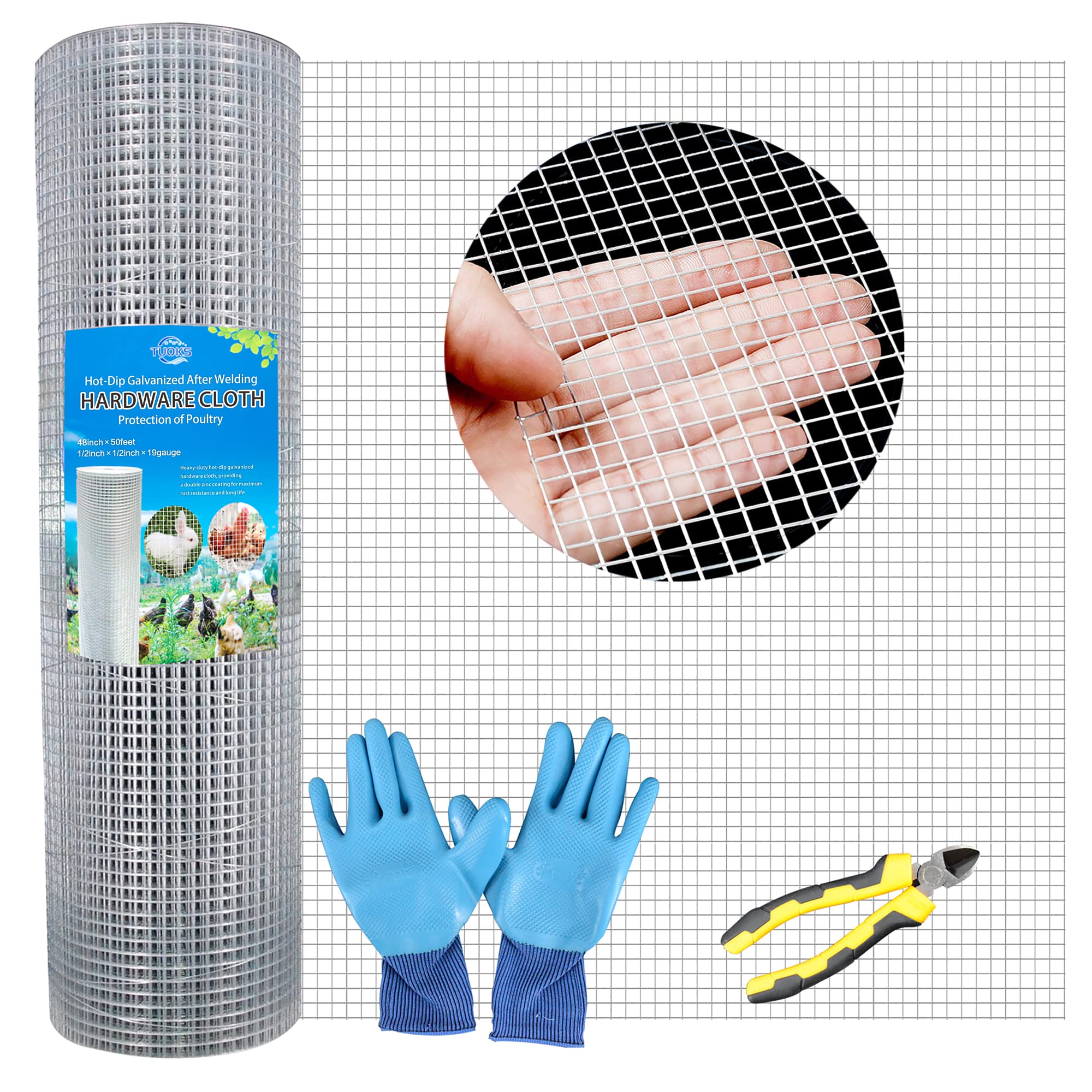
TUOKS offers a solid entry-level option with 19-gauge wire and 1/2-inch square openings at a price point that undercuts many competitors without dropping to flimsy 23-gauge wire. The hot-dip galvanizing process provides adequate corrosion protection for most residential concrete applications, including patios, walkways, and garage slabs where the mesh is fully encased and not exposed to direct weather. The inclusion of both gloves and pliers adds real value for first-time users who may not have the right tools on hand.
Buyers consistently praise the mesh’s ability to unroll flat without stubborn curl, which reduces the frustrating process of fighting the roll while placing concrete. The 1/2-inch openings strike a good balance between reinforcement density and concrete flow—most standard concrete mixes with 3/4-inch aggregate will pass through cleanly. Several reviews note its effectiveness for garden and chicken coop use, confirming the zinc coating is durable enough for direct soil contact.
The main shortcoming reported by some users is inconsistent packaging: a few rolls arrived without the promised gloves and pliers, suggesting quality control on accessory inclusion varies. The 19-gauge wire, while adequate for typical residential slabs, is thinner than the DWALE 16-gauge option for high-load applications. For straightforward concrete reinforcement where extreme durability isn’t required, this is a capable choice that won’t break the budget.
Why it’s great
- Unrolls flat with minimal curl—easy to position in forms
- Includes gloves and pliers for immediate installation
- 19-gauge wire offers solid reinforcement at a budget-friendly tier
Good to know
- Some packages missing the promised accessories
- Thinner than premium 16-gauge options for heavy structural work
7. Galvanized After Welding Hardware Cloth 48 in x 50 ft – 1/4 x1/4 inch Mesh 23GA
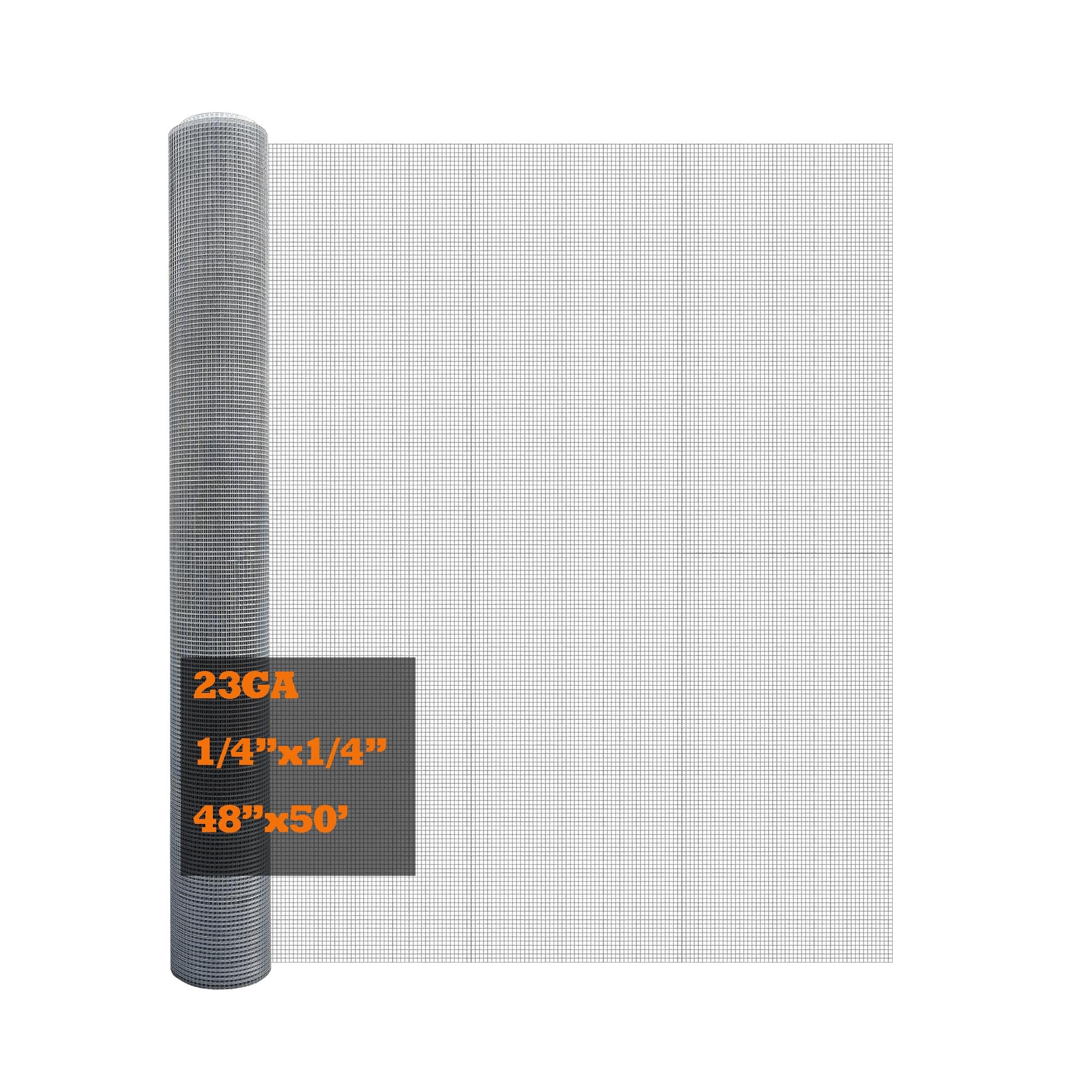
This galvanized after welding hardware cloth from MTB Supply is the lightest in the comparison at 23 gauge, but it still benefits from proper hot-dip galvanization after the welding process. That means even the thin wire gets full zinc coverage at every joint, preventing rust at the most vulnerable points. The 1/4-inch mesh opening is extremely tight, making this product more suitable for filtration, small animal exclusion, or thin concrete overlays rather than standard slab reinforcement.
Buyers consistently rate it highly for its handling characteristics: the thin wire cuts easily with tin snips and bends without kinking, which is a real advantage when you need to conform the mesh around rebar, pipes, or irregular formwork. Multiple reviews mention using it for landscaping ground cover and crawlspace blocking, activities that expose the mesh to moisture and prove the galvanization holds up. The 48-inch width by 50-foot length is a standard size that provides good coverage for smaller projects.
The critical limitation for concrete use is the wire gauge: 0.61mm (23 gauge) provides very little tensile reinforcement compared to 16 or 19-gauge alternatives. This mesh can tear or deform under the weight of wet concrete if not carefully supported. Reserve it for thin overlays (under 1.5 inches), as a stucco base, or for non-structural applications where you need a fine-mesh barrier rather than structural reinforcement.
Why it’s great
- Hot-dip galvanized after welding guarantees zinc coverage at every joint
- Very easy to cut and bend with minimal effort
- Excellent for non-structural applications like thin overlays and stucco
Good to know
- 23-gauge wire is too thin for structural slab reinforcement
- 1/4-inch mesh is too tight for normal concrete aggregate to flow through
FAQ
Can I use 1/2-inch hardware cloth instead of standard 4×4 wire mesh for my concrete slab?
How does gauge thickness affect concrete reinforcement performance?
Final Thoughts: The Verdict
For most users, the best 4×4 wire mesh for concrete isn’t actually a 4×4 product—it’s the Dynabyte Black Hardware Cloth because of its massive 100-foot roll, consistent 19-gauge welds, and vinyl coating that resists corrosion during installation and over time. If you need the maximum tensile strength for a driveway or shop slab, grab the DWALE Welded Wire Fence in 16-gauge. And for thin overlays or crack control in a sidewalk, nothing beats the value of the SANZEUS Hardware Cloth 100-foot roll.