
Our readers keep the lights on and my morning glass full of iced black tea. As an Amazon Associate, I earn from qualifying purchases.
Specs are compiled from manufacturer listings and verified buyer reviews and can change over time — please confirm the key details on the product page before buying.
A quarter-inch polycarbonate sheet stops a falling branch and passes daylight to your plants; a rolled-up 0.100 inch HDPE sheet will not. That difference is the whole buying decision. The five sheets below all measure 4 feet by 8 feet, and all five are real, buyable panels. What changes is the thickness, the weight of each pack, and what each material is actually good at.
I’m Min — the founder and writer behind Gadgets Feed. This guide is built by comparing the manufacturers’ published specifications and the patterns across verified customer reviews, so you get each pick’s real strengths and trade-offs instead of marketing spin.
Thickness decides whether a sheet survives hail, wind, and falling branches. A 0.24 inch polycarbonate sheet resists hail and wind far better than a 0.100 inch HDPE sheet. Weigh that against how much light you need and how much weight your frame can hold. Then use the picks below to find the right 4×8 exterior panels for your build.
Our Picks at a Glance
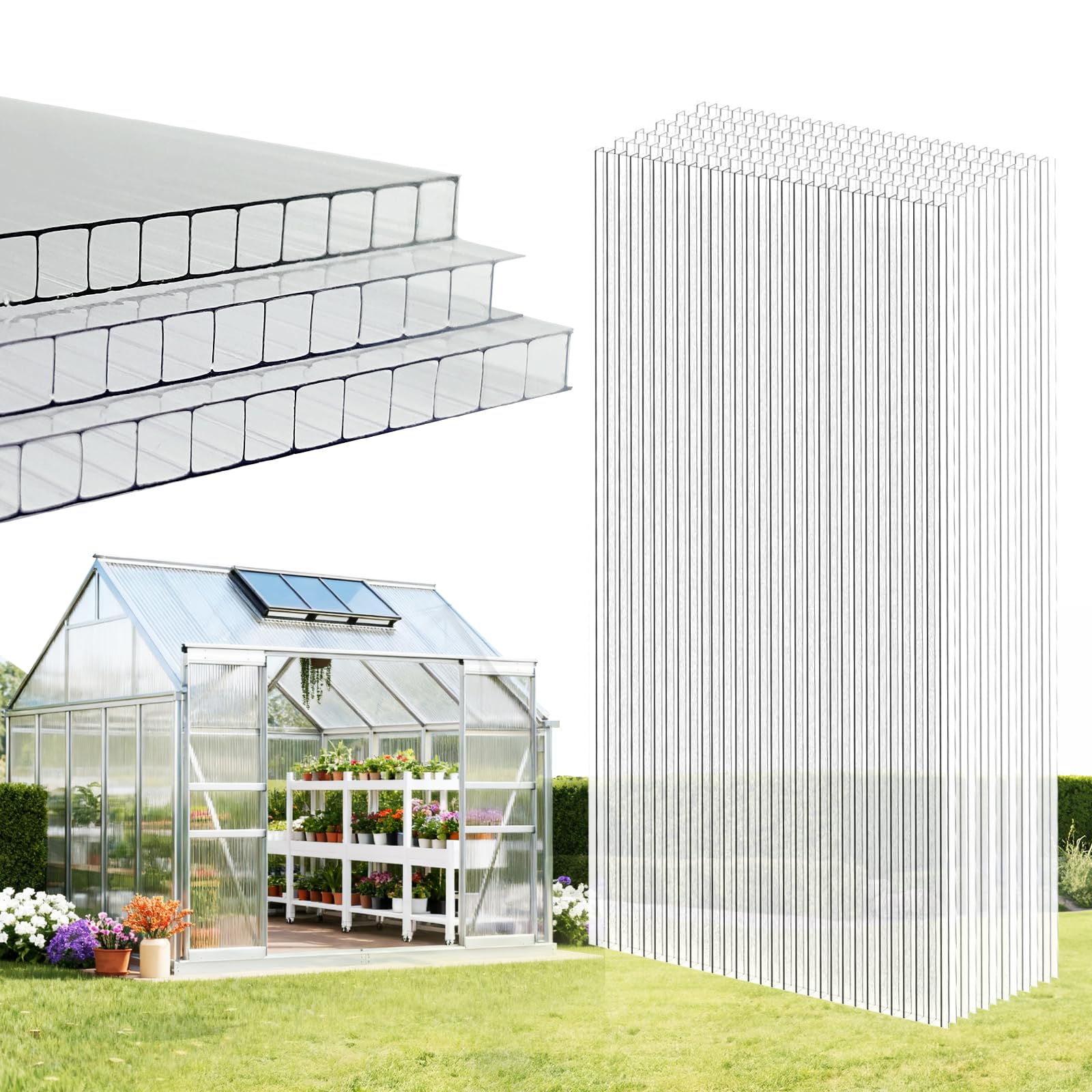

How To Choose The Best 4×8 Exterior Panels
A greenhouse roof and a trailer skin share almost nothing, and the sheet that wins one job will disappoint you on the other. Three measurements settle nearly every buying decision before you ever look at a product page.
Thickness Tells You How Much Abuse It Takes
Thickness is measured in inches or in mils, where one mil equals one-thousandth of an inch. A 0.24 inch sheet is roughly a quarter inch of material — thick enough to shrug off a falling branch or a hailstorm on its own. A 0.032 inch aluminum sheet is much thinner, but it is metal, so it holds its shape instead of flexing. A 0.100 inch HDPE sheet that arrives rolled up keeps ripples and warped edges long after you unroll it. Warped edges are the single most common complaint about the 0.100 inch HDPE sheet. If your frame already has a track or channel sized for a specific panel, measure that opening before you order. A sheet that is even an eighth of an inch undersized will slip straight out of the rail in the first strong wind.
Light Transmission Or Full Block-Out
Polycarbonate is the only one of these three materials meant to let light through, passing 89% to over 90% of daylight to plants underneath. The good sheets coat one face with a UV blocker (a sunscreen layer for plastic that stops the sun from yellowing or embrittling it). That coating only works if you face the treated side toward the sky, so a sheet with no marking for which side is which will leave you stuck mid-install. Aluminum and black HDPE block light completely. They block light completely, because they exist to seal, skin, or protect a surface rather than grow anything under.
Quick Comparison
| Model | Best For | Panel Thickness | Panel Size | Material | Amazon |
|---|---|---|---|---|---|
| EVERECO 6 Pcs Greenhouse Panel★ Best Overall | Greenhouse repair and DIY shelters | 0.24 inches | 8 ft x 4 ft | Polycarbonate | Amazon |
| Blulu Aluminum Trailer SkinBest for Metal Work | Trailer, RV and food-truck reskinning | 0.032 inches | 49 in x 96 in | 1060 Aluminum | Amazon |
| Sinimaka 8-Pack Greenhouse Panels | Large greenhouse roofs and sidewalls | 0.24 inches | 8 x 4 ft | Polycarbonate | Amazon |
| Sinimaka 10-Pack Greenhouse Panels | Full greenhouse rebuilds and porch enclosures | 0.24 inches | 8′ x 4′ | Polycarbonate | Amazon |
| Allstar Performance ALL22461 HDPE Sheet | Workbench tops and low-cost skid plates | 0.100 inches | 4 x 8 ft | HDPE Plastic | Amazon |
In‑Depth Reviews
1. EVERECO 6 Pcs Greenhouse Panel, 8’FT x 4’FT x 0.24″ in Polycarbonate Sheet
Our pick — 4.5★ from 70+ verified ratings; the strongest balance of quality and price.
Six quarter-inch polycarbonate sheets that let the sun in and keep the UV out.
This six-pack earns the top spot because of thickness: each sheet is 0.24 inches of polycarbonate, and that quarter inch gives the panel real body. A falling branch or a hailstorm is unlikely to crack it the way a thin plastic sheet would. You can also trim it to an odd-sized opening with an ordinary utility knife, so no saw and no professional installer are needed. Cutability like that is why buyers use these for coops, cold frames, aquarium lids, and fence panels as well as greenhouses. It is also far more material than the 0.032 inch aluminum sheet further down this list, though that metal pick blocks light where this one lets it through.
What wins people over is the price-to-quality read. Thirteen reviewers single out value for money and another twelve praise the build quality — a remarkable pairing on a building product. Owners describe replacing storm- and UV-damaged panels and finding these noticeably sturdier than the flimsy sheets their greenhouse originally shipped with. The light transmission is genuinely useful too. Over 90% of daylight passes through, so plants get the sun they need, and the maker says the UV-resistant coating blocks 99% of UV rays, which fights the yellowing that kills cheap greenhouse film. The maker also rates it for extreme temperature swings, from -40°C without cracking up to 120°C without softening.
Here is the catch, and it is a size catch rather than a quality one. Several owners measured the sheets and found them at roughly 23 5/8 inches by 47 1/8 inches rather than a true 2 by 4 feet, and the data lists the overall product dimensions as 96.06 by 48.03 inches. That matters enormously if you are dropping them into a prefitted greenhouse track, where an undersized panel will work loose and pop out in a gust. Dry-fit one sheet in your frame before you cut or peel anything, because returns get complicated once the protective film comes off. If your build is framed rather than tracked, or you are trimming to size anyway, that tolerance is a non-issue.
Where This Sheet Delivers
- 0.24 inch polycarbonate with over 90% light transmittance for strong plant growth
- UV-resistant coating blocks 99% of UV rays to fight yellowing and aging
- Sized at 8 feet by 4 feet and cuttable with an ordinary utility knife
- Six sheets per pack, so you have spares for the next damaged panel
What To Plan Around
- Measured sheets can run under a true 2 by 4 feet, which is too loose for a prefitted track
- Weighs 40.9 pounds per pack, so plan how you will carry it to the site
- Returns get difficult once the protective film has been removed
Best fit: DIY greenhouse repairs and small framed shelters where you are cutting panels down anyway.
Measure first: if your frame uses a factory rail or channel, verify the actual sheet size before ordering.
2. Blulu 4 x 8 ft Aluminum Trailer Skin 0.032″, Rv Siding Panels 49″ x 96″
The white aluminum sheet that patches a trailer wall and matches the paint already there.
One 49 by 96 inch piece of 1060 aluminum covers a huge slice of a trailer wall without seams, which means fewer joints and less chance of a leak path later. The 1060 grade is a soft, highly formable aluminum (easy to bend without cracking), so you can shape it around a door frame or a curved trailer nose. At 0.032 inches it is the thinnest product on this list by a wide margin, and that is the point: metal skins sit over a structural frame rather than carrying the load themselves. The white finish is the other quiet advantage. On a trailer or RV, a white panel blends into the surrounding siding instead of showing up as an obvious repair patch.
Owners using it on trailer shells report it laying down cleanly and holding up better than expected, including reskinning a tool trailer door where it stayed tight and did not tear. A contractor-punched hole in a trailer end is the classic use here. Cut a patch, fasten it down, and the repair disappears into the white wall. The material also cuts and drills with common tools, so this is a one-person job at most.
The honest limitation is that this is not a structural panel, and it will not hide a bad frame underneath. If the surface behind it is warped or uneven, a thin aluminum skin will telegraph every low spot straight through to the finished face. It also has no insulating value to speak of, so it is a sealing and appearance product rather than a warmth product. Unlike the quarter-inch polycarbonate panels above, it blocks light completely — great for a trailer wall, useless for a greenhouse roof.
Build quality: 1060 aluminum at 0.032 inches is exactly what a trailer skin should be — thin, formable, and light enough to handle solo, with a commercial and residential grade rating behind it.
Where it stops: no structural strength and no insulation, so it needs sound framing behind it to look right.
Reach for this if: you are reskinning a trailer, campervan, food truck, or dry van and want a wide smooth white panel.
Look elsewhere if: you need the sheet to carry load, insulate, or let daylight through.
3. Sinimaka 8-Pack Polycarbonate Greenhouse Panels, 8 x 4 ft, 0.24 in Twin-Wall Sheets

Eight large-format twin-wall sheets that cover a whole greenhouse roof in far fewer pieces.
Eight panels arrive at approximately 8 by 4 feet each, and together they cover up to 256 square feet of surface before you account for trimming, overlap, or waste. That scale is the real selling point: every 8 by 4 foot sheet covers four times the area of a smaller 4 by 2 foot panel, so a long roof or a tall sidewall needs dramatically fewer joints, connectors, and repeat cuts. Thin sheets like these also compare favorably on thickness to the metal option in this guide — 0.24 inches versus 0.100 inches — so you are getting substantially more material to work with.
Functionality is the second thing buyers talk about, and cutability is right behind it. Buyers report the panels going up easily and trimming cleanly with the right blade. The twin-wall fluted structure (hollow channels running between two outer skins) at 0.24 inches — that is 6mm — adds rigidity while slowing heat transfer through the sheet, so a framed roof holds warmth better. The impact-resistant polycarbonate resin carries ASTM E84 Class A material performance, a surface-burning rating that matters for enclosed structures like porches and shelters. One side is UV-coated, and the instructions are explicit: that marked face must be turned toward the sun. Get that right and the sheet maintains natural light transmission while helping block harmful UV rays.
Understand before ordering that these are non-structural covering panels. They need proper framing, support spacing, and secure fastening — they will not span an open gap on their own, and owners who expected otherwise describe the sheets as flimsy when the real issue was unsupported spans. A second practical snag shows up on the UV marking: at least one buyer could not find which side carries the coating and had to pause the install waiting on an answer, so inspect both faces under good light before you lift a sheet onto the roof. And the panels are translucent, not glass-clear, so expect diffused light rather than a perfectly transparent view through the sheet.
Why the Big Pack Wins
- Eight sheets at roughly 8 by 4 feet deliver up to 256 square feet of coverage
- Each panel covers four times the area of a 4 by 2 ft sheet, cutting seams and connectors
- 0.24 inch twin-wall construction adds rigidity and slows heat transfer
- Polycarbonate resin rated ASTM E84 Class A for material performance
Requires Real Framing
- Non-structural covering — no spanning open gaps without proper support spacing
- UV-coated side is not always easy to identify before installation
- Translucent rather than glass-clear, so light arrives diffused
Right call for: large greenhouse roofs and sidewalls where reducing seams matters more than a small pack size.
Not the pick if: you are patching one panel, or your frame has wide unsupported spans.
4. Sinimaka 10 Pack Polycarbonate Greenhouse Panels, 8′ x 4′ x 0.24” Twin-Wall Polycarbonate Sheets
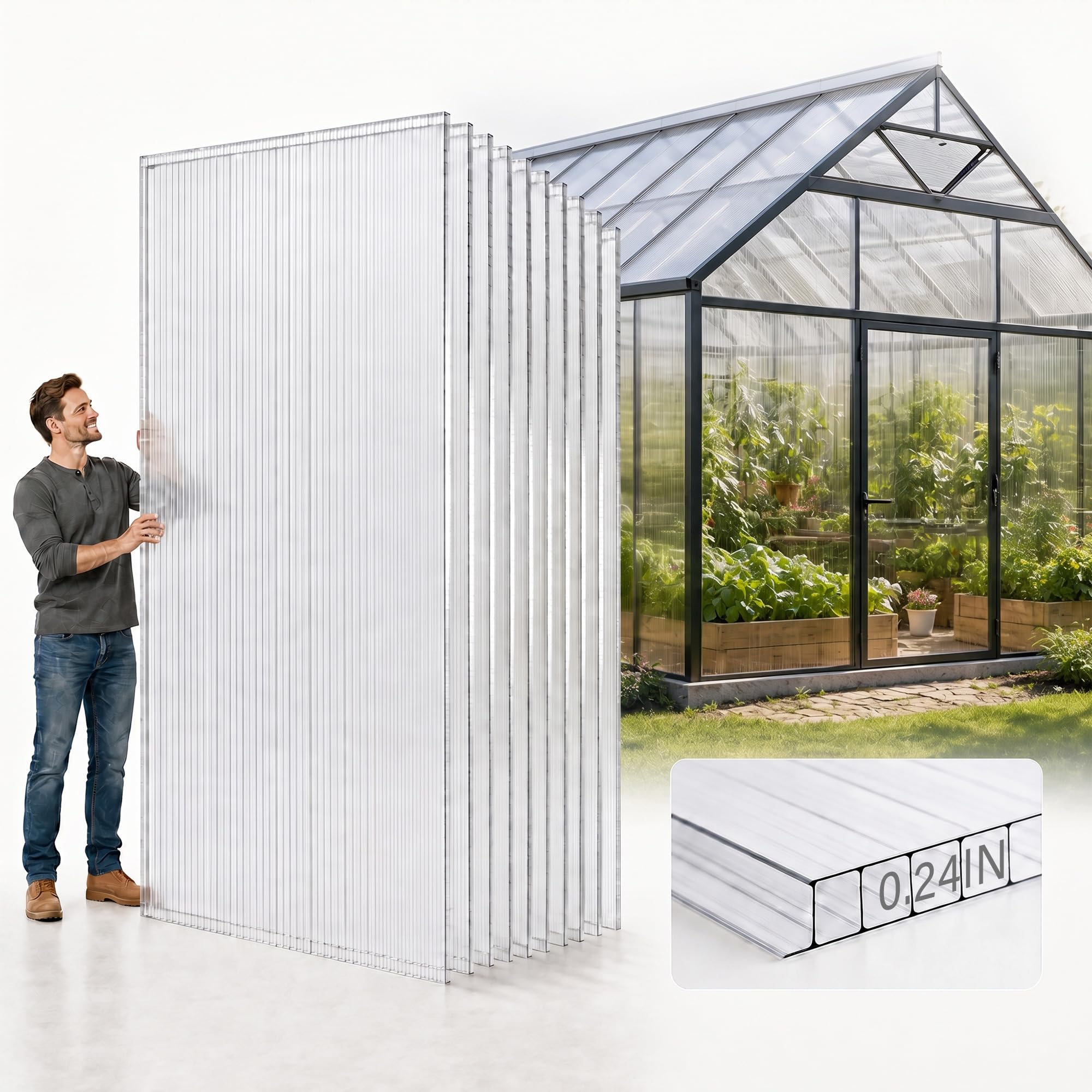
Ten twin-wall sheets with the transparency and bend you want for a porch turned room.
Ten sheets at 8 feet by 4 feet and 0.24 inches thick makes this the biggest pack in the lineup, so one order can enclose a whole porch or rebuild a full greenhouse. The material is twin-wall polycarbonate with a UV-resistant coating that the maker says blocks 99.9% of UV rays while allowing 89% light transmission — a combination that keeps a space bright without cooking whatever is underneath. One detail worth knowing: 89% is slightly less light than the 90% plus transmittance of the EVERECO panels above, in exchange for a coating that blocks a higher share of UV. The double-layer structure diffuses light softly rather than focusing it, and the sheets can be cold-bent (curved without heating) to form curved roofs, so they suit anything from a straight porch wall to a rounded garden shelter.
Where this pack shines is enclosing a space you already have. Owners use it to close in front porches for winter, and the results read like a new room rather than a plastic wall — one described the finished porch as the best room in the house after adding furniture and flooring. Another reports the panels shedding 5 inches of snow plus 3 inches of sleet and ice without trouble and plans to order more to finish the remaining greenhouse panels. Cutting and installing rate as easy across the board, and at 45 pounds for the whole pack the sheets are light enough to handle solo and carry up a ladder.
The trade-off is thin-sheet fragility, and it shows up most on edges and corners rather than the faces. Buyers generally call the quality excellent and the appearance clean, but the recurring note is that panels can dent easily if they are knocked or handled roughly before installation. So stack them flat, not on edge, and set them down carefully on site. As with the eight-pack, these are covering panels that need framing and secure support spacing underneath. Get the framing right and treat the sheets with a little care on the way up, and the pack does exactly what a large enclosure needs.
The light story: 89% light transmission with 99.9% UV blocking keeps a porch or greenhouse bright without the burn, and the twin-wall core softens the light further.
Handle with care: these sheets dent more easily than you might expect, so the way you store and carry them decides how they look installed.
Choose this pack: when you are enclosing a porch, cold frame, or full greenhouse and want ten bendable sheets in one order.
Think twice if: you need impact-proof edges that survive rough handling on site.
5. Allstar Performance ALL22461 0.1″ x 4′ x 8′ Black HDPE Plastic

A light, low-cost black sheet for workbench tops and skid plates.
At 17 pounds the whole 4 by 8 foot sheet, this black HDPE plastic is dramatically lighter than the polycarbonate packs in this guide, which is exactly why it appeals to anyone covering a bench or building a simple sled. It measures 4 by 8 feet at 0.100 inches thick. That thin profile is the material’s whole character: high density polyethylene (a slick, moderately soft plastic) slides easily and resists impact without shattering. Buyers have used it as a workbench top surface, as a skid for dragging things short distances, and even as a finish surface on a small halfpipe for light skateboarding in intense southern Arizona sun.
Rigidity is where the thin gauge turns into a real expectation gap. The sheet ships rolled up, and while unrolling it and letting it sit in the sun helps, warped edges can linger and the finished 4 by 8 foot sheet does not always come out perfectly square. That matters if you are laying it on a flat bench and want it to sit dead flat, because the curl is hardest to remove at the edges and the corners. Anyone expecting a flat, rigid board straight from the start will be disappointed. The listing is honest about the 0.100 inch thickness, but thin plastic stored rolled will always want to stay rolled to some degree.
The surface finish is the other quirk. HDPE scratches readily, and at least one buyer found the sheet arriving already scuffed and abraded, needing a sanded grain added after cutting. On a workbench that is mostly cosmetic, since you are about to drag tools across it anyway, and a matte texture hides future marks better than a gloss face would. The glossy black look does change as it wears, and that is simply part of owning a soft plastic surface. It is also worth repeating that this sheet blocks light entirely — unlike the polycarbonate picks above, it is a work and wear surface, not a glazing material.
Cheapest route to a hard surface: 4 by 8 feet at 17 pounds, easy to trim, and light enough for one person to move and mount.
Two honest quirks: it arrives rolled and stays a little warped at the edges, and the soft surface scratches and scuffs sooner than harder plastics.
Made for: cheap workbench protection, skid plates, and light-duty wear surfaces where a soft, slick sheet is an asset.
Skip this one for: greenhouse glazing, trailer skinning, or any job needing a dead-flat rigid panel.
Understanding the Specs
Thickness in Inches and Mils
Thickness is the number that predicts how much punishment a sheet will take, and it is written two different ways depending on the material. Plastic panels list inches or mils, where a mil is one-thousandth of an inch, so a 0.100 inch HDPE sheet and a 100 mil sheet are describing the same thing. Polycarbonate greenhouse panels here run 0.24 inches, which is far more material than the thin HDPE option. Aluminum trailer skin lands between them at 0.032 inches, and while that sounds thin, metal holds its shape rigidly in a way thin plastic cannot. Thicker is not automatically better for every job — it is heavier and costs more per sheet — but for anything facing hail, wind, or falling branches, thickness is the spec you should refuse to compromise on.
Twin-Wall Construction and UV Coating
Twin-wall means the panel is hollow inside, with a fluted structure running between two outer skins rather than being one solid slab. Those internal walls add rigidity without adding much weight, which is how a greenhouse panel can stand up on a frame while staying light enough to cut and carry. The same structure slows heat transfer, so a twin-wall roof holds warmth better than a single thin sheet would. UV coating is the partner spec, and it works differently: one face of the panel is treated to block the sun’s ultraviolet light, which is what causes cheap plastic to yellow, crack, and go brittle over a few seasons. That coating only protects the panel and blocks UV if the treated face points at the sky, so a panel with no clear marking for the correct side will stall your install until you figure it out.
FAQ
Are polycarbonate panels better than aluminum for covering a trailer?
Do I need to build a frame behind twin-wall greenhouse panels?
How do I know which side of a UV-coated panel faces the sun?
Can I cut 4×8 polycarbonate panels with everyday tools?
Will a thin HDPE sheet flatten out after it arrives rolled up?
Is 0.24 inch thick enough for a greenhouse in hail country?
Do these panels block UV, and does that affect plants?
What can I use a 4×8 exterior panel for besides a greenhouse?
How much area will an 8-pack or 10-pack of panels actually cover?
Final Thoughts: The Verdict
For most people covering a greenhouse or a small shelter, the 4×8 exterior panels to beat are the EVERECO 6 Pcs Greenhouse Panel — quarter-inch polycarbonate that cuts with a utility knife, passes over 90% of daylight, and blocks 99% of UV, sold at a price buyers consistently call out as the best value they found. If you are reskinning a trailer or campervan, the Blulu Aluminum Trailer Skin gives you a wide 49 by 96 inch white panel that covers large areas without seams. Enclosing a porch or rebuilding a full greenhouse points to the Sinimaka 10 Pack, with 89% light transmission and cold-bendable sheets for curved roofs. And when the job is a workbench top rather than glazing, the lightweight Allstar Performance HDPE Sheet gets you there for the least money. Whichever way you go, dry-fit one sheet before you cut — with 4.5 stars behind the top pick and its value for money rating as the single most praised quality, that quarter-inch polycarbonate is the safest place to start.
How We Picked
We do not accept paid placement. Every pick is matched to a real buyer and a real use-case; we do not hands-on test units.
Sources & Methodology
Specifications: manufacturer listings and product documentation. Review insights: verified customer reviews, as of September 2026. Pricing: not shown on this page (it changes often); check the current price via the retailer link.
As an Amazon Associate, Gadgets Feed earns from qualifying purchases. This does not affect which products we feature.