
Restoring a set of kitchen cabinets, building a custom accent wall, or wrapping a curved bar front all demand the same thing: the look and feel of real oak without the back-breaking weight and cost of solid lumber. The search for a full-size 4×8 sheet of oak that delivers on grain, thickness, stainability, and ease of handling can stall a project before it even begins.
I’m Rikta — the co-founder and writer behind Gadgets Feed. I’ve spent years analyzing the grain consistency, adhesive backing technology, and finishing behavior of architectural wood veneers and plywoods, tracking what separates a professional-grade restoration from a costly re-do. (And Homer 🐱 officially approved the flat oak stack as his new afternoon sun spot).
This guide dissects the top contenders across raw veneer, self-adhesive sheets, decorative panels, and multi-ply boards, helping you match the right format to your skill level and project demands. Whether you are refacing tired cabinetry or crafting a laser-cut sign, the right 4×8 sheet of oak determines whether your finish looks seamless or amateur.
How To Choose The Best 4×8 Sheet Of Oak
A full 4×8 sheet of oak comes in three distinct formats: raw veneer, adhesive-backed veneer, and plywood. Each format serves a different use case, and the wrong choice leads to delamination, grain tearing, or a finish that screams patch-job.
Format First: Veneer vs. Plywood
If you are resurfacing existing cabinets, a 1/42-inch-thick veneer sheet with a 10 mil paper backer is the standard. For building new panels or requiring structural rigidity, a Baltic birch plywood sheet (usually 1/8-inch or thicker) acts as both substrate and surface. A decorative tambour sits in between — thin slats bonded to a flexible paper backer for wrapping non-flat surfaces.
Grain Grade and Cut Type
A-grade face veneer promises consistent color and minimal knots. Flat cut delivers the classic cathedral arch grain; rift cut produces a straight, uniform pinstripe pattern. Matching the cut type to your existing cabinetry is essential — a rift-cut white oak strip glued next to a flat-cut original will stand out immediately under any finish.
Adhesive Strategy
Peel-and-stick sheets (PSA, or pressure-sensitive adhesive) are convenient but require even pressure with a J-roller and a warm workspace to activate the bond. Non-glued paper-backed veneer accepts spray contact cement, giving you more time for alignment before the bond sets. Beginners often underestimate how crucial substrate sealing and temperature are — cold glue creates weak spots that show as bubbles under stain.
Quick Comparison
On smaller screens, swipe sideways to see the full table.
| Model | Category | Best For | Key Spec | Amazon |
|---|---|---|---|---|
| Veneer Tech Red Oak Flat Cut 4×8 | Veneer | Cabinet refacing — solid color match | 10 mil paper backer | Amazon |
| Edge Supply Red Oak 4×8 Non Glued | Veneer | Premium furniture restoration | A Grade, 10 mil backer | Amazon |
| Sauers Red Oak Flat Cut 4×8 | Veneer | Budget-friendly refacing | 1/42 in. thick, 10 mil backer | Amazon |
| Wood-All White Oak Rift 24×96 | Veneer | Marquetry and curved surfaces | A Grade, 0.55 mm thick | Amazon |
| Edge Supply White Oak Rift 24×48 Peel & Stick | Veneer | Quick DIY cabinet refresh | PSA adhesive, 0.024 in. thick | Amazon |
| Woodpeckers Baltic Birch 24×48 1/8 in. | Plywood | CNC routing and laser cutting | B/BB grade, 3 mm thick | Amazon |
| Outwater Red Oak Tambour 4×8 | Tambour | Curved walls and wainscoting | 3/4 in. slats, 5/32 in. thick | Amazon |
In‑Depth Reviews
1. Veneer Tech Red Oak Flat Cut 4×8

This 10 mil paper-backed red oak veneer from Veneer Tech is the professional’s default choice for cabinet refacing. It arrives sanded to a smooth, uniform finish and measures a true 48 x 96 inches. The flat cut grain pattern produces the classic cathedral arch that blends naturally with most existing kitchen cabinetry from the 1990s onward.
Multiple verified buyers confirm it matches 30-year-old cabinet doors with no visible seam line after staining. The 10 mil paper backer provides enough rigidity to prevent grain splitting while remaining flexible enough for light contouring. It accepts contact cement, spray adhesive, and urethane or shellac top coats without reaction.
Packaging is sturdy with a long, reinforced tube that prevents edge damage during transit. The only downside is that ordering a single sheet means you may need a second if your project extends beyond a standard cabinet bank — plan your square footage carefully before committing.
Why it’s great
- Sanded ready-to-stain surface straight from the tube
- Proven color match with mid-century and 90s era oak cabinets
- Thick paper backer resists tearing during application
Good to know
- Single sheet only — bulk orders not available
- Requires contact cement; no peel-and-stick backing
2. Edge Supply Red Oak 4×8 Non Glued
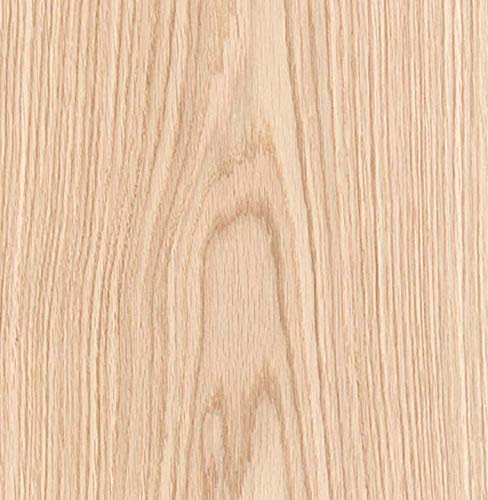
Edge Supply grades this red oak veneer as Premium, and the consistency of the flat cut grain justifies the label. At 0.024 inches overall thickness (the wood face plus the 10 mil paper backer), it offers more heft than the standard 1/42-inch options, which reduces the risk of grain cracking during tight-radius wraps. The backer is non-glued, so you choose your own adhesive — contact cement, epoxy, or PVA.
Buyers report excellent results after sanding with 400 grit and applying an oil-based stain. The initial surface is slightly rough, so pre-conditioning is necessary if you want a glossy finish. The sheet arrives in a sturdy box, though some shipments have shown minor box damage that the thick backer mitigates.
The main caveat is grain inconsistency between sheets ordered separately. If your project covers a large contiguous surface, order all pieces at once to ensure color and grain direction match. Customer service response time has been flagged as slow, so buy from a single lot to avoid frustration.
Why it’s great
- Thicker veneer resists buckling on curved panels
- Non-glued backer allows adhesive flexibility
- Premium A-grade face with minimal knots
Good to know
- Grain pattern varies between ordered lots
- Surface requires sanding before oil-based stain
3. Sauers Red Oak Flat Cut 4×8

The Sauers red oak veneer sheet is the entry-level workhorse for large-area cabinet refacing. Rated as commercial grade, it offers a clean flat cut grain at the standard thickness of 1/42 inch with a 10 mil paper backer. At just over 4 pounds for the full 4×8 sheet, it is lightweight enough for a single person to handle during layout and adhesive application.
Buyers report satisfaction with how it takes stain and finishes smoothly after application. The grain is consistent for the price tier, though there is more visible variation than an A-grade sheet. For a kitchen where the veneer will sit below eye level (base cabinets), this cost advantage makes sense without sacrificing durability.
The item dimensions in the listing show a packaged length of 49 inches, confirming the sheet is folded or rolled tightly. Because the packaging is not reinforced as heavily as premium brands, consider unrolling it and letting it acclimate to your shop’s humidity for 24 hours before cutting to avoid warping during glue-up.
Why it’s great
- Full 4×8 coverage at a budget-friendly price point
- Commercial grade delivers functional finish quality
- Lightweight enough for one-person handling
Good to know
- Grain color may not match high-end cabinets
- Packaging is minimal; acclimate before use
4. Wood-All White Oak Rift 24×96

This white oak veneer sheet from Wood-All is a 24 x 96-inch format — half the width of a standard 4×8 — but the rift cut grain is what sets it apart. Rift cut produces nearly straight, parallel grain lines with minimal flecking, making it the preferred choice for contemporary furniture and arched cabinet panels where a clean linear look is essential. The A-grade face is smooth and free of knots at 0.55–0.57 mm thickness.
Marquetry and inlay enthusiasts specifically praise this sheet for its predictable cutting behavior under a scalpel or laser. The paper backing is easy to slice with a utility knife, and the veneer flattens quickly when wetted with contact cement. One buyer demonstrated that tape marks sand off easily, a common issue with cheaper backers.
The drawback is the narrow width: at 24 inches, you need to seam two sheets side by side to cover a standard full door. Matching grain direction across the seam requires careful ordering, and the natural color variation between batches is more noticeable on white oak than on red oak.
Why it’s great
- Rift cut grain ideal for modern, linear designs
- Thickness suitable for precision marquetry cutting
- Easy to flatten and tape-seam for larger surfaces
Good to know
- 24-inch width requires seaming for full 48-inch coverage
- Color matching between different production batches is variable
5. Edge Supply White Oak Rift 24×48 Peel & Stick
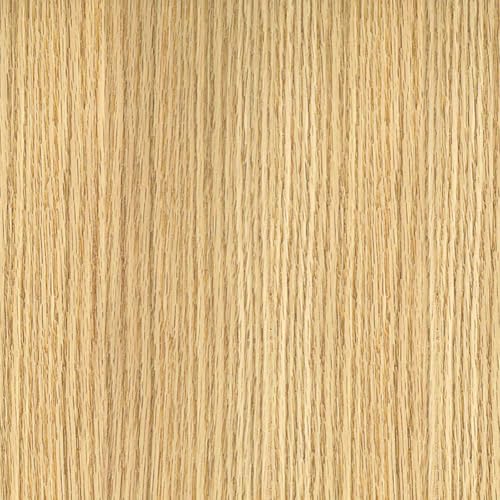
Edge Supply’s 24 x 48-inch white oak sheet brings the convenience of a pressure-sensitive adhesive backing. The 3M PSA is slightly tacky at room temperature but requires a warm workspace and sustained pressure from a J-roller to fully activate. It is not a true peel-and-stick in the sense of repositionable vinyl — once the adhesive grabs, it locks hard, so accurate placement is critical the first time.
The rift cut grain is attractive and the 0.024-inch thickness gives it body that resists tearing during handling. Buyers who prepared their substrate by sealing the base plywood and working in a 70°F-plus environment reported zero bubble issues. Those who tried to apply it in cold garages or without a roller consistently saw failed adhesion and returned the product as defective.
A small portion of shipments have arrived with discoloration or grain defects, likely from storage conditions. Because the adhesive is already applied, you cannot simply flip it over to use the back side. Inspect the sheet immediately upon arrival and request a replacement if the grain does not meet your standard.
Why it’s great
- No messy contact cement — apply directly to sealed plywood
- Rift cut grain provides a clean, modern aesthetic
- Pressure-sensitive bond is extremely strong when properly applied
Good to know
- Adhesive requires warm temperature and heavy roller pressure
- Grain defects reported on some incoming shipments
6. Woodpeckers Baltic Birch 24×48 1/8 in.
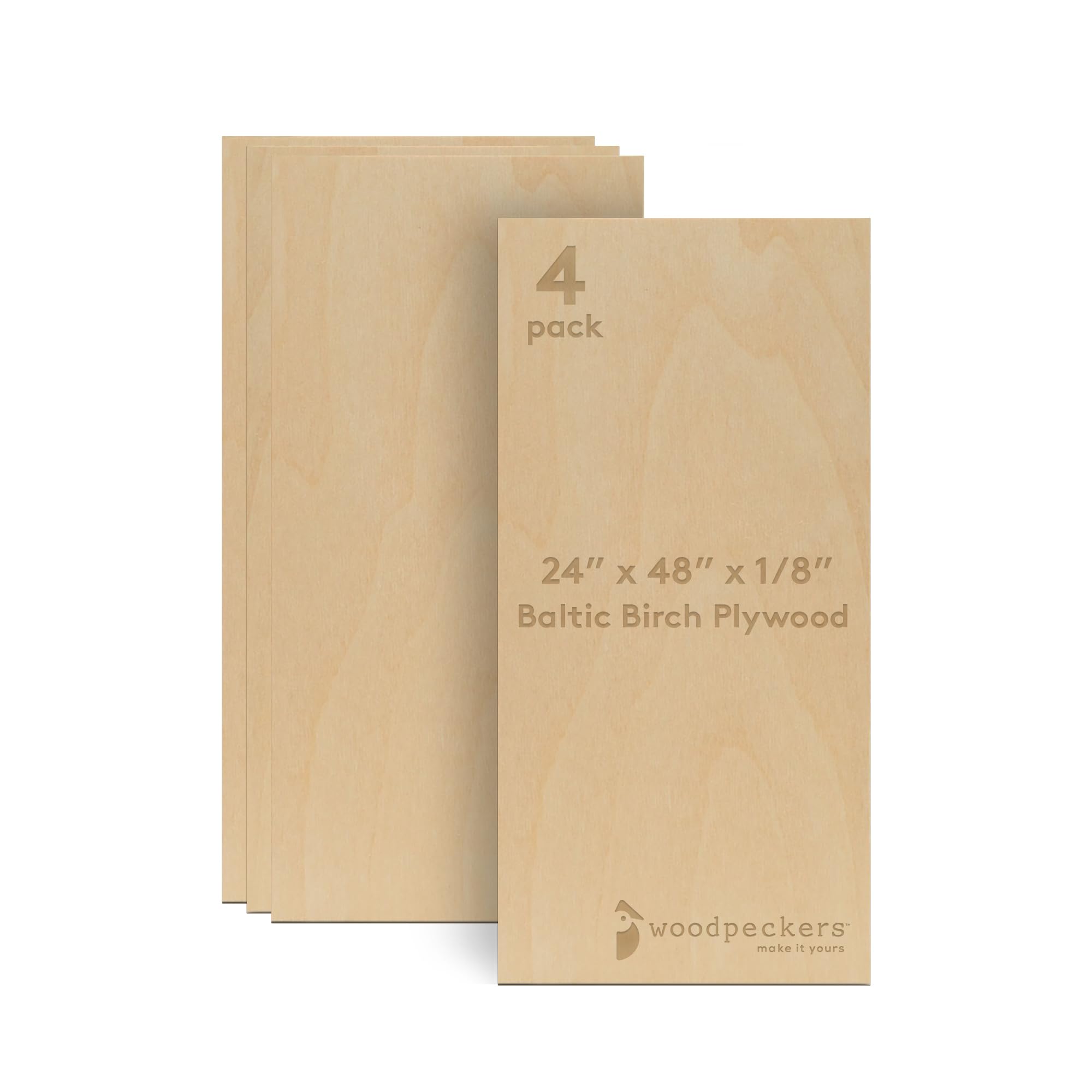
This Baltic birch plywood bundle from Woodpeckers delivers four 24 x 48-inch sheets of 3 mm (1/8-inch) BB/BB grade plywood. Unlike oak veneer, this is a structural product — solid birch plies throughout, no substrate needed. It is the go-to material for laser engravers, CNC routers, and scroll saw craftspeople who need a stable, knot-free surface that cuts cleanly without burning or chipping.
The face veneer is smooth and uniform, while the back surface may contain small color-matched patches typical of B/BB grade. Verified buyers confirm the 23-7/8 x 47-7/8-inch true dimensions are accurate, and the multi-coated layers prevent splintering on laser cut edges. The birch takes stain evenly, though the natural blonde color is often left clear-coated for a modern look.
In humid environments, the sheets can warp slightly if stored flat without restraint. Several users recommend cutting a few zip-tie slots into the design to hold the sheet flat on the laser bed. This is not a cabinet refacing product — it is a build-it-yourself plywood for signs, boxes, and hobby-grade furniture.
Why it’s great
- Strong, stable birch plies resist laser burn and chipping
- Four-sheet pack provides excellent value for production runs
- Smooth face suitable for clear-coat or light stain
Good to know
- B/BB grade may have small patches on the back face
- May warp in high-humidity storage environments
7. Outwater Red Oak Tambour 4×8
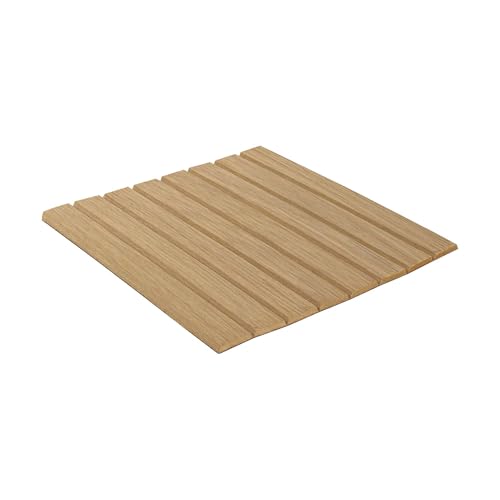
The Outwater tambour panel is a fundamentally different product: a full 4×8 sheet of 3/4-inch-wide red oak slats bonded to a flexible paper backer, with 30-degree V-grooves cut between each slat. This allows the panel to bend around a minimum radius of 3 inches, making it the correct choice for curved accent walls, column wraps, and arched cabinet fronts where a flat veneer sheet would tear.
The unfinished red oak face takes stain and paint easily, and the MDF core slats provide a durable, uniform substrate that will not warp like a solid plank. Multiple users confirm it cuts cleanly with a fine-tooth saw and installs quickly with construction adhesive applied directly to the backer. It has been used for wainscoting, bar fronts, bar backs, and even custom range hood wraps.
The paper backer is not suitable for tambour doors that require sliding track hardware — it is designed for stationary architectural applications. For a curved ceiling soffit or a pillar wrap, this is the only correct 4×8 format among the seven products reviewed.
Why it’s great
- Bends to a 3-inch radius without grain splitting
- True 4×8 size with 3/4-inch slats for a premium look
- Unfinished surface accepts stain or paint flawlessly
Good to know
- Paper backer not designed for sliding tambour doors
- Requires construction adhesive and a fine-tooth saw for cutting
FAQ
Can I apply oak veneer directly over old laminate countertops?
What adhesive works best with 10 mil paper-backed red oak veneer?
Why does my rift-cut white oak veneer look different from the listing photo?
How do I prevent bubbles in peel-and-stick oak veneer?
Final Thoughts: The Verdict
For most users, the 4×8 sheet of oak winner is the Veneer Tech Red Oak Flat Cut because its 10 mil paper backer and ready-to-stain surface deliver seamless results on standard cabinet refacing. If you need a curved architectural surface, grab the Outwater Red Oak Tambour for its flexible 3/4-inch slats. And for precision laser or CNC work where a stable plywood substrate is required, nothing beats the Woodpeckers Baltic Birch 1/8-inch pack.