
Our readers keep the lights on and my morning glass full of iced black tea. As an Amazon Associate, I earn from qualifying purchases.
Specs are compiled from manufacturer listings and verified buyer reviews and can change over time — please confirm the key details on the product page before buying.
You want cinema-style sound in your living room, but the choice between a soundbar kit and a receiver-and-speaker package can feel overwhelming. The real question is whether you value the simplicity of a single HDMI cable or the flexibility to upgrade components later. Here is what actually delivers that chest-thumping, rich experience for your room size and budget.
I’m Min — the founder and writer behind Gadgets Feed. This guide is built by comparing the manufacturers’ published specifications and the patterns across verified customer reviews, so you get each pick’s real strengths and trade-offs instead of marketing spin.
Your living room deserves more than tinny TV speakers, and finding the right 5.1 surround audio system starts with understanding what separates a genuine upgrade from a glorified speaker bar.
Our Picks at a Glance


How To Choose The Best 5.1 Surround Audio System
Before you click buy, you need to match the system type to your living space and your tolerance for setup. A soundbar kit is a single box that often includes wireless subwoofers and rear speakers, while a traditional system has a separate AV receiver that you wire to each speaker.
Soundbar Kits vs. Receiver Systems
Soundbar kits win on convenience—you plug in the bar, and the wireless subwoofer and rears sync up automatically. Receiver systems demand you run speaker wire to each corner of the room, but they offer more power, better separation, and the ability to upgrade individual speakers later.
The Subwoofer Is the Star
The driver size of the subwoofer—the part that produces deep bass—is the single biggest factor in how a movie feels. A 10-inch driver moves more air than a 6.5-inch one, so you feel explosions in your chest rather than just hearing them.
Quick Comparison
| Model | Best For | Subwoofer Size | Total Power | Surround Format | Amazon |
|---|---|---|---|---|---|
| JBL Bar 500MK2★ Best Overall | Theater-style bass in a wireless kit | 10 inches | 750W | Dolby Atmos | Amazon |
| Hisense HS5100Budget Pick | Entry-level wireless convenience | 6.5 inches | 540W | Dolby Audio, DTS Virtual:X | Amazon |
| Rockville HTS820Karaoke King | Karaoke and budget home theaters | 8 inches | 1500W Peak | 5.1 Stereo Surround | Amazon |
| Bobtot Surround Speakers | Parties and LED ambience | 10 inches | 1200W Peak | 5.1/2.1 Switchable | Amazon |
| Amazon Fire TV Soundbar Plus | Fire TV ecosystem integration | — | — | Dolby Atmos, DTS:X | Amazon |
| Harman Kardon HKTS 16BQ | Wired true surround with a receiver | 8 inches | 200W Sub | 5.1 Channel | Amazon |
| Sony BRAVIA Theater System 6 | Sony TV owners wanting smooth pairing | — | — | Dolby Atmos, DTS:X | Amazon |
| Fluance Elite SX51WHR | Audiophile music and movie detail | 10 inches | — | 5.1 Channel | Amazon |
| Yamaha YHT-4970U | Gamers needing 8K/4K120 passthrough | — | — | Dolby Atmos, DTS Virtual:X | Amazon |
| Yamaha YHT-5960U | Complete package with premium HDMI | — | — | Dolby Atmos, DTS:X | Amazon |
In‑Depth Reviews
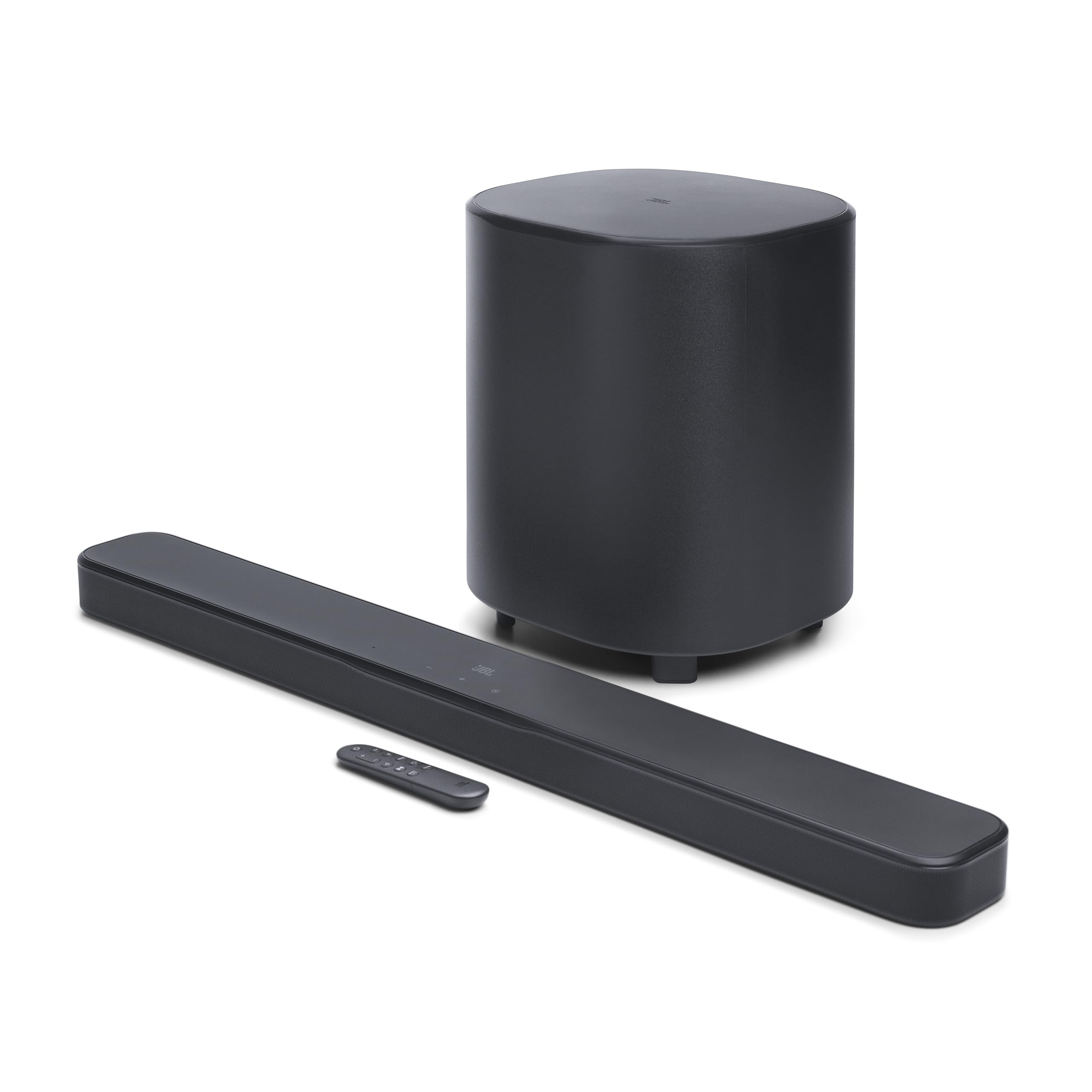
1. JBL Bar 500MK2
Our pick — 4.5★ from 250+ verified ratings; the strongest balance of quality and price.
The wireless kit that makes your couch vibrate like a cinema seat.
The JBL Bar 500MK2 earns the top spot because it delivers the most dramatic physical impact of any soundbar package we analyzed. Buyers report it “outperforms Bose” systems, with the 10-inch wireless subwoofer shaking the sofa at volume level 20. At 750W total power, it fills a medium-to-large living room with authority.
The audio smarts go beyond sheer loudness. Dolby Atmos creates a simulated ceiling and side sound field so a plane seems to soar overhead, while JBL’s MultiBeam 3.0 widens the soundstage to make you feel centered in the action. The PureVoice 2.0 technology automatically lifts dialogue clarity based on ambient scene noise—so whispered plot twists stay intelligible even during chaotic action sequences.
Setup is genuinely easy thanks to HDMI eARC support for uncompressed Atmos over a single cable, plus a JBL ONE app that runs room calibration to tune the sound to your wall reflections. Buyers consistently praise the easy calibration and note it pairs well with Hisense TVs. The main trade-off is size: the bar itself is 37 inches wide and the whole kit weighs 24.3 pounds, so it needs a substantial media console.
Why It Wins
- 10-inch subwoofer delivers chest-pounding, distortion-free bass
- PureVoice 2.0 keeps dialogue clear without manual tweaking
- Easy eARC setup with automatic room calibration
The Trade-Offs
- App forces Wi-Fi connection for sound controls
- Some listeners find it slightly harsh at maximum volume
Perfect for: Anyone who wants theater-shaking bass without running speaker wire across the room.
Reconsider if: You need an audiophile-grade midrange for critical music listening—the mids and highs take a backseat to the booming low end.
2. Hisense HS5100
A true wireless 5.1 kit that values ease over earth-shaking power.
The Hisense HS5100 is the most affordable way to get a genuine front-bar, wireless-subwoofer, and rear-speaker setup working in minutes. Buyers highlight the extremely easy setup—you plug in the subwoofer and rear speakers, and the system auto-configures. It pairs particularly well with Hisense TVs thanks to the EzPlay feature, which lets you control the soundbar’s modes through your TV remote.
Sound quality here is a mixed bag, which is the honest fit note. The 6.5-inch wireless subwoofer delivers 540W across 8 speakers for decent room-filling bass. The center speaker and Voice Enhancement Technology help keep dialogue intelligible. However, some owners mention the rear surround speakers are quiet—as one owner put it flatly, “The surround speakers are so quiet they might as well not exist.”
This system is best suited to small rooms where the modest rear output won’t matter much. Buyers who own it for about a year report occasional speaker cutouts or crackling, possibly from router interference, but overall consider it worth the modest investment. It supports Bluetooth 5.3 for easy music streaming from your phone.
Perfect for small rooms: A true 5.1 channel setup that sets up in minutes and works well in tight spaces where you’ll sit close to the speakers.
Manage expectations: The rear channels are subtle, so don’t buy this expecting an rich bubble of sound—the front stage carries the experience.
3. Rockville HTS820
A wired powerhouse that turns your living room into a karaoke bar.
The Rockville HTS820 is the only system on this list that genuinely doubles as a karaoke machine. It includes dual ¼-inch microphone inputs with echo control, letting two people sing simultaneously over a 1500W peak power system. The 8-inch subwoofer with built-in receiver anchors a 5.1 setup that buyers confirm shakes furniture in large rooms.
This is a traditional wired setup, and Rockville includes generous cabling: 30-foot wires for the rear speakers, 12-foot for the fronts, and 10-foot for the center. Each speaker pairs a 3-inch midrange driver with a 0.75-inch dome tweeter for clear highs. There’s a 5-band EQ, FM radio, and Bluetooth built into the receiver, along with SD/USB inputs for music playback.
The value equation is strong—buyers consistently call it a great budget 5.1 system for a large room. But the honest catch is that the rear speakers don’t seem loud enough for some owners, and the subwoofer can produce a rattle at certain bass frequencies. It’s built for volume and fun rather than audiophile refinement.
Perfect for parties: The dual mic inputs, powerful bass, and room-shaking volume make this the life of any gathering.
Who should pass: Critical listeners who want balanced rear channels—this leans heavy on the front stage and bass.
4. Bobtot Home Theater System
The crowd-pleasing system that puts on a light show while you watch.
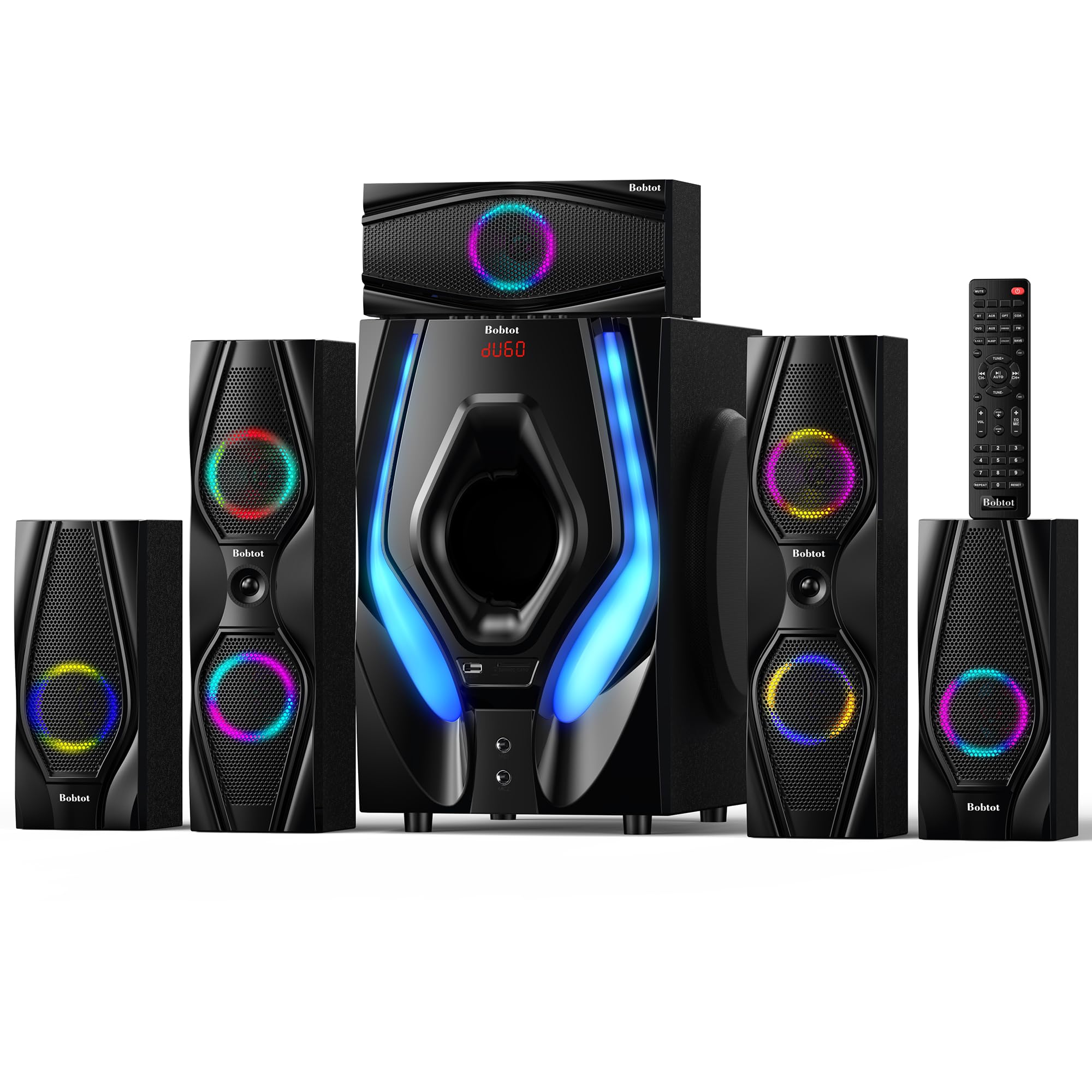
The Bobtot system makes a spectacle of home audio with a 10-inch subwoofer that houses 4 LED lighting modes—blinking to the beat, solid on, spectrum EQ analyzer, or off. This 1200W peak power system delivers clean, natural sound that buyers describe as rich and very loud, making it ideal for movies, football games, and parties.
Flexibility is the core strength here. It switches between 5.1 and 2.1 channel modes via remote or the front panel, and Bluetooth V5.3 connects directly to your phone. The included cables are generous—31-foot wires for the rears and 13-foot for the fronts—so you can place speakers across a large room. There’s even a USB/SD card slot supporting files up to 64GB and dual mic inputs for karaoke.
Where owners praise the sound, many report the unit arriving dead on arrival or failing after months. That reliability question is real, and it’s the main reason this doesn’t rank higher. Customers note the included wires aren’t extendable, so you must measure your speaker placement carefully before committing.
What You Get
- rich 5.1 surround with impressive bass for the price
- LED light effects add genuine party atmosphere
- Flexible inputs: ARC, Optical, Coaxial, USB, Bluetooth 5.3
What to Watch For
- Reliability is inconsistent—some units arrive dead or fail early
- Wired connections require careful placement planning
Best for: Party hosts who want visual flair and serious volume on a budget.
Think twice if: You need long-term dependability—this is a lottery ticket on build quality.
5. Amazon Fire TV Soundbar Plus

The plug-and-play 5.1 kit that disappears into your Fire TV setup.
If you live in the Amazon ecosystem, the Fire TV Soundbar Plus removes every obstacle between you and surround sound. The subwoofer and two surround speakers come pre-paired from the start—you just plug them into power and they connect to the soundbar automatically. Buyers confirm it “instantly works” with a Sony TV via HDMI-ARC, delivering crisp dialogue through a dedicated center channel.
Sound quality punches well above its weight, with buyers reporting feeling bass in their chest during movies. The 5-level dialogue button sharpens conversations, and Dolby Atmos plus DTS:X provides multi-dimensional audio. Content-specific modes—Movie, Music, Sports, Night—automatically tune the sound based on what you’re watching.
The catch is reliability over time. While the soundbar and subwoofer work well initially, some reviewers point out the system stops working after about a month. The subwoofer also has placement restrictions, needing to sit more than 12 inches from a wall. Rear speakers lack volume even at max settings in larger rooms, making this best for small-to-medium spaces.
smooth setup: The pre-paired wireless speakers and single-remote control make this the easiest true 5.1 system to install.
Watch the lifespan: Reports of units failing after a month mean you should test thoroughly during the return window.
6. Harman Kardon HKTS 16BQ

Five crisp satellites and a down-firing sub that need a receiver to shine.
The Harman Kardon HKTS 16BQ is a traditional speaker package for buyers who already own or plan to buy a separate AV receiver. It’s a complete 5.1 channel system with voice-matched, two-way 120W satellite speakers that buyers describe as crisp, clear, and near-Bose level quality. The down-firing 200W subwoofer delivers room-filling bass—at a quarter volume it’s plenty, at full it shakes the house.
What separates this from soundbar kits is the upgrade path. It’s expandable to 7.1 channels, meaning you can add two more speakers later for a wider sound field. The subwoofer includes bass-boost controls and phase switches, letting you dial in the low end for your room’s acoustics.
The honest trade-off is that this package requires a quality receiver to sound its best—shoppers say superb results when paired with a Yamaha or Sony AVR. It’s also fully wired, so you need to route speaker cable to each satellite. One owner noted the rear speaker mounting is slightly tricky but manageable.
Perfect for: Enthusiasts who want true component audio and the ability to upgrade to 7.1 later.
Requires: A separate AV receiver and a willingness to run wires—this is not a plug-and-play soundbar experience.
7. Sony BRAVIA Theater System 6

The soundbar that syncs magically with Sony BRAVIA TVs.
Sony BRAVIA TV owners get a special treat with this system: pair it with a compatible BRAVIA TV and the soundbar becomes controllable from the TV menu, plus you open up Voice Zoom 3 for enhanced dialogue. Buyers describe the setup as working “like magic” with their Sony TVs, where the soundbar and TV “did most of the work.” It’s the closest thing to a smooth, single-brand home theater experience.
This 5.1-channel system uses three front-firing speakers, two rear speakers, and a subwoofer to deliver Dolby Atmos and DTS:X sound. The dedicated center channel keeps dialogue crisp at all volume levels. Sony’s BRAVIA Connect app lets you adjust volume, sound profiles, and advanced settings from your phone, and Multi Stereo mode plays the same sound from all speakers for a room-filling boost.
The connectivity gets mixed feedback—the rear speakers are wired, not wireless, and buyers report the HDMI cable sometimes disconnects with Sony TVs (switching to optical fixes it). The subwoofer and hub must sit near the TV, and the shiny soundbar surface reflects screen glare.
Perfect for: Sony BRAVIA TV owners who want a single-remote, deeply integrated system.
Reconsider if: You need a fully wireless rear setup—the rears are wired, and cable management is on you.
8. Fluance Elite SX51WHR

Floorstanding towers that bring concert-hall detail to your movie room.
The Fluance Elite system is a serious step up for buyers who value musical detail over raw volume. Its 2-way floorstanding towers pair high-frequency tweeters with dynamic midrange drivers to deliver crisp highs and accurate response—buyers highlight the “crisp highs” as a standout feature. The white woodgrain finish on precision-crafted MDF cabinets looks like a proper hi-fi installation, not a plastic soundbar.
This is a speaker package that needs a receiver, and it rewards proper setup. Owners mention the break-in period makes a big difference, as does calibration on your amp or receiver. Once positioned correctly, the system surrounds you with “every brilliant nuance the way the artist intended.” The 10-inch powered subwoofer pumps out room-shaking bass for immersion.
The trade-off is commitment: floorstanding towers demand floor space, and this system requires you to wire everything to a receiver. It also includes isolation floor spikes for the towers, which you’ll need to set up correctly. Buyers praise the build quality and lifetime parts-and-labor warranty, making this a long-term investment.
Perfect for: Music lovers and cinephiles who appreciate detail, soundstage, and physical speaker presence over minimalism.
Not for: Small apartments or buyers who want a discreet, space-saving setup—towers need room to breathe.
9. Yamaha YHT-4970U
The all-in-one receiver system that future-proofs your gaming room.
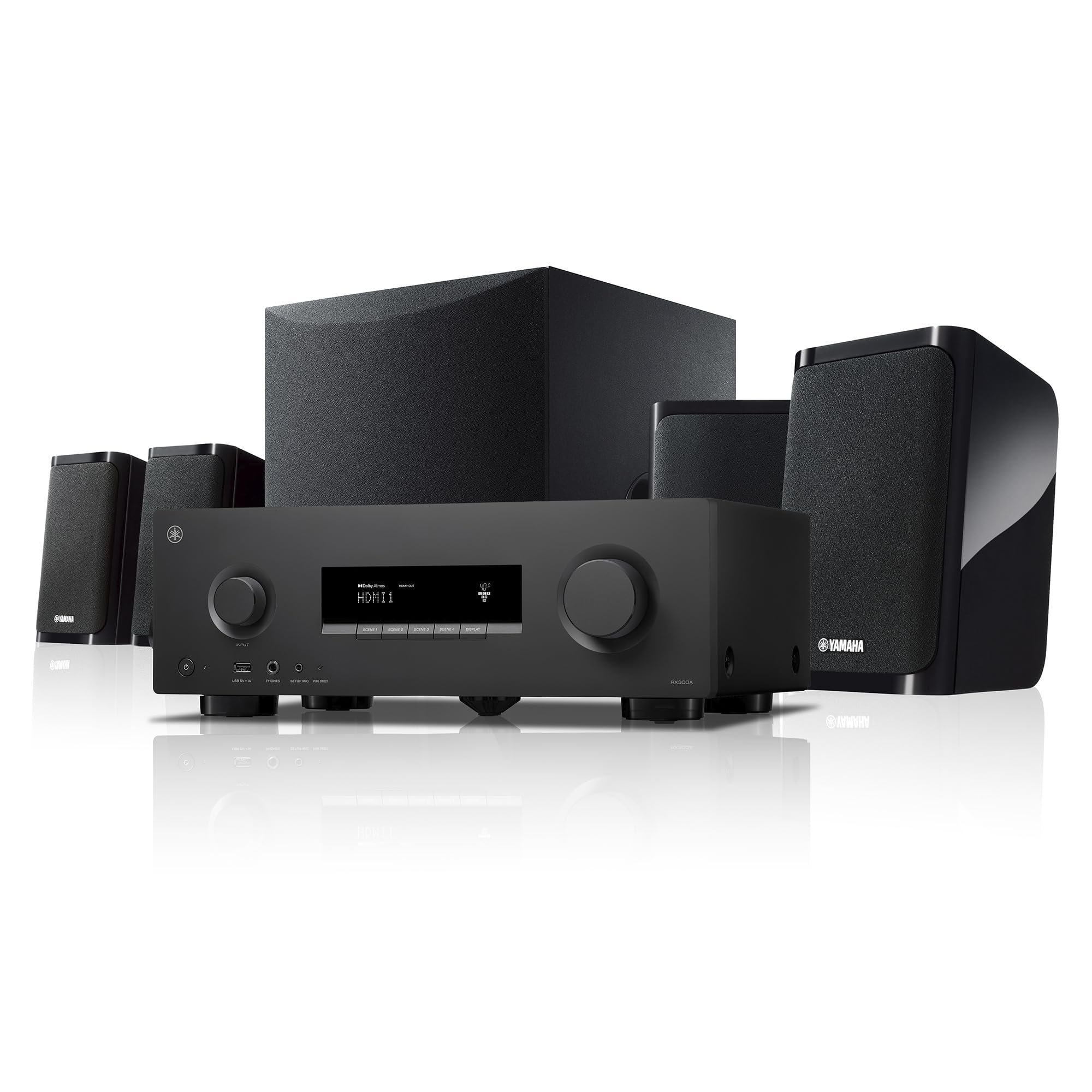
Gamers and home theater enthusiasts who need the latest video passthrough will find the Yamaha YHT-4970U compelling. It ships with the RX300A AV receiver, a 5.1 speaker package, and an 80-foot spool of speaker wire plus a 16-foot subwoofer cable. The receiver supports 4K/120 and 8K/60 video with Dolby Vision and HDR10+—so you can plug in a next-gen console and get both flawless picture and rich sound.
Yamaha includes a setup microphone for its YPAO room correction, which measures your room’s acoustics and automatically tune speaker output. Buyers describe the sound as refined and powerful, restoring clear, detailed movie audio compared to TV speakers. Dolby Atmos and DTS Virtual:X create dimensional sound, and Bluetooth Multipoint lets you pair two source devices and instantly switch between them.
The honest challenge is setup difficulty. Customers note tight speaker posts, monitor handshake issues, and a confusing remote that doesn’t work when the mic is plugged in. Once configured, the sound is outstanding, but this is a DIY project. The subwoofer isn’t extremely loud, and it’s a 5.1 system, not 7.1, so your expansion path is limited.
The Upside
- 8K/60 and 4K/120 passthrough with VRR and ALLM for gaming
- YPAO room correction tailors sound to your space
- Bluetooth Multipoint for instant device switching
The Hurdle
- Setup is complex with tricky speaker posts and remote quirks
- Not upgradeable beyond 5.1 channels
Best for: Enthusiasts who want a proper AV receiver and don’t mind a weekend setup project.
Skip if: You want plug-and-play simplicity—this rewards patience and technical expertise.
10. Yamaha YHT-5960U
A complete receiver bundle with a premium 48Gbps HDMI cable included.
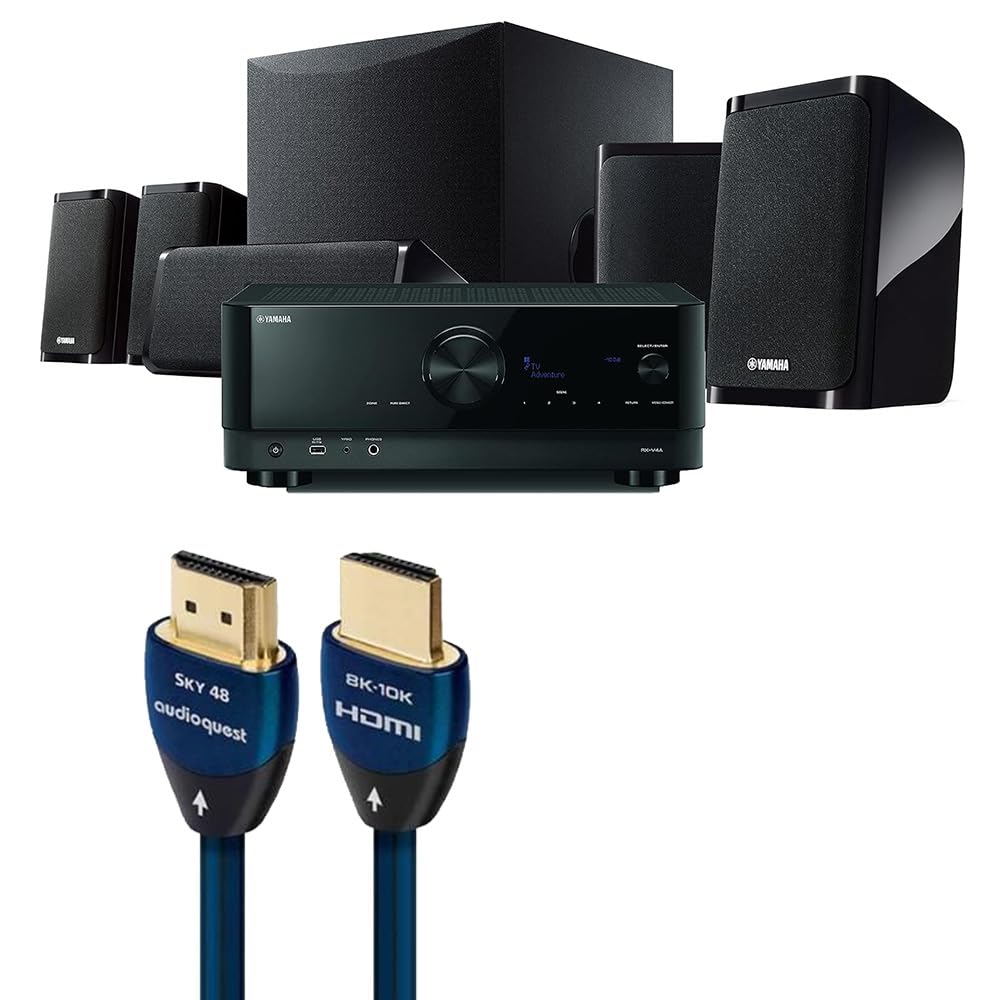
The Yamaha YHT-5960U is the most complete package in this lineup, bundling the 5.1-channel system with a 3-meter AudioQuest Sky ultra-high-speed HDMI cable rated for 48Gbps. That cable alone is a premium accessory many buyers would purchase separately. The system supports Dolby Atmos, DTS:X, and Virtual Height technology to create a spacious, cinematic sound field from the included receiver and matched speakers.
This bundle delivers better sound than a soundbar, with buyers praising the clarity where “voices and songs are clearer.” It handles 8K/60Hz and 4K/120Hz video with HDR10+, Dolby Vision, and eARC, plus gaming features like VRR and ALLM. Built-in Bluetooth, MusicCast multi-room audio, and YPAO room calibration give you flexibility in how you stream and tune the sound.
The reliability track record is the honest concern. While many buyers find it a great starter system with unbeatable value, others report units failing—one buyer’s unit broke twice in 18 months with repairs not covered by the warranty reset. A separate report notes Bluetooth is unreliable until a firmware update, and the MusicCast app feels underdeveloped. The wiring is also difficult for beginners.
Best value for: Buyers who want a true receiver-based 5.1 system plus a premium HDMI cable in one box.
Consider carefully: Long-term reliability is a gamble—test thoroughly during the warranty period.
Understanding the Specs
Subwoofer Driver Size
The subwoofer’s driver size, measured in inches, determines how much air it can move to produce deep bass. A 10-inch driver like the JBL Bar 500MK2’s creates physical, chest-thumping pressure, while a 6.5-inch driver like the Hisense’s delivers a lighter rumble. Bigger isn’t always better—it depends on your room size and how much bass you want to feel.
Dolby Atmos and DTS Virtual:X
These are surround sound formats that simulate height channels using signal processing. Dolby Atmos creates a 3D bubble of sound where effects seem to move overhead, while DTS Virtual:X does similar virtualization from front and rear speakers. Neither requires you to mount speakers in the ceiling—they work with your existing speaker layout to fake the height effect.
FAQ
What is the difference between a 5.1 soundbar kit and a receiver-based system?
Do I need a separate AV receiver for the Harman Kardon or Fluance systems?
Will the JBL Bar 500MK2 work with my non-JBL TV?
How long does a 5.1 surround system typically last?
Is it better to get wireless rear speakers or wired ones?
What does the 10-inch subwoofer size actually mean for my listening experience?
Can I use a 5.1 surround system for music listening, or just movies?
What is HDMI eARC and why does it matter for a 5.1 system?
Will these systems work with my gaming console?
How much space do I need for a 5.1 surround system?
Final Thoughts: The Verdict
The clear winner for most buyers is the 5.1 surround audio system from JBL Bar 500MK2 because its 10-inch subwoofer delivers cinema-shaking bass at 750W with easy wireless setup and automatic room calibration—a crowd favorite backed by overwhelmingly positive owner feedback. If you want the simplest true 5.1 experience on a budget, the Hisense HS5100 sets up in minutes with 540W of power. And for buyers who want a proper receiver-based system with the latest gaming features, the Yamaha YHT-4970U delivers 4K/120 and 8K/60 passthrough with Dolby Atmos.
How We Picked
We do not accept paid placement. Every pick is matched to a real buyer and a real use-case; we do not hands-on test units.
Sources & Methodology
Specifications: manufacturer listings and product documentation. Review insights: verified customer reviews, as of August 2026. Pricing: not shown on this page (it changes often); check the current price via the retailer link.
As an Amazon Associate, Gadgets Feed earns from qualifying purchases. This does not affect which products we feature.