
Our readers keep the lights on and my morning glass full of iced black tea. As an Amazon Associate, I earn from qualifying purchases.
Specs are compiled from manufacturer listings and verified buyer reviews and can change over time — please confirm the key details on the product page before buying.
Get the outside diameter wrong on a soft copper coil and the joint will never seal, no matter how carefully you bend it. Soft copper for refrigeration is sold by its outside diameter (OD) — the measurement across the outside of the tube. The 5/16 inch size is the one that pairs with 1/4 inch inner diameter (ID) fittings, so it matches most flare and sweat connections. This guide covers six smooth round copper coils that all sit at that 5/16 inch OD mark, from a short 8.2 ft hobby spool up to a 25 ft refrigeration run. That way you can match coil length and wall thickness (the width of the copper between the outer and inner surface) to the actual job.
I’m Min — the founder and writer behind Gadgets Feed. This guide is built by comparing the manufacturers’ published specifications and the patterns across verified customer reviews, so you get each pick’s real strengths and trade-offs instead of marketing spin.
Wall thickness is the second decision point, because thin-wall coil bends easily but collapses without a tubing bender (a tool that supports the tube from the inside as it curves) behind it. Here is how the leading 5/16 copper tubing coils compare.
Our Picks at a Glance

How To Choose The Best 5/16 Copper Tubing
Buying copper coil is not a one-size purchase. Two coils can both say “5/16 inch” on the label and still behave completely differently once you cut and bend them. The three specs that decide whether a coil suits your job are the outside diameter, the wall thickness, and the total length of the coil.
Start With The Outside Diameter, Not The Inner
Soft refrigeration copper is measured by its outside diameter — the width across the outer wall of the tube. A coil marked 5/16 inch OD with a 1/4 inch ID leaves you roughly a 1/32 inch wall. That is thin enough to bend by hand and thick enough to hold a flare (a flared end that seats against a fitting). Buy by the inner measurement instead and you will usually end up with a tube too large to seat in your fittings. Check the OD stamped on the coil against the OD your flare or sweat fitting expects before you cut anything.
Wall Thickness Decides How It Bends
A thin wall bends easily but crushes just as easily. Thicker wall copper holds its shape through a tighter radius without collapsing, which matters when you are forming a job-specific bend rather than a simple sweep. The trade-off is stiffness — the thicker the wall, the more hand force you need. For short repair sections, thin wall is fine. For a long refrigeration run with several bends packed close together, the extra wall thickness earns its keep.
Length, Coil Weight And Joint Count
Coil length sets how many joints you have to sweat or flare. A short spool is ideal when you only need a few feet for a hydraulic line repair or a jewellery piece. A long run lets you pull an entire refrigerant line without a splice, which removes a leak point on a pressurized system. The catch is weight and handling — a long coil is heavier to unroll and more likely to arrive tightly wound, so it needs care when you straighten it out.
Quick Comparison
| Model | Best For | Outside Diameter | Coil Length | Wall Thickness | Amazon |
|---|---|---|---|---|---|
| BELLA BAYS Copper Tubing 3/8″ OD★ Best Overall | All-round HVAC and repair work | 0.38 inches | 120 inches | 0.028 inches | Amazon |
| Pure Copper Tubing 5/16″ OD 1/4″ IDCraft Favourite | Craft, jewellery and instrument work | 0.31 inches | 98.4 inches | 1mm | Amazon |
| GOORY Copper Tubing 5/16″ OD | Refrigeration and HVAC installs | 0.31 inches | 10 feet | 0.028 inch / 0.7mm | Amazon |
| 99.9% Copper Tube 5/16″ OD x 1/4″ ID | High-pressure and load-bearing runs | 0.31 inches | 10 feet | 0.03125 inches | Amazon |
| Flexible Copper Tube for Refrigeration | Long single-run refrigeration lines | 8 millimeters | 25 feet | 0.5 millimeters | Amazon |
| Eoiips Copper Tube 5/16″ OD × 1/4″ ID | Long DIY and hobby builds | 0.31 inches | 19.68 feet | 0.0625 inches | Amazon |
In-Depth Reviews
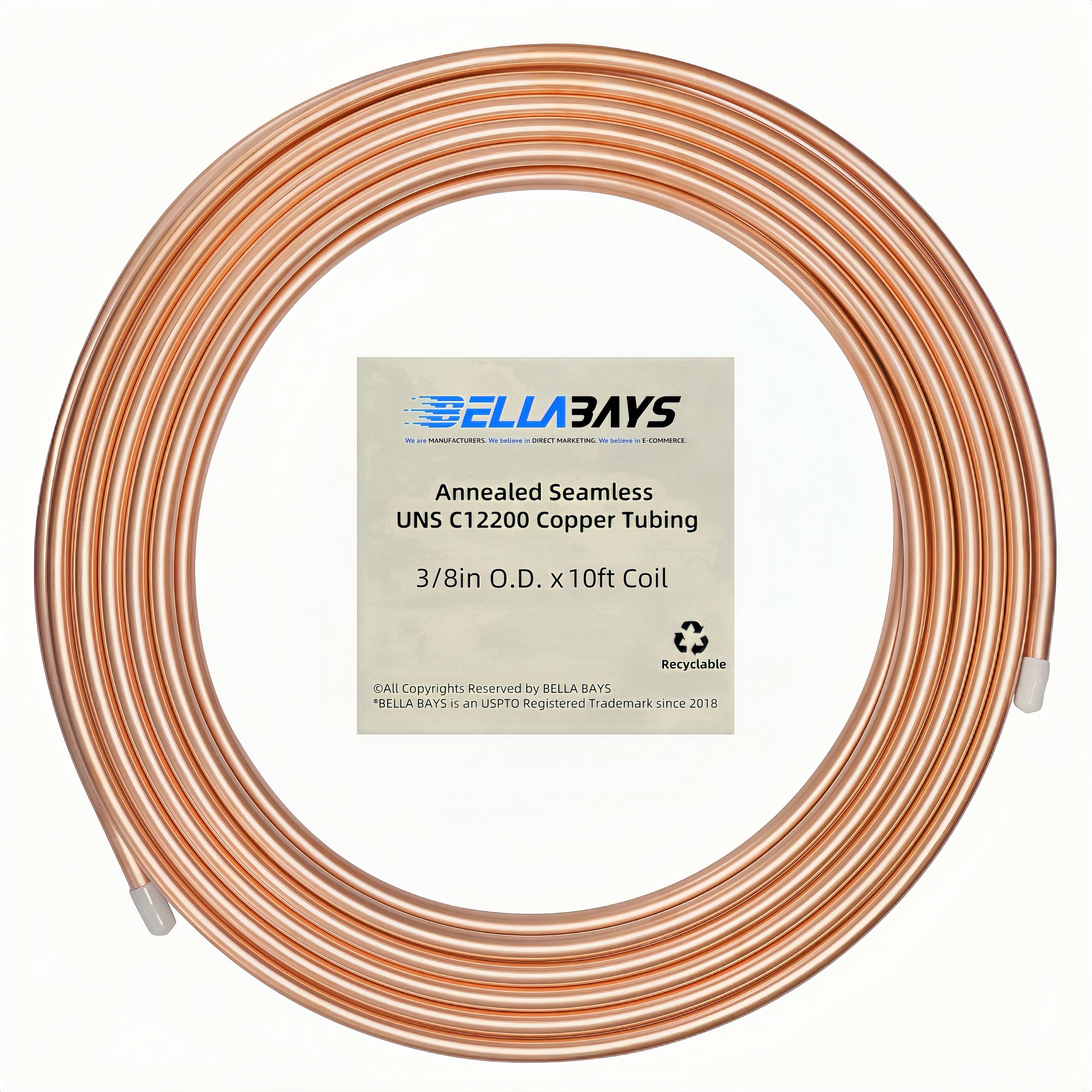
1. BELLA BAYS Copper Tubing 3/8″ OD x 0.320″ ID x 10 ft
Our pick — over 4.5★ from 500+ verified ratings; the strongest balance of quality and price.
A 120-inch C12200 coil that bends by hand for hydraulic line and swamp cooler repairs.
This coil earns the top slot on pure track record: 4.7 stars across 512 ratings, the largest body of owner feedback in this lineup. The tubing is UNS C12200 grade copper that conforms to the ASTM-B280 specification (the standard refrigeration contractors look for before they flare a joint). It ships as a neat coil in a 120 inch length, so you have real working margin for a repair plus a spare sweep of pipe.
Buyers report it seals clean on the first bend, with no re-flaring needed. Owners mention it seals up clean after bending — as buyers put it, “Was exactly what I needed to fix my hydraulic line!” The coil is flexible enough to form into elbows and joints by hand. The thin 0.028 inch wall is the reason it bends at any angle without fighting you. That same thin wall needs support, though: a tubing bender behind the curve keeps it from folding on itself, and owners who knew that going in got clean results every time.
One honest note for anyone comparing sizes: this is the 3/8 inch outside-diameter coil, roughly 0.38 inches across the outside. It runs wider than the 5/16 inch OD tubes below. It also runs the full 120 inches — 22% longer than the 98.4 inch Pure Copper coil — so if you want the longest single span without a splice, this is the one that delivers it. Nitrogen-charged during manufacture to push out impurities and resist oxidation, it is sized for air conditioners, refrigerators, coolers and general HVAC piping. If your fittings are built around a 5/16 inch OD, step down to a narrower coil instead.
Where It Pulls Ahead
- UNS C12200 grade copper built to the ASTM-B280 specification, the spec refrigeration techs check
- 120 inch coil gives you extra length plus leftover for a second cut
- Bends by hand at any angle for elbows and joints
- Nitrogen-charged to limit oxidation and condensation over time
Where It Asks More Of You
- At 0.38 inches OD it is wider than the 5/16 inch coils below — check your fitting size first
- The 0.028 inch wall is thin, so a bender is the difference between a clean sweep and a crushed tube
- Coils can pick up minor dents in transit; a few arrive cosmetically imperfect
Reach for this if: you want the safest all-round coil for HVAC, fridge and hydraulic repairs and you value a long 120 inch run over a narrower profile.
Look elsewhere if: your fittings call for a 5/16 inch outside diameter — one of the green-listed picks below matches that bore.
2. Pure Copper Tubing 5/16″ OD 1/4″ ID 8.2FT
The short, smooth spool that jewellers and instrument builders reach for first.
A 1mm wall on a 5/16 inch OD tube is what makes this coil a favourite for hand work. It measures 5/16 inch OD by 1/4 inch ID — 8 by 6 millimetres — with a 1mm wall in an 8.2 ft length. That tighter bore and shorter coil make it the natural pick when your project is small and precise rather than a full refrigerant run. Hammered bracelets, pitot tubes for a manometer (a pressure-measuring tube), architectural models — the owner stories all point the same way.
Bend it and cut it by hand with no special tooling. Customers note it forms easily without kinking, and one craft-focused buyer built a pair of custom pitot tubes for a manometer and reported it “worked great.” The surface is smooth and smooth with a full metallic sheen, and because it is 99.9 percent copper, it transfers heat and current the way pure copper should. You can cut it to the exact length you want instead of committing the whole coil.
Know what you are buying before you order: this is a slim, light coil — roughly a pound and a bit — not the long run you want for a full HVAC line. At 98.4 inches it is the shortest coil in this group, 22% shorter than the 120 inch BELLA BAYS above, so plan your cuts and joints around that limit. The size range on the listing runs from 1/8 inch up to 7/8 inch OD if you need a different bore for a second job. For a compact, bend-friendly spool for craft and instrument work, it does exactly what it promises.
The craftsman’s short spool: a 1mm wall on a 5/16 inch OD tube holds a clean hand bend, which is the whole reason this coil lands in jewellery and pitot-tube projects.
Plan around the length: 8.2 feet goes fast once you start cutting for multiple pieces, so buy with your full joint count in mind.
Built for: hobbyists, jewellers and anyone forming short, precise copper pieces who wants an easy-bending, smooth spool.
Not built for: a full refrigerant line — the 8.2 ft length leaves no room for a long run.
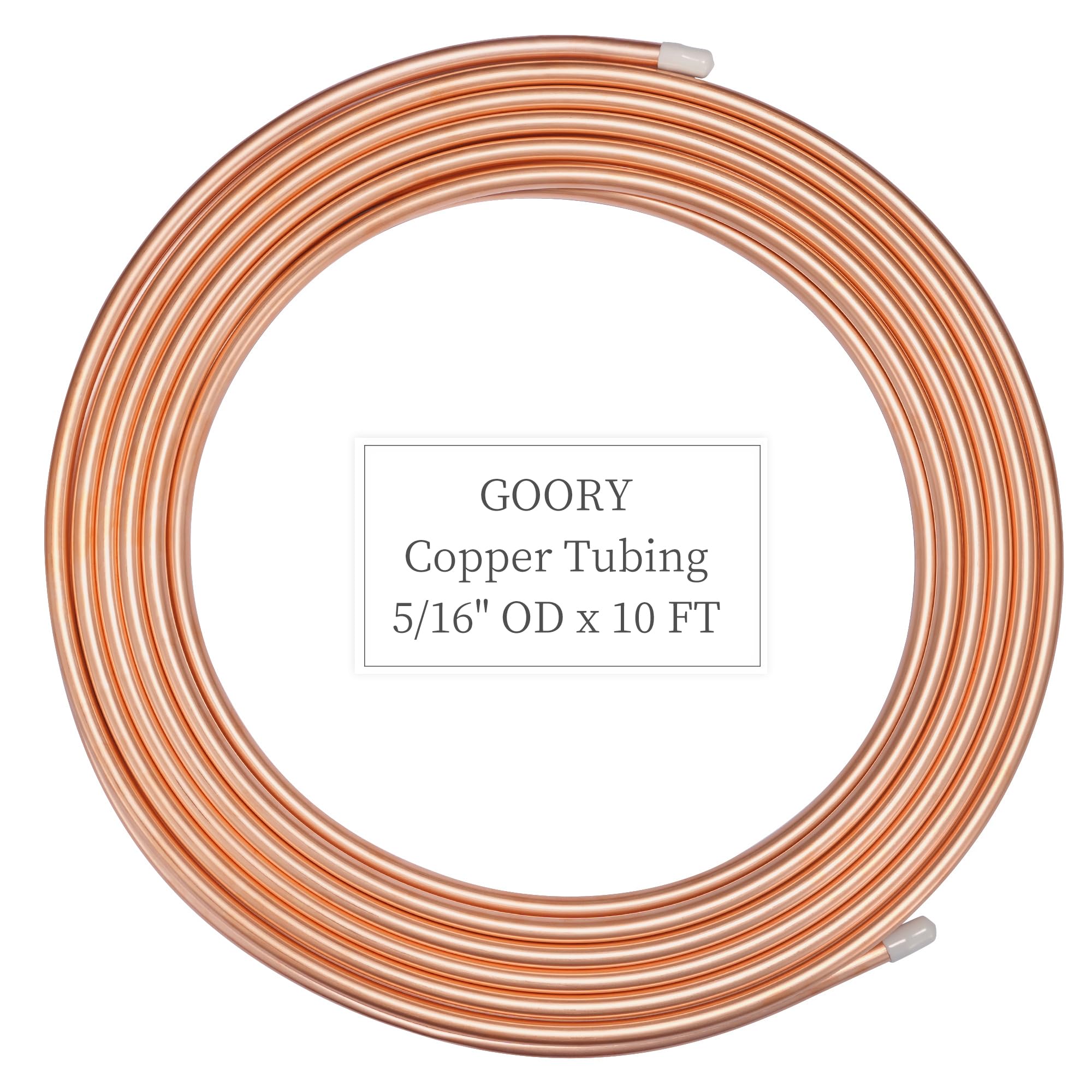
3. GOORY Copper Tubing 5/16″ OD x 0.257″ ID x 10 FT
The 5/16 inch HVAC coil built to the spec contractors actually install.
Two specs make this true-to-label 5/16 inch outside-diameter refrigeration coil the technician’s pick: UNS C12200 grade copper and compliance with the ASTM B280 standard (the standard that covers smooth copper tube for air conditioning and refrigeration field service). It measures 0.31 inches across the outside and 0.257 inches on the inside. That gives you the narrow 5/16 by 1/4 inch pairing that seats properly in standard ACR fittings. It comes nitrogen-charged with impurities pulled out and pressure tested. That manufacturing step guards against internal oxidation, which could otherwise shorten a system’s life.
Installers report it seats in standard ACR fittings and holds a flare without rework. One HVAC installer noted it was “exactly what was needed for my hvac install” and arrived in a strong box undamaged in transit — a practical detail, because a coil that shows up crushed is a coil you cannot use. It cuts and bends by hand or with a ratcheting tool, and it forms into any angle for sweating or flared fittings. The 0.028 inch / 0.7mm wall gives it enough body to hold a curve without folding.
The honest caveat on this one is consistency. Owner feedback splits on durability — some coils arrive and work clean straight from the start, while a few show up kinked or tightly wound from shipping, and the value question is genuinely mixed among buyers. Size feedback, too, is the least positive aspect for this listing, so measure your fittings and confirm the 0.31 inch OD against what you actually need before ordering. Get a clean coil and it is a strong, spec-correct choice for refrigeration and HVAC work.
The spec you are really paying for: UNS C12200 copper compliant with ASTM B280 is the standard that separates a coil you can install from one a professional would rather not.
Inspect on arrival: a tightly wound or lightly kinked coil is the recurring report — unroll it and give it a look before you start cutting.
The right call when: you are running a 5/16 inch OD refrigeration or HVAC line and want the C12200 / ASTM B280 pedigree behind it.
Worth a second look if: you need guaranteed flawless coils every shipment — batch consistency is the one thing buyers flag.
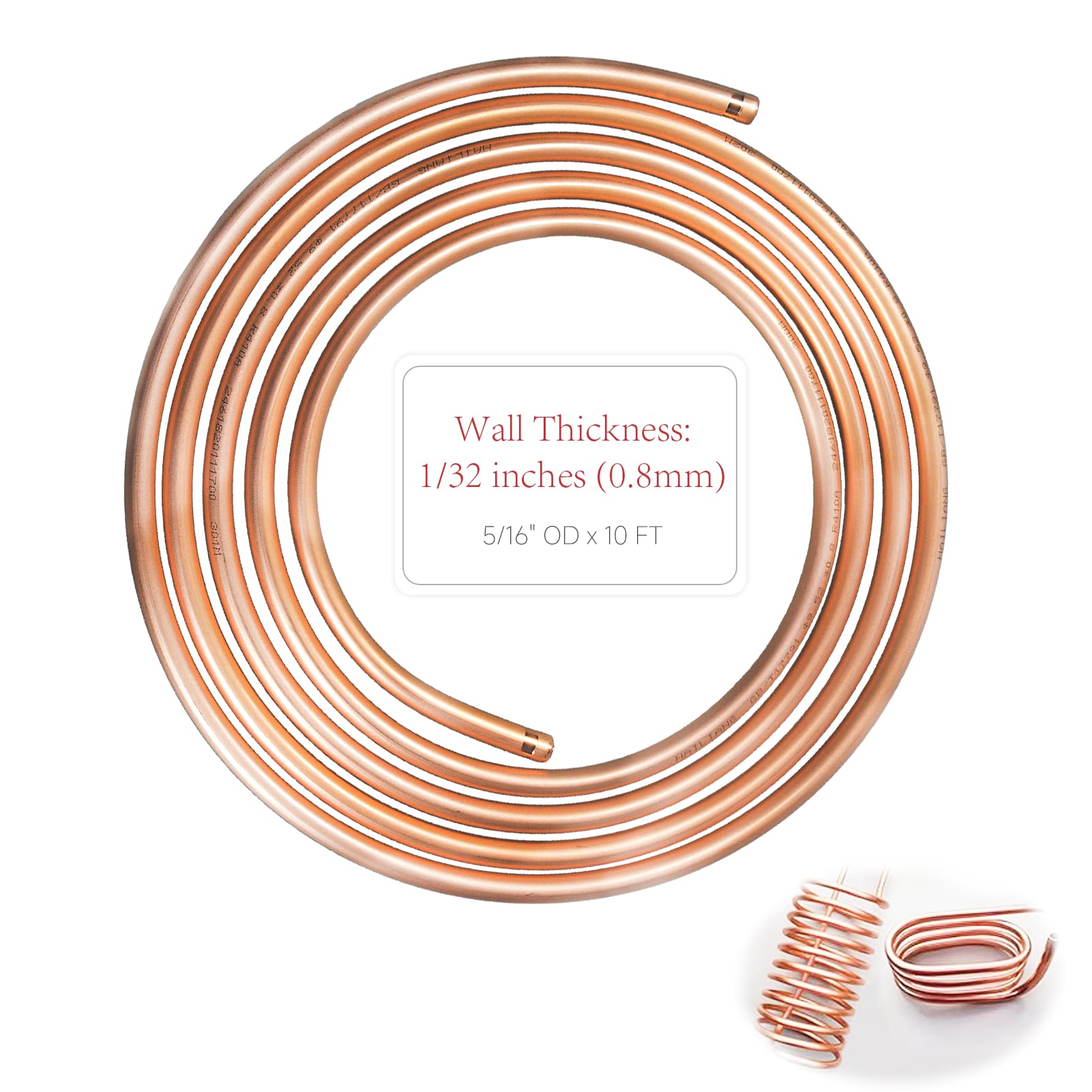
4. 99.9% Copper Tube 5/16″ OD x 1/4″ ID 10 Ft
The extra-thick wall pick for anyone bending copper under real pressure.
At 0.8mm, the wall here is the heaviest spec in this group, so the tube holds a tighter radius without collapsing the way a thin coil would. That is why it leads when the job punishes the tube — high-pressure systems, load-bearing runs, or bends made under force. It is a soft-temper copper tube (heat-treated to bend freely) made with continuous casting and rolling for a smooth, smooth surface. It complies with the ASTM-B280 standard, so thermal conductivity and corrosion resistance are both in line with what a refrigeration coil should offer.
The 0.8mm wall holds a tighter radius than the thin-wall coils above without collapsing. Ham radio builders report it is “very nice product for building your own 6 meter and VHF antennas,” and one repeated theme is that the copper is genuinely real, not a copper-coated substitute. Reviewers confirm it is soft enough to bend and shape into elbows and joints while still carrying the wall thickness needed for applications subject to external force. For a 10 ft run at a 5/16 inch OD and 1/4 inch ID, it fits the bracket of a short, strong section rather than a long flexible line.
The trade-off is a mixed pattern on the wall measurement, so measure with a caliper rather than trusting the label — several buyers found the claimed thickness did not match what arrived. Value is also a swing: some buyers call the price fair, others find it high for the length. Size matters here too, and the lesson from the reviews is to double-check your ID before you commit, because inner diameter changes what fittings will seat. Under normal conditions the tubing performs, but if the thickness spec is critical to a pressure application, verify it on delivery.
Why The Thick Wall Matters
- 0.8mm wall is the heaviest in this lineup — the pick for high-pressure and load-bearing use
- Continuous casting and rolling to ASTM-B280 for a smooth, smooth finish
- Real copper confirmed by owners, not a coated look-alike
What To Verify Yourself
- Thickness feedback is mixed — measure with a caliper before trusting the label
- Value is a split opinion among buyers for the length you get
- Stiffer than a thin coil, so it asks more hand force on a tight bend
Pick this when: pressure and force are the enemies — high-pressure systems and bends that need a wall thick enough to stay open.
Think twice if: you want maximum flexibility from a light hand-bend — the thicker wall resists more than the thin coils above.
5. Flexible Copper Tube for Refrigeration, 5/16″ OD x 1/4″ ID x 25 ft

A 25 foot single run that lets you pull a line without a splice.
Twenty-five feet of continuous tubing is the number that sets this coil apart, and it is the one to pick when your project needs distance more than stiffness. It measures 5/16 inch OD by 1/4 inch ID — 8mm outside and 6mm inside — with a 0.5mm wall, and it unspools to 25 feet, or 7.62 metres. Run that across a room-sized layout and you still have copper left over. That leftover margin is exactly what keeps you from adding a splice and a new leak point.
Refrigeration is not the only job it handles. Owners building a small-scale live steam locomotive called it “perfect for that,” and one amateur-radio enthusiast used it as a ground connection for an antenna, noting it arrived “well packed and received without kinks or extreme bends” even though the wall is thin. Reviewers point out the 25 ft coil arrives without kinks or extreme bends. It is easy to work by hand, bends at any angle into elbows and joints, and cuts to whatever length you choose.
One thing to understand about copper at this wall thickness: the listing itself notes that cyclic stress over a long period can cause material fatigue and cracking — normal for copper, but a reason not to flex the same spot repeatedly across a 25 ft run. The extra length also means a longer, heavier coil to unwind and support while you work. Heat transfer and cooling capacity are strong, as you would expect from a quality copper tube, so for a long, uninterrupted refrigeration or hobby run, this is the length to choose.
The distance play: 25 feet of continuous 5/16 inch OD copper means fewer joints, and fewer joints means fewer places for a pressurized line to leak.
Handle the long coil with respect: it is thin-walled and long, so unroll it straight rather than flexing one spot, and mind the copper fatigue the maker notes for repeated stress.
Go here for: a full-length refrigerant or hobby line where a single uninterrupted run beats a short spool plus couplers.
Not the one for: a quick few-foot repair where a 25 ft coil is more tube to store and straighten than the job needs.
6. Eoiips Copper Tube 5/16″ OD × 1/4″ ID (6-8mm) smooth Round Pipe Tubing

A long smooth coil for DIY builders — once you confirm the true outside diameter.
Nearly 20 feet of copper for a budget price is the draw here: 19.68 feet of 5/16 inch OD by 1/4 inch ID. That is plenty of copper on hand for a bigger DIY build or a renovation job. It is a soft, smooth round pipe meant for refrigeration lines in fridges, freezers and air conditioners, and it also suits craft and renovation work. The copper is described as high-ductility (easy to bend and shape) and smooth-surfaced, and it deforms to fit whatever shape the project calls for.
Owners who it worked for used it exactly that way — one built a liquid-cooled electric motor for a vintage golf cart and called it “clean good quality copper tubing.” It bends by hand into elbows and joints and cuts to length with a tubing cutter. For hobby, craft and lighter DIY use, the ductility and the extra footage are the reasons to consider it.
But this is the pick that demands the most caution on sizing, and the listing’s thinnest feedback is right there. One buyer’s report is blunt — the coil was not the expected 3/16 inch OD and would not fit 3/16 inch fittings, because it actually measured 5mm OD. That is a different measurement from the 5/16 inch OD most hand-benders expect, so if your fittings are built around a true 5/16 inch outside diameter, confirm this before you buy. It also carries the lowest owner score in this lineup, so treat it as the budget route for flexible hobby work where you can measure and adapt, not a spec-critical install coil.
What you get for the price: nearly 20 feet of soft smooth copper with good ductility — real value if your project is flexible about exact bore.
The catch is the caliper check: one report flags the actual OD as 5mm rather than the labeled 5/16 inch, so measure against your fittings before you cut.
Suits: DIY and craft builders who want a long, cheap, bend-anything coil and can measure the true diameter before matching fittings.
Skip if: your job needs a guaranteed 5/16 inch outside diameter to seat a specific flare — verify the bore first or step up to a spec-stamped coil.
Understanding the Specs
Outside Diameter (OD) vs Inner Diameter (ID)
Copper tube is sold two ways, and mixing them up is the number one buying error. OD is the width across the outside wall; ID is the width of the hollow inside. Soft refrigeration coil is normally ordered by OD, so a 5/16 inch OD tube generally pairs with a 1/4 inch ID. When you flare or sweat a fitting (solder it onto the tube), the OD is what has to match the fitting’s outside measurement, while the ID governs how much refrigerant or fluid flows through. Always check both numbers on the coil and on your fitting before you cut — a coil labeled by the wrong dimension will not seat, no matter how well it bends.
Wall Thickness And Temper
Wall thickness is the width of the copper between the outer and inner surface, and it decides how the tube behaves when you form it. A thin wall, like 0.028 inch, bends by hand with light pressure but collapses easily without a tubing bender behind the curve. A thicker wall, such as 0.8mm, holds its shape through a tighter radius and suits high-pressure or force-heavy jobs, at the cost of being stiffer to work. “Soft temper” or “soft annealed” describes copper that has been heat-treated to bend freely — it is the opposite of rigid hard-drawn pipe, which is meant for straight runs.
Copper Grade And Standards
Two stamps tell you whether a coil is built for professional refrigeration work. “C12200” is a specific copper alloy grade known for strong thermal conductivity and corrosion resistance, and “ASTM B280” is the standard that covers smooth copper tube for air conditioning and refrigeration field service. A coil carrying both is the type a technician can sweat or flare with confidence. Nitrogen-charged manufacture is a related step — the coil is filled with nitrogen during production to push out oxygen and impurities, which limits internal oxidation that could otherwise shorten a system’s life.
Coil Length And Handling
Coil length decides how many joints your job needs. A short spool keeps cost and waste down for a small repair or craft piece; a long coil lets you pull an entire line without a splice, which removes a potential leak point on a pressurized system. The trade-off is handling — a long, thin coil is heavier and needs care when you straighten it so you do not kink a single spot. Pick the length that matches your run, plus a little margin for a miscut.
FAQ
Will 5/16 inch copper tubing fit my 1/4 inch fittings?
How do I bend copper tubing without kinking it?
What does ASTM B280 mean on copper tubing?
Can I use refrigeration copper tubing for drinking water?
How long will soft copper tubing last?
What is the difference between 5/16 inch OD and 5/16 inch ID tubing?
Should I choose a thicker wall for high-pressure copper lines?
How many joints will my coil length save me?
Why does my copper coil arrive bent or kinked?
Final Thoughts: The Verdict
For most jobs, the 5/16 copper tubing winner is the BELLA BAYS Copper Tubing 3/8″ OD because it carries the strongest record in the group, the longest 120 inch coil, and the C12200 / ASTM B280 pedigree that makes it a safe all-round repair and HVAC pick. If your fittings call for a true 5/16 inch outside diameter and you want the spec stamped on the coil, reach for the GOORY Copper Tubing 5/16″ OD. And for a long single run where you would rather not splice, the Flexible Copper Tube for Refrigeration gives you 25 feet in one continuous coil — the one moment a bigger, longer coil genuinely pays off over a short, easy-handling spool.
How We Picked
We do not accept paid placement. Every pick is matched to a real buyer and a real use-case; we do not hands-on test units.
Sources & Methodology
Specifications: manufacturer listings and product documentation. Review insights: verified customer reviews, as of September 2026. Pricing: not shown on this page (it changes often); check the current price via the retailer link.
As an Amazon Associate, Gadgets Feed earns from qualifying purchases. This does not affect which products we feature.