
A bad 5-inch hole saw chews through material unevenly, leaves ragged edges, and burns out before you finish the first hole. The wrong carbide tooth geometry or a flimsy arbor design transforms a simple cut into a frustrating battle with your workpiece. Whether you are cutting HardiePlank siding, stainless steel exhaust tubing, or porcelain tile, the right saw makes the hole effortless and the edge smooth.
I’m Min — the co-founder and writer behind Gadgets Feed. My research into hole saw performance metrics, tooth hardness ratings, cutting depth specs, and real-world user feedback across seven competing 5-inch models has narrowed the field to the saws that actually deliver clean, fast cuts without premature wear.
After sorting through construction sites and DIY forums, I built this guide to help you pick the best 5 hole saw for siding, tile, metal, and wood applications without wasting money on bits that dull after a single job.
How To Choose The Best 5 Hole Saw
Selecting a 5-inch hole saw comes down to matching the tooth material, cutting depth, and arbor system to the specific material you cut most often. A saw that chews through HardiePlank in 20 seconds might smoke on stainless steel, and a bi-metal blade that lasts 50 cuts in wood could dull after one porcelain tile.
Tooth Material and Hardness
Carbide-tipped teeth with an HRC hardness over 80 deliver up to 10 times more cuts through cement board and fiber cement than standard bi-metal teeth. For metal cutting, bi-metal with Matrix II or T3 technology resists tooth stripping better than plain HSS steel. Tungsten carbide tipped (TCT) saws handle stainless steel and cast iron, while diamond segments are the only choice for fired ceramic, porcelain, and natural stone. Check the MOHS hardness rating of your material — carbide tips handle up to MOHS 6; diamond handles everything harder.
Cutting Depth and Plug Ejection
A 5-inch hole saw typically offers between 1 inch and 2.36 inches of cutting depth. Deeper cuts reduce the need to flip the material and cut from both sides. Staircase or slotted plug ejection designs — like Speed Slot or functional slot geometry — let you knock the waste core out without prying, which saves time and prevents arbor damage. Tool-free plug ejection systems further speed up repetitive work on ductwork, ventilation, and electrical box cutouts.
Arbor Compatibility and Pilot Bit Quality
Most 5-inch hole saws use a 3/8-inch (10mm) arbor shank, but premium brands like Diablo use a proprietary Snap-Lock Plus mandrel for quick changes. Check whether your existing drill arbor fits the saw, or whether the bundle includes a pilot bit — a carbide-tipped pilot bit is essential for starting holes in tile and stone, while a standard HSS pilot works fine in wood and drywall.
Quick Comparison
On smaller screens, swipe sideways to see the full table.
| Model | Category | Best For | Key Spec | Amazon |
|---|---|---|---|---|
| PLG2SUPT Carbide Tipped | Carbide | HardiePlank & wood | 2.36″ cutting depth, HRC 80+ teeth | Amazon |
| cenyb TCT Carbide | TCT Carbide | Stainless & aluminum | 27 three-blade carbide teeth | Amazon |
| Milwaukee Ice Hardened | Bi-Metal | Steel & cabinets | Ice-hardened Matrix II bi-metal | Amazon |
| DKIBBITH Diamond Core | Diamond | Porcelain & granite tile | 5/8-11 thread for angle grinders | Amazon |
| Diablo Carbide Teeth | Carbide | Deep wood & metal holes | 2-3/8″ depth, Snap-Lock Plus | Amazon |
| LENOX T3 Speed Slot | Bi-Metal | Heavy metal cutting | Increased wall thickness, T3 teeth | Amazon |
| SALI Diamond Core | Diamond | Concrete & brick | 10″ drilling depth, laser-welded | Amazon |
In‑Depth Reviews
1. PLG2SUPT 5″ Deep Carbide Tipped Hole Saw
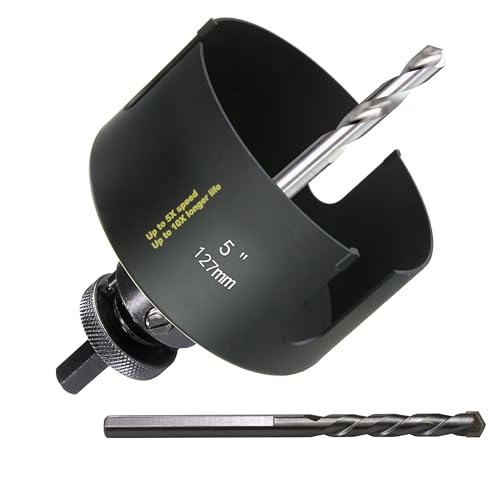
This 5-inch saw from PLG2SUPT stands out for its 2.36-inch cutting depth — nearly double the standard 1-inch depth found on most hole saws. The carbide tipped teeth score an HRC hardness over 80, which explains the real-world experience of cutting 36 clean holes through soffit for recessed lighting with minimal discoloration by the end of the day. The big slot design and specialized tooth geometry let you pop the plug out without prying, and the bundle includes both a standard HSS pilot bit for wood and a carbide tipped pilot for HardiePlank and stone.
Users consistently report fast, clean cuts through Hardie board, drywall, Wonder-board, and plywood. The saw comes with an 11mm shank arbor that fits standard rotary drills — do not use hammer mode, as carbide teeth are brittle under impact. The weight of 1.15 kilograms reflects the robust construction required for deep cuts in dense materials.
For anyone cutting cement board, fiber cement siding, or hardwood at 5 inches, this saw delivers up to 10 times the cuts of a standard bi-metal before dulling. The 12 carbide teeth cut aggressively without grabbing, which keeps the hole round and the workpiece stable. The only caveat is that the pilot bit can loosen over time — some users add thread locker for prolonged use.
Why it’s great
- 2.36-inch cutting depth reduces multiple passes
- Carbide teeth with HRC 80+ last through dozens of HardiePlank cuts
- Includes both wood and carbide-tipped pilot bits
Good to know
- Pilot bit can loosen during extended use
- Not for use in hammer mode on rotary drills
2. Diablo Carbide Teeth 5″ Hole Saw DHS5000CT
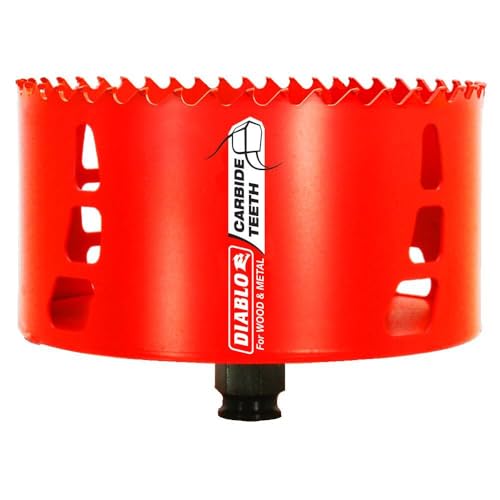
Diablo’s DHS5000CT offers a 2-3/8-inch cutting depth — 40 percent deeper than most standard saws — and the proprietary Snap-Lock Plus mandrel system that lets you swap saws without tools. The carbide teeth are engineered to deliver up to 50 times longer cutting life than standard bi-metal saws, which makes this the most cost-effective choice for professionals cutting both wood and metal all day. The tool-free plug ejection speeds up repetitive work on HVAC ductwork, electrical boxes, and cabinet holes.
Users report clean cuts through softwood and aluminum, though the saw can burn hardwoods if the drill speed is not turned down. The pilot bit on the Snap-Lock arbor is the weak point — it snaps more easily than standalone pilot bits, so having spares on hand is wise. The saw handles aluminum, cast iron, stainless steel, plastic, and wood, making it the most versatile option in this roundup.
For heavy users who need to drill multiple 5-inch holes through mixed materials in a single day, the combination of snap-change convenience, carbide edge retention, and deep cutting capacity justifies the price premium. The included arbor works with all Diablo saws from 5/8 to 6 inches, so your investment scales across the whole set.
Why it’s great
- 40% deeper cut — up to 2-3/8 inches per pass
- Snap-Lock Plus mandrel for tool-free swaps and plug ejection
- Carbide teeth last up to 50X longer than bi-metal
Good to know
- Pilot bit in the Snap-Lock arbor is prone to snapping
- Drill speed must be reduced to avoid burn marks in hardwood
3. LENOX Bi-Metal Speed Slot 5″ Hole Saw
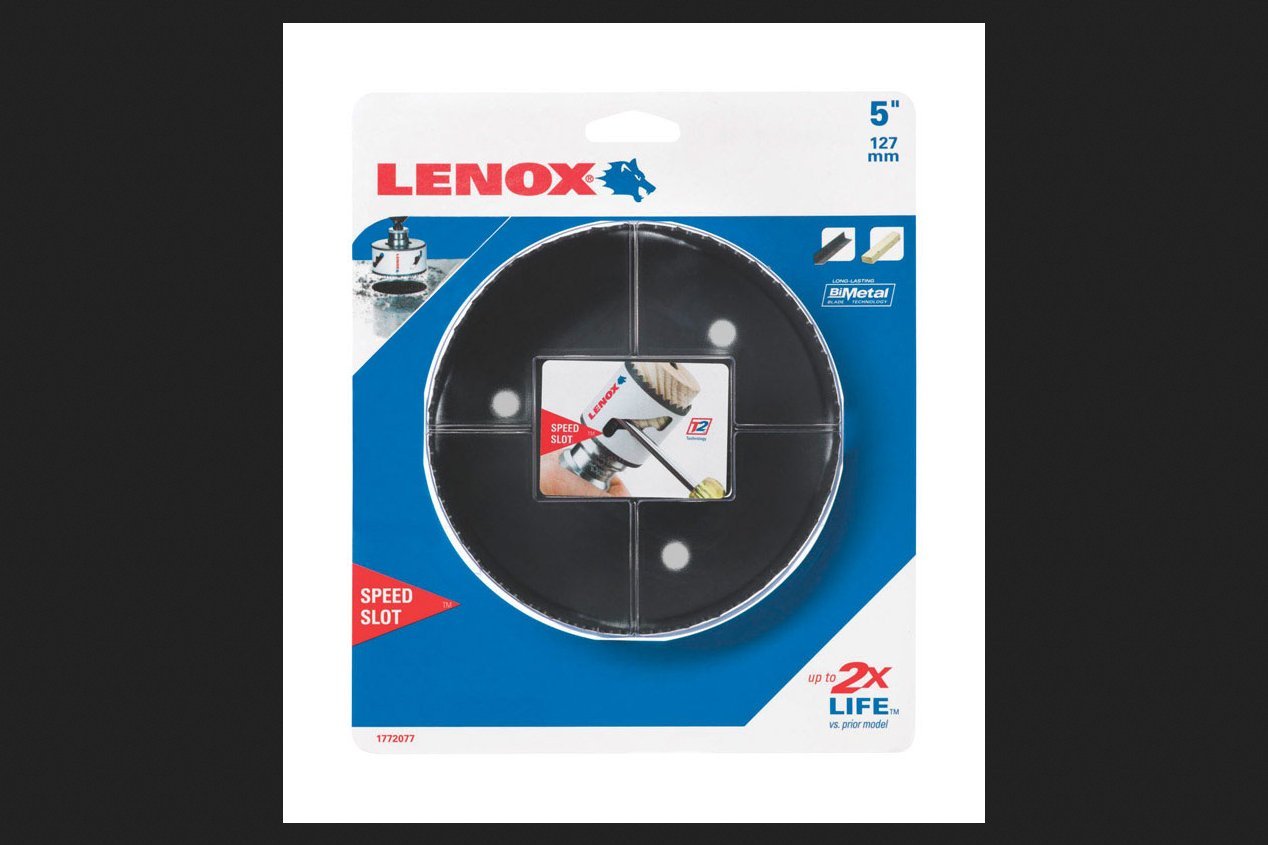
LENOX brings T3 Technology to this 5-inch hole saw, with increased wall thickness that improves durability and minimizes tooth loss when cutting through hard steel. The Speed Slot staircase design ejects plugs quickly, and the optimized tooth geometry penetrates metal with noticeably less pressure than standard bi-metal saws. Users consistently report this saw cuts hard steel cleanly and fits older LENOX mandrels, which makes it a seamless upgrade for existing LENOX owners.
In real-world testing, this saw drilled 15 four-inch holes through 1.5-inch lumber for ventilation work without slowing down. The larger, sharper teeth deliver faster cutting speeds, and the 50 percent longer life claim over previous LENOX models holds up when cutting through angle iron and sheet metal. The 0.7-pound weight makes it light enough for overhead work with a hand drill.
If your primary material is metal — steel, stainless, or thick aluminum — this bi-metal saw outperforms carbide options in toughness, resisting tooth stripping where carbide would chip. The trade-off is a shallower effective cutting depth compared to the deep-carbide options, but for metal fabrication and HVAC work, the tooth durability is paramount.
Why it’s great
- T3 Technology increases wall thickness for reduced tooth loss
- Speed Slot staircase design for easy plug removal
- Optimized tooth geometry penetrates hard steel with ease
Good to know
- Cutting depth is standard 1 inch, not deep-penetration
- Premium price point — best for heavy metal users
4. cenyb TCT Carbide 5″ Hole Saw
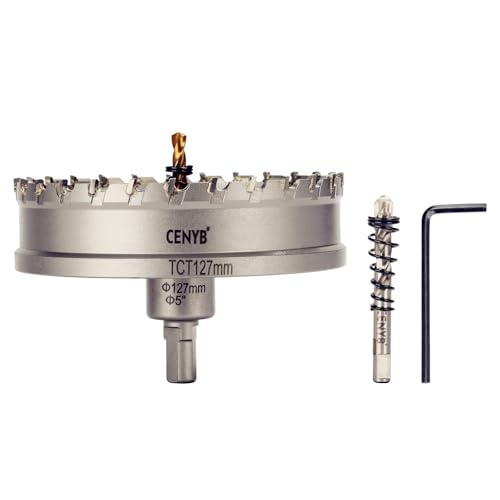
cenyb’s 5-inch carbide hole saw packs 27 tungsten carbide tipped teeth into a three-blade design — outer, middle, and inner blades — that cuts hard metals like stainless steel and cast iron without slowing down. The 1-inch cutting depth is standard, but the titanium-plated teeth resist rust and hold an edge longer than uncoated steel. Users report this saw survived cutting stainless steel drain holes that ruined multiple standard hole saws, and it cut clean aluminum holes at 1-3/8 inches without chatter.
The package includes two titanium-plated pilot drill bits, a hex wrench, and a plastic storage box, which adds convenience for mobile job sites. The 10mm (3/8-inch) shank works with bench drills, magnetic drills, and hand drills. Note that this saw is not designed for concrete, tiles, or stone — it is a metal-and-wood specialist. The set screw can be finicky; remove it before loading the center drill to avoid dropping it into the arbor.
For a mid-range budget, you get carbide tooth hardness that competes with saws at higher prices, combined with the highest tooth count in this roundup for faster chip clearance. If you regularly cut through stainless, aluminum, or iron at 5 inches, this is the best performance-per-dollar option available.
Why it’s great
- 27 carbide teeth for fast, aggressive metal cutting
- Titanium-plated teeth resist rust and maintain sharpness
- Includes two pilot bits, hex wrench, and storage box
Good to know
- Not suitable for concrete, tile, or stone materials
- Set screw can be lost if removed carelessly
5. Milwaukee 49-56-0243 5″ Ice Hardened Hole Saw
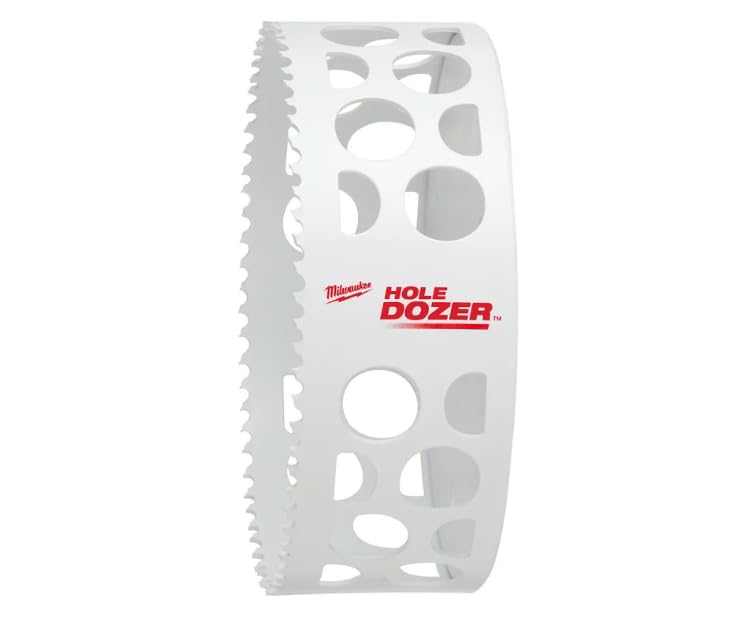
Milwaukee’s Ice Hardened treatment sets this bi-metal saw apart, with a cryogenic process that reportedly delivers up to 50 percent longer life than standard competition saws. The Matrix II bi-metal teeth combine high-speed steel cutting edges with a flexible alloy steel back, reducing breakage when drilling through sheet metal. Users report clean, fast cuts through finished cabinets with minimal chipping and smooth holes through 1/8-inch angle iron when running the drill at slower speeds.
The positive rake angle speeds up cutting, while the radiused tooth back reduces stress on individual teeth to prevent stripping. Deeper gullets eject chips faster, which keeps the saw running cool through metal cuts. The 16-ounce weight keeps it manageable for one-handed drilling. This saw is made in the USA and fits standard 3/8-inch arbors.
For an entry-level price, you get a saw that cuts steel, aluminum, and wood with reliability, though the blade does wear faster than carbide when cutting steel repeatedly. It is ideal for the homeowner or light contractor who needs a few holes in metal or wood cabinets per month without investing in premium carbide.
Why it’s great
- Ice Hardening extends bi-metal life up to 50% longer
- Matrix II teeth resist stripping in metal cuts
- Positive rake angle and deep gullets for fast chip evacuation
Good to know
- Wears faster than carbide on repeated steel cuts
- Best for occasional use, not production-level drilling
6. DKIBBITH 5″ Dry Diamond Core Drill Bit
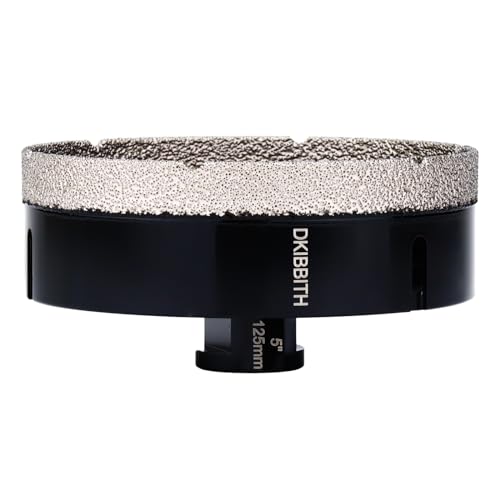
DKIBBITH’s dry diamond core bit uses high-quality diamond segments to drill clean 5-inch holes through ceramic, porcelain, granite, marble, quartz, and even glass tile. The 5/8-11 female thread attaches directly to angle grinders and wet polishers — not standard hand drills — making this a specialist tool for tile work. The max cutting depth of 2 inches handles most floor and wall tile thicknesses, and the side slot removes debris as you cut.
Users report drilling perfect holes through porcelain tile using a wood template to prevent walking. The diamond segments wear predictably — lubrication extends life, but the bit works dry if you keep the RPM high (10,000–14,000) and use a swiveling motion. Start at a 45-degree angle to create a positioning slot, then bring the tool upright. One user cut through shower pipe holes in porcelain and drywall quickly with no chipping.
If you install faucets, showerheads, drains, or exhaust ducts through tile, this diamond core bit is the only tool that leaves a clean edge. The trade-off is that the segments wear faster on very hard porcelain without water cooling, so consider this a 1–3 job bit for heavy use. It saves you from the frustration of chipped tile edges that come from carbide-tipped hole saws on stone materials.
Why it’s great
- Diamond segments cut porcelain, granite, and marble cleanly
- 5/8-11 thread fits angle grinders and wet polishers
- Side slot ejects debris for continuous cutting
Good to know
- Requires an angle grinder, not a standard drill
- Diamond segments wear faster without water lubrication
7. SALI Diamond Core Drill Bit 5″
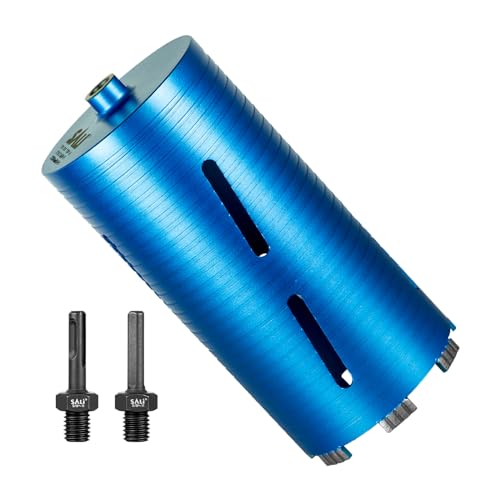
SALI’s diamond core bit is built for the hardest materials: cured concrete, red brick, block, masonry, and asphalt. The laser-welded diamond segments stay bonded under high heat, and the 10-inch inner barrel depth lets you drill through 10-inch-thick concrete walls in a single pass — far exceeding the 2-inch depth of standard hole saws. The package includes a 3/8-inch hex shank adapter and a 5/8-11 to SDS Plus adapter, so it works with both standard drills and rotary hammers (drill mode only — no hammer).
In real-world use, this bit drilled a 2-inch hole through 8-inch concrete with 1.5-inch aggregate in 30 minutes, saving over compared to rental costs. Another user drilled two 12-inch holes through a four-brick-thick wall in 5–10 minutes each, hitting a steel I-beam corner without damaging the bit. The chip removal holes and concentric axis design keep the cut straight and prevent binding.
For anyone who needs to run ductwork, pipes, or range-hood vents through concrete foundations or brick walls, this is the most specialized and effective tool in the roundup. The trade-off is weight and price — it is heavier and costs more than standard saws — but for concrete, masonry, and thick stone, no bi-metal or carbide saw can match its drilling depth and segment durability.
Why it’s great
- 10-inch drilling depth for single-pass concrete walls
- Laser-welded diamond segments stay intact through aggregate
- Includes hex shank and SDS Plus adapters for universal fit
Good to know
- Heavy duty — best for masonry, brick, and concrete only
- Water cooling recommended for deep concrete cuts
FAQ
Can I use a 5-inch carbide hole saw on porcelain tile?
How do I prevent a 5-inch hole saw from burning wood?
What arbor do I need for a 5-inch hole saw?
Final Thoughts: The Verdict
For most users, the 5 hole saw winner is the PLG2SUPT Carbide Tipped because its 2.36-inch cutting depth and HRC 80+ teeth handle fiber cement, wood, and drywall with exceptional longevity. If you cut metal daily and need tooth toughness, grab the LENOX T3 Speed Slot. And for tile installations through porcelain or granite, nothing beats the DKIBBITH Diamond Core Bit for clean, chip-free holes.