
Our readers keep the lights on and my morning glass full of iced black tea. As an Amazon Associate, I earn from qualifying purchases.
Specs are compiled from manufacturer listings and verified buyer reviews and can change over time — please confirm the key details on the product page before buying.
A 5-ton HVAC system is a serious piece of machinery designed to cool and heat large homes, open-plan spaces, or light commercial areas. You are here because you need enough power to handle a big space, and the wrong choice can mean either a massive energy bill or a house that never gets comfortable.
I’m Min — the founder and writer behind Gadgets Feed. This guide is built by comparing the manufacturers’ published specifications and the patterns across verified customer reviews, so you get each pick’s real strengths and trade-offs instead of marketing spin.
This breakdown focuses on the best-performing and most reliable options currently available, helping you sort through the technical specs to find the 5 ton hvac system that fits your home’s layout and your budget.
Our Picks at a Glance

How To Choose The Best 5 Ton HVAC System
Picking a 5-ton system means you are done with window units and small mini-splits. You need raw cooling capacity, measured in British Thermal Units (BTUs), and a system that matches your home’s existing ductwork and fuel type. The three specs below will determine if a system works for you or against you.
SEER2 Rating: Your Long-Term Operating Cost
The Seasonal Energy Efficiency Ratio 2 (SEER2) is the modern standard for measuring how efficiently a system converts electricity into cooling. A higher SEER2 number, like 14 or 14.5, means the system uses less power to remove the same amount of heat. A 5-ton system moves a lot of air, so a jump of even one SEER2 point can save you a noticeable chunk of cash every summer.
Heat Pump vs. Straight AC: Do You Need Heat Too?
This is the biggest fork in the road. A straight air conditioner (AC) only cools. A heat pump does both cooling and heating by reversing the refrigerant flow. If you live in a colder climate, a heat pump with an auxiliary (AUX) heat kit can handle all your needs. If you already have a gas furnace, you might only need a straight AC unit to pair with it.
Split System vs. Packaged Unit: Where Does It Go?
A split system has an outdoor condenser and an indoor air handler or furnace. This is the most common setup. A packaged unit has everything—compressor, condenser, and air handler—in a single outdoor cabinet. Packaged units are usually placed on a concrete slab or a roof and are a great choice if you have no basement or crawlspace for indoor equipment.
Quick Comparison
| Model | Best For | Cooling Power | SEER2 | Form Factor | Amazon |
|---|---|---|---|---|---|
| Senville 5 Ton Heat Pump Split System★ Best Overall | Budget-friendly heat pump with inverter tech | 55,000 BTU | Cold Climate Energy Star | Split System | Amazon |
| Goodman 5 Ton 14.5 SEER2 Heat Pump SystemTop Performer | Total gas heating system | 57,000 BTU | 14.5 SEER2 | Split-System | Amazon |
| Goodman 5 Ton 13.4 SEER2 Packaged Unit | Simple slab or roof installation | 55,000 BTU | 13.4 SEER2 | Packaged Unit | Amazon |
In‑Depth Reviews
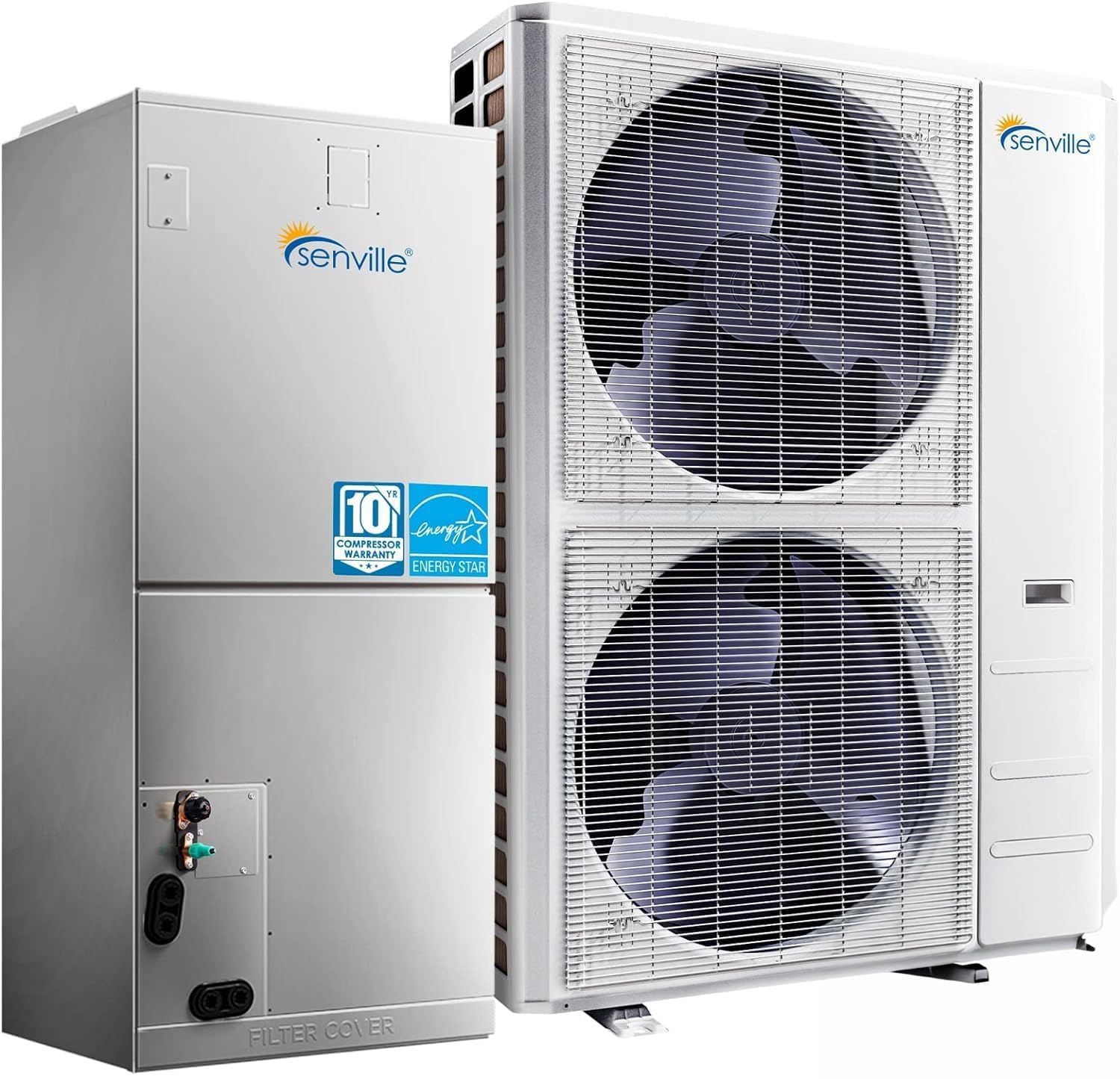
1. Senville 5 Ton Central Air Conditioner Heat Pump Split System, 55,000 BTU
An inverter-driven heat pump that undercuts the big names by thousands.
The Senville system uses an inverter compressor (a variable-speed compressor that ramps up and down instead of cycling on/off, which saves energy and keeps temperatures more even). It delivers 55,000 BTU of cooling and includes a 10KW auxiliary heat kit in the box. Unlike the Goodman setups, the Senville also comes with a remote control so you can change settings from across the room.
The catch is reliability. One buyer in Arizona reported that after delivery, the “motherboard didn’t light up after installed” and the replacement part took over a week to ship. Another reviewer noted that even though the unit works great, the “tough install for attic air handler” made the job a pain. Inverter systems are generally more efficient, but the support network for Senville is thinner than Goodman’s, so a bad board can mean a longer wait for a fix.
What You Get for Less
- Inverter technology means quieter operation and better part-load efficiency
- Heat pump works in temperatures as low as -22°F
- 10-year compressor warranty and 5-year parts warranty
Where It Slips
- Customer support response time is slow according to multiple buyer reports
- Does not include installation kit or copper line sets
Good for the mechanically savvy: If you are comfortable doing some of the legwork yourself and want a heat pump at the entry-level price point, this is the option to look at.
Not for the impatient: If you cannot afford a week without AC in the middle of summer, the slower support means Goodman is safer.
2. Goodman 5 Ton 14.5 SEER2 Multi-Position R-32 Heat Pump System (GLZS4BA6010 + AMST60DU1300)
A complete gas-heat and AC bundle for homes that already have natural gas lines.
This is a true split-system bundle that pairs the 57,000 BTU GLXS4BA6010 condenser with a 120,000 BTU 80% AFUE upflow gas furnace (the “AFUE” means Annual Fuel Utilization Efficiency, so an 80% furnace converts 80% of its fuel into heat, which is standard for mid-efficiency units). The entire system comes as a vertical upflow configuration, which works in most basements and utility closets.
The furnace is convertible to liquid propane with a separate kit, so it works if you are off the gas grid. Buyers are extremely satisfied, with one noting the “flexible delivery location change” and another simply saying “it has sure kept us warm.” The trade-off is that this system is not smart-home compatible, so you will need a standard thermostat and cannot control it from an app.
Why This Stands Out
- Includes the furnace, evaporator coil, and outdoor condenser in one purchase
- 120,000 BTU gas furnace handles the worst winter days without needing a heat pump
- Perfect 5/5 star rating across 7 reviews
The Trade-off
- No smart home compatibility — you cannot control it via Wi-Fi or app
- Downflow or horizontal configuration requires a specific request at time of purchase
Right for gas homeowners: If you have natural gas and want a single-vendor system for both heating and cooling, this bundle removes the guesswork.
Not for the tech-savvy: Skip this if you want a smart thermostat with remote app control, as that integration is not baked in.
3. Goodman 5 TON 13.4 SEER2 Horizontal Heat Pump Packaged Unit (GPHH36041)
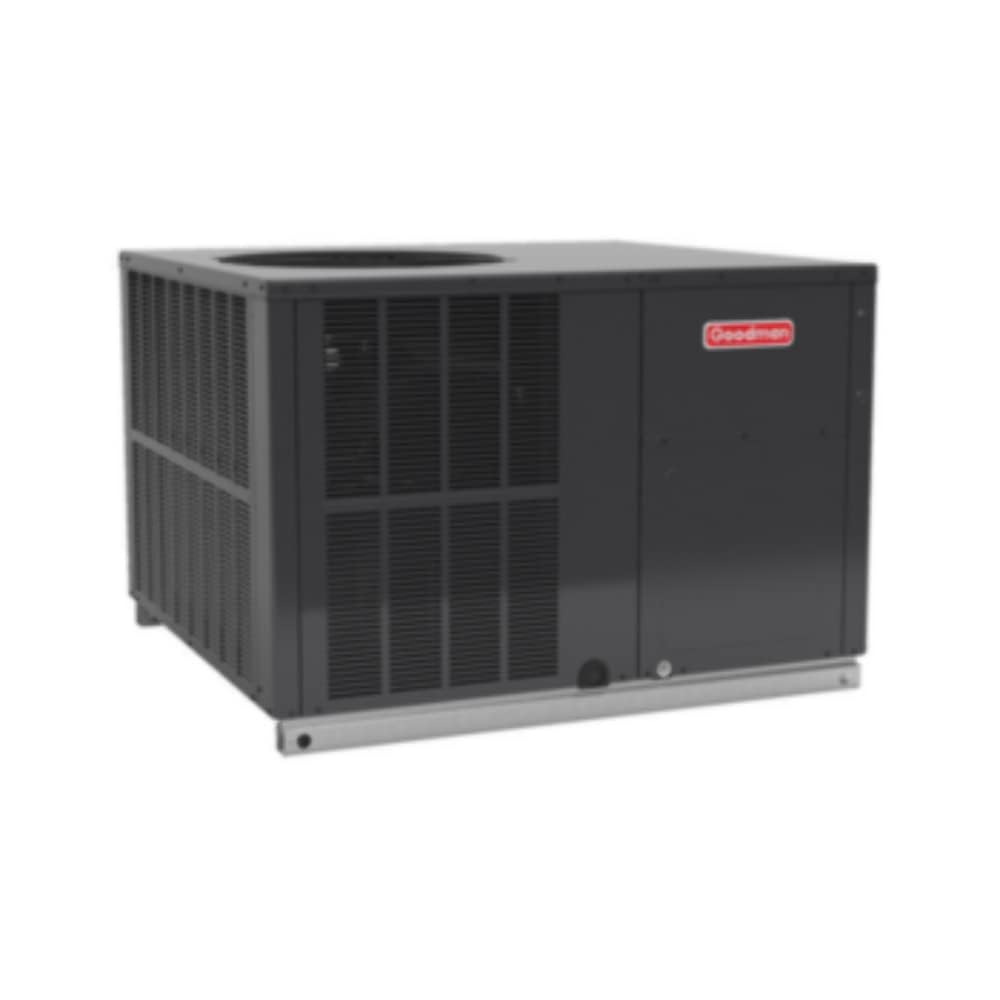
A self-contained heat pump that sits outside on a slab with no indoor equipment needed.
This is the only packaged unit in the list. It is a single cabinet that contains the compressor, condenser, evaporator, and blower. Sold as a horizontal unit, it sits on the ground or a roof and connects directly to your ductwork. It uses R-410A refrigerant (the previous industry standard before R-32) and has a slightly lower efficiency rating at 13.4 SEER2.
Owners mention that after two years the unit has “great heating/cooling performance,” and that adding heat strips later was easy. The real problem came from one buyer who received a unit with “NO FREON” and discovered that Goodman does not honor the warranty for online purchases. That is a hard pill to swallow. Another buyer noted the unit has a tendency to trip the outside breaker during extreme heat, so you might need a beefier breaker or a soft-start kit.
Why a Packaged Unit Works
- No air handler or indoor coil needed — saves space inside
- Two stages of heating and cooling for better temperature control
- EEM (X-13) blower motor is energy efficient
The Hard Truths
- Warranty is void on online purchases according to customer reports
- Some units shipped without refrigerant, leading to an extra charge to fill it
Ideal for quick slab installs: If you have no basement or indoor space for a furnace, this one-box solution is the only way to go.
Risky without local backup: Because the online warranty is questionable, you need a contractor who can handle refrigerant issues out of pocket.
Understanding the Specs
SEER2
SEER2 stands for Seasonal Energy Efficiency Ratio 2. It is the updated test standard that measures how much cooling you get per unit of electricity over an entire cooling season. A rating of 14 SEER2 is the federal minimum for new systems. A jump to 14.5 SEER2 means about 3-5% better efficiency, which adds up to real savings on a 5-ton unit that runs hundreds of hours a year.
BTU (British Thermal Unit)
A BTU is the amount of energy needed to raise one pound of water by one degree Fahrenheit. In HVAC terms, it is the raw cooling power. A 5-ton system produces roughly 60,000 BTU. In the data above you see 55,000, 57,000, and 58,000 BTU — all within a 5% margin. The higher the BTU number, the faster the system can pull heat out of the house. The key is matching that power to the size of your ductwork and home insulation.
Scroll Compressor
A scroll compressor uses two interleaving spiral scrolls to compress refrigerant. Unlike a piston compressor, it has fewer moving parts, which makes it quieter and more durable. Every Goodman unit in this list uses a rotary scroll compressor. If you see “Inverter” on the Senville, that means the compressor can vary its speed, so it does not have to run at full power all the time.
R-32 vs R-410A Refrigerant
R-32 is the newer type of refrigerant that has a lower global warming potential (GWP) than the older R-410A. R-32 systems are typically slightly more efficient and use less refrigerant charge overall. The Goodman 14 SEER2 and 14.5 SEER2 split systems use R-32, while the packaged unit still uses R-410A. If you are replacing an old R-22 system, you will need a new matching coil because the oil and pressures are different.
FAQ
Can I install a 5-ton HVAC system myself?
What size ductwork do I need for a 5-ton system?
What is the difference between a 13.4 SEER2 and a 14.5 SEER2 system?
Does the Goodman warranty cover online purchases?
Will a 5-ton heat pump work in freezing weather?
What refrigerant does a modern 5-ton system use?
Can I pair a 5-ton condenser with a smaller air handler?
What does “pre-charged for 15 feet of tubing” mean?
Final Thoughts: The Verdict
For most people, the 5 ton hvac system winner is the Goodman 14.5 SEER2 Heat Pump because it offers the highest efficiency rating and the versatility of a heat pump without requiring a separate gas furnace. If you want a complete gas heating system and need the raw power of a 120,000 BTU furnace, grab the Goodman AC + Gas Furnace Bundle. And for a budget-friendly inverter heat pump with a low-temp operating range, the Senville 5 Ton is the entry point that leaves room for future upgrades.
How We Picked
We do not accept paid placement. Every pick is matched to a real buyer and a real use-case; we do not hands-on test units.
Sources & Methodology
Specifications: manufacturer listings and product documentation. Review insights: verified customer reviews, as of July 2026. Pricing: not shown on this page (it changes often); check the current price via the retailer link.
As an Amazon Associate, Gadgets Feed earns from qualifying purchases. This does not affect which products we feature.