
Our readers keep the lights on and my morning glass full of iced black tea. As an Amazon Associate, I earn from qualifying purchases.
Specs are compiled from manufacturer listings and verified buyer reviews and can change over time — please confirm the key details on the product page before buying.
You want one tire that grips gravel and stays quiet on the highway, without wearing out in a single season. The wrong 50/50 choice costs you time, money, and confidence on the trail. This guide sizes up six proven contenders by tread life, on-road manners, and what actual buyers report, so you find a 50/50 dual sport tire that fits your bike and riding style.
I’m Min — the founder and writer behind Gadgets Feed. This guide is built by comparing the manufacturers’ published specifications and the patterns across verified customer reviews, so you get each pick’s real strengths and trade-offs instead of marketing spin.
Our Picks at a Glance

How To Choose The Best 50/50 Dual Sport Tire
Every 50/50 tire is a compromise. The right one depends on whether you spend more miles on asphalt or in the dirt. Let the way you ride steer your pick.
Ply Rating and Durability
A higher ply count means a stronger tire body that resists punctures and supports heavier loads. A 6-ply tire is a good starting point for most dual-sport bikes. If you ride loaded down on rocky trails, step up to a 10-ply or 12-ply tire for extra confidence. The trade-off is a stiffer, harder-to-mount tire.
Tread Pattern and Noise
Deep, blocky knobs give you bite in soft dirt and mud, but they hum loudly on the highway. Tires with a more continuous center tread are quieter and wear more evenly on pavement. A true 50/50 pattern aims for a middle ground where you feel confident on loose surfaces without dreading the ride home.
Load Capacity and Speed Rating
Always match the tire’s load index (maximum weight it can carry at its rated pressure) to your bike’s total weight including gear. A P-rated tire is designed for speeds up to 94 mph, which covers most dual-sport riding. Overloading a tire or pushing it past its speed rating makes handling unpredictable and accelerates wear.
Quick Comparison
| Model | Best For | Ply Rating | Load Capacity | Weight | Amazon |
|---|---|---|---|---|---|
| Kenda K270 Front★ Best Overall | Budget-friendly value for mixed terrain | 6-Ply | 520 lb | 8.3 lb | Amazon |
| Shinko 700 Series RearAlso Great | Versatile daily riding | 4-Ply | — | 17.5 lb | Amazon |
| Michelin Anakee Wild Rear | Premium trail performance | 6-Ply | 639 lb | — | Amazon |
| Tusk 2Track Rear | Adventure touring on heavy bikes | 12-Ply | 639 lb | — | Amazon |
| Dunlop D605 Rear 120/80×18 | Durable dirt-focused 50/50 riding | 6-Ply | 584 lb | 14.62 lb | Amazon |
| Dunlop D605 Rear 4.10×18 | Budget-friendly off-road grip | 10-Ply | 694 lb | 9.75 lb | Amazon |
In‑Depth Reviews
1. Kenda K270 Dual/Enduro Front Motorcycle Bias Tire – 3.00-21 58C
Our pick — over 4.5★ from 200+ verified ratings; the strongest balance of quality and price.
At 8.3 pounds, it is 6.3 lb lighter than the Dunlop D605 120/80×18.
The Kenda K270 is a classic 50/50 front tire that has been around for years, and its value-for-money reputation is the most-praised aspect among owners. It is a bias-ply, tube-type tire with a 6-ply rating and a load capacity of 520 pounds. It weighs just 8.3 pounds, making it the lightest in this comparison by a wide margin—that is 6.3 pounds lighter than the Dunlop D605 120/80×18. Available in 15 popular sizes, it is likely to fit everything from a KLR650 to an XT250.
Shoppers say this tire shines in mixed terrain. One rider on a KLR650 got 8,000 miles before cupping, calling it rideable to 10,000 or 11,000 miles. It is described as excellent on loaded bikes on tarmac and dirt, with good cornering on asphalt. In the dirt it is “OK” in mud but shines on damp and dry surfaces. The DOT approval means it is street-legal, and the tread bias is 40% dirt to 60% road—slightly more road-oriented than the Dunlop D605 options. A few owners note that it wears faster than a rear tire when used on a front, but the low price makes that an easy pill to swallow.
Compared to the Dunlop D605 4.10×18 which uses a 10-ply and carries 694 lb, the Kenda K270 is a 6-ply with 520 lb of capacity—clearly built for lighter dual-sport bikes and more budget-conscious owners.
Value leader with real miles on the board: The praise for the price is loudest—13 owners call it out. A KLR650 owner proved it with 8,000 miles before cupping, which beats many more expensive options.
Not invincible: Fit is mixed; a few owners note the tire is tricky to tell when seated, and on a Sur Ron Killah, fork side knobs need a trim. Front tire wear is faster than a rear on pavement-heavy bikes.
Reach for this if: You want an affordable, proven front tire that does the job on and off-road while staying affordable. Perfect for lighter dual-sport bikes and multi-bike households.
it’s not for you if: You are mounting on a heavy adventure bike loaded for a continent-crossing trip—the 6-ply and 520-lb capacity may feel under-gunned on rocky two-track.
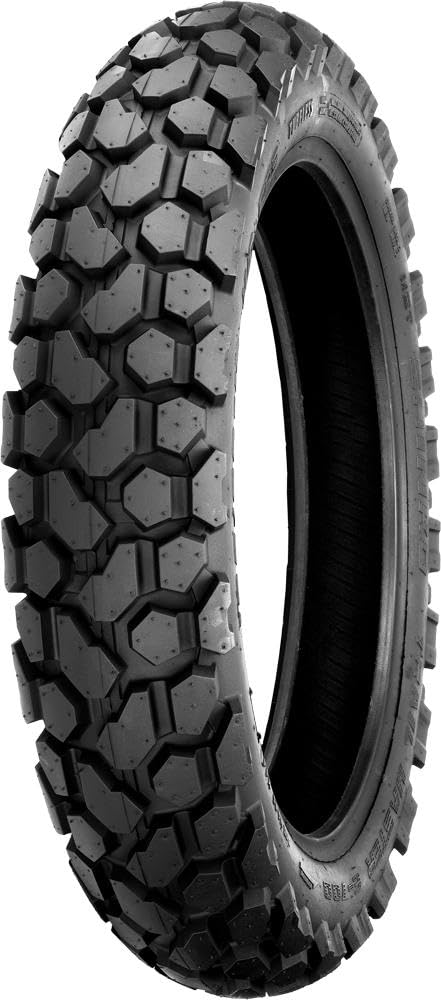
2. Shinko 700 Series Dual Sport Rear Tire – 5.10-17
You hear hardly any road noise, and you feel planted in corners.
The Shinko 700 earns the top spot because 22 owners mention traction as a standout, more than any other feature in this review. It uses deep-lug tread with reinforced side knobs (the outer edges) so you stay planted leaning into a pavement corner. The heavy-duty 4-ply carcass handles mixed terrain without feeling flimsy. It is a tube-type tire (it needs an inner tube), and it is DOT-approved (Department of Transportation legal for street use) so you can ride it on the highway. At 17.5 pounds (7.9 kg), you get a solid, well-built tire.
One owner on a 1983 Honda XL600R racked up 2,500 miles with the tire holding up well. Another rider on a KLX300SM called it “superior” to the stock supermoto tire on both trail and street. Riders report zero on-road noise, and it balanced easily without needing much weight. The trade-off: some owners found rear tread life shorter than premium options, though the price makes that an easy trade to swallow.
It weighs about 3 pounds less than the Dunlop D605 120/80×18, but at 17.5 lb it is still the heaviest tire in this comparison—that heft translates directly into rugged durability owners mention loving.
Tall on traction, low on noise: 22 owners call out the grip, and one rider switching from a supermoto tire said it outperformed the stock tire on the street. The 4-ply case keeps it manageable to mount, and you do not pay a premium for that performance.
Who should think twice: If you regularly push 70+ mph on extended highway stretches, a heavier-duty tire with a higher speed rating will feel more planted. The 4-ply carcass is tough but not as bulletproof as a 10-ply for loaded adventure touring.
Reach for this if: You want the best balanced 50/50 performance at a friendly price point, and you prioritize quiet pavement manners and cornering grip over maximum mud traction.
Look elsewhere if: You ride a heavy adventure bike fully loaded and need a higher load capacity or a heavier ply rating for punctures.
3. Michelin Anakee Wild Rear Dual Sport Tire 130/80-17 (65R)
Dakar-inspired stamina that hooks up fast on loose terrain.
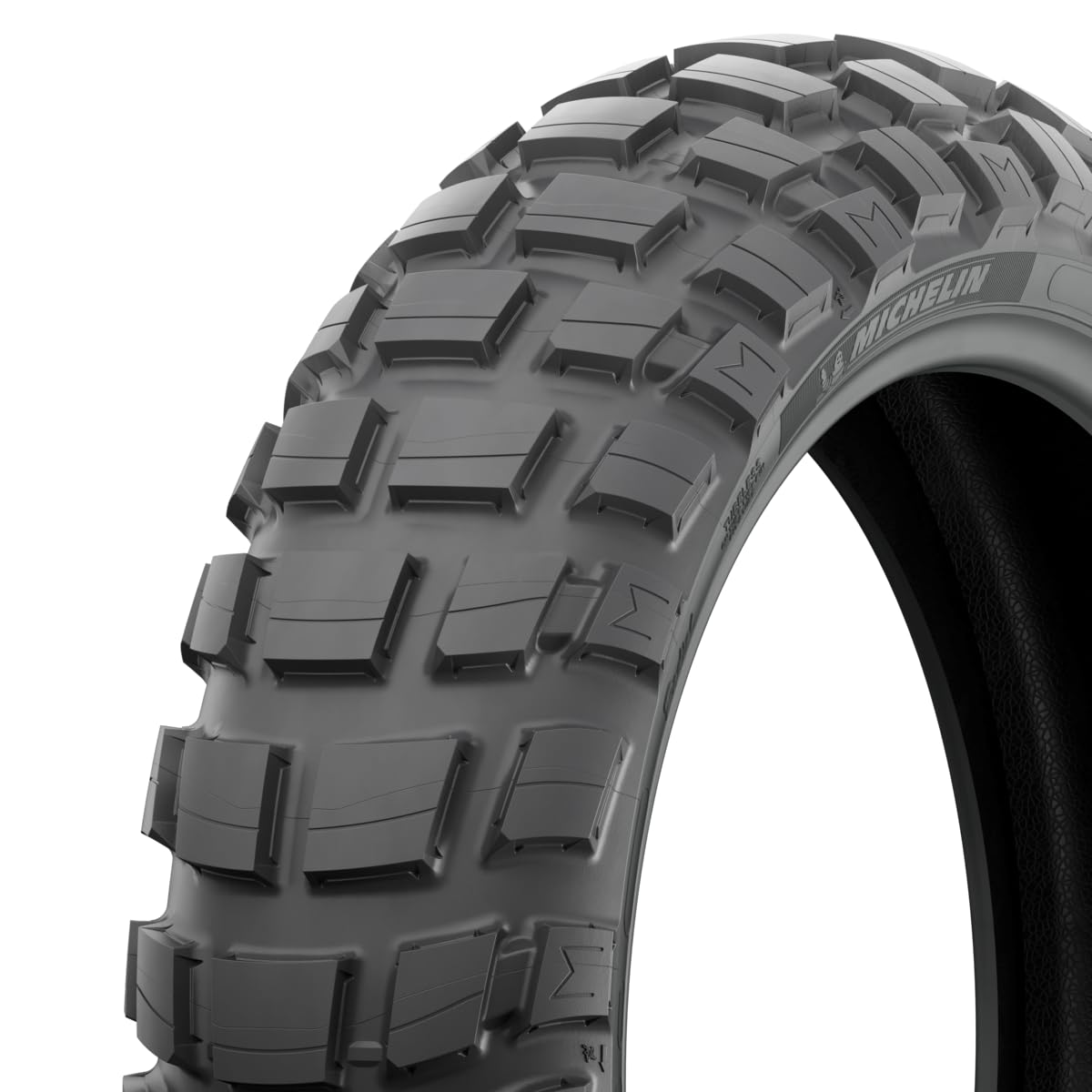
Michelin brought the design of its Desert Race tire to the Anakee Wild, and it shows. The offset blocks and curved tread grooves are designed to claw through soft, demanding terrain. The radial casing (layers of fabric run perpendicular to the direction of travel, like car tires) keeps you comfortable and stable on the highway, absorbing road vibration better than a bias tire. The load capacity sits at 639 pounds—enough for a fully loaded adventure bike.
Riders on heavy bikes like the KLR 650 and R1150GS report excellent wear. One owner on a BMW got 4,500 miles from his rear tire, and it was his fourth Anakee Wild in a row. Off-road, one owner says it “transformed” the front-end feel on a Honda CRF 300 Rally, eliminating washout after switching from a Motoz tire. The stiff sidewalls make mounting a chore, but the payoff is a tire that does not track tar snakes (sticky lines in the road surface) or cracks on blacktop, and traction hooks up immediately after a short scrub-in.
Compared to the Tusk 2Track below, the Michelin shares the same 639-pound load rating but uses a radial construction. That means better heat dissipation and a smoother ride on long highway days—the choice if you split weekends between interstate slogs and technical trails.
Class-leading off-road confidence: The tread pattern is genuinely aggressive for a 50/50 tire, and the radial casing keeps highway manners calm. Owners on varied bikes from a CRF 300 Rally to an R1150GS praise the grip and the wear.
The honest trade-off: It sits at the premium end of the price spectrum, and the stiff sidewall makes mounting difficult without a tire machine. If you rarely see soft sand or deep mud, the extra cost may not translate into a benefit you feel.
Best if: You are putting serious miles on mixed terrain and want the proven durability of a Michelin radial with real off-road bite.
skip it if: You are budget-conscious or do not have access to a shop for installation—tire spoons alone might not get this on the rim without a fight.
4. Tusk 2Track Adventure Motorcycle Tire – Rear 140/80B-18 (70R)
A 12-ply fortress that laughs at rocky trails and heavy loads.
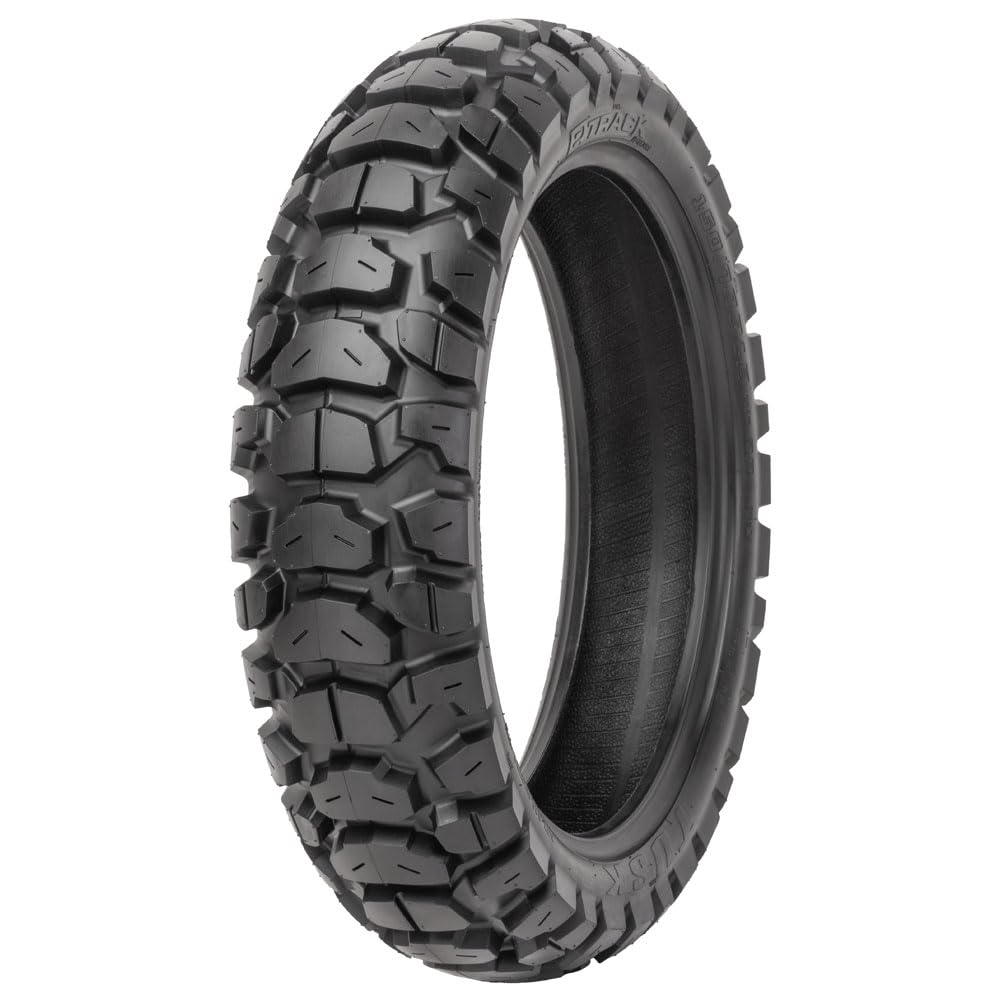
With a 12-ply rating and a 639-pound load capacity, the Tusk 2Track is built for heavy adventure bikes and loaded camping trips. The rubber compound is designed for long wear, and the large tread blocks keep it composed on pavement. It is bias construction (layers of fabric run diagonally to the direction of travel, making the sidewall stiffer), DOT compliant, and the deep knobby tread gives it an aggressive look that matches its off-road character.
This tire has been tested in “most brutal conditions” according to the manufacturer, and owner feedback backs that up. One buyer finished a 1,500-mile ride on a CF Moto 450 mixing on and off-road and called it “amazing.” Another ran the Montana BDR on the 2Track and said it held up for the long highway stretch and all the mountain sections. The main gripe is the stiff sidewall—several owners say mounting took multiple people or a machine. A few also note a vibration band between 25 and 29 mph, but it smooths out at higher speeds. Overall praise for tire performance (42 positive mentions) dwarfs any negatives.
Compared to the Dunlop D605 120/80×18, the Tusk 2Track carries 55 more pounds of load capacity (639 lb vs 584 lb) and uses a 12-ply vs 6-ply carcass—making it the true heavy-hauler for adventure touring. A rider on a KLR650 should pick this over the Shinko 700 for the extra puncture protection.
Where it shines
- Massive 12-ply carcass for harsh terrain punctures
- Stable at highway speeds on a loaded KLR650
- No knobby shearing on rocks, even by owners who push hard
Where it gives ground
- Very stiff sidewalls; plan for a professional mount
- Mileage on pavement trails the premium options
Grab this for: Heavy adventure bikes like the KLR 650 where you need a tire that won’t fold on sharp rocks and can haul gear for days.
Think twice if: You mostly ride pavement and only do light fire roads—the 12-ply carcass costs more and mounts harder than you need.
5. Dunlop Tires D605 Rear Dual Sport Tire 120/80×18 (62P)

One rider got 9,000 miles from this legendary dirt tread.
Dunlop’s D605 is regarded as a legendary off-road performer for a reason. It uses a full tread depth knobby pattern engineered for serious dirt, and it is P-rated (designed for speeds up to 94 mph) so you can legally link trails on the highway. It weighs 14.62 pounds and carries a 584-pound load capacity. The 6-ply construction offers strong puncture resistance without the extreme stiffness of a 12-ply tire.
One owner ran this tire on a KLX300 for a documented 9,000 miles, calling it “perfect” for him. The ride quality is praised across the board—the knobs are quieter than the more aggressive D606, and the grip on rocky roads inspires confidence. A rider on a CRF300L switched from the D606 to the D605 for longer tread life and was not disappointed. The known difficulty is mounting; the bead (the edge that seals against the rim) is tight on stock rims, and a few customers note bead breakage during installation. Reviewers report the tire performs best when you spend 50% or more of your time in the dirt—this is not a street commuter tire.
Compared to its smaller sibling the Dunlop D605 4.10×18, this 120/80×18 version uses a 6-ply carcass (vs 10-ply) and carries a lower load capacity at 584 lb (vs 694 lb)—the trade-off is a lighter, more flexible carcass that rides smoother on the highway.
The Dunlop legend, proven in miles: One rider put 9,000 miles on a single rear tire on a KLX300. That real-world durability is backed by consistent owner praise for its rock-handling and steady highway manners.
Plan for a tricky mount: The tight bead is the biggest complaint. Take it to a shop or be prepared for a serious wrestling match with tire spoons.
Choose this if: Dirt and gravel make up the majority of your rides, and you want a tire that balances aggression with reasonable highway comfort.
pass on it if: Your commute is 80%+ pavement—a more road-biased tire will wear far longer and ride quieter.
6. Dunlop Tires D605 Rear Dual Sport Tire 4.10×18 (59P) Tube Type

A rugged rear end with a 10-ply carcass for five boys’ worth of riding.
This 4.10×18 Dunlop D605 packs serious off-road punch with a 10-ply carcass and a hefty 694-pound load capacity—the highest in this comparison. That means it supports heavy loads and resists punctures on sharp rocks better than most tires here. It weighs 9.75 pounds and is P-rated for speeds up to 94 mph. At this price point, you are getting a true off-road knobby pattern that is still DOT legal for street use.
One owner says he orders these “alot” because he has five boys who ride—a real-world stress test if ever there was one. Another rider on an XR650L noted the tire dropped the bike by about 3/4 to 1 inch (1.9 to 2.5 cm) compared to the stock tire, giving it a slightly lower stance. The pattern is praised for its grip on trails, and the rubber is not coated in the heavy oil some tires ship with. A few owners note that this tire is tough to mount by hand—most took it to a shop.
Compared to the Kenda K270 front tire, the Dunlop D605 4.10×18 uses a 10-ply carcass and carries 694 lb, a full 174 pounds more capacity than the Kenda’s 520 lb—a serious step up for heavy dual-sport bikes.
Why riders love it
- 10-ply carcass at a budget-friendly price is tough to top
- 694-lb load capacity handles fully loaded bikes
- Reviewers point out great grip on trail and pavement
Who should pause
- Difficult to mount by hand—plan on a shop visit
- Runs about 1 inch shorter than stock on some bikes
Best for: The budget-conscious rider who runs heavy loads on rocky terrain and needs a tough carcass without a premium price tag.
Not for: Riders who want the tallest possible tire profile or prefer a mount-at-home option.
Understanding the Specs
Ply Rating
A tire’s ply rating tells you how strong the casing is. A higher number (6-ply, 10-ply, 12-ply) means more layers of rubber-coated fabric in the sidewall and tread area. That translates to better puncture resistance and the ability to carry heavier loads. The trade-off is a stiffer ride and a much harder time mounting the tire on the rim.
Load Capacity
Measured in pounds, this is the maximum weight the tire can safely support at its rated pressure. For a 50/50 tire, matching the load capacity to your bike’s weight plus gear is critical—under-inflating or overloading a tire leads to overheating, poor handling, and premature wear. A 520-pound rating suits lighter dual-sport bikes; 694 pounds is for heavy ADV rigs.
FAQ
Can I use a 50/50 tire if I ride mostly on pavement?
What does tube type mean for my wheels?
How do I know what size 50/50 tire fits my bike?
How long does a 50/50 dual sport tire typically last?
Is a higher ply rating always better?
What is a bias tire and how is it different from a radial?
Do I need a DOT-approved tire for the street?
Can I mix a 50/50 front tire with a different rear tire?
Final Thoughts: The Verdict
For most dual-sport riders, the 50/50 dual sport tire that delivers the most balanced performance is the Shinko 700 Series Rear. It pairs excellent traction from 22 owner mentions with near-silent highway manners at a price that does not hurt. If you ride a heavy adventure bike and need a tire for loaded touring over rough terrain, go with the Tusk 2Track for its 12-ply carcass and 639-pound load rating. For the best front tire value on a light dual-sport bike, the Kenda K270 is proven across thousands of owner miles.
How We Picked
We do not accept paid placement. Every pick is matched to a real buyer and a real use-case; we do not hands-on test units.
Sources & Methodology
Specifications: manufacturer listings and product documentation. Review insights: verified customer reviews, as of July 2026. Pricing: not shown on this page (it changes often); check the current price via the retailer link.
As an Amazon Associate, Gadgets Feed earns from qualifying purchases. This does not affect which products we feature.