
You want a 50-inch screen without the bloated operating system, forced ads, and privacy concerns that come with modern smart TVs. A non-smart television delivers exactly that—a pure display panel that connects to your choice of streaming stick, cable box, or gaming console without any built-in software slowing things down or tracking your viewing habits.
I’m Min — the co-founder and writer behind Gadgets Feed. I’ve spent countless hours researching the remaining pool of non-smart TVs, analyzing panel technologies, refresh rates, input lag figures, and connectivity options to separate the true dumb TVs from the smart TVs pretending to be simple.
This guide cuts through the marketing noise to deliver the best 50 inch non smart tv options that prioritize your privacy, deliver fast HDMI switching, and let you control your own viewing experience without a built-in OS dictating terms.
How To Choose The Best 50 Inch Non Smart TV
Choosing a non-smart TV in a market flooded with smart OS models requires a shift in priorities. You need to focus on the panel itself, the connectivity options, and how the TV handles external inputs rather than judging streaming app availability or voice assistant integration.
Panel Technology and Resolution
The heart of any non-smart TV is its display panel. For 50-inch models, you’ll encounter LED, QLED, and less common LCD variants. LED panels offer solid brightness and contrast for most rooms, while QLED panels deliver wider color gamuts and better brightness for HDR content via external devices. Resolution matters—4K UHD panels give you the sharpest picture with modern streaming sticks and consoles, while 1080p panels are acceptable for secondary rooms where budget matters more.
Connectivity and Input Lag
Since you’re not using built-in apps, your HDMI port count, version support, and input switching speed define the user experience. Look for at least two HDMI ports, ideally HDMI 2.0 or 2.1 for 4K at 60Hz. A non-smart TV should wake and switch inputs within seconds—any delay beyond five seconds indicates a slow processor. The ATSC tuner quality also matters for over-the-air broadcasts if you skip the streaming box entirely.
Physical Design and VESA Compatibility
Non-smart TVs often get relegated to wall mounts in garages, RVs, or as external monitors. Confirm the VESA mount pattern (200x200mm is standard for 50-inch panels) and check the TV’s depth and weight for your mounting scenario. A removable power cord is a practical advantage for RV and wall-mount installations where cable management matters.
Quick Comparison
On smaller screens, swipe sideways to see the full table.
| Model | Category | Best For | Key Spec | Amazon |
|---|---|---|---|---|
| TuTu 40 Inch FHD TV | Non-Smart | Zero-OS purity | 40-inch 1080p, true non-smart | Amazon |
| VIZIO V4K50M Renewed | Mid-Range | Budget 4K with gaming | 50-inch 4K, 120Hz, VRR | Amazon |
| Amazon Fire TV Omni QLED | Smart | QLED color with Alexa | 50-inch 4K QLED, 48 dimming zones | Amazon |
| Roku Select Series 50-Inch | Smart | Simple smart interface | 50-inch 4K QLED, HDR10 | Amazon |
| Hisense 50″ E6 QLED | Smart | Hi-QLED color accuracy | 50-inch 4K QLED, Dolby Vision | Amazon |
| VIZIO V4K50M-0810 | Mid-Range | Wi-Fi 6 and gaming features | 50-inch 4K, Dolby Vision, VRR | Amazon |
| FPD 50 Inch Google TV | Smart | Google TV ecosystem | 50-inch 4K, MEMC, eARC | Amazon |
| Westinghouse 50 Mini LED Roku | Premium | Mini-LED contrast | 50-inch 4K Mini-LED, 100000:1 contrast | Amazon |
| Amazon Ember 50-inch QLED | Premium | Fast quad-core performance | 50-inch 4K QLED, Wi-Fi 6, Omnisense | Amazon |
In‑Depth Reviews
1. TuTu 40 Inch FHD TV
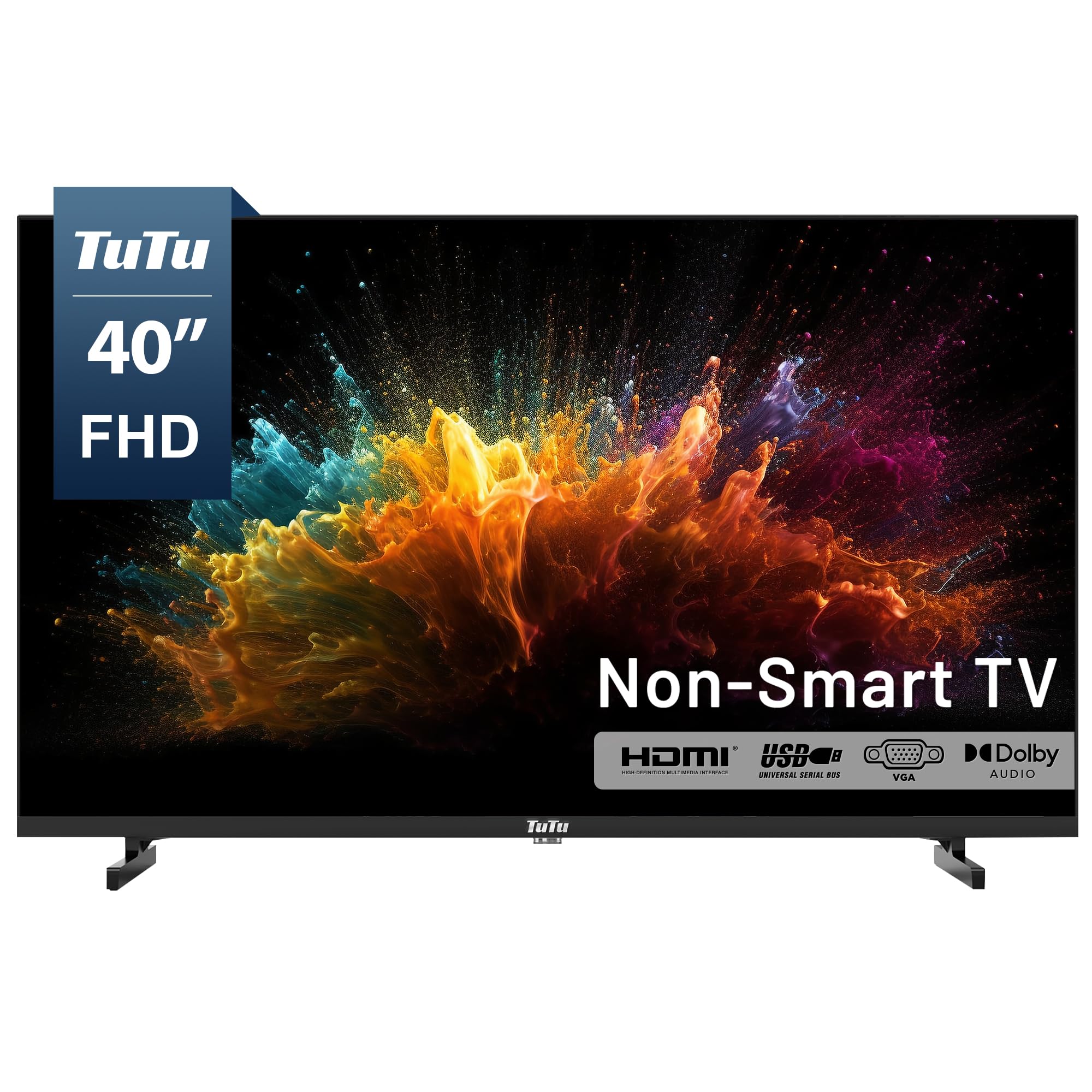
The TuTu is the rare modern television with absolutely zero smart OS built in—no ads, no bloatware, no data collection. It boots in roughly five seconds and switches HDMI inputs in about ten seconds, outperforming virtually every smart TV on the market in raw responsiveness. The 40-inch 1080p panel delivers sharp images for a secondary room without the cost premium of 4K.
Dolby Audio provides clearer dialogue than most budget TVs, though the built-in speakers still sound thin for music or action scenes. The TV ships with physical buttons limited to power only, meaning the included remote is your sole control method—a minor concern given its non-smart simplicity. The ATSC tuner pulls in over-the-air HD channels cleanly for cord-cutters who want free local broadcasts.
For anyone seeking a pure monitor-like experience with a streaming stick or console, this is the most honest non-smart TV available. No forced updates, no home screen ads, no privacy concerns. The 40-inch size makes it ideal for bedrooms, RVs, or workshop setups where a 50-inch panel would overwhelm the space.
Why it’s great
- Zero built-in OS, no ads or tracking
- Fast boot and input switching
- Clean 1080p picture for secondary rooms
Good to know
- 40-inch size smaller than typical 50-inch
- Sound is thin without external speakers
- No rear controls beyond power button
2. VIZIO V4K50M 50 Inch 4K UHD Smart TV (Renewed)

The renewed VIZIO V4K50M offers genuine 4K resolution at a price point that undercuts most budget 1080p options. Its 120Hz refresh rate and HDMI VRR support make it genuinely capable for console gaming, reducing screen tearing and input lag in supported titles. The 4K UHD panel delivers crisp detail that justifies pairing with a 4K streaming stick or gaming console.
DTS Virtual X provides surprisingly immersive audio from the built-in speakers, creating a wider soundstage than typical budget TVs. Wi-Fi 6 connectivity means faster streaming when you do use the built-in smart features, though the primary appeal remains the panel quality and gaming-friendly specs. The renewed condition carries some risk—buyers report occasional cosmetic damage or missing accessories.
This is the entry point for someone who wants 4K resolution and gaming features on a tight budget. The 120Hz panel and VRR support are exceptional finds at this tier, making it a strong candidate for a gaming monitor in a secondary room.
Why it’s great
- 4K resolution at an entry-level price point
- 120Hz refresh rate with HDMI VRR for gaming
- DTS Virtual X audio for wider soundstage
Good to know
- Renewed unit may have minor cosmetic wear
- Smart OS present, not a pure dumb TV
- Shipping damage reported by some buyers
3. Amazon Fire TV 50″ Omni QLED Series

The Omni QLED delivers a quantum dot panel with 48 full-array local dimming zones, producing deeper blacks and brighter highlights than standard LED panels. Dolby Vision IQ and HDR10+ Adaptive adjust brightness and color temperature in real time based on room lighting, keeping the picture accurate whether you watch during the day or at night. The 4K QLED panel covers a wide color gamut that makes streaming content from a Fire TV Cube or Apple TV look vibrant and punchy.
The Fire TV OS integration is deep but comes with the trade-off of a slower interface compared to the TuTu’s instant-on experience. Users report occasional lag when switching between apps, and the home screen surfaces ads by default. For those prioritizing picture quality over OS speed, the panel itself justifies the premium over cheaper 4K alternatives.
Gamers will appreciate the HDMI eARC port for soundbar connections, though the 60Hz panel limits high-refresh-rate console play. The adaptive brightness feature works well in rooms with large windows, automatically boosting or dimming the screen without manual intervention.
Why it’s great
- 48-zone local dimming for excellent contrast
- Quantum dot panel with wide DCI-P3 color
- Adaptive brightness sensor works effectively
Good to know
- Fire TV OS has ads and occasional lag
- 60Hz panel limits high-refresh gaming
- Some units arrive with software glitches
4. Roku Smart TV 2026 – 50-Inch Select Series 4K QLED
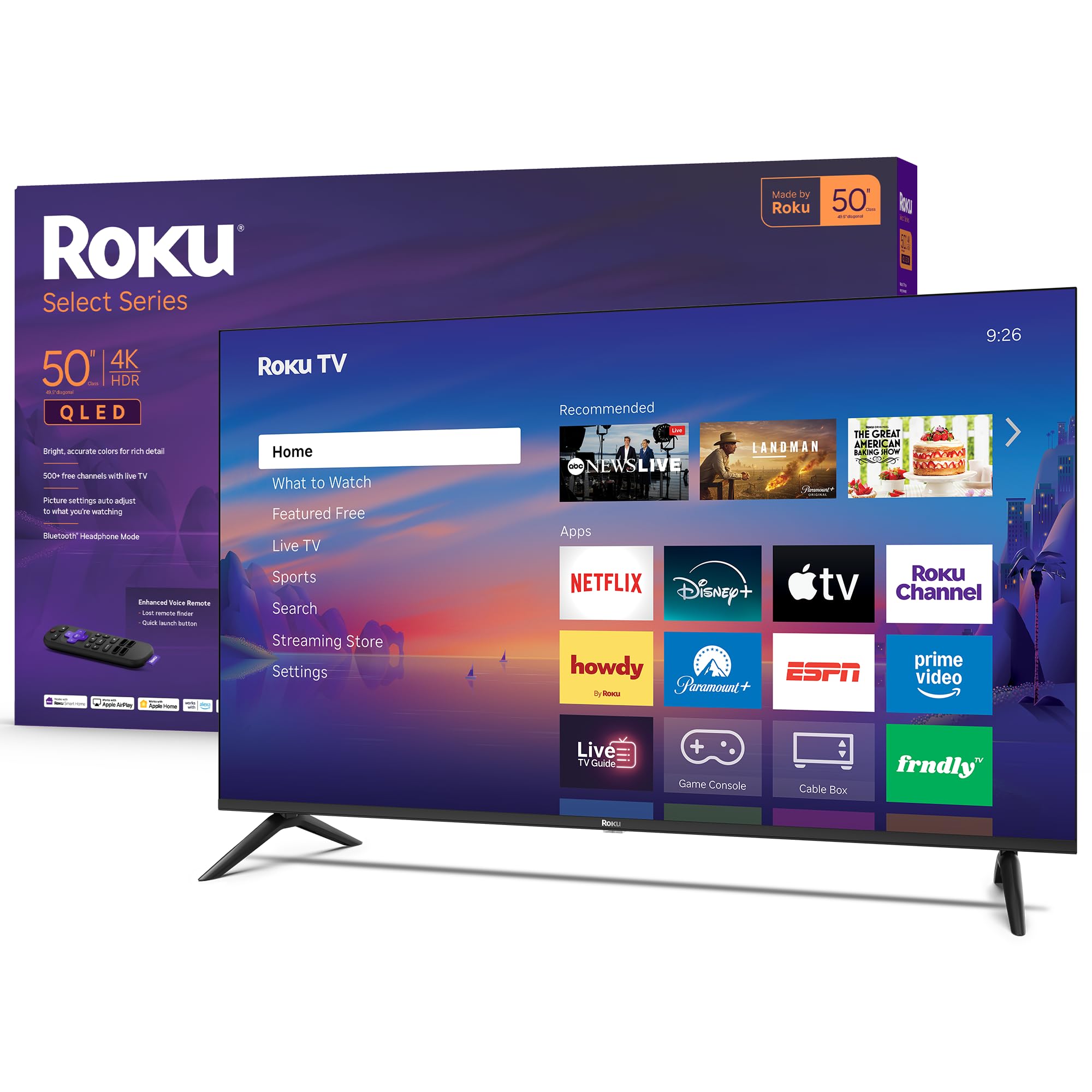
Roku’s Select Series pairs a 4K QLED panel with the platform’s famously simple operating system. The interface loads quickly, updates automatically, and avoids the cluttered ad experience of competitors. Bluetooth Headphone Mode lets you listen privately through wireless headphones without disturbing others—a genuinely useful feature for late-night viewing that most TVs in this tier lack.
The 4K QLED panel delivers bright, accurate colors with HDR10 support, and Roku’s Smart Picture processing cleans up incoming signals from cable boxes or antenna feeds. The voice remote includes a lost remote finder, which is more practical than most smart features on competing TVs. Variable Refresh Rate support makes gameplay smoother on compatible consoles.
Roku’s free ad-supported channel lineup offers 500+ channels without subscription, but the TV still qualifies as a smart TV with an OS. The panel quality and responsive interface make it one of the best options if you need a smart OS that stays out of your way.
Why it’s great
- Roku OS is fast and relatively ad-light
- Bluetooth Headphone Mode for private listening
- 4K QLED panel with HDR10 accuracy
Good to know
- Still a smart TV with built-in OS
- Built-in sound adequate but not exceptional
- Frameless design shows bezel in bright rooms
5. Hisense 50″ E6 Cinema Series Hi-QLED 4K
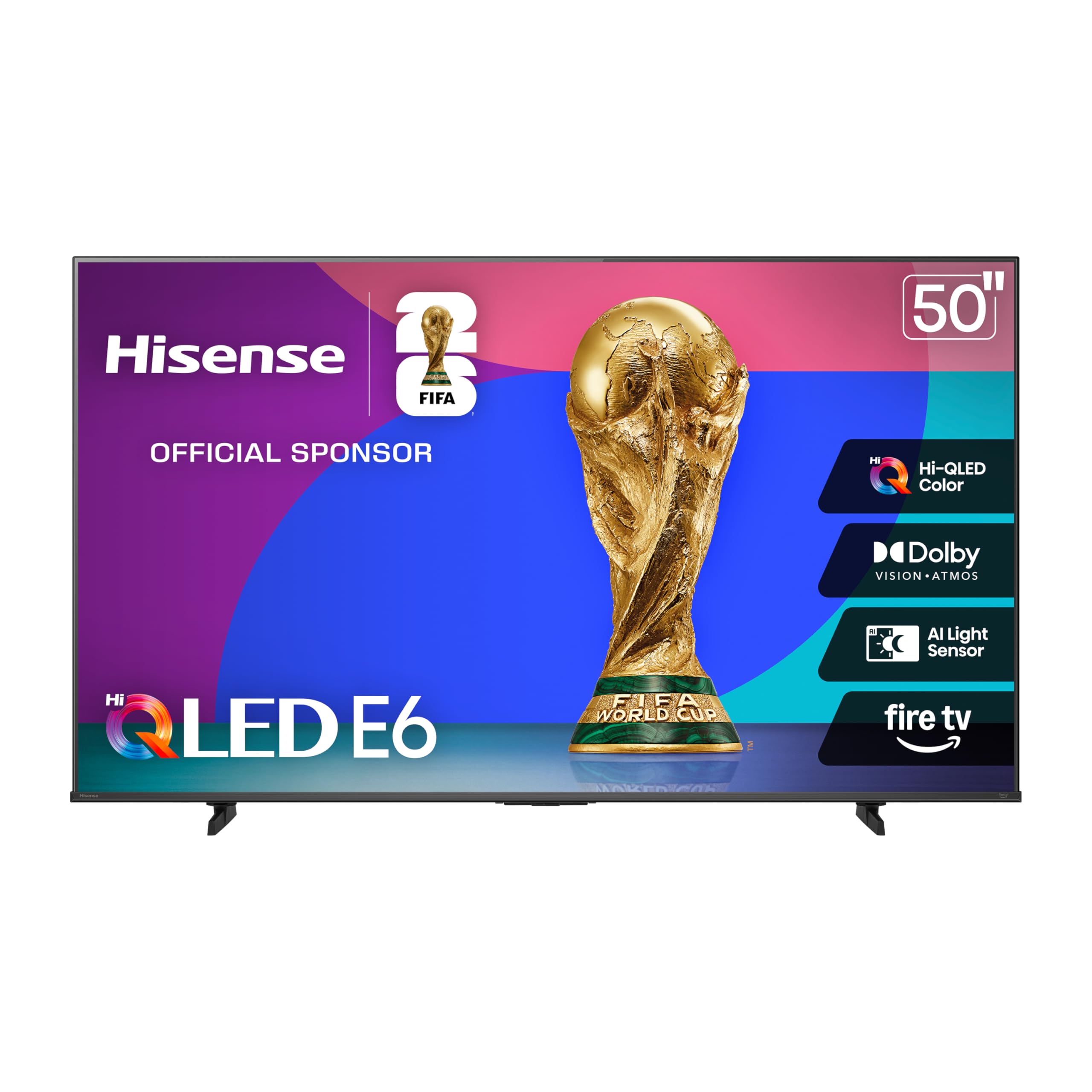
Hisense’s Hi-QLED technology saturates colors beyond standard QLED panels, making the E6 Cinema Series one of the most vibrant 50-inch displays available. Dolby Vision and Dolby Atmos combine for cinema-grade picture and sound that rivals more expensive models. The wide color gamut reproduces subtle shades accurately, from deep greens in nature documentaries to skin tones in dramas.
The built-in Fire TV platform integrates Alexa voice control directly, letting you search content, control smart home devices, and check sports scores hands-free. Motion Rate 120 processing smooths fast-moving content, though the native panel refresh rate is 60Hz. Game Mode Plus reduces input lag to respectable levels for casual console gaming.
The main compromise is the Fire TV interface itself, which some users find slower and more ad-heavy than Roku. The remote initially exhibited lag in some units before firmware updates resolved it. For pure picture quality at a mid-range price, the Hi-QLED panel outperforms most competitors in its tier.
Why it’s great
- Hi-QLED delivers exceptional color saturation
- Dolby Vision and Atmos for cinema experience
- Alexa built-in with voice control convenience
Good to know
- Fire TV interface has ads and some lag
- 60Hz native panel limits gaming potential
- No AV output for older devices
6. VIZIO 50 Inch V Series 4K UHD LED Smart TV (V4K50M-0810)
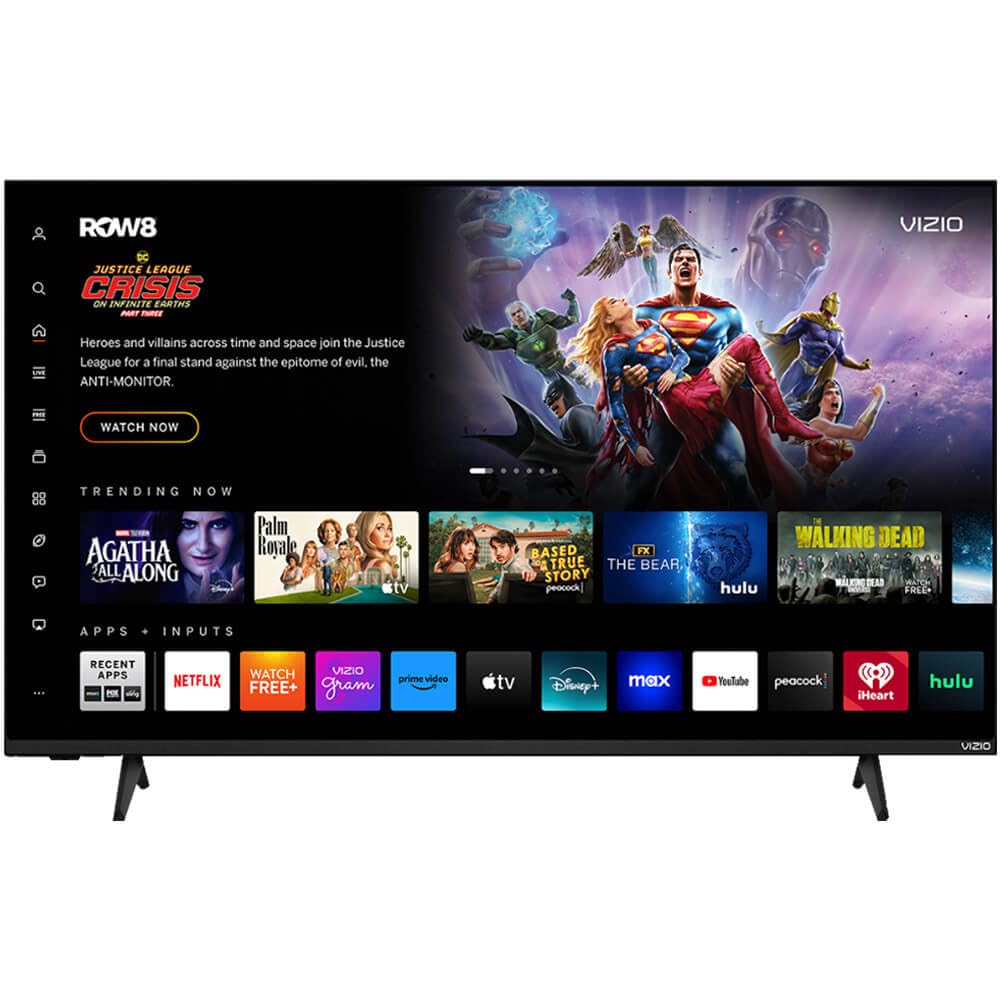
The VIZIO V4K50M-0810 brings Wi-Fi 6 dual-band connectivity for faster, more stable streaming, making it the best option for households with congested networks. Dolby Vision HDR and HDR10+ support ensure the 4K UHD panel reproduces HDR content accurately, with deeper blacks and brighter highlights in supported movies and shows.
DTS Virtual X delivers a convincing virtual surround sound experience from the slim chassis, and HDMI VRR with Auto Low Latency Mode makes this a strong gaming TV at a mid-range price. The Bluetooth compatibility lets you pair wireless headphones or speakers directly, bypassing the built-in audio for private listening or better sound quality.
Some buyers report the SmartCast OS displays ads on startup and occasionally auto-switches inputs unprompted, which undermines the simplicity you’d expect. The 3000:1 contrast ratio is respectable but not class-leading—local dimming is present but with limited zones compared to premium competitors.
Why it’s great
- Wi-Fi 6 for faster, more reliable streaming
- Dolby Vision HDR with HDR10+ support
- HDMI VRR and ALLM for smooth gaming
Good to know
- SmartCast OS shows startup ads
- Limited local dimming zones
- Input auto-switching bug reported
7. FPD 50 Inch Smart TV 4K LED Google TV
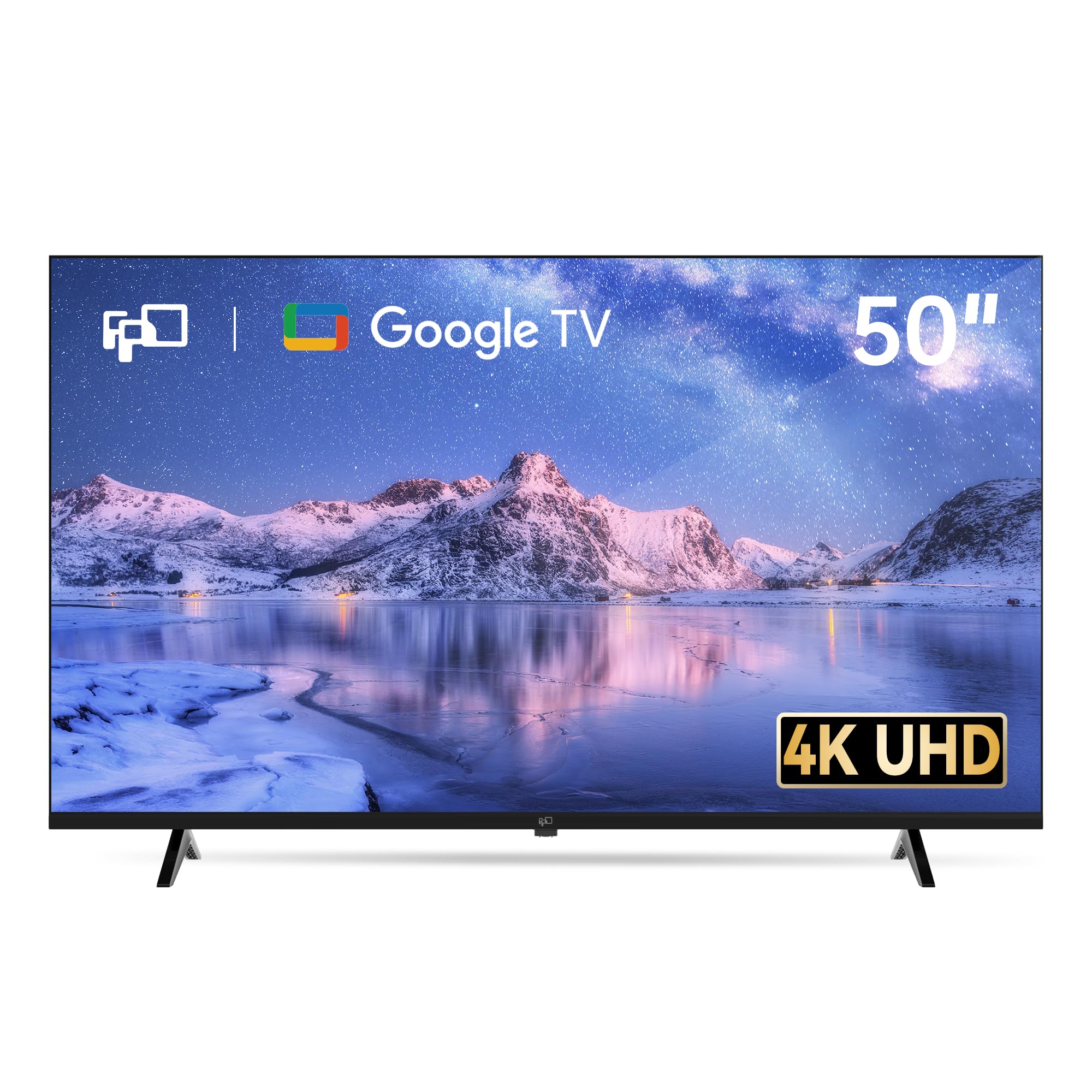
The FPD 50 Inch offers Google TV with Google Cast built-in, making it seamless for Android users to stream content directly from their phones. The 4K UHD panel with HDR10 delivers sharp images with enhanced contrast, and MEMC motion smoothing reduces blur during fast-action scenes and sports broadcasts. The three HDMI 2.1 ports, including one with eARC, provide modern connectivity for consoles and soundbars.
The integrated Google Assistant voice control via the remote works well for search and playback, though some users report the setup process being more complex than expected. The built-in Dolby Audio provides clear sound, but the speakers lack bass for movie watching without a soundbar. The Google TV interface offers a personalized home screen with recommendations across your subscribed services.
Build quality concerns surface in some reviews, with reports of a thick back panel and seller communication issues regarding defects. The MEMC processing and ALLM mode make this a capable budget option for gaming, but prospective buyers should confirm warranty terms before purchasing.
Why it’s great
- Google TV with built-in Chromecast
- HDMI 2.1 ports with eARC support
- MEMC motion smoothing for sports
Good to know
- Build quality can feel plasticky
- Setup process more involved than some
- Sound quality average without soundbar
8. Westinghouse 50 Inch Mini LED 4K UHD Roku TV
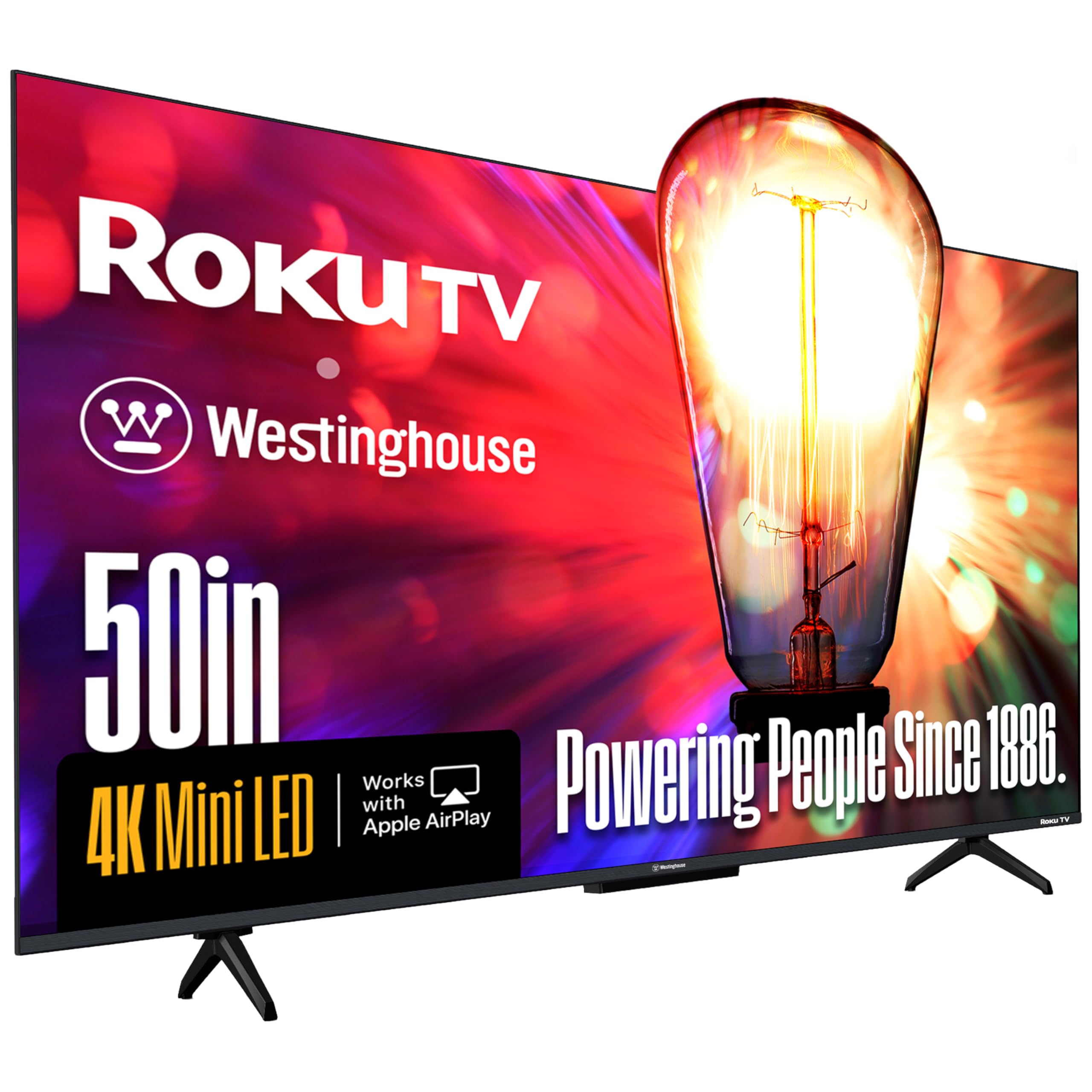
The Westinghouse Mini LED delivers the best contrast ratio in this roundup at 100000:1, thanks to its high-density local dimming zones that individually control thousands of tiny LEDs. Blacks appear genuinely deep with minimal blooming, and highlights punch with authority. The QLED quantum color technology covers up to 93% of the DCI-P3 color gamut, producing rich, accurate colors that rival more expensive OLED competitors.
Four HDMI 2.1 ports with eARC provide exceptional connectivity for multi-device setups, and the Roku TV platform remains one of the fastest and least intrusive smart interfaces available. MEMC motion smoothing reduces judder in fast-moving sports and action films. The TV is notably lightweight for a 50-inch panel, making wall mounting straightforward.
The built-in speakers, while loud, produce muddy midrange frequencies that lack clarity for dialogue-heavy content—a soundbar is almost mandatory to fully enjoy the excellent panel. Some units exhibit minor dirty screen effect during panning shots, though it’s minimal compared to other LCD-based competitors at this price.
Why it’s great
- Mini-LED with 100000:1 contrast ratio
- 93% DCI-P3 color gamut coverage
- Four HDMI 2.1 ports with eARC
Good to know
- Built-in speakers sound muddy in midrange
- Some dirty screen effect on panning shots
- Premium price reflects Mini-LED technology
9. Amazon Ember 50″ QLED Series with Fire TV
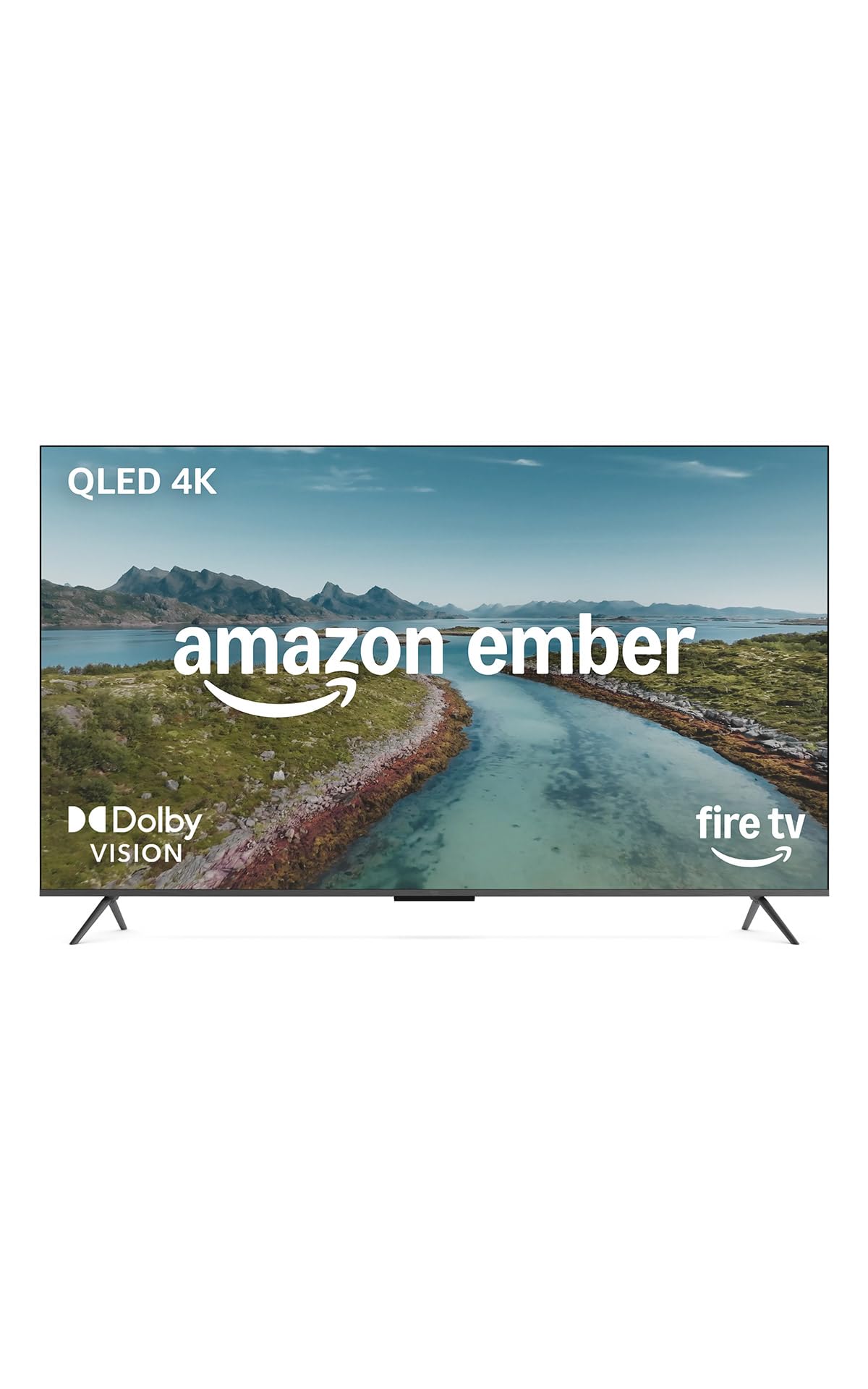
The Amazon Ember QLED Series is the newest Fire TV iteration, featuring a custom quad-core processor and Wi-Fi 6 support that make app loading and menu navigation noticeably faster than previous Fire TV models. The 4K QLED panel with Dolby Vision and HDR10+ Adaptive delivers excellent picture quality that adapts to room lighting conditions. The Omnisense technology wakes the display when you enter the room, giving it a smart-home feel that actually works.
Alexa integration is deeper here than any other TV on this list—you can ask hands-free to find shows, control smart home devices, or check information even with the screen off. The quad-core processor handles Amazon Luna and Xbox Game Pass streaming without noticeable lag, turning the TV into a cloud gaming hub without an external console. Bluetooth headphone support lets you watch privately.
The picture quality is very good for the price, but some users report 4K content appearing less crisp than older Sony models, particularly with sports broadcasts. The audio is adequate but thin without a soundbar, and the Fire TV interface still shows ads on the home screen despite the premium positioning.
Why it’s great
- Quad-core processor for fast app loading
- Wi-Fi 6 for smooth streaming
- Omnisense wake-on-presence feature
Good to know
- Fire TV home screen displays ads
- Built-in sound thin without soundbar
- 4K sharpness not class-leading for sports
FAQ
Do any 50-inch non-smart TVs still support 4K resolution?
Can I use a non-smart TV with a streaming stick like Roku or Fire Stick?
Why do non-smart TVs often cost more than smart TVs of the same size?
How do I verify a TV truly has no smart operating system before buying?
What is the typical input lag difference between a non-smart TV and a smart TV?
Final Thoughts: The Verdict
For most users, the best 50 inch non smart tv winner is the TuTu 40 Inch FHD TV because it delivers a genuinely ad-free, zero-bloatware experience with fast boot times and seamless HDMI input switching. If you want superior picture quality with Mini-LED contrast, grab the Westinghouse 50 Inch Mini LED Roku TV. And for a pure dumb monitor experience at the lowest cost, nothing beats the TuTu for its honest simplicity and privacy-first design.