
Our readers keep the lights on and my morning glass full of iced black tea. As an Amazon Associate, I earn from qualifying purchases.
Specs are compiled from manufacturer listings and verified buyer reviews and can change over time — please confirm the key details on the product page before buying.
An umbrella that tips in the first breeze turns a relaxing afternoon on the patio into a game of chase. The right 50-lb base stops that problem before it starts — it plants your shade firmly so you can sit back and actually enjoy the deck, the poolside, or the garden table. This guide breaks down the real differences between steel, cast iron, resin, and concrete designs so you know which one fits your setup and your weather.
I’m Min — the founder and writer behind Gadgets Feed. This guide is built by comparing the manufacturers’ published specifications and the patterns across verified customer reviews, so you get each pick’s real strengths and trade-offs instead of marketing spin.
You want a base that holds its ground in moderate wind and looks good doing it — below you will find the top contenders for the title of best 50 lb umbrella base, with honest notes on which stands up and which might wobble when the weather turns.
Our Picks at a Glance

How To Choose The Best 50 Lb Umbrella Base
A 50-pound base is the balance for most patio umbrellas up to 9 or 10 feet wide. But not all 50 pounds are created equal — the shape, material, and footing design change how that weight works in the real world. Here is what to look at before you click “add to cart.”
Material Matters: Cast Iron, Steel, Concrete, or Resin
Solid cast iron gives you the most dense, wobble-free weight in a compact footprint. It does not crack like concrete and it does not flex like resin, but it can rust if the finish chips. Powder-coated steel with a cement core is cheaper and still heavy, though the coating can scratch during shipping. A pure resin or plastic shell filled with sand or water is lighter at the same volume and can feel less planted against a side gust.
Wheels: Convenience vs. Stability
A rolling base lets you chase the sun across the deck without straining your back. That is the upside. The trade-off is that wheels raise the center of gravity, and some rolling stands are more prone to tipping in a strong breeze than a stationary disc of cast iron. Look for locking casters on all wheels and read the reviews on side-wind performance carefully if you live in a breezy area.
Pole Fit and Receiver Design
Most umbrella poles fall between 1.5 and 1.9 inches in diameter. A good base comes with removable plastic adapters or dual tightening knobs to grip whatever size you have. A threaded metal receiver that screws into the base is stronger than a cheap plastic insert — owners who complain about wobble often have a receiver that loosens over time. Two separate set screws are better than one for locking the pole at a true vertical.
Quick Comparison
| Model | Best For | Material | Weight | Diameter | Amazon |
|---|---|---|---|---|---|
| Tropishade Cast Iron Base★ Best Overall | Maximum wobble-free hold | Cast Iron | 50 lbs | 22 in | Amazon |
| GIANTEX Resin BaseBest Rolling | Ease of movement | Resin / Steel | 50 lbs | 20.5 in | Amazon |
| California Umbrella Concrete Base | Value and wide under-table fit | Steel / Cement | 52 lbs | 19.75 in | Amazon |
| Tangkula Steel Base | Low-profile under-table use | Alloy Steel | 50 lbs | 24 in | Amazon |
| C-Hopetree Resin Composite Base | Smooth rolling on a patio | Resin Concrete | 51 lbs | — | Amazon |
| Blue Wave Cast Iron Base | Classic look and dual stem heights | Cast Iron | 50 lbs | 23 in | Amazon |
In-Depth Reviews
1. Tropishade Cast Iron Umbrella Base
Our pick — 4.5★ from 100+ verified ratings; the strongest balance of quality and price.
Cast iron heft that makes wind a non-issue, wrapped in a low-profile disc.
The defining trait here is the material itself — solid cast iron rather than a cement fill or plastic shell. At 50 pounds with a 23-inch diameter and a flat-style pattern, it sits low and wide. Two pole thumb screws grip the umbrella stem from opposite sides, and the threaded tube connection between the receiver and the base prevents the wobble that can develop on designs that use a simple sleeve. Buyers report that it handles “strong Cape Cod winds” — about as direct a real-world endorsement for stability as you can get.
The black powder coat gives it a clean, minimalist look that disappears under a table or stands alone on a deck. Owners note it is “non-plastic/resin” and has no sharp corners, making it a safe choice for high-traffic outdoor spaces.
What owners can’t stop praising
- Weight is the most-discussed strength — buyers call it “very heavy and stable,” and the solid cast iron leaves no doubt.
- Stability is the second most-praised trait; the threaded tube connection keeps the pole locked tight without wobble.
- The low-profile, flat design fits under tables without taking up leg room and looks polished on its own.
The fit note to keep in mind
- A small number of owners find the price high, though they generally conclude it is worth it for the build quality.
- Durability is rated as mixed by a few, with a single report of bolts loosening over time — a quick check with a wrench every season solves it.
Reach for this if: you want the most rock-solid anchor for a freestanding umbrella and are willing to pay for a dense, non-cracking cast iron base.
Not your style if: you need wheels or a super-low price point — this is a stationary, premium pick.
2. GIANTEX 50 LBS Patio Umbrella Stand
A 50-pound base that rolls on four wheels so you can follow the shade.
If your biggest frustration is having to pick up and drag a heavy base every time the sun moves, this GIANTEX model solves it. Four 360-degree rotating wheels with locks let you reposition the umbrella with one hand. The 50-pound resin and steel construction is heavy enough for a standard 8-foot patio umbrella, and the rattan pattern on the surface adds a decorative touch that blends with wicker furniture.
The main trade-off is the center of gravity. The larger wheels lift the mass slightly, and a few owners mention the base can tip over in windy conditions with the umbrella closed — one called it “attractive, rolls easily, but tips over twice on windy days.” That is the honest caveat: if your patio is in an open, breezy spot, you may need to close the umbrella when not in use or choose a lower-profile stationary base. The included removable plastic inserts let it fit both 1.5 and 1.9-inch pole diameters.
The mobility advantage
- Mobility is the top praised feature — owners say it rolls smoothly and the locks hold it in place.
- The rattan design looks good enough to sit visibly on a patio without an umbrella table.
- Quick assembly with no need to fill with sand or water — it comes ready at the full 50 pounds.
The honest caution
- The higher center of gravity from the wheels makes this less stable than a flat cast iron disc in strong gusts — a known trade-off.
- A minority of units arrive with scuffs or signs of prior use, though customer service handles replacements or partial refunds.
Get this if: you reposition your umbrella often to chase shade across a large patio or pool deck and the wheels will save your back.
Look elsewhere if: you face regular high winds or want a base that never tips even with the umbrella closed.
3. California Umbrella 50 lbs Concrete Base

A cement-steel base that actually weighs in at 52 pounds — versus the stated 50-pound spec.
This is the most-reviewed base on the list by a wide margin, and the consensus is clear: it is a solid, heavy anchor that holds up well for the price. The powder-coated steel frame wraps a cement core, giving you a durable weight without the expense of solid cast iron. A 16-inch receiver pole adds stability by gripping a longer section of your umbrella shaft, and the security set knob locks it tightly in place. Owners note it “works perfectly for our patio umbrella” and call it “cheaper than Lowes 40lb that cracked.”
Some find the pole receiver or threaded ring can be brittle, and a small number report rust spots on the matte black finish after a season. It is still a superb budget-conscious pick for moderate breezes, but if you live in a constant wind zone, the cast iron options above or below give you more confidence.
Why the crowd loves it
- Weight is the top positive aspect — buyers consistently praise the heavy feel for the price.
- The 19-inch clearance under the base fits compact dining tables easily, and it comes with a cover.
- A bottom cover prevents concrete dust from scattering on your deck.
The trade-offs at this price
- The threaded ring that holds the umbrella pole is the most common failure point — a few customers note it breaks under stress.
- Rust resistance is the most common negative theme, with some units showing corrosion on the steel finish over time.
Best for: anyone who wants a proven, low-cost anchor for a table-set umbrella and is willing to treat the receiver gently.
Think twice if: your umbrella lives in constant, strong wind or you need a base that can survive coastal salt air without rust.
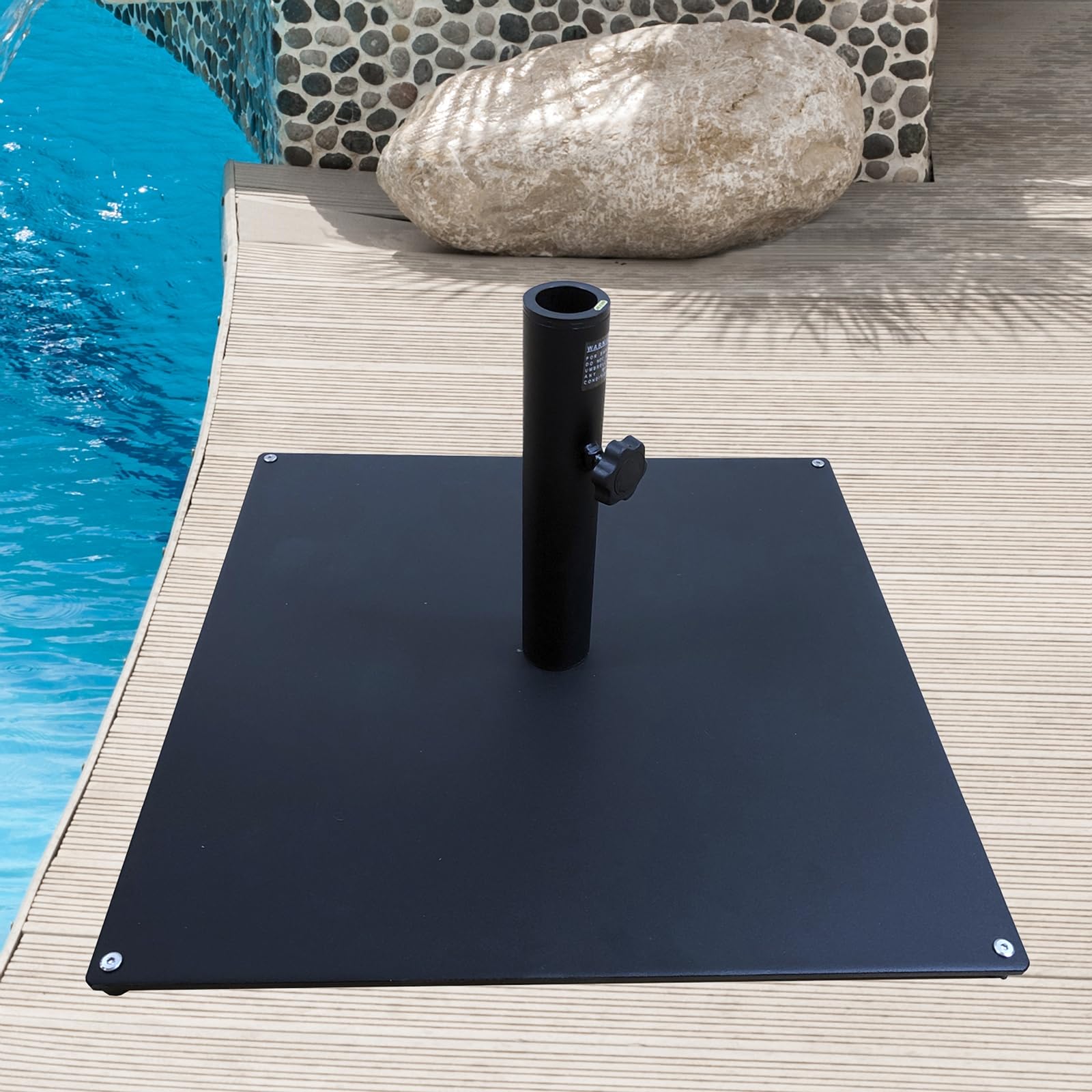
4. Tangkula 50LBS Square Umbrella Base

A flat, nearly 2-foot square that slides under most tables with room to spare.
At 24 inches wide and less than one inch thick, this Tangkula base is the most table-friendly option here. The flat steel profile leaves generous leg room for diners, and two built-in wheels let you tilt and roll it into position rather than lugging a disc across the deck. The powder-coated alloy steel shell holds the 50-pound weight, while three included pole adapters let you fit poles from 1.4 to 1.9 inches in diameter. Two hand-turn knobs tighten the umbrella securely.
Stability is the most-praised aspect — owners say it supports 9-foot umbrellas well and works perfectly in moderate breezes. The honest note is that the connection between the stem and the flat base can loosen over time; a buyer who tried locktite still saw wiggle. Durability is also a mixed point, with a handful of owners reporting rust within a year in wet or coastal conditions. If you keep it dry or covered when not in use, the low profile and easy mobility make it a very practical pick.
What stands out
- The flat, wide footprint gives the best under-table fit of any 50-lb base here — owners praise the leg room.
- Stability is the top-discussed strength, with buyers calling it “strong, stable, and super convenient.”
- Easy assembly with clear instructions and the wheels mean no heavy lifting to reposition.
Things to watch
- The stem-to-base attachment is the weak point — some reviewers point out loosening over time even with the two knobs.
- Durability is mixed, with occasional reports of the powder coat failing and rust appearing within a year.
Pick this for: a table-mounted umbrella that needs a slim, unobtrusive base with enough stability for daily use.
skip it if: you want a flawless long-term finish in a humid climate or plan to leave the base out in rain all year.
5. C-Hopetree 51 lb Heavy Duty Round Base

A rolling base that pairs a classic cast-iron look with a resin-concrete core.
The C-Hopetree uses a resin concrete composite that resists sun and weather better than bare metal, and the antique cast-iron finish gives it a timeless appearance. Four locking wheels roll smoothly across the patio — owners say assembly is fast and the base moves easily. The double-lock design uses an adjustable rotary knob to secure the umbrella, and the holder fits both 1.5-inch and 1.9-inch poles with an adjustable insert. It is rated for 7-11 foot market umbrellas.
The most-discussed theme is that the base works great for moderate days but has a real limitation in wind. The included user manual warns against using it in breezes over 5 mph, and one owner returned the unit after finding the tube-to-base connection flimsy for those conditions. It is a smooth roller for calm patios, not a hurricane anchor.
What owners enjoy
- Rolls very smoothly on its four wheels and locks in place — owners praise the mobility.
- The resin-concrete composite holds up better to sun and rain than raw steel or iron alone.
- Quick and easy to assemble right from the start with no filling required.
The honest constraint
- The manual states it is unsafe in wind over 5 mph — a critical detail not always visible in the product listing.
- A few owners find the tube-to-base connection wiggles in real breeze, making it best for sheltered spots.
Best for: a calm, sheltered patio or courtyard where you want a rolling base and like the antique iron look.
Not the pick if: your yard catches regular wind — you are better off with a solid cast-iron stationary base.
6. Blue Wave 50-lb Classic Cast Iron Umbrella Base
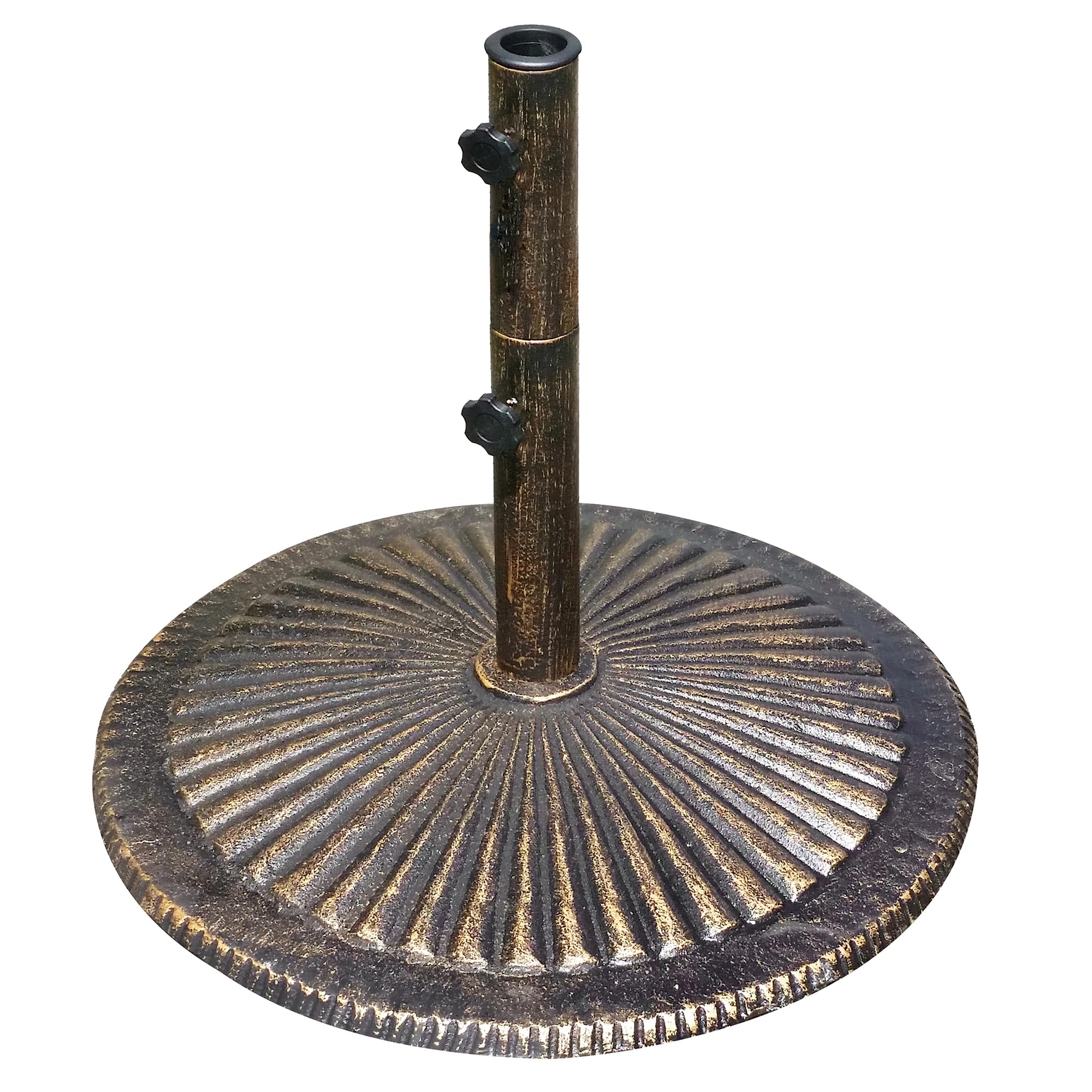
Dual stems and a sunburst design make this both a functional anchor and a patio ornament.
Blue Wave’s cast iron base stands out for its versatility. It comes with two steel stems — a 17.5-inch tall stem for freestanding shade on a deck or poolside and a 6.5-inch short stem for centering the umbrella under a patio table. Swapping them is a simple threaded connection. The base itself is 23 inches in diameter with a weather-resistant brushed antique bronze finish and a sunburst radial fluted pattern that complements most outdoor furniture styles. Two comfort-grip knobs tighten at separate points along the stem, and the included pole adapters fit shafts from 1-3/8 to 1-7/8 inches for a wobble-free hold that supports canopies up to 10 feet.
Owners consistently call it “heavy, powder-coated cast iron with threaded pipe tubes (not cheap screws)” and report it holds its ground in stiff breezes — one owner says “my umbrella doesn’t move at all.” The recurring negatives are that the threaded tubes can be very hard to screw in even with grease, and a few units arrive with rust spots or damaged packaging. Assembly is the most mixed aspect in the feedback: some find it straightforward, others struggle with the threading. For the price, this is a premium-looking piece that earns its place with dual functionality, but it demands a careful unpacking and a bit of elbow grease during setup.
Why it earns its price
- Stability is the most-praised aspect — owners say it holds even in all but the windiest conditions.
- The dual-stem system (17.5 in and 6.5 in) lets you switch between freestanding and under-table use from the same base.
- Sunburst design and bronze finish look like a decorative piece, not just a functional weight.
The honest downsides
- Assembly is the most mixed aspect — threading the dual-stem system can be difficult and sometimes requires grease.
- A minority of units arrive with rust spots or damaged packaging, a common risk with heavy iron bases shipped long distances.
Best for: patio owners who switch between a table setup and a freestanding spot and want a decorative cast iron base that does both.
pass on it if: you dislike assembly hassle or need a base that arrives pristine every time — check packaging carefully on delivery.
Understanding the Specs
Material Density and Rust Resistance
Cast iron is the densest material in this category, which means the same 50-pound weight takes up a smaller footprint than a resin or concrete base. The trade-off is that cast iron can rust if the powder coat chips, especially in coastal or humid areas. Powder-coated steel over a cement core (like the California Umbrella base) is cheaper but the coating can be thinner, and some owners see rust spots after a season. Resin concrete composite resists rust entirely but is less dense, so a 50-pound resin base feels bulkier and has a higher center of gravity.
Wheels and Center of Gravity
A rolling base with 360-degree casters lets you chase the sun across the patio without straining your back. But those wheels lift the mass of the stand a few inches off the ground, which raises the center of gravity. In a 15-mph gust, a rolling resin base is more likely to tip than a flat cast iron disc sitting flush on the ground. If you go with wheels, lockable casters are essential — and plan to close the umbrella when a breeze picks up.
FAQ
Will a 50-pound base hold a 10-foot umbrella?
Can I leave a 50 lb umbrella base out in rain and snow?
Are umbrella bases with wheels less stable than stationary ones?
How do I fit a 1.5-inch umbrella pole into a 1.9-inch receiver?
What is the difference between cast iron and steel umbrella bases?
Can I use a 50 lb umbrella base on a deck without damaging the wood?
How do I stop my umbrella from wobbling in the base?
Why do some 50 lb bases feel less stable than others?
Final Thoughts: The Verdict
For most buyers, the 50 lb umbrella base winner is the Tropishade Cast Iron Base because its solid cast iron construction, low profile, and threaded receiver deliver the most wobble-free hold in a compact 22-inch footprint. If you want the flexibility to roll your shade across the deck, grab the GIANTEX Resin Base. And for a budget-friendly anchor that fits neatly under a dining table, the California Umbrella Concrete Base is the one to reach for.
How We Picked
We do not accept paid placement. Every pick is matched to a real buyer and a real use-case; we do not hands-on test units.
Sources & Methodology
Specifications: manufacturer listings and product documentation. Review insights: verified customer reviews, as of July 2026. Pricing: not shown on this page (it changes often); check the current price via the retailer link.
As an Amazon Associate, Gadgets Feed earns from qualifying purchases. This does not affect which products we feature.