
A 50 pound weight vest changes the physics of calisthenics, rucking, and HIIT — but only if the load stays locked to your center of mass instead of sliding, bouncing, or digging into your shoulders mid-rep. The difference between a vest that feels like part of your gear and one that feels like a punishment comes down to weight distribution, plate material, and how well the frame matches your torso length.
I’m Min — the co-founder and writer behind Gadgets Feed. This guide comes from cross-referencing hundreds of verified buyer reports and spec sheets across seven leading models to isolate which 50-pound-ready designs actually deliver on zero-bounce fit and long-term durability.
Buyers serious about progressive overload need a vest that scales from lighter loads up to a full 50 lb capacity without requiring a second purchase. This guide breaks down the strongest options to help you find the right 50 pound weight vest for your training goals.
How To Choose The Best 50 Pound Weight Vest
Selecting a 50 lb weight vest requires more than checking the maximum load rating. The vest’s construction, weight plate material, and torso fit directly affect whether the load feels natural or becomes a distraction. Here are the critical factors to evaluate.
Weight Plate Material: Steel vs. Iron vs. Sand
Solid steel or iron plates pack more density into a thinner profile than sandbags. At 50 lb loads, steel plates keep the vest compact against your torso, reducing bulk and bounce. Sand-filled pockets require deeper pouches that shift over time, especially during running or dynamic movements. Steel plates also resist moisture absorption and last longer under heavy sweat exposure.
Weight Distribution and Balance
A well-designed vest distributes the load roughly equally between front and back panels. Too much weight forward pulls you off balance; too much rearward strains lower back extensors. Look for designs that allow you to shift individual plates between compartments so you can fine-tune the balance for your specific movement pattern — whether that’s rucking, pull-ups, or sprint intervals.
Shoulder Padding and Torso Fit
At 50 lb, shoulder pressure becomes the primary comfort constraint. Foam or TPE padding with a contour that follows your trapezius ridge reduces hot spots. The vest should sit close to your upper chest and back without gaping — excessive vertical slack causes the load to bounce with each foot strike. Adjustable waist straps help lock the vest in place, but the shoulder fit is where comfort is made or broken.
Adjustability Range and Ease of Reconfiguration
A vest that scales from 20 lb to 50 lb lets you progress without buying new gear. The best systems use individually removable iron or steel plates that slot into tight pockets — no loose sandbag refilling required. Check whether the plate compartments are accessible without fully removing the vest, as this convenience makes mid-session weight changes practical.
Quick Comparison
On smaller screens, swipe sideways to see the full table.
| Model | Category | Best For | Key Spec | Amazon |
|---|---|---|---|---|
| MIR PRO Weighted Vest | Premium | Maximum load range 45-90 lbs | Solid iron plates, zipper/strap closure | Amazon |
| BeatBoost Weighted Vest Set | Premium | Full-body training with wrist/ankle weights | Steel plates 0.625 lb each | Amazon |
| WOLF TACTICAL Weighted Vest | Premium | Tactical training and HIIT | 2 lb iron blocks, 600D nylon | Amazon |
| HANZO Weighted Vest | Mid-Range | Rucking and bodyweight training | 2.2 lb iron bars, 1000D Oxford nylon | Amazon |
| MVRK Weighted Vest | Mid-Range | Scalable load from 0 to 35 lbs | Neoprene-coated iron weights 2.18 lb each | Amazon |
| Gymnastics Power Weighted Vest | Mid-Range | Low-back-friendly cropped design | 2 lb steel weights, 1000D nylon | Amazon |
| ZELUS Weighted Vest | Budget | Entry-level adjustable load | Sandbag fill, reflective strips | Amazon |
In‑Depth Reviews
1. MIR PRO Weighted Vest With Zipper Option

The MIR PRO stands apart because it accepts up to 90 lb of solid iron plates in a vest that remains compact enough for running and calisthenics. The plate system lets you dial in any load from roughly 3 lb to 90 lb by swapping full-length iron bars — no partial sandbags or loose filler required. The zipper option provides a clean external profile, while the strap version offers faster on-off for timed circuits.
Regular users at 70+ lb report the stitching and fabric hold up with no tearing at the stress points. The vest fits snugly against the torso, with the weight distributed evenly front to back. Multiple reviewers confirm it works for walking, running, push-ups, sit-ups, and leg exercises without the plates shifting. The fabric does feel stiff initially but relaxes after a few sessions.
At 45 lb and up, the MIR PRO delivers the highest weight ceiling in this roundup. If your training plan calls for progressing beyond 50 lb without buying a second vest, this is the only model that keeps you in the same platform all the way to 90 lb. The trade-off is a higher initial cost and a bulkier feel compared to lower-capacity vests.
Why it’s great
- Accepts 45 to 90 lb of solid iron plates for long-term progression
- Full-length plates distribute weight evenly with no shifting
- Zipper or strap closure options let you choose your preferred retention style
Good to know
- Fabric starts stiff and requires a break-in period
- Higher price point reflects the premium load capacity
2. BeatBoost Weighted Vest Set

The BeatBoost set bundles a 40 lb vest with matching wrist and ankle weights, creating a complete resistance system for full-body conditioning. Each steel plate weighs 0.625 lb, giving you fine-grained control over the load — add or remove a plate at a time rather than jumping in 2 lb increments. This granularity is useful for rehabilitation protocols or incremental progressive overload.
The vest uses a hook-and-loop closure system and breathable mesh fabric that keeps airflow moving during intense sessions. Multiple users highlight the comfort of the vest on its own, though the ankle weights tend to dig into the shins during running unless paired with thicker socks or sleeves. The wrist weights are less intrusive and work well for adding load to push-ups and overhead presses.
For anyone wanting a single purchase that covers vest, arm, and leg resistance, the BeatBoost set eliminates the need to buy accessories separately. The steel plates resist rust better than untreated iron when exposed to sweat, and the overall build quality holds up under frequent use. The main limitation is the 40 lb ceiling on the vest — if you need a true 50 lb core load, you’ll max out before reaching that target.
Why it’s great
- Complete system with vest, wrist, and ankle weights in one box
- Fine-grained 0.625 lb steel plates for precise load adjustment
- Breathable mesh fabric reduces heat buildup during long sessions
Good to know
- Ankle weights may dig into shins without protective padding
- Vest maxes out at 40 lb, not a true 50 lb core load
3. WOLF TACTICAL Weighted Training Vest
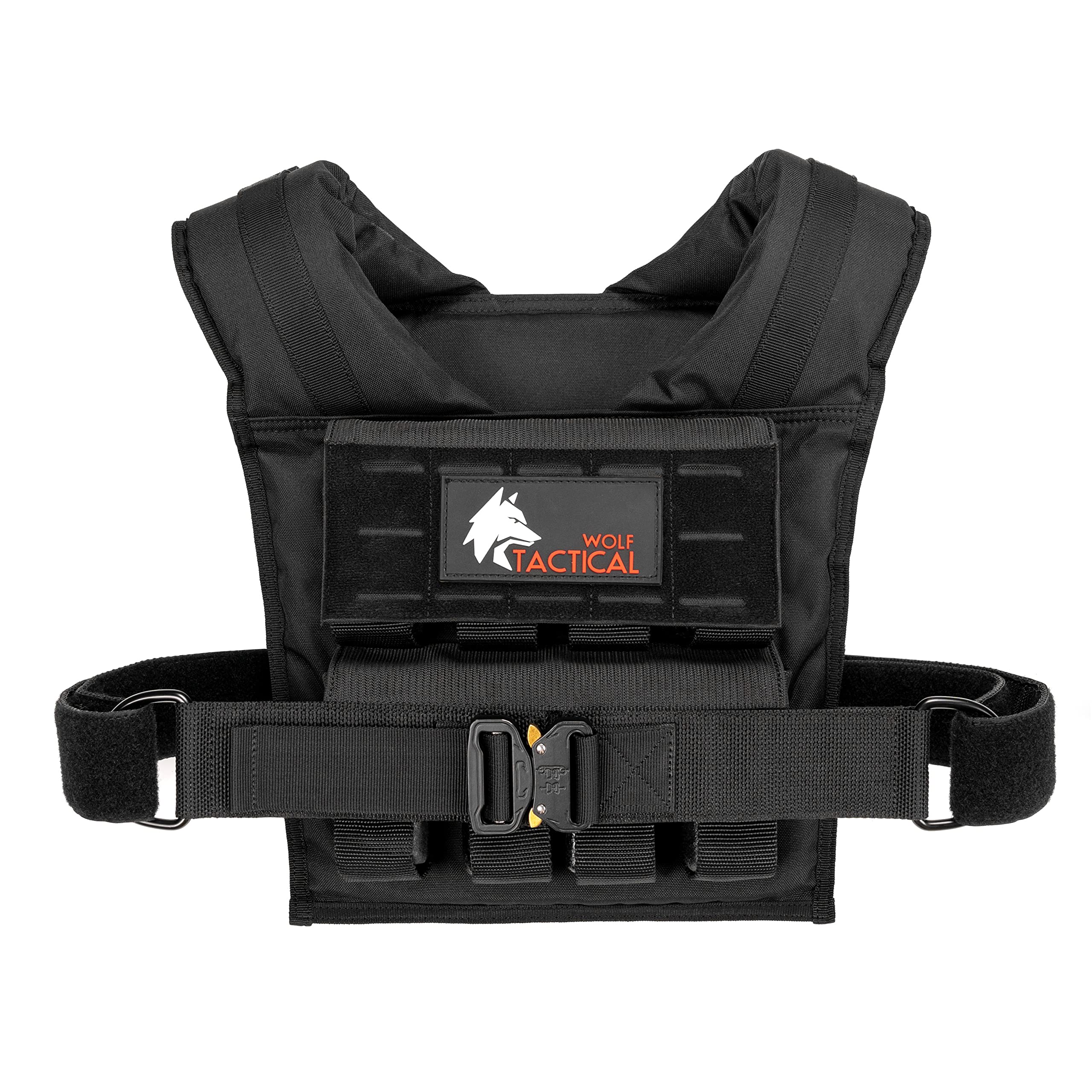
The WOLF TACTICAL vest carries its weight high and tight against the upper chest and back, engaging the core more directly than vests that sit lower on the torso. Each 2 lb iron block slots into dedicated pouches, and the vest ships with enough blocks to reach 35 lb — though military and tactical users frequently add extra plates from other sources to hit their target load. The 600D nylon shell resists abrasion from rucking packs and tactical gear.
Ultra-cushioned shoulder pads and oversized airflow panels make the 35 lb load feel lighter than it is. The quick-release buckle allows fast removal during timed drills or emergency scenarios. Users report that the vest stays secure during running when the straps are pulled tight, though some find the tight fit restricts deep breathing and prefer to loosen it slightly for calisthenics.
The front and back loop panels accept morale patches, which is a niche bonus for tactical athletes. The heavy-duty metal buckle and reinforced velcro hold up well after months of training. The main limitation is the 35 lb out-of-box capacity — reaching 50 lb requires sourcing additional plates, which not all competitors need. For those who want a compact, high-riding platform, the WOLF TACTICAL delivers premium feel and adjustability.
Why it’s great
- High-and-tight fit engages core effectively during dynamic movement
- Ultra-cushioned shoulder pads reduce pressure at heavier loads
- Quick-release buckle enables fast removal during tactical drills
Good to know
- Out-of-box capacity is 35 lb; hitting 50 lb requires extra plates
- Snug fit may restrict deep breathing for some users during running
4. HANZO Weighted Vest
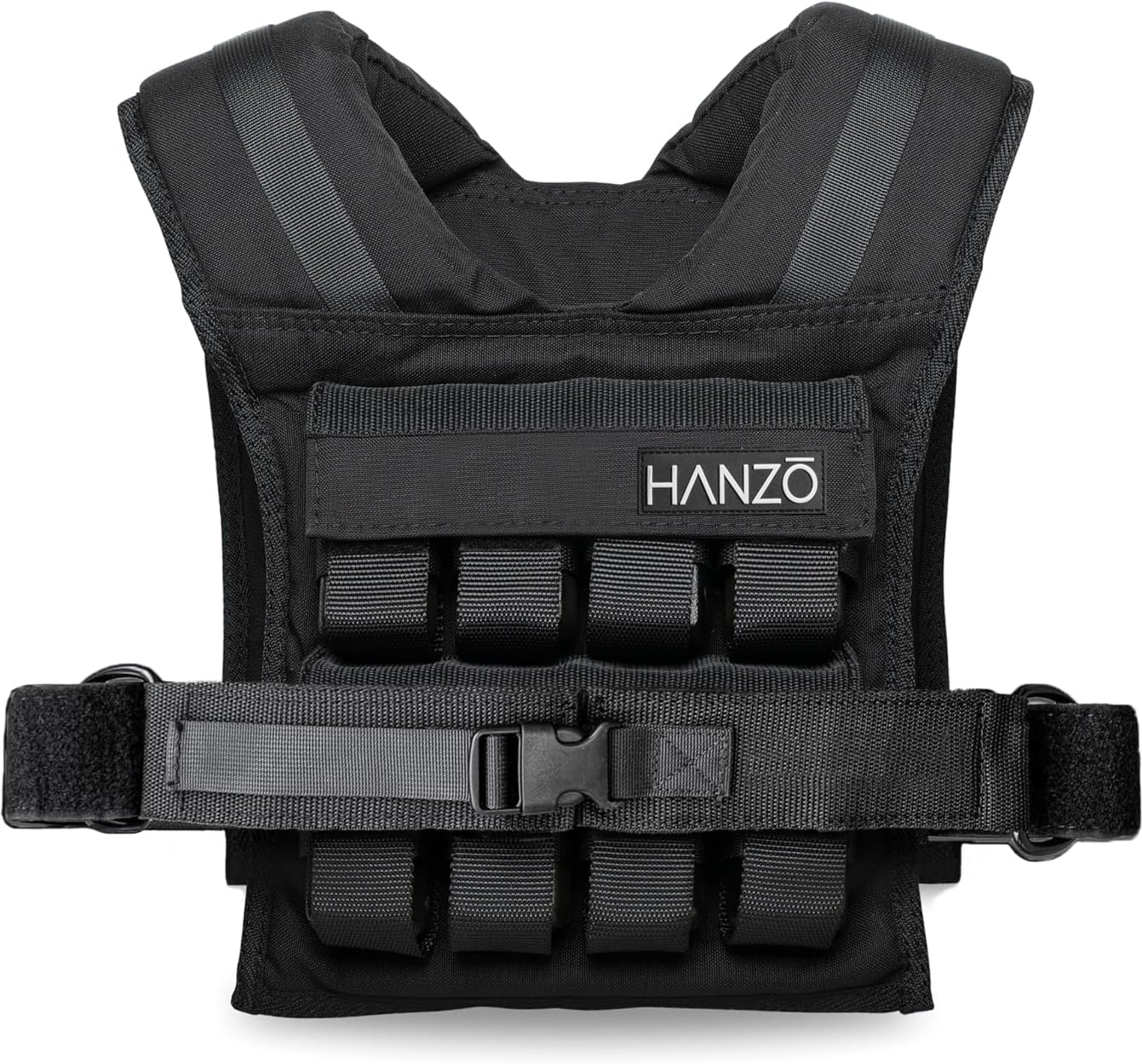
The HANZO vest uses 2.2 lb iron bars rather than sandbags, and the tight-fit pockets keep the plates virtually silent during movement — no audible shifting or clanking. The 1000D Oxford nylon shell and heavy-duty stitching give it the build quality needed for daily rucking sessions. Double-padded shoulders distribute the load broadly enough that users report minimal chafing even during 5-mile walks at 45 lb.
The vest ships with a full complement of 20 bars to reach the rated capacity, so there are no additional purchases required. Users highlight the balanced front-to-back weight distribution, which keeps the load centered over the torso rather than pulling forward or backward. The buckle closure system is secure but quick to operate, and the company’s customer service receives consistent praise for sending replacement parts promptly when needed.
One common note is that removing and replacing the bars requires firm pressure because the pockets are intentionally tight to prevent shifting. This makes mid-workout weight changes less convenient, but it also means the plates stay locked in place during dynamic movement. For dedicated ruckers who set their load before heading out, the HANZO offers exceptional stability at a mid-range price point.
Why it’s great
- 1000D Oxford nylon and heavy-duty stitching withstand daily rucking
- 2.2 lb iron bars stay silent and shift-free in tight pockets
- Includes all plates to reach full rated capacity out of the box
Good to know
- Tight pockets make on-the-fly weight changes difficult
- Some users report initial shoulder discomfort that resolves after break-in
5. MVRK Weighted Vest
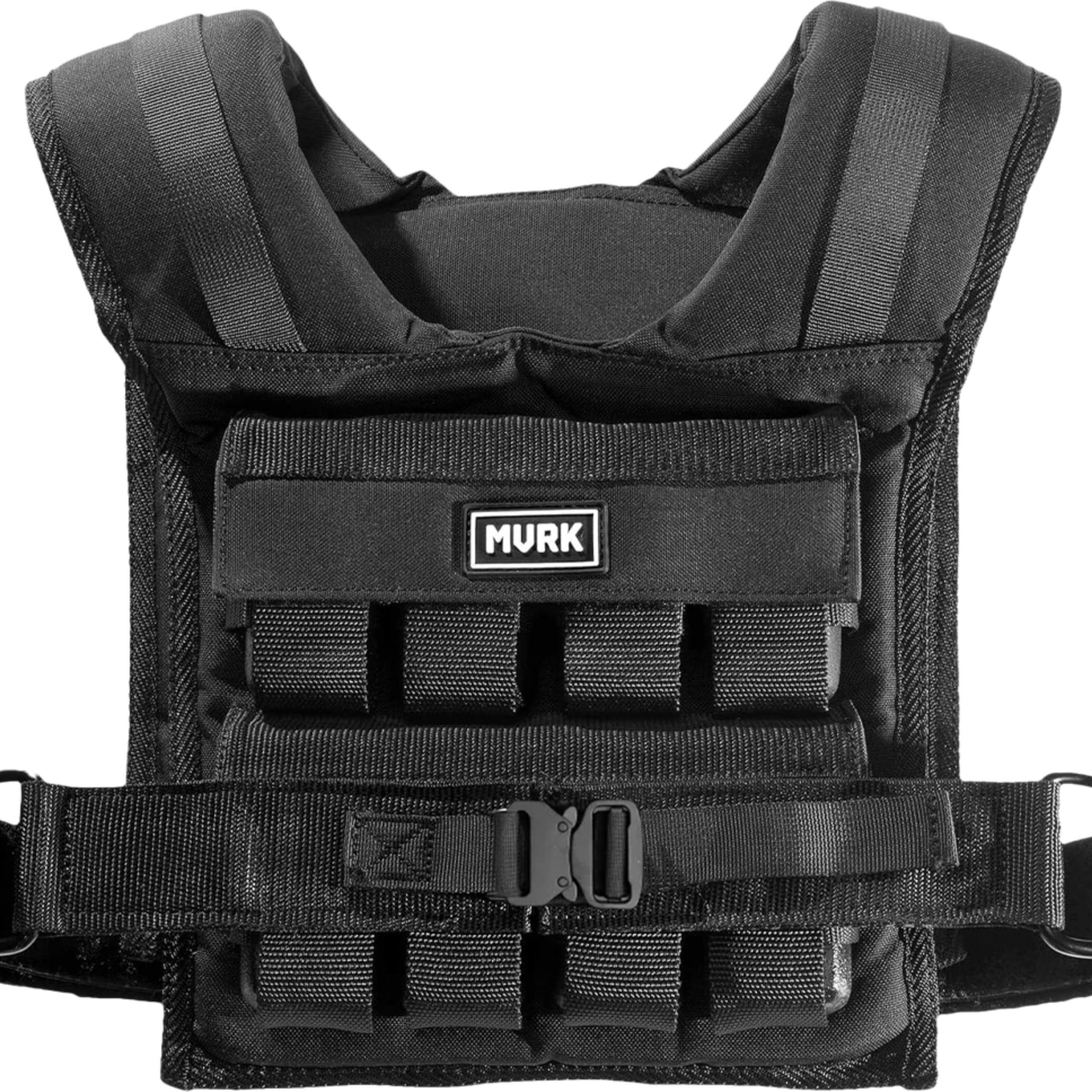
The MVRK vest scales from completely empty to 35 lb using 16 neoprene-coated iron weights, making it one of the most adjustable options for beginners who want to start light. Each weight block weighs approximately 2.18 lb, giving you 0.5 lb increments above competing 2 lb systems. The neoprene coating prevents the iron from contacting sweat directly, reducing rust buildup over time.
The compact design keeps the weight close to the body, and reinforced stitching at every stress point adds durability for high-volume training. Users report the vest fits comfortably for jogging, agility drills, and bodyweight exercises, though some shoulder rub occurs during explosive overhead movements. The front pocket is a practical addition for carrying keys or a phone during outdoor sessions.
At 35 lb maximum, the MVRK is better suited for athletes working up to 50 lb rather than those already training at that level. The neoprene coating is a thoughtful anti-rust measure that cheaper vests often skip, and the hand-wash instructions are straightforward — remove the weights, wash the shell, hang dry. If your target load sits at 35 lb or below, this is a well-built option with strong durability feedback.
Why it’s great
- Neoprene-coated iron weights resist rust from sweat exposure
- Scales from 0 to 35 lb for gradual progression
- Compact profile minimizes bulk and maintains range of motion
Good to know
- Maximum capacity of 35 lb is below the 50 lb threshold
- Some shoulder chafing reported during explosive overhead movements
6. Gymnastics Power Weighted Vest
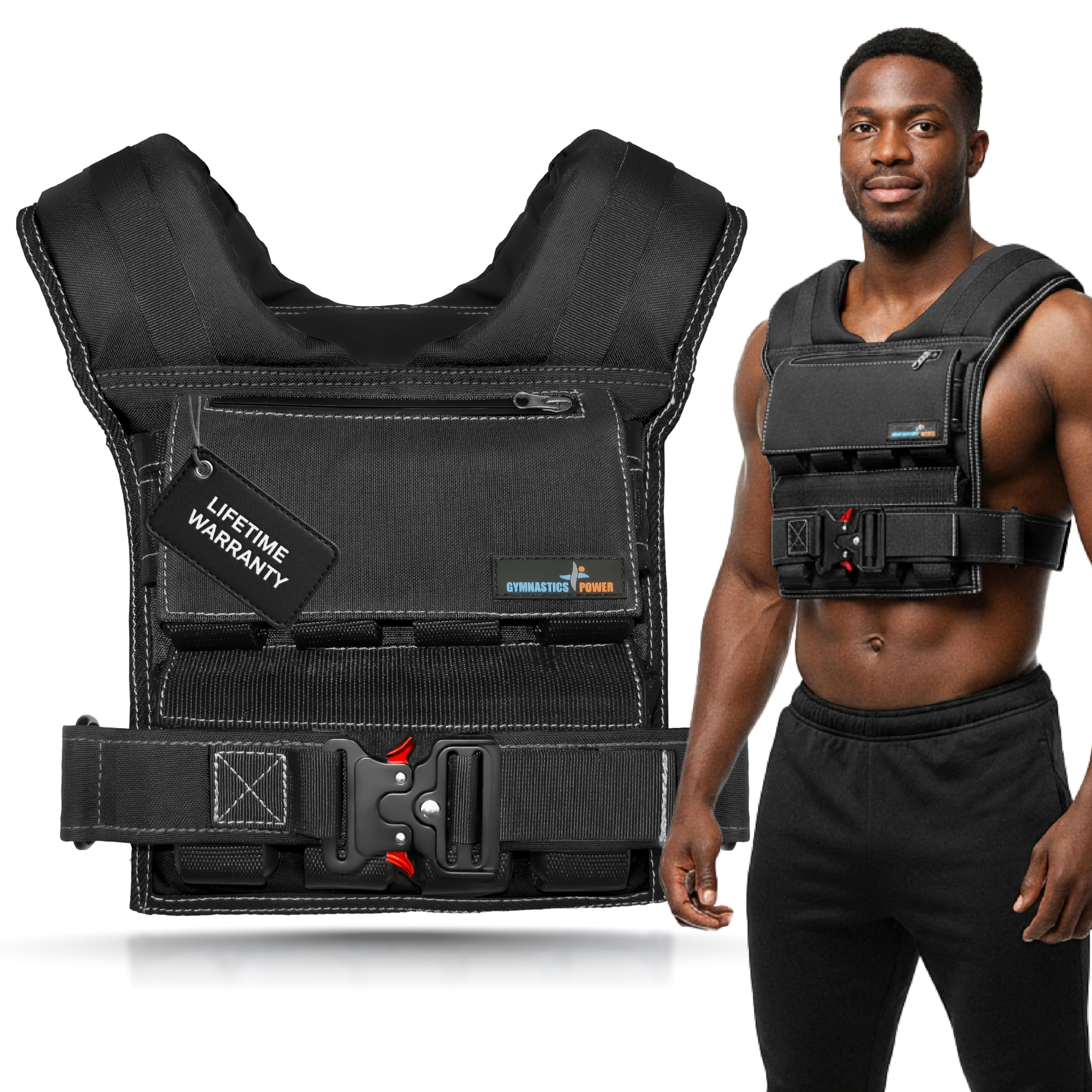
The Gymnastics Power vest is built around a cropped silhouette that stops above the hips, eliminating lower back pressure during sit-ups and floor exercises. The 1000D nylon construction with metal buckle closure gives it a robust feel, and the 2 lb steel weights provide 0.5 lb more precision per plate than 2.2 lb iron alternatives. The TPE foam shoulder padding is genuinely comfortable — multiple users confirm the vest feels lighter than its rated load.
The cropped design also means the vest doesn’t interfere with a weight belt or hip drive during squats. A front zippered pocket and reflective strip add utility for outdoor training in low light. Users of varying heights — from 5’3” to 6’6” — report the adjustable straps provide a secure fit without riding up. The machine-washable shell is a practical advantage for those training in hot conditions.
The 35 lb version is the most popular size, and the vest earns consistent 5-star reviews for build quality and comfort. The main drawback for the 50 lb target is the same as the MVRK: the capacity tops out below the 50 lb threshold. For athletes who prioritize comfort at moderate loads or who are still progressing toward heavier weights, this is the most comfortable vest in the mid-range bracket.
Why it’s great
- Cropped design eliminates lower back pressure during sit-ups and squats
- TPE foam shoulder padding provides exceptional comfort at load
- Machine-washable shell and reflective strip for outdoor use
Good to know
- Maximum capacity is 35 lb, not sufficient for 50 lb training
- Not ideal for users who prefer weight sitting lower on the torso
7. ZELUS Weighted Vest

The ZELUS vest offers an entry point into weighted training with sandbag-based resistance, available in configurations up to 60 lb. The reinforced nylon fabric and foam-padded shoulders provide adequate comfort for walking and light jogging, and the high-visibility reflective strips on the front, shoulders, and back add safety for outdoor use in low light. The hook-and-loop fastener system makes donning and doffing straightforward.
Multiple users at the 45 lb and 60 lb levels report the vest fits snugly without excessive jiggling during jogging, though some shifting occurs during dynamic movements. The sandbag compartments require effort to load initially, and reconfiguring the weight is less convenient than plate-based systems — you need to open the pouches and redistribute the bags. The vest is also bulky enough that sitting in a backed chair is uncomfortable, as noted by several reviewers.
The ZELUS is best suited for users starting weighted training who want to test the experience without a large investment. The 45 lb desert camo color option appeals to those who prefer a tactical aesthetic, but the sandbag system lacks the density and long-term durability of steel or iron plates. If you know you’ll progress to 50 lb training consistently, investing in a plate-based vest from the start saves money in the long run.
Why it’s great
- Lowest entry price point for testing weighted training commitment
- Reflective strips on all sides improve visibility for outdoor sessions
- Available in sizes up to 60 lb for heavier loads
Good to know
- Sandbag system is less convenient to adjust than plate-based alternatives
- Bulky profile makes sitting in a chair with the vest on uncomfortable
FAQ
Can I use a 35 lb vest and add weight to reach 50 lb?
How does weight distribution between front and back affect my workout?
Will heavy steel plates rust from sweat inside the vest?
What shoulder padding thickness is enough for 50 lb loads?
Final Thoughts: The Verdict
For most users, the 50 pound weight vest winner is the MIR PRO Weighted Vest because it supports a true 45-90 lb range with solid iron plates, giving you room to progress far beyond 50 lb without buying a second system. If you want a complete resistance kit with wrist and ankle weights included, grab the BeatBoost Weighted Vest Set. And for tactical training where high-and-tight core engagement matters, nothing beats the WOLF TACTICAL Weighted Vest.