
A 500mm³ build volume isn’t just big — it rewrites your entire approach to prototyping, cosplay, and production printing. Instead of slicing a helmet into four interlocking pieces and praying the seams match, you hit “print” once and walk away. The category demands a frame rigid enough to resist resonance across half a meter of travel, a motion system that doesn’t introduce ghosting at those spans, and a hotend that can push enough volumetric flow to keep cycle times sane. Most machines promising this envelope compromise speed or reliability to hit a price point. The trick is finding the one that delivers on all three without constant tinkering.
I’m Min — the co-founder and writer behind Gadgets Feed. I’ve spent hundreds of hours analyzing structural kinematics, volumetric flow rates, and real-world failure modes across the current generation of large-format FDM printers to separate genuine engineering from marketing claims.
This guide walks through the strongest contenders at the 500mm scale — from open-source CoreXY platforms to sealed multi-material monster machines — helping you decide which 500mm 3d printer actually belongs on your shop floor.
How To Choose The Best 500mm 3D Printer
Choosing a 500mm³ printer isn’t like picking an Ender 3. The physics scale differently. You need a frame that won’t flex, a motion system that can handle the mass of a large bed moving at speed, and a hotend that pushes enough plastic to fill that volume in a reasonable time. Here’s what to watch.
Volumetric Flow Rate (mm³/s) and Hotend Capability
At standard 0.4mm nozzles and 0.2mm layer heights, a 500mm³ cube takes about 2.5 kilograms of filament. If your hotend caps at 15 mm³/s, you’re looking at a multi-day print. High-flow hotends delivering 40 mm³/s or more cut that drastically. Check the nozzle temperature ceiling too — 300°C minimum for engineering materials, 350°C if you plan to run PPA-CF or similar abrasives.
Frame Rigidity and Motion System
A 500mm gantry amplifies every vibration. Look for aluminum extrusion thick enough to resist torsional flex — 4040 profiles or thicker. Linear rails on all axes beat v-slot wheels for longevity at scale. CoreXY kinematics reduce moving mass compared to traditional bedslingers, which matters enormously when the bed itself weighs several kilograms. Some higher-end options use lead screws or ball screws on Z for consistent vertical movement across the full 500mm travel.
Chamber Heating and Active Temperature Control
Large prints have massive surface area to volume ratio, meaning they cool unevenly and warp aggressively. A heated chamber — 55°C to 65°C — is almost mandatory for ABS, ASA, polycarbonate, and nylon. Some printers offer chamber heating as an optional upgrade; factor that into your total cost. The chamber should maintain temperature actively, not just passively trap waste heat from the bed.
Automatic Bed Leveling and First Layer Reliability
At 500mm, manual leveling is a nightmare. The bed is simply too large to get perfectly trammed by hand every time. Look for inductive probes, eddy current sensors, or load-cell-based systems that map the entire surface and compensate for minute warping. Strain gauge or eddy current sensors offer contactless measurement and don’t wear out. The best systems also check bed tilt automatically before every print.
Quick Comparison
On smaller screens, swipe sideways to see the full table.
| Model | Category | Best For | Key Spec | Amazon |
|---|---|---|---|---|
| Sovol SV08 MAX | CoreXY | Open-source flexibility with 500mm³ true build volume |
500 x 500 x 500 mm | Amazon |
| Creality K2 Plus Combo | CoreXY | Multi-color printing at 600 mm/s | 350 x 350 x 350 mm | Amazon |
| QIDI Max4 Combo | CoreXY | Reliable engineering-grade filament printing with 65°C chamber |
390 x 390 x 340 mm | Amazon |
| Snapmaker Artisan | Dual Extrusion | Modular 3-in-1 (print, laser, CNC) | 400 x 400 x 400 mm | Amazon |
| ELEGOO Jupiter 2 | MSLA Resin | Ultra-detailed large resin prints with 16K resolution |
302 x 162 x 300 mm | Amazon |
| Creality K2 Pro Combo | CoreXY | Multi-color with aluminum exoskeleton stability |
300 x 300 x 300 mm | Amazon |
| Original Prusa CORE One | CoreXY | Reliable enclosed printing with Prusa ecosystem |
250 x 220 x 270 mm | Amazon |
| Creality K2 Plus Combo | CoreXY | Premium 16-color multi-material workflow |
350 x 350 x 350 mm | Amazon |
| Original Prusa XL 5-Tool | Multi-Head CoreXY | Professional multi-material prototyping platform |
360 x 360 x 360 mm | Amazon |
In‑Depth Reviews
1. Sovol SV08 MAX CoreXY 3D Printer
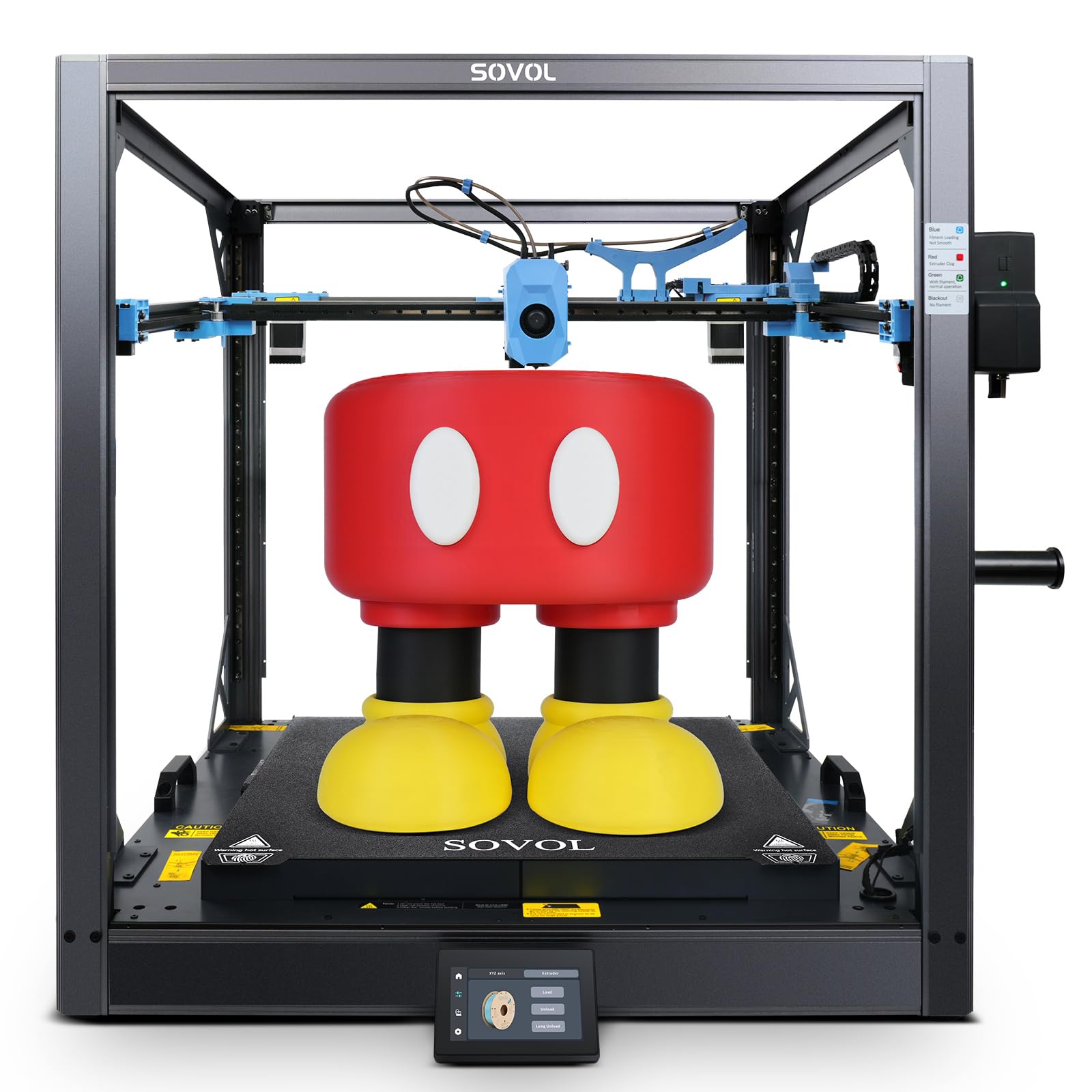
The Sovol SV08 Max delivers a true 500mm³ build volume — 19.7 inches on each side — in a CoreXY configuration that hits 700 mm/s with 40,000 mm/s² acceleration. That kind of speed at that scale is possible because of the lightweight gantry and the Voron 2.4-derived open-source design. It uses full XYZ linear rails, not v-slot wheels, so the motion stays consistent after hundreds of hours of large-format printing. The 1300W heated bed with an 8mm thick aluminum plate warms up fast and stays flat across the full 500mm span, which is critical for first-layer adhesion on prints that consume an entire kilogram spool each.
Leveling is handled by an eddy current sensor that maps the bed without physical contact — no wear, no drift. The built-in 1280×720 HD camera supports remote monitoring and time-lapse recording, and the machine runs Klipper firmware, giving you full control over tuning parameters through a web interface. The 300°C hotend with a 50 mm³/s flow rate handles PLA, PETG, ABS, nylon, and carbon-fiber composites. A smart auxiliary feeder includes tangle and clog detection, and the reserved interface lets you add a heated chamber module later if needed.
Some users report loose components from the factory, like belt tension and cable chain clips, so a thorough once-over before the first print pays off. The frame is heavy and rigid, with four Z-motors stabilizing the massive bed, and the open-source nature means replacement parts and upgrades won’t lock you into a proprietary ecosystem. For the build volume and speed it delivers, this is the most honest large-format printer on the market right now.
Why it’s great
- True 500mm³ build envelope for oversized parts.
- Open-source Klipper firmware with web-based control.
- Eddy current leveling and full linear rails ensure reliability at scale.
Good to know
- May require initial tuning of belt tension and hardware.
- Heated chamber module sold separately.
2. Creality K2 Plus Combo 3D Printer

The Creality K2 Plus Combo builds on the K2 platform with a 350mm³ envelope and a refined Creality Filament System (CFS) that supports up to 16 colors when you link four units. The step-servo motors with field-oriented control push 600 mm/s print speed and 30,000 mm/s² acceleration, while keeping noise levels surprisingly low for a machine this size. Dual AI cameras — one in the chamber for failure detection and one on the toolhead for flow rate optimization — provide real-time feedback that catches problems before they ruin a long print.
The actively heated chamber reaches 60°C, stabilizing ABS, ASA, and PPA prints without the warping that plagues open-frame machines at this volume. The hotend hits 350°C and uses a hardened steel nozzle, making it compatible with abrasive carbon-fiber nylons. The “Matrix” frame uses aerospace-grade die-cast aluminum alloy, and the dual Z-axis with four linear rods keeps the 350mm bed stable during rapid movement. Auto-leveling includes tilt adjustment before every print.
Customers report excellent out-of-box reliability, though some have encountered hotend clogs and firmware hiccups that required support intervention. The printer ships with one CFS unit and spools of RFID filament, which the CFS identifies automatically. The machine is heavy — plan for a two-person unboxing — but the print quality rivals printers costing significantly more. For multi-color large-format work, this is a strong contender.
Why it’s great
- Up to 16-color multi-material printing with CFS system.
- Active 60°C heated chamber for engineering filaments.
- Dual AI cameras for flow and failure monitoring.
Good to know
- Some reports of initial hardware defects and support delays.
- Very heavy; requires two people to set up.
3. QIDI Max4 Combo 3D Printer
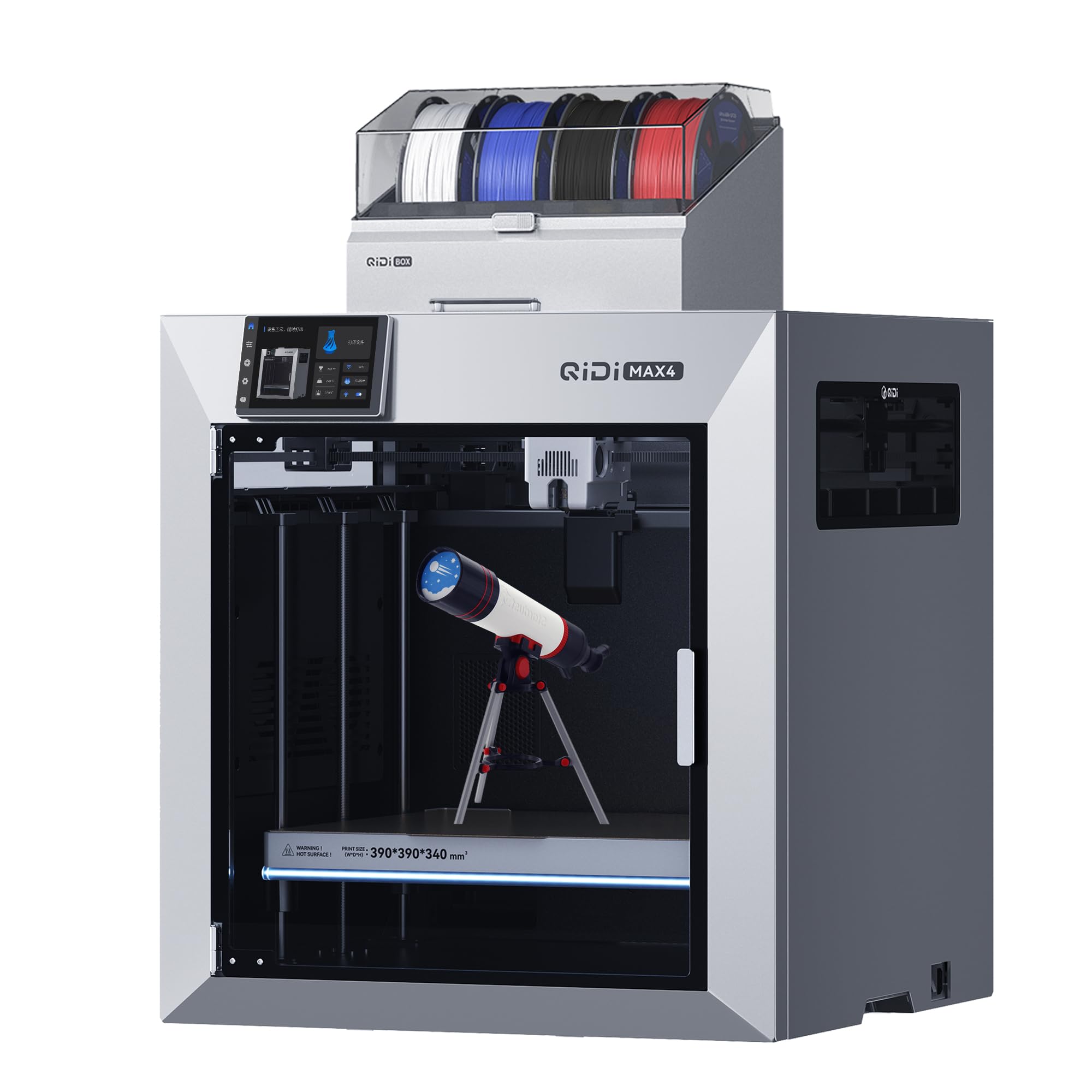
The QIDI Max4 Combo targets users who need reliable engineering-grade prints. With a 390 x 390 x 340 mm build volume — 55% larger than its predecessor — and a 65°C actively heated chamber, it handles ABS-CF, PC, PPS-CF, and other high-temperature materials that would warp in an unenclosed printer. The closed-loop motors on X and Y axes maintain positioning accuracy at speeds up to 800 mm/s, and the 2mm lead screw with anti-backlash nut on Z ensures consistent layer stacking across the tall build.
The 40 mm³/s high-flow hotend with hardened steel nozzle manages standard filaments and abrasive composites without swapping parts. The AI camera detects spaghetti failures and pauses automatically. The QIDI BOX add-on enables up to 16-color multi-material printing, though it’s worth noting the Polar Cooler is a separate purchase. The printer is almost fully open-source, compatible with multiple slicers, and the company supports right-to-repair, offering replacement parts and repair guidance for issues like a warped bed.
Some users report false triggers on the toolhead sensor and filament jams in the MMU boxes with brittle materials. The machine is large and heavy at 120 pounds, requiring dedicated floor space. Setup is straightforward with on-screen prompts, and first prints — even with generic PETG — often come out clean. For professional environments running PPA-CF or ABS-CF daily, the Max4 Combo delivers consistent quality that justifies the investment.
Why it’s great
- 65°C active heated chamber for high-temp engineering materials.
- Closed-loop motors on X/Y for precision at high speed.
- Open-source friendly with right-to-repair support.
Good to know
- Polar Cooler sold separately; not included.
- Brittle filaments can cause jams in the MMU system.
4. Snapmaker Artisan 3D Printer

The Snapmaker Artisan is a 400mm³ dual-extrusion 3D printer that also functions as a laser engraver and CNC machine when you swap the toolhead module — a genuinely useful feature for workshop environments. The dual extruder uses a 7:5:1 planetary gear system for consistent filament feed, supporting PLA, ABS, PETG, TPU, and nylon. The one-piece die-cast base plate and CNC-ground steel linear rails provide the rigidity needed for a 400mm envelope, and quick-swap toolheads let you switch between functions in under a minute.
The 7-inch touchscreen offers a clean interface for live status, nozzle temperatures, and G-code previews. The modular platform supports over 600 materials across its three functions, making it a flexible option for makers and small businesses. Users praise the laser engraving performance and the build quality of the aluminum frame, though the 3D printing speed is average compared to dedicated CoreXY machines of similar size.
Assembly is more involved than the quick-start guide suggests — some users report spending several hours, relying on YouTube videos for clarity. The slicer software can be buggy, and a small number of units arrive with extruder alignment issues. Support is responsive but resolution takes time. For a workshop that needs one machine for prototyping, engraving, and light CNC work, the Artisan saves space and money. For pure FDM print speed, a dedicated printer will serve better.
Why it’s great
- True 3-in-1 modular system (print, laser, CNC).
- All-metal frame with industrial-grade linear rails.
- Dual extrusion for support materials and multicolor.
Good to know
- Assembly instructions lack detail; expect a learning curve.
- Print speed is average compared to CoreXY competitors.
5. ELEGOO Jupiter 2 Resin 3D Printer
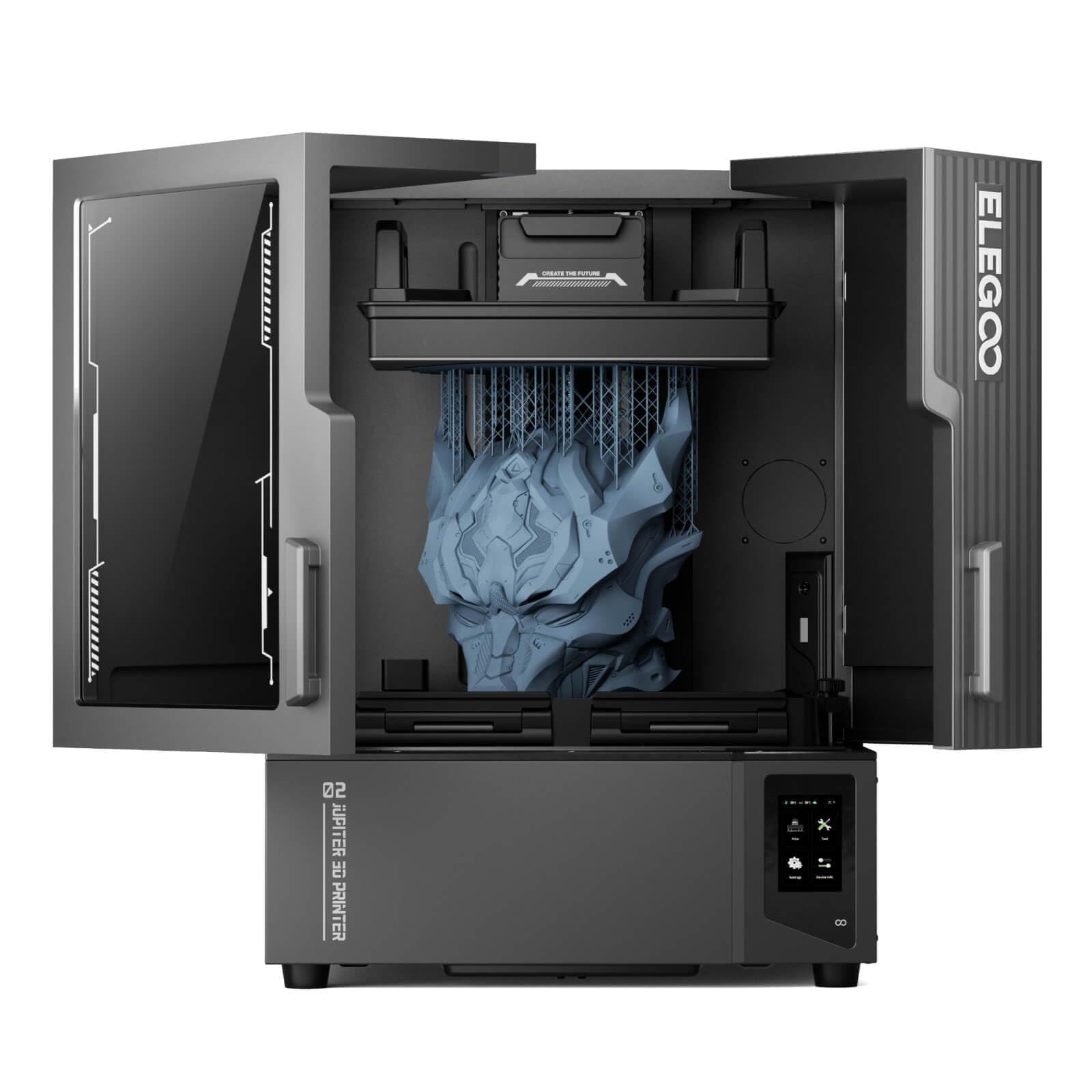
While most 500mm-scale printers use FDM technology, the ELEGOO Jupiter 2 brings a massive 302 x 162 x 300 mm resin build volume with an extraordinary 15120 x 6230 pixel resolution — 16K on the 20 x 26 micron XY axis. This translates to detail levels FDM simply cannot match: sharp corners, smooth curves, and no visible layer lines. The enclosed light source eliminates light leaks for uniform exposure, critical for reliability at this scale.
Multi-point auto leveling, smart tank heating that maintains 30°C, and an automatic resin feeding system minimize manual intervention. The double-door design and transparent window make checking progress easy, and the quick-release PFA film swaps out in seconds without tools. Onboard 8 GB ROM and dual-band Wi-Fi support OTA firmware updates and Wi-Fi cluster management for multi-printer setups. The built-in camera supports real-time monitoring and time-lapse with HDR for clarity across different resin colors.
The Jupiter 2 is large physically — nearly 28 inches deep — and requires a dedicated table. Some customers report that the auto-resin feed system is unnecessary for their workflow and that the included carbon filter loses effectiveness quickly. The lack of a hinged lid means you must remove it entirely for access. For users who need extreme detail on large models — jewelry patterns, dental models, or detailed figurines — this is the only realistic option at this build volume.
Why it’s great
- 16K resolution with 20 x 26 micron XY for unmatched detail.
- Smart tank heating and auto-resin feed for hands-free operation.
- Tool-free PFA film replacement speeds up maintenance.
Good to know
- Requires significant bench space and dedicated ventilation.
- Lid is not hinged, making access less convenient than competitors.
6. Creality K2 Pro Combo 3D Printer
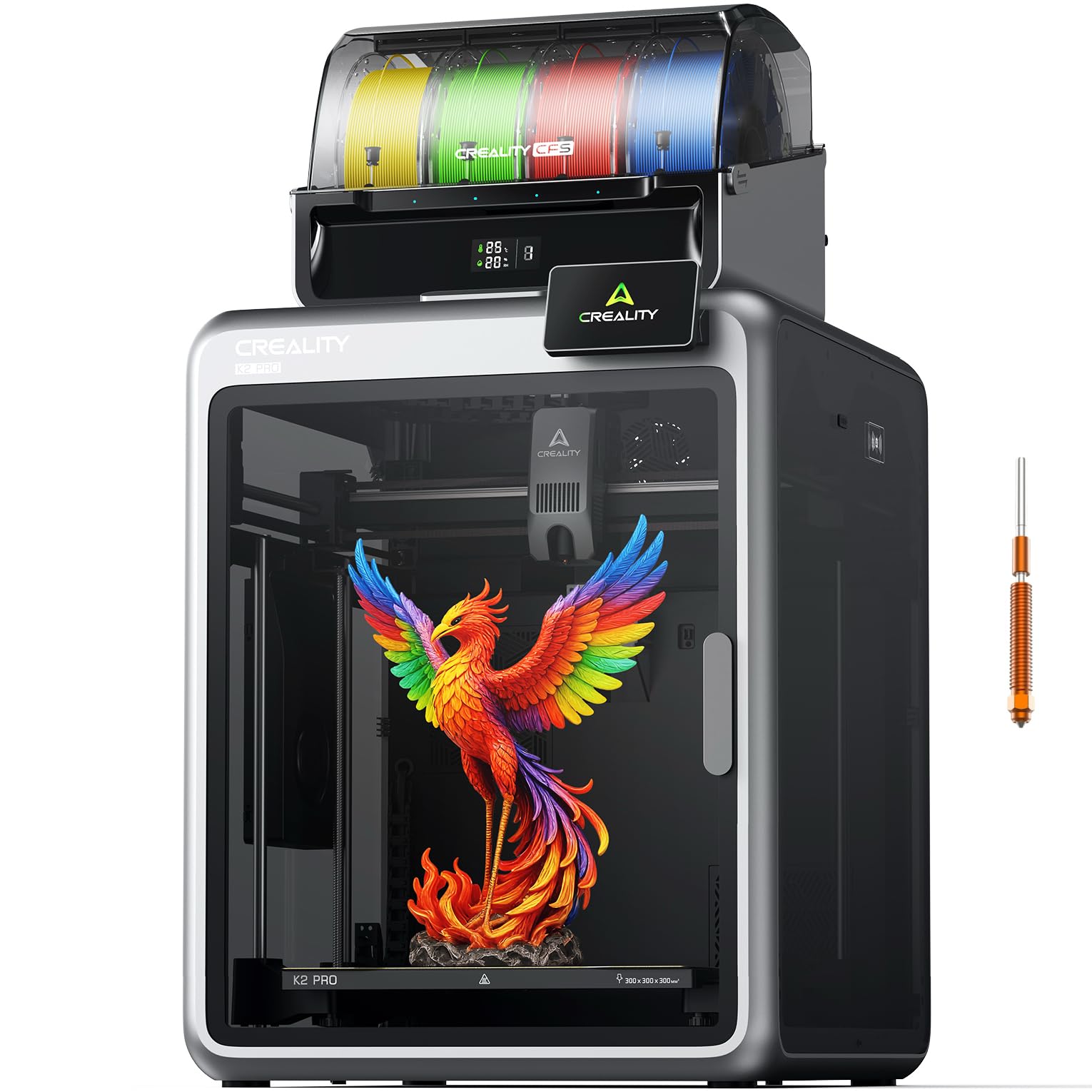
The Creality K2 Pro Combo offers a 300mm³ build volume in a package that emphasizes multi-color printing and structural rigidity. The aerospace-grade aluminum alloy exoskeleton and dual Z-axis with four linear rods minimize vibration at speed, while the quick-swap direct drive extruder pushes 40 mm³/s through a 300°C hardened steel nozzle. The Creality Filament System (CFS) supports up to 16 colors with four units, though only one CFS ships in the box. The CFS provides auto filament identification, relay printing when a spool runs out, and real-time humidity monitoring to keep filaments dry.
Dual AI cameras — one chamber-mounted for failure detection and one on the nozzle for flow tuning — provide comprehensive print monitoring. The chamber heats to 60°C, making ABS, ASA, and PPA-CF less prone to warping. Setup is straightforward, and many users report excellent reliability for the first several months, with successful prints in PLA, PETG, PA, and ABS without adhesion issues. The exhaust fan is noted as louder than the printer’s motion system.
Some customers experienced extruder clogs after extended use, particularly with filaments that break inside the extruder path due to enclosure heat. Creality support has been slow in some cases, with replacement parts requiring payment for shipping. The K2 Pro Combo is a capable multi-color machine for its size, but the mixed reliability reports suggest buyers should have some troubleshooting skills. For the build quality and feature set, it remains a solid mid-range choice.
Why it’s great
- Rigid aluminum exoskeleton and dual Z-axis for stable prints.
- CFS system with auto-filament identification and relay printing.
- Heated chamber up to 60°C for engineering materials.
Good to know
- Some reports of clogs and sensor issues after several months.
- Customer support delays reported for warranty parts.
7. Original Prusa CORE One 3D Printer
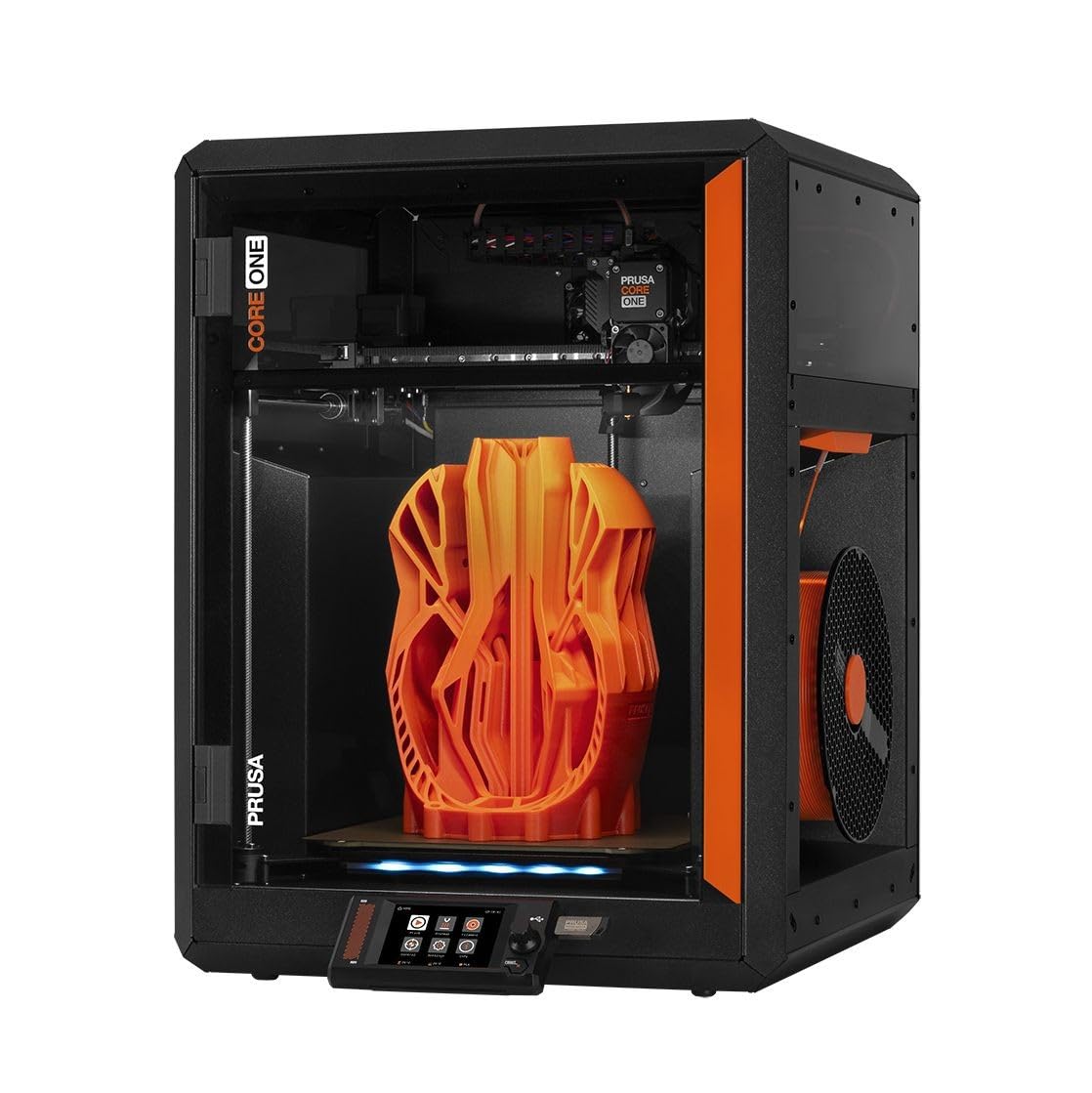
The Prusa CORE One brings the company’s legendary reliability into a CoreXY format with an enclosed chamber reaching 55°C. The build volume of 250 x 220 x 270 mm is smaller than other options in this guide, but the “made to last” engineering philosophy means exceptional consistency over thousands of hours. The all-steel exoskeleton frame provides maximum rigidity, and active temperature control inside the chamber allows printing PLA and PETG with the door closed — something many enclosed printers struggle with.
The printer is fully assembled and tested before shipping, includes a 1 kg spool of Prusament PLA Galaxy Black, and comes with lifetime technical assistance. Setup involves attaching a few transport-locked parts and takes minutes. The open-source ecosystem means no forced updates or cloud dependency, and the printer works with conventional slicers. Users consistently praise the print quality and the support provided by Prusa Research, though some have noted that the initial assembly of the machine can be time-consuming for the kit version.
Customer reports are positive overall, with long-term users logging thousands of hours without major issues. The MMU3 multi-material upgrade is available but adds significant cost and complexity. The CORE One is not a 500mm printer — its envelope is smaller — but for users who prioritize reliability over raw size, it’s the most dependable machine on this list. Fit and finish are exceptional, and the Prusa ecosystem integration with Printables.com and Prusa Slicer is seamless.
Why it’s great
- Industry-leading reliability and customer support.
- Open-source with no cloud lock-in.
- Active chamber temperature control for diverse materials.
Good to know
- Significantly smaller build volume than other printers here.
- Multi-material upgrade is expensive and complex.
8. Creality K2 Plus Combo 3D Printer
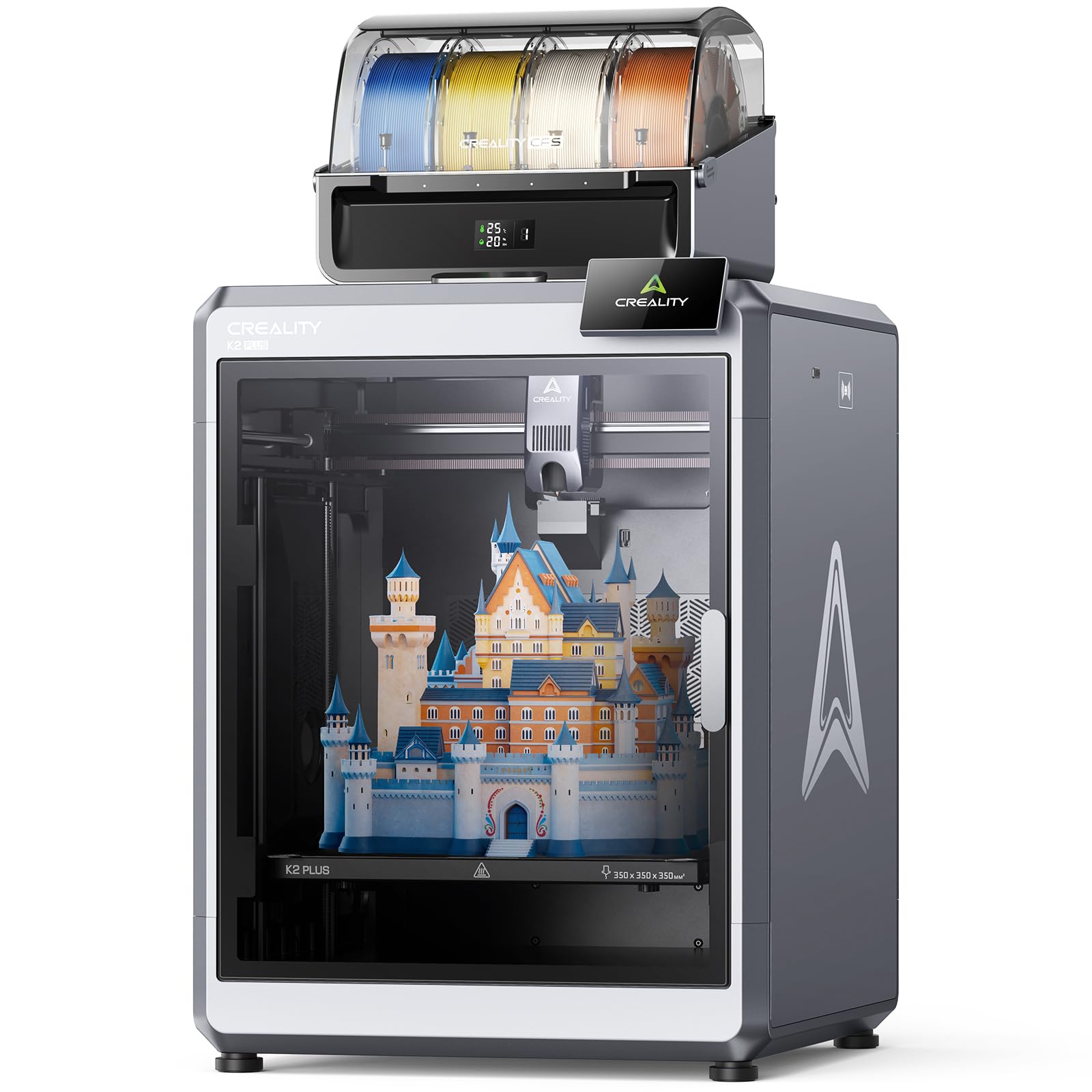
This variant of the Creality K2 Plus Combo is nearly identical to the earlier listing, shipping with a different bundle configuration that includes four 500g spools of Hyper RFID filament (black, white, red, blue). The 350mm³ build volume, 600 mm/s print speed, 30,000 mm/s² acceleration, and dual AI cameras are identical. The step-servo motors on all axes deliver quiet, precise movement, and the Matrix frame with aerospace-grade aluminum die-casting minimizes resonance during rapid prints.
The CFS unit identifies RFID-tagged filament automatically — color, type, and remaining length — and can relay to a similar spool when one runs dry. The chamber heats to 60°C, and the hotend reaches 350°C with a hardened steel tip. Auto-leveling includes independent Z-axis tilt adjustment before every print. Users who have logged over 1,400 hours report consistent quality with PLA and PETG, though ABS requires a dedicated nozzle due to poor hotend transition design that can cause jams.
Reports of initial defects — bad hotends, loose connectors, cracked ceramic heating elements — appear in a minority of units, along with firmware bugs that can brick the machine. Customer support responsiveness is inconsistent. For the bundle price, this combo offers strong value if you get a clean unit. The RFID filament system is genuinely useful for multi-color workflows, and the dual AI cameras add a layer of protection against failed prints during long unattended sessions.
Why it’s great
- Strong value with included RFID filament bundle.
- Dual AI cameras and auto-tilt leveling for reliability.
- 350°C hotend for advanced engineering filaments.
Good to know
- Some units arrive with hardware defects or firmware issues.
- ABS requires dedicated nozzle to avoid hotend jams.
9. Original Prusa XL 5 Independent Toolhead 3D Printer
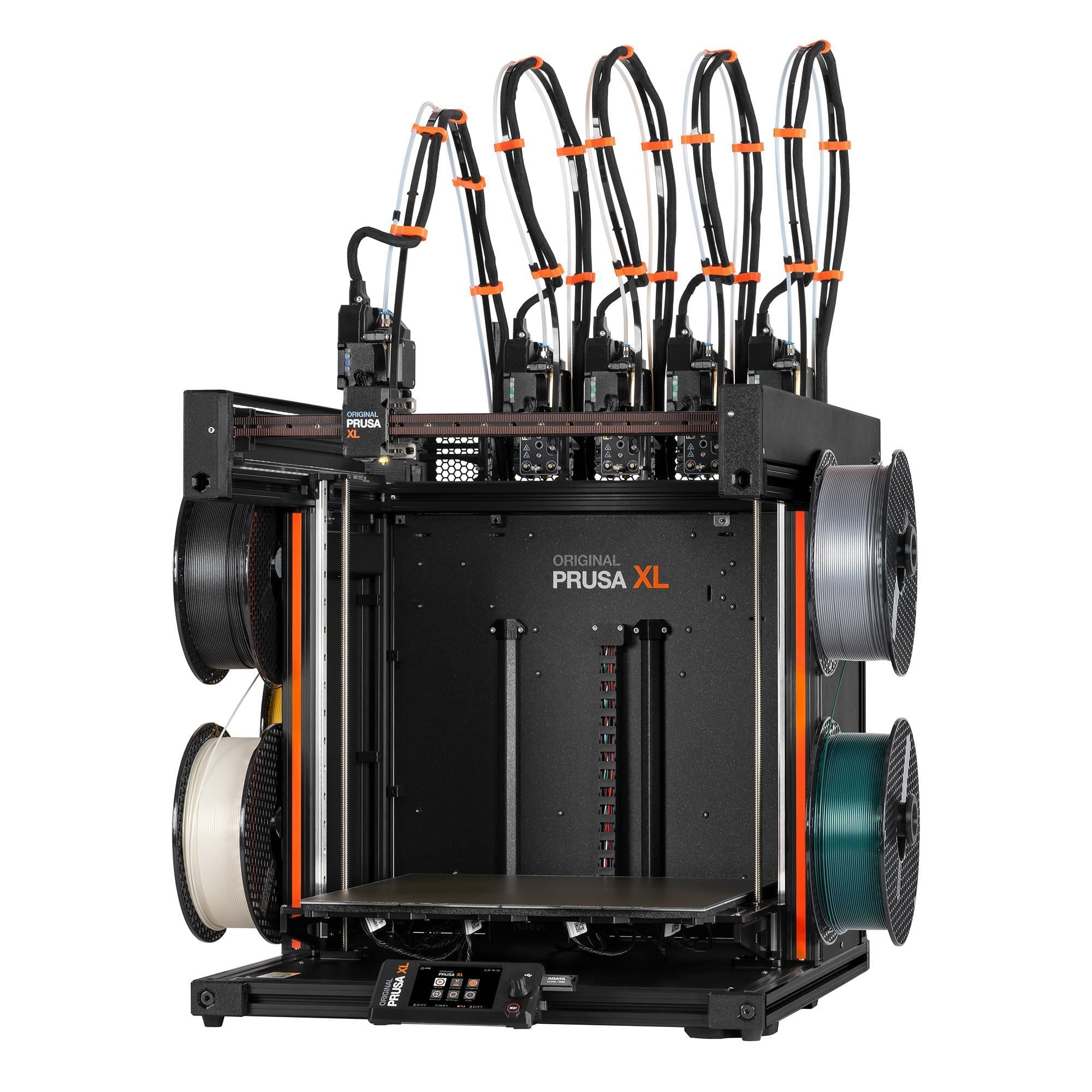
The Prusa XL with five independent toolheads is a professional prototyping platform that prints up to five materials or colors in a single job without the purge waste of a single-nozzle multi-material system. Each toolhead has its own extruder and hotend, allowing true independent switching — the printer parks one toolhead and picks up another in seconds. The 360mm³ build volume is generous for functional prototypes and full-color visual models, and the segmented heated bed uses intelligent heating zones to improve energy efficiency and reduce warping on large prints.
CoreXY kinematics maintain speed and precision even with frequent tool changes. The machine integrates seamlessly with Prusa software tools and the Printables.com model ecosystem. Each toolhead can use a different filament type — tough support material for overhangs, flexible for grips, rigid for structural parts — all in one print. The printer includes one Satin print sheet and a 1 kg spool of Prusament PLA. Prusa offers lifetime technical assistance and 24-hour professional customer service.
Assembly is required, with some users reporting it takes half a day to complete. The XL does not ship fully assembled, and some units arrive with damaged plastic parts or loose components due to shipping. The software setup has occasionally been buggy, requiring Wi-Fi configuration and workarounds. The cost is substantial, but for a shop that needs true multi-material prototypes without manual assembly, the XL justifies its price with capability no other consumer printer matches. Novices should look elsewhere — this machine rewards experienced operators.
Why it’s great
- Five independent toolheads for true multi-material printing with zero purge waste.
- Segmented heated bed reduces warping and energy use on large prints.
- Prusa ecosystem with lifetime support and open-source philosophy.
Good to know
- Requires significant assembly and troubleshooting; not for novices.
- High cost and some reports of shipping damage.
FAQ
Can a 500mm 3D printer print reliably without an enclosure?
What is the minimum layer height practical on a 500mm printer?
Final Thoughts: The Verdict
For most users, the 500mm 3d printer winner is the Sovol SV08 MAX because it delivers a true 500mm³ build volume with open-source Klipper firmware, eddy current leveling, and full linear rails at a price that undercuts the competition. If you want multi-color printing without sacrificing build quality, grab the Creality K2 Plus Combo. And for reliable engineering-grade filament printing with a heated chamber, nothing beats the QIDI Max4 Combo.