
A 500W solar panel is a serious piece of hardware, often spanning over seven feet in length and built to deliver real power for off-grid homes, RV fleets, and backup systems. But the market is flooded with panels that advertise “500W” under perfect lab conditions while struggling to hit 300W in your backyard under real sun and heat.
I’m Min — the co-founder and writer behind Gadgets Feed. I’ve spent hundreds of hours researching the cell types, bifacial gains, temperature coefficients, and real-world output data from thousands of buyer reports to separate the honest performers from the overhyped spec sheets in the 400W to 600W range.
Whether you’re building a stationary ground mount or a mobile setup for a camper, this guide will lead you to the most consistently delivered wattage per dollar among today’s best 500w solar panel options.
How To Choose The Best 500W Solar Panel
Selecting a 500W solar panel isn’t just about matching the wattage on the label to your power station’s input. Real-world performance depends on cell architecture, temperature handling, and whether the panel is designed for your specific mounting scenario — roof, ground, or portable.
Cell Technology: N-Type vs. P-Type vs. PERC
N-Type cells dominate the premium tier because they resist light-induced degradation (LID) better than traditional P-Type cells. In a 500W panel, this means you can expect higher stabilized output after the first few months of operation. PERC (Passivated Emitter and Rear Contact) cells are a step up from basic monocrystalline but still lag behind N-Type in temperature tolerance and shading response. For a serious 500W investment, N-Type is the smarter long-term bet.
Bifacial Gain and Its Real Impact
A bifacial panel with a transparent backsheet can capture reflected light from the ground, snow, or a light-colored roof, boosting total production by 10 to 30 percent. If you’re mounting the panel on a flat surface with high albedo (concrete, gravel, or white TPO), bifacial delivers meaningful extra wattage. On a dark asphalt roof or in a tight array with no rear access, the gain shrinks dramatically — making a monofacial panel a more cost-effective choice.
Voltage Matching and MPPT Controllers
500W panels typically produce 40 to 50 Voc. If your charge controller has a 150V or 250V input limit, you can run two panels in series without overvolting. For 12V battery banks, you must use a capable MPPT controller — PWM controllers will waste more than half the panel’s potential. Check your controller’s Voc rating before committing to a specific panel’s voltage curve.
Quick Comparison
On smaller screens, swipe sideways to see the full table.
| Model | Category | Best For | Key Spec | Amazon |
|---|---|---|---|---|
| SUNGOLDPOWER 500W (2-Pack) | Premium Monofacial | Fixed rooftop arrays | 2500Wh/day per panel (lab) | Amazon |
| Callsun 450W Bifacial (2-Pack) | Premium Bifacial | Ground-mount high gain | 450W per panel / 16BB N-Type | Amazon |
| JJN 550W Bifacial (2-Pack) | Premium Bifacial | Maximizing output per roof space | 1100W total / 23% eff. | Amazon |
| Renogy 590W N-Type (2-Pack) | Premium Bifacial | High-power stationary systems | 1180W total / 25% eff. | Amazon |
| EF ECOFLOW 125W Bifacial (4-Pack) | Modular Portable | Portable / camper setups | 500W total / 9.26 lb per module | Amazon |
| JJN 425W Bifacial | Mid-Range Bifacial | Single-panel off-grid builds | 425W / 25% eff. / 16BB | Amazon |
| Futuresolar 720W (2x360W) | Mid-Range Half-Cell | 24V battery / high-tolerance | 720W total / 19.5% eff. | Amazon |
| DOKIO 400W Mono | Budget-Friendly Mono | Sheds / greenhouses / small sheds | 400W / 9.84 ft MC4 leads | Amazon |
| ECOBOSS 400W (4x100W) | Budget Multi-Panel | Modular portable / redundant | 400W total / 4.79A per panel | Amazon |
In‑Depth Reviews
1. SUNGOLDPOWER UL61730 500W Monocrystalline (2-Pack)

This 500W panel uses 132 half-cut monocrystalline cells wired in a half-cell architecture that delivers higher shade tolerance than standard full-cell panels. At 82.44 x 44.65 x 1.38 inches, it’s a large-format panel designed to replace five 100W units with a single frame, reducing mounting hardware and wiring complexity for 12V, 24V, or 48V MPPT systems.
Buyers consistently report peak real-world output of 420W to 480W per panel under good sun, with several users running two in series to hit over 1000W on a 48V system. The UL61730 listing and CEC certification confirm it meets North American safety and performance standards, while the 2400Pa wind load and 5400Pa snow load rating make it suitable for permanent roof mounting across most climates.
For stationary installations where you want the highest watt-per-panel count without bifacial complexity, this is the most straightforward 500W solution on the market.
Why it’s great
- True 500W rating with half-cell technology for shade resilience
- UL61730 and CEC listed — meets insurance and rebate requirements
- 25-year linear performance warranty and 12-year workmanship warranty
Good to know
- Large and heavy at 56.2 pounds — two-person installation recommended
- Some buyers report minor polarity labeling confusion on early batches
2. Callsun 450W Bifacial N-Type (2-Pack)
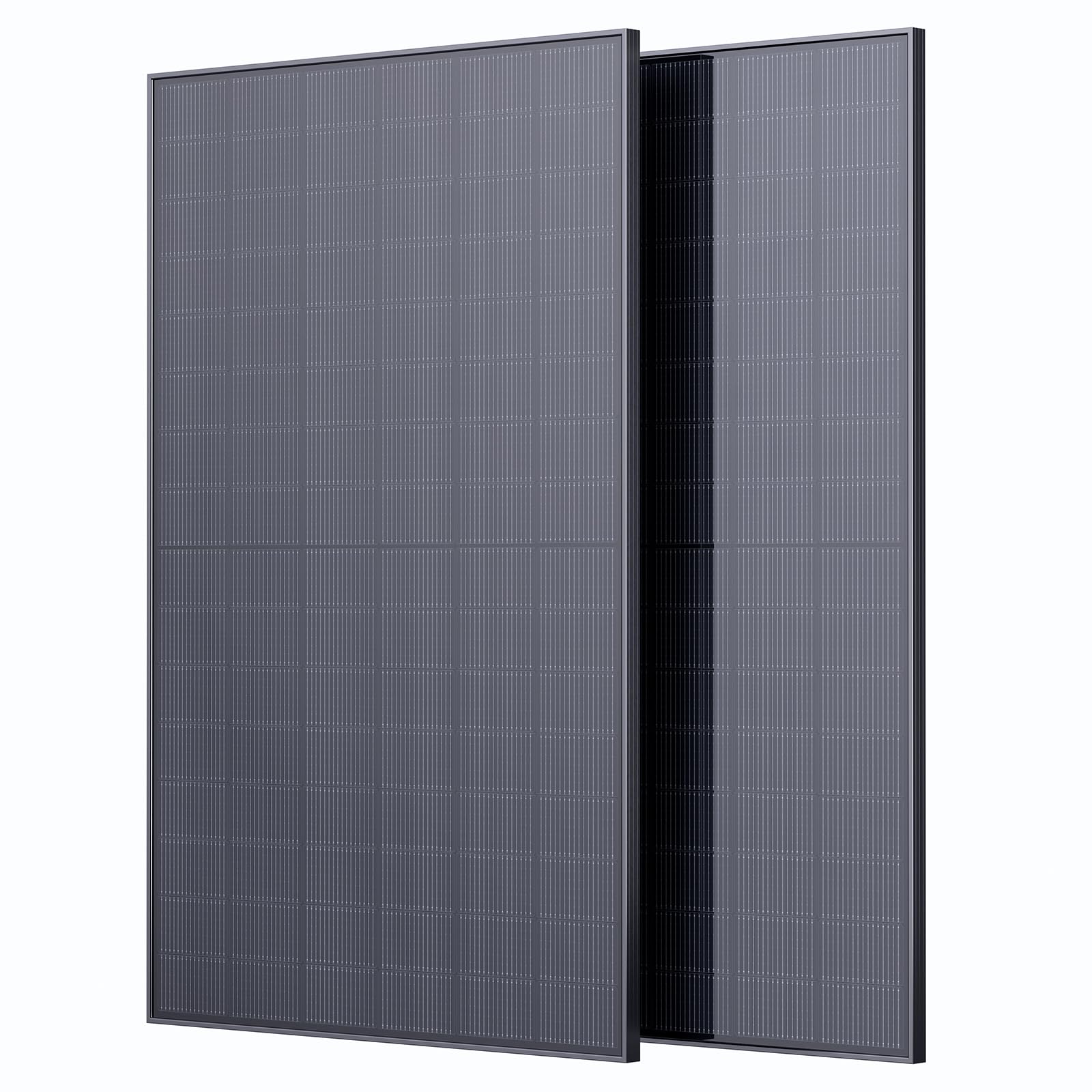
Rated at 450W per panel, these Callsun units consistently overproduce in real-world conditions thanks to their N-Type 16BB cell architecture and transparent backsheet bifacial design. Users report peak readings of 420W to 450W per panel on ground mounts with reflective surfaces, often hitting the rated output or exceeding it by 5 to 10 percent during midday sun on concrete or light gravel.
The dual-module parallel anti-shade design is a key differentiator: if one half of the panel is shaded by a chimney, vent, or passing cloud, the other half continues producing near its full potential rather than dropping to near zero like a traditional series-string panel. At 69.37 x 44.65 x 1.18 inches with double-glass construction, it’s built for long-term outdoor exposure with a 25-year linear power warranty.
Buyers running arrays of 6 to 7 panels report total system output of 1300W to 1900W in partly cloudy conditions, making this an excellent choice for anyone serious about squeezing every watt from a mid-sun or partially shaded installation.
Why it’s great
- Dual-module design halves output loss when partially shaded
- N-Type 16BB cells resist LID and deliver lower degradation over 25 years
- Double-glass and aluminum frame rated IP68 for all-weather outdoor use
Good to know
- Some users see output drop to ~380W in 90°F+ heat due to temperature derating
- Bifacial gain is minimal on dark asphalt or shaded ground surfaces
3. JJN 550W Bifacial N-Type (2-Pack)
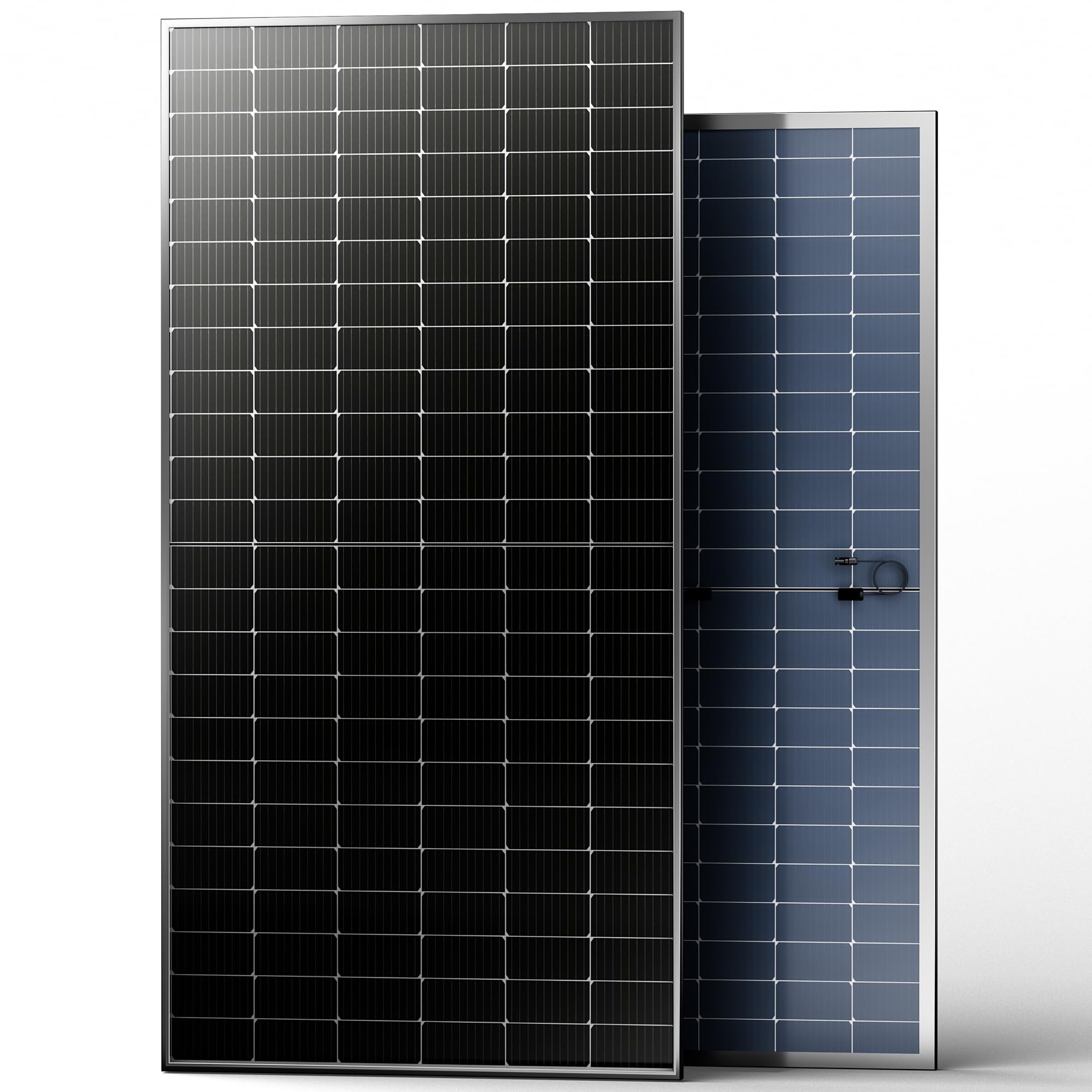
At 550W per panel and 89.61 x 44.65 x 1.38 inches, this is one of the largest consumer-available panels in the 500W class. The transparent backsheet and 16BB N-Type cells can deliver up to 30 percent more energy than a standard monofacial panel in high-albedo installations, making each panel effectively behave like a 600W+ unit when mounted over concrete or gravel.
Buyers consistently report excellent durability, with panels surviving heavy rain, snow, and wind without degradation. The pre-drilled mounting holes simplify installation, and wiring two in series produces around 84 Voc — well within the 150V limit of most mid-range MPPT controllers. For homeowners looking to maximize output per square foot of roof, this is one of the most watt-dense options available.
JJN backs the panel with a 30-year transferable power output warranty, which is exceptional for the price tier and signals confidence in the N-Type cell’s long-term stability.
Why it’s great
- 550W per panel — highest single-panel output in this guide
- 30-year transferable power output warranty for long-term peace of mind
- Bifacial design adds up to 30% energy gain over standard panels
Good to know
- Very large and heavy at 123.4 pounds for the 2-pack — plan for structural support
- Packaging quality varies: some buyers report damage during shipping
4. Renogy 590W N-Type Bifacial (2-Pack)
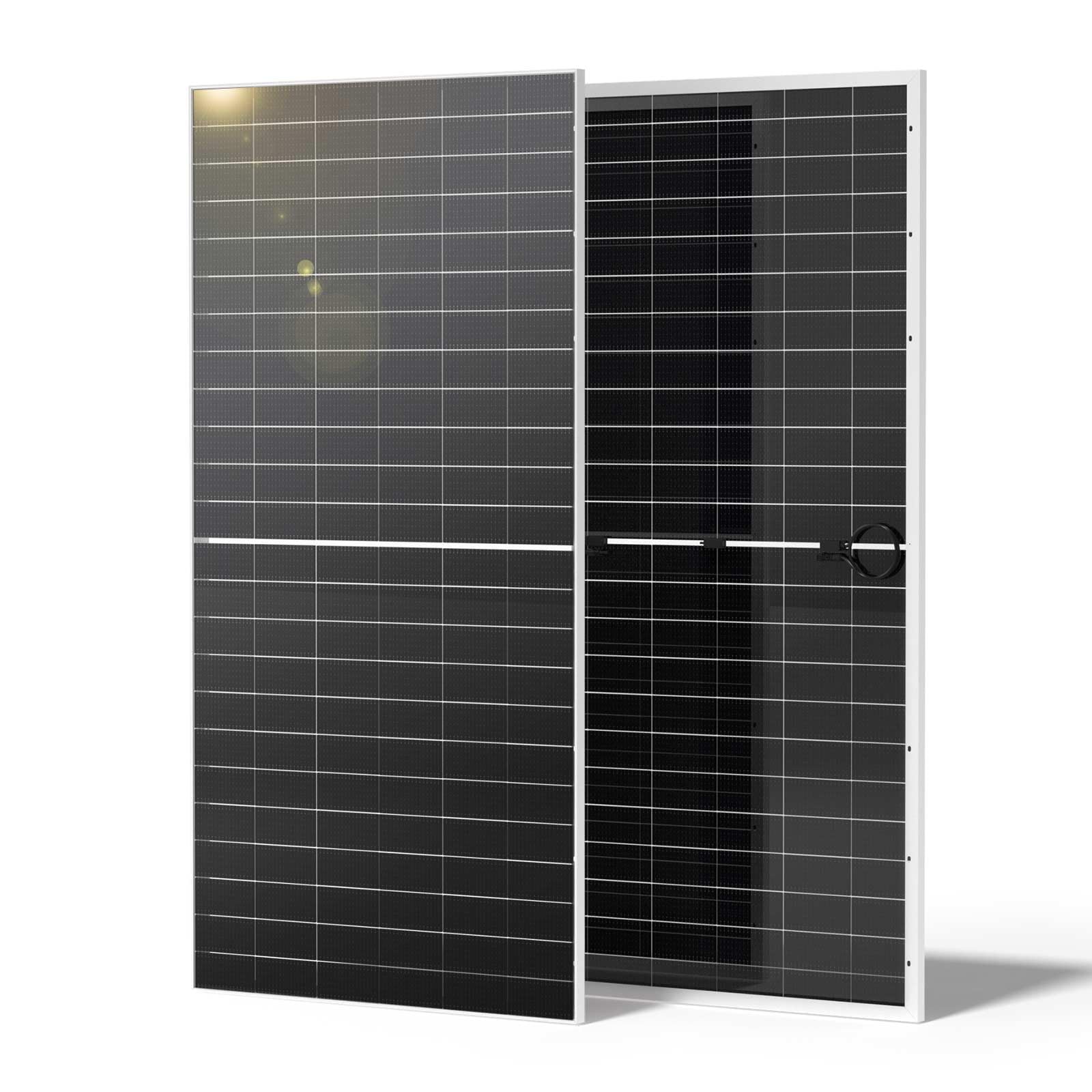
Renogy brings its well-established reputation to the 590W N-Type bifacial panel, featuring A+ grade cells and 16BB technology that delivers up to 25 percent greater conversion efficiency compared to earlier PERC designs. The transparent backsheet enables 5 to 30 percent energy gain from reflected light, and the corrosion-resistant black aluminum frame handles 2400Pa wind loads and 5400Pa snow loads with ease.
In real-world testing, buyers report spot-on voltage output and excellent performance when paired with a Renogy Rover 60A MPPT controller. A typical installation of two panels in series on a sunny day delivers around 1000W to the battery bank, even with 150 feet of 8AWG wire. The IP68-rated junction box adds another layer of waterproofing for permanent outdoor installations.
For buyers who trust the Renogy ecosystem and want a matched panel-controller setup with minimal compatibility headaches, this is the most plug-and-play high-wattage option available.
Why it’s great
- Renogy ecosystem compatibility with Rover and other MPPT controllers
- A+ grade N-Type cells minimize LID and hot-spot formation
- Durable build survives rough handling during U-Haul transport and mounting
Good to know
- Awkward size (89.7″ long) requires four people for safe installation
- Price can fluctuate — some buyers report post-purchase drops
5. EF ECOFLOW 125W Bifacial Modular (4-Pack / 500W)

The EF ECOFLOW 125W bifacial panel takes a different approach: instead of one massive rigid panel, you get four 125W modules that combine into a 500W array with XT60W connectors that auto-parallel when linked. Each module weighs just 9.26 pounds and includes an integrated 30 to 60-degree adjustable kickstand with a solar angle guide — no separate mounting hardware required for portable use.
Buyers consistently report hitting 500W total from the four-panel set in direct sun, with the bifacial design adding 5 to 20 percent extra from ground reflection. The modular nature means you can deploy just one or two panels for smaller loads, then add more when you need full charging capacity for a Delta Pro or similar large power station. The XT60W connectors are waterproof and include MC4-compatible adapters for third-party systems.
The trade-off: the panels are lightweight and can be blown over in moderate wind unless staked or sandbagged, and the ultra-thin tempered glass is more fragile than a standard 500W rigid panel. But for campers and RV users who need portable 500W that fits in a car trunk, this is the most flexible option by far.
Why it’s great
- Modular 500W at 37 pounds total — can split into 1 to 4 panels for lighter carry
- Integrated kickstands and solar angle guide for zero-hardware setup
- Bifacial N-Type cells with IP68 rating for outdoor weather resistance
Good to know
- Light panels blow over easily in wind — need stakes or sandbags
- XT60i connectors limit series/parallel reconfiguration flexibility
6. JJN 425W Bifacial N-Type 16BB
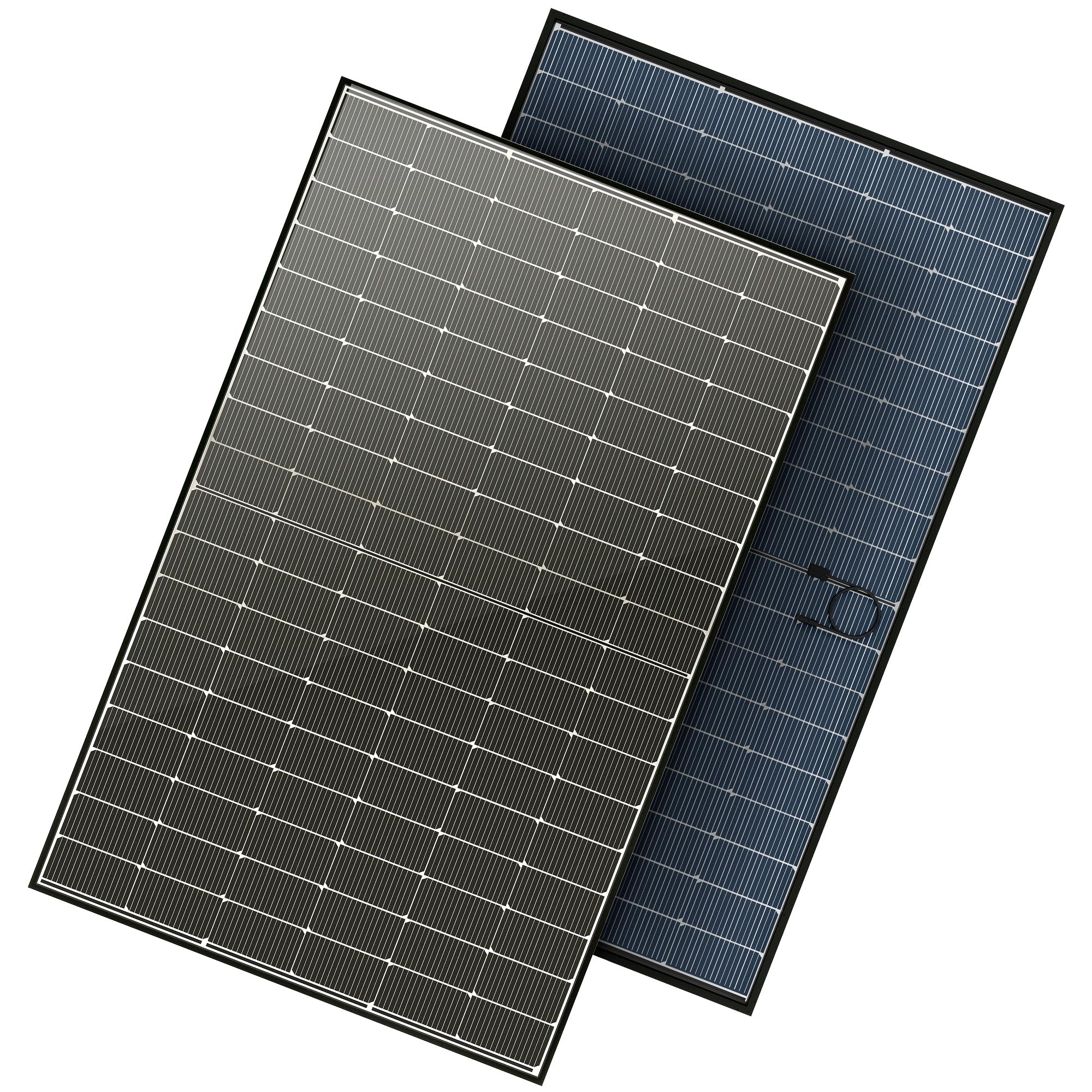
Priced to undercut most 425W bifacial panels, this JJN model uses 16BB N-Type cells and a transparent backsheet to harvest reflected light. The panel measures 44.7 x 67.8 x 1.2 inches and weighs 51.6 pounds, making it manageable for a two-person roof install. The 25 percent efficiency rating is among the highest for this wattage class.
Real-world output reports are strong: a mobile-mounted panel regularly delivers 380W to 420W, and on partly cloudy days users still see 100W+. The 30-year power output warranty is a standout, especially at this price point. Buyers running two panels in parallel report total system output of 1200W to 1500W, covering most baseline house loads.
The main caveat is cosmetic consistency — a small number of buyers report minor cell dot imperfections that don’t affect output but may bother perfectionists. For the price and warranty length, however, this is a very competitive entry into the 400W+ bifacial space.
Why it’s great
- 30-year power output warranty offers exceptional long-term value
- Bifacial N-Type design delivers 380W+ in real-world mobile setups
- Lightweight enough at 51.6 lb for single-person roof handling with care
Good to know
- Some units arrive with small cosmetic cell imperfections
- Cable lengths could be longer for wide-panel installations
7. Futuresolar 720W (2x360W) Half-Cell Mono PERC
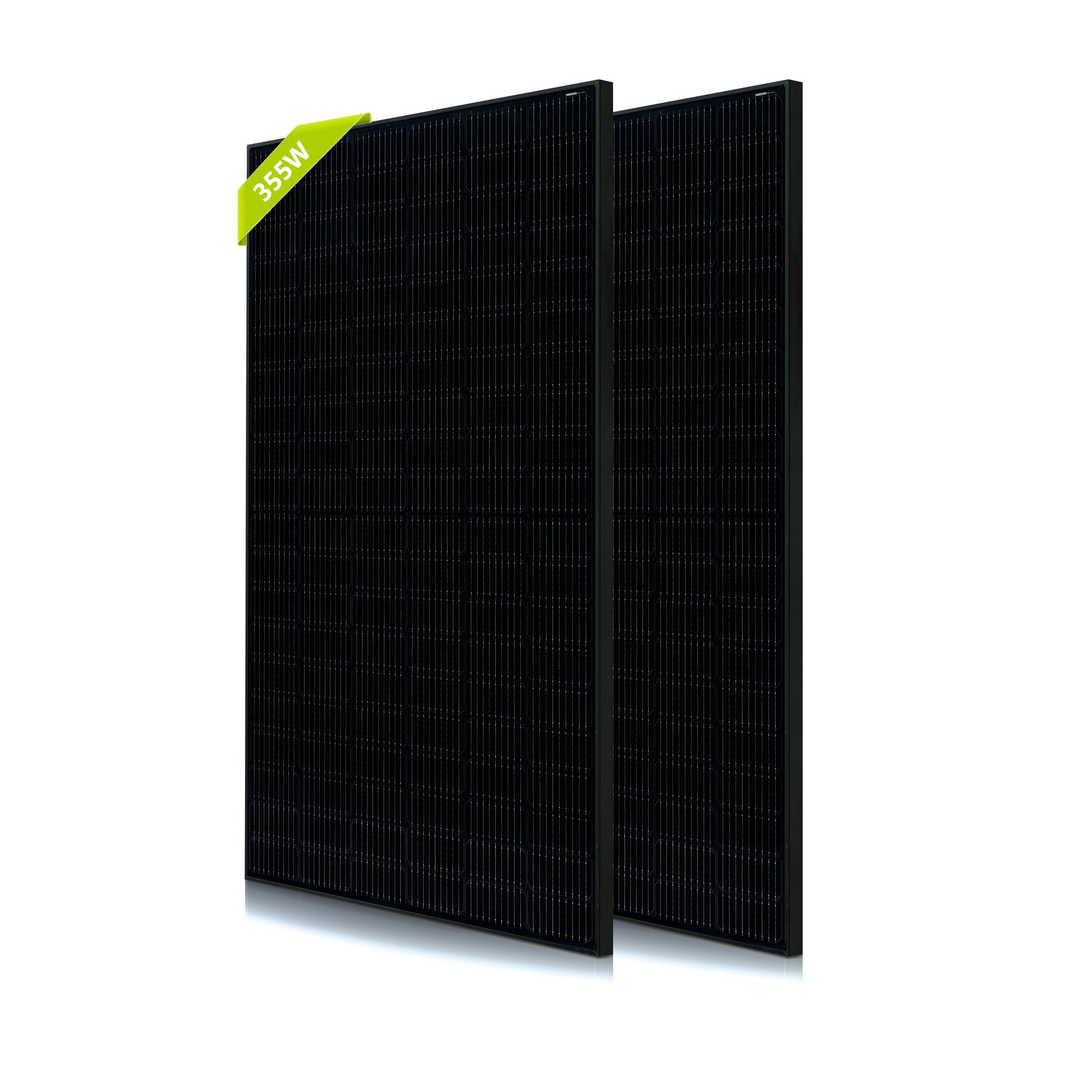
This 2-pack of 360W half-cell Mono PERC panels delivers 720W total, placing it below the 500W single-panel target but offering a combined array that’s more flexible for 24V systems. The half-cell design improves shade tolerance because each panel is effectively two smaller sub-strings — if one half is shaded, the other still produces. The PERC technology adds rear-surface passivation for slightly better low-light performance than standard mono.
Buyers praise the output consistency, with panels regularly hitting close to their rated amps and volts. At 70 x 41.4 x 1.38 inches, these panels are slightly shorter and wider than some 500W units, which can be an advantage on certain roof pitches. The 10-year workmanship warranty plus 25-year linear performance warranty provides solid long-term coverage.
Packaging is a recurring concern — multiple buyers report boxes arriving damaged, though the panels themselves usually survive. If you’re building a 24V system and want the shade-tolerance benefits of half-cell technology without paying for N-Type or bifacial, this is a reliable mid-range pick.
Why it’s great
- Half-cell PERC design delivers superior shade tolerance for partial sun
- Ideal for 24V battery systems with standard MC4 quick-connect cables
- 25-year linear power warranty at a competitive price point
Good to know
- Packaging is insufficient — high risk of box damage during shipping
- Some units arrive with dents or broken glass; inspect immediately upon delivery
8. DOKIO 400W 31V Monocrystalline

The DOKIO 400W panel replaces four 100W units with a single 67.8 x 44.6 x 1.2-inch frame, reducing the number of branch connectors and potential failure points. The 9.84-foot MC4 leads are a practical touch — they eliminate the need for extension cables in most shed and greenhouse installations, reducing voltage drop from unnecessary connectors.
In real-world testing, two panels in parallel deliver around 560W under partly cloudy conditions, and the 31V output voltage works well with MPPT controllers designed for 12V or 24V batteries via series or parallel wiring. The tempered glass and aluminum frame construction is weather-resistant for permanent outdoor exposure.
The laboratory STC rating is 400W, but buyers should expect 300W to 340W in typical midday conditions — consistent with the NOCT standard. For the price, this is a straightforward, no-frills panel that works best for charging a dedicated battery bank in a small workshop, greenhouse, or RV where 400W is the target.
Why it’s great
- Long 9.84 ft MC4 leads reduce need for extension cables in tight spaces
- Single 400W panel simplifies wiring vs. multiple 100W panels
- Fast shipping with corner protectors for damage prevention
Good to know
- Real-world output drops to 300-340W in typical sun due to NOCT derating
- Requires MPPT controller for acceptable performance — PWM wastes significant wattage
9. ECOBOSS 400W (4x100W) N-Type 16BB
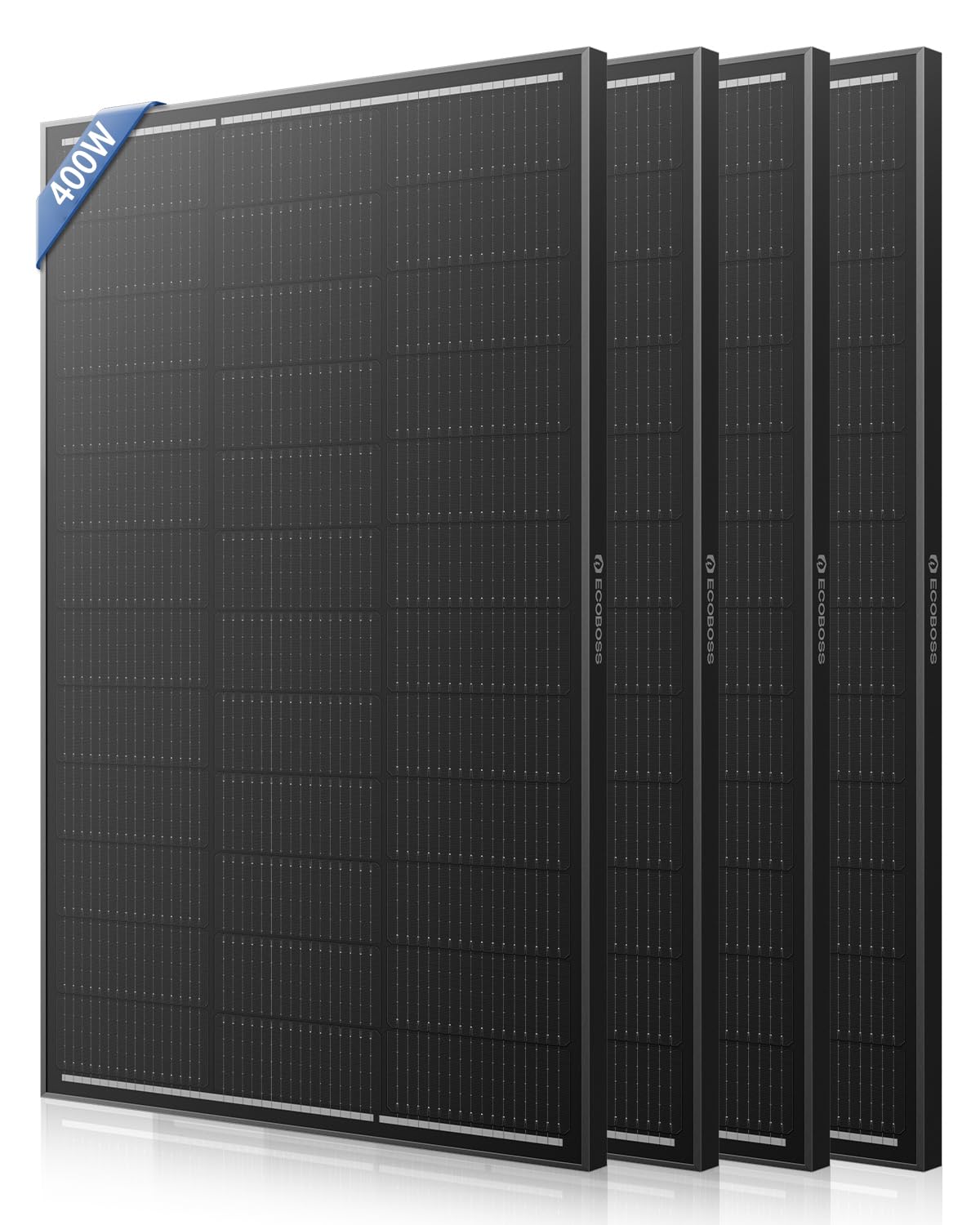
This 4-pack of 100W N-Type 16BB panels is the most modular option in the budget tier. Each panel measures 23 x 35.8 x 1.18 inches and weighs roughly 12 pounds, making them easy to carry and position individually for sun-tracking across the day. The N-Type cells deliver better low-light performance than basic polycrystalline panels, and the 16BB grid improves current collection efficiency even under partial shade.
Buyers consistently report each panel producing 80W to 100W in real-world conditions, with a 4-panel array hitting 350W to 400W at solar noon. The 25.6 percent efficiency rating is competitive for this form factor. The 12AWG wire is noted as a positive touch — thicker than the 14AWG found on many budget 100W panels, reducing voltage drop in longer runs.
The trade-off is wiring complexity: you’ll need branch connectors to parallel the four panels, and the total array output of 400W falls short of the 500W target. But for beginners or anyone wanting a portable, modular 400W system that can be split into smaller units for trickle charging multiple batteries, this is an excellent entry point.
Why it’s great
- Modular 4-pack design allows flexible deployment and easy single-panel carrying
- 12AWG wire reduces voltage drop compared to typical 14AWG budget panels
- N-Type 16BB cells deliver better shade tolerance than basic poly panels
Good to know
- Total output is 400W — 100W short of the 500W class covered in this guide
- Requires additional branch connectors for parallel wiring of the 4-panel array
FAQ
Can I use a 500W solar panel with a 12V battery bank?
How much space does a single 500W solar panel require?
How much power will a 500W solar panel produce per day?
Is bifacial worth the extra cost for an RV roof installation?
What gauge wire do I need for a 500W solar panel?
Final Thoughts: The Verdict
For most users, the 500w solar panel winner is the SUNGOLDPOWER 500W (2-Pack) because it delivers verified UL61730-rated output with half-cell shade tolerance and a 25-year warranty at a competitive price per watt, all without the bifacial premium. If you want maximal energy harvest from a ground mount over reflective surfaces, grab the Callsun 450W Bifacial (2-Pack). And for portable setups where you need to move panels between campsites, nothing beats the EF ECOFLOW 125W Modular (4-Pack) for flexibility and ease of transport.