
When your virtual machine cluster is thrashing swap files or your in-memory database queries are hitting disk latency, you have moved past the territory where 128GB or even 256GB of RAM feels adequate. A 512GB RAM configuration is not about casual multitasking — it is the memory threshold where enterprise virtualization, large-scale data analytics, and high-performance computing begin to breathe. At this capacity, memory bandwidth and rank configuration matter as much as raw gigabytes, and choosing the wrong DIMM topology can bottleneck an entire server rack.
I’m Min — the co-founder and writer behind Gadgets Feed. I have spent hundreds of hours analyzing server memory specifications, comparing DDR4 LRDIMM vs. RDIMM performance curves, and cross-referencing compatibility matrices for workstation and datacenter deployment scenarios to build this guide.
Whether you are populating a PowerEdge for a home lab or scaling a production virtualization host, every option here is built around one central question: what is the actual best 512gb ram configuration for your specific workload and platform constraints?
How To Choose The Best 512GB RAM Configuration
A 512GB RAM deployment is a platform-level decision, not a simple DIMM purchase. The motherboard, CPU memory controller, and operating system all impose constraints. Ignoring the rank geometry or mixing ECC types will lead to POST failures or crippled performance.
LRDIMM vs. RDIMM — the 512GB gatekeeper
Most dual-socket servers based on Intel Xeon E5 v4 or newer support eight memory channels per CPU. To reach 512GB with 64GB DIMMs, you need load-reduced DIMMs (LRDIMMs) rather than standard registered DIMMs (RDIMMs). LRDIMMs buffer the data signals and reduce the electrical load on the memory bus, allowing eight ranks per channel without signal degradation. RDIMMs typically top out at 256GB on the same hardware because the memory controller cannot drive the higher rank count.
Rank configuration — 4Rx4 is your friend
A 64GB DDR4 LRDIMM is almost always manufactured as a quad-rank (4Rx4) module. This means each DIMM presents four ranks to the memory controller. In an eight-DIMM-per-socket configuration, you are asking the integrated memory controller (IMC) to drive 32 ranks per socket. Not all IMCs handle that gracefully. Intel Xeon Scalable (first and second gen) and Xeon E5 v4 series are tested for this load. Consumer platforms like Core i9 or Threadripper typically cannot address 512GB at all without specialized motherboards.
Speed and latency trade-offs
DDR4 LRDIMMs at 2400MHz are the sweet spot for 512GB configurations. Higher frequencies like 2666MHz or 2933MHz are available but often force the memory controller to reduce the number of ranks per channel or drop to a lower speed grade when all slots are populated. Latency measured in CAS (CL) is typically CL17 at 2400MHz for 64GB LRDIMMs — slightly higher than the CL15 found on 16GB modules, but the bandwidth gain from the larger page size outweighs the minor latency penalty for server workloads.
Quick Comparison
On smaller screens, swipe sideways to see the full table.
| Model | Category | Best For | Key Spec | Amazon |
|---|---|---|---|---|
| A-Tech 512GB Kit (8x64GB) DDR4 | LRDIMM Kit | Enterprise servers & virtualization hosts | 8x 64GB DDR4 2400MHz 4Rx4 LRDIMM | Amazon |
| HP High-End Virtualization Server | Renewed Server | Home lab & SMB virtualization | 256GB DDR4 (upgradable to 512GB) | Amazon |
| Crucial 128GB Kit (2x64GB) DDR5 | DDR5 Upgrade | High-end mobile workstations | 2x 64GB DDR5 5600MHz SODIMM | Amazon |
| PowerEdge Dell R630 Server | Renewed Server | Home lab & test environments | 128GB DDR4 (upgradable to 512GB) | Amazon |
| HP OmniBook 7 AI Laptop | AI Laptop | Mobile AI & content creation | 32GB LPDDR5x (onboard) | Amazon |
| HP OmniBook 7 17.3″ Pro | AI PC Pro | Professional workstation on the go | 32GB LPDDR5x (onboard) | Amazon |
| Dell Pro Tower Desktop | Business Tower | Corporate office & SMB workstations | 16GB DDR5 (upgradable) | Amazon |
| Lenovo IdeaPad Touchscreen | Value Laptop | Budget productivity & student use | 40GB DDR4 (max configuration) | Amazon |
| HP 17.3″ Business Laptop | Business Laptop | Remote work & business travel | 16GB DDR4 (upgradable to 64GB) | Amazon |
| HP Pro Tower 290 G9 | Business Desktop | Office productivity & dual monitors | 16GB DDR4 (upgradable) | Amazon |
| HP Desktop Tower PC | Home Office PC | Entry-level home office & student | 16GB DDR4 (upgradable) | Amazon |
In‑Depth Reviews
1. A-Tech 512GB Kit (8x64GB) DDR4 2400MHz ECC LRDIMM

The A-Tech 512GB kit is an eight-module set of 64GB DDR4 load-reduced DIMMs operating at 2400MHz with a quad-rank x4 organization (4Rx4). This is the specific topology required by dual-socket Intel Xeon Scalable (first and second gen) and Xeon E5 v4 platforms to populate all eight DIMM slots per CPU and reach the full 512GB capacity without signal degradation. The ECC LRDIMM architecture offloads the electrical burden from the memory controller, which is essential when driving 32 ranks per socket.
Each DIMM carries a CAS latency of CL17, which is standard for 64GB density DDR4 modules at this speed grade. The kit supports both Intel XMP 3.0 and AMD EXPO, although EXPO is rarely relevant for server platforms. Users deploying this RAM in Dell PowerEdge R440 or R540 servers report immediate detection without BIOS changes, and the modules downclock gracefully if the motherboard limits the channel speed to 2133MHz or 1866MHz. Verified buyer feedback confirms the DIMMs are manufactured by Samsung and rebranded under the A-Tech label, with genuine Samsung NAND and PCB traces.
The critical limitation here is compatibility: this is LRDIMM memory designed exclusively for enterprise servers. It will not physically fit or electrically function in standard desktop motherboards, laptop SODIMM slots, or any consumer platform. Mixing LRDIMMs with registered or unbuffered ECC DIMMs on the same channel will cause POST failures. For anyone building or upgrading a dual-socket virtualization host, AI inference server, or in-memory database appliance, this kit provides the full 512GB density in a single validated set.
Why it’s great
- Full 512GB capacity from eight matched 64GB LRDIMMs — one purchase, no mixing.
- Quad-rank 4Rx4 organization guarantees compatibility with Xeon Scalable and E5 v4 platforms.
- Lifetime warranty from A-Tech with 24/7 support for compatibility verification.
Good to know
- Strictly for enterprise server platforms — incompatible with desktop or laptop systems.
- 2400MHz maximum speed; higher-frequency motherboards will downclock.
- International returns may incur additional shipping and customs costs if a module is defective.
2. HP High-End Virtualization Server DL360 G9 (Renewed)

The HP ProLiant DL360 G9 is a 1U rackmount server equipped with dual Intel Xeon E5-2695 v4 processors totaling 36 cores (18 per socket) and 256GB of DDR4 RAM installed across 16 DIMM slots. The server ships with four 4TB 7.2K SATA hard drives configured in the Smart Array P440ar RAID controller with 2GB flash-backed write cache. Windows Server 2019 Standard Evaluation is pre-installed, making this a turnkey platform for immediate virtualization deployment or home lab experimentation.
The 256GB configuration is populated with registered DDR4 DIMMs, leaving headroom for an upgrade to the full 512GB capacity if you swap to LRDIMMs. The dual 10GbE network interfaces and 500W redundant power supplies provide enough I/O bandwidth and power resilience for running multiple production VMs, Docker containers, or Kubernetes worker nodes. Verified buyers report booting to the Windows Server login within five minutes of receiving the unit, and the iLO out-of-band management interface allows full remote administration.
One buyer noted that the mounting ears arrived damaged during shipping, and another experienced an initial VGA display issue caused by a faulty adapter — both resolved through the seller’s customer support. The server’s form factor is 32 inches deep, requiring a full-depth rack cabinet rather than a short-depth wall-mount enclosure. For anyone seeking a pre-configured virtualization host with the ability to scale to 512GB by swapping memory modules, this renewed unit delivers strong value.
Why it’s great
- 36 cores and 256GB RAM out of the box — powerful enough for many virtualization workloads immediately.
- Dual 10GbE networking and Smart Array RAID with FBWC provide enterprise-grade storage and network performance.
- Renewed pricing makes this a budget-friendly entry point into enterprise server hardware.
Good to know
- Requires a full-depth rack cabinet (32 inches deep) — not suitable for shallow racks or desk use.
- The included 7.2K SATA drives are mechanical and significantly slower than SSD arrays.
- Physical condition varies on renewed units; some buyers have reported cosmetic damage during shipping.
3. Crucial 128GB Kit (2x64GB) DDR5 5600MHz Laptop Memory
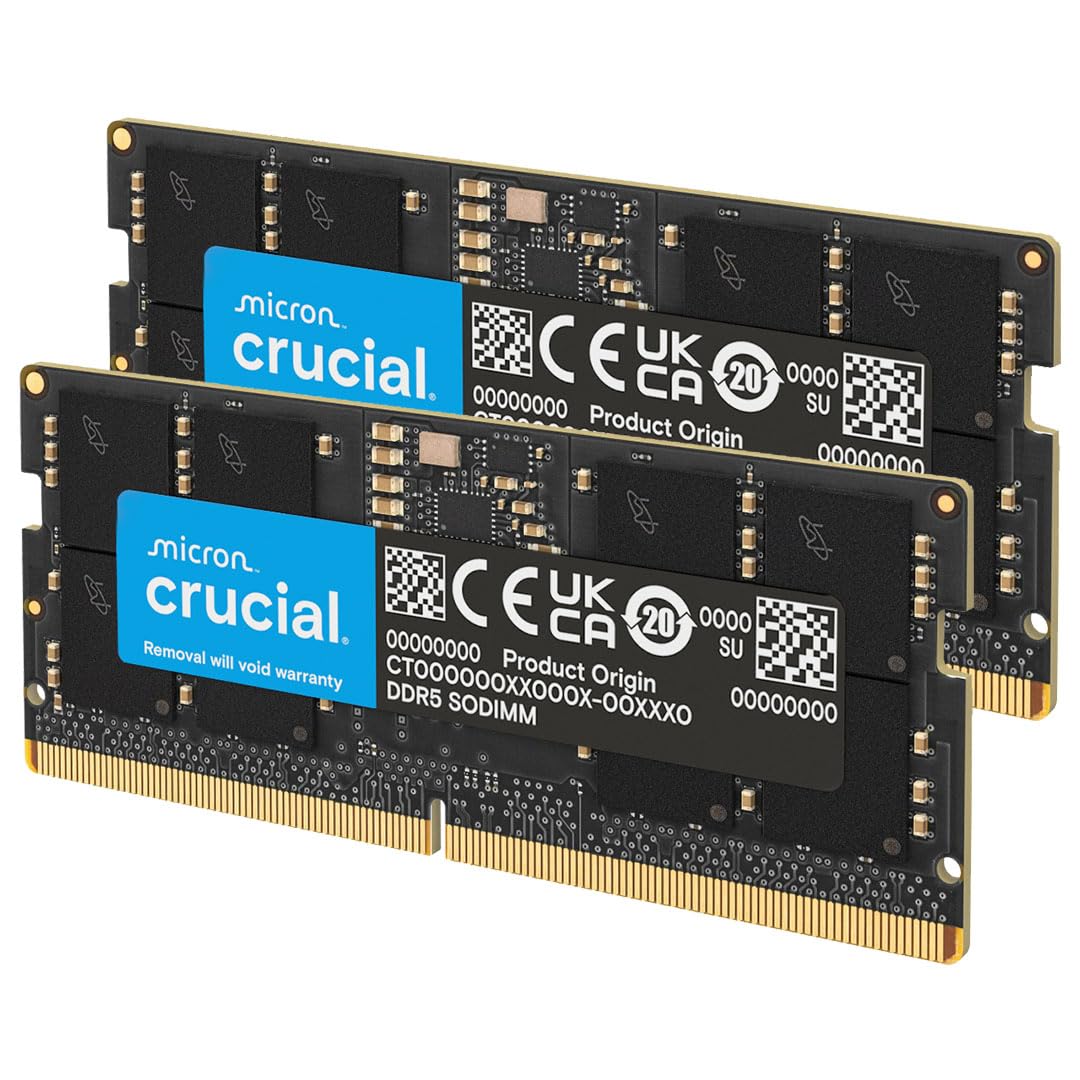
The Crucial 128GB kit comprises two 64GB DDR5 SODIMM modules running at 5600MHz with a CAS latency of CL46. This is not a 512GB kit — it is a 128GB kit — but it represents the densest DDR5 SODIMM configuration currently available for high-end laptops and mobile workstations. For users who need to approach 512GB in a portable form factor, this kit would require four such modules in a platform with four SODIMM slots, which is rare outside of certain Clevo-based or mobile workstation chassis.
The modules support both Intel XMP 3.0 and AMD EXPO for automatic overclocking profiles, and they downclock to 5200MHz or 4800MHz if the system memory controller cannot sustain the full 5600MHz data rate. Crucial is the retail brand of Micron, one of only three global DRAM manufacturers, so the NAND dies are first-party. Verified buyers report immediate detection in compatible laptops, with dxdiag confirming the full 64GB per stick and noticeable improvements in multitasking with virtual machines, video editing, and CAD rendering software.
The main limitation is platform support: only laptops and mobile workstations with an Intel Core Ultra or AMD Ryzen 8000-series CPU and dual SODIMM slots can accept these modules. Systems with soldered RAM cannot be upgraded. The CL46 latency is higher than typical desktop DDR5 CL36 or CL30 modules, which is a consequence of the extreme 64GB density per SODIMM. For mobile users who need to run large in-memory databases or multiple VMs on the go, this is the densest available option.
Why it’s great
- 64GB per SODIMM is the highest density available in DDR5 laptop memory.
- Micron-manufactured NAND ensures first-party quality and long-term reliability.
- Dual-profile XMP and EXPO support allows automatic tuning on Intel and AMD platforms.
Good to know
- 128GB total is far below the 512GB target; four modules would be needed for 256GB.
- CL46 latency is higher than desktop DDR5 kits — not ideal for low-latency workloads.
- Only compatible with laptops that have two SODIMM slots and support 64GB per module.
4. PowerEdge Dell R630 Server (Renewed)

The Dell PowerEdge R630 is a 1U rackmount server configured with dual Intel Xeon E5-2690 v4 processors providing 28 cores total (14 per socket), 128GB of PC4-2133 DDR4 memory, and two 1TB SATA SSDs. This is a refurbished enterprise server aimed at home lab enthusiasts, testing environments, and small-scale virtualization hosts. The 128GB configuration uses registered DIMMs, leaving empty slots for a future upgrade to LRDIMMs and the full 512GB ceiling.
The server includes an iDRAC 8 Enterprise license for out-of-band management, a PERC 730-mini RAID controller, and redundant power supplies. Verified buyers report running Windows Server 2022 with Hyper-V and multiple VMs without hardware issues after one year of continuous 24/7 operation. The unit supports up to eight 2.5-inch drives in the front bays, providing flexible storage options for a home lab SAN or hyper-converged cluster.
One buyer noted that the VGA ports had intermittent connectivity issues and that one power supply threw a false error code — both resolved through seller support or component swaps. The server is louder than a desktop workstation due to the 1U fan form factor, so placing it in a living space requires consideration of ambient noise. For anyone seeking an affordable entry into enterprise-class hardware that can be upgraded to the full 512GB capacity over time, the R630 is a proven choice.
Why it’s great
- Dual Xeon E5-2690 v4 processors deliver 28 cores for multi-threaded workloads.
- iDRAC 8 Enterprise license enables full remote KVM and power management.
- Empty DIMM slots allow an upgrade path to 512GB via LRDIMM modules.
Good to know
- 1U chassis fans produce significant noise — not suitable for quiet environments.
- Renewed condition means cosmetic wear and occasional component quirks.
- VGA display ports may require troubleshooting or adapter swaps.
5. HP OmniBook 7 AI Laptop 17.3″ Touchscreen
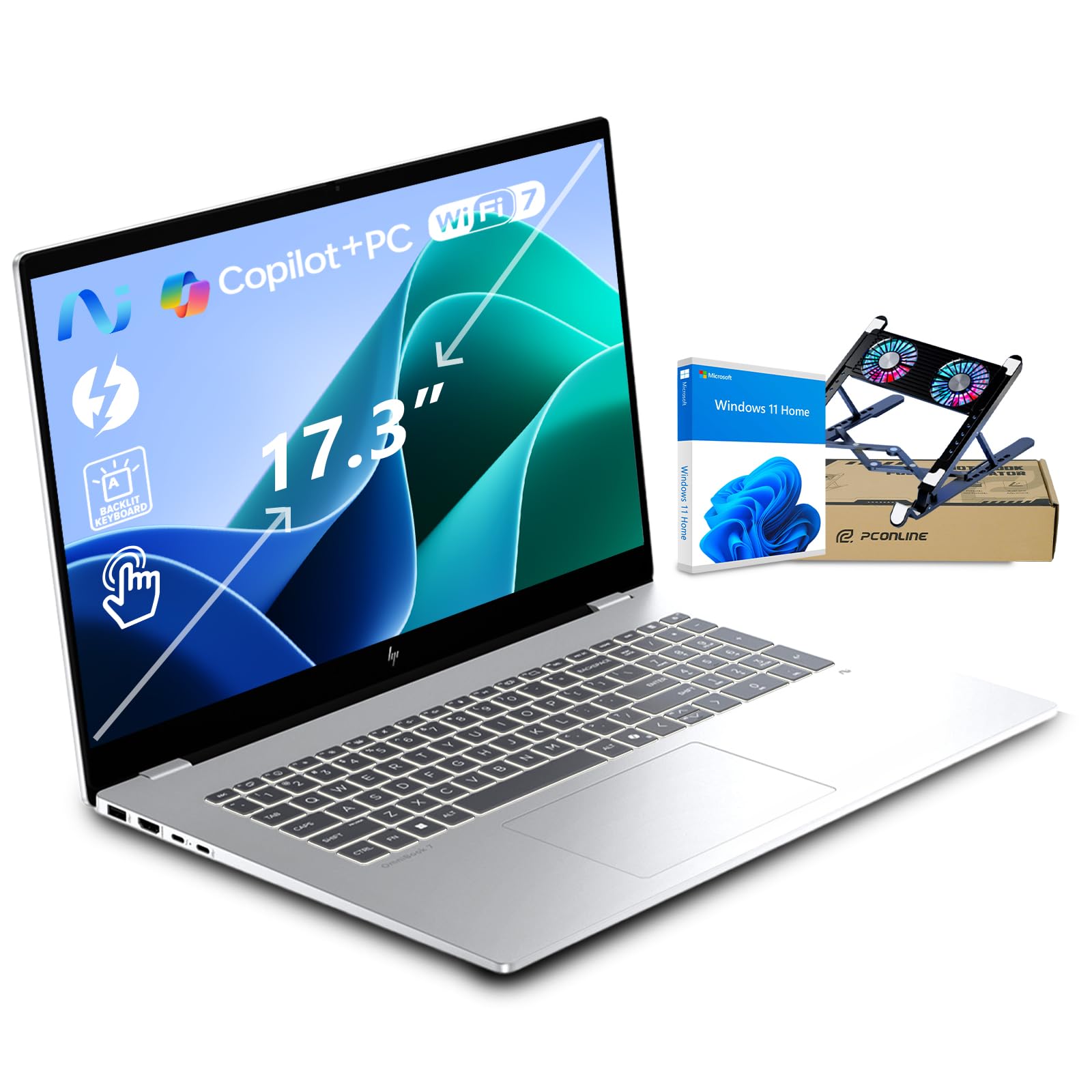
The HP OmniBook 7 is a 17.3-inch AI PC laptop powered by the Intel Core Ultra 7 258V processor with a dedicated Intel AI Boost NPU rated at 47 TOPS. The system ships with 32GB of onboard LPDDR5x RAM and a 2TB PCIe Gen4 NVMe SSD. The memory is soldered to the motherboard, meaning it is not user-upgradable — the 32GB configuration is fixed. This places the OmniBook firmly in the mobile workstation category for AI inference, content creation, and professional multitasking rather than the 512GB server space.
The 17.3-inch FHD IPS touchscreen display covers 100% sRGB at 400 nits brightness, and the MIL-STD-810H ruggedization certifies it against drops, bumps, and temperature extremes. The Thunderbolt 4 port supports 40Gbps data transfers and dual 4K display output, while Wi-Fi 7 and Bluetooth 5.4 provide modern wireless connectivity. HP Fast Charge reaches 50% in roughly 30 minutes, and battery life is rated at up to 12 hours for productivity workloads.
One verified buyer reported a dent in the bottom corner of the chassis upon delivery, which suggests packaging inconsistencies from the seller. Another noted that the laptop is heavier than comparable 15-inch models. The 32GB RAM ceiling means this cannot approach the 512GB target — it is included here as a reference point for mobile professionals who need AI acceleration but do not require server-scale memory. If your workload fits within 32GB, the OmniBook’s NPU and build quality make it a compelling choice.
Why it’s great
- Intel AI Boost NPU with 47 TOPS accelerates local AI inference and content creation.
- MIL-STD-810H certification ensures durability in demanding environments.
- Thunderbolt 4 and Wi-Fi 7 provide high-bandwidth connectivity for external displays and storage.
Good to know
- 32GB RAM is soldered and non-upgradable — far below the 512GB threshold.
- Heavier than typical 15-inch laptops due to the 17-inch chassis and rugged construction.
- Quality control inconsistency reported with cosmetic dents on arrival.
6. HP OmniBook 7 17.3″ Touchscreen Next Gen AI PC Pro
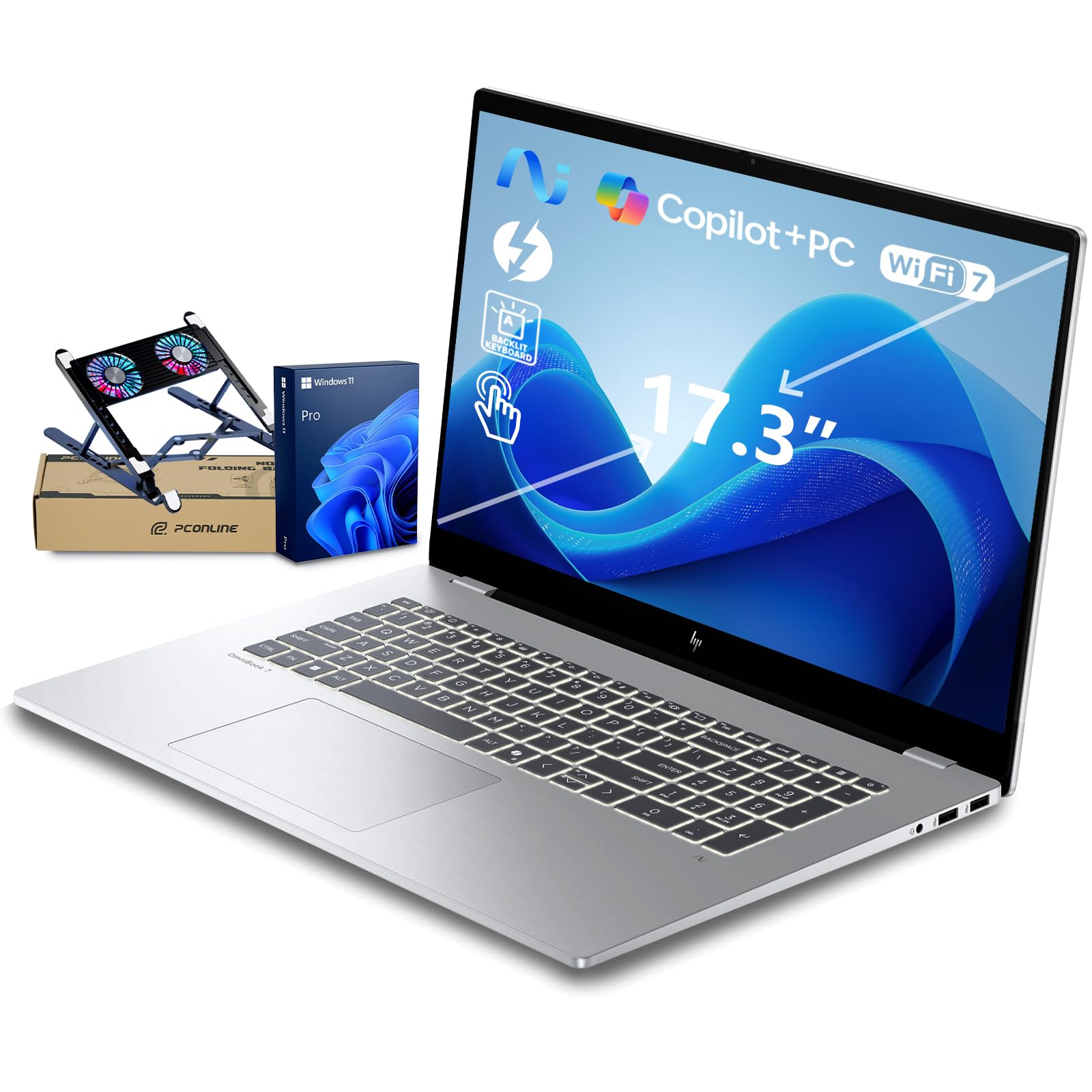
The HP OmniBook 7 Pro variant shares the same Intel Core Ultra 7 258V processor and 32GB onboard LPDDR5x RAM as the standard OmniBook 7, but ships with Windows 11 Pro instead of Windows 11 Home. The 2TB PCIe Gen4 SSD, Wi-Fi 7, Thunderbolt 4, and MIL-STD-810H ruggedization are identical. The Pro operating system tier adds BitLocker encryption, Remote Desktop hosting, and domain join capabilities for corporate deployment scenarios.
The 17.3-inch FHD IPS touchscreen display with 100% sRGB coverage supports the same 400-nit brightness and 178-degree viewing angles. The 5MP IR camera with temporal noise reduction and Poly Studio audio tuning enhances video conferencing quality, which is a strong differentiator for remote professionals who spend significant time in virtual meetings. The included PCO laptop cooler bundle adds thermal stability for extended compute sessions.
A verified buyer reported that the laptop replaced two aging towers and now drives four monitors (three external) with excellent CAD rendering performance and the ability to run No Man’s Sky at high settings via the overclocked Intel Arc Graphics. However, one review from a different buyer raised serious concerns about the seller PcOnline US, alleging that components were swapped with sub-quality parts. The 32GB memory ceiling means this does not serve the 512GB use case, but for a mobile professional workstation running Windows 11 Pro, the OmniBook 7 Pro is a capable package.
Why it’s great
- Windows 11 Pro provides BitLocker, Remote Desktop, and domain join for enterprise networks.
- 5MP IR camera with Poly Studio audio tuning delivers professional-grade video conferencing.
- Multi-monitor support (up to 4 displays) is rare in a 17-inch laptop form factor.
Good to know
- 32GB soldered RAM is non-upgradable and insufficient for server-scale tasks.
- Seller reputation concerns raised in buyer reviews — verify the seller before purchasing.
- Heavier than typical laptops and lacks an Ethernet port.
7. Dell 2026 Pro Tower Desktop for Corporate & Business
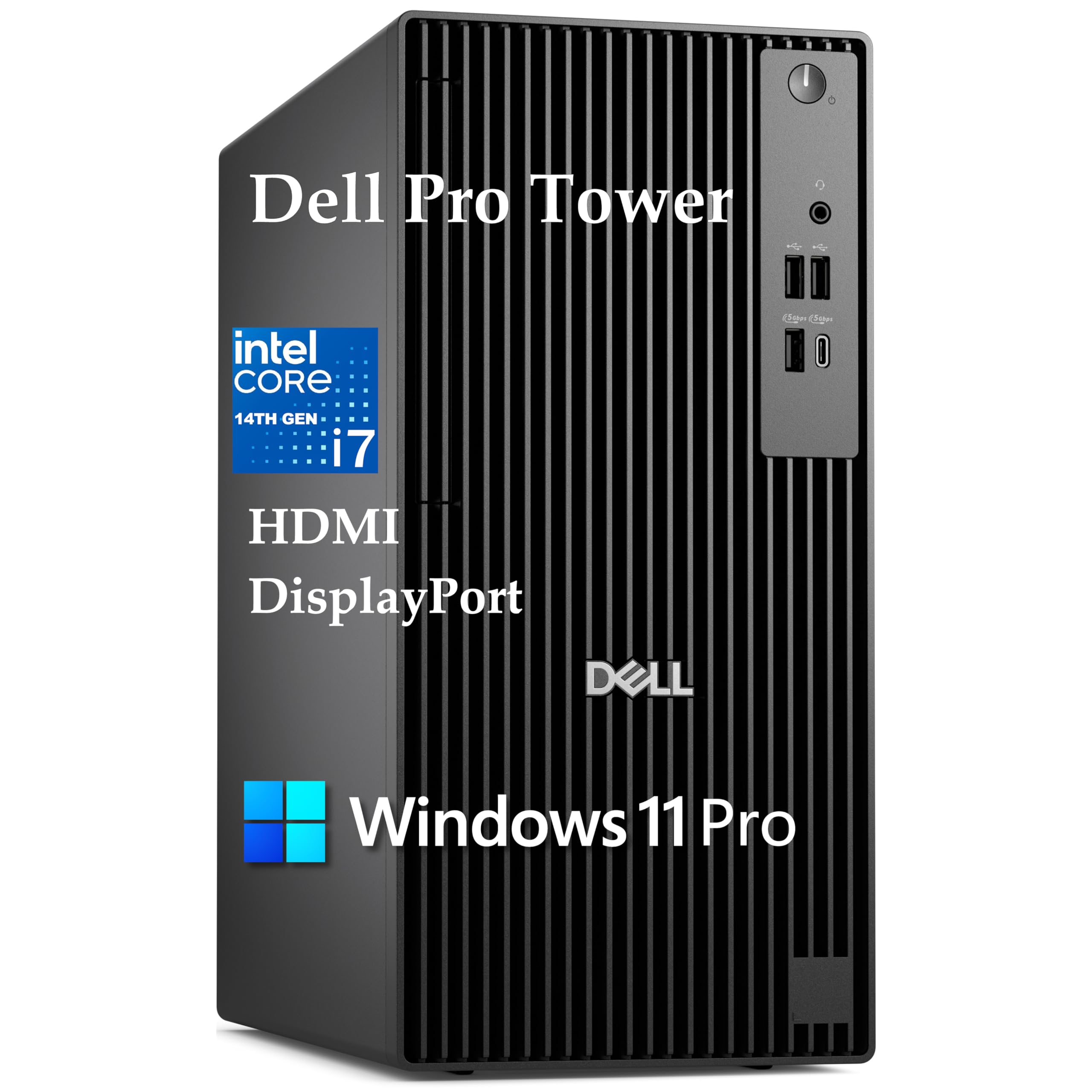
The Dell Pro Tower Desktop is powered by an Intel Core i7-14700T vPro processor with 20 cores (8 performance + 12 efficiency) reaching up to 5.2GHz. The system ships with 16GB of DDR5 RAM and a 512GB PCIe NVMe SSD, running Windows 11 Pro. The Intel vPro platform adds hardware-enhanced security and remote IT management features that are essential for corporate IT deployments, financial services, and healthcare environments managing sensitive data.
The Intel UHD Graphics 770 supports up to two 4K displays at 60Hz via HDMI 2.1 and DisplayPort 1.4a, which makes this tower suitable for multi-monitor analytics stations, financial trading desks, or engineering workstations. The port selection includes eight USB ports (Type-A and Type-C), Gigabit Ethernet, and a USB Wi-Fi adapter — though there is no built-in Wi-Fi, which is a notable omission for a modern business desktop. The tower chassis is tool-less and expandable for future RAM or storage upgrades.
One verified buyer raised a serious issue: the unit shipped with non-Dell components and failed to boot within three weeks, and Dell refused support because the serial number did not match their database. This suggests the unit may have been assembled from used parts rather than being a new Dell product. The 16GB DDR5 configuration is far below the 512GB target, but the i7-14700T vPro platform and DDR5 architecture make this a candidate for memory-intensive workflows — provided you confirm the seller’s authenticity before purchase.
Why it’s great
- Intel Core i7-14700T with vPro provides enterprise-grade security and remote management.
- DDR5 RAM and PCIe Gen4 NVMe storage deliver fast data access and multitasking.
- Dual 4K display support via HDMI 2.1 and DisplayPort 1.4a.
Good to know
- No built-in Wi-Fi — requires a USB Wi-Fi adapter or Ethernet connection.
- 16GB RAM is entry-level and requires upgrades to handle demanding workloads.
- Counterfeit or refurbished unit concerns reported by verified buyers.
8. Lenovo IdeaPad 15.6″ FHD Touchscreen Laptop
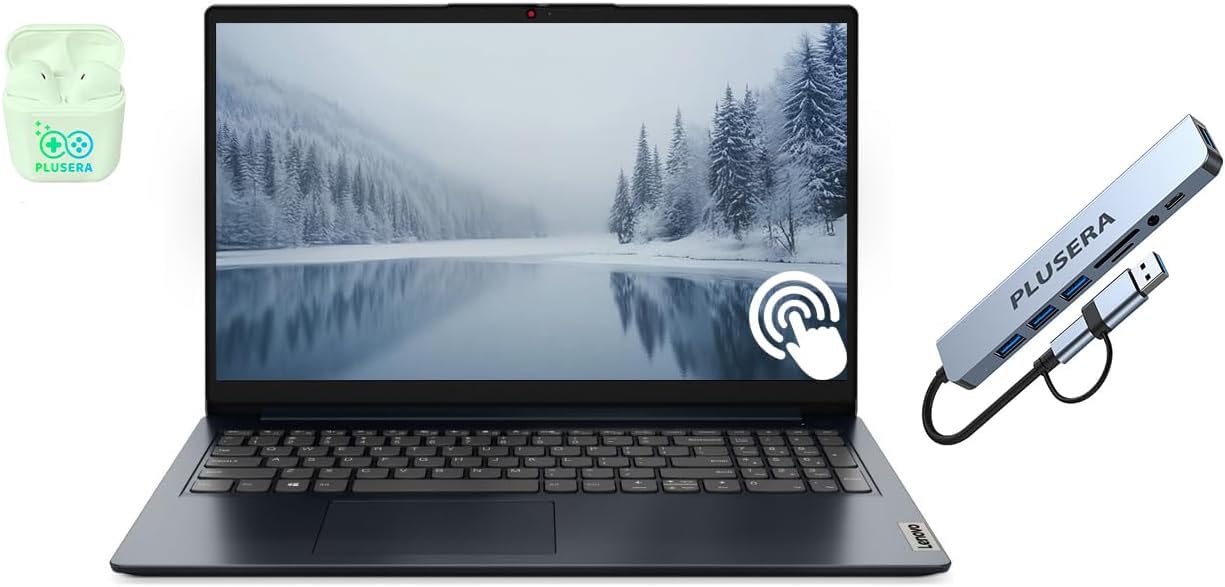
The Lenovo IdeaPad combines a 12th-gen Intel Core i5 processor with 40GB of DDR4 RAM and 2.5TB of total storage (2TB SSD plus a 512GB docking station drive) at a price point that undercuts most competitors. The 15.6-inch FHD touchscreen display with anti-glare coating runs at 1920×1080 resolution, and the narrow-bezel design keeps the chassis relatively compact. Windows 11 Pro is pre-installed along with a lifetime Microsoft Office license.
The 40GB RAM configuration is unusual — it likely consists of 8GB soldered plus a 32GB SODIMM module — and provides ample headroom for running multiple virtual machines, compiling code, or editing large media files. The bundle includes a PLUSERA earphone set and an 8-in-1 USB-C hub for expanding connectivity. The battery life is rated at up to 10 hours with rapid charging support, and the Dolby Audio certification improves the built-in speaker quality.
One buyer described the build quality as “kind of cheaply made” and noted that the battery life underperforms expectations. Another reported that the laptop arrived in a default user login mode that required a factory reset to fix, but the unit worked beautifully afterward. The 40GB of RAM is substantial for a consumer laptop but does not approach the 512GB target — this is a value-oriented machine for students and professionals who need more memory than standard 16GB configurations but do not require enterprise-class reliability.
Why it’s great
- 40GB of DDR4 RAM provides excellent multi-tasking capacity for a consumer laptop.
- 2.5TB total storage (2TB SSD + 512GB dock drive) eliminates external hard drive dependency.
- Lifetime Microsoft Office license included — a significant value-add for students and professionals.
Good to know
- Build quality feels less premium than competing Lenovo ThinkPad models.
- Battery life is rated at 10 hours but real-world usage tends to be shorter.
- The 40GB RAM ceiling is far below the 512GB target — not a server replacement.
9. HP 17.3″ Business Laptop
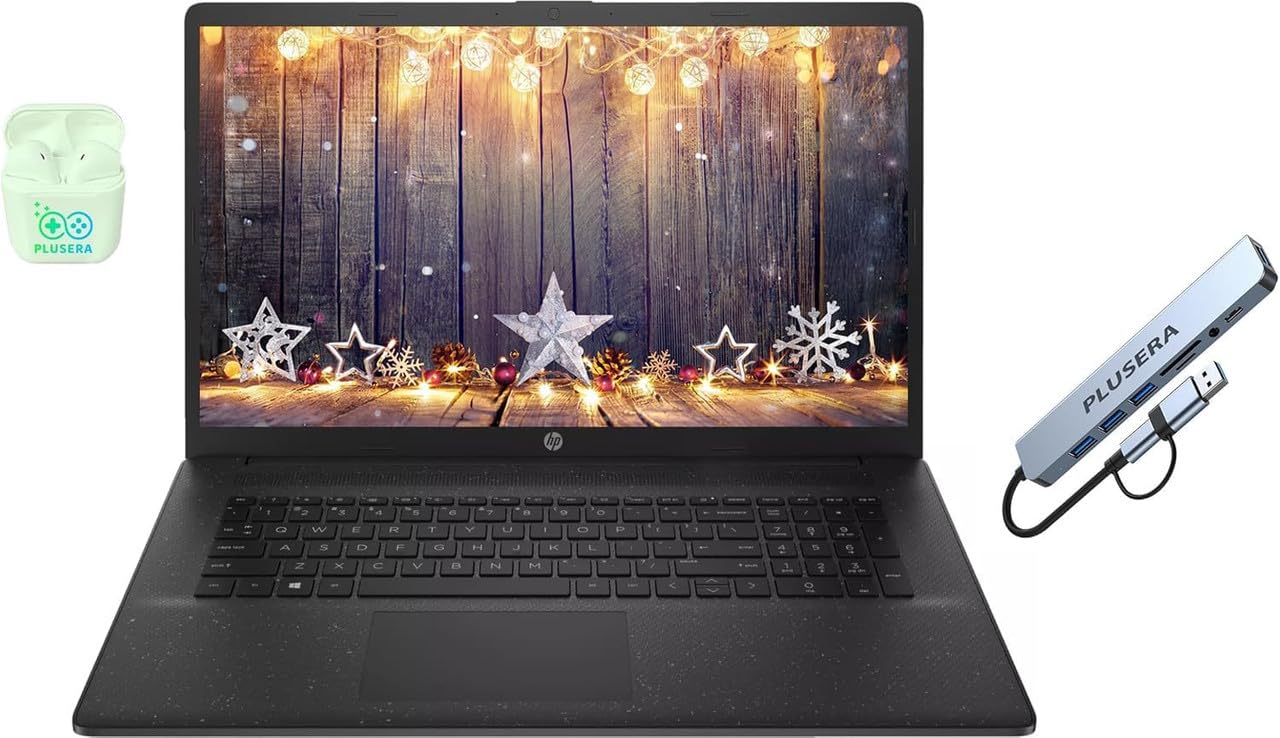
The HP 17.3-inch Business Laptop is an entry-level machine built around an 11th-gen Intel Core i5 (10 cores, 12 threads) with Intel Iris Xe graphics and 16GB of DDR4 RAM. The display is a 1600×900 LED panel at 250 nits — a noticeably lower resolution than the 1080p panels found on most modern laptops. Storage is handled by a 512GB PCIe NVMe SSD, which provides fast boot times but limited capacity for large media projects.
The port selection includes one USB-C, two USB-A, one HDMI, and a headphone/microphone combo jack — no Thunderbolt support. The numeric keypad is a welcome addition for data entry and accounting tasks. The laptop ships with Windows 11 Pro and includes PLUSERA earphones, though one buyer expressed disappointment that an Ethernet adapter was not included instead. The absence of an RJ-45 port means wired network connections require an external USB-to-Ethernet adapter.
One verified buyer reported that the laptop crashed repeatedly and a repair attempt that replaced a thermal component failed to fix the underlying “Memory Module 64 failure” error. This suggests a possible motherboard defect or incompatible memory configuration on that specific unit. The 1600×900 display resolution is below the standard for this price range, and the 16GB RAM limit means this is not suitable for 512GB-scale workloads. This is a budget-friendly option for basic office tasks and web browsing.
Why it’s great
- Large 17.3-inch display with a numeric keypad is comfortable for data entry and document work.
- Intel Iris Xe graphics handle casual gaming and video playback without dedicated GPU power drain.
- Windows 11 Pro provides enterprise-level security and remote desktop features.
Good to know
- 1600×900 display resolution is substandard for a laptop at this price tier.
- No Ethernet port — requires a USB adapter for wired connections.
- Reliability concerns reported with memory failure and thermal issues.
10. HP Pro Tower 290 G9 Business Desktop
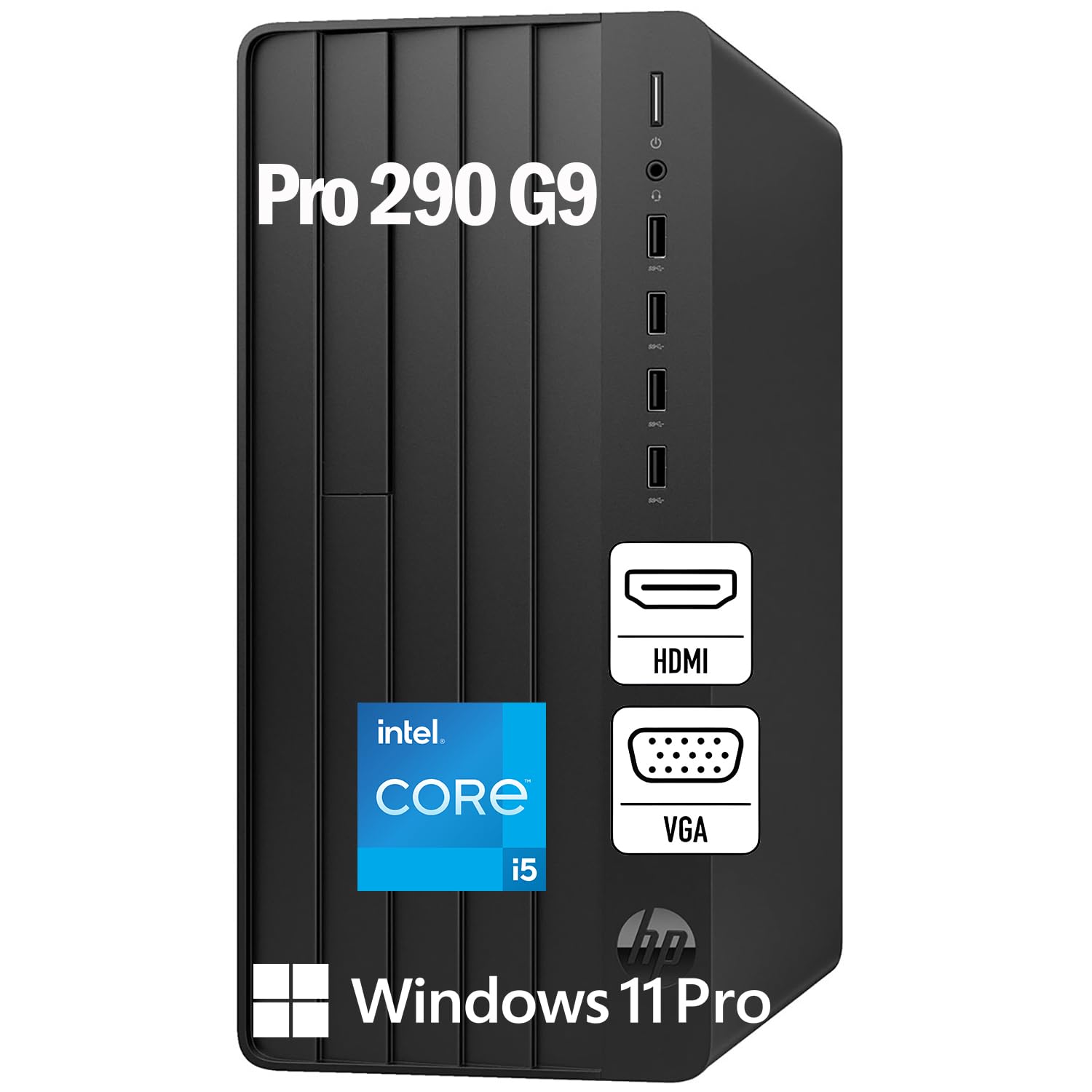
The HP Pro Tower 290 G9 is a compact business desktop powered by a 12th-gen Intel Core i5-12500 processor with 6 cores reaching up to 4.6GHz. The configuration includes 16GB of DDR4 RAM and a 512GB PCIe NVMe SSD, running Windows 11 Pro. The tower design is compact at 11.92 x 6.1 x 13.27 inches, making it suitable for tight desk spaces or under-monitor placement. The Intel UHD Graphics 770 supports dual monitor setups via HDMI and VGA outputs.
The connectivity suite includes four front USB 3.0 ports (5Gbps), four rear USB 2.0 ports, HDMI, VGA, and a Gigabit Ethernet jack. The system does not include built-in Wi-Fi — connectivity is limited to wired Ethernet or an optional USB Wi-Fi adapter. The 80 Plus Gold rated 180W power supply provides energy-efficient operation. The tool-less chassis allows easy access for future upgrades to RAM or storage, and the 1-year warranty covers hardware defects.
Verified buyers report that the system is quiet and handles multitasking smoothly for office productivity, but one noted that enabling hardware acceleration in Microsoft Edge caused video playback issues until the setting was disabled. Another buyer mentioned that using an HP printer required manually changing the driver from the Microsoft IPP Class Driver to the HP-specific driver to avoid print errors. The 16GB RAM configuration is adequate for office work but cannot scale to the 512GB target without a motherboard replacement supporting higher memory densities.
Why it’s great
- Compact tower design saves desk space while maintaining upgrade accessibility.
- Intel Core i5-12500 delivers responsive performance for office productivity and multitasking.
- Dual monitor support via HDMI and VGA for data analysts and finance professionals.
Good to know
- No built-in Wi-Fi — Ethernet is required or a USB adapter must be used.
- HP printer driver conflicts may require manual intervention for correct operation.
- 16GB RAM limit prevents this from reaching the 512GB target.
11. HP Desktop Computer Tower PC
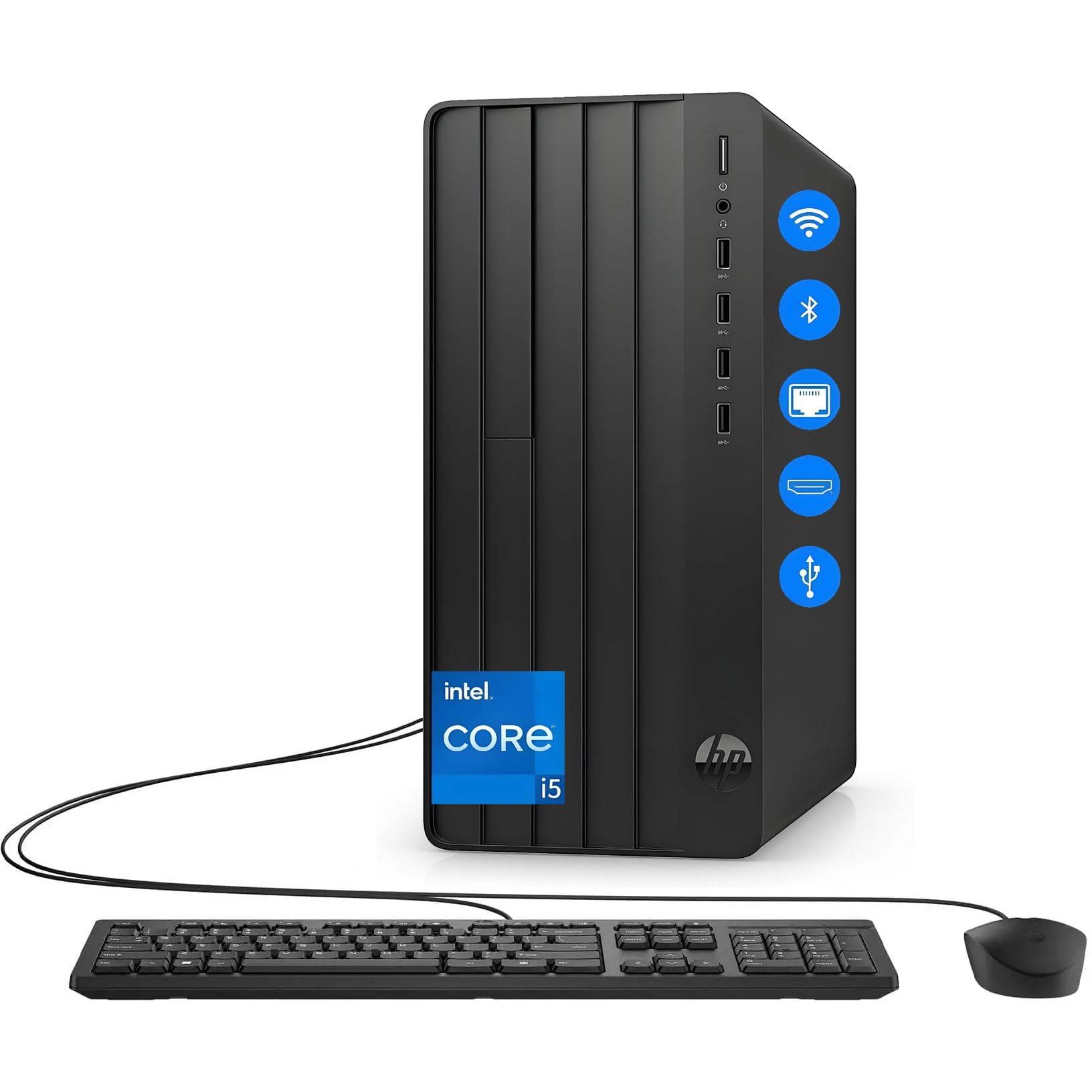
The HP Desktop Tower PC is the most budget-friendly option in this lineup, equipped with a 12th-gen Intel Core i5-12500 (6 cores), 16GB of DDR4 RAM, a 512GB PCIe NVMe SSD, and Windows 11 Home. The system includes a wired keyboard and mouse, making it a complete out-of-box solution for home office workers, students, and small businesses. The Intel UHD Graphics 770 handles day-to-day productivity, streaming, and light photo editing without a dedicated GPU.
The tower design is standard at 11.92 x 6.1 x 13.27 inches with built-in Wi-Fi and Bluetooth for wireless connectivity — a notable advantage over some pricier competitors that omit Wi-Fi. The front panel includes USB 3.0 ports for fast file transfers, and the rear offers four USB 2.0 ports, HDMI, VGA, and Ethernet. The 512GB SSD provides sufficient storage for documents, spreadsheets, and business applications, though users working with large media files may need external storage or cloud solutions.
Verified buyers report that the system is “dead quiet” and has been running reliably for months without slowdowns or glitches. One user mentioned that the HP registration process had a glitch where the box model and serial numbers differed from the actual system, requiring the HP online app to retrieve the correct numbers. The 16GB RAM limit and standard desktop form factor mean this is not a candidate for 512GB-scale deployments, but for entry-level computing at a competitive price, this HP tower delivers dependable performance.
Why it’s great
- Complete setup with keyboard and mouse included — no additional peripherals needed.
- Built-in Wi-Fi and Bluetooth eliminate the need for dongles or adapters.
- Intel Core i5-12500 delivers responsive multitasking for home office and student workflows.
Good to know
- 16GB RAM and 512GB storage are entry-level — may require upgrades for demanding workloads.
- HP registration process may have serial number mismatches that need manual correction.
- No dedicated GPU limits the system to integrated graphics for light tasks only.
FAQ
Can I install 512GB of RAM in a standard desktop computer?
What is the difference between LRDIMM and RDIMM for a 512GB build?
Does a 512GB RAM configuration require ECC memory?
Final Thoughts: The Verdict
For most virtualization and enterprise computing scenarios, the best 512gb ram solution is the A-Tech 512GB Kit (8x64GB) because it provides a complete, validated set of eight 64GB LRDIMM modules that meet the rank and speed requirements of dual-socket Xeon platforms. If you want a pre-configured server that can be immediately deployed, the HP DL360 G9 with 256GB and upgrade potential to 512GB is a strong choice. And for mobile professionals who need AI acceleration on the go, nothing beats the HP OmniBook 7 — though its 32GB limit means it serves a completely different use case than the 512GB server configurations.