
Our readers keep the lights on and my morning glass full of iced black tea. As an Amazon Associate, I earn from qualifying purchases.
Specs are compiled from manufacturer listings and verified buyer reviews and can change over time — please confirm the key details on the product page before buying.
The 52/300 ball is the modern standard for ASA and USA slowpitch — a softer core rated at 300 pounds of compression that flies off composite bats but stays gentle on your arms. The real challenge is finding a dozen that keeps its shape after a season of heavy hitting, because cheap 52/300s go flat and mushy fast. This guide compares three field-proven dozens so you can pick the one that matches your league, your infield surface, and your budget.
I’m Min — the founder and writer behind Gadgets Feed. This guide is built by comparing the manufacturers’ published specifications and the patterns across verified customer reviews, so you get each pick’s real strengths and trade-offs instead of marketing spin.
The best 52 300 softballs balance a lively composite cover with a durable core that survives your hardest swings.
Our Picks at a Glance
How To Choose The Best 52 300 Softballs
The number “52/300” tells you two things at once. The.52 is the COR rating — how bouncy the ball is off the bat. The 300 is the compression — how much force it takes to squeeze the ball one quarter inch. Together they define the soft, lively feel that modern ASA and USA league bats are tuned for.
Match the ball to your league stamp
League rules decide everything here. ASA and USA slowpitch leagues mandate the low-compression 52/300 ball, while other associations use harder 44/375 or 47/450 cores. Bring a 52/300 into a league that requires a harder ball and it may not pass inspection, so confirm your league’s approved stamp before you buy a full dozen.
Consider your infield surface
Where you play changes how long a ball lasts. On a turf infield, a composite cover barely wears, so a quality ball can last for many games. On dirt, the abrasive surface scuffs and nicks the cover far faster, which means the durability difference between budget and premium balls becomes obvious quickly.
Quick Comparison
| Model | Best For | Core Type | Cover Material | Weight | Amazon |
|---|---|---|---|---|---|
| X-Rock Composite Cover★ Best Overall | Elite players on turf | 52/300 composite | Faux leather | 5.4 lbs / dozen | Amazon |
| MacGregor X52RE | Practice and team play | 52/300 poly graphite | Graphite | 16 oz | Amazon |
| Dudley Thunder ZN | Batting practice durability | 52/300 polyurethane | Composite | 12-inch dozen | Amazon |
In‑Depth Reviews
1. X-Rock 12″ Composite Cover 52/300 ASA Softball Dozen
Our pick — over 4.5★ from 150+ verified ratings; the strongest balance of quality and price.
The turf infield specialist that heavy hitters trust to stay round all season.
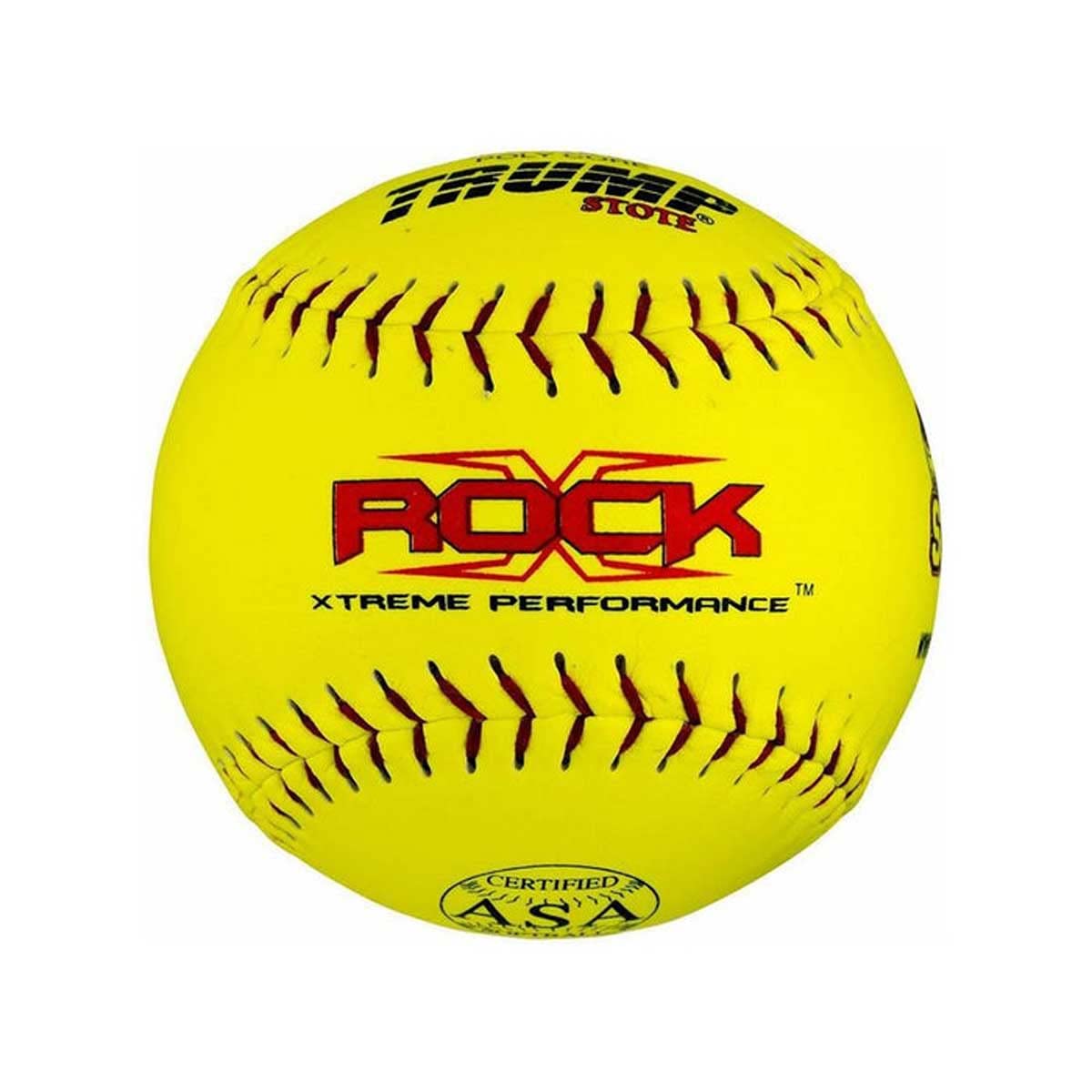
The X-Rock dozen is the crowd favorite here — holding a 4.7-star average from over 170 buyers who praise the build quality above all else. What wins people over is the composite cover’s ultra-thin design, which the maker says is the most aerodynamic in the game; you feel the difference in flight from the very first swing. It is ASA approved, so it passes league inspection without a second thought.
Durability is where this ball earns its reputation, especially on the right surface. Buyers report that on a turf infield these balls “are perfect and will last forever,” which is the exact scenario this pick was built for. On dirt infields they still perform, but the surface does knick the cover up over time as you’d expect with any ball. The texture also gives pitchers a firm grip to throw a wider variety of pitches, and it pops hard off ASA and USA bats.
At 5.4 pounds for the full dozen of 12-inch balls, it is a heavier, denser-feeling option than the MacGregor below — but that mass translates to balls that keep their shape through your hardest swings. Core quality here is what the bulk of owner feedback circles back to, with durability as the second most-discussed strength.
What wins owners over
- Turf-infield durability that buyers describe as lasting “forever”
- Ultra-thin composite cover for a lively launch off composite bats
- ASA approved for league play
Who should think twice
- Dirt infields will scuff and nick the cover faster
- Heavier than some rivals at 5.4 lbs per dozen
Reach for these if: you play on turf and want a dozen that survives a full schedule while flying hard off the bat.
Look elsewhere if: your home field is rocky dirt that chews up every cover within a few games.
2. MacGregor X52RE ASA Slow Pitch Composite Softball, 12-inch – One Dozen

The budget-friendly dozen that outlasts heavy hitters and keeps practice affordable.
The MacGregor is the value play that punches above its price — a 4.6-star rating from close to 190 buyers who call it both good quality and great value for the money. Its poly graphite core with red stitching delivers the 52/300 max compression that ASA play requires, all approved for league and practice use alike. The graphyte construction, at a total weight of 16 ounces, is lighter than the X-Rock’s 5.4 pounds per dozen.
This is a ball built to take abuse from your team’s strongest bats. Owners mention that a coed team of “pretty heavy hitters” made it through the first game with no damages at all, and the same ball stayed in play until a foul or home run sent it out of reach. That durability makes it a favorite for batting practice off a tee, which owners consistently call out as a top use case.
The MacGregor has an item weight of 16 ounces, while the X-Rock weighs 5.4 pounds per dozen. The trade-off is that the composite cover is less exotic than the X-Rock’s ultra-thin aerodynamic skin, so pure distance hounds may notice slightly less launch off the barrel.
Where it shines
- Survives a game against powerful hitters with zero damage
- Lighter overall weight at 16 ounces
- Owners consistently recommend it for tee and batting practice
Keep in mind
- Some buyers noted slower FedEx shipping on arrival
- Cover isn’t as aerodynamic as the X-Rock skin
The confident choice for: teams and coaches who want a durable dozen for batting practice without paying a premium.
Not the pick if: you chase maximum distance off the barrel and want the most aerodynamic cover money can buy.
3. Dudley 12″ Thunder ZN Hycon ASA Composite Slowpitch Softball

The 100-hit survivor that keeps its round shape through endless batting practice.
The Dudley Thunder ZN is the premium-priced practice workhorse, earning 4.4 stars from 100+ owners who lean on it for pure repetition. Its high-density polyurethane center is built for maximum resiliency, which is the technical way of saying these balls refuse to go flat. Customers note that after about 100 hits, the balls “still hold their shape” — the defining trait for anyone who spends whole sessions at the cage.
The composite cover delivers a crisp sound off the bat that owners love, and it pairs with red, flat seams that give pitchers a consistent feel. At 300 lbs. compression with a.52 COR, it meets the exact 52/300 spec this category is built around. What owners value most is how it compares to the competition — one buyer tested four different dozens of 52/300 balls and called the Thunder ZNs the best of the group.
One honest caveat worth noting: the listing shows an ASA logo, but some units arrive stamped “USA” instead. If your league requires the exact ASA stamp, check your batch before game day. For pure batting practice, this is the durable, shape-holding pick that edges out the MacGregor on long-term value.
Built to grind: the high-density polyurethane core keeps these round well past 100 hard swings, making them the top pick for marathon cage sessions.
Watch the stamp: some units ship with a “USA” logo instead of the pictured “ASA,” so verify before league inspection.
Stick with these if: you run heavy batting practice and want balls that hold shape and sound great off the barrel.
Skip them if: your league mandates the exact ASA logo and you can’t risk a stamp mismatch on game day.
Understanding the Specs
Compression (300 lbs)
Compression measures how much force it takes to squeeze a ball one quarter inch. A 300-pound rating means a softer, lower-compression ball that deforms more on impact, which is what modern ASA and USA league bats are tuned to launch. Harder balls in the 375 or 450 range feel firmer but can be banned from 52/300 leagues.
COR (.52)
COR stands for coefficient of restitution — basically, how bouncy the ball is off the bat. A.52 COR is the lively, springy spec that pairs with the 52/300 core to give slowpitch hitters that satisfying pop off composite barrels. Pair this with compression and you have the full performance profile of a legal league ball.
FAQ
What does the 52/300 rating on a softball actually mean?
Will a 52/300 ball work in every softball league?
Why do 52/300 balls feel different off the bat than harder balls?
What is the difference between ASA and USA stamps on softballs?
How long do 52/300 composite softballs last in batting practice?
Is a composite cover better than a leather cover for softballs?
How much does a dozen 12-inch softballs weigh for carrying to the field?
What is the best 52/300 softball for turf infields?
Final Thoughts: The Verdict
The overall winner for most players is the X-Rock Composite Cover dozen, because it pairs the highest 4.7-star rating with a durable composite skin that shines on turf infields and delivers a lively launch off composite bats. If you want the best value for team practice and batting cages, grab the MacGregor X52RE, a lighter 16-ounce option that survives heavy hitters without damage. And for marathon batting practice where shape retention matters most, the Dudley Thunder ZN holds its roundness past 100 hits — just double-check the stamp matches your league’s requirement.
How We Picked
We do not accept paid placement. Every pick is matched to a real buyer and a real use-case; we do not hands-on test units.
Sources & Methodology
Specifications: manufacturer listings and product documentation. Review insights: verified customer reviews, as of August 2026. Pricing: not shown on this page (it changes often); check the current price via the retailer link.
As an Amazon Associate, Gadgets Feed earns from qualifying purchases. This does not affect which products we feature.