
Our readers keep the lights on and my morning glass full of iced black tea. As an Amazon Associate, I earn from qualifying purchases.
Specs are compiled from manufacturer listings and verified buyer reviews and can change over time — please confirm the key details on the product page before buying.
Choosing a 52mm UV filter is really a battle against two invisible enemies: flare that washes out your colors, and the dread of scratching a front element that costs more than your rent. A good filter lets light through as if nothing is there at all, while a cheap one leaves a permanent gray veil on your photos. The real difference between a filter and an filter is how many layers of coating fight reflection, how flat the glass stays, and whether the frame is slim enough to avoid dark corners on wide shots.
I’m Min — the founder and writer behind Gadgets Feed. This guide is built by comparing the manufacturers’ published specifications and the patterns across verified customer reviews, so you get each pick’s real strengths and trade-offs instead of marketing spin.
We focused on optical clarity, coating layers, and frame depth to find the best 52mm UV lens filter for every kind of shooter, from kit-lens beginners to pros who notice a single speck of dust.
Our Picks at a Glance

How To Choose The Best 52mm UV Lens Filter
Before you buy, check your lens barrel for the “Ø” symbol followed by 52mm — that is the thread size (the diameter of the screw-on ring at the front of your lens). This size is common on kit zooms like the 18-55mm and primes like the 50mm f/1.8. Once you confirm it fits, your only real decision is glass quality and coatings.
Coating Layers and Transmission
Every UV filter is coated to reduce reflections, but the number of layers varies wildly — from 12 layers on budget glass up to 32 layers on premium options. More layers usually means higher light transmission (99.3% to 99.6%) and less flare when shooting into the sun. The coatings are also what make a filter water-repellent, oil-resistant, and easier to wipe clean without smearing.
Frame Profile and Vignetting
A thick filter ring can block light at the edges of the frame on wide-angle lenses, creating dark corners called vignetting. Ultra-slim frames — 3mm or 3.3mm thick — avoid this entirely, even on a Sigma 18-35mm zoom at its widest setting. If you shoot telephoto or standard lenses, a deeper ring usually does not cause problems, but slim is always safer for flexibility.
Quick Comparison
| Model | Best For | Coating Layers | Frame Thickness | Transmission | Amazon |
|---|---|---|---|---|---|
| K&F CONCEPT MC UV★ Best Overall | Overall clarity & value | 28-layer | 3.3mm | 99.6% | Amazon |
| NEEWER MC UVBudget Champion | Budget protection | 24-layer | Ultra-slim | — | Amazon |
| PROfezzion UVBest Compatibility | Kit-lens compatibility | 12-layer | 3mm | 99.5% | Amazon |
| NiSi UHC UV | High-transmission glass | 18-layer | Ultra-slim | 99.3% | Amazon |
| Hoya NXT Plus UV | Established optics brand | 10-layer | Slim | 98% | Amazon |
| Tiffen Digital HT | Titanium frame style | HT multi-coated | — | — | Amazon |
| B+W Master UV Haze | Brass-thread grip | MRC Nano | Slim | — | Amazon |
| ZEISS T* UV | ZEISS lens owners | T* anti-reflective | — | — | Amazon |
| Hoya HD3 UV Protector | High-megapixel shooters | 32-layer | — | — | Amazon |
In‑Depth Reviews
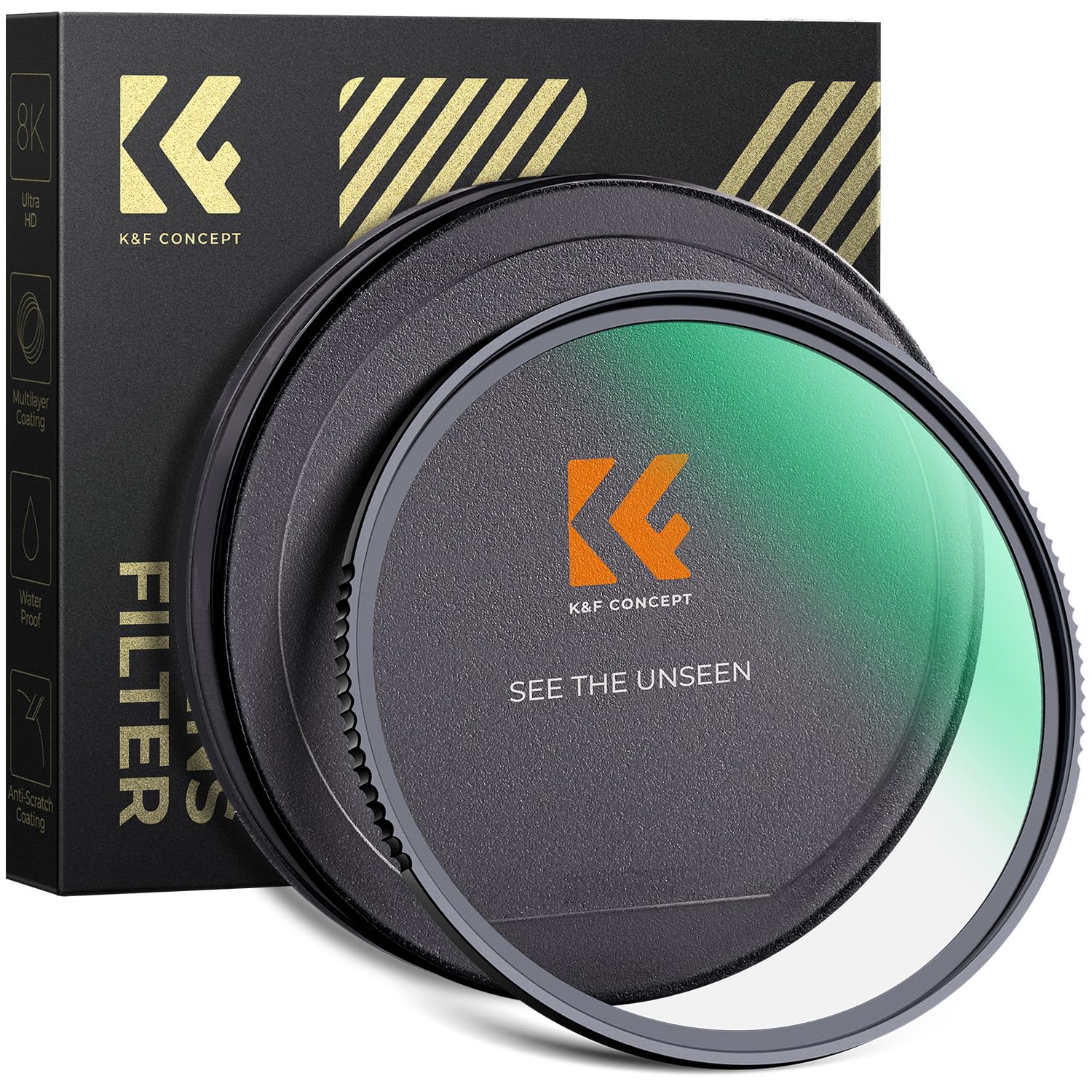
1. K&F CONCEPT 52mm MC UV Protection Filter
Our pick — over 4.5★ from 800+ verified ratings; the strongest balance of quality and price.
The 28-layer coated filter delivers 99.6% transmission with a 3.3mm frame that prevents vignetting on wide primes.
K&F CONCEPT wraps its 28-layer nanometer coatings around Japanese AGC glass to reach 99.6% transmission, so you get essentially zero light loss while the filter stays on. It also handles the two biggest frustrations of daily protection: water and fingerprints bead up and wipe away, and the double-side polishing means no ghosting even on a Sigma 18-35mm at 18mm. The frame is only 3.3mm thin, which is exactly why it avoids vignetting on telephoto and wide-angle lenses alike.
What wins people over is the sheer build quality — owners consistently say the premium feel and slim profile make it optically invisible, even wide open at f/1.8 on a fast prime. The ribbed edges give your fingers a firm grip for twisting on and off, and the included case keeps it safe in a camera bag. One small note from the feedback: those ribs can catch on your fingers when removing the lens cap, so consider how you handle it.
Against pricier German glass like B+W or Hoya, shoppers repeatedly call this “great value” while admitting the optical difference is negligible for everyday shooting. It stays on the lens permanently for many, with lens hoods and caps attaching perfectly on top. If you want one filter that does everything well while staying affordable, this is the crowd favorite at 4.8 stars across 800+ ratings.
What Makes It Great
- 28-layer coatings deliver 99.6% transmission for true-to-life colors
- Ultra-slim 3.3mm frame prevents vignetting on wide glass
- Ribbed grip makes twist-on/off easy and secure
Worth Knowing
- Ribbed edges can snag fingers when capping/uncapping
- Comes as a single filter, not a multi-pack
Reach for this if: you want one dependable filter that never degrades your photos and fits any 52mm lens from kit zoom to fast prime.
Look elsewhere if: you need multiple filters for several lenses at once — this is a single-unit buy at a mid-range price.
2. NEEWER 52mm MC UV Protection Filter
A 24-layer nano coating on an aluminum frame offers budget-priced protection that a 40-year pro found faultless.
For the price of a sandwich, NEEWER gives you 24 layers of nano coating on HD optical glass housed in a CNC-machined, black anodized aluminum frame. The coating resists rain, dust, and smudges, which is exactly what you want from a daily driver protector. It weighs just 1.87 ounces — noticeably lighter than the PROfezzion below at 2.12 ounces — so it adds almost nothing to your lens.
The thing everyone raves about is how the coatings beat far pricier filters, with one owner who has shot for four decades finding zero faults. A comparison test against MeFoto, Hoya, Tiffen, and B+W ranked the NEEWER coatings the best of the bunch, though that same owner noted an early defect where glass popped out, replaced free and never repeated. The non-stick surface also improves contrast and blocks most UV light in real-world testing.
Functionally, it does its job with zero drama — buyers report it fits perfectly and provides exactly the protection they want. It includes a cleaning cloth and filter case in the box. If you are on a tight budget and just want to stop dust and scratches from reaching a kit lens, this is the one.
Honest read: The coatings outperform the price tag by a wide margin, and the ultra-slim CNC aluminum frame avoids vignetting on wide glass.
Trade-off: A rare early unit can arrive with glass issues, though replacements were handled cleanly.
3. PROfezzion 52mm UV Filter
A 12-layer coated filter with a 3mm frame that snaps onto kit lenses and stays optically invisible.
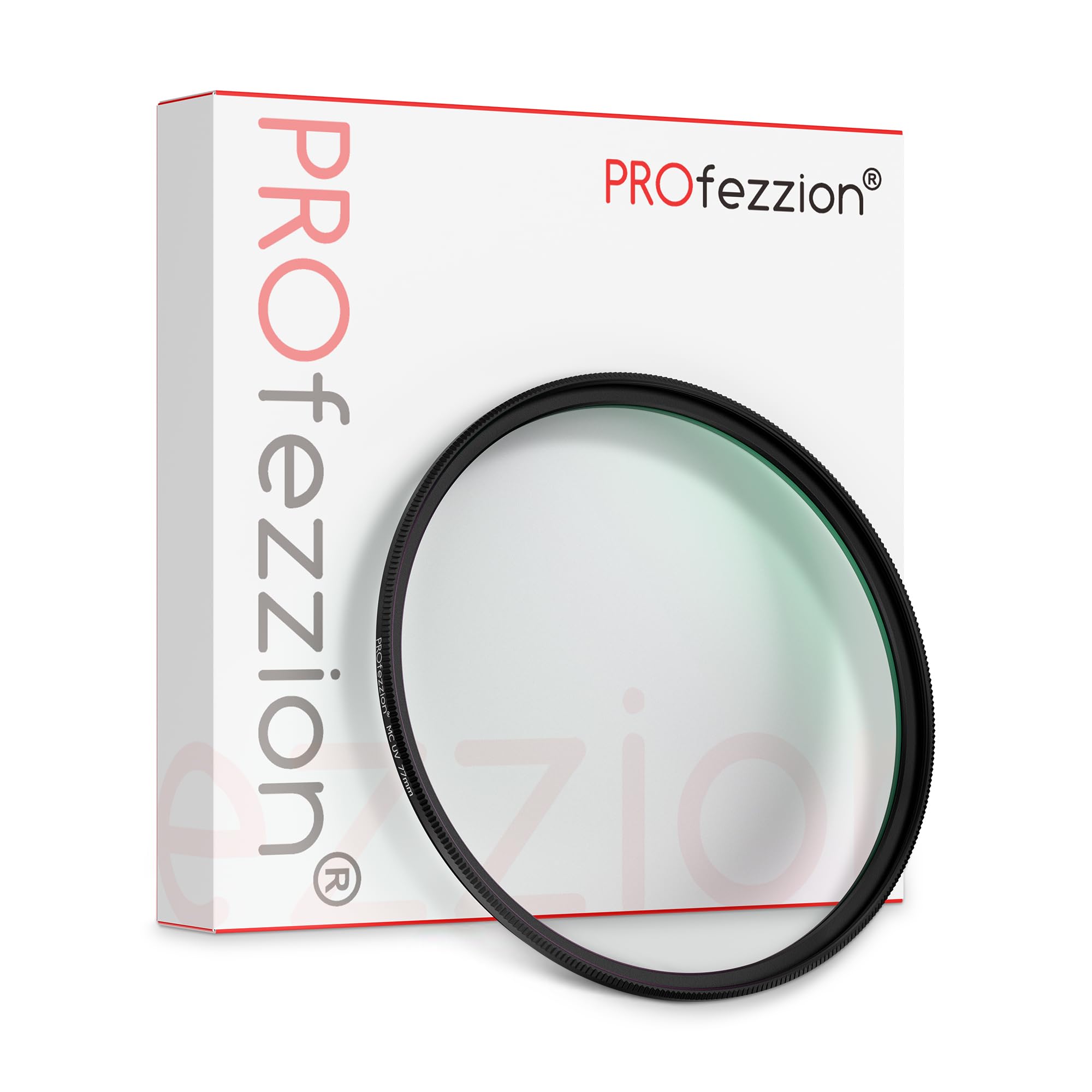
PROfezzion pairs 12 multi-layer nanometer coatings with Japanese optical glass to reach over 99.5% light transmission, keeping images clear and sharp while blocking UV haze. The frame is a wafer-thin 3mm, and the non-slip surface makes installation or removal genuinely easy — no wrestling with a stuck ring. It is explicitly listed as compatible with a wide range of Nikon DSLRs (D5500, D5300, D3300 and more) with the AF-S 18-55mm kit lens, plus Fujifilm X-M5 and X-T series cameras.
Buyers call it “good value for the money and product works as advertised.” It screws onto the 18-45mm kit lens on a Canon R50 without trouble, and most owners see it as cheap insurance — one buyer notes it is a tiny purchase that prevents a much bigger charge if the lens breaks. The aluminum body keeps weight at 2.12 ounces, and a filter case comes in the box.
The catch is simple: at 12 layers and inside a 3mm frame, it sits a step below the 24- or 28-layer options in this list for extreme backlight conditions. But for standard outdoor shooting, haze reduction and color accuracy are exactly what you need from a protector you will leave on permanently.
Your pick if: you own a Nikon or Fujifilm kit lens and want verified compatibility plus a slim, non-slip frame at an entry-level price.
Think twice if: you regularly shoot into harsh sunlight where maximum flare resistance from 28-layer coatings matters more.
4. NiSi 52mm UHC UV Lens Protection Filter
Water White Glass with 18-layer coating keeps high-megapixel sensors razor sharp at 99.3% transmission.
NiSi builds this 52mm filter around 18 layers of coating on Water White Glass — a step above standard optical glass — reaching 99.3% transmittance. That combination keeps colors neutral and images razor sharp even on high-megapixel sensors, which is why it markets itself around UHD Technology. The ultra-slim design prevents vignetting on wide-angle glass, and the double-sided nano coating makes it waterproof, oil-proof, and easy to clean.
What wins people over is the “absolutely all around quality” — owners mention the premium build, the absence of chromatic aberration or flare, and flawless performance in bright conditions. It protects against drops, dust, fingerprints, dirt, sand, and even seawater spray, making it a solid travel companion. The included case drew unprompted praise as worth saving on its own.
The honest caveat is that build feedback runs mixed — some find it extremely well made while others describe fragility, with a few reporting glass shattering issues. One owner noted a green artifact appearing in intense sun flares. This is a fit-note: it excels at clarity and value, but treat it gently on the trail.
Standout: The 99.3% transmission on Water White Glass gives you high-end optical performance at a mid-range price.
Fit note: Glass this thin demands careful handling — occasional reports of fragility mean it is best for careful shooters, not rough bags.
5. HOYA 52mm NXT Plus UV Filter
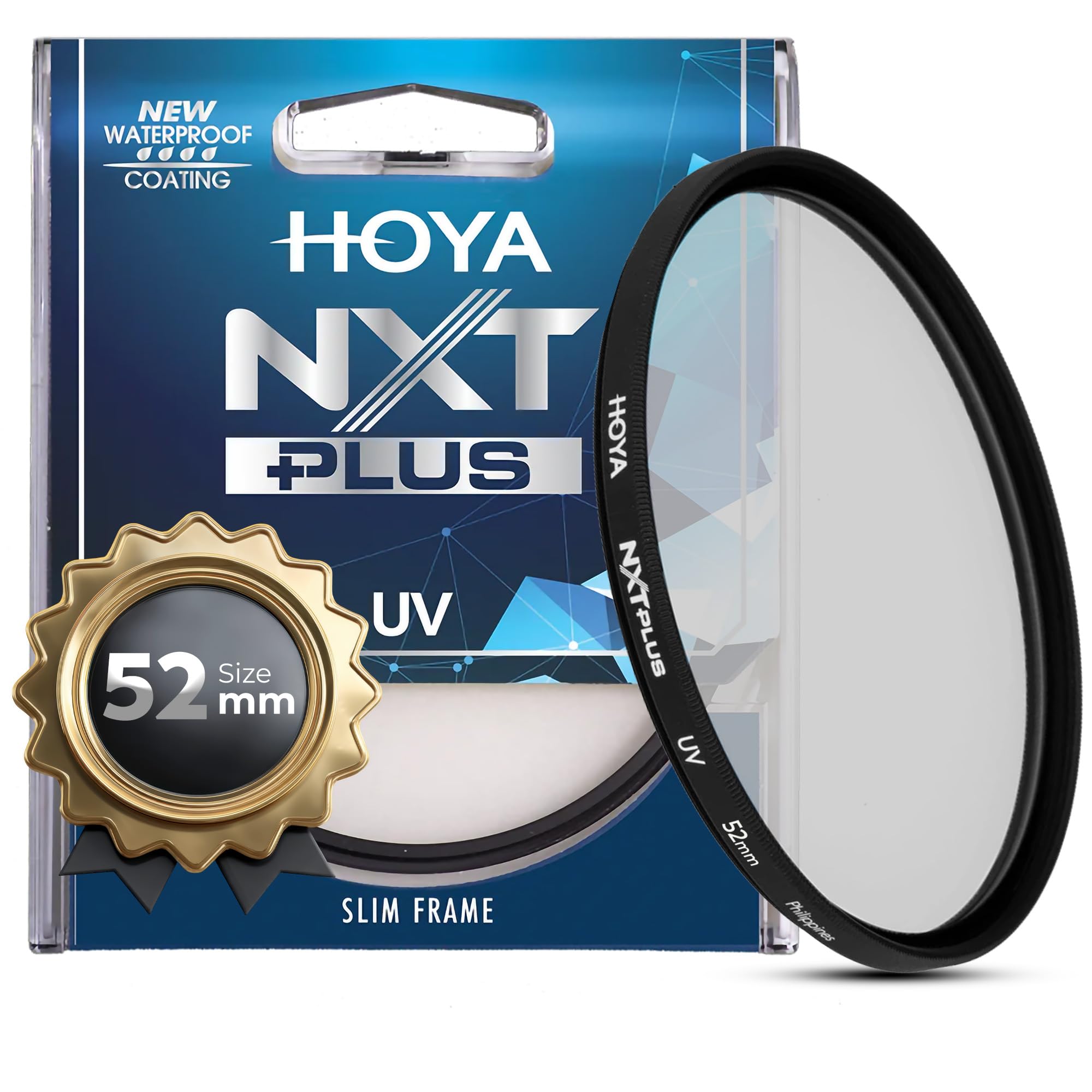
Hoya’s 10-layer HMC coating on Schott B270 glass delivers 98% transmission, backed by a legacy since 1941.
Hoya has been making optical glass since 1941, and the NXT Plus brings that pedigree with 10 layers of HMC anti-reflective coating on Schott B270 clear glass to hit 98% light transmission. The slim, low-profile aluminum frame prevents vignetting on wide-angle lenses while pairing cleanly with lens hoods. The hydrophobic top-coat repels smudges, dust, and fingerprints, though owners note it does not fully prevent prints — it just makes them far easier to wipe off.
Quality is the runaway theme here, with the most owner feedback of any filter in this list centered on build and optical clarity. One long-time owner puts it simply: “Are they cheap? No, but they are much cheaper than a new lens.” The filter fits snugly, provides solid protection, and shows no measurable impact on photo quality — the right balance between price and optical performance for daily use.
Against the K&F above, the Hoya has fewer coating layers (10 vs 28) but decades of proven glass science behind it. For shooters who trust the Hoya name and want reliable, no-surprise protection on a favorite lens, this is the safe, established pick.
Pick it for: a trusted brand with proven Schott B270 glass and easy-clean hydrophobic coating at a fair mid-range price.
skip it if: maximum flare resistance is your priority — the 10-layer coating trails the 28-layer competition in extreme backlight.
6. Tiffen Digital HT Multi Coated Protector 52mm UV Filter
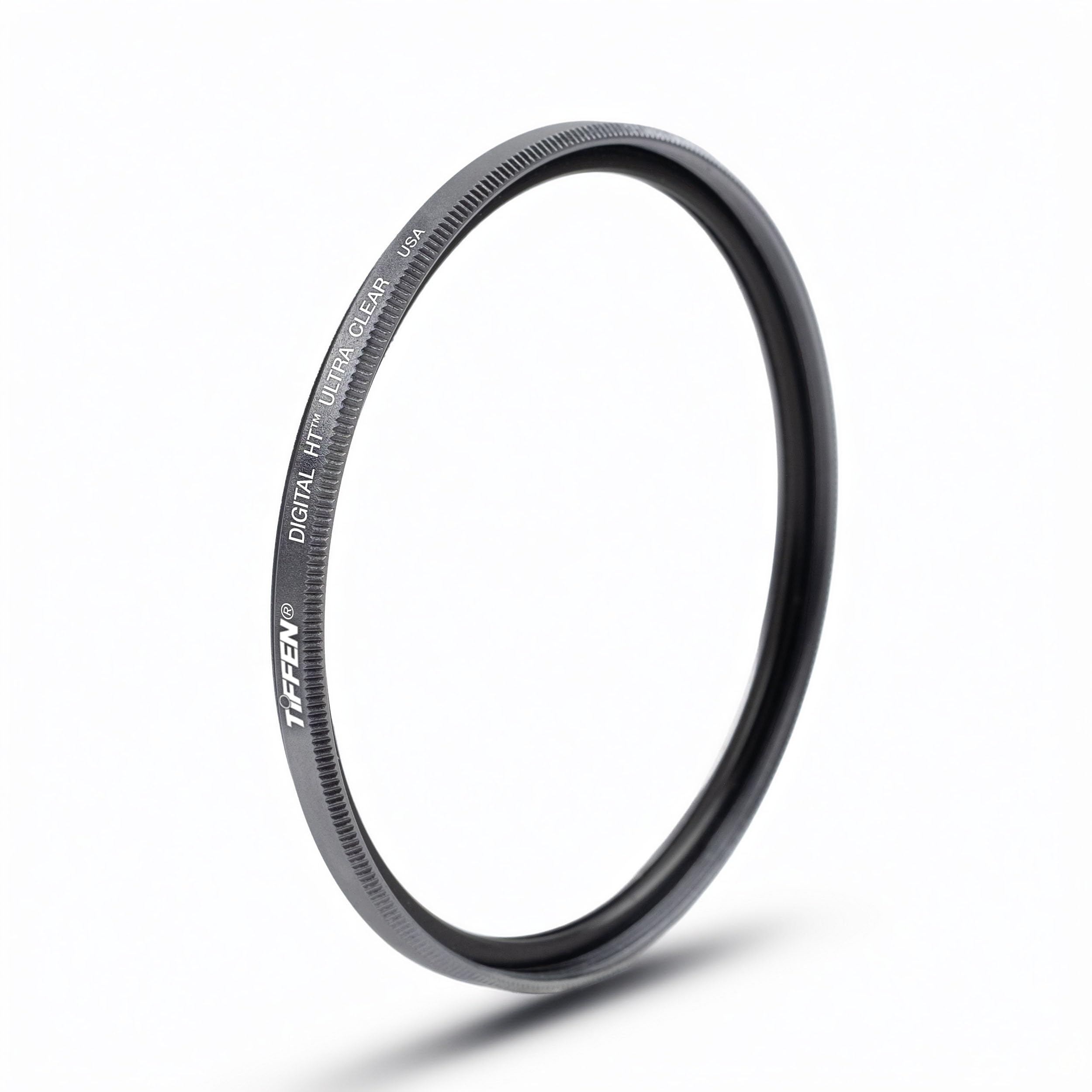
A titanium-coated frame with high-transmission glass that saved a telephoto lens from damage.
Tiffen’s Digital HT filter uses high-transmission multi-coated optical glass engineered to reduce reflections and flare while preserving contrast and color. It is built in New York and carries a titanium-coated frame that owners say stands out on dark L-series lenses — one even calls it a “retro look” that matches a silver Nikon Zf body. The clear, non-effect design lets you leave it on every day without altering exposure settings or color balance.
Protection is the headline story here: owners mention this filter saved an expensive telephoto lens from real damage, and it is praised as crisp with no distortion. It fits well, is easy to clean, and works with the lens cap and hood on top. The titanium finish draws mixed opinions — some love it, others find the silver tone odd on all-black lenses — so consider the look before you commit.
At its price point, this is a premium pick for shooters who value build toughness and a distinct aesthetic. The scratch-resistance feedback runs mixed, so it is best treated as a dependable daily protector rather than an unbreakable shield.
The appeal: New York-made glass with a striking titanium frame and a reputation for saving lenses from real-world knocks.
The fit note: If your kit is all-black, the silver frame might not match your aesthetic — a style choice, not a flaw.
7. B+W 52mm Master UV Haze MRC Nano 010M Glass Filter

A brass-threaded frame with MRC Nano coating resists binding and seizing on aluminum lens rings.
B+W builds this Master-line filter around a black knurled brass frame — brass threads are the gold standard because they resist binding and seizing on aluminum lens rings. The MRC Nano coating repels dirt and water, and the slim profile works down to 17mm on full-frame lenses without vignetting. A QR code is included so you can verify authenticity on the spot.
Owners call the Master line “the way to go,” citing the thin frame and superb optical quality on primes like a 35mm f/1.8. One buyer frames it simply: “The only way to protect your valuable camera lenses.” The knurled edge grip is a genuine upgrade over smooth rings, making installation and removal noticeably easier. On a Fujifilm XF 35mm f/1.4, it keeps dust off with minimal artifacts except when shooting directly into the sun — a hood mitigates that.
This is the pick for shooters who change filters often and hate fighting stuck rings. It may not top the transmission charts, but the mechanical excellence of brass threads is something you feel every single time you mount it.
Choose it for: buttery-smooth brass threading and a slim profile that behaves perfectly on wide and standard primes.
Consider other options if: you want the absolute highest transmission percentage — this one prioritizes mechanical quality over raw light throughput.
8. ZEISS T* Anti-Reflective Coating UV Protection Filter 52mm

ZEISS T* anti-reflective coating pairs perfectly with ZEISS glass and improve any lens’s clarity.
ZEISS brings its legendary T* anti-reflective coating to a 52mm UV filter, delivering optimal protection of the front element plus more clarity in your photos. It is designed for high-fit accuracy, which means fast filter changes without fiddling, and it works with a lens shade. While ideal for ZEISS lenses, it is fully compatible with non-ZEISS glass too — owners run it on Canon RF 24-105mm f/4 and 14-35mm f/4 lenses with excellent results.
The craftsmanship draws real appreciation — owners describe it as sturdy, well-crafted, “art-like,” and note it collects dust but a blower clears it instantly. Functionality earns the strongest positive feedback, with specific praise for its usability on a Nikon 200 F4 Micro lens. Weighing in at 2.4 ounces, it feels substantial without being heavy.
Value opinions split: some say it is worth the cost for a high-quality lens, while others find it pricey for a protective filter. If you already own ZEISS glass, this is the natural companion; if you are on a budget, the K&F or NEEWER delivers similar protection for less.
Best matched: ZEISS lens owners who want T* coating continuity across the whole optical chain.
Reality check: It is the premium-priced option here, so weigh it against the value of the lens you are protecting.
9. Hoya HD3 52mm UV Protector Filter
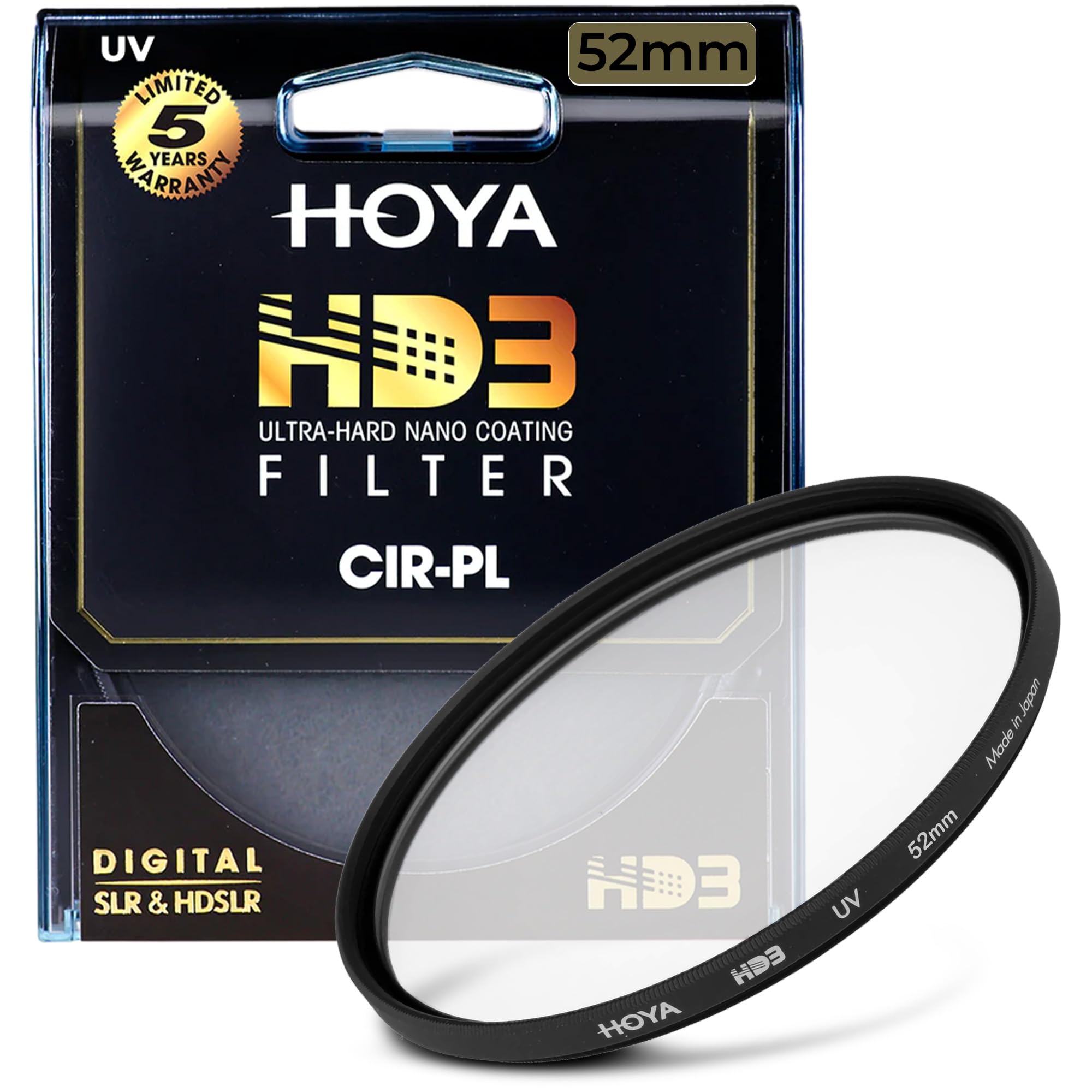
The hardest glass in the lineup, re-certified for 100MP+ sensors.
Hoya’s HD3 takes protection to another level with optical glass that is 4x harder than traditional filter glass, backed by an 800% harder coating and a patented 32-layer nano-technology. It is the only filter in this list explicitly re-certified for 100MP+ camera sensors without loss of resolution — meaning every pixel on a high-res body stays intact. At 2.4 ounces, it adds negligible weight to your setup.
Owners confirm the claims hold up: excellent scratch, fingerprint, and dust resistance with optics equal to Nikon and B+W flagships. One test on a 45MP D850 zoomed to 800% found zero optical degradation. It is ideal for shooters who skip lens caps entirely, and it survived a real assignment in the Everglades with an 18-135mm zoom showing no distortion or vignetting.
The honest trade-off is maintenance: the filter attracts dust more than others and draws mixed cleaning feedback, even though some say it stays cleaner overall. Value opinions run mixed too — it is not cheap, so the advice is to weigh the cost against your lens value and damage risk. For the price of protecting a lens, it is a defensible investment.
Why It’s The Top Performer
- 32-layer nano coating with 800% harder surface resists scratches
- Re-certified for 100MP+ sensors with zero resolution loss
- Proven in field use with no distortion or vignetting
The Price Of Perfection
- Attracts dust more readily than other filters
- Premium cost demands a value calculation against your lens
Worth it for: owners of high-resolution bodies or expensive glass who want the toughest optical shield available.
Skip if: your lens is a budget kit zoom — the HD3’s cost exceeds the value of what it protects.
Understanding the Specs
Coating Layers & Light Transmission
The number of coating layers (12, 24, 28, 32) determines how much light passes through and how well reflections are suppressed. Higher transmission — 99.6% versus 99.3% — means less light lost and fewer ghost images in backlit scenes. More layers also make the filter water-repellent, oil-resistant, and easier to clean without streaks.
Frame Thickness & Vignetting
A filter’s frame depth (3mm, 3.3mm, or ultra-slim) controls whether you get dark corners on wide-angle lenses. Thicker rings can block edge light at 18mm or wider; a 3mm frame avoids this entirely. For telephoto lenses, deeper frames are usually harmless, but slim is always the safer choice for flexibility.
FAQ
How do I know if my lens takes a 52mm filter?
Will a 52mm UV filter cause vignetting on my wide-angle lens?
Does a UV filter affect image quality or sharpness?
Can I leave a 52mm UV filter on my lens permanently?
What is the difference between 12-layer and 32-layer coatings?
Is a 52mm UV filter worth it if I already have a lens hood?
Will a 52mm filter work on my camera if my lens says 49mm or 55mm?
How do I clean a 52mm UV filter without scratching it?
Why is the B+W filter frame made of brass?
Final Thoughts: The Verdict
For most people, the 52mm uv lens filter winner is the K&F CONCEPT MC UV because 28-layer coatings and a 3.3mm frame deliver 99.6% transmission without vignetting, all at a mid-range price. If you want the hardest glass money can buy with 32-layer protection for a high-megapixel body, grab the Hoya HD3. And for a budget-friendly daily protector with surprisingly good coatings, the NEEWER MC UV is the one to reach for.
How We Picked
We do not accept paid placement. Every pick is matched to a real buyer and a real use-case; we do not hands-on test units.
Sources & Methodology
Specifications: manufacturer listings and product documentation. Review insights: verified customer reviews, as of August 2026. Pricing: not shown on this page (it changes often); check the current price via the retailer link.
As an Amazon Associate, Gadgets Feed earns from qualifying purchases. This does not affect which products we feature.