
A telephoto zoom that starts around 55mm and stretches to 250mm is the dividing line between casual snapshots and real reach — the kind that brings distant wildlife, sideline action, and compressed landscapes into your frame without forcing you to carry a massive f/2.8 brick. The challenge is that not every lens in this range delivers the sharpness and stabilization needed to make that reach usable handheld.
I’m Min — the co-founder and writer behind Gadgets Feed. I’ve spent hundreds of hours analyzing optical formulas, autofocus motor types, and image stabilization systems across the entire 55-250mm spectrum to separate the true performers from the also-rans.
Whether you are cropping into a bird at 200mm or framing a portrait at 85mm, the best 55-250mm lens for your camera system balances reach, weight, and optical quality without breaking your budget.
How To Choose The Best 55-250mm Lens
The 55-250mm range is a sweet spot for APS-C camera owners who want telephoto versatility without the weight and cost of full-frame glass. The right lens for you depends on which mount your camera uses and the specific trade-offs you are willing to make between reach, aperture speed, image stabilization, and build quality.
Image Stabilization is Non-Negotiable
At 200mm and especially at 250mm, even minor hand shake turns a sharp shot into a blurry mess. Lenses with optical image stabilization (often labeled VR for Nikon, IS for Canon, or OSS for Sony) give you roughly 3 to 4.5 stops of handheld shooting latitude. Without it, plan to shoot at 1/250th of a second or faster, which often means pushing your ISO higher than you want. For a 55-250mm lens that you intend to use without a tripod, stabilization is not optional.
Optical Quality and ED Glass Elements
Chromatic aberration — those purple and green fringes around high-contrast edges — is the most common optical flaw in budget telephoto zooms. Extra-low dispersion (ED) glass elements directly combat this, and most serious contenders in this category include at least one or two ED elements. Lenses with Super Spectra Coating or Super Integrated Coating also help reduce ghosting and internal reflections, improving contrast across the zoom range.
Autofocus Motor and Speed
The autofocus motor type determines whether your lens will track moving subjects or hunt endlessly in low light. Ultrasonic-type motors (SWM for Nikon, USM for Canon, STM for Canon RF) are quieter and faster than micromotor or older AF systems. If shooting sports, kids, or wildlife is your primary use, prioritize a lens with a silent wave or stepping motor over a conventional micromotor system.
Quick Comparison
On smaller screens, swipe sideways to see the full table.
| Model | Category | Best For | Key Spec | Amazon |
|---|---|---|---|---|
| Canon RF-S 55-210mm f/5-7.1 IS STM | Premium | Canon RF mirrorless | 4.5-stop IS, STM motor | Amazon |
| Nikon 55-300mm f/4.5-5.6G ED VR (New) | Premium | Nikon DX with 300mm reach | VR II, ED elements | Amazon |
| Nikon 55-200mm f/4-5.6G ED VR II (New) | Mid-Range | Compact telephoto, travel | 4-stop VR II, 300g | Amazon |
| Nikon 55-300mm f/4.5-5.6G ED VR (Refurb) | Mid-Range | Long reach, budget-conscious | VR II, 300mm tele | Amazon |
| Canon EF-S 55-250mm f/4-5.6 IS II (Renewed) | Mid-Range | Canon EF-S crop sensors | UD glass, IS, 250mm | Amazon |
| Sony E 55-210mm f/4.5-6.3 (Renewed) | Mid-Range | Sony E-mount mirrorless | OSS, 315mm eq. | Amazon |
| Canon EF 75-300mm f/4-5.6 III | Budget | Canon EF full frame | 300mm reach, no IS | Amazon |
| Nikon 55-200mm f/4-5.6G ED (New) | Budget | Nikon DX entry level | SWM, 9oz weight | Amazon |
| Nikon 55-200mm f/4-5.6G ED VR (Renewed) | Budget | Nikon DX with VR on a budget | VR, SWM, 9oz | Amazon |
In‑Depth Reviews
1. Canon RF-S 55-210mm f/5-7.1 IS STM (Renewed)

Canon’s RF-S 55-210mm f/5-7.1 IS STM is the native telephoto zoom that EOS R-series APS-C owners have been waiting for. Its 88-336mm full-frame equivalent range covers sports, wildlife, and travel, and the optical image stabilizer delivers up to 4.5 stops of shake correction on its own — extending to 7 stops when paired with an R-series body that has IBIS.
The lens uses two ultra-low dispersion elements and Super Spectra Coating to combat chromatic aberration and ghosting, producing sharp, contrasty images even at the long end. The STM stepping motor ensures smooth, quiet autofocus that is ideal for both stills and video work, and the rounded 9-blade diaphragm creates natural-looking bokeh. At 395 grams, it is lightweight enough to carry all day.
The maximum aperture of f/5 to f/7.1 is a stop slower than some alternatives, meaning you will need good light or higher ISO settings in dim conditions. However, the modern sensor performance in Canon’s R50, R10, and R7 bodies compensates well, making this kit the most balanced RF-mount telephoto option under serious money.
Why it’s great
- Native RF mount with 4.5-stop IS (7-stop with IBIS)
- Two UD elements for excellent chromatic aberration control
- STM motor for silent, smooth autofocus
Good to know
- f/5-7.1 aperture is slow in low light
- APS-C only, not compatible with full-frame RF bodies
2. Nikon AF-S DX NIKKOR 55-300mm f/4.5-5.6G ED VR (New)
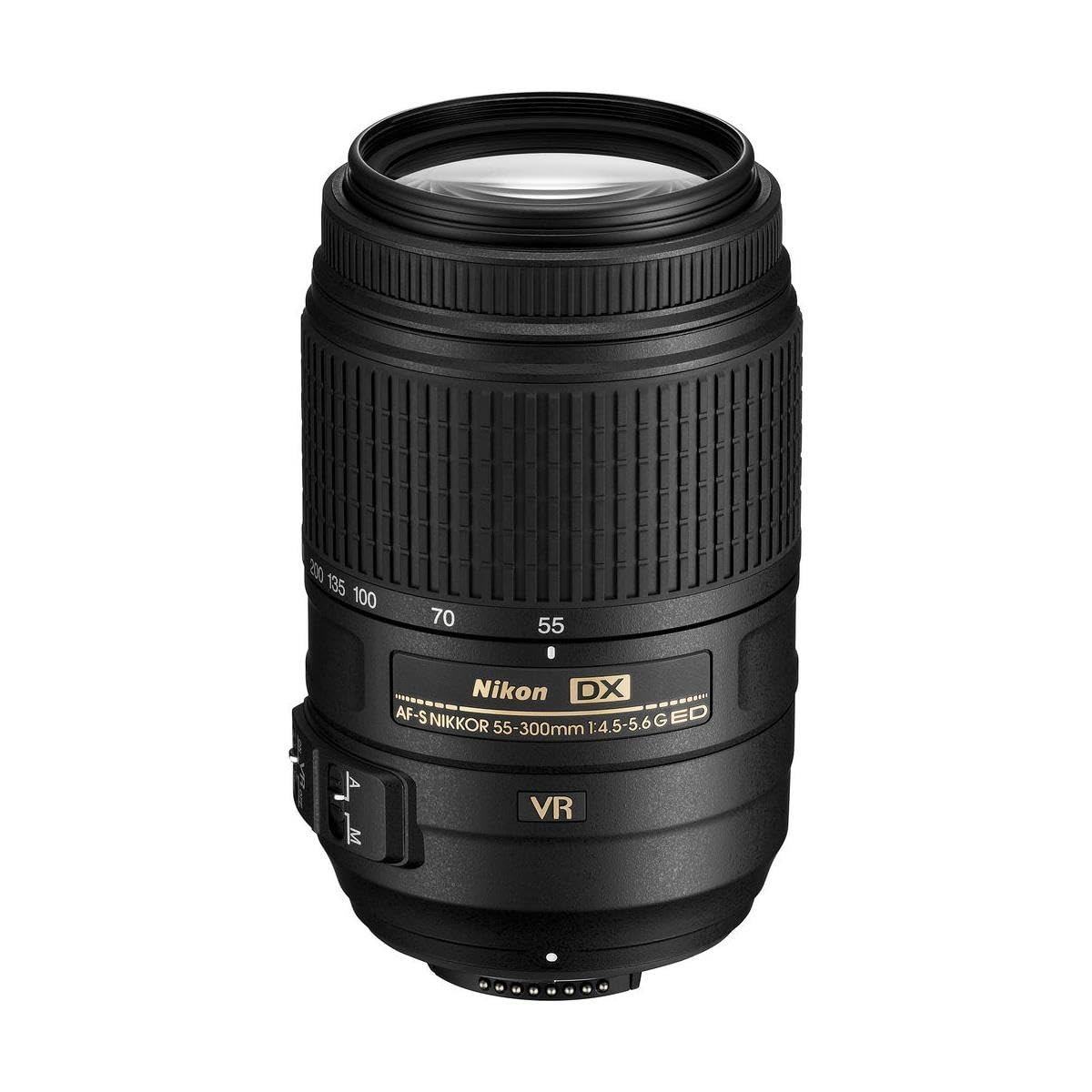
Nikon’s 55-300mm f/4.5-5.6G ED VR extends the reach beyond the typical 200mm mark to a true 300mm, giving DX-format shooters a 450mm full-frame equivalent. This extra 100mm over standard 55-200mm lenses is the difference between a distant bird being a small crop and a frame-filling subject.
VR II image stabilization delivers four stops of handheld latitude, which is essential when shooting at 300mm where every micro-shake is magnified. The optical formula includes two extra-low dispersion elements and a high refractive index element, which together suppress chromatic aberration and maintain sharpness across the frame. The Silent Wave Motor provides reasonably fast and quiet autofocus, though it does hunt more aggressively in low-contrast or dim conditions.
The trade-off for the extra reach is a longer barrel that feels front-heavy on smaller DX bodies like the D3500. The minimum focus distance of 4.6 feet is also longer than some competitors. But if your priority is raw reach — capturing subjects that other 55-200mm lenses simply cannot fill the frame with — this Nikon delivers at a competitive price point.
Why it’s great
- 300mm reach (450mm equivalent) for distant subjects
- VR II stabilization keeps shots sharp at full zoom
- Two ED elements for high contrast and low aberrations
Good to know
- AF hunts in low light and at 300mm
- Longer barrel feels front-heavy on small bodies
3. Nikon AF-S DX NIKKOR 55-200mm f/4-5.6G ED VR II (New)
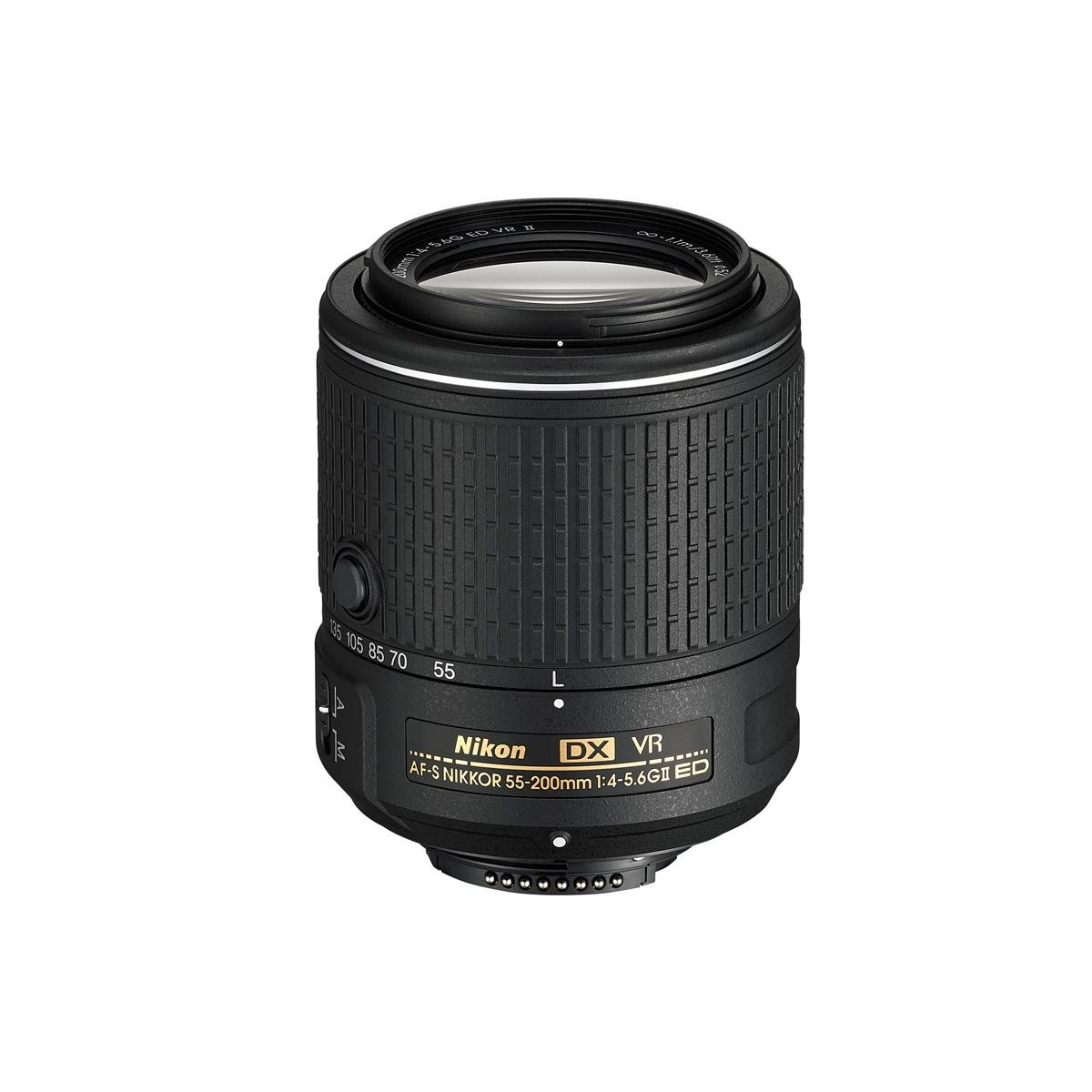
The VR II version of Nikon’s 55-200mm drops the weight to just 300 grams while retaining a 4-stop vibration reduction system. This is the lens to pack when every gram matters — it disappears into a day bag and barely changes the balance of your camera body.
Its optical performance with a Super Integrated Coating and an ED element is respectable for its class, delivering sharp images at the wide end and acceptable results at 200mm. The retracting barrel design keeps it short when not in use, and the rounded seven-blade diaphragm produces pleasing background blur. Autofocus uses a micro-type ultrasonic motor — not as fast as a ring-type SWM, but adequate for general use and quiet enough for video.
The plastic lens mount and lack of a manual focus override ring remind you that this is a budget-oriented design. It also performs poorly in low light beyond 135mm, where the f/5.6 maximum aperture forces higher ISOs. For daytime travel, portraits, and general outdoor photography, however, it is the lightest path to 200mm reach on a Nikon DX body.
Why it’s great
- Ultra-light 300g design for travel
- 4-stop VR II for sharp handheld shots
- Compact retracting barrel
Good to know
- Plastic mount with no manual focus override
- Soft at 200mm in low light
4. Nikon AF-S DX NIKKOR 55-300mm f/4.5-5.6G ED VR (Refurbished)

This certified refurbished version of the Nikon 55-300mm VR brings the same optical formula and VR II stabilization as the new version, but at a significantly lower entry point. If you want the extra 100mm of reach over a standard 55-200mm but need to keep spending in check, this is the most compelling option for Nikon DX shooters.
The lens includes two ED elements and an HRI element for controlled aberrations, and the VR system is effective enough to get sharp results at 300mm with a steady hand. Reviews note that autofocus hunting is more pronounced at the long end, especially in lower contrast scenes, but zooming out slightly before acquiring focus usually solves the issue. The refurbished units in this batch generally arrive with clean glass and functional electronics.
Build quality is solid for its tier, though the barrel does extend significantly when zoomed to 300mm, which can feel cumbersome in tight spaces. The 90-day warranty is shorter than a new purchase, and some units may show cosmetic wear. If you are patient with autofocus in dim conditions and want maximum reach per dollar, this refurbished option is hard to beat.
Why it’s great
- 300mm reach at a budget-friendly refurbished price
- VR II provides solid handheld stabilization
- ED and HRI elements for good optical quality
Good to know
- AF hunts in low light at 300mm
- 90-day warranty only; possible cosmetic wear
5. Canon EF-S 55-250mm f/4-5.6 IS II (Renewed)

The Canon EF-S 55-250mm IS II is a staple in the Canon crop-sensor ecosystem, and with good reason. It delivers 250mm of reach (400mm full-frame equivalent) through a 12-element, 10-group optical formula that includes one UD glass element — the same type of glass used in Canon’s L-series lenses to suppress chromatic aberration.
The optical image stabilizer is effective for handheld shooting, and the lens is noticeably lighter and sharper than Canon’s older 70-300mm non-IS offerings. On APS-C bodies like the 7D Mark II or 90D, the autofocus via micromotor is functional but audible, and it will struggle to track fast-moving subjects compared to ring-type USM lenses. The plastic mount is a common complaint, but for a lens at this price tier, it is acceptable with careful handling.
Renewed units usually arrive in good condition, though some may have minor marks on the barrel or glass that require cleaning. The AF is not silent enough for serious video use, and the micromotor system feels dated. For stills — especially birds, backyard wildlife, and daytime sports — the combination of 250mm reach and UD glass sharpness makes this the strongest EF-S telephoto value.
Why it’s great
- 250mm reach with UD glass for low aberrations
- Effective optical image stabilization
- Lighter and sharper than older 70-300mm alternatives
Good to know
- Plastic mount feels fragile
- Micromotor AF is audible and not video-friendly
6. Sony E 55-210mm f/4.5-6.3 OSS (Renewed)

Sony’s E-mount system is full of premium glass, but the 55-210mm f/4.5-6.3 OSS remains the most affordable telephoto zoom for APS-C bodies like the a6000 series and ZV-E10. Its 82-315mm full-frame equivalent range covers most outdoor scenarios, and the Optical Steady Shot (OSS) stabilization is effective for both stills and video, keeping handheld footage smooth at the long end.
The lens is strongest between 55mm and 135mm, where it delivers sharp, contrasty images with good color rendering. Beyond 135mm toward 210mm, sharpness drops off noticeably, particularly in the corners. The autofocus is internal and quiet, which is a real advantage for video recording, and the manual focus ring does not rotate during autofocus operation. Super Spectra Coating minimizes flare and ghosting effectively.
The f/6.3 maximum aperture at 210mm makes it a daylight-only lens in practical terms — expect to push ISO or use a tripod in overcast or indoor conditions. The plastic construction is typical for its tier, and the zoom ring can feel slightly uneven. For Sony APS-C users who need an entry-level telephoto without breaking the bank, this is the only native OSS option in its price segment.
Why it’s great
- Only native Sony E-mount telephoto with OSS at this price
- Internal focus for quiet video autofocus
- Good sharpness from 55-135mm
Good to know
- Noticeably soft at 210mm
- f/6.3 at long end limits low-light performance
7. Canon EF 75-300mm f/4-5.6 III
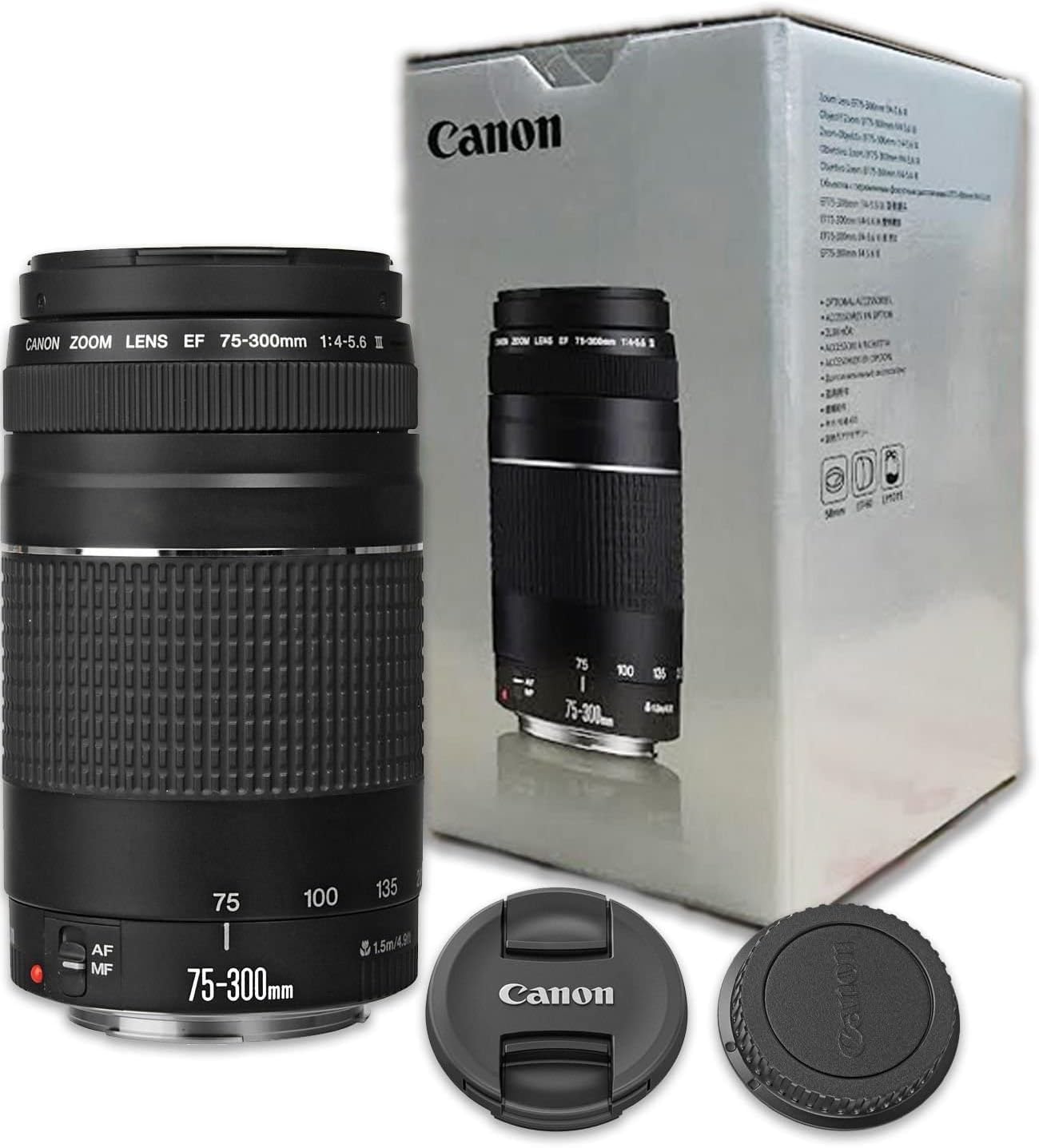
The Canon EF 75-300mm f/4-5.6 III is distinct from the EF-S 55-250mm — it is a full-frame EF mount lens, meaning it works on both full-frame and APS-C Canon DSLRs without any crop factor change. This makes it an option for shooters with older 5D series bodies who want an inexpensive telephoto zoom, or for APS-C users who plan to eventually upgrade to full frame.
The zoom range is 75-300mm, giving you a bit more reach at the cost of losing the wider 55-75mm segment. The biggest drawback here is the complete absence of image stabilization — at 300mm, even with a fast shutter speed, camera shake is a constant battle, and you will need a tripod or very high shutter speeds (1/300th or faster) to get consistent results. Chromatic aberration is also more pronounced at the long end, especially around high-contrast edges.
The III version improves zoom smoothness over earlier generations, and the autofocus is workable in good light. Build quality is entirely plastic, and the front element rotates during focusing, making it awkward to use with a circular polarizer. For anyone shooting on a full-frame Canon DSLR on a tight budget, this lens delivers 300mm reach that nothing else at this price point can match.
Why it’s great
- Works on full-frame Canon EF bodies
- 300mm reach at a low entry point
- Improved zoom mechanism over earlier versions
Good to know
- No image stabilization at all
- Strong chromatic aberration at 300mm
- Front element rotates during AF
8. Nikon 55-200mm f/4-5.6G ED AF-S DX (New White Box)

This white box version of the Nikon 55-200mm f/4-5.6G ED is essentially a brand new lens sold without retail packaging, bringing the cost down enough to be the cheapest entry point into Nikon DX telephoto photography. At just 9 ounces (255 grams), it is extremely light and compact, making it almost forgettable in a camera bag.
The optical design includes two ED elements and Super Integrated Coating, which together produce surprisingly good image quality for an entry-level lens. The Silent Wave Motor provides quiet autofocus that is faster than the micromotor alternatives, and the overall color rendition and contrast are pleasing for outdoor photography. It does not have VR, so you must rely on good technique or a tripod at 200mm.
The plastic construction is expected at this price, and the white box purchase means no fancy retail box or accessories beyond the lens itself. The lack of vibration reduction and the variable aperture are the main compromises. For a new photographer with a Nikon D40, D3200, or D5100 looking for their first telephoto, this lens offers the most affordable path to learning.
Why it’s great
- Lowest cost path to Nikon DX telephoto
- Extremely light at 9oz for easy carrying
- SWM autofocus is quiet and responsive
Good to know
- No image stabilization
- Plastic build and mount
- White box means no retail packaging
9. Nikon 55-200mm f/4-5.6G ED VR AF-S DX (Renewed)
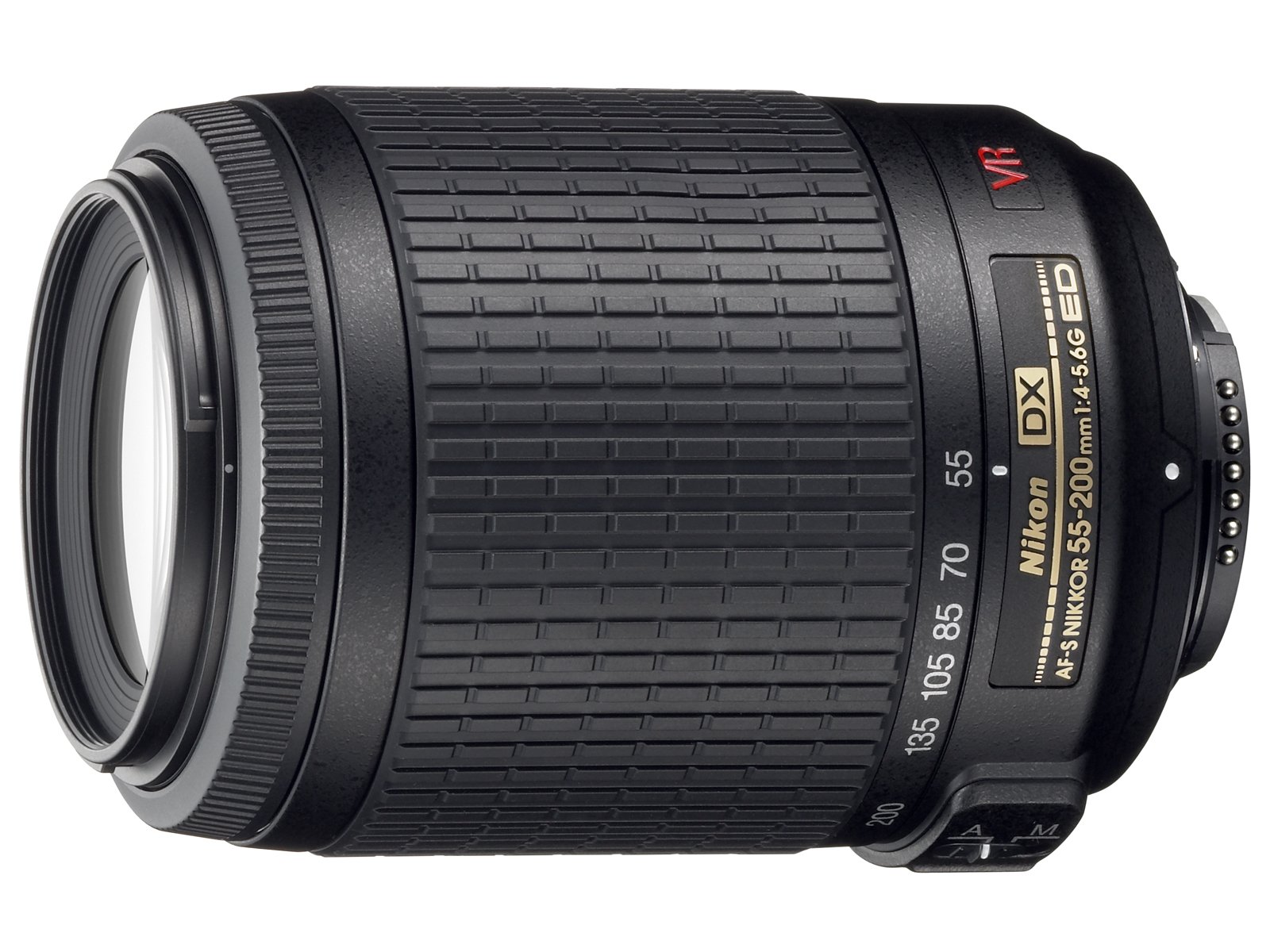
The VR version of Nikon’s 55-200mm is the same compact 9-ounce form factor as the non-VR white box model, but adds optical vibration reduction that makes a tangible difference at the 200mm end. This is the right choice for budget-conscious Nikon DX shooters who shoot handheld and cannot afford to lose shots to camera shake.
Its optical formula uses two ED elements and a Super Integrated Coating to control flare and chromatic aberration, producing results that many reviewers describe as surprisingly good for the price. The Silent Wave Motor keeps autofocus quiet and reasonably fast. At 200mm with VR engaged, you can reliably shoot at shutter speeds around 1/50th to 1/80th of a second — well below the old 1/200th rule of thumb.
Being a renewed product, there is some variance in condition — one reviewer reported a broken plastic mount on the first unit, though the replacement was fine. The plastic mount is the weakest physical point, and some units may show minor wear. For the lowest possible entry point to a VR-equipped telephoto zoom on Nikon DX, this renewed lens delivers the stabilization that matters most.
Why it’s great
- VR image stabilization for handheld 200mm shooting
- Lowest price entry point for a VR Nikon telephoto
- ED elements and SIC for solid image quality
Good to know
- Plastic mount can break on defective units
- Renewed condition may vary; check return policy
FAQ
Can I use a Canon EF-S 55-250mm lens on a full-frame Canon DSLR?
Does the Nikon AF-S DX 55-200mm f/4-5.6G ED VR II have a metal lens mount?
What is the difference between a 55-200mm and a 55-250mm lens for wildlife?
Final Thoughts: The Verdict
For most users, the best 55-250mm lens winner is the Canon RF-S 55-210mm f/5-7.1 IS STM because it combines native RF-mount compatibility, a modern STM autofocus motor, and 4.5 stops of stabilization in a lightweight package that outclasses every other telephoto option for Canon APS-C mirrorless shooters. If you want the longest reach for the money, grab the Nikon 55-300mm f/4.5-5.6G ED VR. And for the best value in a stabilized Sony E-mount package, nothing beats the Sony E 55-210mm f/4.5-6.3 OSS.