
Our readers keep the lights on and my morning glass full of iced black tea. As an Amazon Associate, I earn from qualifying purchases.
Specs are compiled from manufacturer listings and verified buyer reviews and can change over time — please confirm the key details on the product page before buying.
Picking a 55-inch TV at this level means deciding where your money should go: the jaw-dropping contrast of OLED that demands dim light, or the brute brightness of Mini-LED that fights sunlit windows. Each technology rewrites your living room setup, and the wrong choice here nags you every time you sit down to watch.
I’m Min — the founder and writer behind Gadgets Feed. This guide is built by comparing the manufacturers’ published specifications and the patterns across verified customer reviews, so you get each pick’s real strengths and trade-offs instead of marketing spin.
Whether you game at 120Hz+ or binge movies on a bright Saturday afternoon, the takeaway is the same: you only get one shot to spend on the right 55 inch 4k smart tv for your room.
Quick Picks
- Hisense 55″ U8 Series ULED Mini-LED 4K UHD Smart Google TV — Best Overall
- Roku Smart TV – 55-Inch Pro Series 4K QLED RokuTV — Best for Simplicity
- Sony BRAVIA 5 55 Inch TV, Mini LED, 4K Smart Google TV — Best Processing
- Samsung 55-Inch Class OLED S95F 4K Glare Free Smart TV — Bright-Room OLED
- LG 55-Inch Class OLED evo AI Super Upscaling 4K G5 Series Smart TV — Wall Art OLED
- Sony 55 Inch BRAVIA 8 OLED 4K Ultra HD Smart Google TV — Cinematic OLED
- TCL 55-Inch Q7 QLED 4K Smart Google TV — Gaming Value King
- TCL Amazon Exclusive 55 Inch Class T7 Series 4K QLED HDR Smart Google TV — High Refresh Value
- Roku Smart TV – 55-Inch Plus Series, Mini-LED TV – RokuTV with Enhanced Voice Remote — Best Value
- Samsung 55-Inch Class Mini LED M70H Series Samsung Vision AI Companion Smart TV — Mini-LED on a Budget
- Panasonic W70 Series (2025 Model) 55″ LED 4K Ultra HD Smart Fire TV — Budget Champion
How To Choose The Best 55 Inch 4K Smart TV
Most buyers fixate on resolution and miss the three specs that actually define daily enjoyment: peak brightness, local dimming quality, and the smart platform’s speed. Here’s how to decode them.
Panel Technology: Mini-LED vs. OLED vs. QLED
OLED lights each pixel individually, so blacks are truly black — perfect for dark home theater rooms. Mini-LED and QLED use a backlight behind an LCD panel, which lets them get much brighter (great for bright rooms) but can create a slight halo around bright objects on black backgrounds. If your TV sits opposite a window, lean Mini-LED. If you watch at night, OLED wins.
Refresh Rate and Gaming Features
A 60Hz panel works fine for news and standard streaming. For sports and console gaming, 120Hz (or higher) keeps fast motion blur-free. VRR (Variable Refresh Rate), like AMD FreeSync or NVIDIA G-Sync, matches the TV’s refresh rate to your game’s frame rate so you don’t see tearing — a must for PS5 and Xbox Series X.
Smart Platform Longevity
Roku OS is famously simple and stays fast for years. Google TV offers deep customization but can slow down with less powerful processors. Fire TV is convenient for Amazon users, but review feedback here is mixed depending on the model. Pick the interface you’ll use daily, because a slow remote ruins a fast panel.
Quick Comparison
On smaller screens, swipe sideways to see the full table.
| Model | Best For | Panel Tech | Refresh Rate | Smart OS | Amazon |
|---|---|---|---|---|---|
| Hisense U8 Series | Ultra-bright HDR & Gaming | Mini-LED QLED | Native 165Hz | Google TV | $698.00$899.99Amazon |
| Roku Pro Series | Simplest User Experience | Mini-LED QLED | 120Hz | Roku OS | $699.99$899.99Amazon |
| Sony BRAVIA 5 | Best Processing & PS5 | Mini-LED | 120Hz | Google TV | $998.00$1,399.99Amazon |
| Samsung S95F OLED | Bright-room OLED Experience | OLED | 164Hz | Tizen | from $1,895.98Amazon |
| LG G5 OLED evo | Wall-Mount Design & Movies | OLED evo | 165Hz | webOS | $1,598.00$1,696.99Amazon |
| Sony BRAVIA 8 OLED | Cinematic Dark Room Viewing | OLED | 120Hz | Google TV | $1,298.00Amazon |
| TCL Q7 QLED | Budget Gaming with 240Hz VRR | QLED | Native 120Hz | Google TV | $539.99$565.67Amazon |
| TCL T7 Series | Affordable High Refresh Rate | QLED | 120Hz-144Hz | Google TV | $449.99Amazon |
| Panasonic W70 Series | Budget-friendly Fire TV | LED | 60Hz | Fire TV | from $371.95Amazon |
| Samsung M70H | Mini-LED on a Budget | Mini-LED | 60Hz | Tizen | $349.99$447.99Amazon |
| Roku Plus Series | Best Value QLED Mini-LED Combo | Mini-LED QLED | 60Hz | Roku OS | $349.99$499.99Amazon |
In‑Depth Reviews
1. Hisense 55″ U8 Series ULED Mini-LED 4K UHD Smart Google TV
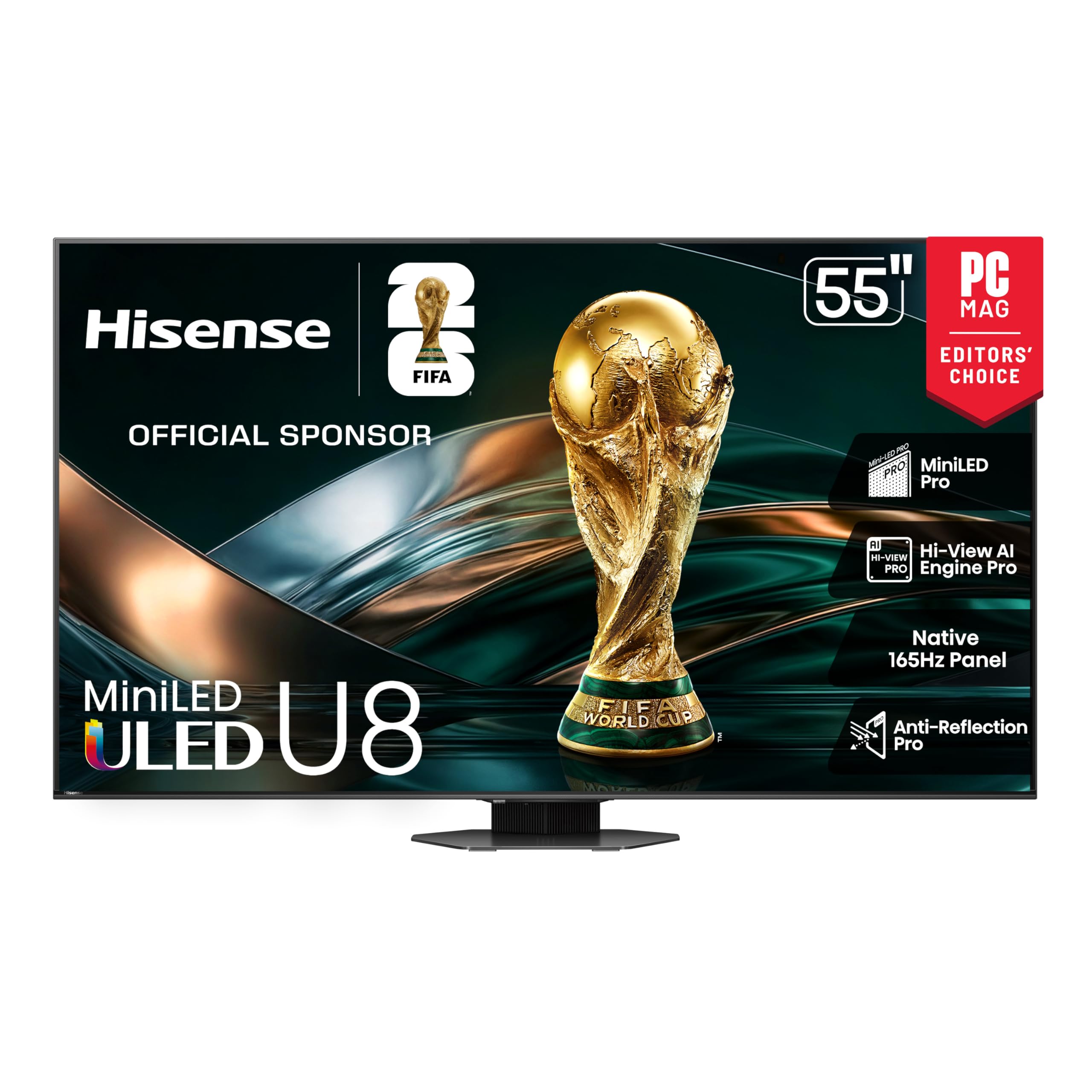
The performance leader that brings flagship brightness and a 165Hz panel without the flagship price tag.
You get a picture that rivals OLED in contrast, thanks to up to 5600 local dimming zones (backlight sections that turn off independently for pure black). The Mini-LED Pro backlight hits a blinding 5000 nits peak brightness — so a sunlit soccer game on HDR doesn’t wash out. Buyers report the “picture as good as OLED” and “clear and vibrant,” though one review notes the built-in speakers are weak and a Hisense soundbar fixes that.
On the gaming side, this is the most future-proof pick at 55 inches. The Native 165Hz Panel with VRR 288 (Variable Refresh Rate up to 288Hz) and AMD FreeSync Premium Pro means PC and console gamers get tearing-free, butter-smooth motion. The Enhanced Game Bar lets you tweak settings from the remote. Anti-Reflection Pro coating also helps in bright rooms — the coating sits inside the liquid crystal layer, not just on top.
Why it’s the top pick
- Up to 5000 nits peak brightness for stunning HDR highlights — brighter than any other TV in this list.
- 4.1.2 multi-channel surround with Dolby Atmos, including two up-firing speakers that bounce sound off the ceiling.
- Native 165Hz panel with VRR 288: a level of motion smoothness most TVs under simply don’t offer.
The downsides
- Annual energy consumption of 264 kWh per year — notably higher than many competitors.
- Some buyer reports of software instability: one review describes it getting stuck and needing a factory reset after being left idle.
- Base width is 15.7 inches, so you need a wide TV stand.
Who should buy this: The enthusiast who wants near-OLED black levels, console/PC gaming at 165Hz, and the highest HDR brightness available in this budget tier.
Who should think twice: Anyone who values a rock-solid, never-reboot smart TV from the start — some owners mention needing occasional resets on this Google TV platform.
2. Roku Smart TV – 55-Inch Pro Series 4K QLED RokuTV
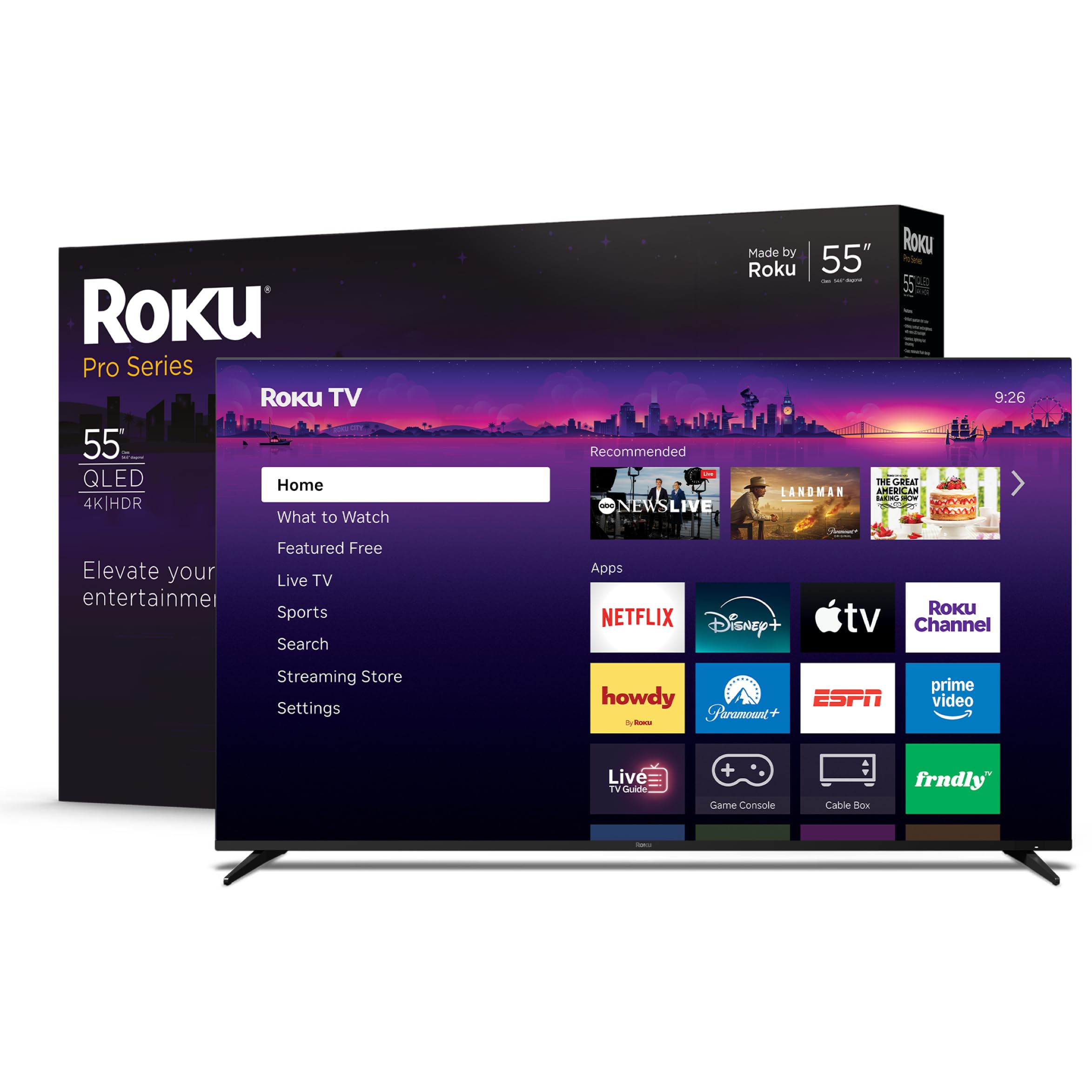
A brilliantly simple interface married to a 120Hz Mini-LED panel that rivals more complex sets.
This is the TV that makes your grandmother and your gamer roommate equally happy. The Roku OS is famously intuitive — no bloatware, no slow app launches — and it runs a 120Hz panel with Freesync Premium Pro, ALLM (Auto Low Latency Mode), and VRR. Buyers mention one reviewer called the Pro Remote “backlit and high-quality,” and that the TV’s side-firing speakers deliver “room-filling sound” with Dolby Atmos that a rival reviewer said was better than the Samsung The Frame.
Blistering speed from the 120Hz panel makes live sports and games look fluid, and the included rechargeable voice remote with backlit buttons saves you from searching for batteries in the dark. It also features an Ambient Light Sensor that auto-adjusts brightness to your room.
The catch is reliability: One buyer’s unit developed brown spots on the screen after three weeks and reported a slow refund process from Amazon — a risk that’s rare but note for a “smarter remote” TV.
Reach for this if: You want the simplest, fastest smart TV experience with solid 120Hz gaming and excellent built-in sound, all at mid-range pricing.
Look elsewhere if: You need the absolute highest peak brightness for HDR — this caps out well below the Hisense U8’s 5000 nits.
3. Sony BRAVIA 5 55 Inch TV, Mini LED, 4K Smart Google TV

Sony’s AI-powered XR processor upscales everything to near-4K, making this the best pick for mixed content.
While many TVs just display what you feed them, the XR Processor with AI technology in the BRAVIA 5 actively cleans up and enhances every scene in real-time. Reviewers call the 4K upscaling “incredible” — standard HD content and even DVDs look sharper than on any other TV here. The Mini LED backlight is controlled by XR Backlight Master Drive, giving you the bright highlights of Mini-LED with the deep blacks of a much more expensive set.
For PlayStation 5 owners, this TV is a no-brainer. It supports Auto HDR Tone Mapping (which tells the PS5 exactly what the TV can handle) and Auto Genre Picture Mode, plus a Game Menu that puts all your gaming settings in one place. One limitation: only 2 of the 4 HDMI ports are 2.1, so you can’t run two next-gen consoles at full bandwidth simultaneously. The remote lacks backlighting, which multiple buyers noted was annoying in a dark room.
Perfect for: The person who watches a mix of old DVDs, cable TV, and streaming — the XR processing makes everything watchable, not just native 4K content.
skip it if: You need four full HDMI 2.1 ports or a backlit remote — this set has neither.
4. Samsung 55-Inch Class OLED S95F 4K Glare Free Smart TV

The first OLED that truly works in a sun-drenched living room without turning into a mirror.
Traditional OLEDs are notorious for reflections — every window or lamp turns the screen into a mirror. Samsung’s “Glare Free” technology on the S95F eliminates distracting reflections, even with “sun streaming through your windows,” according to the maker. Buyers confirm it: one called the anti-glare a “standout” and said the picture looks “as if the actors are in the room with us.” It’s also Samsung’s brightest OLED ever, thanks to the NQ4 AI Gen3 Processor that runs 128 neural networks for AI-enhanced picture and optimized sound.
On the spec sheet, this is one of the highest-performing TVs in the list: Motion Xcelerator 164Hz, Dolby Atmos, and Samsung Vision AI with Alexa built-in. The TV upscales everything to 4K using those 128 neural networks and even transforms standard SDR content to HDR-like quality. However, some buyers find the software frustrating — one review details the TV entering a screensaver during Android casting and suffering slow YouTube response (20-30 second delays).
Standout features
- Glare Free coating makes OLED viable in bright rooms — a category first.
- 164Hz refresh rate with 128 neural network AI processing for sharp, smooth motion.
- Phenomenal color, HDR brightness, and deep blacks in a thin, premium build.
Software trade-offs
- Some customers note sluggish response and unwanted Samsung default app behavior.
- Energy consumption of 246 kWh per year is higher than Roku Pro or Sony BRAVIA 5.
- Premium pricing at: you pay for that anti-glare OLED breakthrough.
Buy this for: A bright living room where you want OLED blacks without the glare — this is the only TV that solves that problem.
Skip this if: You want a lean, no-fuss smart TV — some owners prefer the snappier interface of a Hisense Android TV over Samsung’s Tizen system.
5. LG 55-Inch Class OLED evo AI Super Upscaling 4K G5 Series Smart TV

A stunning wall-mount OLED with 45% more brightness than last year and gaming specs that rival any screen.
The LG G5 is designed to be the centerpiece of a room — the “One Wall Design” sits virtually flush against the wall, leaving almost no gap. It uses LG’s Brightness Booster Ultimate technology, which the maker says makes it 45% brighter than the previous generation, so it performs well even in rooms with ambient light. The Alpha 11 AI Processor Gen2 powers AI Super Upscaling and AI Director Processing that adjusts tone to match the director’s intent.
Gamers get a 0.1ms response time and up to 165Hz refresh rate, plus NVIDIA G-Sync, AMD FreeSync Premium, and VRR. Four HDMI 2.1 inputs let you hook up multiple consoles without swapping cables. Buyers rave about the picture — one described it as having “stunning visuals in either movies, streaming content or games,” with “deep blacks and near-3D effect.” The biggest complaint? The remote lacks backlit buttons, so you’ll need a flashlight to change channels in the dark. Also, it does not come with a TV stand — only a wall bracket is included in the box.
Best for: Home theater enthusiasts who want a perfect picture with a flush wall mount, plus serious gaming features. The 165Hz and 0.1ms response time beat almost every other TV here.
Consider alternatives if: You need a stand (it’s not included), or you dislike LG’s webOS software — some buyers find it bloated and spend hours disabling unwanted features.
6. Sony 55 Inch BRAVIA 8 OLED 4K Ultra HD Smart Google TV

Sony’s OLED with over 8 million self-lit pixels delivers pure black for a true cinema experience.
While the LG G5 is brighter, the Sony BRAVIA 8 focuses on perfect contrast. The XR Contrast Booster 15 enhances the natural per-pixel blacks of OLED, and the XR Triluminos Pro accesses billions of accurate real-world colors. It also uses Acoustic Surface Audio+, where the screen itself vibrates to produce sound — meaning dialogue comes directly from the actor’s mouth, not from speakers below. The TV comes with 5 movie credits in the Sony Pictures Core app for high-bitrate 4K streaming.
Performance is stellar for movies and PS5 gaming. One buyer describes it as having “stunning picture quality and smooth performance” with “deep blacks, natural colors, smooth motion.” Another notes the aggressive static logo dimming — you may need to set peak luminance to medium to avoid it. The bundled Google TV interface is faster than previous Sony generations, though one reviewer calls it “garbage” for sound dropouts and privacy concerns. It needs a dark room to shine, but when it does, it’s as close to a movie theater as 55 inches gets.
Reach for this if: You watch movies in a dark room and want the most accurate, natural-looking OLED picture. The Sony processing and XR Contrast Booster 15 make HDR look beautifully nuanced.
Look away if: Your room is bright, or you stream mostly standard-def content — the Sony’s upscaling is excellent, but the anti-glare coating is not as effective as the Samsung S95F’s.
7. TCL 55-Inch Q7 QLED 4K Smart Google TV

A mid-range QLED that punches above its weight with a 120Hz panel and up to 240Hz VRR.
This is the TV that gamers on a budget should bookmark. The native 120Hz panel jumps to up to 240Hz VRR (Variable Refresh Rate) with AMD FreeSync, making it one of the smoothest screens for competitive PC gaming at this price. Full Array Pro Local Dimming with over 200 zones (backlight sections that dim independently) gives it contrast that one reviewer called “near-OLED HDR” with a superb contrast ratio of about 100,000:1. The QLED panel and HighBright Pro LED Backlight create rich, vibrant colors that cover over 98% of the DCI-P3 color space.
Buyers consistently rate it 5/5 for value. One long-term owner says “TCL proves itself to me” after over a year of use. The Google TV interface comes with ads on the home screen, which some users fix by adding an Apple TV 4K. The “Motion Rate 480 with MEMC Frame Insertion” combines multiple motion enhancement technologies for top-tier motion clarity. A few owners note the “feet” need a wide console, and the TV is slightly thicker than premium models.
The standout offer: 240Hz VRR gaming performance at a mid-range price, with contrast and HDR that beat many TVs costing hundreds more. It even beats the LG QNED90 in reviewer comparisons.
What you give up: Built-in speakers are merely OK, and the Google TV interface has ads. Also, it lacks the extreme brightness (5000 nits) of the Hisense U8.
8. TCL Amazon Exclusive 55 Inch Class T7 Series 4K QLED HDR Smart Google TV
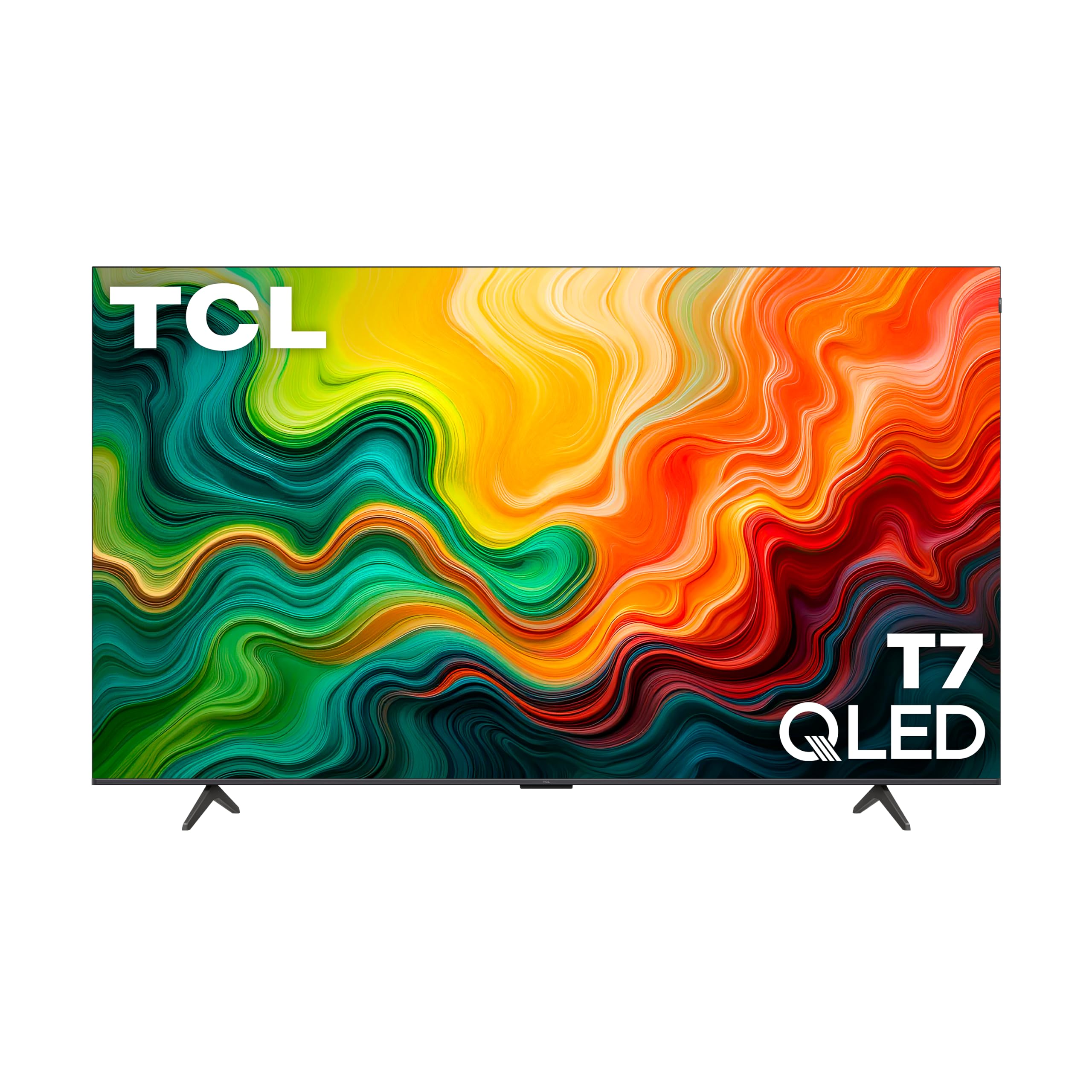
A 144Hz QLED at an entry-level price point, bridging the gap between budget panels and premium gaming.
, the T7 Series delivers a 120Hz panel that can go up to 144Hz — a spec usually reserved for much pricier TVs. Paired with Motion Rate 480 and MEMC Frame Insertion, this provides ultra-smooth motion for sports and fast-paced games. The 4K QLED (Quantum Dot Technology) covers nearly the entire DCI-P3 color space, so colors are rich and vibrant. It also supports Dolby Vision, HDR10+, and HLG for broad HDR compatibility.
One key advantage: four HDMI inputs (including one with eARC) give you plenty of room for consoles, soundbars, and streaming sticks. The TCL AIPQ Pro Processor intelligently optimizes color, contrast, and clarity. Reviewers point out the picture is “stunning” for 4K discs like Blade Runner and John Wick, with no lag on PC or PS5 when Game Mode is enabled. One potential downside: the TV requires internet and Google setup before you can use any HDMI input, so it’s not truly “plug and play” from the start. A few buyers also note slight glare in bright rooms.
Why it stands out
- 144Hz variable refresh rate for gaming at a budget-friendly price.
- QLED panel provides vibrant, wide-gamut color.
- Four HDMI inputs with eARC for flexible setup.
The trade-offs
- Requires internet setup before using HDMI inputs — a hassle if you have no Wi-Fi.
- Direct LED backlighting means less precise local dimming vs. the TCL Q7’s Full Array Pro.
Buy this for: A high-refresh gaming TV that won’t break the bank. The 144Hz support at this price is unique.
pass on it if: You want the deepest black levels — the T7’s Direct LED backlight can’t match the Q7’s Full Array Pro local dimming zones.
9. Roku Smart TV – 55-Inch Plus Series, Mini-LED TV – RokuTV with Enhanced Voice Remote
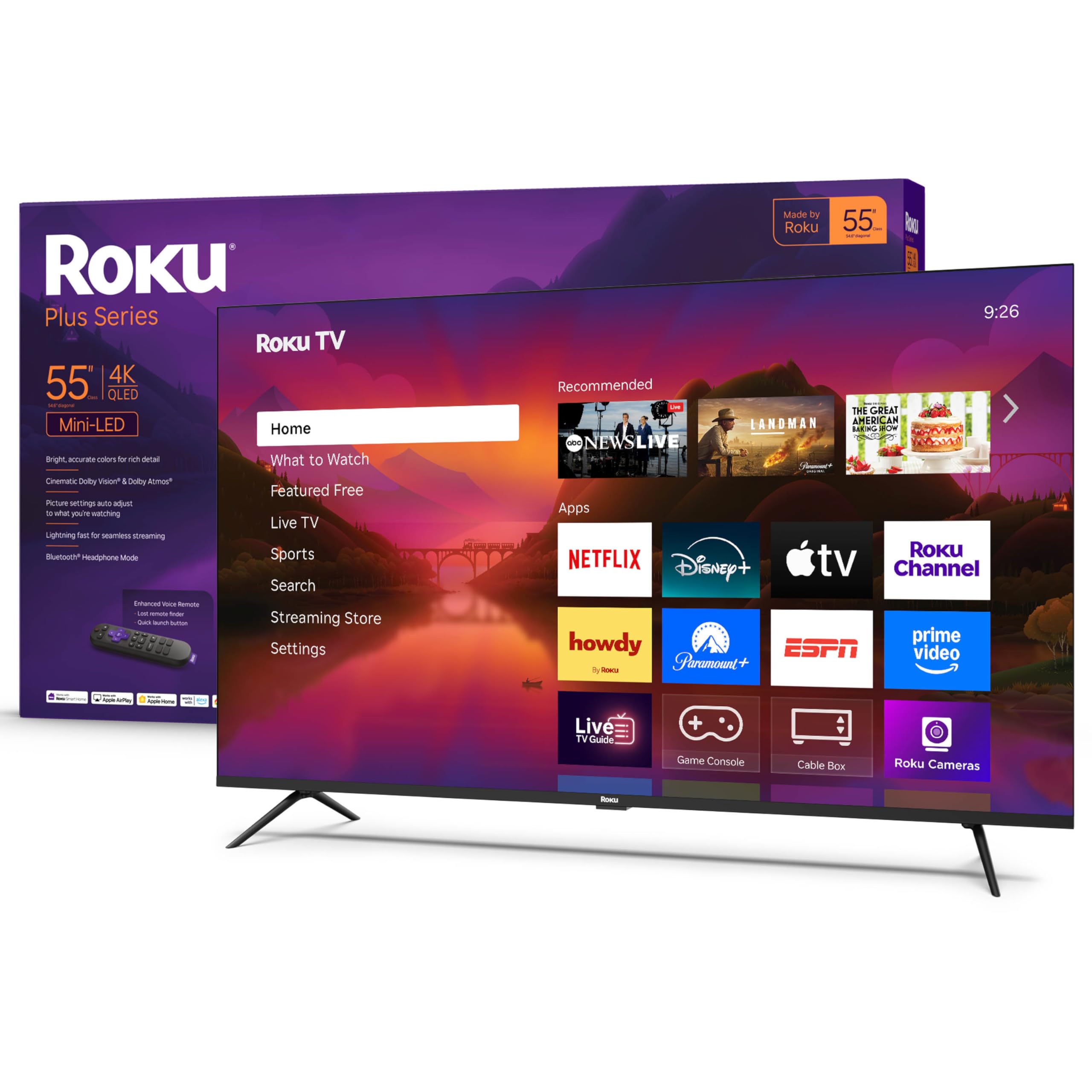
An affordable Mini-LED QLED combo that punches hard with deep blacks and a famously snappy interface.
At the lower end of the mid-range, the Roku Plus Series brings Mini-LED backlighting and QLED color to a price point where you usually find plain LED panels. The result is “deep blacks & vibrant colors,” as one buyer describes it. Dolby Vision support adds dynamic HDR metadata for richer highlights. The Roku OS is the simplest interface here — buyers consistently mention it is “very intuitive” and “snappy.” Reviewers also praise the “surprisingly good sound for TV speakers,” though one notes it “lacks deep bass” and recommends a soundbar.
The annual energy consumption is a respectable 175 Kilowatt Hours per 1000 hours. It comes with an Enhanced Voice Remote that includes a lost remote finder — a clever feature for anyone who’s ever lost the clicker. One trade-off: the base width is only 11.7 inches, making it one of the narrowest stands in this list, so it fits on small consoles but may feel tippy on a wide table. Shoppers say the “Plus model worth extra over Select for superior picture & build,” and the lost remote finder is a genuine convenience that Samsung and LG lack at this price.
The best argument for it: You get Mini-LED QLED picture quality and the best smart TV OS for under. The Dolby Vision and Dolby Atmos support make this a legit movie-watching machine.
The compromise: 60Hz panel means no high-refresh gaming. If you play competitive shooters, look at the TCL Q7 or T7 instead.
10. Samsung 55-Inch Class Mini LED M70H Series Samsung Vision AI Companion Smart TV
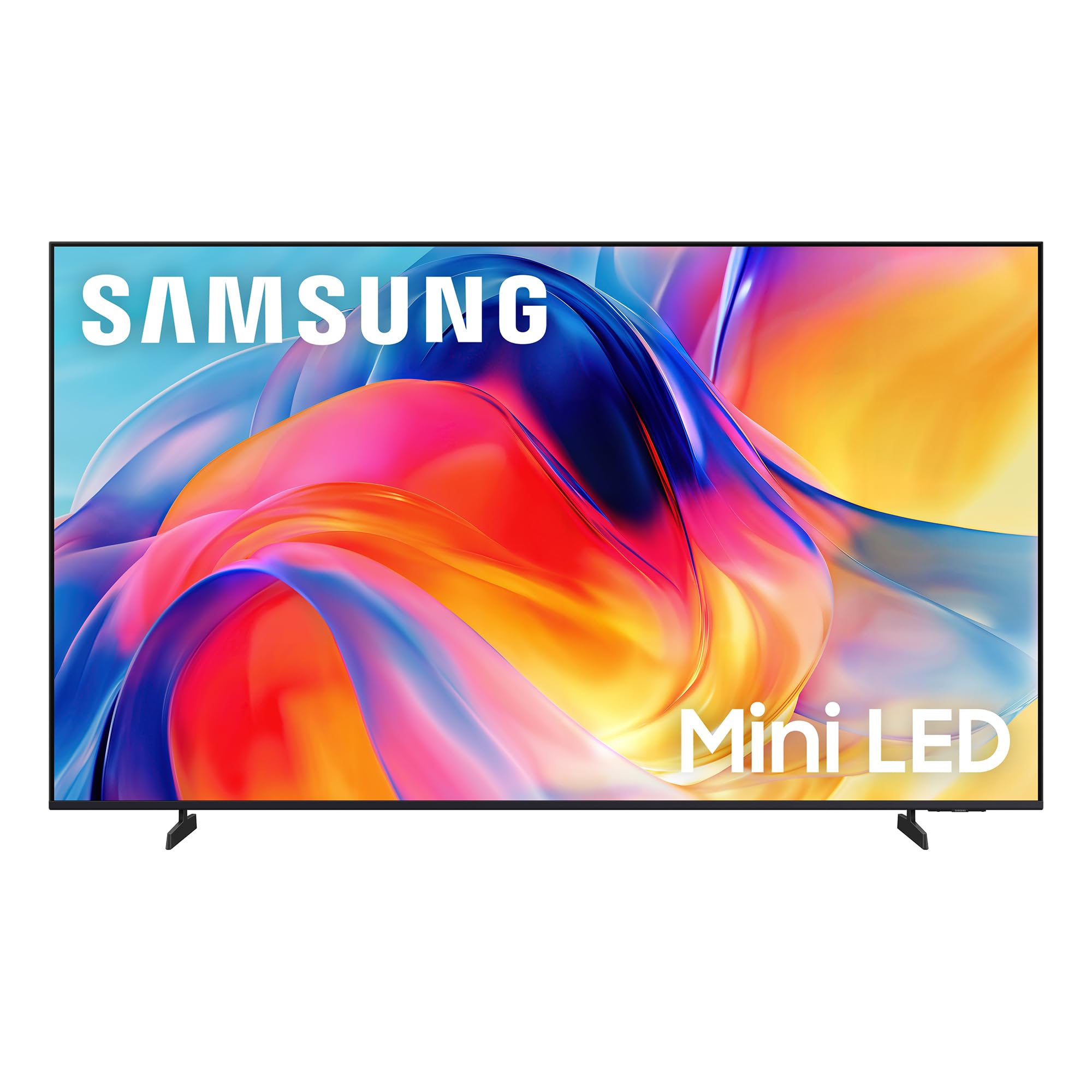
A budget entry to Samsung’s Mini-LED lineup with a 60Hz panel and Color Booster vibrancy.
For buyers who want the Samsung ecosystem (Tizen OS, SmartThings integration) and the contrast benefits of Mini-LED without spending, the M70H is the on-ramp. It uses a Mini LED Processor 4K to deliver “brighter highlights and deeper blacks,” and Pure Color Spectrum technology aims for one billion true-to-life colors. The Color Booster feature pushes reds and blues to be more intense, making cartoons and sports pop. It even includes a Soccer Mode that reportedly delivers 40% clearer motion and 30% more vibrant greens for the pitch.
One review calls the picture quality “good” for the price, noting “Mini LED works well at 55″.” The built-in Tizen smart platform includes 2,700+ free streaming options via Samsung TV Plus — a decent alternative to a streaming stick. However, the main catch is the remote and software. Multiple reviews call it “the most frustrating TV, ever,” with a remote that can’t switch HDMI inputs easily, an interface that opens Pluto TV unprompted, and poor Alexa integration. The glare on the screen can also be distracting in certain lighting, according to one buyer.
What you get
- Mini-LED contrast and brightness at a budget price point — genuine improvement over standard LED.
- DLG 120Hz (Dynamic Luminance Grading) for smoother motion on sports.
- Samsung TV Plus offers 2,700+ free channels, no subscription needed.
What you put up with
- Frustrating remote design: no input memory, no button-based volume control.
- Smart interface is clunky — one reviewer calls it “the most frustrating TV, ever.”
Best for: Samsung loyalists who want the Mini-LED picture advantage at the lowest possible cost and are willing to use an external Roku or Apple TV to fix the software.
Not for: Anyone who plans to use the built-in smart TV system as their primary interface — the remote and software are a genuine pain point according to owners.
11. Panasonic W70 Series (2025 Model) 55″ LED 4K Ultra HD Smart Fire TV
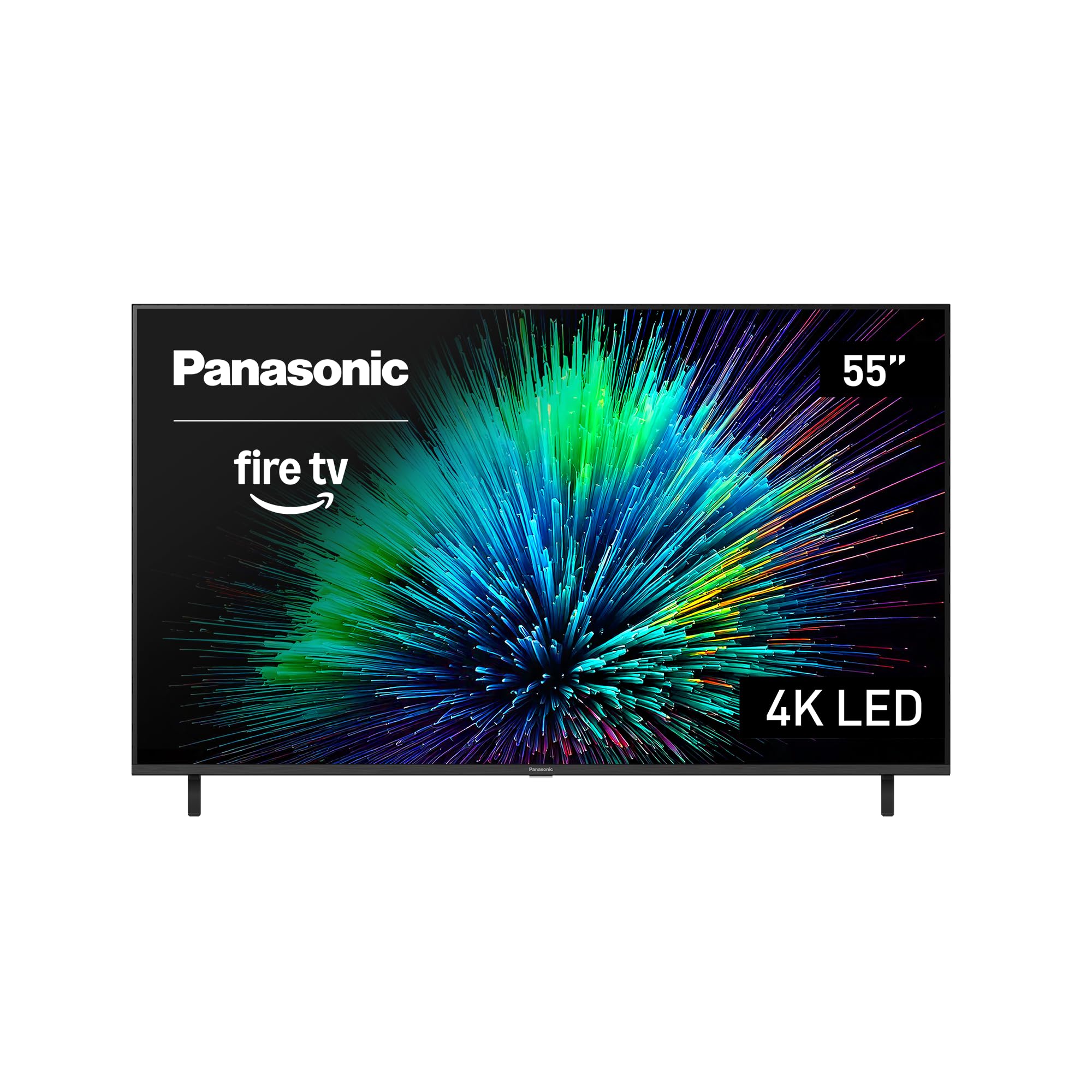
A budget 4K set that leans hard on Amazon’s ecosystem but stumbles on performance.
The Panasonic W70 Series offers a 55-inch LED 4K panel with HDR10+ support and four HDMI ports (including HDMI 2.1) for under. The built-in Fire TV platform gives you Alexa voice control, Apple AirPlay, and access to all major streaming apps. The HDR Bright Panel powered by a 4K Studio Color Engine includes MEMC (Motion Estimation Motion Compensation) technology for smoother motion in movies and sports. The base width is 41.65 inches, versus the Roku Plus Series’ 11.7 inches, meaning it needs a very large TV stand or furniture.
The buyer reviews tell a split story. Some call it a “great price point” and say the picture is “beautiful” with an “excellent picture/sound” and straightforward setup. But others report a serious reliability problem. One detailed review describes a first unit with a “black screen,” and a second unit where the Fire TV was “extremely slow, with buffering/freezing on apps despite fast internet,” eventually causing the TV to turn on randomly and crash during navigation. Another buyer sums it up as a “slow Amazon Fire TV with a mediocre processor.”
The value proposition: A known brand (Panasonic) with HDR10+ and HDMI 2.1 at a very low price. If you get a good unit, it’s a solid deal.
The risk: Multiple reviews cite quality-control issues and sluggish Fire TV performance — a few owners had to return or replace their unit. You may want an external streaming stick from day one.
Understanding the Specs
Panel Technology: Mini-LED vs. OLED vs. QLED
This is the single most important choice. OLED uses over 8 million self-lit pixels that turn off completely for true black — perfect for dark rooms. Mini-LED uses thousands of tiny LEDs behind an LCD screen to control brightness zones; it can get much brighter (up to 5000 nits on the Hisense U8) so it works better in sunlit rooms. QLED is a type of LCD that uses a quantum dot layer for vibrant color; it’s usually paired with Mini-LED or standard LED backlighting. A Mini-LED QLED TV (like the Roku Plus Series) gets you both brightness and color saturation.
Refresh Rate and VRR
Measured in Hertz (Hz), this tells you how many times the screen updates per second. 60Hz is standard for movies and TV. 120Hz is the balance for sports and console gaming. 165Hz (like the Hisense U8 and LG G5) is overkill for most but eliminates any trace of blur on fast PC games. VRR (Variable Refresh Rate) matches the screen’s refresh rate to your game’s frame rate, preventing screen tearing. Look for AMD FreeSync or NVIDIA G-Sync support if you game. The TCL Q7’s 240Hz VRR is a standout for competitive gaming on a budget.
FAQ
Will a 55-inch TV fit on my existing stand or furniture?
How much energy does a 55-inch 4K TV consume?
Is 60Hz enough for watching sports and movies?
Which smart TV platform is fastest and most reliable?
Do I need a soundbar with these TVs?
Is Mini-LED better than OLED for a bright living room?
What is VRR and why does it matter for gaming?
How do I know if a TV supports Dolby Vision and Dolby Atmos?
Is the TCL Q7 better than the TCL T7 for gaming?
What does VESA mount compatibility mean?
Final Thoughts: The Verdict
For the majority of shoppers, the best 55 inch 4k smart tv winner is the Hisense U8 Series because it delivers flagship-level brightness (5000 nits) and a native 165Hz panel at a price that undercuts Sony and Samsung by hundreds. If you want the simplest daily experience with excellent built-in sound, grab the Roku Pro Series. And for the purest cinematic picture in a dark room, the standout is the Sony BRAVIA 8 OLED — it’s the closest you’ll get to a home theater without the dedicated projector.
How We Picked
We do not accept paid placement, and we did not hands-on test every unit. Instead, we match each pick to a real buyer and use-case by comparing the manufacturers’ published specifications against the patterns in verified customer reviews — so you get each pick’s real strengths and trade-offs instead of marketing copy.
Sources & Methodology
Specifications: manufacturer listings and product documentation. Review insights: verified customer reviews, as of July 2026. Pricing: not shown on this page (it changes often); check the current price via the retailer link.
As an Amazon Associate, Gadgets Feed earns from qualifying purchases. This does not affect which products we feature.
Product prices and availability are accurate as of the date/time indicated and are subject to change. Any price and availability information displayed on Amazon at the time of purchase will apply to the purchase of this product. As an Amazon Associate I earn from qualifying purchases.
CERTAIN CONTENT THAT APPEARS ON THIS SITE COMES FROM AMAZON. THIS CONTENT IS PROVIDED "AS IS" AND IS SUBJECT TO CHANGE OR REMOVAL AT ANY TIME.
Amazon and the Amazon logo are trademarks of Amazon.com, Inc. or its affiliates.