
Walking into a brightly lit showroom, every 57-inch television looks like a winner. But once you get it home, the real test begins: fighting glare from midday windows, hoping the black levels hold up during a late-night movie, and trusting the refresh rate to keep pace with a frantic fourth quarter. The 57-inch class—often represented by 55-inch panels marketed as part of this size bracket—demands that you look past the marketing spec sheet and dig into what actually delivers a premium viewing experience in your specific room conditions.
I’m Min — the co-founder and writer behind Gadgets Feed. I’ve spent hundreds of hours cross-referencing panel types, local dimming zones, native refresh rates, and real-world HDR luminance figures to separate the TVs that genuinely excel from those that just look good on paper.
This guide ranks the top performers across key categories like Mini-LED brightness, OLED contrast, and gaming responsiveness to help you choose the right best 57 inch tv for your home.
How To Choose The Best 57 Inch TV
Selecting a 57-inch TV is a balancing act between panel technology, brightness, refresh rate, and smart platform preference. Understanding a few core specs can save you from a purchase you’ll regret within the first week.
Panel Technology: Mini-LED vs OLED vs QLED
Mini-LED uses thousands of tiny LEDs behind the LCD panel to create dense local dimming zones, delivering high peak brightness and strong black levels without the burn-in risk of OLED. For bright rooms or mixed-use scenarios, Mini-LED is a powerhouse. OLED offers infinite contrast with perfect blacks and superior viewing angles, but typically caps brightness lower and is best suited for controlled-lighting environments. QLED (quantum dot) enhances color volume on standard LED-backlit LCDs, often found on budget-to-mid-tier models.
Refresh Rate, VRR, and HDMI 2.1
A native 120Hz panel is the baseline for smooth sports and console gaming. 144Hz and 165Hz panels give PC gamers a visible edge. Variable Refresh Rate (VRR) technology, especially AMD FreeSync Premium Pro, eliminates screen tearing during variable frame-rate gameplay. For full-bandwidth 4K at higher refresh rates from PS5, Xbox Series X, or a gaming PC, you need HDMI 2.1 ports—ideally two or more for multiple high-end sources. Auto Low Latency Mode (ALLM) shifts the TV into its lowest-lag mode automatically.
HDR Format Support and Peak Brightness
Dolby Vision IQ adjusts HDR picture based on ambient room light, HDR10+ offers dynamic metadata, and IMAX Enhanced delivers expanded aspect ratio on compatible content. Peak brightness (measured in nits) determines how well HDR highlights pop—look for 800 nits or higher for a noticeable impact. Local dimming zone count matters: more zones mean finer control over blooming and deeper blacks during HDR playback.
Quick Comparison
On smaller screens, swipe sideways to see the full table.
| Model | Category | Best For | Key Spec | Amazon |
|---|---|---|---|---|
| Hisense 55″ U8 Series | Mini-LED | Bright rooms & HDR gaming | 5000 nits peak / 5600 dimming zones | Amazon |
| Samsung 55″ OLED S85F | OLED | Cinematic contrast & design | NQ4 AI Gen2 / Pantone color | Amazon |
| LG 55″ OLED C5 | OLED evo | AI upscaling & Dolby Vision | Alpha 9 Gen8 / Brightness Booster | Amazon |
| Sony 55″ BRAVIA 8 OLED | OLED | PS5 integration & film accuracy | XR Contrast Booster 15 | Amazon |
| LG OLED C1 55″ | OLED | Gaming & value OLED | A9 Gen4 / 120Hz | Amazon |
| Sony BRAVIA 2 II 55″ | LED | PS5 & reliable LED | 4K Processor X1 | Amazon |
| Samsung 55″ M80H Mini LED | Mini-LED | AI upscaling & color volume | Pure Spectrum Color | Amazon |
| TCL 55″ QM64L | Mini-LED QLED | Value Mini-LED with Fire TV | QD-Mini LED / 144Hz | Amazon |
| iFFALCON 55″ MiniLED | Mini-LED | Budget gaming with HDMI 2.1 | Native 144Hz / 4x HDMI 2.1 | Amazon |
| Roku 55″ Select Series | LED | Simple smart TV experience | Auto brightness / HDR10+ | Amazon |
| Westinghouse 58″ 4K | LED | Entry-level large screen | Dolby Vision / Xumo TV | Amazon |
In‑Depth Reviews
1. Hisense 55″ U8 Series ULED Mini-LED 4K Google TV (55U8QG)
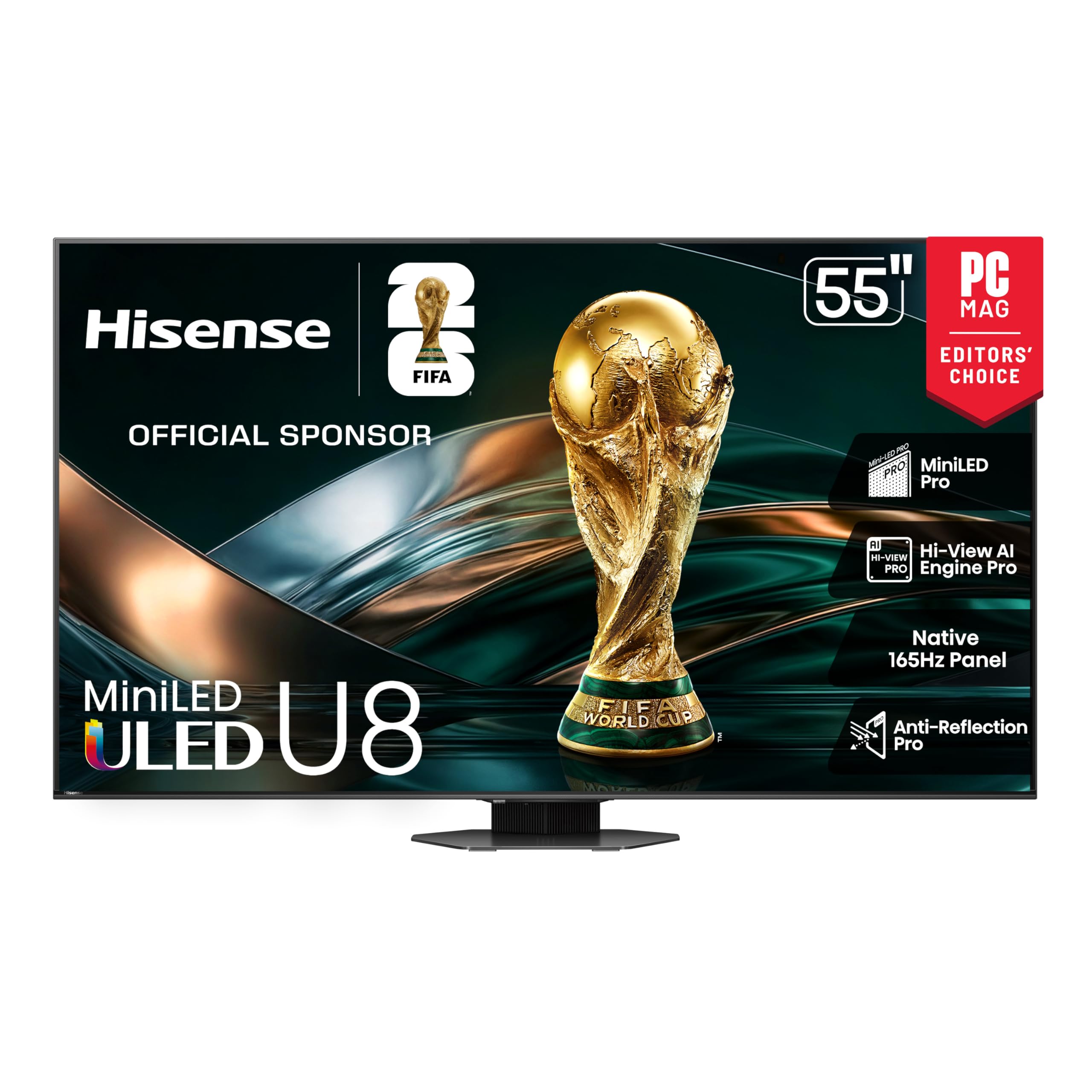
The Hisense U8 Series anchors this list with a stunning 5000-nit peak brightness figure and 5600 local dimming zones—numbers that were unattainable at this price point just two years ago. The Mini-LED Pro backlight, combined with a Hi-View AI Engine Pro, delivers HDR highlights that genuinely feel explosive while maintaining deep, uniform blacks with virtually no blooming in mixed scenes. The 4.1.2-channel Dolby Atmos speaker array with up-firing drivers creates an immersive soundstage without requiring an external soundbar.
Gamers benefit from a native 165Hz panel that supports VRR up to 288Hz via the Game Booster feature, AMD FreeSync Premium Pro, and a dedicated Game Bar for real-time monitoring. The Anti-Reflection Pro coating is a genuine advantage for living rooms with windows or overhead lighting, preserving contrast and color saturation. Pantone-validated QLED color reproduction ensures accuracy out of the box, especially for sports and cinematic content.
The single point of friction is the Google TV interface, which occasionally requires app re-authentication after updates. Pair it with an external streaming stick for a consistently snappy smart experience. At this spec density, the U8Q is the most capable all-around 55-inch panel for mixed HDR and gaming use.
Why it’s great
- 5000-nit peak brightness handles any lighting condition
- 165Hz native panel with 288Hz VRR for competitive gaming
- 4.1.2 built-in audio reduces need for a soundbar
Good to know
- Google TV interface can lag after OS updates
- Requires careful HDMI cable selection for full 4K/165Hz bandwidth
2. Samsung 55″ OLED 4K S85F Series (2025 Model, 55S85F)
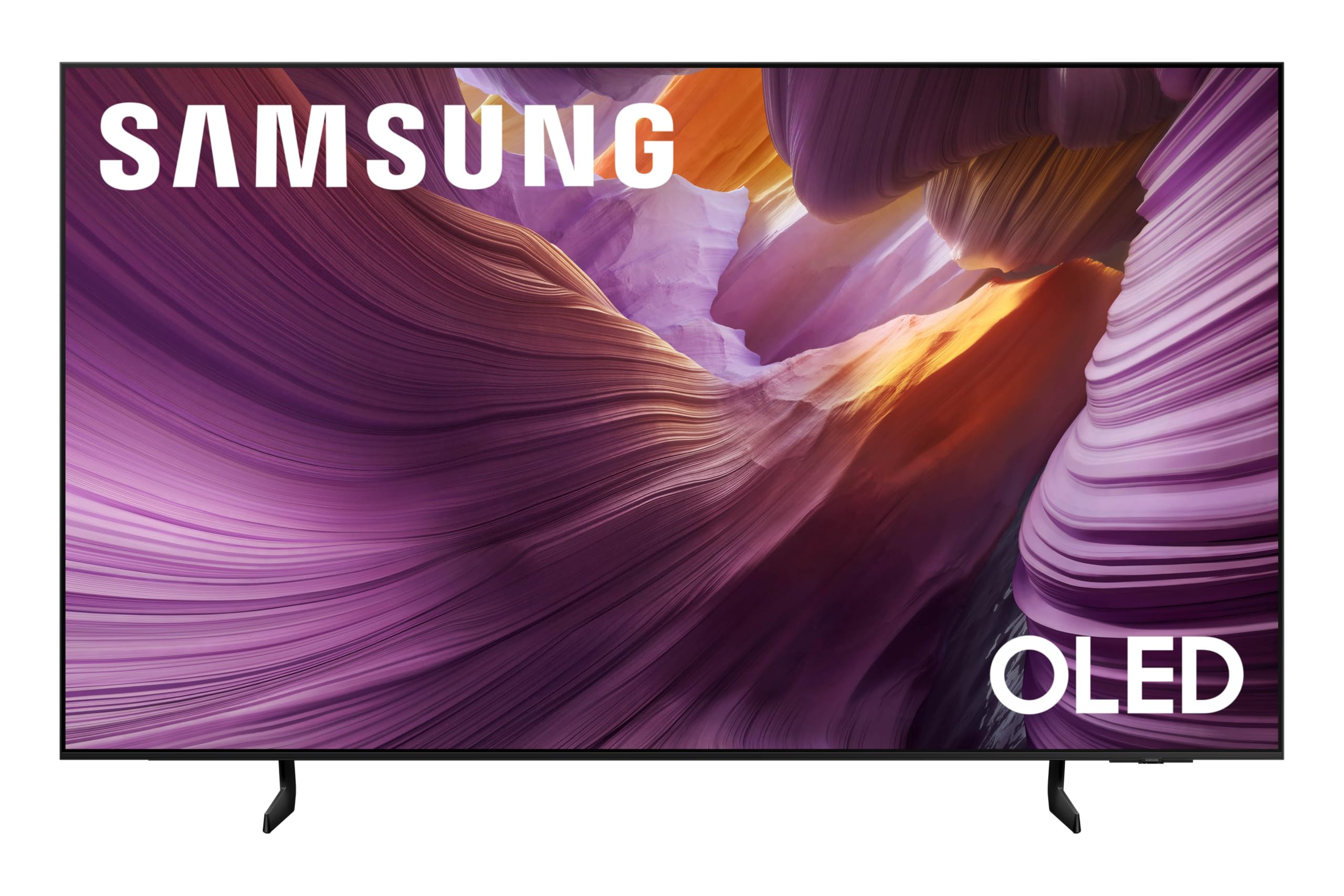
The Samsung S85F brings OLED’s pixel-level contrast to a more accessible price tier by using the NQ4 AI Gen2 processor to upscale lower-resolution content to near-4K clarity via 20 neural networks. Color Booster Pro and Pantone validation mean skin tones look natural and saturated colors don’t clip—a rare trait under . The Object Tracking Sound Lite technology spatially steers audio to match on-screen motion, creating a convincing sense of immersion without external speakers.
This TV is ideal for a dedicated home theater room where you can control ambient light. The OLED panel produces inky blacks that make HDR and Dolby Atmos content truly cinematic. The slim contour design fits flush against a wall, and Samsung’s Vision AI auto-adjusts picture settings based on genre detection. The 120Hz refresh rate and FreeSync Premium support deliver smooth console gaming, though it lacks the 144Hz ceiling of some competitors.
Some units have reported intermittent screen dimming during certain app launches, which may require a firmware update. The smart remote gesture navigation takes a few days to learn. If pure black levels and accurate color are your priority and you game at 120Hz, the S85F is the OLED choice.
Why it’s great
- Per-pixel OLED black levels with Pantone-validated color
- NQ4 AI upscaling sharpens 1080p and 1440p content effectively
- Object Tracking Sound creates spatial audio immersion
Good to know
- Peak brightness lower than Mini-LED competitors in bright rooms
- Occasional app-specific dimming issues reported
3. LG 55″ OLED evo C5 Series (OLED55C5PUA, 2025)

The LG C5 builds on the legendary C-series legacy with the Alpha 9 AI Processor Gen8, which performs AI Super Upscaling in real time while also optimizing brightness per scene via the Brightness Booster feature. The OLED evo panel pushes luminance levels higher than standard OLED without compromising the deep blacks that define the category. Dolby Vision IQ, Dolby Atmos, and Filmmaker Mode are all present, and the WOW Orchestra functionality allows the TV speakers to sync with an LG soundbar for a cohesive front soundstage.
For gamers, the C5 supports G-Sync and FreeSync, 4K/120Hz, and a low input lag mode that rivals dedicated gaming monitors. The Bright Room Ready claim holds up well in moderately lit living rooms—reflections are managed reasonably, and the panel retains contrast better than older OLED models. The webOS smart platform is fast and supports Apple AirPlay, Chromecast, and Alexa out of the box.
The stand is wide and requires a surface at least 18.5 inches in depth. The Ethernet port is still capped at 100Mbps, so for high-bitrate 4K streaming, a USB-to-Ethernet adapter or Wi-Fi 6 connection is recommended. The LG C5 represents the refined middle-ground between pure OLED performance and everyday practicality.
Why it’s great
- OLED evo brightness boost without sacrificing black levels
- Dual VRR support (G-Sync and FreeSync) for flexible gaming
- WOW Orchestra syncs TV and soundbar speakers
Good to know
- Wide stand requires a deep entertainment unit
- 100Mbps Ethernet bottleneck for high-bitrate streaming
4. Sony 55″ BRAVIA 8 OLED 4K Google TV (K-55XR80)

The Sony BRAVIA 8 is the reference OLED for PlayStation 5 owners, featuring exclusive Auto HDR Tone Mapping and Auto Genre Picture Mode that dialog with the console to optimize contrast and latency without manual tweaking. The XR Processor runs real-time analysis on every frame, and XR Contrast Booster 15 pushes OLED luminance higher than previous Sony generations while keeping blacks true. Acoustic Surface Audio+ vibrates the screen itself to produce sound from the center of the image—a genuinely unique effect for dialogue and directional audio.
Dolby Vision and Atmos, IMAX Enhanced, and DTS:X support cover the full spectrum of home theater formats. The SONY PICTURES CORE app includes 5 credits for streaming high-bitrate 4K UHD movies directly, a tangible bonus for film enthusiasts. Build quality is exceptional, with a metal frame that feels substantial, though the TV is notably heavier than equivalent-sized OLED competitors.
The Google TV interface has been reported to have occasional sound dropouts and requires multiple privacy agreement steps on first boot. The remote is small and can be cumbersome for larger hands. If PS5 integration is your primary driver and you want the most accurate out-of-box HDR for Sony content, the BRAVIA 8 is the top pick.
Why it’s great
- Exclusive PS5 HDR auto-tuning for zero-config latency
- Acoustic Surface Audio+ gives dialogue a center-channel feel
- High-bitrate movie credits included via Sony Pictures Core
Good to know
- Google TV interface has occasional sound dropout bugs
- Heavier than other 55-inch OLEDs; plan for secure wall mounting
5. LG OLED C1 Series 55″ (OLED55C1PUB, 2021)

The LG C1 remains a strong contender years after its launch because of its 120Hz panel with G-Sync and FreeSync Premium, four HDMI 2.1 ports, and the Alpha 9 Gen4 processor that handles motion interpolation and upscaling competently. OLED black levels are still reference-grade, making HDR movies like Dune or Blade Runner 2049 look genuinely spectacular. The ultra-slim profile—1.8 inches deep—makes it one of the most wall-friendly OLED designs available.
This TV is particularly appealing for gamers who need multiple high-bandwidth ports without a switcher. Input latency at 120Hz is among the lowest of its generation, and the Game Optimizer dashboard lets you toggle VRR, black stabilizer, and crosshair overlays in a single menu. The webOS interface is still snappy enough for streaming apps, though newer versions have faster animations.
The built-in speakers lack bass response and rely heavily on a soundbar for any meaningful audio impact. The 100Mbps Ethernet port also bottlenecks streaming, so Wi-Fi 5 is the preferred network connection. As a mature platform, it shows its age in peak brightness compared to 2024/2025 OLED panels, but for the price of an entry-level OLED, it delivers disproportionate performance.
Why it’s great
- Four HDMI 2.1 ports for multi-console setups
- Sub-1ms input lag at 120Hz for competitive gaming
- Ultra-slim 1.8-inch depth for a flush wall mount
Good to know
- Lower peak brightness than newer OLED evo or Mini-LED panels
- Weak internal speakers require external audio
6. Sony BRAVIA 2 II 55″ 4K LED Google TV (K-55S20M2)

The Sony BRAVIA 2 II focuses on delivering reliable LED performance with Sony’s 4K Processor X1 handling real-time upscaling from 1080p and streaming sources. It supports Dolby Vision and Atmos, and the Motionflow XR processing keeps sports and action sequences clear without excessive soap-opera effect. For gaming, the TV automatically detects PS5 and switches to Auto HDR Tone Mapping and Auto Genre Picture Mode, mirroring the exclusive integration found on Sony’s higher-end models.
The Eco Dashboard consolidates energy management, a useful feature for hotel or office setups where the TV runs for extended periods. The stand design is practical, spanning 40.13 inches for stability while accommodating most media consoles. Connectivity includes Ethernet and Bluetooth 5.3, ensuring stable streaming without dongles.
The peak brightness is average compared to Mini-LED alternatives, making HDR less impactful in sunlit rooms. The remote is functional but small, with a minimalist button layout that may frustrate power users. It’s a solid choice for PS5 owners who want Sony’s picture processing on a budget without sacrificing Dolby Vision or Atmos compatibility.
Why it’s great
- Auto HDR Tone Mapping for PS5 without extra configuration
- Reliable 4K X1 upscaling from sub-4K streams
- Eco Dashboard for energy-conscious or commercial use
Good to know
- LED backlight can’t match Mini-LED or OLED black levels
- Average peak brightness reduces HDR pop in bright rooms
7. Samsung 55″ Mini LED M80H Series (2026 Model, 55M80H)
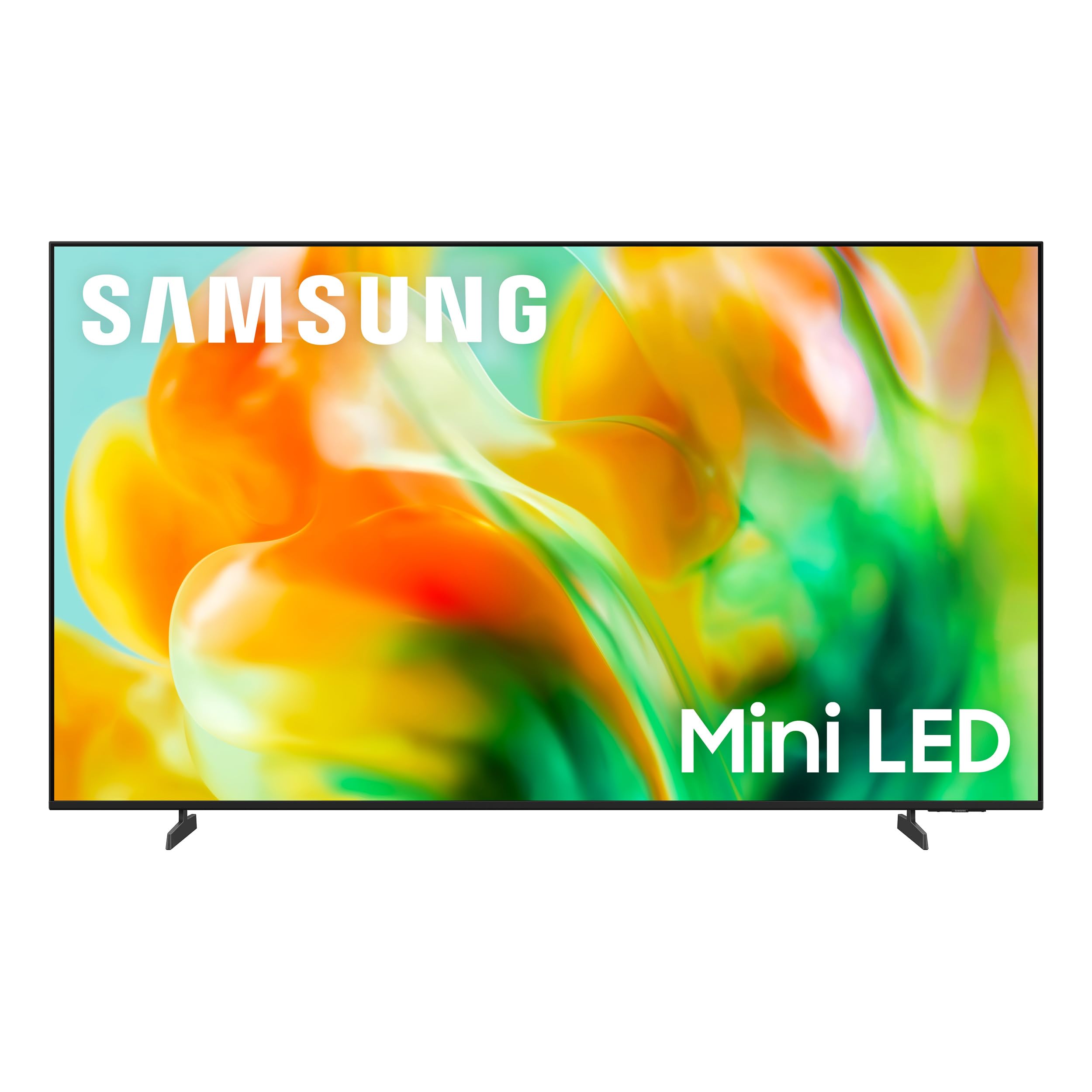
The Samsung M80H leverages Mini-LED backlighting with the NQ4 AI Gen2 processor and Samsung Vision AI to analyze and enhance each scene in real time. The Pure Spectrum Color technology, driven by quantum dots, reproduces over one billion colors with high saturation, while Auto HDR Remastering upscales standard dynamic range content to HDR-like vividness. The Motion Xcelerator 144Hz delivers smooth motion for fast-paced content, though the panel’s native refresh rate is 120Hz.
This set is well-suited for living rooms where lighting changes throughout the day—the Mini-LED array maintains consistent brightness and contrast even with ambient light fluctuations. Alexa and Google Assistant are built in, and Samsung’s Tizen smart platform offers a clean app layout with quick-access gaming hub. The slim profile and near-bezel-less design integrate cleanly into modern decor.
The processor, while powerful, sometimes oversharpens lower-bitrate streaming content, introducing noticeable artifacts. The remote uses a solar cell, which extends battery life but requires adequate light exposure during setup. For buyers seeking Mini-LED brightness with Samsung’s AI-driven picture optimization, the M80H offers a balanced package.
Why it’s great
- Mini-LED array maintains contrast in variable room lighting
- Auto HDR Remastering enhances SDR content effectively
- Samsung AI scene analysis adjusts color and clarity per frame
Good to know
- AI processing can over-sharpen low-bitrate streams
- Solar remote requires direct light for optimal battery charging
8. TCL 55″ QM64L Series QD-Mini LED 4K Fire TV (55QM64L, 2026)
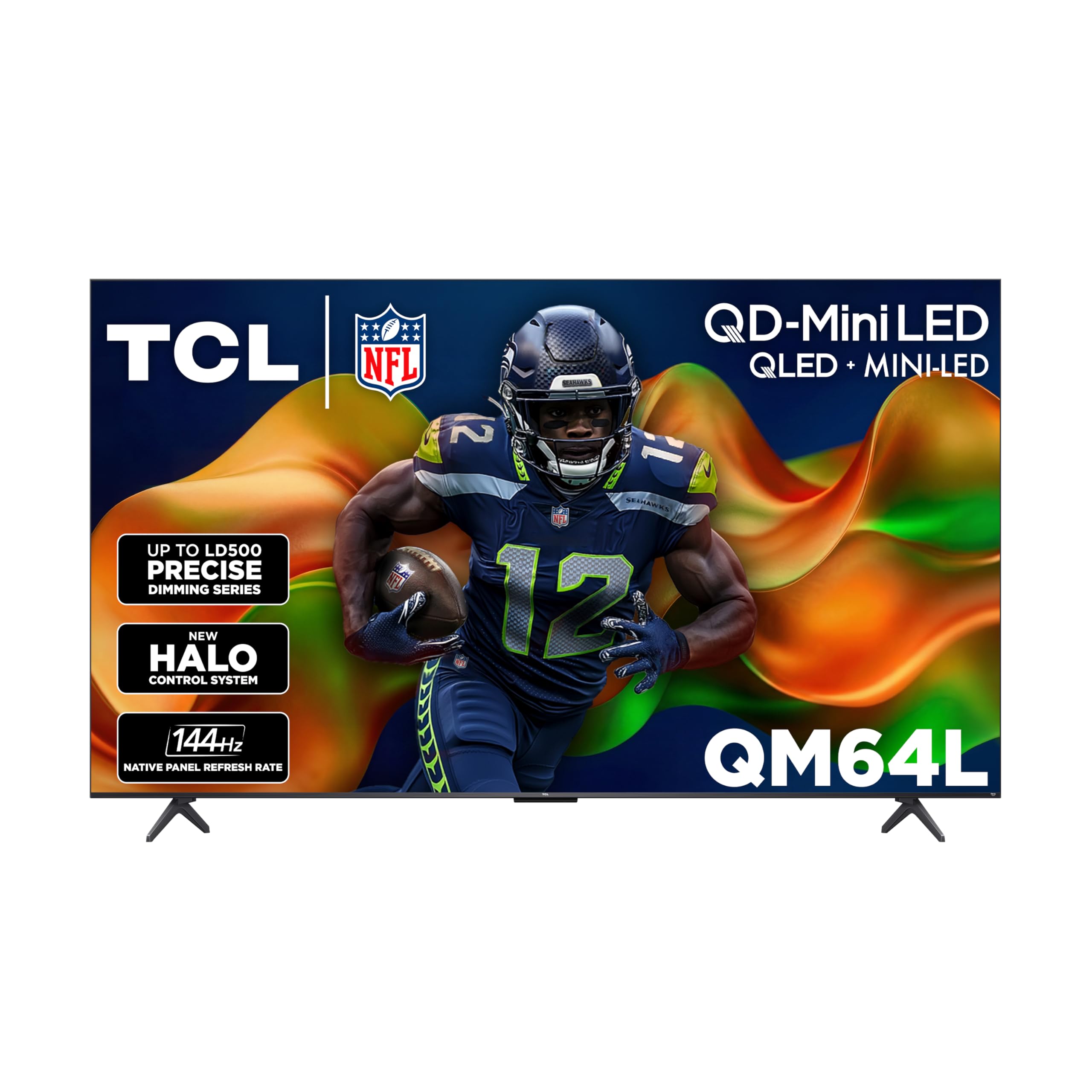
The TCL QM64L enters the 57-inch class as a QD-Mini LED hybrid, employing quantum dots for expanded color volume alongside a Mini-LED backlight for precise local dimming. The TCL Halo Control System integrates a Super High Energy LED Microchip and High Contrast HVA Panel to achieve high brightness with reduced blooming—critical for movie nights in dim rooms. The native 144Hz panel, combined with FreeSync Premium Pro, makes it a strong contender for budget-conscious gamers who still want smooth frame delivery.
Amazon’s Fire TV OS is deeply embedded here, offering hands-free Alexa integration, a customizable home screen that prioritizes Prime Video and live TV, and access to over 1.8 million movies and TV episodes. The Enhanced QLED technology claims over 100,000 hours of high-quality viewing life, backed by DCI-P3 color space coverage. The bevel-less design gives it a premium look despite its price point.
The optical audio output has been reported to have volume control limitations when using external speakers, which may require an HDMI-ARC soundbar. Fire TV OS can feel intrusive with advertising on the home screen. If you want Mini-LED contrast and 144Hz gaming at the lowest possible cost, the QM64L is compelling.
Why it’s great
- QD-Mini LED delivers strong color and contrast per dollar
- Native 144Hz with FreeSync Premium for smooth PC gaming
- Bezel-less design at an accessible price
Good to know
- Fire TV home screen includes advertising tiles
- Optical audio output may not control volume from TV remote
9. iFFALCON 55″ 4K MiniLED Smart TV (55U85)
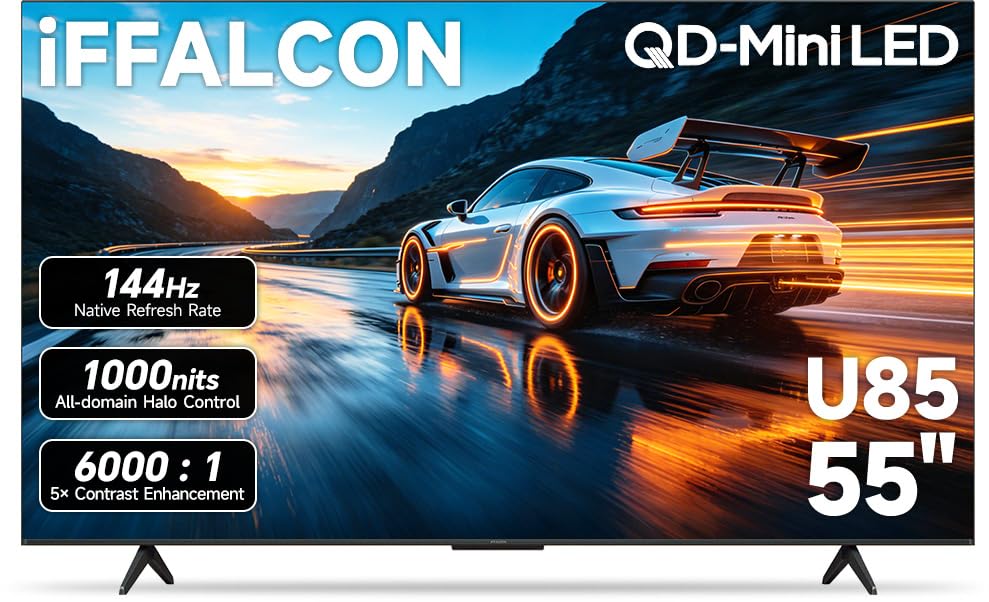
The iFFALCON 55U85 breaks the price barrier for Mini-LED gaming TVs by offering a native 144Hz panel with VRR scaling up to 288Hz and four HDMI 2.1 ports—two of which support 4K/144Hz for simultaneous PS5 and Xbox Series X connections. The 6000:1 contrast ratio, combined with local dimming, produces deeper blacks than typical budget LED panels, and the 1000-nit peak brightness makes HDR gaming titles like Cyberpunk 2077 and Forza Horizon 5 visually impactful.
This set also includes Dolby Vision IQ, Dolby Vision Gaming, HDR10+, and IMAX Enhanced, a rare combination at this price. The 50-watt 2.1-channel speaker system includes a 20-watt woofer, producing enough low-end to skip a soundbar for casual viewing. The built-in hotel mode and IP control are useful for Airbnb or office setups where menu locking and remote management are needed.
The Google TV interface is responsive in testing, but occasional flickering has been reported on early units, possibly resolved through firmware. The build is slightly thicker than premium competitors, though this doesn’t affect the viewing experience. For gamers with multiple HDMI 2.1 devices on a tight budget, the 55U85 is an exceptional value proposition.
Why it’s great
- Four HDMI 2.1 ports with two running full 4K/144Hz
- 1000-nit Mini-LED brightness for impactful HDR gaming
- 50W 2.1 audio with built-in subwoofer
Good to know
- Some early units reported flickering (check firmware updates)
- Thicker chassis than premium Mini-LED models
10. Roku 55″ Select Series 4K HDR RokuTV
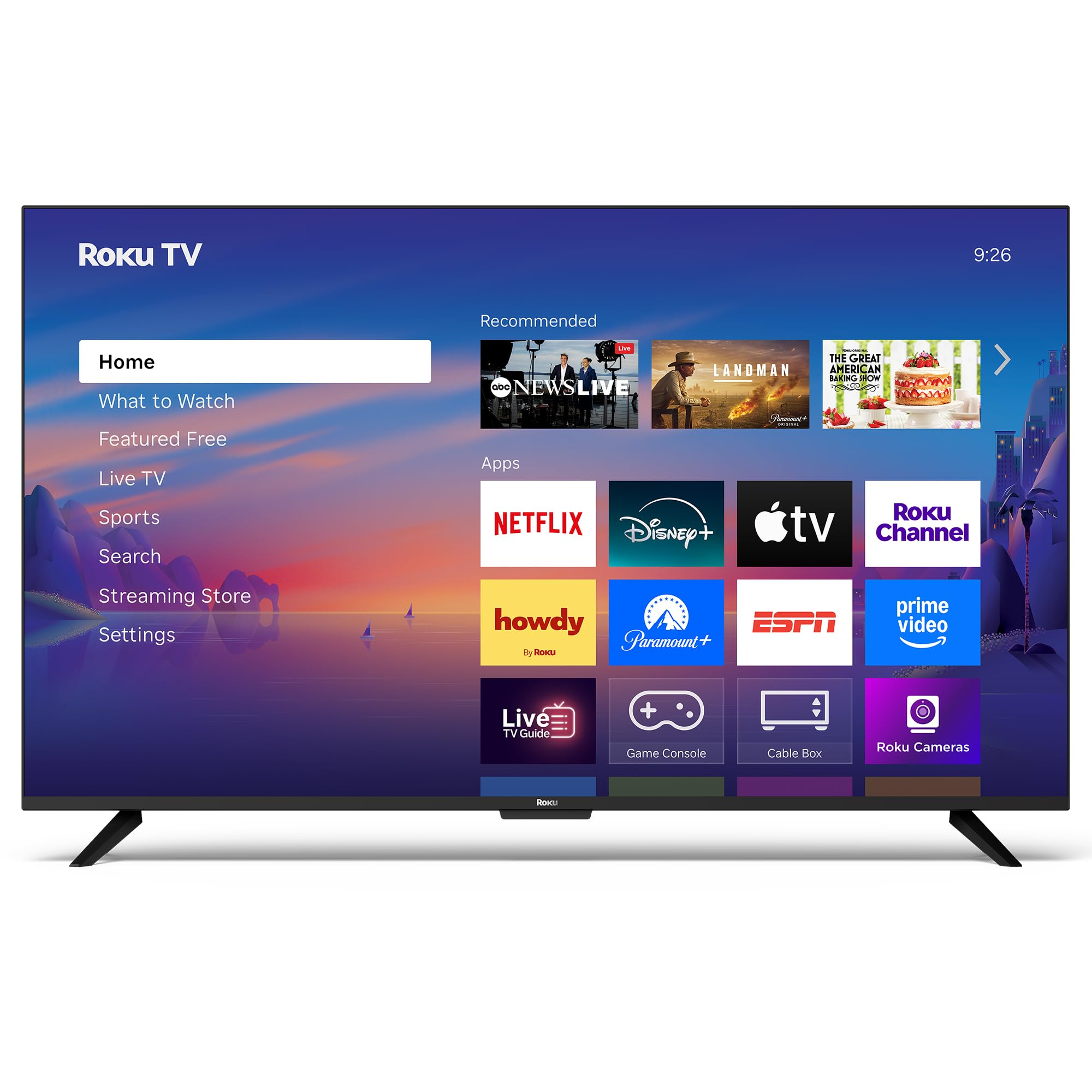
The Roku Select Series TV strips away complexity to deliver a straightforward 4K HDR experience powered by the Roku OS, widely regarded as the most intuitive smart TV platform for users who simply want to stream without digging through menus. The HDR10+ support brings dynamic metadata to compatible content, improving brightness and contrast scene by scene. The automatic brightness sensor adjusts the screen to room lighting, preserving the intended tone of the picture without requiring manual calibration.
The enhanced voice remote includes a lost remote finder, headphone mode for private listening, and programmable shortcut buttons for favorite streaming apps. The selection of 400+ free live TV channels through the Roku Channel is a strong value-add for cord-cutters. Setup is minimal—plug in, connect to Wi-Fi, and start streaming within minutes.
The LED backlight is entry-level, so HDR highlights lack the punch of Mini-LED or OLED. Sound is acceptable for casual viewing but noticeably thin for action movies. The Roku Select Series excels for those who value ease-of-use and want a simple, reliable 4K smart TV without extra features that complicate the experience.
Why it’s great
- Roku OS is the simplest smart platform for all ages
- Automatic brightness sensor reduces eye strain in changing light
- Lost remote finder and headphone mode on voice remote
Good to know
- Entry-level LED backlight limits HDR impact
- Internal speakers lack bass for cinematic audio
11. Westinghouse 58″ 4K UHD Xumo TV
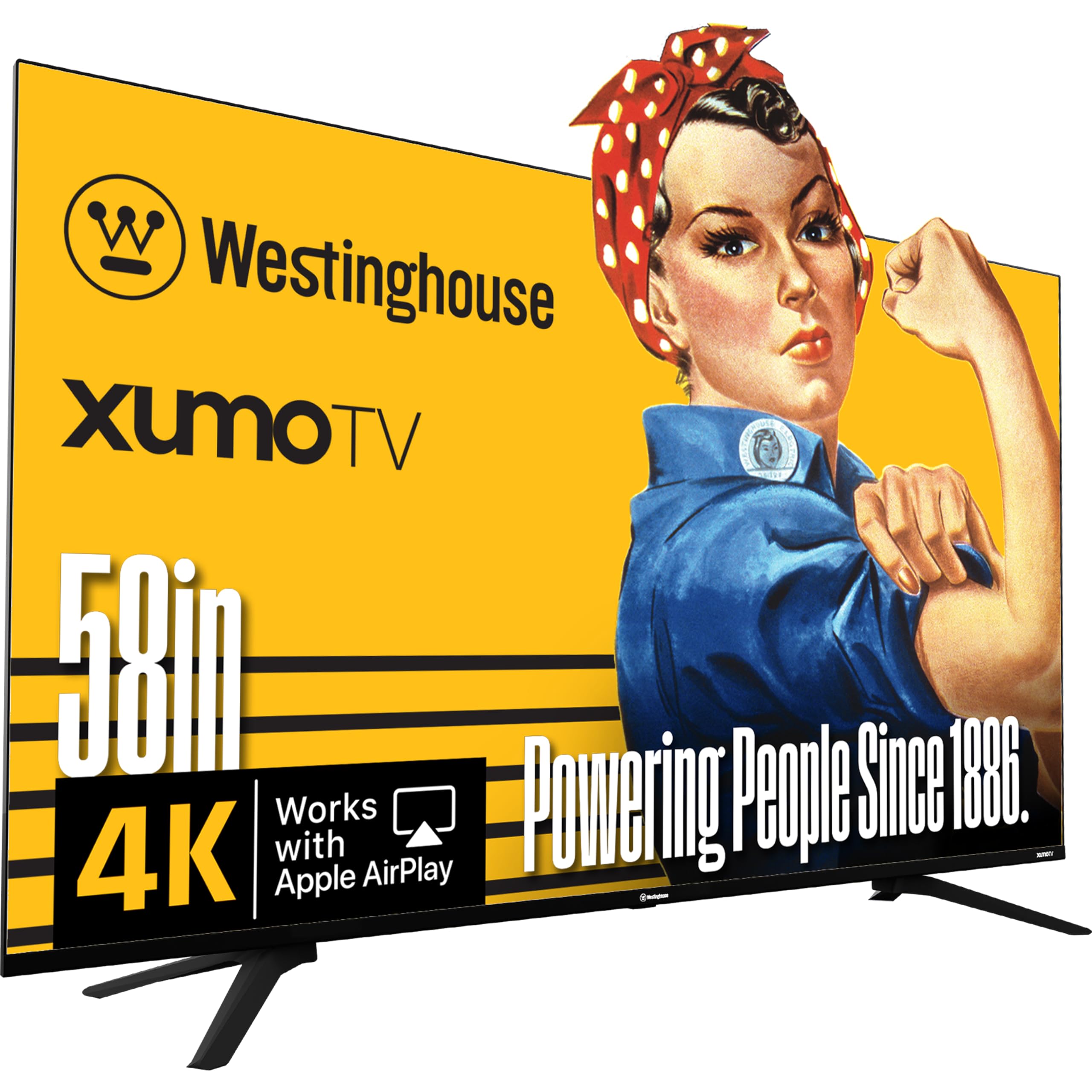
The Westinghouse 58-inch Xumo TV offers the largest screen size in this roundup at a price that undercuts almost everything else, making it a legitimate option for tight budgets or secondary rooms. Dolby Vision and HDR10 support improve color and contrast over standard 4K SDR panels, and the built-in Xumo Play app provides 350+ free live channels and 70,000+ on-demand shows without any subscription—a literal one-stop cord-cutter solution. The edgeless design and 5000:1 contrast ratio give it a cleaner look and deeper blacks than most entry-priced sets.
Connectivity is solid for the price: three HDMI ports, Bluetooth 5.1 for wireless audio, Apple AirPlay 2 for iPhone mirroring, and a USB port for local media playback. The universal voice search and dedicated remote buttons make navigation reasonably fast, though the Xumo OS may feel slower than Roku or Google TV to seasoned users.
The peak brightness is modest, so HDR content won’t look as vibrant as on premium sets in well-lit rooms. Some users reported initial setup quirks with the voice remote and Bluetooth pairing. If size-per-dollar is your primary metric and you plan to use an external streaming device, this Westinghouse is purely a value-driven purchase.
Why it’s great
- 58-inch screen at entry-level pricing offers exceptional size-per-dollar
- Xumo Play includes 350+ free live channels with zero subscriptions
- Dolby Vision and HDR10 for improved contrast
Good to know
- Modest peak brightness limits HDR impact in sunlight
- Xumo OS is slower than Roku or Google TV
FAQ
What is the best viewing distance for a 55-58 inch TV?
Is 144Hz noticeably better than 120Hz on a TV?
Do I need to mount a 55-inch TV or can I use the stand?
Final Thoughts: The Verdict
For most users, the best 57 inch tv winner is the Hisense 55″ U8 Series because its 5000-nit Mini-LED brightness, 5600-zone local dimming, and native 165Hz panel cover every use case from brightly lit living rooms to competitive PC gaming. If you want the perfect black levels of OLED without sacrificing brightness, grab the Samsung 55″ OLED S85F. And for the best value-for-spec ratio in the category, nothing beats the iFFALCON 55U85 with its four HDMI 2.1 ports and 144Hz gaming performance.