
Our readers keep the lights on and my morning glass full of iced black tea. As an Amazon Associate, I earn from qualifying purchases.
Specs are compiled from manufacturer listings and verified buyer reviews and can change over time — please confirm the key details on the product page before buying.
Your amp’s power stage needs direct current, and the 5AR4 (also sold as the GZ34) is the rectifier tube that converts alternating current into it. It also shapes your amp’s “sag” — that musical voltage drop when you hit a big chord. Reliability matters most here, because a bad rectifier can blow a fuse or, worse, damage a board-mounted component.
I’m Min — the founder and writer behind Gadgets Feed. This guide is built by comparing the manufacturers’ published specifications and the patterns across verified customer reviews, so you get each pick’s real strengths and trade-offs instead of marketing spin.
You want a drop-in replacement that won’t arc at start-up and will deliver clean, quiet DC for years, which is exactly what this roundup of the 5ar4 tube options below is designed to settle with real owner experience.
Our Picks at a Glance


How To Choose The Best 5AR4 Tube
Before you buy, match the tube to what your amp actually demands. The 5AR4 and GZ34 are the same octal rectifier type, so any of these will drop into a socket labeled either way — the real questions are current, warm-up, and physical fit.
Match the current rating to your amp
A 5AR4’s max DC output current tells you how much juice it can safely feed your power tubes. The JJ here is rated at 250 mA, which covers the vast majority of Fender, Vox, and Dynaco designs — but if your amp is a hungry beast, confirm that number against your schematic before you commit.
Understand sag and warm-up
Sag is the natural voltage dip under load that gives an amp its spongy, musical feel — it’s a feature, not a bug. A tube with a controlled heater warm-up time ramps up gently, which spares your other tubes from a brutal cold-start surge and reduces that scary arcing at power-on.
Check the physical envelope
Not every 5AR4 is the same size. Some glass envelopes run shorter or narrower than others, which can matter inside a cramped chassis or under a tight cover. A tube that is “physically smaller” than the stock part still works, but it’s worth knowing before you wrestle it into place.
Quick Comparison
| Model | Best For | Max DC Output | Weight | Origin | Amazon |
|---|---|---|---|---|---|
| JJ GZ34 / 5AR4★ Best Overall | Value & Vox/Fender tone | 250 mA | — | Slovakia | Amazon |
| Sovtek 5AR4 SOVTop Performer | Reliable Hi-Fi & guitar | — | 22.68 g | Russia | Amazon |
| 5AR4 Tung-Sol | Budget upgrade & low drop | — | 1.65 oz | Russia | Amazon |
| Tube Amp Doctor 5AR4 STR | Premium Mullard-style sag | — | 6 oz | — | Amazon |
| Mullard Reissue GZ34 | Warm, smooth Hi-Fi tone | — | 1.52 oz | — | Amazon |
| Genalex Gold Lion GZ34 | Hi-Fi clarity & bass control | — | 5 oz | Russia | Amazon |
In‑Depth Reviews
1. JJ GZ34 / 5AR4 Vacuum Tube
Our pick — over 4.5★ from 150+ verified ratings; the strongest balance of quality and price.
The Slovakian workhorse that brings Vox chime and rich harmonics without the boutique markup.
Most owners start with the JJ 5AR4 (sold here under its GZ34 alias) because it delivers the classic Fender and Vox rectifier voicing at a price that still leaves room for a backup. It’s an octal rectifier tube (an 8-pin base) rated at a max DC output current of 250 mA, so it comfortably feeds the power stages of Princeton Reverbs, AC30s, and other vintage-inspired amps.
Owners praise its functionality above all, with a strong second chorus for value for money — buyers report some dealers are asking three times as much for tubes today. It ships from Slovakia, arrives in a box, and multiple owners mention it worked on arrival, including one who had it shipped all the way to the Philippines for a Fender Princeton. The one honest caveat is reliability, which gets mixed feedback: a few customers note intermittent shorting, so it’s the kind of tube you buy knowing QC is a lottery you usually win.
The JJ’s sound is its main strength. Reviewers describe rich harmonics and that unmistakable Vox chime, which is exactly the character a 5AR4 is supposed to add to a cathode-biased EL84 amp. It delivers the classic rectifier job at an affordable price.
What Owners Cheer
- Functionality is the #1 praise — it works on arrival and keeps working
- Rich harmonics and Vox chime in real guitar amps
- Value so good buyers grab a spare
The Honest Caveat
- Reliability is mixed — occasional intermittent shorting reported
- Not the premium-selected QC of costlier rivals
Reach for this if: you want the classic 5AR4 voicing for a Fender or Vox at a budget-friendly price, especially if you like keeping a spare on the shelf.
Look elsewhere if: you’ve had QC bad luck before and want a tube that’s double-tested for the long haul.
2. Sovtek 5AR4 SOV Rectifier Vacuum Tube, Single
The Russian-made rectifier that survives high-voltage starts where others arc and fail.
The Sovtek 5AR4 is the tube you pick when you want a fast-rise, full-wave rectifier that just refuses to die. It’s a GZ34 equivalent built for both Hi-Fi and instrument amplification, and owners consistently rate it above the JJ for build quality — quality is its most-praised trait here, ahead of functionality.
The defining story in its reviews involves a rebuild where the JJ GZ34s arced at a 100 VAC line, while the Sovtek handled the high voltage without drama. That’s the exact scenario where a rectifier proves its worth. It also slid straight into a Dr. Z Cure and replaced a failed stock Fender 5AR4/GZ34 in a Deluxe Reverb Custom 68 Reissue, though reviewers point out the Sovtek’s glass is physically smaller than Fender’s part — a cosmetic quirk, not a functional one.
Vintage Dynaco ST-70 owners are repeat customers, reporting the Sovtek lasts a good long while with no noise or hums across multiple pieces of vintage equipment. At 22.68 g, it’s a featherweight, and Sovtek backs it with a 90-day credit-or-replace warranty on defects from Amazon direct purchases — the only tube in this roundup with a printed warranty.
Built-different verdict: quality is what wins people over here — it’s the tube that takes the hardest start-ups in stride.
Best if: you’ve been burned by arcing or want a dead-reliable daily driver for vintage Hi-Fi or a gigging guitar amp.
Think twice if: you’re obsessive about tube cosmetics — the smaller glass envelope looks different from a stock Fender.
3. 5AR4 Tung-Sol

A light 1.65-ounce Russian rectifier with low voltage drop and a gentle, controlled warm-up.
If you want less sag and a gentler power-up, the Tung-Sol 5AR4 is a Russian-made reissue with a low internal voltage drop and a controlled heater warm-up time. That means it sags less and powers up gently, which is kind to the rest of your amp. It’s the budget-friendly entry here, and it’s a straight replacement or upgrade for all 5AR4/GZ34 types.
In a Princeton Reverb reissue paired with Genalex Gold Lions, shoppers say great tone with no background noise at all. The honest reality, repeated by buyers, is that a rectifier has very little to do with sound quality — its job is to last a long time and supply constant voltage, and this one does exactly that.
The catch is quality control, and it’s the rare negative in the data: one defective unit blew a board-mounted pico fuse, which required a service visit. That’s squarely a who-this-isn’t-for moment — most owners get a flawless tube, but the QC lottery is slightly less forgiving here than on the Sovtek.
Sound check: guitarists report non-existent background noise and steady voltage, which is precisely what a rectifier should deliver.
Grab it for: a budget-friendly upgrade in a Princeton or similar single-amp setup where low drop and clean DC matter more than prestige branding.
skip it if: you’d rather pay a little more for the tighter QC reputation of Sovtek or Genalex.
4. Tube Amp Doctor 5AR4 / GZ34 STR Premium Selected Vacuum Tube
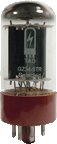
The heaviest 6-ounce rectifier here, promising pure power and that classic Mullard-era sag.
For the classic 1960s sag, the Tube Amp Doctor 5AR4 STR faithfully reproduces the Mullard/VALVO GZ34, the rectifier behind the most famous guitar amps since then. It’s also an upgrade path for amps running 5U4GB or 5U4G tubes. Its weight — 6 ounces versus the Tung-Sol’s 1.65 ounces, a 3.6x gap — hints at a more substantial build, and it’s the only tube here that’s been through a named “Premium Selected” gauntlet: plate current, low noise, microphonic, sonic, shock, and shorts tests.
Owners who A/B’d it against a Sovtek came away saying the TAD delivers a smoother power-up response and a very nice sound. One Scott 299B owner with popping, thudding channels and blown fuses got a clean, smooth startup after swapping to this tube. The knock, and it’s a real one in the data, is a dead-on-arrival unit that turned a buyer back to JJs — for a “premium” tube at a premium price, a DOA is a tougher pill to swallow.
When it works—which is most of the time—it’s the most musically authentic 5AR4 in this roundup. But you’re paying for the Mullard mojo and the individual testing, and one bad draw is enough to sting.
Premium trade-off: the classic sag and smooth startup are the draw, but a DOA at this price is a harder miss than on a budget tube.
Choose this if: you want the closest thing to that 1960s Mullard/VALVO rectifier voicing and value individual testing.
Hesitate if: a tube arriving dead would send you back to a cheaper brand — the QC guarantee here is thinner than the marketing.
5. Brand New Tested Mullard Reissue GZ34 / 5AR4 Vacuum Tube

The 1.52-ounce tone-shaper that smooths harsh treble and warms up analytical speakers.
The Mullard Reissue GZ34 is the rectifier for the speaker who finds their system too analytical or harsh. One owner running ELAC speakers — known for sharp, cutting treble — used this tube to fine-tune the sound, making it a little smoother without killing detail. In a vintage Dynakit ST-70, it delivers warm, balanced sound that works flawlessly at all volumes with no noise.
Its reviews split into two camps. The praise side highlights clarity and clean bass, with the Mullard character making everything just a bit more musical. The caution side is longevity: one heavily-used unit (12-16 hours a day) lasted almost six months before failing, and another owner heard crackling with light from the base after a week and swapped back to Genalex.
At 1.52 oz, it’s light, and it’s sold as “Brand New Tested” — but the data suggests you should keep a spare if you run your gear long hours daily. It prioritizes tone over longevity.
The draw: warm, balanced, famously smooth — the classic Mullard house sound that tames harsh treble.
The watch-out: longevity under heavy daily use is the recurring question mark in owner reports.
Best for: Hi-Fi listeners with bright speakers who want a smoother, warmer presentation from their rectifier slot.
Not for: anyone who runs their amp 12+ hours a day and can’t tolerate an occasional early failure.
6. 5AR4/GZ34/U77 Genalex Gold Lion

The 5-ounce Russian upgrade owners say they can hear within the first hour of play.
The Genalex Gold Lion, sold as the U77/GZ34, is the full-wave rectifier that owners describe as a significant upgrade from the Sovtek — one called it immediately audible right from the start. Its qualities are quality first, then sound quality: clearer, balanced low end, less scratchy highs, a fuller soundstage, and bass that’s fuller and very controlled. In a Muzishare X7, upgrading from a Sovtek brought major improvements in resolution, imaging, and midrange lushness.
It fits and works in an Xduoo TA20plus, and in a Dynaco ST-70 it delivered more stable bias. The Russian-made Gold Lion also runs cooler at the base for most owners — though one unit measured a hot 170°F at the plastic base versus 120°F on a NOS USA tube, which led to a return. Value gets positive marks too, as it’s significantly less expensive than vintage alternatives.
Owners consistently report an immediate audible difference, with bass control being the most praised aspect. It’s the priciest option here, but buyers generally consider it worth the cost.
Why It Wins Fans
- Hear-a-difference quality, especially fuller, controlled bass
- Made in Russia, fits Dynaco ST-70 and Xduoo TA20plus
- Value vs. pricey vintage NOS alternatives
What To Watch
- Base heat ran high on one unit (170°F) vs. NOS USA tubes
- Premium price demands premium expectations
Reach for it: if you’re upgrading vintage Hi-Fi gear and want a noticeable, immediate jump in bass control and clarity over a stock Sovtek.
Hesitate if: your chassis is tight around the base — one owner saw improve heat at the plastic base.
Understanding the Specs
Max DC Output Current
This is the ceiling for how much direct current the rectifier can safely feed your amp’s power tubes. The JJ is rated at 250 mA, which is plenty for classic Fender, Vox, and Dynaco designs. If your amp draws more than the tube’s rating, you risk overheating and early failure — always check your schematic before choosing.
Sag and Warm-Up Time
Sag is the natural voltage drop under a heavy chord or transient, and it’s what gives an amp its spongy, musical feel. A tube with a controlled heater warm-up time ramps up gently at power-on, protecting your other tubes from a sudden cold-start surge and cutting down on arcing at the line voltage.
Physical Envelope and Weight
Not every 5AR4 is the same size or weight. Tube Amp Doctor’s STR weighs 6 ounces versus the Tung-Sol’s 1.65 ounces — a 3.6x gap that hints at heavier internal construction. Some tubes (like the Sovtek) run physically smaller than stock Fender parts, which is cosmetic but worth knowing before you install.
Origin and Brand Lineage
Where a tube is made still matters to many buyers. The JJ ships from Slovakia, and the Sovtek, Tung-Sol, and Genalex are all made in Russia. The Tube Amp Doctor and Mullard Reissue are reproductions of the classic Mullard/VALVO designs, which is why they’re marketed for their tone rather than their country of origin.
FAQ
Will a 5AR4 tube work in an amp that says GZ34 on the socket?
Can I replace a 5U4GB or 5U4G with a 5AR4?
Why is my rectifier tube arcing at power-on?
How much does a 5AR4 tube weigh?
Does a rectifier tube affect sound quality?
What is tube sag and why does it matter?
How long should a 5AR4 tube last?
Why is my rectifier tube’s base getting hot?
Are Russian-made 5AR4 tubes good quality?
What does a controlled heater warm-up time do?
Final Thoughts: The Verdict
For most players the best 5ar4 tube is the JJ GZ34 / 5AR4, because it delivers that rich harmonics and Vox chime at a value that leaves room for a backup. If you’ve been burned by arcing and want a tank, grab the Sovtek 5AR4. And if you’re chasing the classic Mullard-era sag, the Tube Amp Doctor STR is the one to reach for.
How We Picked
We do not accept paid placement. Every pick is matched to a real buyer and a real use-case; we do not hands-on test units.
Sources & Methodology
Specifications: manufacturer listings and product documentation. Review insights: verified customer reviews, as of September 2026. Pricing: not shown on this page (it changes often); check the current price via the retailer link.
As an Amazon Associate, Gadgets Feed earns from qualifying purchases. This does not affect which products we feature.