
A 5G home internet gateway is no longer a niche gadget for rural holdouts—it’s a primary line of defense against unreliable cable and DSL. But most carrier-provided gateways are locked-down plastic boxes with throttled firmware, poor routing hardware, and zero port control. Unlocking true performance means buying your own hardware, one that gives you full command over SIM card profiles, band locking, QoS, and VPN termination.
I’m Min — the co-founder and writer behind Gadgets Feed. I have spent weeks digging into chipset datasheets, carrier certification lists, and real-world throughput reports to separate proper 5G routers from overpriced dongles masquerading as gateways.
Whether you need a travel-ready backup connection or your home’s sole broadband source, the right hardware must balance carrier compatibility, 5G SA/NSA support, and Wi-Fi speed. This is our full breakdown of the best 5G home internet gateway choices available today.
How To Choose The Best 5G Home Internet Gateway
Buying a 5G gateway is a multi-year investment, so the wrong choice means living with packet loss or paying for a network speed tier you cannot reach. Focus on carrier certification, chipset generation, and the quality of the routing firmware—not just the SIM slot count.
Carrier Certification and Band Support
A gateway listed as “compatible” on Amazon may still fail on Verizon or T-Mobile. Look for explicit AT&T, T-Mobile, or US Cellular certification in the spec sheet. Devices that lack carrier firmware optimization often drop mid-band n41 and n77 connections, especially during carrier aggregation. Band locking becomes critical here—a good gateway lets you pin a specific 5G band instead of letting the modem hunt.
Modem Chipset and 5G SA/NSA Modes
The modem silicon defines your speed ceiling. Qualcomm Snapdragon X62-based gateways hit 3.4 Gbps downlink on NSA and handle SA aggregations smoothly. Older MediaTek chips may struggle with low-band 5G penetration. Pure SA (Standalone) support means lower latency and a dedicated 5G core, which is becoming the industry standard. A gateway locked to NSA-only will degrade once carriers migrate fully to SA.
Routing Ecosystem and Port Flexibility
A 5G gateway must do more than push packets. You need VLAN support for segmented home networks, VPN WireGuard passthrough for remote work, and Multi-WAN failover between Ethernet tethering and cellular. The best units run OpenWrt or a lightweight proprietary fork, allowing TTL modification, band lock scripts, and custom firewall rules. Avoid devices with only a single 1 Gbps LAN port—future-proof with at least one 2.5 Gbps or 10 Gbps port.
Quick Comparison
On smaller screens, swipe sideways to see the full table.
| Model | Category | Best For | Key Spec | Amazon |
|---|---|---|---|---|
| GL.iNet GL-X3000 (Spitz AX) | Mid-Range | Rural & RV Use | Dual-SIM 5G, OpenWrt, Wi-Fi 6 | Amazon |
| GL.iNet GL-XE3000 (Puli AX) | Mid-Range | Backup Power Scenarios | 6400mAh battery, Dual-SIM | Amazon |
| Hitron D60 5G | Mid-Range | Cellular Failover | 4×4 MIMO, Nano SIM+eSIM | Amazon |
| Cudy P5 | Premium | Band Lock Control | Qualcomm SDX62, 3.4 Gbps | Amazon |
| ASUS RT-BE90U | Premium | Wi-Fi 7 Mesh Expansion | Quad 2.5G Ports, Tri-Band | Amazon |
| TP-Link Archer BE600 | Premium | Multi-Gig Wired Backbone | 10G Port, BE9700 Tri-Band | Amazon |
| Waveform QuadPro Kit | Accessory | Weak Signal Fix | 4×4 MIMO, 9.1 dBi Panel | Amazon |
| UBIQUITI UDM-SE | Premium | Enterprise Network Hub | 10G SFP+, IDS/IPS, PoE+ | Amazon |
| ASUS ROG GT-BE98 PRO | Premium | High-Performance Gaming | Quad-Band, Dual 10G Ports | Amazon |
In‑Depth Reviews
1. GL.iNet GL-X3000 (Spitz AX)

The Spitz AX runs on a proprietary OpenWrt fork, which gives you full modem control via AT commands, automatic tower locking, and granular band selection. You can set failover priority between its dual SIM slots, Ethernet tethering, and Wi-Fi repeater mode—ideal for rural areas where carrier signal varies by location. The Wi-Fi 6 radio delivers up to 574 Mbps on 2.4 GHz and 2.4 Gbps on 5 GHz, which keeps up with a 200 Mbps 5G backhaul without bottleneck.
Its six detachable antennas improve signal capture in RVs or cabins, and the device supports both NSA and SA standards for future network migration. The hardware is also certified for AT&T and T-Mobile IoT networks, meaning the modem firmware is tuned for those carrier profiles. You can attach a wired dome antenna for extra gain in fringe coverage zones.
On the downside, the modem limits carrier aggregation to two bands, which caps peak speeds compared to premium chipsets like the Qualcomm X62. The router also handles smart home device loads only moderately well, and there is no internal battery. Some users report packet loss after days of uptime, requiring a periodic reboot to clear cached sessions.
Why it’s great
- Full OpenWrt customization with band lock and AT commands
- Dual-SIM with automatic failover and multi-WAN options
- Detachable antennas for external signal boosting
Good to know
- Limited to 2-band carrier aggregation
- No built-in battery backup
- Some users report latency creep after extended uptime
2. GL.iNet GL-XE3000 (Puli AX)
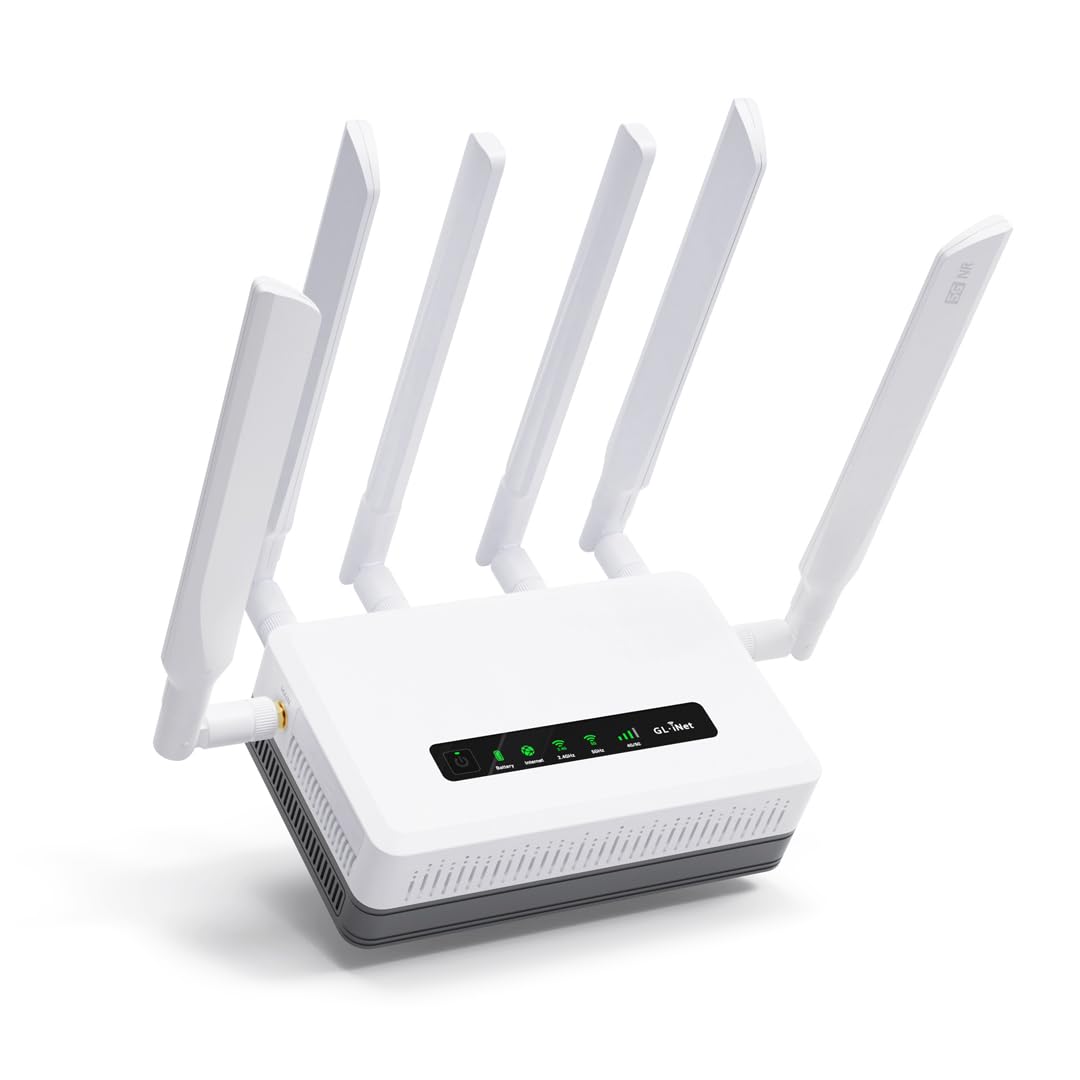
The Puli AX shares the same core OpenWrt software DNA as the Spitz but adds a critical physical difference: a 6400 mAh internal battery that keeps the gateway running for up to eight hours during a power outage. That makes it the primary choice for mobile offices, pop-up retail, or any location with intermittent grid power. The dual SIM slots with single standby allow automatic failover between carriers, and the Wi-Fi 6 radio handles 30+ simultaneous client connections without issue.
Setup is impressively simple—insert a SIM, and the router auto-detects the carrier profile. The detachable antennas capture weak signals from far towers, and the OpenWrt dashboard provides advanced tools like VPN WireGuard client, TTL modification, and DNS over TLS. GPS and Ethernet WAN are also available as additional WAN sources, creating a true multi-WAN load-balancing setup.
At a premium price, the Puli AX is bulky and the 6400 mAh battery adds noticeable weight. The internal battery is non-removable, so once it degrades after a few years, the unit cannot run on battery power. The Wi-Fi 6 throughput is also capped at 2.4 Gbps on the 5 GHz band, which may throttle gigabit 5G backhauls.
Why it’s great
- Built-in battery for 8-hour power-outage connectivity
- Multi-WAN with load balancing and failover
- OpenWrt with advanced VPN and band control
Good to know
- Non-removable battery will degrade over time
- Bulky design adds weight for portable use
- Wi-Fi 6 throughput is mid-range for the price
3. Hitron D60 5G
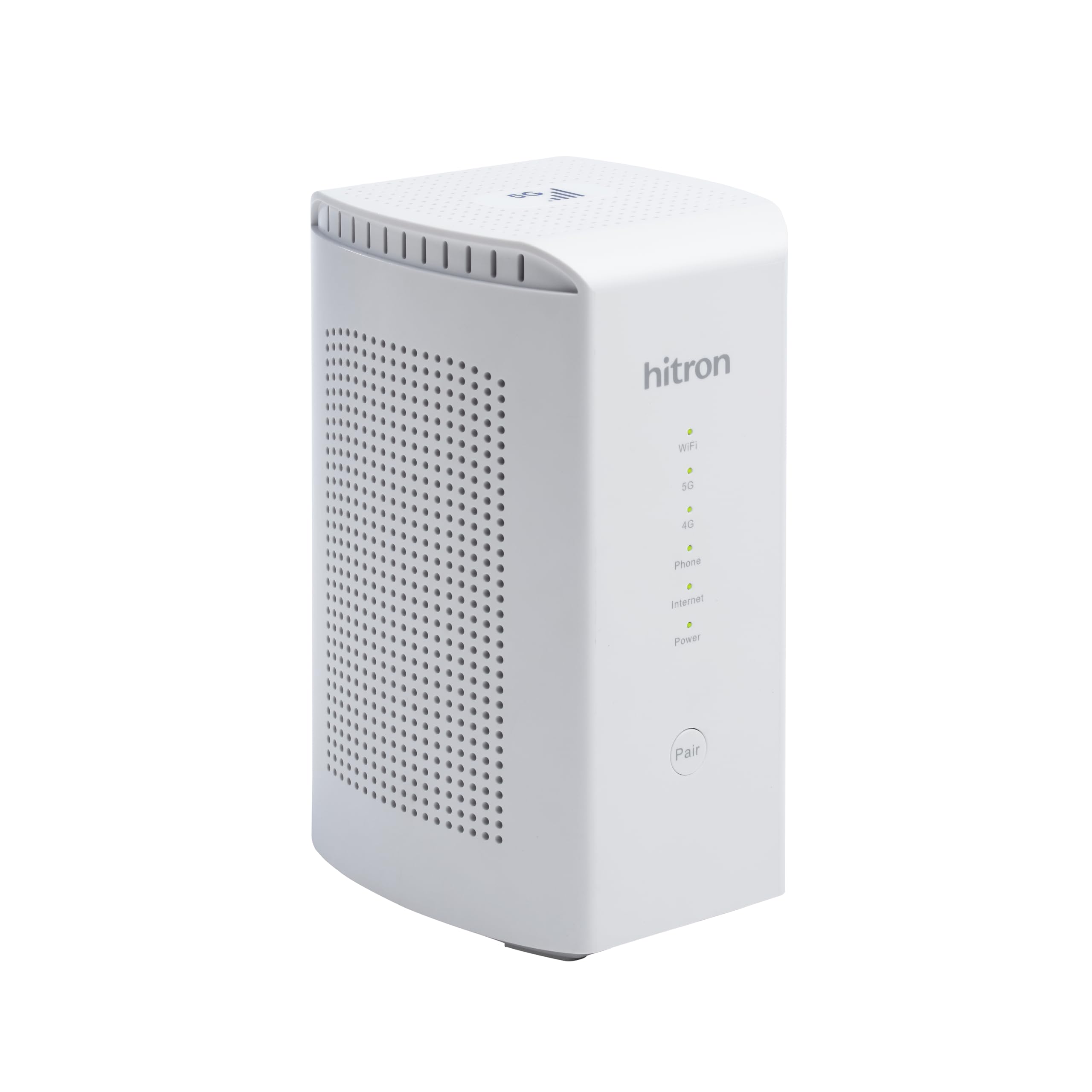
The Hitron D60 is a straightforward AX3000 Wi-Fi 6 router with a 5G modem that supports both Nano SIM and eSIM profiles, giving you dual failover capability without needing two physical SIM cards. It employs 4×4 MIMO on the 5 GHz band, which improves throughput and client capacity in dense device environments. The gateway is certified for AT&T, T-Mobile, and US Cellular, and works on both NSA and SA 5G networks.
Setup involves inserting a SIM and powering on, but some users report difficulty with carriers that block multi-use SIMs. The D60 includes an RJ11 port for voice fallback, which is rare and useful for home phone backup. The 3.4 Gbps theoretical downlink speed is enough to saturate most home plans, and the dual-band Wi-Fi 6 covers a typical household.
Reliability is the D60’s biggest question mark. Multiple owners report the unit crashing after 6–48 hours of uptime, dropping all LEDs except the power light. This is likely a firmware issue, but Hitron does not provide easy firmware update pathways. The device runs warm and there is no official app for remote management.
Why it’s great
- Dual failover via Nano SIM and eSIM
- RJ11 voice backup port for home phone lines
- Certified for 3 major US carriers
Good to know
- Reports of crashes after 6–48 hours of uptime
- No official update path or app support
- Runs warm under continuous load
4. Cudy P5 5G AX3000

The Cudy P5 uses the Qualcomm Snapdragon SDX62 modem, the same silicon that powers many tier-1 carrier devices, hitting 3.4 Gbps downlink on NSA and 2.4 Gbps on SA. This chip handles 5G carrier aggregation more gracefully than the lower-end modems found on budget gateways. It also provides a built-in band lock feature through the web UI, which is crucial for users in areas where the modem jumps between congested and clean bands.
Dual SIM slots enable automatic failover between carriers, and the router supports WireGuard, OpenVPN, and ZeroTier VPN protocols natively. The detachable 5 dBi antennas improve signal reception on both 5G and Wi-Fi 6 bands. The AX3000 dual-band radio provides enough throughput for 4K streaming and video conferencing without frame drops.
Compatibility is the main pain point. The Cudy P5 does not support T-Mobile SIMs out of the box, and some Verizon users report the modem fails to register on the network. The web interface is functional but the UI can feel unfinished. The unit also runs noticeably warm, which may cause thermal throttling in poorly ventilated cabinets.
Why it’s great
- Qualcomm SDX62 chipset for fast 5G speeds
- Built-in band lock and TTL modification
- Native WireGuard and ZeroTier VPN support
Good to know
- No T-Mobile SIM support listed
- Can be tricky to set up with Verizon
- Runs warm under heavy load
5. ASUS RT-BE90U
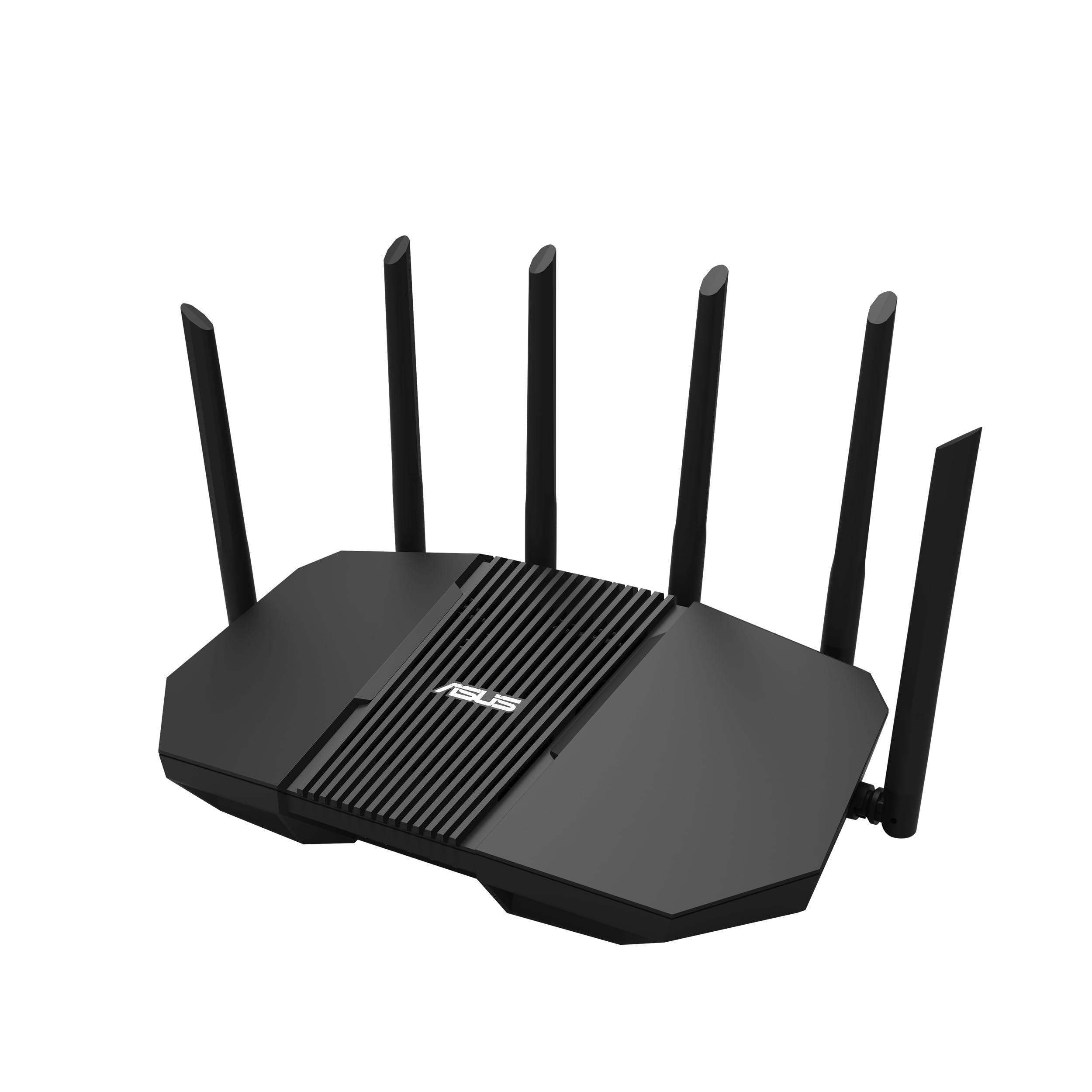
The RT-BE90U is a tri-band Wi-Fi 7 router that excels as an access point behind a 5G gateway. Its four 2.5 Gbps ports provide enough wired throughput to handle a multi-gig 5G backhaul and feed a NAS, game console, and workstations without congestion. The 320 MHz channel width on the 6 GHz band delivers 9400 Mbps aggregate bandwidth, which future-proofs your network as Wi-Fi 7 clients arrive.
ASUS’s AiMesh system lets you pair this router with other compatible units to create a seamless mesh for large homes. The commercial-grade AiProtection security suite is subscription-free and covers the whole network. ROG-first features like mobile game mode and triple-level game acceleration prioritize gaming traffic from the device to the server, which reduces latency jitter during 5G failover.
The absence of a built-in cellular modem means the RT-BE90U cannot function as a standalone 5G gateway. It is purely a router that requires an upstream 5G modem or carrier gateway. Its relatively short Wi-Fi 7 range means you may need additional mesh nodes for full coverage. Bufferbloat management is also lacking, as noted by some users who found QoS insufficient.
Why it’s great
- Quad 2.5G ports for wired multi-gig routing
- AiMesh compatibility for whole-home coverage
- Subscription-free commercial-grade security suite
Good to know
- No integrated 5G modem—requires separate gateway
- Wi-Fi 7 range is limited without mesh nodes
- QoS does not fully solve bufferbloat
6. TP-Link Archer BE600 (BE9700)

The Archer BE600 is a tri-band BE9700 router that includes a 10 Gbps WAN/LAN port alongside a dedicated 2.5 Gbps WAN/LAN port and three 2.5 Gbps LAN ports. This configuration is ideal for connecting to a 5G gateway at full multi-gig speed while keeping wired backhaul for multiple high-demand clients. The 320 MHz channels on the 6 GHz band ensure that Wi-Fi 7 devices get the full bandwidth benefit.
TP-Link’s HomeShield security adds IoT device protection and parental controls. The router supports Multi-Link Operation (MLO), which bonds bands for stable connections even while moving through a house. For VPN users, the BE600 supports both VPN client and server modes, simultaneously handling regular internet traffic and encrypted tunnels. Setup via the Tether app is straightforward, with automatic WAN detection.
Some early units shipped with firmware that caused random reboots under heavy Wi-Fi traffic. TP-Link released patches that fixed the issue for most, but a minority of users still experience instability. The web interface wastes screen space with promotional content and non-removable Tether app links, which can frustrate users who prefer dense management views.
Why it’s great
- True 10 Gbps WAN port for multi-gig 5G backhaul
- Tri-band BE9700 speeds with 320 MHz channels
- MLO and HomeShield for stable, secure connections
Good to know
- Some firmware versions cause random reboots
- Web UI has excessive promotional content
- No integrated cellular modem
7. Waveform QuadPro 4×4 MIMO Kit

This is not a gateway but an essential upgrade for anyone whose 5G gateway sits in a marginal coverage zone. The QuadPro uses a 4×4 MIMO panel antenna with 9.1 dBi gain across 600–6000 MHz, meaning it captures every 4G and 5G band from every carrier. The kit includes a 20-foot UltraFlex-Quad cable, a window feed-through, and a FlexMount bracket for tool-free installation.
Real-world results are dramatic. Users with T-Mobile Home Internet routinely report speed improvements from 50 Mbps to 300+ Mbps after mounting the QuadPro to an exterior wall facing the nearest tower. The antenna works with AT&T Internet Air, Verizon 5G Home, and T-Mobile gateways, with detailed installation guides included for each specific model. The built quality is excellent, and Waveform provides three years of warranty support.
The main downsides are the cost and the effort of installation. The antenna is directional, so you must use apps like CellMapper to locate the tower and aim the panel accurately. The window entry cable is a neat solution, but permanent outdoor installation requires drilling and sealing. Some users also report that the included adapters do not fit every gateway model without a separate pigtail purchase.
Why it’s great
- Doubles or triples speeds in weak signal areas
- Covers all 4G/5G bands across AT&T, T-Mobile, Verizon
- Complete kit with window entry, no drilling needed initially
Good to know
- Requires precise directional aiming toward tower
- Permanent outdoor install requires drilling
- Higher price point than indoor-only solutions
8. Ubiquiti UDM-SE

The UDM-SE is a full-stack security gateway and network controller designed for small businesses and power users. It integrates a multi-gigabit WAN port with 10G SFP+, 8 LAN ports (2 with PoE+), and a built-in 1TB hard drive slot for UniFi Protect cameras. It runs UniFi OS, which provides intuitive VLAN management, IDS/IPS at line rate, and deep packet inspection without recurring licensing fees.
For 5G home internet setups, the UDM-SE works as the routing brain behind a standalone 5G modem. You connect the modem to the 10G SFP+ port, then use the UDM-SE’s advanced firewall policies, traffic routing, and VPN server to manage the entire network. The interface is polished enough for non-IT users but deep enough for network engineers, with features like Geo-IP blocking, site-to-site VPN, and RADIUS authentication.
The UDM-SE lacks integrated Wi-Fi, so you must pair it with UniFi access points for wireless coverage. The device ramps up fan noise under sustained high load, making it less ideal for open living rooms. Some advanced users also feel the software lacks fine-grained policy controls compared to open-source firewalls like pfSense.
Why it’s great
- 10G SFP+ WAN for multi-gig 5G backhaul
- Enterprise IDS/IPS with no recurring license fees
- UniFi controller integration for VLANs and VPN
Good to know
- No integrated Wi-Fi—needs UniFi APs
- Fan noise increases under sustained high load
- Less granular policy control than pfSense
9. ASUS ROG Rapture GT-BE98 PRO

The GT-BE98 PRO is a true quad-band Wi-Fi 7 router that pushes wireless throughput to 30 Gbps aggregate. Its dual 10G ports and quad 2.5G ports allow you to connect a multi-gig 5G gateway while simultaneously feeding a high-performance NAS and gaming PC. The triple-level game acceleration engine prioritizes traffic from the device port through the ISP connection, reducing latency during 5G failover.
External dual-feeding antennas improve coverage stability at long range, and the router supports Multi-Link Operation, which bonds 2.4 GHz, 5 GHz, and 6 GHz bands for uninterrupted roaming. The ASUS app provides a simple setup path for users who avoid the web interface. The built-in VPN Fusion feature lets you route specific devices through a VPN while others connect directly, which is useful for remote work and gaming simultaneously.
This is a massive physical unit that needs dedicated shelf space. The 2.4 GHz band has a known Broadcom chipset bug that can cause IoT devices to disconnect repeatedly—some firmware versions have fixed this, but it is not universal. At a premium price, it is also overkill for anyone who does not already have multi-gig internet and a fleet of Wi-Fi 7 clients.
Why it’s great
- Dual 10G ports for maximum wired throughput
- Triple-level game acceleration reduces latency
- 4 Wi-Fi bands with MLO for seamless roaming
Good to know
- Known 2.4 GHz IoT disconnection bug on some hardware
- Large footprint requires dedicated shelf space
- Overkill unless you have multi-gig internet and Wi-Fi 7 devices
FAQ
Can I use any 5G gateway with T-Mobile Home Internet?
Why does my 5G gateway keep dropping to 4G speeds?
Do I need an external antenna for a 5G home gateway?
Final Thoughts: The Verdict
For most users, the best 5G home internet gateway is the GL.iNet GL-X3000 (Spitz AX) because it combines genuine OpenWrt flexibility, dual-SIM failover, and carrier certifications that keep you online in fringe areas. If you need battery backup for mobile work or unreliable power, grab the GL.iNet GL-XE3000 (Puli AX). And for a pure wired backbone upgrade behind a 5G modem, nothing beats the Ubiquiti UDM-SE with its 10G SFP+ port and enterprise-level security.