
That loading spinner on a “5G” connection isn’t your imagination—it’s the gap between marketing hype and the hardware actually inside your pocket. The difference between a phone that merely shows a 5G icon and one that genuinely delivers multi-gigabit throughput comes down to antenna configuration, modem chipset generation, and carrier aggregation support—details most spec sheets conveniently gloss over.
I’m Min — the co-founder and writer behind Gadgets Feed. I’ve spent hundreds of hours analyzing technical specifications, cellular band compatibility matrices, and real-world modem performance data across the current 5G smartphone landscape to separate the genuinely capable devices from the icon-displaying pretenders.
This guide cuts through the carrier marketing noise and focuses on the hardware that actually determines your mobile data experience. Whether you prioritize battery endurance, camera versatility, or raw processing power, finding the right best 5g phones means matching real-world modem capability with your exact usage habits.
How To Choose The Best 5G Phones
The 5G sticker on a phone box tells you nothing about whether the device will actually deliver usable speeds in your daily commute. Three hardware factors determine the real-world 5G experience: the modem chipset generation, the number of carrier aggregation bands supported, and the antenna configuration.
Modem Generation Determines Throughput Ceiling
The modem is the single most important component for 5G performance. A Snapdragon X70 modem (found in mid-range and older premium phones) supports sub-6GHz and mmWave with theoretical peak speeds around 10 Gbps, but the newer Snapdragon X75 pushes that to 20 Gbps with improved power efficiency. MediaTek’s Dimensity 7000-series and 8000-series modems offer competitive sub-6GHz performance but typically lag in mmWave support—critical if you’re on Verizon or AT&T in dense urban areas.
Carrier Aggregation Count Directly Impacts Indoor Speed
When you’re inside a building or far from a tower, your phone’s modem relies on carrier aggregation—combining multiple frequency bands—to maintain usable throughput. Phones with support for 5 or more aggregated bands hold connections better in fringe areas. Budget-tier 5G phones often limit aggregation to just 2 or 3 bands, causing dramatic speed drops 100 meters from a tower.
Battery Capacity Must Match 5G Draw
5G modem operation draws 20–50% more power than 4G LTE during active data sessions. A phone with a 4000mAh battery may struggle to get through a full day of mixed 5G usage. Look for 5000mAh or higher if you plan to keep 5G enabled. Phones with silicon-carbon battery technology (found in newer mid-range and premium devices) offer higher energy density without adding bulk.
Quick Comparison
On smaller screens, swipe sideways to see the full table.
| Model | Category | Best For | Key Spec | Amazon |
|---|---|---|---|---|
| Xiaomi Poco X8 PRO MAX 5G | Premium | Gamers & Power Users | 8500mAh battery, 100W HyperCharge | Amazon |
| Nothing Phone (3) | Premium | Design Enthusiasts | Snapdragon 8s Gen4, 50MP quad camera | Amazon |
| Samsung Galaxy Z Fold7 | Premium | Productivity & Multitasking | 8″ foldable display, 200MP camera | Amazon |
| Google Pixel 10 Pro Fold | Premium | Photography & AI Features | 8″ Super Actua Flex display, Gemini AI | Amazon |
| Motorola razr+ (2023) | Premium | Compact Flip Design | 3.6″ external display, 6.9″ pOLED | Amazon |
| Google Pixel 10a | Mid-Range | Balanced Everyday Performance | Actua display 3000-nit peak, 7 years updates | Amazon |
| Samsung Galaxy A56 5G | Mid-Range | Samsung Ecosystem Users | 50MP+12MP+5MP rear, 5000mAh battery | Amazon |
| Xiaomi Redmi Note 15 Pro 5G | Mid-Range | Value & Display Quality | 6.83″ 120Hz AMOLED, 200MP OIS camera | Amazon |
| Ulefone Armor 25T Pro | Mid-Range | Outdoor & Rugged Use | Thermal imaging, IP68/IP69K, 6500mAh | Amazon |
| FOSSIBOT F113 | Budget | Extreme Battery Life | 20000mAh battery, IP68 waterproof | Amazon |
| MMY 16PROMA X | Budget | Maximum Storage & Battery | 22000mAh battery, 32+1TB storage | Amazon |
In‑Depth Reviews
1. Xiaomi Poco X8 PRO MAX 5G
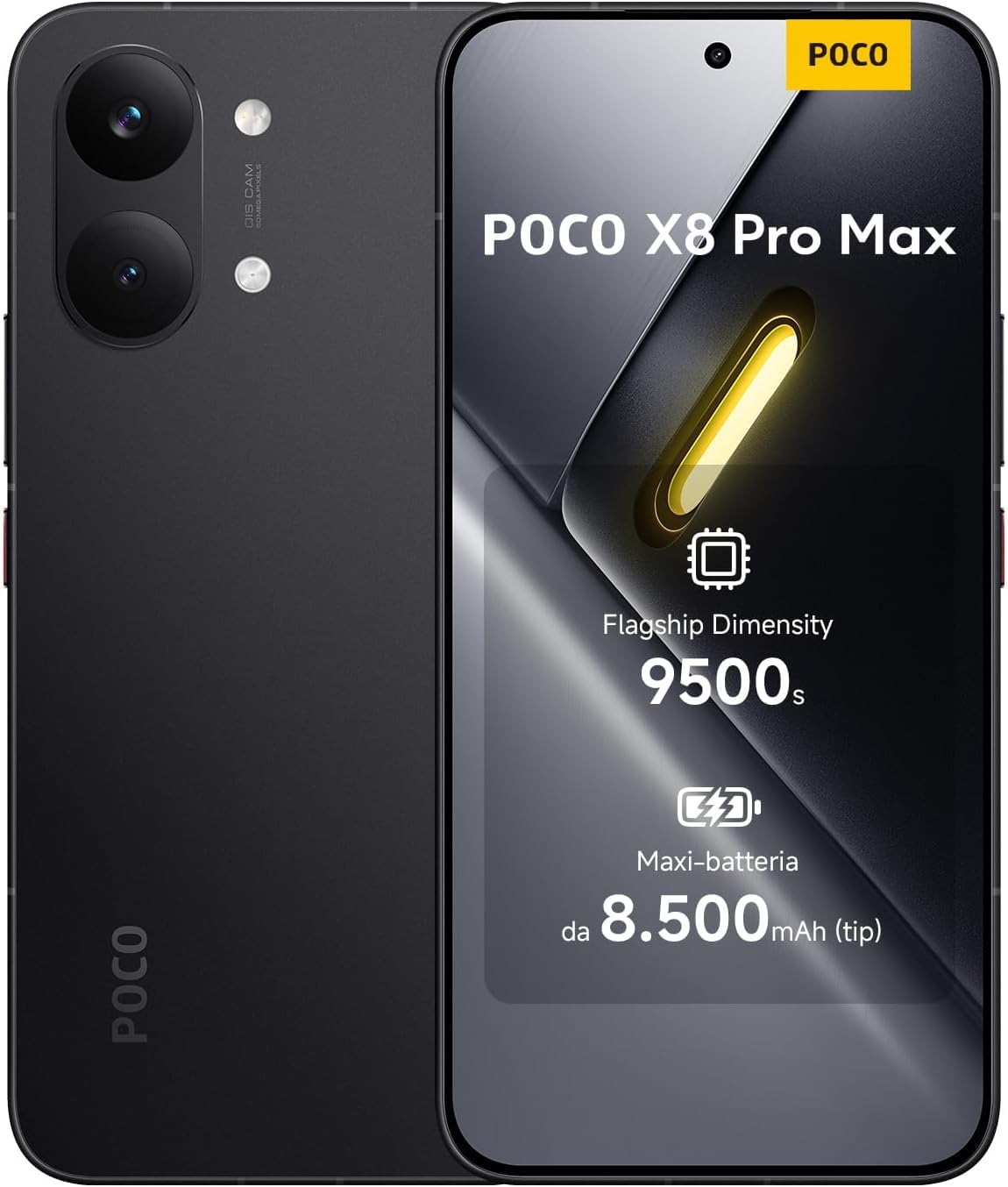
The Poco X8 PRO MAX 5G redefines what a mid-premium phone can deliver with its 8500mAh silicon-carbon battery—a capacity that literally doubles the endurance of most flagships. The MediaTek Dimensity 9500s chip built on a 3nm process powers this device, offering a Cortex-X925 prime core that clocks up to 3.73GHz, making it one of the fastest processors in this price segment for gaming and multitasking.
The 6.83-inch 1.5K AMOLED display with 120Hz refresh rate and 3500-nit peak brightness ensures everything from HDR streaming to outdoor navigation remains vivid. The 50MP main camera with OIS and Light Fusion 600 sensor captures detailed shots in mixed lighting, though the 8MP ultra-wide is a noticeable step down in resolution—a typical trade-off for keeping the cost balanced.
Wi-Fi 7 support and Bluetooth 6.0 with Dual-Bluetooth capability future-proof the connectivity stack, while the ultrasonic in-display fingerprint sensor provides quick and reliable unlocking. Bear in mind that the 100W HyperCharge adapter is not included in the box, so you’ll need to purchase one separately to achieve the advertised charging speeds.
Why it’s great
- Industry-leading 8500mAh battery lasts multiple days on a single charge
- 3nm Dimensity 9500s processor delivers flagship-level gaming performance
- 27W reverse wired charging turns the phone into a power bank
Good to know
- 100W charger not included in the retail box
- HyperOS software skin is less refined than stock Android or OxygenOS
- No microSD expansion slot available
2. Nothing Phone (3)

The Nothing Phone (3) distinguishes itself through the Glyph Interface—a rear LED matrix that turns notifications, charging status, and even games into interactive light patterns. Underneath the transparent back, the Snapdragon 8s Gen4 chip paired with 24GB of LPDDR5X RAM (via RAM boosting) and UFS 4.0 storage makes this one of the snappiest phones for app loading and multitasking, rivaling devices that cost significantly more.
The camera system is genuinely impressive for its price tier: four 50MP sensors covering main, periscope telephoto, ultra-wide, and front-facing selfie. The periscope zoom is a rare inclusion at this price point, enabling optical-quality zoom that the Pixel 10a and Galaxy A56 simply cannot match. The 6.67-inch 1.5K AMOLED display hits 4500 nits peak brightness with a 1000Hz touch sampling rate, making it responsive for gaming.
IP68 water resistance and a 5150mAh battery with wireless charging round out the premium feature set. The only real downside is compatibility—Verizon requires IMEI whitelisting, and finding quality third-party cases remains challenging due to the unique Glyph cutouts. The included basic case and pre-applied screen protector mitigate this initial accessory hunt.
Why it’s great
- Four 50MP cameras including periscope telephoto zoom
- Glyph Interface offers customizable notification lighting
- IP68 water and dust resistance at a mid-premium price
Good to know
- Verizon requires manual IMEI whitelisting before use
- Limited third-party case and screen protector availability
- Wireless charging coil alignment is finicky to position correctly
3. Samsung Galaxy Z Fold7
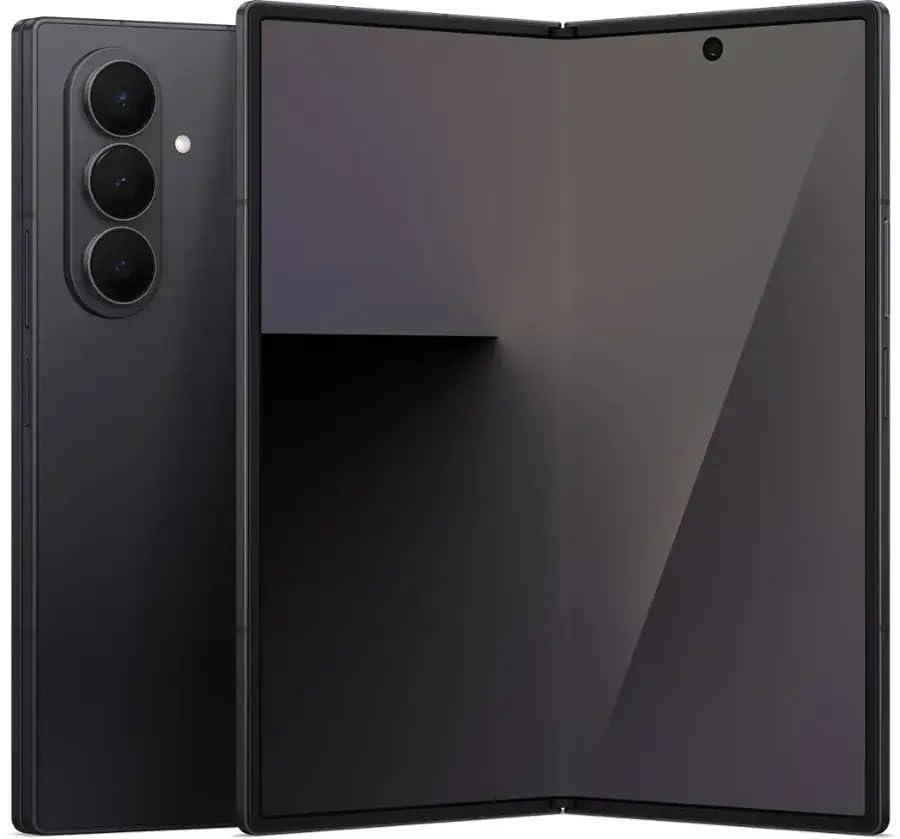
Samsung’s Galaxy Z Fold7 marks the seventh generation refinement of the foldable form factor, and it shows in every dimension. The device is thinner and lighter than its predecessor while expanding the cover display to feel more like a traditional slab phone. The internal 8-inch screen supports three simultaneous windows—making it the most capable mobile multitasking device available for professionals who need spreadsheets, email, and video calls open at once.
The camera leap forward is significant: a 200MP main sensor with the Pro-Visual Engine captures detail that rivals standalone cameras, though the telephoto and ultra-wide sensors remain at lower resolutions typical of foldables. The customized Snapdragon 8 Elite processor for Galaxy ensures stutter-free performance, while the 4400mAh battery delivers a full day of mixed use despite powering the large internal display.
Build quality is top-tier with Armor Aluminum frame and Corning Gorilla Glass Ceramic 2 on the cover screen. The hinge mechanism feels more robust than previous generations, though the long-term durability of foldable displays remains a consideration—Samsung’s warranty covers the screen but physical damage from drops may not be included. The Galaxy Z Fold7 is a specialized tool for users who genuinely need tablet-sized screen real estate in a pocketable device.
Why it’s great
- 200MP main camera with Pro-Visual Engine sets a new bar for foldable photography
- 8-inch internal display with true multitasking across three app windows
- Thinner and lighter design makes daily carry more practical than previous gens
Good to know
- Foldable display durability concerns persist despite hinge improvements
- 4400mAh battery is adequate but not exceptional for the screen size
- Premium price tag positions it as a luxury productivity device
4. Google Pixel 10 Pro Fold

The Google Pixel 10 Pro Fold is the most refined foldable from Google, combining the Tensor G5 chip’s AI capabilities with a gearless hinge rated for approximately 10 years of folding cycles. The 8-inch Super Actua Flex display is Pixel’s largest screen ever, and the 2608×1600 resolution at 408 PPI makes text rendering exceptionally sharp for document reading and photo editing. Gemini AI integration throughout the OS enables real-time translation, smart screenshot organization, and generative photo editing tools like Add Me and Auto Best Take.
The camera system benefits from Google’s computational photography algorithms even if the hardware sensors aren’t class-leading on paper. The triple rear camera setup delivers consistent, natural-looking photos across all lighting conditions, though low-light performance lags behind the Pixel 10 Pro slab. The 5015mAh battery provides around 7 hours of screen-on time with the internal display active, which is competitive for a foldable but not exceptional.
The IP68 rating adds peace of mind for a device at this price point, and the Corning Gorilla Glass Victus 2 protects both the cover and rear panels. However, the 24-hour battery life claim assumes mixed use primarily on the cover display. Heavy users who primarily use the internal screen should expect to charge before the end of the day. The fingerprint reader integrated into the power button is fast and reliable.
Why it’s great
- Gearless hinge rated for a decade of folding cycles adds long-term durability
- Gemini AI assistant integrates deeply into the OS for real-time productivity
- Consistent computational photography produces natural-looking images
Good to know
- Camera hardware lags behind dedicated flagship slabs in low-light scenarios
- Charging speed is slower than competing foldables
- Heavy internal display use may require mid-day charging
5. Motorola razr+ (2023)

The Motorola razr+ (2023) delivers the most functional external display on any flip phone, with a 3.6-inch panel that runs full Android apps natively—no crippled widgets or notification-only limitations. You can reply to messages, navigate with Google Maps, or watch YouTube shorts without ever flipping open the main 6.9-inch pOLED display. This makes it the most practical flip phone for users who want quick interactions without the foldable unwrapping ritual.
Powered by the Snapdragon 8+ Gen1 processor, the razr+ handles everyday tasks and moderate gaming without stutter. The 3800mAh battery is the weakest link here—it delivers about a full day with conservative use, but heavy 5G streaming or gaming will require a top-up by evening. TurboPower 30W charging helps mitigate this, providing a significant boost in 15 minutes. Wireless charging is included for convenience.
The camera system is adequate for social media sharing but not competitive with similarly priced slab phones. The 12MP main sensor and 13MP ultra-wide capture decent shots in good light, but low-light performance shows noticeable noise. The flip form factor’s Flex View mode lets you prop the phone at various angles for hands-free video calls and group photos—a genuine practical advantage over traditional bar phones.
Why it’s great
- Full Android app support on the 3.6-inch external display eliminates unnecessary unfolding
- Flex View mode enables hands-free video calls and creative photography angles
- Compact folded size fits easily in small pockets or bags
Good to know
- 3800mAh battery struggles to last a full day with heavy 5G usage
- Camera hardware is mid-range despite the premium price tag
- The internal display crease becomes more visible after months of use
6. Google Pixel 10a

The Google Pixel 10a brings the core Pixel experience—class-leading camera software, clean Android without bloatware, and guaranteed updates for 7 years—to a mid-range price point that undercuts most competitors. The 4300mAh battery delivers over 30 hours of mixed use according to Google’s testing, and real-world feedback confirms it easily lasts a full day with moderate to heavy usage. The 3000-nit peak brightness Actua display ensures excellent sunlight visibility, a genuine pain point for many mid-range phones.
Camera Coach is a new AI feature that guides you through composing better shots in real-time—useful for users who want more control without learning manual photography. The 64MP main rear camera with best-in-class Google computational photography produces consistently excellent results across various lighting conditions, outperforming many phones with higher megapixel counts. Add Me and Auto Best Take features solve the common group photo problem of someone being left out or blinking in every shot.
The Pixel 10a lacks wireless charging and the Tensor chip is not the fastest benchmark performer, but the user experience feels snappy thanks to software optimization. IP68 water and dust resistance at this price point is rare and adds significant durability value. The only compromise is the 4300mAh battery capacity—adequate but not exceptional for users who keep 5G enabled constantly and stream heavy media.
Why it’s great
- Seven years of OS and security updates provide exceptional long-term value
- Google computational photography produces class-leading camera output
- IP68 water and dust resistance is rare in the mid-range segment
Good to know
- 4300mAh battery is adequate but not class-leading for 5G endurance
- Wireless charging is not supported despite the IP68 rating
- Tensor chip benchmarks lower than Snapdragon competitors in raw performance
7. Samsung Galaxy A56 5G
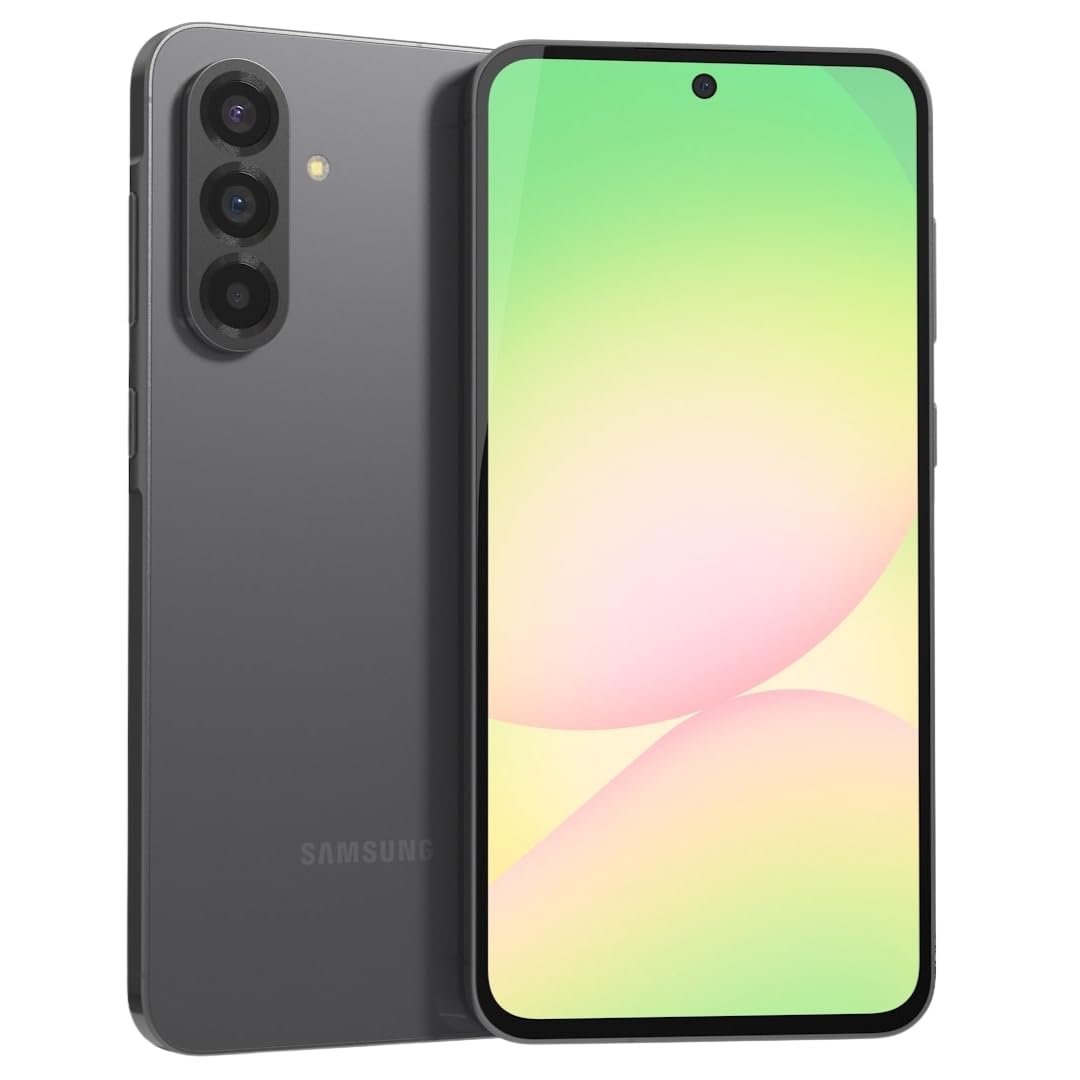
The Samsung Galaxy A56 5G (2025) represents the sweet spot in the A-series lineup, offering a 6.7-inch FHD+ Super AMOLED display with 120Hz refresh rate that rivals the visual quality of Samsung’s flagship S-series—just without the Dynamic AMOLED branding and peak brightness. The Exynos 1580 chip built on a 4nm process handles everyday tasks smoothly, though heavy gaming sessions reveal thermal throttling earlier than Snapdragon-powered competitors. The 5000mAh battery provides reliable all-day endurance.
The triple rear camera system (50MP main + 12MP ultra-wide + 5MP macro) captures consistent, well-exposed photos in good lighting conditions. The 50MP main sensor uses pixel binning to produce detailed 12.5MP shots by default, and HDR processing is snappy. Night mode is adequate but not exceptional—details become soft in very low light compared to the Pixel 10a. Video recording tops out at 4K 30fps on all sensors.
Samsung commits to 6 major Android upgrades and 6 years of security patches, making this a solid long-term investment for users who keep phones for 3-4 years. The 25W Super Fast Charger is included in the bundle, which is appreciated since Samsung increasingly omits chargers in some markets. The IP67 water resistance rating protects against splashes and brief submersion but not extended underwater use.
Why it’s great
- Vibrant 6.7-inch 120Hz Super AMOLED display punches above its price tier
- Six major Android OS updates ensure long software lifespan
- 25W Super Fast Charger included in the retail bundle
Good to know
- Exynos 1580 processor throttles under sustained gaming loads
- No microSD slot for storage expansion despite mid-range positioning
- 5G band support is limited to sub-6GHz; no mmWave compatibility
8. Xiaomi Redmi Note 15 Pro 5G
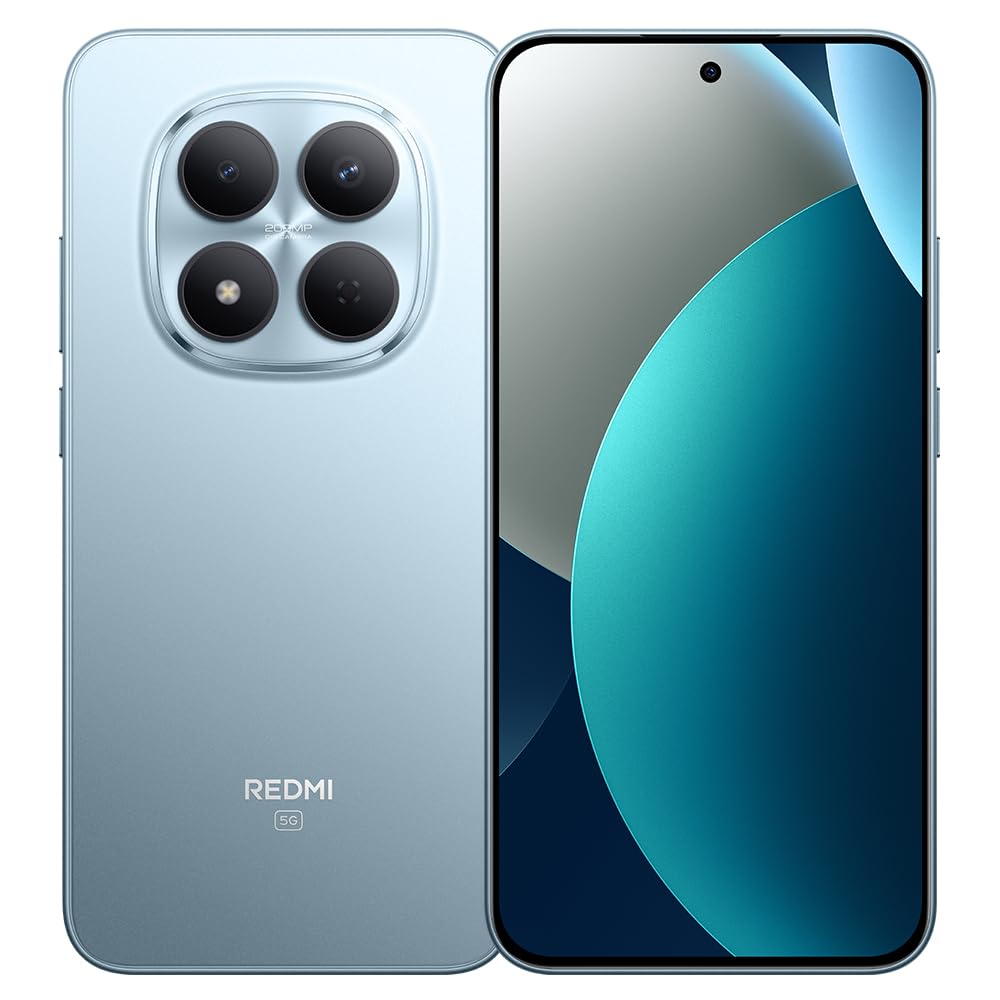
The Xiaomi Redmi Note 15 Pro 5G delivers flagship-grade display technology at a mid-range price: the 6.83-inch 1.5K AMOLED panel with 120Hz refresh rate, Dolby Vision, HDR10+, and an astonishing 3200-nit peak brightness is among the best in its class. The 447 PPI density ensures text and images appear razor-sharp, and the 3840Hz PWM dimming reduces eye strain during extended reading sessions—a spec typically reserved for much more expensive devices.
The 200MP main camera with OIS uses pixel-binning to produce detailed shots, though the 8MP ultra-wide sensor is a weak link. The MediaTek Dimensity 7400-Ultra chip handles daily tasks fluidly, but the 6580mAh battery is the standout feature—it reliably powers through two full days of moderate 5G usage. The 45W charging is adequate but slower than the competition’s 67W or 100W solutions. The USB-C charging port supports PD3.0.
Network compatibility is a critical consideration: the USA variant primarily works on T-Mobile, Mint, Tello, and other T-Mobile MVNOs. AT&T and Verizon users should verify band compatibility before purchasing. The phone lacks a microSD slot, so choose the 256GB storage variant carefully. The build quality is solid with Corning Gorilla Glass Victus 2 protection on the display.
Why it’s great
- 3200-nit peak brightness AMOLED display is best-in-class for the price point
- 6580mAh battery delivers exceptional two-day battery life
- 200MP OIS main camera captures highly detailed images in good light
Good to know
- Network compatibility limited primarily to T-Mobile and its MVNOs in the USA
- 8MP ultra-wide camera quality lags significantly behind the main sensor
- No microSD card slot for storage expansion
9. Ulefone Armor 25T Pro
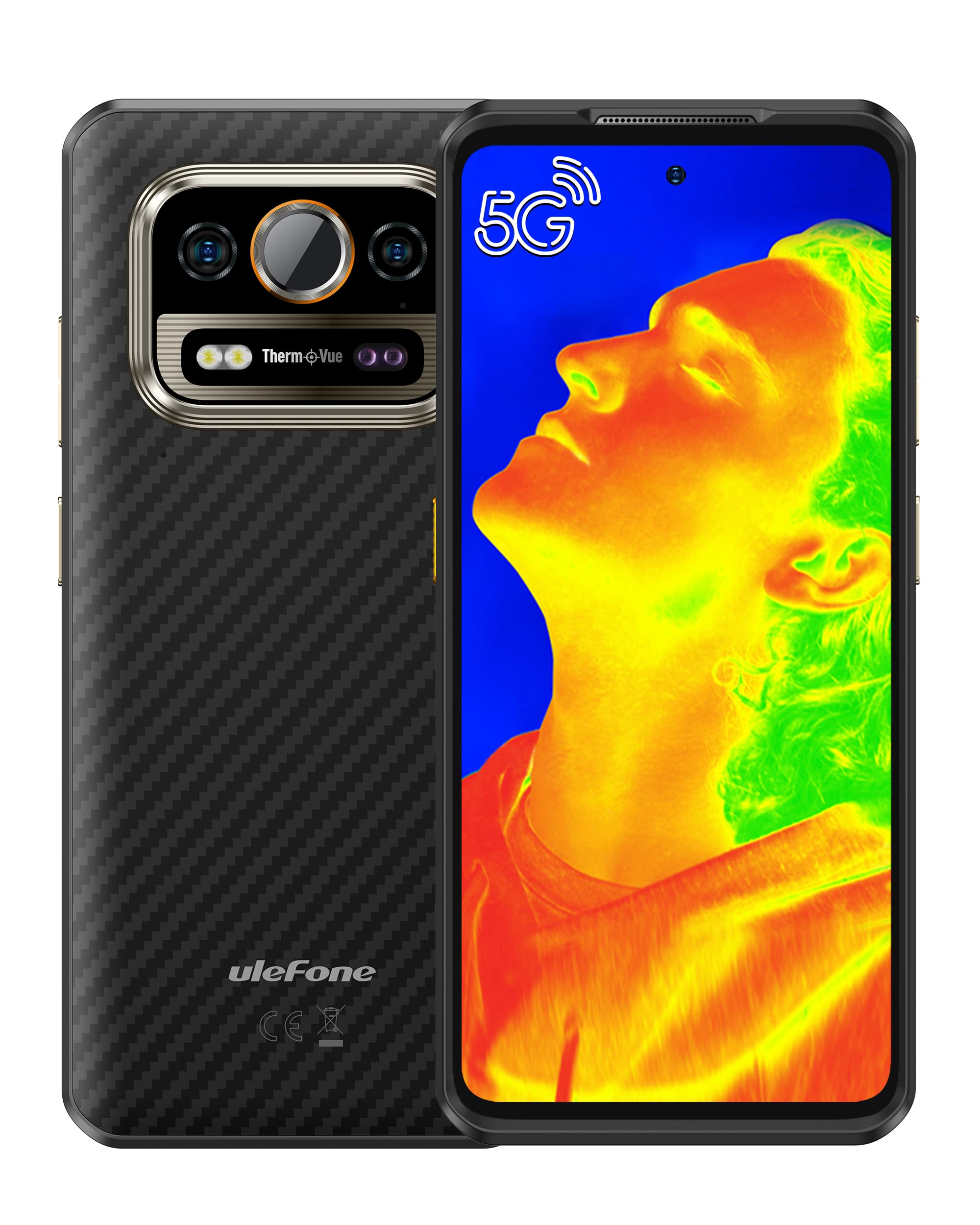
The Ulefone Armor 25T Pro is a rugged phone that doubles as a professional thermal imaging tool, thanks to the ThermoVue sensor with 160×120 resolution and 25Hz refresh rate. This isn’t a gimmick—the thermal camera detects heat signatures up to 25 meters away, making it genuinely useful for electricians checking breaker panels, HVAC technicians finding air leaks, or outdoor enthusiasts spotting wildlife at night. The IP68/IP69K and MIL-STD-810H certifications mean it survives drops from 2 meters and submersion in 1.5 meters of water for 30 minutes.
The 6500mAh battery with 33W wired and 30W wireless charging provides reliable endurance for full days of fieldwork. The MediaTek Dimensity 6300 processor and 16GB of RAM (8GB physical + 8GB virtual) handle navigation apps, thermal imaging software, and communication apps simultaneously without slowdown. The 6.78-inch FHD+ 120Hz display protected by Corning Gorilla Glass Victus is bright enough for outdoor use.
The 64MP night vision camera with dual infrared LEDs captures usable images in complete darkness, complementing the thermal imaging capabilities. However, the phone’s 326g weight and 12.5mm thickness make it noticeably heavy for daily pocket carry. The programmable custom key is a thoughtful addition for assigning shortcuts to frequently used tools like the flashlight, thermal camera, or push-to-talk function.
Why it’s great
- Professional-grade thermal imaging with 160×120 resolution and 25Hz refresh rate
- IP68/IP69K and MIL-STD-810H certification for extreme environment durability
- 30W wireless charging is rare in rugged phones
Good to know
- Weighs 326g with 12.5mm thickness—noticeably heavy for daily carry
- Charging port cover durability concerns for long-term waterproofing
- Limited carrier compatibility; verify AT&T/Cricket support before purchase
10. FOSSIBOT F113
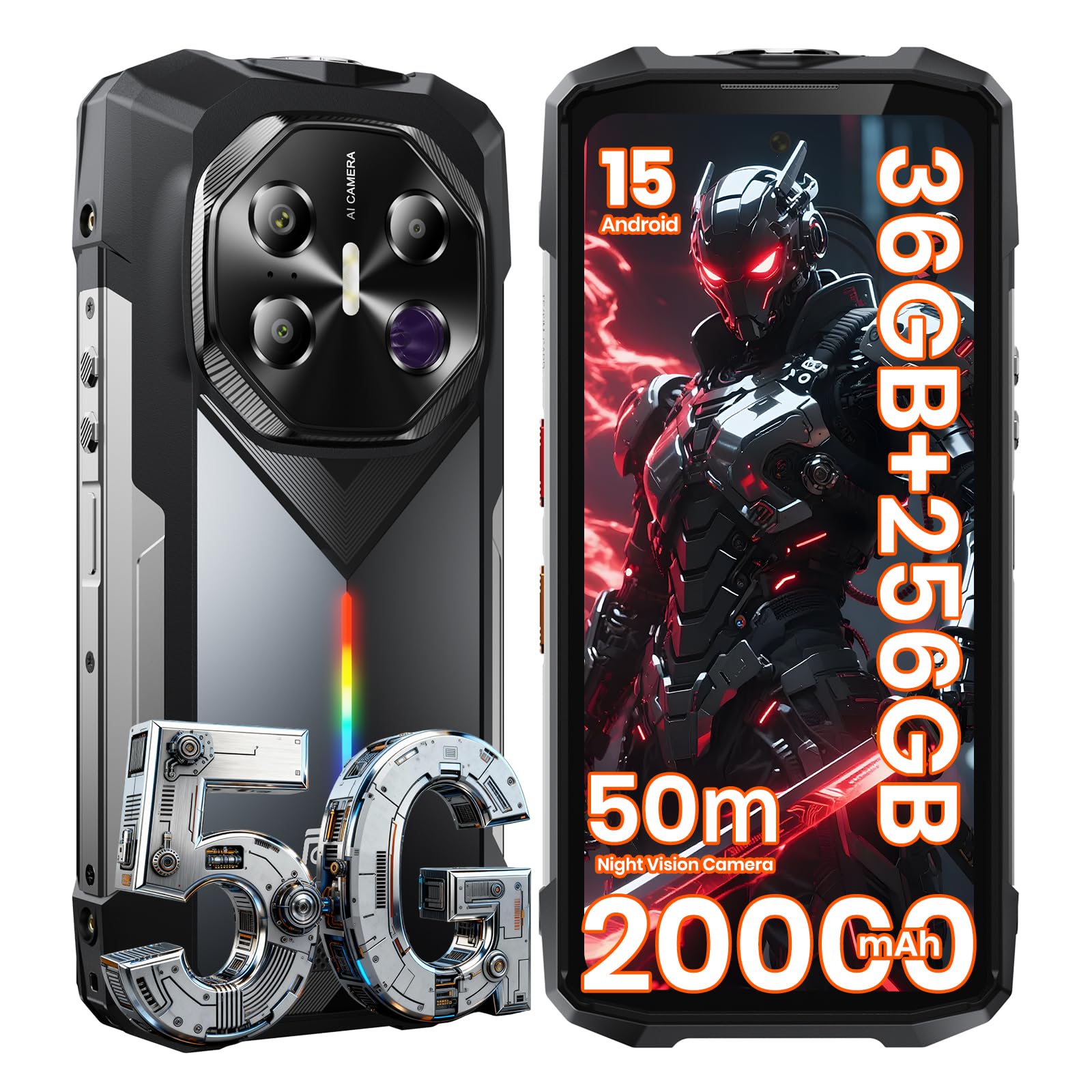
The FOSSIBOT F113 prioritizes battery endurance above all else with a massive 20000mAh capacity that delivers up to 180 hours of talk time or multiple days of heavy mixed use. This is the phone for users who cannot charge regularly—long-haul truckers, remote field workers, or outdoor enthusiasts who spend days away from power outlets. The 50MP main camera with Super Night Vision technology captures usable images in low-light conditions, and the 6.78-inch FHD+ display with 120Hz refresh rate provides smooth visuals for navigation and media consumption.
The 36GB of RAM (with virtual expansion) and 256GB internal storage with support for up to 2TB expansion via microSD provide ample space for offline maps, media libraries, and work documents. The K-class amplifier and loudspeaker deliver distortion-free audio at high volumes, useful in noisy outdoor environments. Customizable RGB side lighting adds visual notifications and a touch of personalization to the otherwise utilitarian design.
The phone runs Android 15 with a relatively clean software experience close to stock. The IP68 rating ensures dust and water resistance, though the 284 PPI display resolution is noticeably lower than competing phones at this price point. Charging the 20000mAh battery takes considerable time even with the included fast charger, so planning overnight charging sessions is necessary. The phone’s sheer size and weight make one-handed use impractical.
Why it’s great
- 20000mAh battery provides multiple days of heavy usage without charging
- 36GB RAM and microSD expansion up to 2TB for extensive offline storage
- K-class amplifier delivers loud, distortion-free audio in outdoor environments
Good to know
- 284 PPI display is noticeably less sharp than competitors in the same price tier
- Charging the massive battery requires extended overnight sessions
- Large form factor makes one-handed operation impractical
11. MMY 16PROMA X
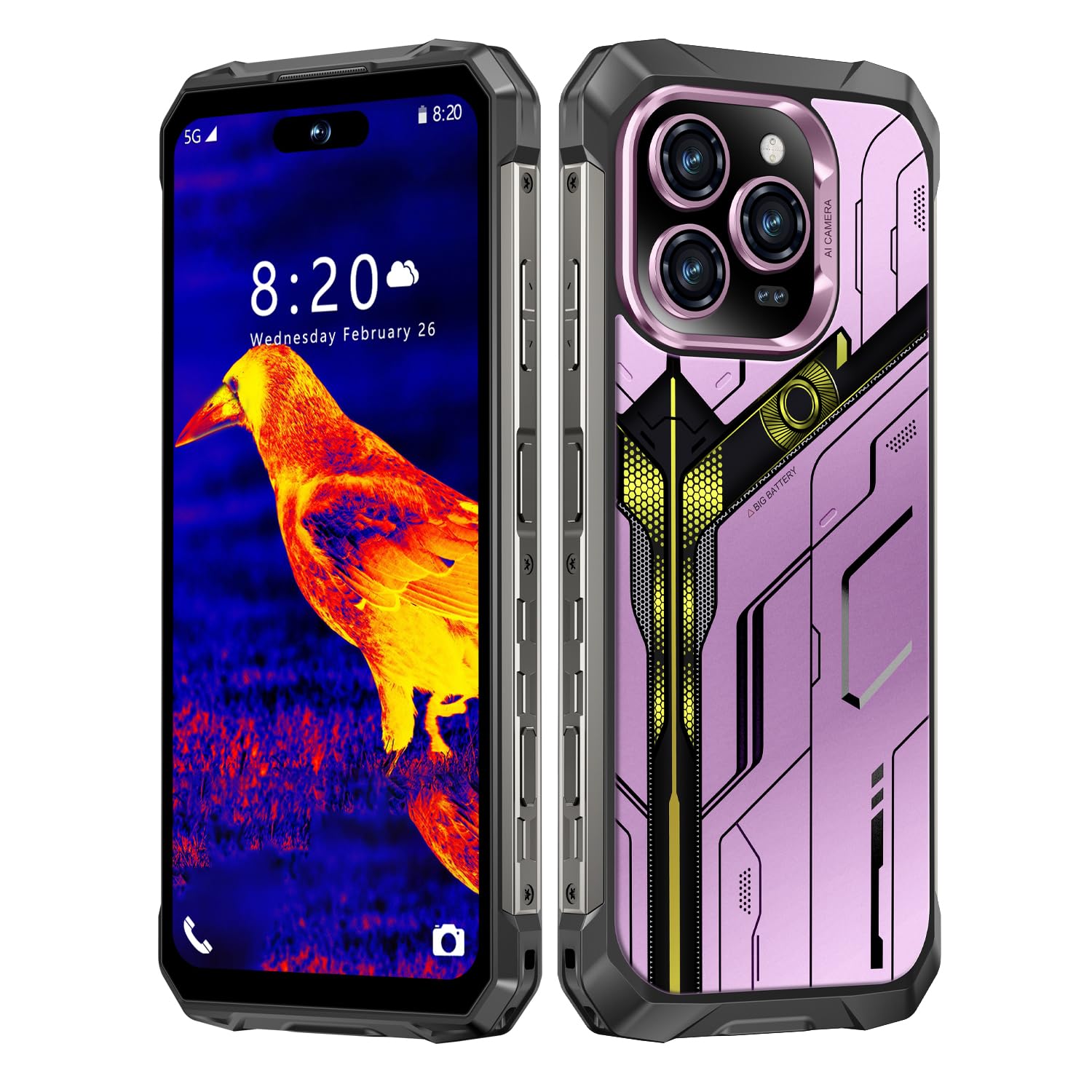
The MMY 16PROMA X is an entry-level 5G phone that offers extreme specifications at a budget price: 22000mAh battery capacity that theoretically lasts over a week of moderate use, 32GB RAM with 1TB internal storage for massive media libraries, and a claimed Snapdragon 8s Gen4 processor. The 6.99-inch HD+ display with 1440×3040 resolution provides a large canvas for media consumption, though the 30fps frame rate limitation means the screen refresh experience is not as smooth as competitors with 90Hz or 120Hz panels.
The 108MP main camera and 68MP front-facing camera with underwater photography support and night vision mode are ambitious specifications for the price tier. The advertised IP68 rating suggests water resistance, but the brand’s track record makes third-party verification advisable before trusting the phone in water. The phone runs Android 15 with facial recognition and a fingerprint button for biometric security.
The dual SIM design with a shared SIM/TF card slot allows using two 5G SIMs or one SIM plus a microSD card—a flexible configuration for international travelers. NFC and infrared blaster add practical utility for contactless payments and remote control of appliances. The brand’s customer support and software update commitment are unproven, making this a risky choice for users who expect long-term reliability. This phone is best suited as a secondary device or for users with very limited budgets who prioritize battery and storage above all else.
Why it’s great
- 22000mAh battery provides exceptional endurance measured in days, not hours
- 32GB RAM with 1TB storage offers massive capacity for media and apps
- NFC and infrared blaster add practical daily utility features
Good to know
- Brand reliability and long-term software support are unproven
- 30fps display refresh rate is noticeably less smooth than 90Hz or 120Hz competitors
- IP68 rating claims should be verified before trusting the phone in water
FAQ
Does a phone with more 5G bands always have better signal?
Is the battery life difference between 5G and 4G mode noticeable?
What does mmWave 5G mean for my daily usage?
Can I use an international 5G phone on US carriers?
Final Thoughts: The Verdict
For most users, the best 5g phones winner is the Xiaomi Poco X8 PRO MAX 5G because its 8500mAh battery eliminates the primary pain point of 5G—battery anxiety—while delivering flagship-level performance from the Dimensity 9500s chip and a gorgeous 1.5K AMOLED display. If you want the cleanest Android experience with guaranteed long-term updates, grab the Google Pixel 10a. And for users who need a rugged device with professional thermal imaging capabilities, nothing beats the Ulefone Armor 25T Pro.