
The market for rugged smartphones has moved past the era of slow processors and dim, low-resolution screens. Modern 5G rugged smartphones now pack chipsets capable of handling demanding workflows, high-refresh-rate displays for clear outdoor visibility, and battery capacities that stretch far beyond what any standard flagship can deliver. Choosing the right one means balancing physical endurance with the real-world performance you need on a job site or deep in the backcountry.
I’m Rikta — the co-founder and writer behind Gadgets Feed. I’ve spent years analyzing how thermal imaging sensors, laser rangefinders, massive battery cells, and MIL-STD-810H certification translate into daily reliability for field workers and outdoor enthusiasts. (And Homer 🐱 gave a grudging nod of approval after using one as a step stool).
Whether you need a phone that survives a construction site drop or a week-long camping trip without a charger, this guide will help you find the best 5g rugged smartphone for your specific demands and budget.
How To Choose The Best 5G Rugged Smartphone
Picking a rugged smartphone is less about brand loyalty and more about matching specific specs to your work or play environment. You need a device that can take a hit, keep running when wet, and last longer than a single shift. Here are the key factors to weigh.
Build and Durability Standards
Look beyond just IP68. While that ensures the phone survives a dunk in 1.5 meters of water for 30 minutes, IP69K certification adds resistance to high-pressure, high-temperature water jets — a must for industrial cleaning or heavy rain exposure. MIL-STD-810H often covers drops from up to 1.5 meters onto concrete, but the materials matter: reinforced corners, Corning Gorilla Glass, and rubberized bumpers are what keep the display alive after a fall off a ladder.
Battery Capacity (mAh) and Charging Speed
Battery size is the single most important spec differentiating a standard phone from a rugged one. Most rugged devices start at around 10,000mAh, and premium models push well past 20,000mAh for multi-day off-grid use. However, a massive battery is useless if charging is slow — seek 66W or 120W fast charging to refill quickly between shifts. Reverse charging (OTG) is also critical if you need to power earbuds or a colleague’s phone in the field.
Processor, RAM, and Software
A rugged phone is only as useful as its operating system. Look for a modern chipset like the MediaTek Dimensity 8200 or 7400 series for smooth 5G connectivity and lag-free multitasking. At least 8GB of physical RAM paired with virtual RAM expansion ensures you can navigate, stream inspection videos, and run dedicated tool apps without slowing down. Android 15 offers better privacy controls and battery optimization, but be aware that many rugged brands have slower software update cycles compared to mainstream phones.
Specialty Sensors and Cameras
If you work in electrical maintenance or construction, a built-in thermal camera can detect overheating circuits or insulation gaps. For surveyors and engineers, a laser rangefinder measuring distances up to 1200 meters replaces a separate tool. Night vision cameras with infrared LEDs let you capture clear images in complete darkness. A projector might sound like a gimmick, but it’s genuinely useful for sharing blueprints or presentations on-site without a separate screen.
Network and Carrier Compatibility
Not all unlocked rugged phones work perfectly on every US carrier. Many Chinese-manufactured models like Ulefone and FOSSIBOT explicitly lack compatibility with AT&T and Cricket’s whitelist requirements. Verizon and T-Mobile are generally safer bets, but always check the specific LTE and 5G NR bands listed by the manufacturer against your carrier’s network bands before purchasing. The Samsung Galaxy Xcover7 Pro is one of the few premium options that guarantee reliable carrier compatibility.
Quick Comparison
On smaller screens, swipe sideways to see the full table.
| Model | Category | Best For | Key Spec | Amazon |
|---|---|---|---|---|
| Ulefone Armor 29 Pro Thermal | Premium | Thermal Inspection & Field Work | 640×512 Thermal Resolution, 25Hz | Amazon |
| Ulefone Armor 34 Pro Plus | Premium | Built-in Projector & Extreme Endurance | 25500mAh Battery, 66W Charging | Amazon |
| 8849 Tank X | Premium | High-Lumen Projector & Camping | 220 Lumens 1080P Projector | Amazon |
| 8849 Tank 4 Pro | Premium | AMOLED Display & Fast Charging | 6.73″ 1440×3200 AMOLED, 120Hz | Amazon |
| Samsung Galaxy Xcover7 Pro | Premium | Enterprise Reliability & Light Weight | 240g, Removable Battery | Amazon |
| 8849 Tank 3 Pro | Mid-Range | Extreme Battery & Projector | 23800mAh Battery, 120W Charging | Amazon |
| FOSSIBOT F115 Ultra | Mid-Range | Laser Rangefinder & Thermal | 1200m Laser Rangefinder | Amazon |
| Kyocera DuraForce Ultra 5G UW | Mid-Range | Verizon Network & Push-to-Talk | 4500mAh Battery, 1.5m Drop-Proof | Amazon |
| FOSSIBOT F113 | Mid-Range | Budget-Friendly Performance | 20000mAh Battery, 5G | Amazon |
| Blackview Rock 2 Pro | Budget | Entry-Level 5G & Long Battery | 15000mAh Battery, 558g | Amazon |
| MMY 16PROMA X | Budget | Ultra-Low Budget & Big Battery | 22000mAh Battery, 108MP Camera | Amazon |
In‑Depth Reviews
1. Ulefone Armor 29 Pro Thermal
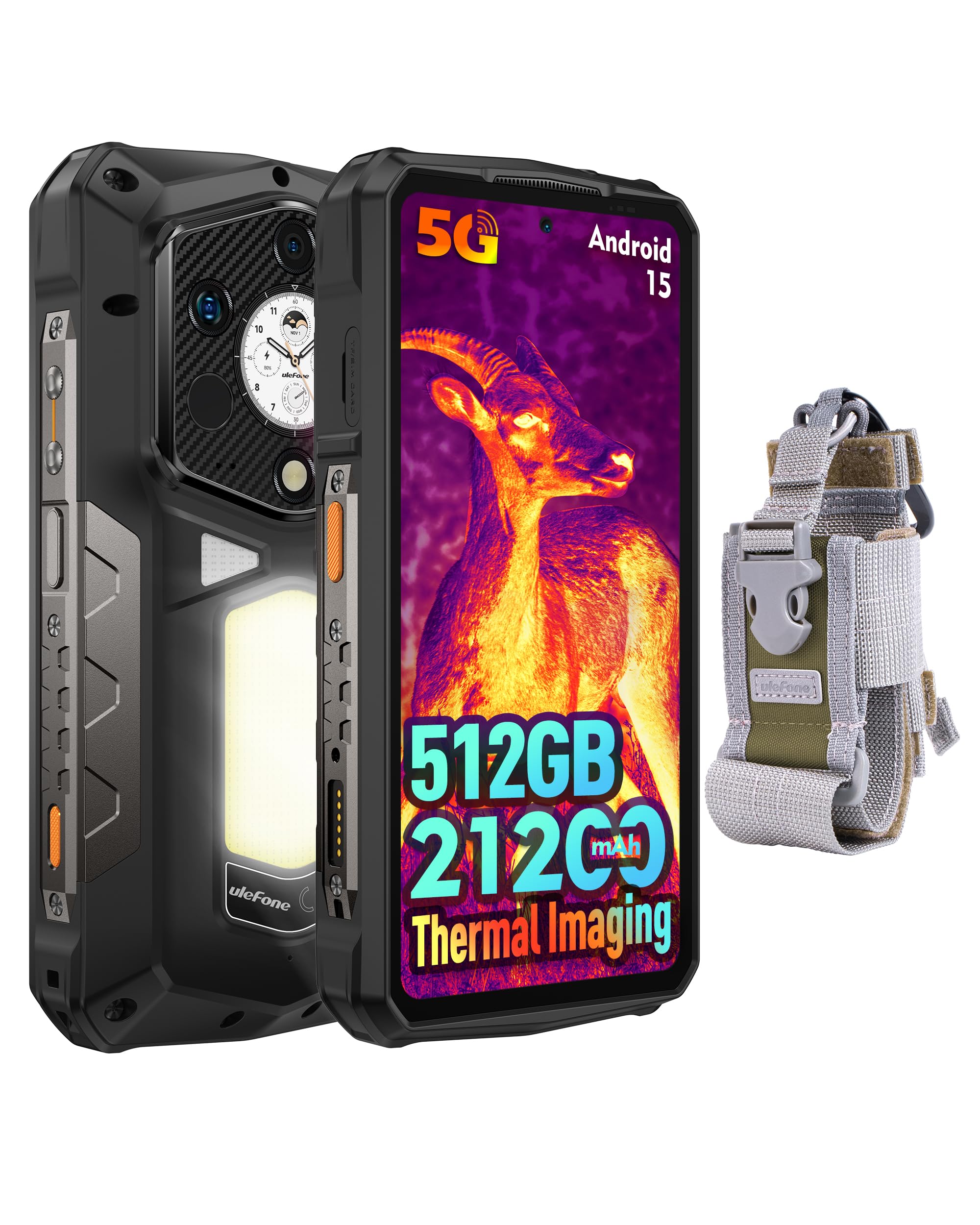
The Armor 29 Pro Thermal takes the crown by pairing a dedicated ThermoVue T2 thermal camera with a flagship-grade 640×512 resolution and a smooth 25Hz refresh rate — a pairing you normally only find in standalone inspection tools. The AI-enhanced dual-spectrum fusion overlays thermal data onto the standard camera view, making it extremely practical for electrical panel checks, HVAC diagnostics, or finding heat leaks in a building envelope. Sharpening the image is not a gimmick here; the SharpenAI algorithm genuinely reduces blur on those small, fast-moving temperature targets.
Beyond the thermals, this is a media powerhouse with a 6.67-inch flexible AMOLED display that hits 2200 nits peak brightness, so you can read schematics under direct sunlight. The 21200mAh battery with 120W fast charging means you can charge from nearly empty to about 20% in only 10 minutes, then keep running for 4-5 days of moderate use. The secondary 1.04-inch sub-display on the back provides at-a-glance notifications without waking the main screen, though it remains more of a convenience than a necessity. Camera performance is strong too, with a 50MP main sensor, 64MP night vision cam with quad IR LEDs, and a 50MP ultrawide lens, all delivering consistent, sharp results.
The 688-gram weight and MIL-STD-810H certification come as expected for a device this feature-dense. Wi-Fi 6E, Bluetooth 5.4, and a 3.5mm headphone jack round out the connectivity, while the uSmart expansion connector offers future add-ons. The only real trade-off is the lack of an optical telephoto lens and a slightly disappointing haptic motor, though neither detracts from its primary job as a rugged inspection tool. For professionals who need thermal vision and extreme battery life, this is the most balanced premium choice on the market.
Why it’s great
- Professional-grade 640×512 thermal camera with 25Hz refresh rate
- 21200mAh battery lasts up to 5 days, charges 20% in 10 minutes
- 6.67-inch 2200-nit AMOLED screen
- Excellent camera setup with 64MP night vision
Good to know
- Weighs 688g (1.5 lb)
- No optical telephoto lens
2. Ulefone Armor 34 Pro Plus
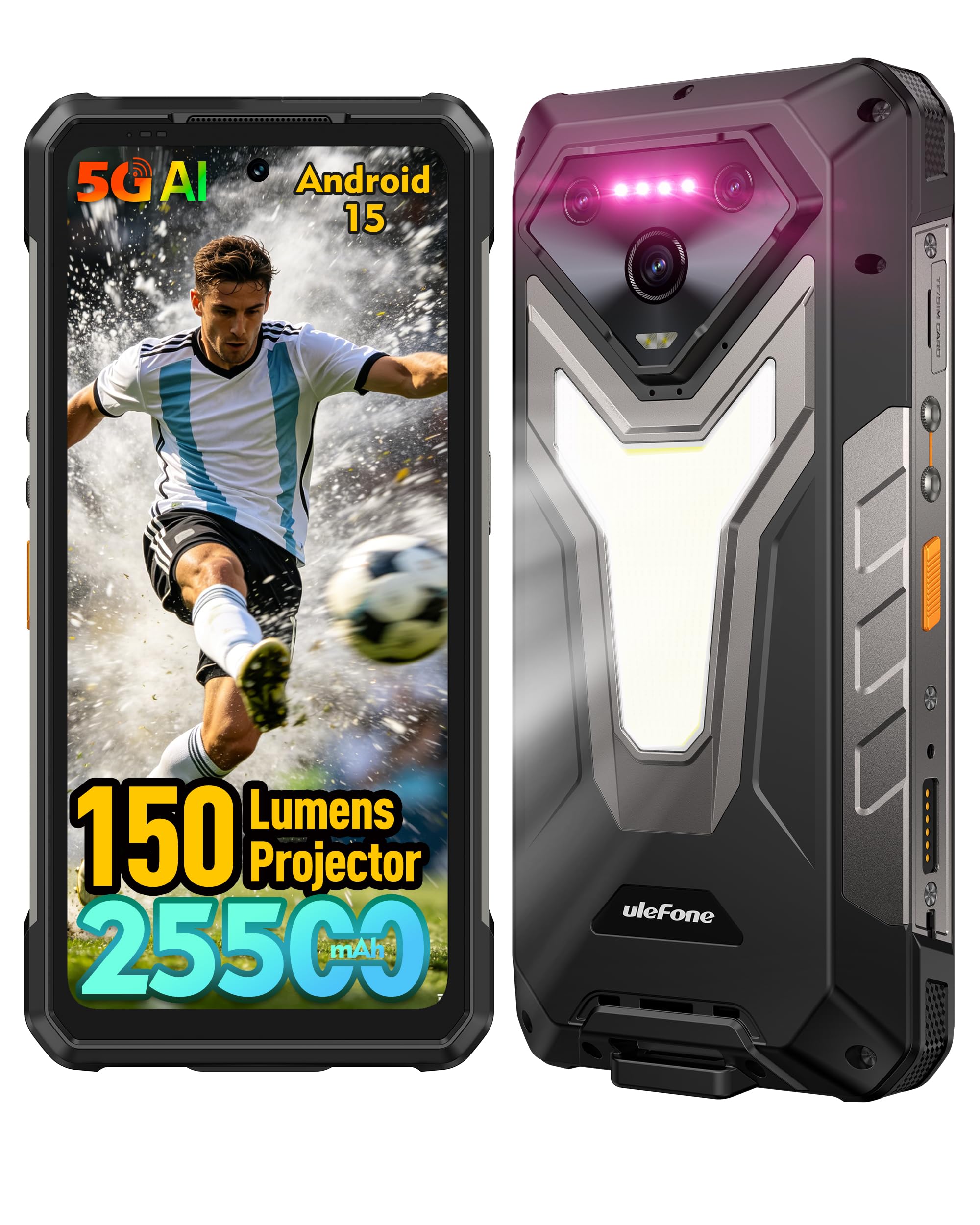
The Armor 34 Pro Plus is the phone for anyone who needs to present on the go. Its integrated DLP projector delivers 150 lumens at 854×480 resolution, with smart autofocus and ±40° keystone correction — enough to cast a usable 100-inch image from just three meters away. The 98 dB loudspeaker means you can actually hear a presentation or movie without external speakers, and the one-key projection shortcut makes it dead simple to activate. Widevine L1 certification ensures you can stream Netflix and other DRM content in high definition when projecting.
Battery endurance on this device is extraordinary, with a 25500mAh cell that easily delivers 8-10 days of moderate use and an estimated 138 hours of talk time. The 66W fast charging refills that massive battery reasonably fast, and the 10W reverse charging can top up your earbuds or a colleague’s phone in a pinch. Under the hood, the MediaTek Dimensity 7400X chip handles multitasking smoothly, while the 32GB of RAM (16GB physical + 16GB virtual) ensures apps stay running in the background without reloading. Storage is generous at 512GB, expandable to 2TB via microSD.
The camera system is equally robust: a 64MP night vision camera with quad IR LEDs captures clear images in pitch black, and the 50MP ultra-wide sensor offers a 117.3° field of view for landscape shots. The 1100-lumen camping light with red and blue warning lights adds genuine value for off-grid safety. However, at 825 grams (nearly 1.8 lbs), this is one of the heaviest phones on this list, and the projector resolution won’t replace a dedicated business projector. It is not compatible with AT&T or Cricket networks, so check your carrier before purchasing.
Why it’s great
- Built-in 150-lumen DLP projector with autofocus
- Massive 25500mAh battery lasts over a week
- 64MP night vision camera with quad IR LEDs
- Widevine L1 for HD streaming on projector
Good to know
- Extremely heavy at 825g (1.8 lbs)
- Not compatible with AT&T or Cricket
3. 8849 Tank X
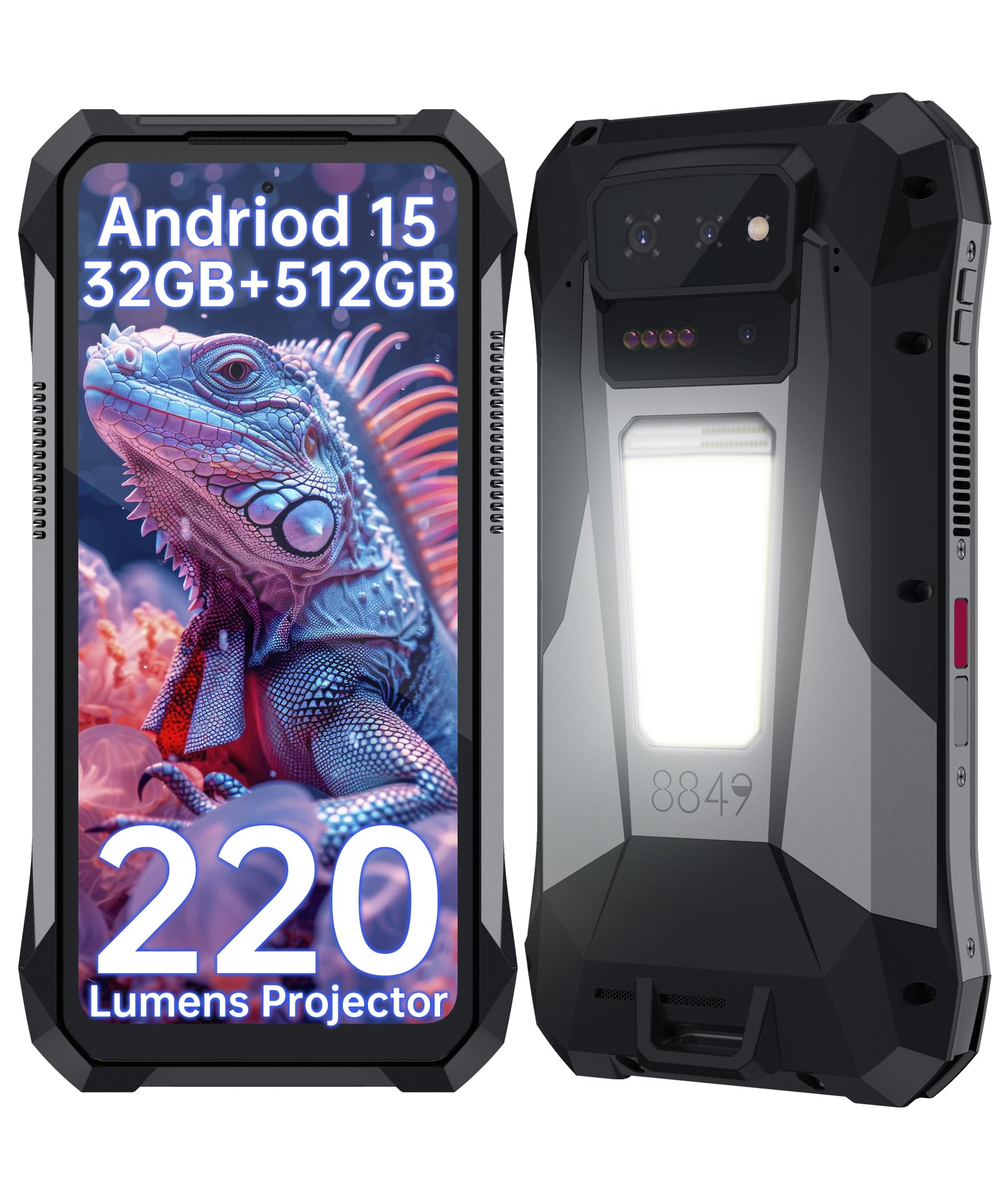
The Tank X jumps ahead of the Armor 34 Pro Plus in raw projection brightness, offering a 220-lumen DLP projector with a sharper 1080P resolution. Auto keystone correction and auto screen alignment mean you can set it up on a rock or a table without fiddling with manual sliders. The 120W fast charging is the fastest on this list alongside the Tank 3 Pro, refilling the 17600mAh battery to full in only about 70 minutes — a significant advantage when you’re moving between job sites.
Performance comes from a MediaTek Dimensity 8200 octa-core chip, paired with 32GB RAM (16GB physical + 16GB virtual) and 512GB of usable internal storage, with a microSD slot for up to 2TB more. The 6.78-inch LCD display runs at a smooth 120Hz and a resolution of 2460×1080, which is a bit lower pixel density than the AMOLED competitors but still crisp enough for outdoor viewing. The 50MP main camera with a 64MP night vision sensor and an 8MP telephoto lens gives you a versatile shooting setup, though the telephoto is more useful for framing than serious zoom work.
The 1200-lumen camping light is genuinely powerful, with five modes including SOS and strobe, and the IP68 + IP69K rating means you can rinse it off and keep going. A physical privacy button disables the cameras and microphone with one toggle, which is a rare and welcome security feature. On the downside, the fingerprint scanner can be buggy, and some users report that disabling the virtual RAM setting solves minor keyboard and performance quirks. The 5G bands work well with T-Mobile and Verizon but may not cover every carrier fully.
Why it’s great
- 220 lumens 1080P projector with auto correction
- 120W fast charging for 17600mAh battery
- Physical hardware privacy button
- Smooth Dimensity 8200 performance
Good to know
- LCD display, not AMOLED
- Fingerprint sensor can be unreliable
4. 8849 Tank 4 Pro

The Tank 4 Pro is built for those who refuse to compromise on display quality. Its 6.73-inch AMOLED panel runs at a sharp 1440×3200 resolution and a 120Hz refresh rate, with a peak brightness of 1800 nits — making it the best-looking screen in this entire roundup. Colors are vibrant, blacks are true, and outdoor visibility is excellent even under direct sunlight. The 100-lumen DLP projector (720P) with auto focus and keystone correction is a step down in spec from the Tank X, but still perfectly usable for sharing documents or casual movie nights.
Under the hood, the MediaTek Dimensity 8300 chipset handles the high-resolution display with ease, backed by 32GB of RAM (16GB physical + 16GB virtual) and 512GB of internal storage plus 2TB expandable. The 11600mAh battery is smaller than many competitors, but the 120W fast charging compensates by reaching a full charge in about 90 minutes. The camera setup is well-rounded: a 50MP main shooter, a 64MP night vision camera for low-light capture, a 50MP telephoto, and a 32MP front camera for video calls. The 1200-lumen camping light and red/blue warning lights are standard for this tier.
The phone’s relatively lighter weight (compared to the 800g+ monsters) makes it more pocketable, though it still carries a substantial heft. The main drawbacks are carrier compatibility — it works reliably with T-Mobile and Verizon, but some users report issues with Straight Talk and incomplete Verizon data connectivity. The active cooling fan is necessary to keep the chipset cool during extended projector use, and it adds a faint whir. If you prioritize a stunning AMOLED display above all else, this is your pick.
Why it’s great
- 6.73-inch 1440×3200 AMOLED, 1800 nits peak
- MediaTek Dimensity 8300 chipset
- 120W fast charging
- Versatile camera system with telephoto
Good to know
- Battery smaller than competitors at 11600mAh
- Some carrier compatibility issues reported
5. Samsung Galaxy Xcover7 Pro
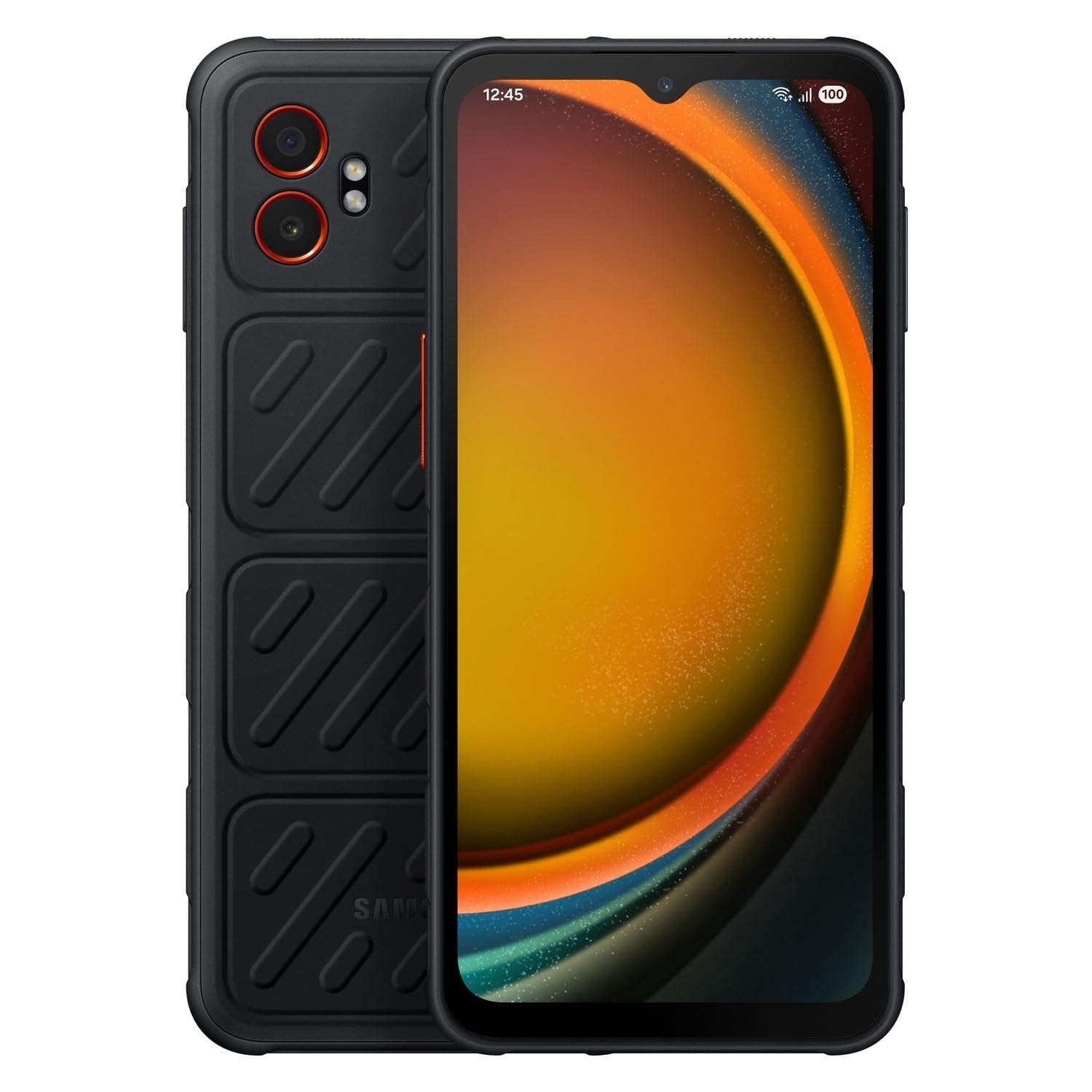
The Xcover7 Pro stands apart from the rest of this list because it is first and foremost a Samsung enterprise device, not a niche rugged phone from a specialist brand. It weighs just 240 grams, making it the lightest phone here by a massive margin, and it retains a removable battery for hot-swapping — a feature nearly extinct in modern smartphones. The 6.6-inch screen and 128GB internal storage (expandable via microSD) are modest, but the dual speakers deliver genuinely loud audio that cuts through construction noise.
Performance is mid-range, running Android 15 with Samsung’s enterprise-grade Knox security platform. The phone handles work apps, navigation, and communication tools smoothly, but it is not designed for intensive gaming or heavy multitasking. The 4350mAh battery is small by rugged standards, but the removable design means you can carry a spare and swap it instantly — a major advantage for field workers who can’t afford downtime. The glove touch sensitivity is excellent and responds reliably even with thick work gloves. Carrier compatibility is the best in this category, as Samsung phones support all major US networks out of the box.
The trade-offs are substantial for power users: the camera is average at best, there is no thermal imaging or projector, and the included 6GB of RAM feels modest in 2025. It also lacks IP69K certification, so high-pressure water jets are a risk. This phone makes sense for fleet managers, logistics workers, or anyone who needs a light, reliable, and rugged device that integrates seamlessly with enterprise MDM solutions. For hardcore outdoor enthusiasts who want toys and massive battery life, it will feel under-equipped.
Why it’s great
- Ultra-lightweight at 240g
- Removable battery for hot-swapping
- Best carrier compatibility for US networks
- Samsung Knox enterprise security
Good to know
- Small battery and modest RAM/storage
- No thermal camera, projector, or advanced sensors
6. 8849 Tank 3 Pro

The Tank 3 Pro makes a strong argument for the “set it and forget it” crowd with its 23800mAh battery that easily lasts 4-7 days of mixed use, and the included 120W charger refills it to 90% in about 90 minutes. The 100-lumen projector (854×480) is modest compared to newer models, but it still works well for casual presentations and movie nights in a dark room. The 1200-lumen camping light doubles as an emergency strobe with red/blue warning signals, adding an extra layer of safety for nights in the backcountry.
The MediaTek Dimensity 8200 processor handles day-to-day tasks with ease, and the 32GB RAM (16GB + 16GB virtual) with 512GB of storage leaves no room for compromise. The camera system is surprisingly capable for a rugged phone: a 200MP main camera delivers detailed daytime shots, while the 64MP night vision sensor with IR LEDs is effective in total darkness. The 6.79-inch display is a 120Hz FHD+ panel, not AMOLED, so colors aren’t as punchy as the Tank 4 Pro, but it’s bright enough for outdoor use. The underwater camera mode is a fun bonus, though it only captures stills, not video.
Carrier compatibility is a potential headache — 5G only works reliably on T-Mobile, and AT&T users may be stuck with 4G. The phone is noticeably heavy at 696 grams and requires two hands for comfortable operation. Some users have also reported Bluetooth connectivity issues with car audio systems. For campers and field workers who absolutely need the longest possible battery life and a built-in projector, this remains a compelling option, especially if you can find it at a discount.
Why it’s great
- 23800mAh battery — 4-7 day endurance
- 200MP main camera for detailed shots
- 120W fast charging
- 1200-lumen camping light with warning signals
Good to know
- 5G not supported on AT&T
- Bluetooth car connectivity can be unreliable
7. FOSSIBOT F115 Ultra
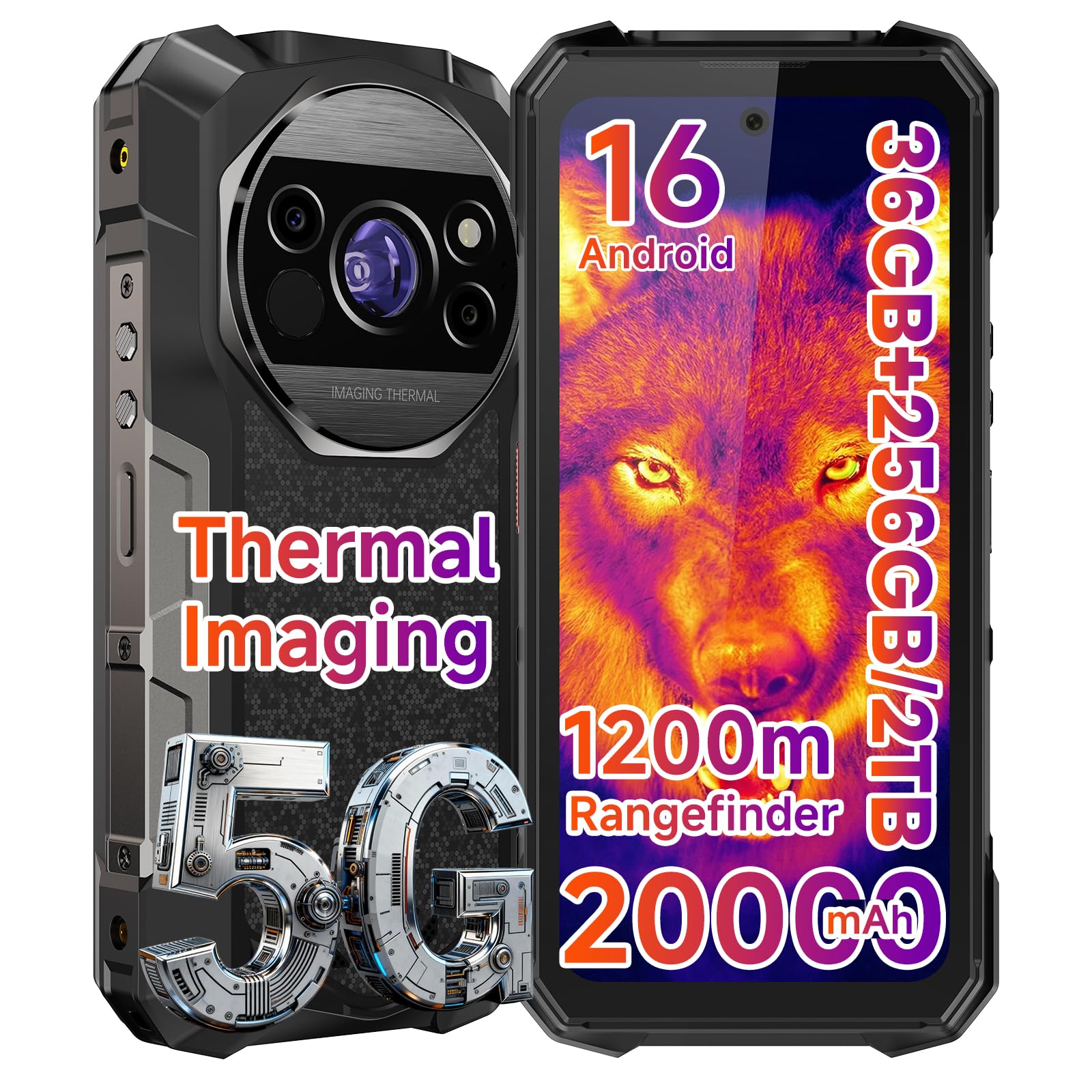
The F115 Ultra is the Swiss Army knife of rugged smartphones, packing a 1200-meter laser rangefinder with 17 measurement modes (distance, height, area, angle) and a thermal imaging camera with a -20°C to 550°C range. The 64MP night vision camera with four infrared LEDs can capture 4K footage in complete darkness up to 50 meters away, and the 10X hybrid zoom helps you inspect distant structures or wildlife. For engineers, surveyors, and facility managers, this device replaces multiple dedicated tools in one rugged package.
The MediaTek Dimensity 7100+ chip and 36GB of RAM (12GB + 24GB virtual) handle simultaneous thermal and rangefinder tasks without stuttering. The 20000mAh battery is a solid choice, delivering a full week of moderate use, and the 33W fast charging is slower than the competition but still adequate. The 6.78-inch 120Hz LCD display is covered by Corning Gorilla Glass, and the wet/glove touch support is genuinely responsive even in rain. Android 16 ships out of the box, offering the latest privacy and battery optimization features.
The phone is large and heavy, as expected, and the 33W charging speed feels slow compared to the 120W rivals. More importantly, like many Chinese rugged phones, it is not compatible with AT&T or Verizon, limiting you to T-Mobile and its MVNOs. The software experience is near-stock Android with minimal bloat, but the virtual RAM feature can cause minor app instability in some cases. For field professionals who need a laser and thermal tool in their pocket, the F115 Ultra is unmatched in this price range.
Why it’s great
- Built-in 1200m laser rangefinder with 17 measurement modes
- Thermal imaging camera (-20°C to 550°C)
- 64MP 4K night vision up to 50 meters
- Runs Android 16 out of the box
Good to know
- 33W charging is slower than competitors
- Not compatible with AT&T or Verizon
8. Kyocera DuraForce Ultra 5G UW

The DuraForce Ultra 5G UW is a unique entry because it’s one of the few rugged phones designed specifically for the Verizon mmWave network. The Snapdragon 765G handles push-to-talk over ultra-wideband with low latency, making it a favorite for teams that rely on instant radio-style communication. The triple camera system — 24MP main, 16MP wide-angle, and 8MP front — is adequate for documentation, and the underwater camera mode lets you capture images while submerged. The Sapphire Shield display is impressively scratch-resistant, and the textured edges make one-handed operation possible even with wet gloves.
The 4500mAh battery is disappointing compared to the competition, offering only a day of moderate use. Wireless charging helps offset the smaller capacity, but you will need to recharge daily. The phone is MIL-STD-810H certified and IP68 rated, but the lack of IP69K means you should avoid high-pressure washdowns. The built quality feels tank-like, with reinforced corners and a rubberized bumper that has survived ocean drops and being run over by a tractor in one owner’s anecdote. The software experience is close to stock Android, and the phone is highly customizable via programmable buttons.
Customer reviews are polarized: some praise its indestructible build and reliable push-to-talk, while others report screen popping, random factory resets, and poor battery life after 2.5 years. The aging hardware (released in 2021) means performance is noticeably behind modern rugged phones, particularly in camera quality and display brightness. For Verizon enterprise users who need push-to-talk and mmWave 5G, this is a niche but capable tool. For everyone else, the newer options on this list offer much more value.
Why it’s great
- Designed for Verizon mmWave 5G and PTT
- Extremely durable Sapphire Shield display
- Underwater camera mode
- Wireless charging support
Good to know
- Small 4500mAh battery, needs daily charging
- Aging hardware from 2021
- Mixed reliability reports
9. FOSSIBOT F113
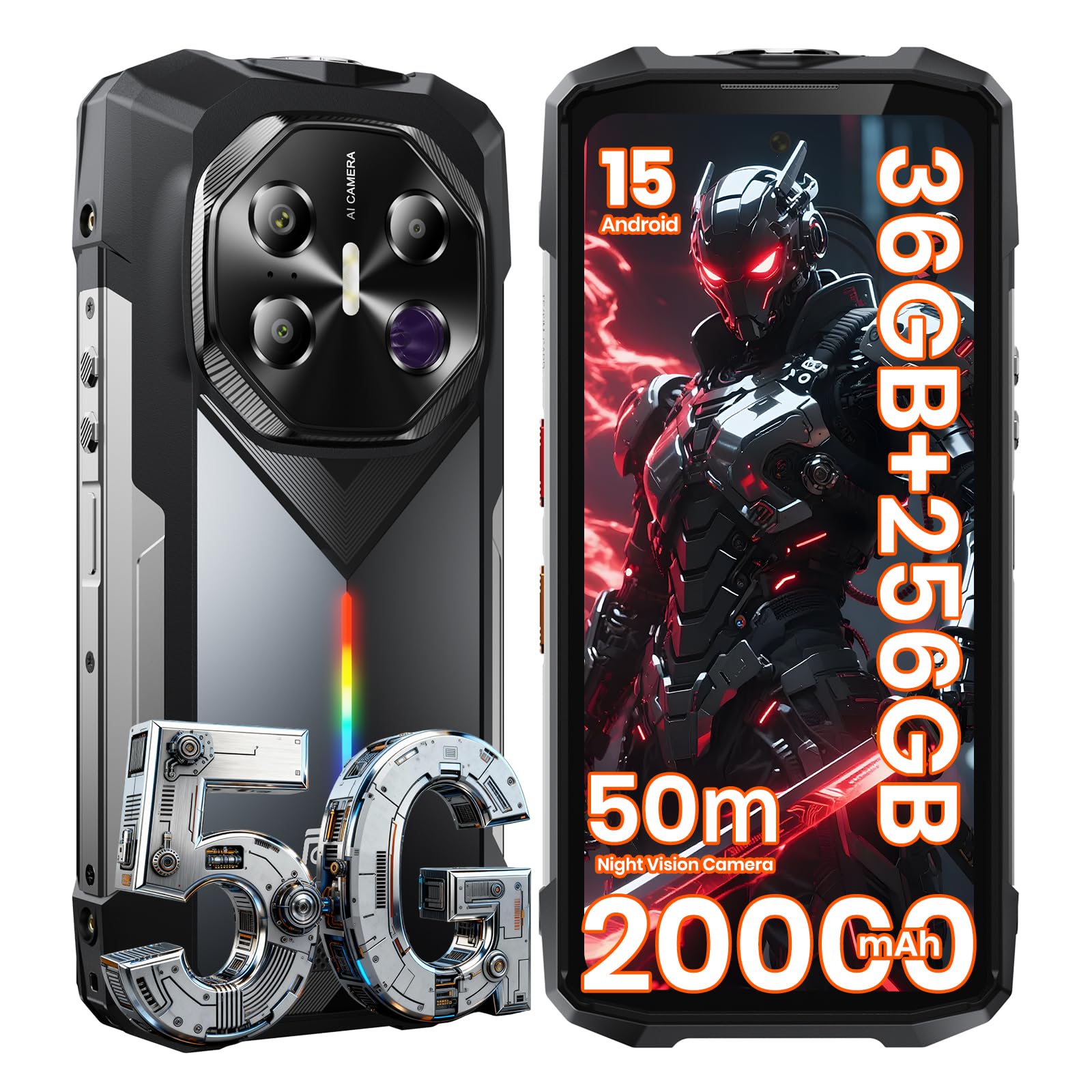
The FOSSIBOT F113 offers an honest mid-range value proposition: a solid 20000mAh battery, a capable 50MP night vision camera, and a smooth 120Hz 6.78-inch display at a price that won’t break the bank. It lacks the fancy projectors, thermal sensors, and laser rangefinders of the premium models, but it nails the fundamentals of a rugged phone — long battery life and durable construction. The IP68 rating and MIL-STD-810H certification are standard, and the included K-class amplifier delivers loud, clear audio for calls and media.
Performance is powered by a mid-range 5G chipset with 36GB RAM (12GB + 24GB virtual) and 256GB of internal storage, expandable up to 2TB. The camera system is straightforward but effective: the 50MP main sensor with its large aperture handles daytime shots well, and the dedicated night vision mode using infrared LEDs is genuinely useful for inspecting dark spaces. The RGB side lighting is a nice touch for notifications and ambiance, but it’s more of a novelty than a necessity. Android 15 provides a clean, near-stock experience with minimal unnecessary apps.
The F113 is noticeably chunkier and heavier than standard phones, though not unusual for its battery size. The display, while smooth at 120Hz, is an LCD panel rather than AMOLED, so colors are less vivid. The biggest downside is the same carrier limitation — it may not support AT&T or Verizon’s 5G bands fully. For users who need a simple, durable phone with excellent battery life and are willing to stick with T-Mobile or an MVNO, the F113 is a fantastic budget-friendly pick.
Why it’s great
- 20000mAh battery lasts 6+ days
- Excellent 50MP night vision camera
- 120Hz smooth display
- Loud K-class audio amplifier
Good to know
- LCD display, not AMOLED
- Carrier compatibility limited to T-Mobile
10. Blackview Rock 2 Pro
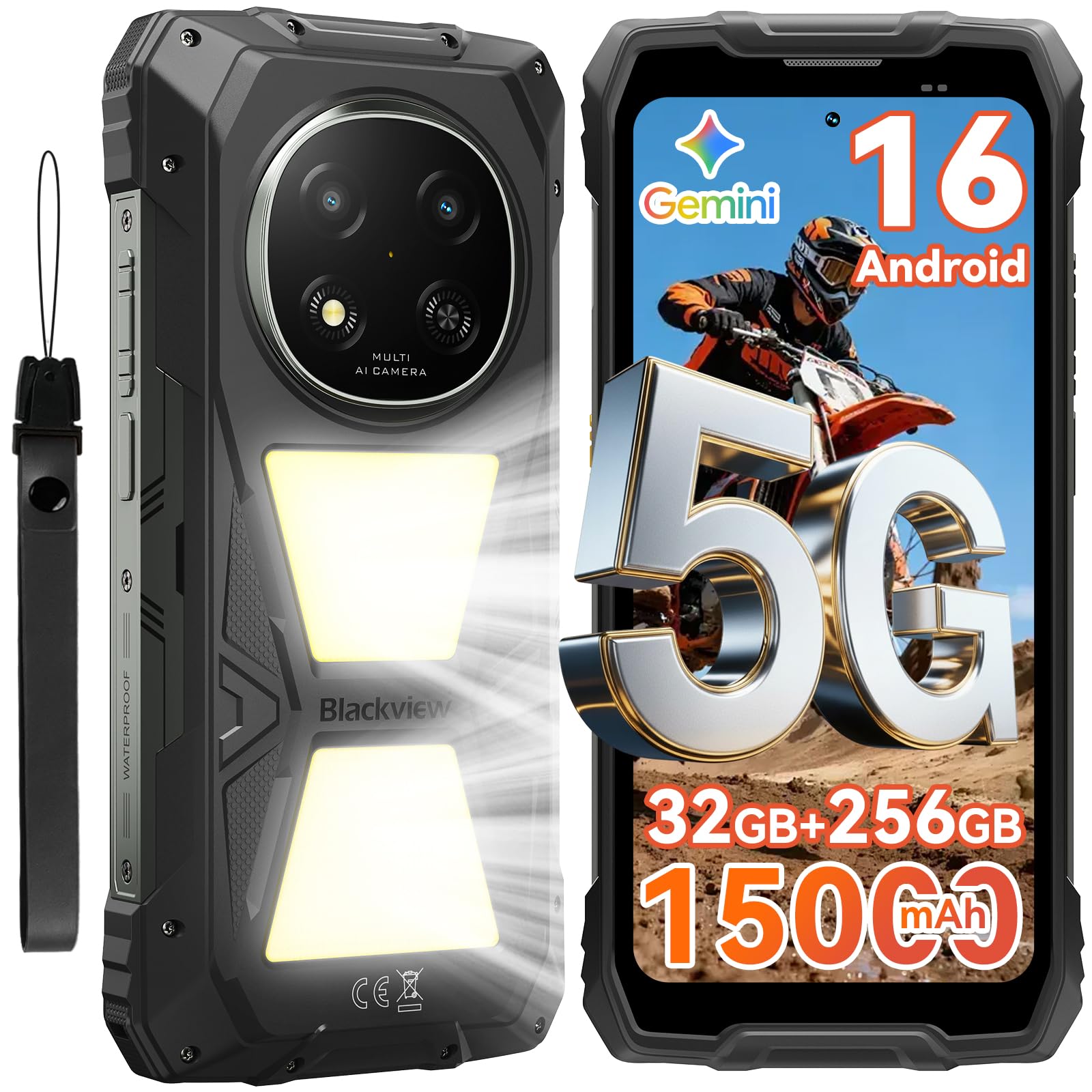
Blackview’s Rock 2 Pro proves you don’t need to spend a fortune to get a capable 5G rugged phone. The 15000mAh battery easily lasts a week for moderate users, and the dual 400-lumen camping lights with multiple modes (steady, SOS, strobe) are genuinely useful for nighttime camping or power outages. The MediaTek UMS9620 chipset handles everyday apps and social media without lag, and the 32GB of RAM (8GB physical + 24GB virtual) with 256GB of storage offers smooth multitasking.
The 6.67-inch 120Hz display is decent for an entry-level device, though the 450 nits brightness struggles under direct sunlight compared to the premium AMOLED options. The 16MP main camera is adequate for documentation but won’t win any photography awards. IP68/IP69K and MIL-STD-810H certification give you peace of mind against water, dust, and drops. Glove mode works reliably, making it practical for cold weather or workshop use. The phone ships with Android 16, which is surprising at this price point and offers modern privacy features.
The Rock 2 Pro is not compatible with AT&T or Verizon, so you are limited to T-Mobile and its MVNOs. The 558-gram weight is notable, and customers consistently mention the bulk as something to consider. The software experience includes Blackview’s DokeOS, which adds some customization but isn’t as clean as stock Android. For budget-conscious buyers who need a rugged phone with good battery life and core 5G connectivity, the Rock 2 Pro is a compelling entry-level option.
Why it’s great
- 15000mAh battery delivers week-long endurance
- Dual 400-lumen camping lights with SOS mode
- Runs Android 16 out of the box
- IP68/IP69K certified
Good to know
- Camera quality is basic at 16MP
- Heavy at 558g
- Not compatible with AT&T or Verizon
11. MMY 16PROMA X
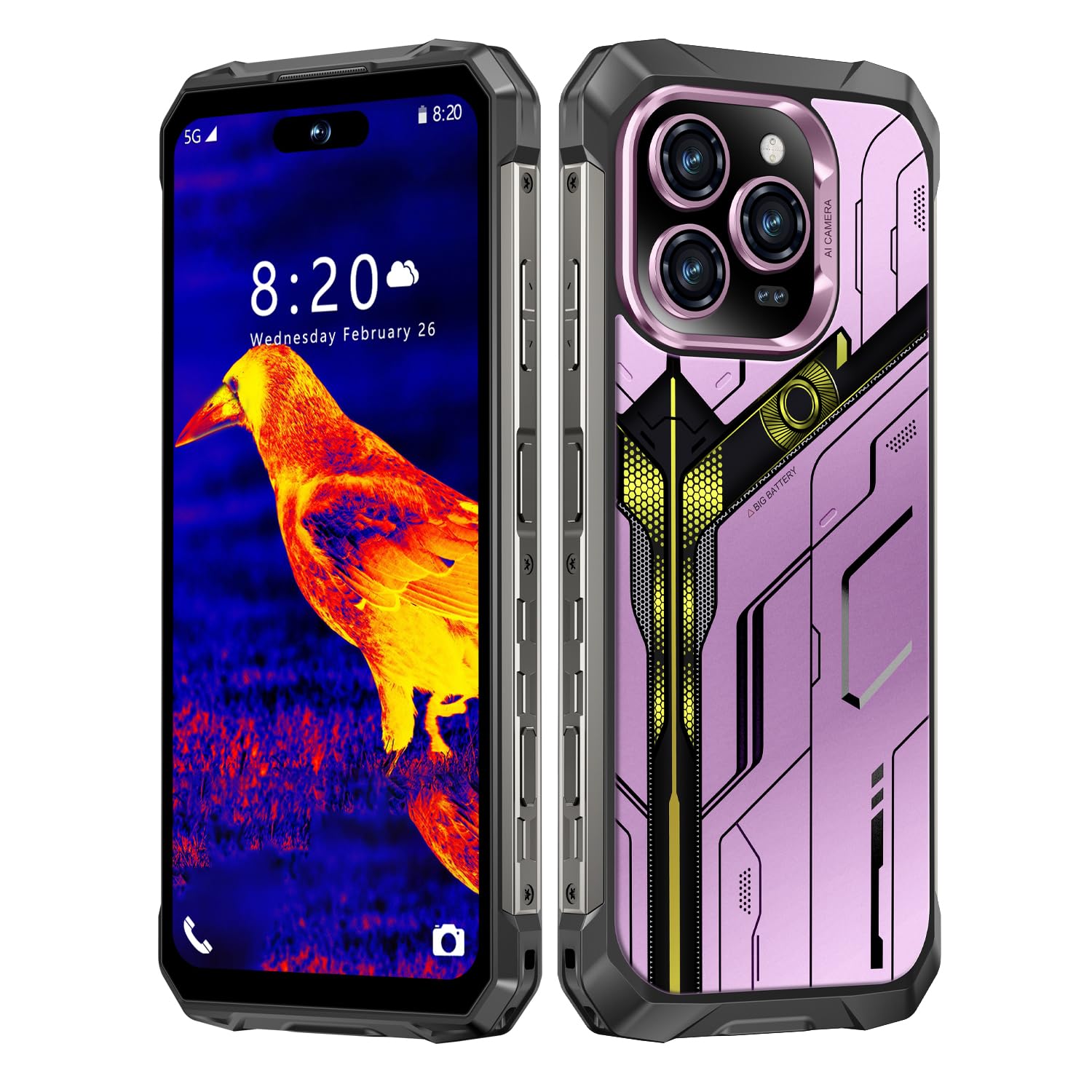
The MMY 16PROMA X targets the absolute entry-level price point with a massive 22000mAh battery, a 108MP main camera, and a claimed Snapdragon 8 Gen 4 chipset that feels too good to be true at this budget. The 6.99-inch HD+ display with an OLED panel is an unusual find at this tier, and the 1440×3040 resolution looks good on paper. The phone also includes NFC for payments and an infrared blaster for controlling appliances, adding genuine utility.
However, the budget price comes with significant caveats. Reviews are scarce and largely focus on accessories like cases rather than the phone itself, which suggests the brand may not have a strong track record. The claimed chipset and camera specs should be viewed with skepticism — budget rugged phones often exaggerate hardware. The phone supports underwater photography and night vision, but real-world image quality is likely to be mediocre. IP68 water resistance is listed, but the build quality may not match the rigorous testing of established brands.
The MMY 16PROMA X is best seen as a gamble for extreme budget seekers who prioritize battery capacity above all else. If you accept that the camera and processor may not deliver flagship-level performance, the phone offers a large screen and a massive battery for a very low investment. For reliable performance and guaranteed durability, you are better off spending slightly more on a Blackview Rock 2 Pro or a FOSSIBOT F113. This phone is only for the most price-sensitive buyers who are willing to take a risk.
Why it’s great
- Massive 22000mAh battery
- 6.99-inch OLED display
- NFC and infrared blaster included
- Bottom-of-the-barrel pricing
Good to know
- Brand and specs not verified
- Likely mediocre camera and build quality
- Very few user reviews for the phone itself
FAQ
Can a rugged 5G smartphone replace my work laptop or tablet?
Why do many rugged phones not work with AT&T or Verizon?
Is a built-in projector worth the added weight and cost?
How important is thermal imaging for non-professionals?
Can I use a rugged phone for everyday tasks like banking and social media?
Final Thoughts: The Verdict
For most users, the best 5g rugged smartphone winner is the Ulefone Armor 29 Pro Thermal because it combines a genuinely useful professional-grade thermal camera, a stunning AMOLED display, and class-leading 21200mAh battery life with 120W fast charging — all in a single device that leaves almost no compromises. If you need a built-in projector for presentations and sharing content on-site, grab the Ulefone Armor 34 Pro Plus for its 150-lumen projector and massive 25500mAh battery. And for enterprise fleets or lightweight fieldwork, nothing beats the Samsung Galaxy Xcover7 Pro for its reliable carrier support, removable battery, and featherweight 240-gram build.