
Our readers keep the lights on and my morning glass full of iced black tea. As an Amazon Associate, I earn from qualifying purchases.
Specs are compiled from manufacturer listings and verified buyer reviews and can change over time — please confirm the key details on the product page before buying.
Where you plan to bolt your rack decides which one you should buy. A 5U rack (five rack units tall, the smallest size that still holds a real network stack) fits a patch panel, a switch or two, and often a UPS. The four picks below split into two jobs: wall-mounted metal enclosures that lock your gear behind a door, and a lightweight wooden carry rack you move from gig to gig.
I’m Min — the founder and writer behind Gadgets Feed. This guide is built by comparing the manufacturers’ published specifications and the patterns across verified customer reviews, so you get each pick’s real strengths and trade-offs instead of marketing spin.
Rack-unit count, mounting style, and usable depth decide nearly everything here, and the picks below cover both the bolted-to-the-wall and the carry-it-out-the-door approaches. If you are weighing a permanent installation against a portable audio rack, this breakdown of the best 5u server rack options should make the decision quick.
Our Picks at a Glance
How To Choose The Best 5U Server Rack
Four things decide whether a 5U rack works in your space: how it mounts, how deep it goes, how much weight it holds, and if you need to lock it. The order matters, because a rack that mounts the wrong way never gets installed at all.
Wall-Mounted Versus Floor And Carry Racks
A wall-mounted rack cabinet (a metal box you bolt to a wall so your switches and patch panels hang out of the way) suits a closet, IDF room, or warehouse wall. A vertical wall cabinet turns your equipment sideways so a deep server sits parallel to the wall instead of sticking out into the room. A straight-through equipment rack lays gear flat and usually sits on a desk or floor — it travels well but offers less protection. Decide which of those two your gear needs before you compare any other spec.
Why Depth Decides Your Server Choice
Depth is the rack’s front-to-back interior room, and it quietly rules out hardware. A switch or patch panel needs very little depth; a rackmount server needs a lot. The vertical cabinets here run deep enough for real servers, while the shallow wooden rack tops out far shorter — so if a full-depth server is in your plan, check depth before anything else.
Load Rating, Locks, And Ventilation
Weight capacity tells you what the rails and cabinet walls will carry over years, not weeks. A steel cabinet rated for heavy loads suits long-term installations, while a light wooden rack suits gear you lift in and out. A locking door keeps people out of a shared space. Perforated or vented panels let hot air escape, which matters if anything with a fan lives inside.
Quick Comparison
| Model | Best For | Mounting Type | Depth | Item Weight | Amazon |
|---|---|---|---|---|---|
| Tripp Lite SRWF5U★ Best Overall | Switch-depth wall cabinets | Wall Mount | 20″ | 49 pounds | Amazon |
| 5U Procraft SRC-5U-12-SH | Portable audio and studio racks | Strap | 12″ | 13 pounds | Amazon |
| NavePoint 5U Vertical Enclosure | Deep gear in tight wall space | Wall Mount | 23.6″ | 66.1 pounds | Amazon |
| Tripp Lite SRWF5U36 | Full-depth rackmount servers | Wall Mount | 36″ | 66.1 pounds | Amazon |
In‑Depth Reviews
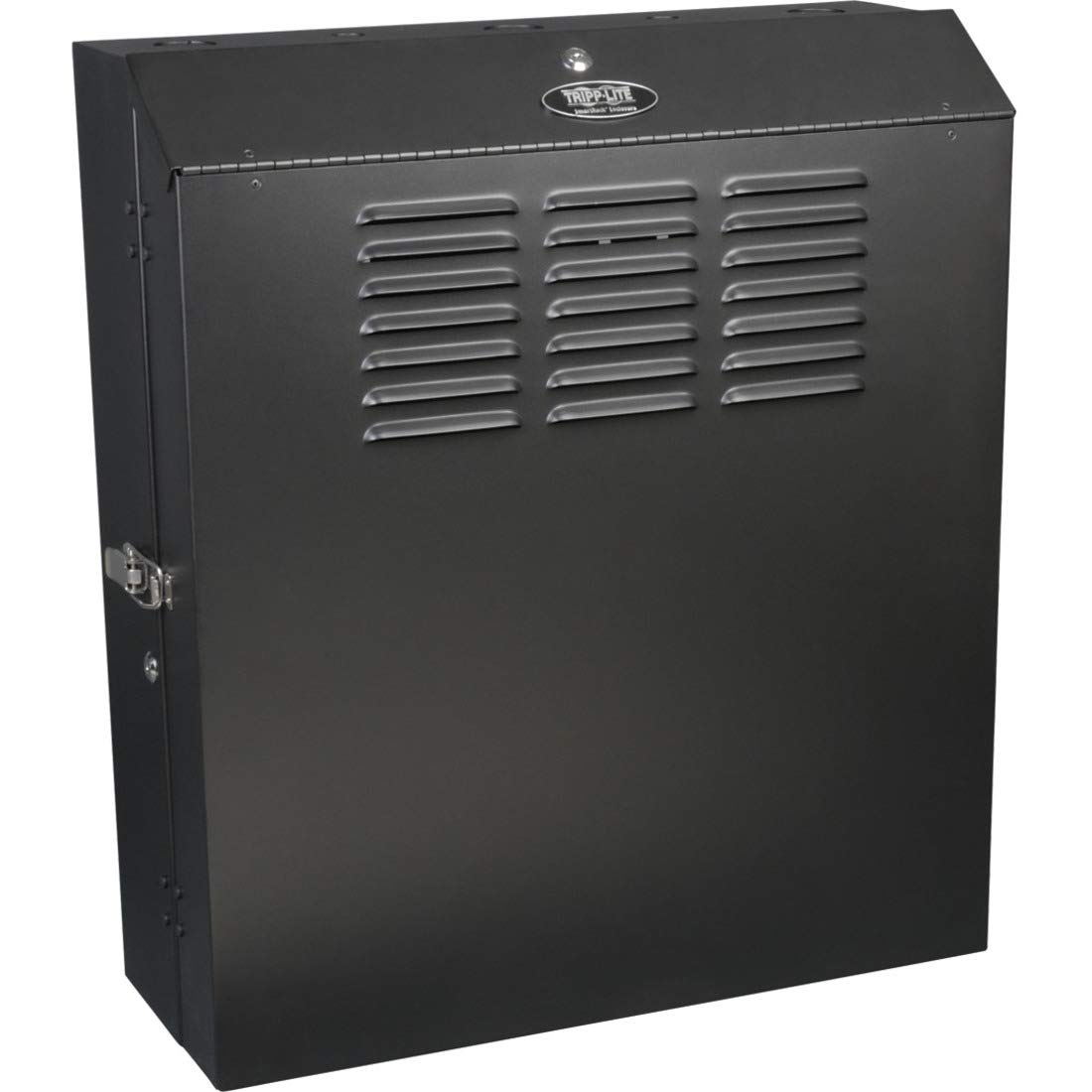
1. Tripp Lite 5U Vertical Wall Mount Rack Enclosure Cabinet, Low Profile, Switch-Depth, 20″ Deep, Black (SRWF5U)
Our pick — 4.5★ from 20+ verified ratings; the strongest balance of quality and price.
Ships assembled, hangs on the wall, and hides your entire switch stack behind a locked door.
If your gear list is switches, patch panels, and a small UPS — not a full-depth server — this is the cabinet that makes the job boring in the best way. It measures 20 inches deep, which is the switch-depth figure in its name, so it sits flatter against a wall than the 36-inch Tripp Lite SRWF5U36 further down this list. A 5U interior gives you five rack units of usable height, enough for the typical network closet stack.
What it does for you in daily use: the door reverses and locks, the rails adjust, and the whole thing arrives fully assembled, so install day is drilling and hanging rather than bolting a kit together. Buyers report putting two of them into a warehouse to add network switches for an IP camera deployment, and that scene is exactly what this box is shaped for — a wall run of camera switches you never want to touch again. It also meets PCI DSS enclosure requirements, which matters if your site audits how cardholder-data hardware is physically secured.
The catch is the box it travels in. At least one buyer opened a cabinet that had arrived bent and scratched, said function was unaffected, and kept it anyway. The hardware itself draws a lighter, more pleasant note — it is a nicely made unit that is easy to work with, and the included screws, cup washers, keys, and manual mean you are not chasing fasteners the same day. Backed by a five-year warranty, the longest coverage in this comparison.
The Daily Reality
- Arrives fully assembled with rack hardware, M6 screws, cup washers, keys, and a manual in the box
- Adjustable and reversible rails plus a reversible locking front door
- 20-inch depth keeps it tight to the wall — far shallower than the 36-inch SRWF5U36 below
- 5-year warranty, the longest in this comparison
Before You Order
- Switch-depth only — a deep rackmount server will not fit
- Shipping has left some units arriving bent or scratched, though they still function
- No sliding rails for recessed vertical mounting covered here
Reach for this if: you are wall-mounting switches, patch panels, and a small UPS in a closet or warehouse and want a locked, pre-built cabinet.
Look elsewhere if: your equipment list includes a long rackmount server — the 36-inch depth cabinet is the one built for that.
2. 5U Procraft 12″ Deep Equipment Rack 5 Space w/Rack Screws Made in USA

A 13-pound wooden rack with a carry handle — built for gear that leaves the studio.
Here is the weight story in one line: at 13 pounds, this Procraft is the rack you lift with one hand, and the NavePoint vertical enclosure below runs 66.1 pounds — the gap between the two is one of the biggest in this whole roundup. It stands 8.88 inches tall against the NavePoint’s 30.93 inches, and it is the only rack here with a strap handle and a 21.25-inch width, so it behaves like a piece of portable furniture rather than a bolted-down cabinet.
Inside, the 12-inch depth and 19-1/8-inch-wide rack opening are set up for audio gear rather than servers. A 6-channel mixer amplifier that had lived on a shelf for twenty years finally got a home here, and once the little legs came off, it dropped straight in. If your world is amplifiers, mixers, and outboard gear, that is the fit you want. The rail is installed half an inch from the front edge, which lets you recess equipment so knobs and buttons do not stick out past the face — a small detail that saves your gear from an accidental bash.
Construction is 3/4-inch plywood with rabbet joints that are screwed and glued, wrapped in black automotive-grade carpet and ringed with protective nylon corners. The steel-reinforced strap handle is strong enough for a fully loaded box. Two honest notes: the rack does not include front or rear lids, so it is not a sealed road case, and the 12 screws included have struck at least one buyer as too few for a five-space unit. Neither is a defect — they are simply the terms of a rack this light and this affordable.
What earns its keep: the screwed-and-glued plywood build with steel-reinforced handle and nylon corners, at a weight you can carry up a stairwell by yourself.
The fine print: no front or rear lids, and the screw count is on the lean side — budget for a fuller set if you are loading all five spaces.
The verdict: the obvious pick for musicians and audio engineers who rack gear on a desk and then move it, and who value a light box over a locked one.
Second thought: if your equipment needs to be locked away or ventilated, a steel wall cabinet is the better home.
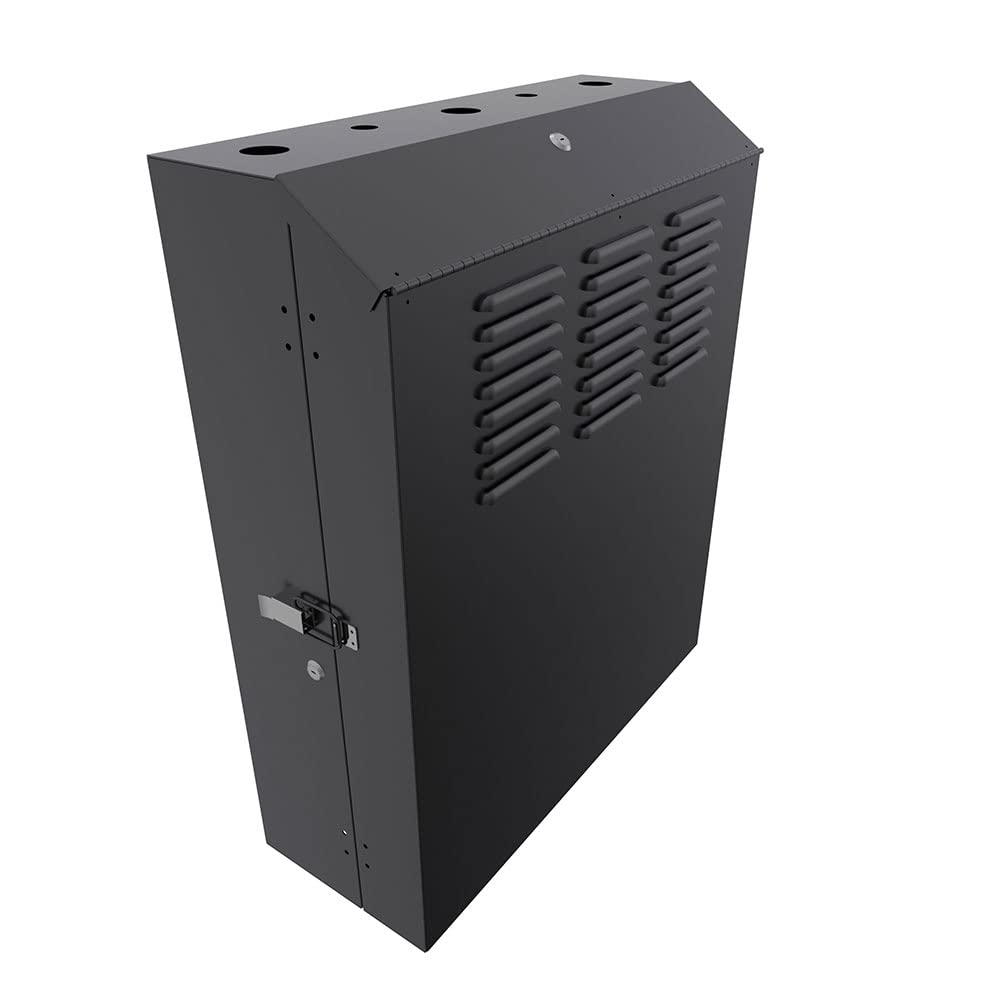
3. NavePoint 5U Vertical Server Rack Enclosure, Low Profile, 23.6″ Deep, Max Weight Capacity 132lbs – 5U Network Cabinet Vertical Wall Mount, Perforated, Black
Adjustable rails and a 132-pound load rating, sized for gear that is deeper than a switch.
Start with the two numbers that matter when the box is on your wall. The depth slides between 20.6 and 23.6 inches, so you can tune it to your equipment rather than the other way around — noticeably deeper than the Procraft’s 12 inches in the table above. And the load rating sits at 132.27 pounds, which answers the question of whether this cabinet will hold a small server, UPS, and a couple of switches at once without sagging.
The practical win, though, is access. Removable lockable side panels and a top cover mean you can reach the front of your gear without pulling the whole cabinet off the wall, and the customer who installed one for a small office liked exactly that — a low-profile cabinet holding a server, a UPS, and two switches, easy to mount, with every piece of hardware supplied. Perforated side panels let heat escape, and top and bottom cable access ports keep the wiring tidy. Built from 16-gauge cold-rolled steel (a thick, sturdy steel sheet) with a black electro-static powder-coat finish, it arrives fully assembled with M6 and 12-24 threaded rails already in place.
Two things to size up honestly before you buy. The build quality and the size both draw mixed reactions — some owners find the cabinet solid and roomy, others find the metal thinner than they expected or the unit bigger than the photos suggested. The screw-hole taps also get flagged: one buyer needed a tap and die set before the included screws would bite, and the thick steel makes that job harder. Check the 30.93-inch height and 9.75-inch width against your wall first, and eye the taps on arrival.
The strongest argument: an adjustable 20.6-to-23.6-inch depth and a 132.27-pound load rating give you more usable server room than anything else here at this price band.
Worth knowing: the customer reports on build quality and size both run mixed — plan for the possibility of cleaning up a few threaded holes and measure your wall cavity first.
Who it suits: installers who need a lockable, adjustable-depth wall cabinet for servers and switches in a tight space and value the removable side panels for future maintenance.
Who should look at the Tripp Lite instead: buyers who want a lighter, shallower cabinet for switches only and would rather not wrestle with tight screw taps.
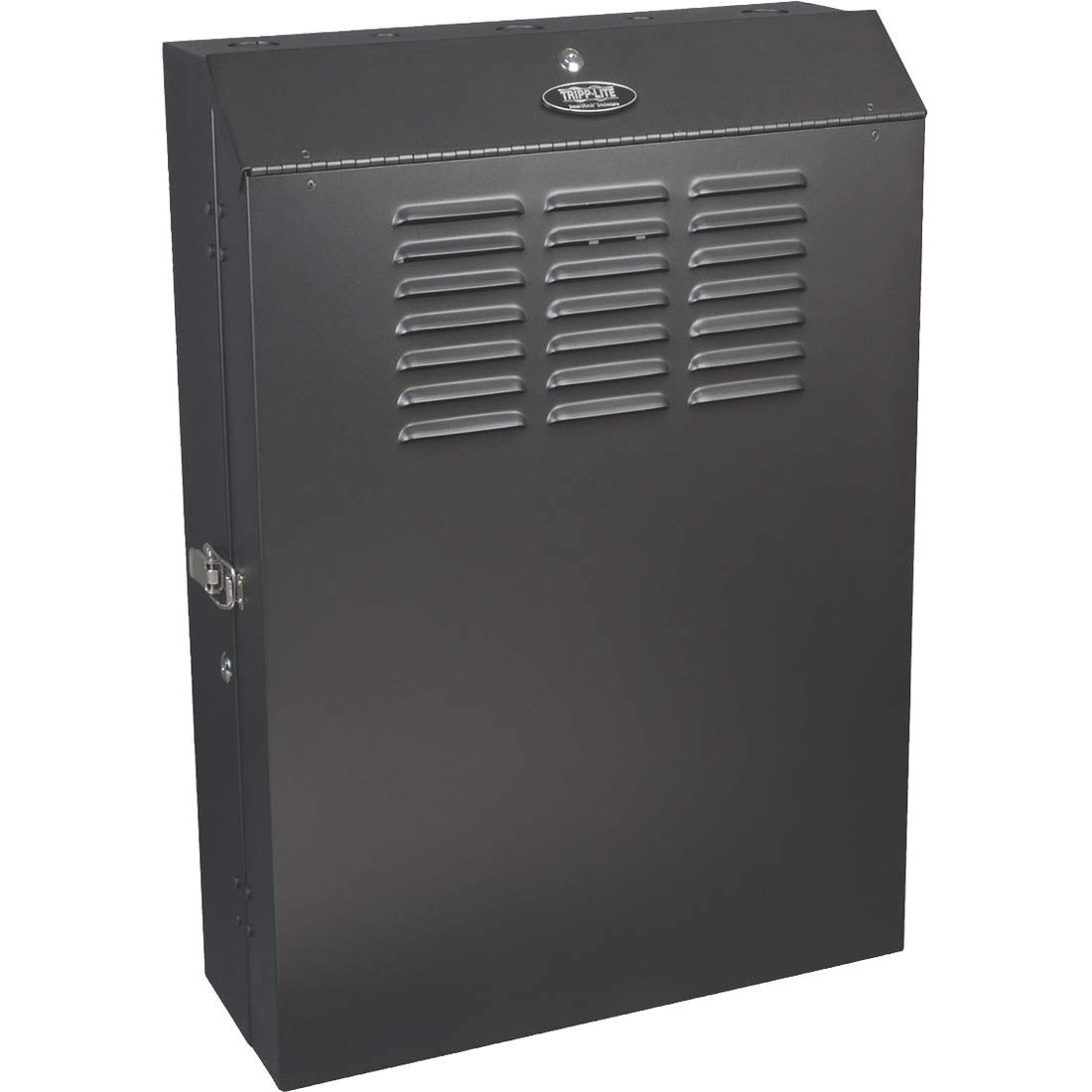
4. Tripp Lite 5U Vertical Wall Mount Rack Enclosure Cabinet, Low Profile, Server Depth, 36″ Deep, Black (SRWF5U36)
The 36-inch cabinet built for rackmount servers — as long as you do not bring four-post rails.
This is the enclosure you graduate to when a switch-only cabinet is no longer enough. Its 36-inch depth leads the field here, and it adds 2U slide-out mounting brackets for patch panels plus a flip-top quick-access door — a combination that lets you park a rackmount server and still reach the top of the cabinet. At 66.1 pounds empty, it needs a solid anchoring surface — studs or a backplane, not bare drywall.
Where it shines is real installs. One owner mounted a 2U Dell rackmount server inside for a client, added a rackmount power strip and a 1U switch, and found the installation easy with room left over. The flip-top door drew genuine affection from another buyer who called the hinges and latches high quality. Locking, reversible door and adjustable rails round out the enclosure features, and it ships fully assembled like its SRWF5U sibling.
The trade-off is rail compatibility. This cabinet is sized for server depth, but it is not a four-post rack, and owners with Dell Ready Rails have found it needs heavy modification to accept them. If your server slides into four-post rails rather than sitting on a shelf, look carefully. One buyer also noted that the included fan power cords ran roughly 6 inches short of reaching the top PDU, forcing a swap to a 12-inch cord. Neither issue is a reason to skip the cabinet — they are questions to settle before you drill.
Why it wins this depth class: 36 inches of interior depth, 2U slide-out patch-panel brackets, and a flip-top door that lets you service a rackmount server without unbolting anything.
What to plan around: four-post rail systems like Dell Ready Rails need modification, and the stock fan power cords leave a 6-inch gap to a top-mounted PDU.
The right call for: anyone mounting a full-depth rackmount server on a wall where a switch-depth cabinet simply will not do the job.
Better served elsewhere: buyers running four-post rail systems or working in a spot without a solid anchoring surface for a 66.1-pound enclosure.
Understanding the Specs
Rack Units and Height
A rack unit, or U, is a standard slice of vertical space — 5U means five of those slices stacked, whether the cabinet stands them up or lays them flat. That height is fixed, so it is your first filter: a 5U rack holds five units of gear, and the wall cabinets here use their interior differently from a desk rack. Measure the total cabinet height against your wall or cabinet cavity, because a 5U interior can still arrive in a cabinet that stands over 30 inches tall once the frame and covers are counted.
Depth, Load Rating, and Ventilation
Depth is front-to-back interior room, and it decides whether a rackmount server fits or whether you are limited to switches and patch panels. Load rating, given in pounds, tells you what the rails and cabinet walls will carry over the long haul. Ventilation comes from perforated or vented panels that let hot air escape, which matters as soon as a device with a fan lives inside. Match all three to your gear list before you buy, and check the threaded-rail taps if you plan to load the cabinet heavy.
FAQ
What does 5U mean on a server rack?
Will a rackmount server fit in a 5U vertical wall cabinet?
Can I mount a 5U rack on drywall?
Wall cabinet or portable equipment rack — which is better?
Do these 5U racks arrive assembled?
What weight can a 5U wall mount rack hold?
Can I use a rackmount server with four-post rails in these cabinets?
Do I need a locking door on a 5U rack?
How much rack space do I need for a small business network?
Final Thoughts: The Verdict
For most readers, the 5u server rack winner is the Tripp Lite SRWF5U because it arrives assembled, hangs flat against a wall at 20 inches of depth, and hides a switch and patch-panel stack behind a locking reversible door with the longest warranty in the group. If your gear lives on a desk and travels, grab the Procraft 5U — 13 pounds with a steel-reinforced strap handle is a different job than any steel cabinet here. And when a full-depth rackmount server is the whole point, the Tripp Lite SRWF5U36 is the one to reach for, provided your server does not ride on four-post rails.
How We Picked
We do not accept paid placement. Every pick is matched to a real buyer and a real use-case; we do not hands-on test units.
Sources & Methodology
Specifications: manufacturer listings and product documentation. Review insights: verified customer reviews, as of September 2026. Pricing: not shown on this page (it changes often); check the current price via the retailer link.
As an Amazon Associate, Gadgets Feed earns from qualifying purchases. This does not affect which products we feature.