
Our readers keep the lights on and my morning glass full of iced black tea. As an Amazon Associate, I earn from qualifying purchases.
Specs are compiled from manufacturer listings and verified buyer reviews and can change over time — please confirm the key details on the product page before buying.
Choosing the right oil isn’t about picking any bottle off the shelf; it’s about matching the chemistry to your engine’s age, workload, and daily temperatures. The wrong 5W-30 can mean noisy cold starts, sludge buildup, or accelerated wear on high-mileage internals, while the right one makes the whole car feel tighter and smoother for thousands of miles.
I’m Min — the founder and writer behind Gadgets Feed. This guide is built by comparing the manufacturers’ published specifications and the patterns across verified customer reviews, so you get each pick’s real strengths and trade-offs instead of marketing spin.
From budget-friendly jugs to premium ester-based formulas, these are the top performers for daily drivers, tow rigs, and tuned engines. Here is our researched breakdown of the 5w-30 synthetic oil that actually earned its place in your garage.
Our Picks at a Glance


How To Choose The Best 5W-30 Synthetic Oil
Before you grab a jug, you need to match the oil’s chemistry to your engine’s condition. The two numbers in 5W-30 tell you how it flows in cold weather (the “5W” part) and at full operating temperature (the “30” part), but the additives inside decide whether it cleans, protects, or conditions seals.
Match the Additives to Your Engine’s Age
An engine with over 100,000 miles has worn seals and looser tolerances than a new one. High-mileage oils include seal conditioners that can help reduce leaks and oil consumption in older engines, while a standard full synthetic focuses purely on wear protection and cleanliness. Choose based on your odometer, not just the brand name.
Check the Specs for Your Specific Vehicle
Modern engines often require a specific specification like dexos1 for GM vehicles or ACEA A5/B5 for many European models. Using an oil that meets those standards is the safest bet for warranty coverage and long-term reliability. If you drive a turbocharged car, look for an oil with strong high-temperature deposit protection.
Decide Between Bottle Volume and Jug Size
Most cars take between 4 and 6 quarts per oil change. A 5-quart jug covers a standard sedan, but trucks often need a 6-quart sump, which means buying an extra single quart or a pack of six. Consider your vehicle’s capacity before choosing between a single 5L jug, a 5-quart pack, or multiple individual quarts to avoid a mid-change scramble.
Quick Comparison
| Model | Best For | Volume | Additive Focus | Key Approval | Amazon |
|---|---|---|---|---|---|
| Liqui Moly Special Tec LL★ Best Overall | BMW & Euro engines | 5 Liters | Long-Life Protection | BMW LL-04 | Amazon |
| Mobil 1 Truck & SUVTop Performer | Towing & heavy loads | 5 Quarts | Triple Action Formula | API SP | Amazon |
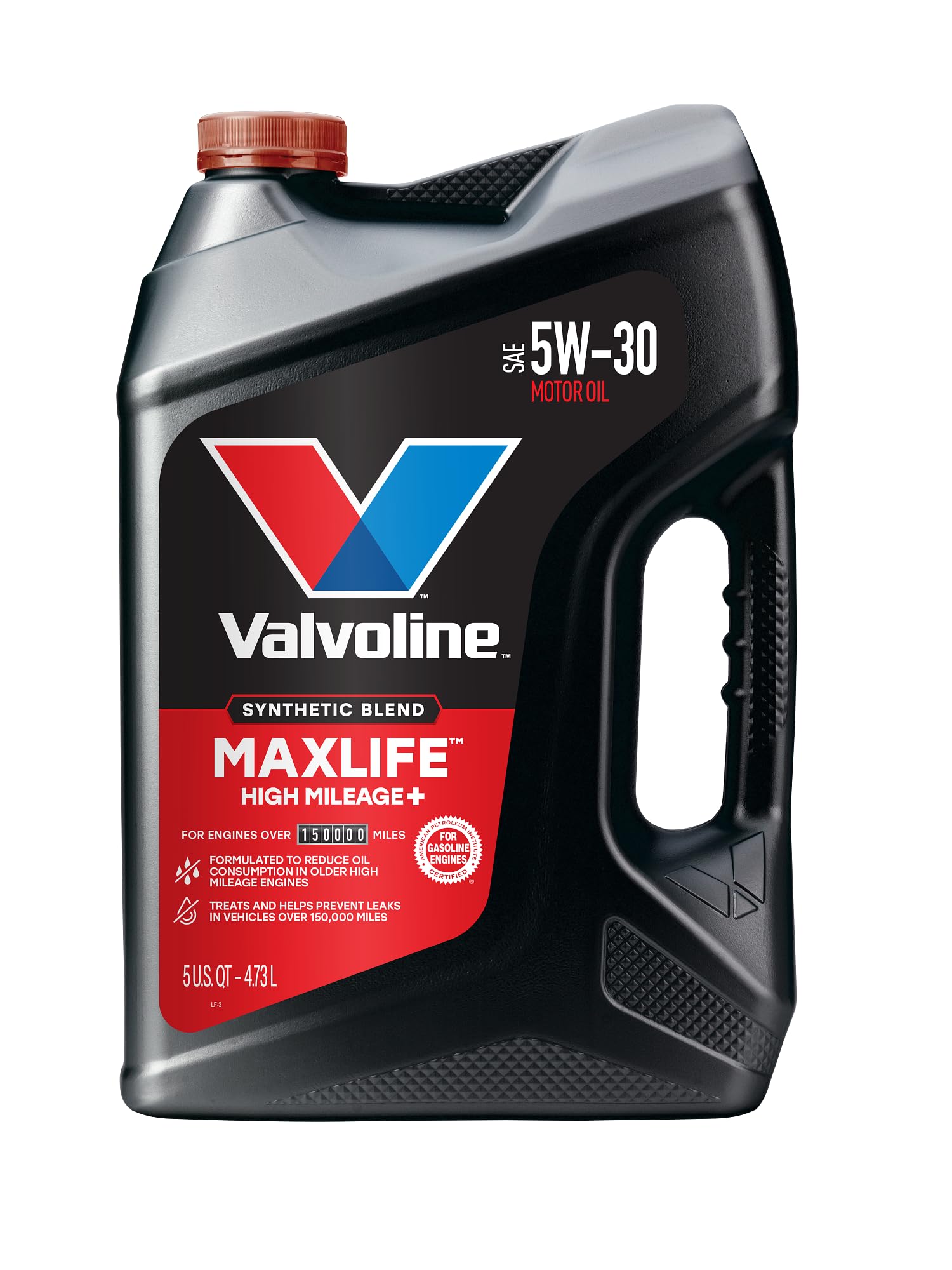
| Valvoline High Mileage 150KBest High Mileage | Engines over 150K miles | 5 Quarts | Seal Conditioners | API SP | Amazon |
| K&N Premium Synthetic | Daily driving value | 5 Quarts | Synthamax Technology | — | Amazon |
| Mobil High Mileage | Engines over 75K miles | 6 Quarts | Seal Conditioner | API SP | Amazon |
| Castrol GTX MAGNATEC | Cold start wear reduction | 5 Quarts | Smart Molecules | — | Amazon |
| ACDelco dexos1 Gen 2 | GM & Chevy vehicles | 6 Quarts | OEM Formulation | dexos1 Gen 2 | Amazon |
| Motul 8100 ECO-nergy | European & performance | 5 Liters | Low-Friction Formula | ACEA A5/B5 | Amazon |
| Red Line 5W30 | Track & high-performance | 1 Gallon | Ester/PAO Blend | BMW LL-01 | Amazon |
In-Depth Reviews
1. Liqui Moly Special Tec LL SAE 5W-30
Our pick — over 4.5★ from 950+ verified ratings; the strongest balance of quality and price.
The premium German-formulated pick that keeps high-strung engines hushed for the long haul.
If you drive a BMW or another European car that demands a specific long-life spec, this Liqui Moly jug is the crowd favorite for a reason — the 5-liter bottle (which is about 6% more volume than the K&N’s 4.73 liters) gives you a full change plus a bit of top-up for many sedans. The fuel is a fully synthetic 5W-30 built around a “Low SAPS” formulation (a low-ash additive package that protects emissions systems) that’s gentle on emissions systems, which is why owners with tuned engines and extra boost report it keeps things running smooth and quiet years later.
Quality is the thing buyers here rave about most, and it shows up in real driving: idle quality improves, valve-train chatter softens, and the oil holds up well even when you’re pushing more power than stock. It weighs 9.43 pounds at the door, so it’s a solid, hefty jug that clearly isn’t playing around. The trade-off is that this is not the budget pick — it sits at the premium end of the mid-range, and owners admit it’s getting expensive, even if they still choose it first.
What Wins Owners Over
- Noticeably quieter engine operation, even under tuned boost
- 5-liter volume beats the 4.73-liter K&N jug by a useful margin
- Holds its viscosity over long drain intervals
Who Should Think Twice
- Premium price tag for a 5-liter jug
- Best suited to European spec engines, less universal than Mobil 1
This is the smart pick for: BMW and European car owners who want a long-life synthetic that keeps the engine quiet under hard use.
Look elsewhere if: you just need a cheap, universal fill for an old beater — you’d be paying for capability you won’t use.
2. Mobil 1 Truck & SUV Full Synthetic 5W-30
The heavy-lifter built for trucks that tow, haul, and sweat through brutal summer heat.
This Mobil 1 variant is the answer when your daily drive involves a trailer hitch or a heavy payload. It’s formulated with the brand’s Triple Action Formula to fight wear, deposits, and breakdown, and the specs back up the big-truck promise: It holds up for up to 10,000 miles between changes, shrugs off internal heat up to 500°F, and still flows at -40°F.. Owners running GMC 5.3s and Ford Escorts for two decades report valve trains that still look new at 165k miles.
On the road, buyers report the oil stays clean after 3,000 miles of mixed driving with good pressure and no leaks or burning, which is exactly what you want from a towing oil. It comes in a 5-quart jug (160 fluid ounces) that’s easy to pour with a wide spout, and it’s a universal fit for cars and trucks. The honest catch is that this is a standard 5-quart jug, so full-size trucks needing six quarts will need a second bottle.
The bottom line: This is the go-to full synthetic for hardworking American trucks and SUVs that face heavy loads and extreme temperatures on the regular. It beats the Castrol Magnatec for sheer heat and load tolerance, but it lacks the high-mileage seal conditioners you’d get from the Valvoline below.
3. Valvoline High Mileage 150K with MaxLife Plus Technology
The seal-saving specialist that gives a 150,000-mile engine a second wind.
For an engine that’s already rolled past 150,000 miles, this Valvoline is engineered differently than a standard synthetic. It’s packed with premium seal conditioners that help prevent oil leaks and reduce consumption in older engines, plus a Moly Additive Protection that coats metal parts to cut friction. The numbers are real: Valvoline claims 10% better wear protection than industry standards and 15% stronger sludge defense., so it’s genuinely built to resurrect a tired motor.
Real-world owner reports back the story: “Mileage finally crept over 175k. Made the switch. Definitely worth it.” — and that sentiment is echoed by drivers of high-mileage SUVs and a 2006 Chevy Silverado with over 150k on the clock who say it simply works. It meets ILSAC GF-7A and API SP standards, so it’s fully compatible with modern engines too. The trade-off is that it’s not designed for the owner who does 5,000-mile intervals on a new car — its additives are tuned for older engines.
Who it’s for: The high-mileage owner dealing with leaks or oil consumption who wants a cost-effective way to extend engine life. If your engine is under 75,000 miles, the standard Mobil 1 above makes more sense.
4. K&N Premium Synthetic 5W-30

The understated performer that delivers premium protection without the premium-name markup.
K&N is famous for air filters, but this 5W-30 full synthetic shows the brand knows engine lubrication too. It uses Advanced Synthamax Technology with unique additives to protect critical components and minimize sludge buildup, and the all-weather formula is built to keep your car running smooth in both cold and hot conditions. Owners who switched from Amsoil to this for a high-mileage Volvo XC90 found the oil still brownish at the 5,000-mile mark — a sign it’s holding up well.
The value story here is strong: it’s a genuine 5-quart bottle (4.73 liters, about 6% less volume than the Liqui Moly’s 5 liters) at a mid-range price, and buyers consistently call it “great oil one of the best out there” and confirm it absolutely is 5 quarts as labeled. It weighs 9.2 pounds, slightly lighter than the Liqui Moly’s 9.43-pound jug. The honest note is that it doesn’t carry a specific OEM approval like dexos1 (a General Motors engine oil standard), so it’s a great universal choice rather than a spec-chasing one.
Why It’s a Smart Fill
- Premium full synthetic performance at a value price
- All-weather formula handles hot and cold extremes
- Owners mention clean oil well past 5,000 miles
Keep in Mind
- No specific OEM spec certification like dexos1
- 4.73 liters is slightly less than the 5-liter Liqui Moly jug
5. Mobil Full Synthetic High Mileage 5W-30

The smart six-pack for trucks and cars that drink more than five quarts per change.
This Mobil High Mileage formula is the answer when your engine holds six quarts instead of the standard five — the pack of six 1-quart bottles (192 fluid ounces total) means you never run short mid-change. It’s engineered for vehicles over 75,000 miles, It delivers protection that lasts 1.5X longer than Mobil’s conventional and synthetic blend oils, up to 7,500 miles between changes.. The extra seal conditioner helps prevent leaks and sludge formation.
Owners of F-150s and GMs praise it for keeping engines running strong, and one driver with 177K miles says the full synthetic helps the vehicle perform well considering its age. It meets API SP resource-conserving standards and works with turbocharged engines, so it’s a solid modern choice for an older car. The practical upside of the six-pack is flexibility — you can pour unneeded quarts into a lawnmower or snow blower without waste, but the single-quart bottles are slightly less convenient than a single big jug.
Best for: High-mileage trucks needing six quarts, or anyone who wants individual bottles for easy measuring. If you have a five-quart sedan, the single-jug Mobil 1 above is simpler.
6. Castrol GTX MAGNATEC 5W-30

The cold-morning specialist whose smart molecules cling to parts before the pump starts.
Castrol’s MAGNATEC is unique because its “smart molecules” are designed to stick to engine parts even when the engine is off, meaning your bearings are already coated the instant you turn the key on a frosty morning. That translates to dramatically reduced engine wear at startup — the moment when most wear actually happens. It leaves critical engine parts 4X smoother in the industry Sequence IVA wear test., and the 5-quart jug (160 fluid ounces) covers a standard car easily.
Customers note it quiets lifter noise on cold starts, especially in winter, and one 215k-mile Silverado driver found the dipstick still looks new. It’s also a massive crowd-pleaser on value — it’s a synthetic that regularly undercuts the premium brands, which explains why it’s among the most-reviewed oils out there. The one catch: Castrol notes this product transitions to the new GTX Full Synthetic name, so the branding on the shelf may shift while the formula stays proven.
What Makes It Unique
- Smart molecules cling to parts when off, cutting cold-start wear
- Reviewers point out quieter lifter noise in winter
- Excellent value for a full synthetic
The Honest Note
- Rebranding to GTX Full Synthetic may confuse buyers
- Not the top-tier pick for extreme track use — that’s Red Line’s job
7. ACDelco GM Original Equipment dexos1 Gen 2 5W-30

The exact factory-fill for GM owners who want zero guesswork on warranty and specs.
If you drive a Chevy, GMC, or Cadillac, this is the oil General Motors actually puts in the engine from day one — it’s licensed to the dexos1 Gen 2 specification, which is GM’s own OEM spec. It meets ILSAC GF-5 and API SN standards too, and it’s designed to protect against high-temperature deposits that cause wear. The six-pack of 1-quart bottles (0.95 liters each) covers trucks and SUVs that need more than five quarts.
Shoppers say a specific win: one Equinox owner switched from a different expensive oil where they always had to add more between changes, and with this ACDelco they don’t add oil at all between changes. That’s the seal-conditioning and formulation working. It’s a premium-priced pick, though, and owners admit it’s “a little pricey” — you’re paying for the OEM confidence. It’s also rated for trucks specifically, so it’s less of a universal choice than the Mobil 1 Truck & SUV.
The verdict: The perfect no-brainer for GM vehicle owners who want the factory spec without hunting for equivalent approvals. Non-GM drivers will find more universal value in the Mobil 1 or Castrol options above.
8. Motul 8100 ECO-nergy 5W-30
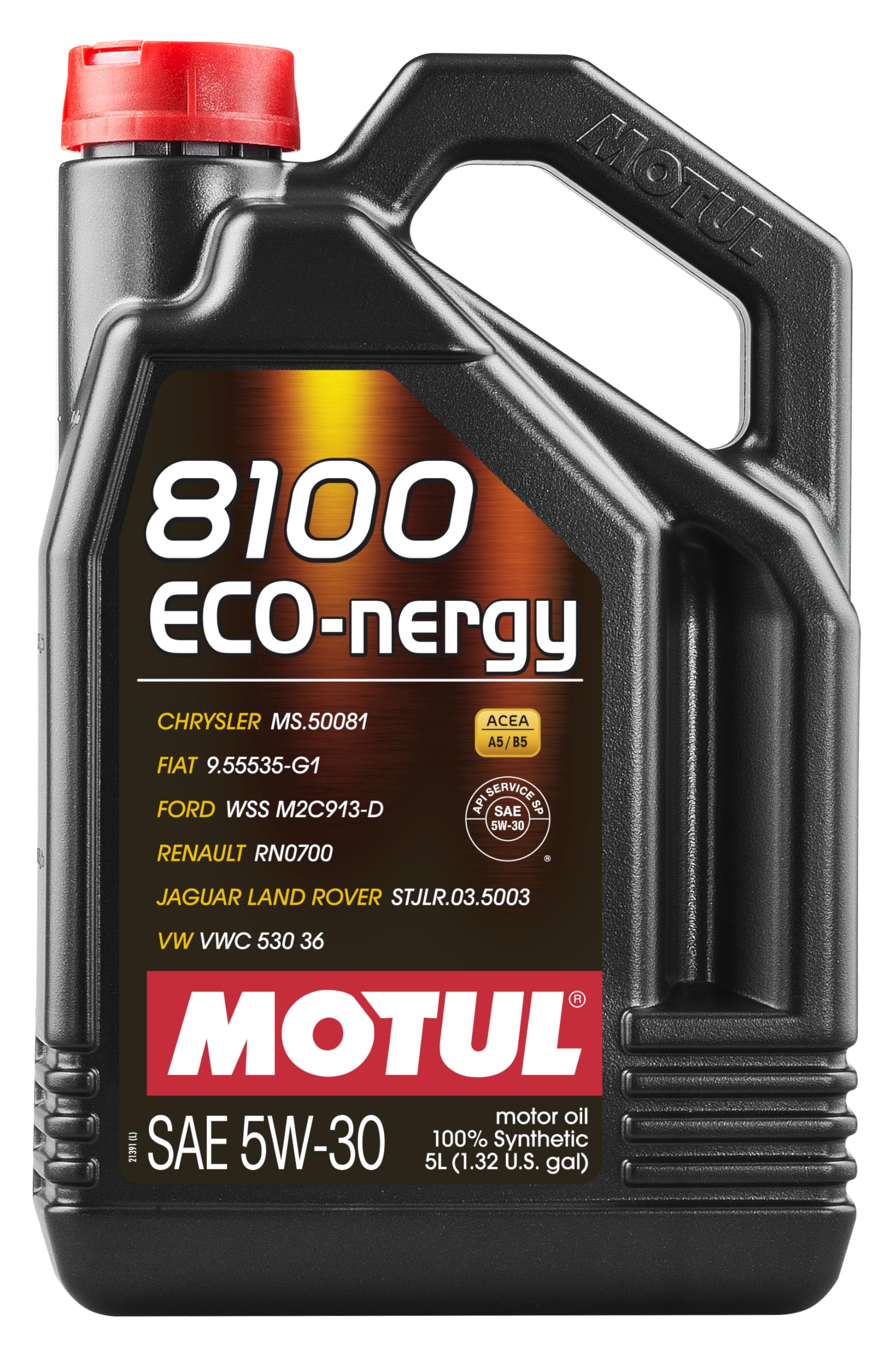
The friction-fighting French formula that open up better fuel economy on European and tuned engines.
Motul’s 8100 ECO-nergy is built for a specific crowd: owners of Ford, Jaguar Land Rover, VW, and other European applications that specify ACEA A5/B5. Its advanced low-friction formula is designed to maintain oil pressure while actually decreasing operating temperature, which is exactly what a stressed turbo or high-strung four-banger needs. It’s suitable for all types of gasoline or diesel engines, and the 5-liter jug is a perfect fit for most Euro oil pans.
The results are hard to argue with: A 2022 Hyundai Palisade owner saw fuel economy jump from 19 to 24 mpg after the switch., and a Subaru WRX driver on track days found the oil analysis at 4,000 miles showed only 60% life used. Owners also report it eliminates oil burn-off in LS motors and quiets the valvetrain. The catch is that it’s a premium-priced oil, and the ACEA A5/B5 spec (a European oil standard for high-performance gasoline engines) makes it less ideal for GM trucks that want dexos1 — it’s a specialist, not a universal fill.
Why Euro Owners Love It
- Real fuel economy gains reported (19 to 24 mpg in one Palisade)
- Quiets valvetrain and reduces oil burn-off
- Meets strict ACEA A5/B5 and API SP standards
Be Aware
- Premium price point
- Spec is tailored to European applications, not GM dexos1 engines
9. Red Line 15305 5W30 Fully Synthetic

The ester-based racing bloodline for drivers who demand maximum film strength at any rpm.
Red Line is the oil you buy when you’re not just maintaining a car — you’re protecting a serious investment in performance. Its formula blends polyol ester and PAO base stocks with natural multi-grade properties, which means it avoids the unnecessary additives that can actually hinder lubricity in cheaper synthetics. The result is a 5W-30 that holds its film strength under extreme load and heat, which is why it’s recommended for BMW LL-01, VW/Audi, and even marine applications.
Owners who’ve made the switch from Mobil 1, Castrol, and Liqui Moly consistently call it the best oil they’ve tried, reporting smoother idles, quieter valvetrains, and better fuel economy — One driver measured a 1-2 mpg increase.. A 20-year mechanic swears his 200k-mile Suzuki has no smoke, ticks, or knocks running only Red Line. The gallon size (128 fluid ounces) is efficient for a single change plus storage, and the 3.2 kg weight tells you it’s the real deal. The honest catch is the price — it’s the most expensive pick here, and for a daily commuter that changes oil every 5,000 miles, it’s overkill.
Who should buy it: The enthusiast with a tuned, tracked, or high-performance engine who views oil changes as cheap insurance. For a stock commuter, the Castrol Magnatec gives 90% of the protection at a fraction of the cost.
Understanding the Specs
Viscosity Grade 5W-30
The “5W” measures how the oil flows in cold weather — the “W” stands for winter, and a 5W rating means it stays fluid enough to protect engine parts at low temperatures, reducing wear on that first cold start. The “30” is the oil’s thickness at full operating temperature, balancing a durable film for protection with enough flow to reach tight clearances. For most modern cars and light trucks, 5W-30 is the recommended middle ground that works across four seasons.
API & OEM Specs
The API (American Petroleum Institute) rating like “SP” or “SN” tells you the oil meets current industry standards for wear protection, sludge control, and fuel economy. Beyond that, OEM specs like GM’s dexos1 or European ACEA A5/B5 are stricter standards set by the car manufacturers themselves — meeting these means the oil is licensed for warranty-safe use in specific engines. Always check your owner’s manual for the minimum spec required.
High Mileage Additives
High-mileage oils (typically for engines over 75,000 miles) contain extra seal conditioners that help soften and swell aged rubber seals, reducing oil leaks and consumption. They also pack additional detergents and antioxidants to fight the sludge and deposits that accumulate over a long service life. If your engine burns oil or leaves drips on the driveway, a high-mileage formula is usually the smarter choice over a standard synthetic.
Base Stock Chemistry
Not all “full synthetics” are equal. Most use Group III hydrocracked bases, while premium oils like Red Line use Group IV (PAO) or Group V (ester) bases, which offer superior thermal stability and film strength. The ester bases in particular have a natural attraction to metal, meaning they cling to parts at startup and stand up to extreme heat better than cheaper bases. That’s why motorsport oils cost more — the chemistry genuinely is different.
FAQ
Can I mix 5W-30 synthetic with another viscosity?
How many miles can I go between changes with full synthetic 5W-30?
What’s the difference between 5W-30 and 0W-30 or 10W-30?
Will changing to a high-mileage oil stop my engine from leaking?
What does “dexos1 Gen 2” mean, and do I need it?
Is it okay to switch between synthetic oil brands?
Why does Red Line cost so much more than other synthetics?
Does using 5W-30 synthetic improve fuel economy?
What’s the shelf life of an unopened bottle of synthetic oil?
Can I use a 5W-30 full synthetic in my older classic car?
Final Thoughts: The Verdict
For most buyers, the 5w-30 synthetic oil winner is the Liqui Moly Special Tec LL because it delivers the best blend of proven quality, quiet operation, and owner trust across thousands of verified reviews — It’s the crowd favorite at 4.9 stars with nearly a thousand ratings backing it up.. If you want proven heavy-duty protection for towing, grab the Mobil 1 Truck & SUV. And for an older engine past 100,000 miles, the Valvoline High Mileage 150K is the one to reach for because its seal conditioners directly target the leaks and consumption that plague high-mileage motors.
How We Picked
We do not accept paid placement. Every pick is matched to a real buyer and a real use-case; we do not hands-on test units.
Sources & Methodology
Specifications: manufacturer listings and product documentation. Review insights: verified customer reviews, as of August 2026. Pricing: not shown on this page (it changes often); check the current price via the retailer link.
As an Amazon Associate, Gadgets Feed earns from qualifying purchases. This does not affect which products we feature.