
Our readers keep the lights on and my morning glass full of iced black tea. As an Amazon Associate, I earn from qualifying purchases.
Specs are compiled from manufacturer listings and verified buyer reviews and can change over time — please confirm the key details on the product page before buying.
The oil aisle is a dizzying wall of claims — long life, engine protection, better mileage. But when you drain the old stuff and pour in a full synthetic 5W-30, the difference you actually feel (quieter cold starts, a smoother idle, less valve clatter) depends on the additive package and base oil chemistry, not the brand name on the jug. This guide cuts through the jargon to the nine oils real owners trust, with the specs that actually matter for your engine’s confidence.
I’m Min — the founder and writer behind Gadgets Feed. This guide is built by comparing the manufacturers’ published specifications and the patterns across verified customer reviews, so you get each pick’s real strengths and trade-offs instead of marketing spin.
What you are about to read is a deep dive into the best 5w30 full synthetic oil options, ranked by real-world owner feedback and the technical certifications that tell you an oil is built for modern engines, not just a fancy label.
Our Picks at a Glance


How To Choose The Best 5W-30 Full Synthetic Oil
The right 5W-30 full synthetic oil protects critical components from heat, friction, and sludge for thousands of miles. Here are the three specs you should check before buying.
Certifications: API SP and OEM Approvals
The latest API SP standard, introduced around 2020, is designed to protect modern engines against Low-Speed Pre-Ignition (LSPI) — a destructive condition in turbocharged direct-injection engines where the air-fuel mixture ignites at the wrong time. Some automakers, especially GM, also require dexos1 Gen 2 or Gen 3 certification for warranty compliance. If you drive a newer turbo or a performance vehicle, checking for these approvals is a safe bet.
Base Oil Type: Group III vs. Group IV (PAO)
Not all “full synthetic” 5W-30 oils use the same base stock chemistry. Many bottle labels use Group III base stocks that are severely hydrocracked mineral oils — technically synthetic but not as thermally stable as Group IV (polyalphaolefin, or PAO) esters. A PAO-based oil resists breakdown at high temperatures better, which matters for tuned engines, turbo cars, or extended oil-change intervals. Look for language about “true synthetic” or PAO if you push your car hard.
Viscosity and Cold-Weather Performance
The “5W” in 5W-30 tells you the oil stays pumpable down to -30°C (-22°F), which means faster lubrication at start-up in winter. The “30” is the hot-running viscosity — thin enough for modern tight-tolerance engines but thick enough to maintain a protective film at high operating temperatures. If you live in a very cold climate or do lots of short trips where the engine never fully warms up, a 5W-30 is a versatile choice.
Quick Comparison
| Model | Best For | Volume | Certifications | Base Oil Type | Amazon |
|---|---|---|---|---|---|
| Liqui Moly Special Tec LL 5W-30★ Best Overall | German & European Premium | 5 L | BMW, VW 504/507 | PAO/Group IV | Amazon |
| Motul 8100 ECO-lite Gen3 5W-30Top Performer | Modern Turbo & GM OEM | 1 L | dexos1 Gen3, API SP | PAO/Ester (Group IV/V) | Amazon |
| Mobil 1 Truck & SUV 5W-30Best for Trucks | Towing, Hauling, High Mileage | 5 qt | API SP | Group III | Amazon |
| K&N Premium Synthetic 5W-30 | All-Weather Reliability | 5 qt | API SN Plus | Group III | Amazon |
| Mobil 1 High Mileage 5W-30 | Engines Over 75k Miles | 6 qt (6-pack) | API SP | Group III | Amazon |
| Valvoline European Vehicle 5W-30 XL-III | European Diesel & Gasoline | 5 qt | ACEA C3, BMW LL-04, MB 229.51 | Group III | Amazon |
| ACDelco GM Original Equipment 5W-30 | GM & Chevy Performance | 6 qt (6-pack) | dexos1 Gen 2, ILSAC GF-5 | Group III | Amazon |
| Motul 8100 ECO-nergy 5W-30 | European Performance & LSD | 5 L | ACEA A5/B5, API SP | PAO/Ester (Group IV/V) | Amazon |
| Royal Purple HPS 5W-30 | High-Performance & Modified Engines | 6 qt (6-pack) | API SN | PAO/Ester (Group IV/V) | Amazon |
In‑Depth Reviews
1. Liqui Moly Special Tec LL SAE 5W-30 | 5 L
Our pick — over 4.5★ from 950+ verified ratings; the strongest balance of quality and price.
The German-made oil that keeps high-strung BMW straight-sixes smooth and quiet past 200k miles.
If you drive a modern German car — especially a BMW, VW, or Mercedes — this 5-liter jug from Liqui Moly is the crowd favorite for a reason. It carries approvals for VW 504.00/507.00 and BMW LL-04, which means it meets the exacting Longlife specs those engines require for extended drain intervals. Buyers report immediate changes: a noticeably quieter idle, less valve-train clatter on cold starts, and smoother operation even when tuned with extra boost. The base stock is a PAO (Group IV) blend, which resists thermal breakdown far better than a standard Group III oil, so you can confidently run it near the manufacturer’s maximum recommended interval, especially on modern turbocharged platforms.
What wins people over is the quality — it’s the most-praised aspect by a wide margin. Hundreds of owners have used nothing else since their car was new. The 5-liter jug is a good value by itself, but it also handily beats what BMW-branded oil costs at the dealer counter. The only recurring trade-off is price: it has crept up like everything else, but buyers consistently say the engine feels smoother and quieter than with mid-tier synthetics. For a high-compression BMW or a tuned Audi, this is the one.
German engineered protection: At 5 liters, this jug holds 5 liters versus the single-liter Motul 8100 ECO-lite below — so it covers a typical BMW or VW sump in one pour, no second bottle needed.
Best for European engines: European sedans, SUVs, and any engine with a Longlife spec that demands a quality PAO-based 5W-30.
Think twice if budget matters: Your budget is tight; this is a mid-to-premium price that rewards owners who stretch the interval, not those on a three-month quick-change cycle.
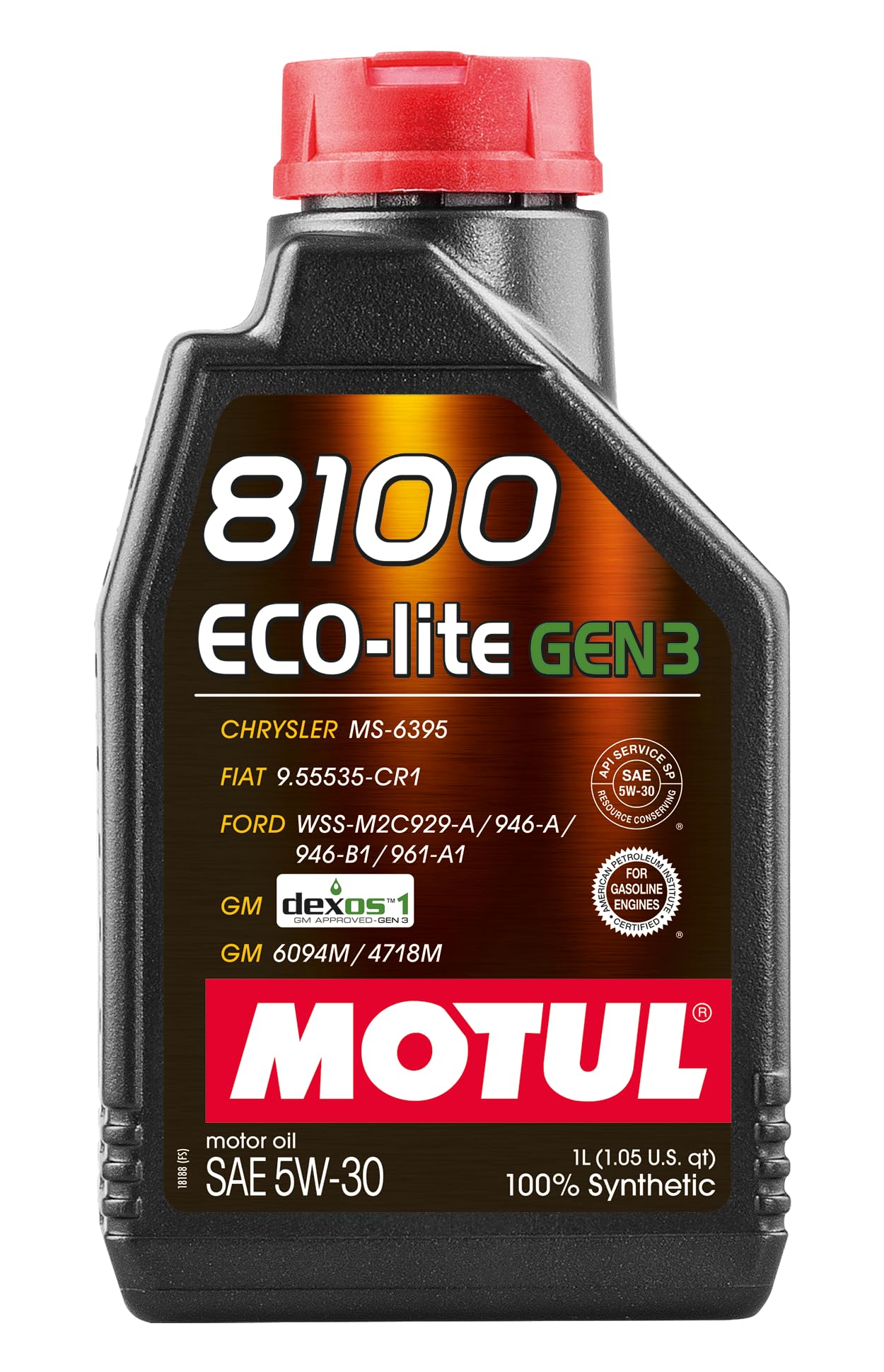
2. Motul 8100 ECO-lite Gen3 5W-30 (1 Liter)
The tech-forward pick for modern turbo engines that need the latest GM and API protections.
This oil is built for the newest generation of engines. It carries the full API SP certification plus GM dexos1 Gen3 approval — the latest spec that helps prevent low-speed pre-ignition (LSPI), timing-chain wear, and deposit buildup in turbocharged direct-injection motors. That makes it a strong choice for late-model GM, Ford, Chrysler, and many Asian vehicles. The base chemistry leans on a true Group IV/V (PAO/Ester) blend, so it handles high temperatures and sustained high-RPM driving better than standard Group III synthetics. Owners running E85 with a supercharger report it holds up on the dyno without losing viscosity, and drivers of 1999 Honda Civics feel a smoother, more responsive throttle after the switch.
A practical bonus: one reviewer noted that a 5-liter bottle matches the Mazda CX-5 (2019) sump capacity exactly — no half-bottle leftovers. The certification list is also long: Ford WSS-M2C929-A, Chrysler MS-6395, FIAT 9.55535-CR1, and more. Because the 1-liter size is sold individually, you can buy exactly as many quarts as your engine needs without paying for a bulk jug you won’t use.
Reach for this if green: You drive a 2019+ GM, Ford, Chrysler, or Mazda with a turbo and want the absolute latest protection specs met.
Look elsewhere if value: You need a 5-quart single jug for a large sump — this listing is per liter, so you’ll buy multiples.
3. Mobil 1 Truck & SUV 5W-30, 5 Quart
The heavy lifter for big V8s pulling trailers — tested in a 10,000-lb towing scenario.
Mobil 1’s Truck & SUV formula is a heavy-duty full synthetic 5W-30 designed for hardworking vehicles that tow, haul, or operate in extreme conditions. It’s built to protect critical engine parts for up to 10,000 miles between oil changes, controlling oxidation to prevent oil breakdown and maintaining viscosity under the punishing heat of heavy loads. Mobil 1 claims it provides excellent internal engine heat protection up to 500°F and low-temperature protection down to -40°F — so it handles both a frozen Montana morning and a summer desert tow without thinning out or getting too thick to flow. The Triple Action Formula delivers engine protection, cleanliness, and proven performance, backed by a real-world towing test.
Owner reports back up the hype. One buyer put this oil in a 2004 GMC 5.3L and a 2000 Ford Escort for two decades — the valve train still looked new at 165k miles. Others running high-mileage Jeeps with the 3.6L Pentastar praise how it maintains viscosity under heavy loads and the heat of turbos, noting the low calcium content to prevent low-speed detonation. The 5-quart jug makes for an easy, no-drip pour. As a Group III-based synthetic, it isn’t as thermally sturdy as a PAO/Ester oil for extreme racing builds, but for daily towing and high-mileage truck life, it’s a proven workhorse at a fair price.
Truck proven durability: Quality and value for money are the two most-discussed highlights — hundreds of buyers call it the best money can buy for a hardworking truck or SUV.
Best for heavy loads: Daily-driven trucks and SUVs that tow, especially older GM/Ford V8s where long-term reliability is the priority.
Think twice if compact: You need a strict LL-04 or C3 spec for a modern European turbo diesel — this oil lacks those low-SAPS approvals.
4. K&N Premium Synthetic 5W-30, 5 Quart

A full synthetic that leverages K&N’s filtration expertise to battle sludge and contaminants.
K&N is best known for its air filters and cold-air intakes, but they also make a solid full synthetic motor oil. This 5W-30 uses what they call Synthamax Technology — a proprietary additive package designed to protect critical engine components from wear, sludge, and harmful contaminants. The formulation is designed to reduce wear and tear while offering all-weather protection, keeping the engine running smoothly in both cold starts and hot highway cruising. It’s a universal-fit oil that works across a wide range of gasoline-powered cars, not just high-performance machines.
Buyers consistently praise the quality and value. Many note that after a change, their engines simply “run better,” echoing the product’s claim of a full-synthetic level of protection. The 5-quart bottle means you get exactly what you need for a standard sump in one purchase. The honest caveat: K&N oil doesn’t carry the same brand recognition or racing pedigree as the heavy hitters like Motul or Royal Purple, but it delivers a premium full-synthetic experience at a mid-range price point — ideal for a daily driver that just needs clean, reliable lubrication.
Reach for this if filter: You want a trusted filtration brand’s engine oil for your daily commuter, valuing clean-running protection over track-day specs.
Look elsewhere if generic: You need specific OEM certifications like dexos1 or VW 504/507 for a newer European turbo — K&N does not list those approvals here.
5. Mobil Full Synthetic High Mileage 5W-30, 6-Pack

Designed for the engine that’s passed the 75,000-mile mark, fighting leaks and deposits as it lubricates.
Mobil’s High Mileage formula is purpose-built for vehicles with over 75,000 miles on the clock, upgrading from a conventional or synthetic blend or requiring full synthetic protection. It provides guaranteed protection that lasts 1.5 times longer than Mobil’s conventional and synthetic blend oils, with an oil-change interval up to 7,500 miles. The key ingredient is an extra seal conditioner — a specialized additive that helps rejuvenate dried-out gaskets and seals to prevent oil leaks, a common issue on older engines. It also includes a balanced additive system to fight sludge, deposit formation, and thermal breakdown, making it a solid choice for an aging daily driver you plan to keep on the road.
The 6-quart pack is a practical bonus. Many trucks and SUVs need six quarts for a full fill (GM V8s, for example), and buying this pack means no second trip to the store for one more quart. Owners running a 6.0L GM or a Ford F-150 with over 177,000 miles report the engine stays strong, no check-engine lights, and consistent performance. The main thing to note: this is still a Group III-based synthetic, so if you run a track car or a heavily modified engine, you might want a PAO-based oil instead. But for a reliable high-mileage commuter, this is a pick-and-forget solution.
Best for older engines: A car or truck with 75k+ miles that you want to keep leak-free and running smoothly well past 200k.
Think twice if low miles: You change oil every 3,000 miles — the seal conditioner and extended-drain capability are wasted on a rapid-change schedule.
6. Valvoline European Vehicle Full Synthetic 5W-30 XL-III, 5 Quart
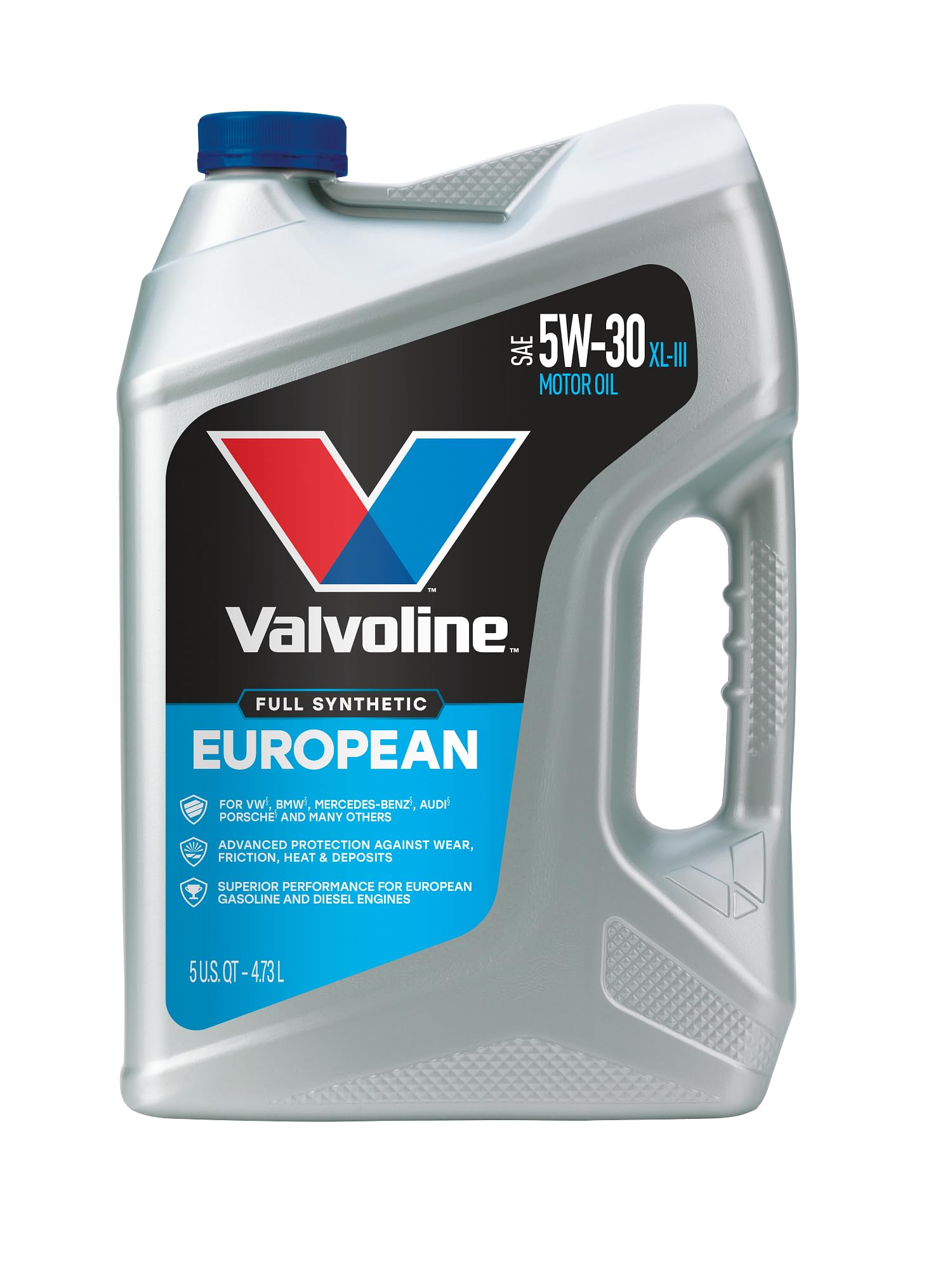
The oil that quieted a Mini’s startup clatter — engineered for the unique demands of European engines.
Valvoline’s European Vehicle formula is purpose-built for the specific metallurgy, tolerances, and emissions systems found in European gasoline and diesel engines. It is a low-SAPS (Sulfated Ash, Phosphorus, and Sulfur) oil, which means it won’t clog the sensitive diesel particulate filters (DPF) or catalytic converters found on modern BMWs, VWs, and Mercedes. It meets ACEA C3 and carries approvals for VW Standard 504.00/507.00, BMW LL-04, and MB-Approval 229.51/229.52 — a laundry list that covers nearly every modern European diesel and gasoline engine. The advanced anti-wear additives provide extra protection against the four main causes of engine breakdown: wear, friction, heat, and deposits.
Owners approve. A 2011 BMW 335d diesel owner reports it works perfectly and keeps the engine running well. Another driver notes that after switching to this oil, their Mini Cooper’s start-up sounded noticeably quieter. The flash point is 446°F, indicating excellent resistance to high-temperature breakdown and oil consumption. The compatibility note is important: it is approved for VW 504/507 and BMW LL-04 but is a mixed fit for the strictest Mercedes 229.5 specs, so if you drive a late-model Mercedes AMG, double-check the owner’s manual.
Reach for this if Euro: You own a European car, especially a diesel (BMW, VW, Mercedes, Mini), and need a low-SAPS oil that meets the latest OEM specs.
Look elsewhere if domestic: You drive a standard American V8 or a Japanese daily driver — the low-SAPS formulation costs more than necessary for engines without sensitive particulate filters.
7. ACDelco GM Original Equipment dexos1 Gen 2 5W-30, 6-Pack

The OEM oil that made a Chevy Equinox stop burning oil between changes — direct from GM’s spec book.
This ACDelco oil is licensed to the General Motors dexos1 Gen 2 engine oil specification — a requirement for late-model GM vehicles to maintain warranty coverage. It also meets ILSAC GF-5 and API SN standards, making it suitable for a wide range of gasoline engines. The formulation is designed to protect against high-temperature deposits, reduce engine wear, and keep the valvetrain clean. Since it’s built to GM’s factory fill quality, switching to this oil from a cheaper blend is a straightforward upgrade for any Chevy, GMC, Buick, or Cadillac on the road.
An owner of an Equinox tells a revealing story: after switching from a more expensive brand-name synthetic to this ACDelco oil, the engine stopped needing top-ups between oil changes — a change they described as “pretty amazing.” A second owner with a 2015 Silverado 2500 HD at 190,000 miles reports using it with 10,000- to 12,000-mile change intervals with no issues at all, calling it affordable and effective. This oil meets dexos1 Gen 2 spec but not the newer Gen 3 standard, so it may not be the most advanced choice for a brand-new 2024+ GM turbo engine. For most GM vehicles, though, it’s a perfect warranty-safe pick at a fair price.
Best for GM vehicles: Any GM car, truck, or SUV from the last decade where you want an OEM-quality oil that stops oil consumption and keeps warranty compliance.
Think twice if aftermarket: You have a 2023+ GM car with a turbo engine requiring dexos1 Gen 3 certification — check your manual before buying.
8. Motul 8100 ECO-nergy 5W-30 Full Synthetic, 5 Liter
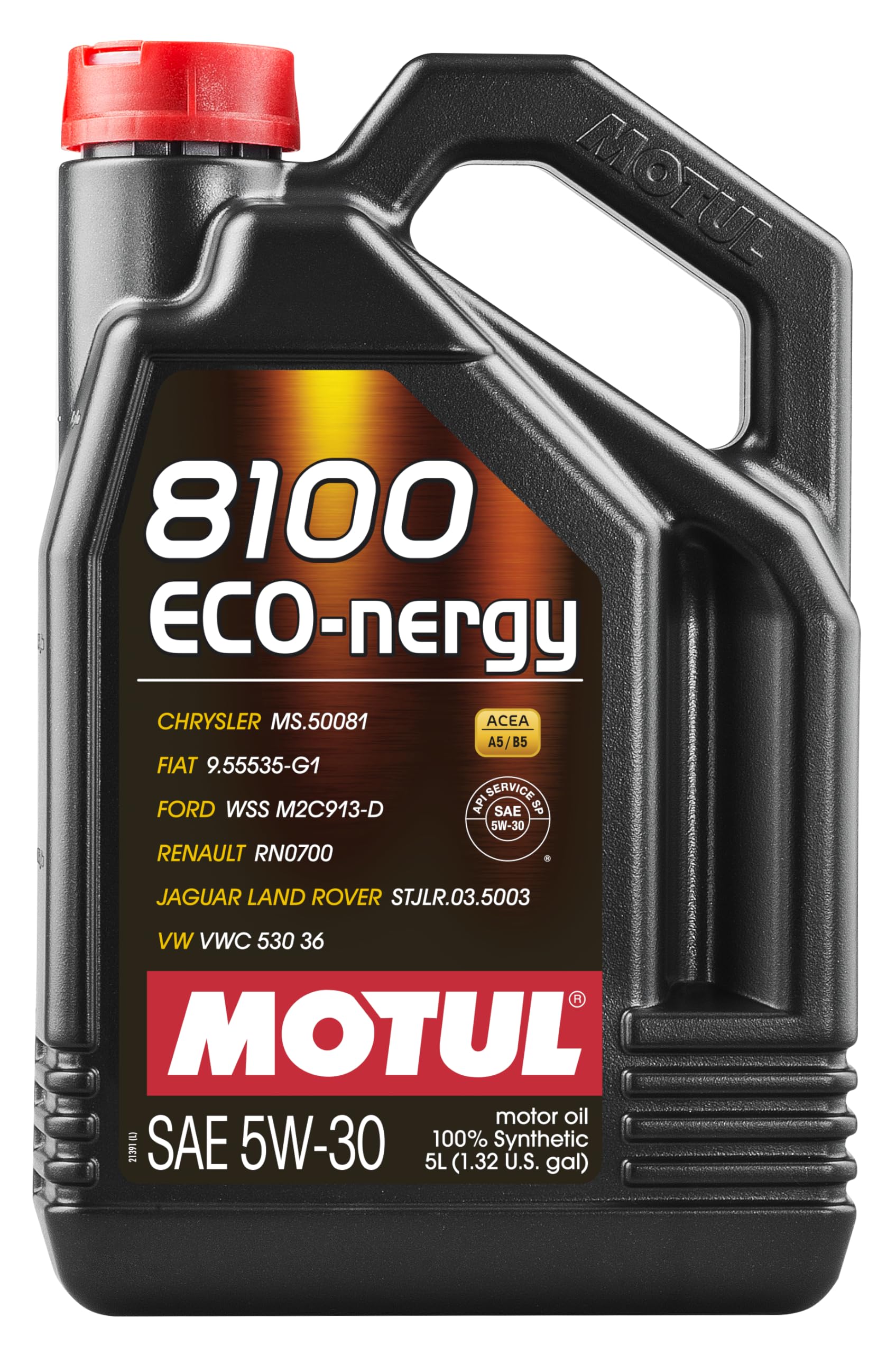
The French synthetic that quieted a Camaro SS valvetrain and stopped oil burning in one drain.
Motul’s 8100 ECO-nergy is a 100% synthetic formulated for high-performance gasoline and diesel engines, particularly European applications from Ford, Jaguar Land Rover, and VW. It meets ACEA A5/B5 and API SP standards, delivering outstanding lubricating properties while maintaining oil pressure and typically decreasing operating temperature. The 5-liter jug is a practical size for a wide range of sumps, including an LS1 F-body Camaro or a Nissan Frontier VQ40DE. Motul is known for using a high-quality PAO/Ester base stock, so this oil resists shear and holds its viscosity longer than many Group III alternatives.
Owners are emphatic. A driver of a 2002 Camaro SS with an LS1 reports it eliminated oil burn completely and quieted the valvetrain noise — something they compare favorably to Redline, Amsoil, and Royal Purple. Another owner with a 2022 Hyundai Palisade found it quieted a noisy valve train and improved gas mileage from 19 to 24 mpg on a regular commute. It offers older API specs (SL, SM, SN) that are harder to find in modern SP oils, which some owners of legacy engines actually prefer. If your car calls for ACEA A5/B5 (common in older European and some Asian engines), this is a top-tier choice that outperforms many premium brands.
Reach for this if efficiency: You own a European car, a VQ Nissan, or an LS-swapped vehicle and want a PAO-based oil that quiets noise and stops oil consumption.
Look elsewhere if small: Your car requires an LL-04 or C3 low-SAPS spec — this oil does not carry those approvals and should not go into a DPF-equipped diesel.
9. Royal Purple HPS 5W-30 Synthetic Motor Oil, 6-Pack

The high-zinc oil that keeps flat-tappet camshafts alive and CTS-V superchargers cool.
Royal Purple’s HPS (High Performance Street) 5W-30 is engineered for modified engines and performance driving where loads exceed normal conditions. It is fortified with a high level of zinc and phosphorus (ZDDP) anti-wear additives, which are critical for protecting flat-tappet camshafts and high-stress valvetrains common in older American muscle and modified engines. The Synerlec additive technology is designed to reduce friction at a molecular level, increasing horsepower and torque while providing exceptional oxidation stability.
The owners who swear by this oil do so for specific, high-demand applications. A 2013 Cadillac CTS-V owner has used it since 6,900 miles, and every oil analysis “comes back great.” A driver of a 1973 Ford F250 with a 360CI flat-tappet engine reports it runs quieter and smoother than conventional oil, noting the high ZDDP level as essential. The 6-quart pack covers most early Silverado 6.0L sumps in one purchase. At this tier, you pay for the high-performance additive package, and it may not be necessary for a stock daily driver that never sees the redline. But for a hot Camaro, a boosted Mustang, or a classic with a flat-tappet cam, Royal Purple HPS is a trusted pick.
Best for racing: Modified, supercharged, or older flat-tappet engines where high ZDDP is non-negotiable for camshaft survival.
Think twice if daily driver: You drive a modern stock commuter with a turbo and catalytic converter — the high phosphorus can harm the catalyst over time.
Understanding the Specs
Viscosity Grade (SAE 5W-30)
The “30” refers to its thickness at operating temperature — thin enough to flow through tight modern oil passages but thick enough to maintain a protective film under high heat and load. A 5W-30 is the most common viscosity for modern engines because it balances cold-flow ability with high-temperature film strength better than a 0W-20 (very thin) or a 10W-40 (thicker). Always check your owner’s manual; running a thicker or thinner oil than your engine is designed for can reduce fuel economy or increase wear.
API “Donut” & Resource Conserving
Look on the back of the bottle for the API Service Symbol — often called the “donut.” The latest standard is API SP, introduced in 2020, which includes protections against low-speed pre-ignition (LSPI) in turbocharged engines, timing chain wear, and sludge. Below the donut is the “Resource Conserving” mark, which shows the oil meets fuel-economy and emissions-system protection standards. If your car is a 2020 or newer, it is generally recommended to use an API SP oil; older cars can safely use a current-standard oil even if their manual lists an older category like API SN.
FAQ
Can I use a 5W-30 full synthetic oil in an old engine that always ran conventional 10W-40?
What does dexos1 Gen 2 or Gen 3 mean, and do I need it?
Is it OK to mix two different brands of 5W-30 full synthetic oil in the same engine?
How long does a 5W-30 full synthetic oil actually last before it needs changing?
Will switching to a full synthetic 5W-30 cause oil leaks in an older high-mileage engine?
What’s the difference between API SP and ACEA C3 certification?
Can I use a 5W-30 full synthetic oil recommended for a BMW in my Subaru or Honda?
What are PAO and Esters in motor oil, and why should I care?
Does a higher price always mean better protection in a 5W-30 full synthetic oil?
Final Thoughts: The Verdict
For most buyers, the 5w30 full synthetic oil winner is the Liqui Moly Special Tec LL because it delivers the genuine PAO-based chemistry that modern European engines demand, backed by over 900 owners who have used nothing else since day one. If you want the latest GM and API SP protections with a true PAO/Ester base, grab the Motul 8100 ECO-lite Gen3. And for a high-mileage truck that tows and hauls, the Mobil 1 Truck & SUV is the one to reach for — proven in a 10,000-lb towing test and trusted by owners who have run it for 200,000 miles without a check engine light.
How We Picked
We do not accept paid placement. Every pick is matched to a real buyer and a real use-case; we do not hands-on test units.
Sources & Methodology
Specifications: manufacturer listings and product documentation. Review insights: verified customer reviews, as of July 2026. Pricing: not shown on this page (it changes often); check the current price via the retailer link.
As an Amazon Associate, Gadgets Feed earns from qualifying purchases. This does not affect which products we feature.