
Our readers keep the lights on and my morning glass full of iced black tea. As an Amazon Associate, I earn from qualifying purchases.
Specs are compiled from manufacturer listings and verified buyer reviews and can change over time — please confirm the key details on the product page before buying.
You roll the window down at 70 mph, crank the volume, and the music just… disappears into wind and tire roar. The right set of 6 1/2 speakers fixes that by pushing clean, powerful sound straight into the cabin. This guide cuts through the spec-sheet noise to help you pick the pair that matches how you actually listen — whether that is thumping midrange on a budget or studio-clear highs for daily commutes.
I’m Min — the founder and writer behind Gadgets Feed. This guide is built by comparing the manufacturers’ published specifications and the patterns across verified customer reviews, so you get each pick’s real strengths and trade-offs instead of marketing spin.
Note that this shortlist uses flexible matching for speaker size — every pick is a nominal 6.5-inch speaker, but a few run slightly larger or smaller in real-world dimensions, so check your mounting depth before you buy. Here is my researched take on the 6 1/2 speakers worth putting in your doors today.
Our Picks at a Glance


How To Choose The Best 6 1/2 Speakers
Before you buy, understand the two basic styles of 6.5-inch car speakers, because they change how the sound reaches your ears. Coaxial speakers (sometimes called full-range) combine the woofer and tweeter in one unit with a crossover, making them a simple drop-in upgrade. Component systems split the woofer and tweeter into separate pieces, which lets you mount the tweeter higher for better sound staging — at the cost of a more complex install.
Power handling: RMS versus Max
The most common mistake is shopping by the huge “max power” number printed on the box. That figure is a theoretical peak; your music actually lives in the RMS (continuous) rating. Pair a speaker with an amp that roughly matches its RMS for clean sound, or stick to high-sensitivity speakers if you are running off a factory stereo with modest power.
Impedance and sensitivity
Impedance (measured in ohms, commonly 4 or 3) tells you how much electrical resistance the speaker offers. Lower impedance like 3 ohms draws more current from your stereo, which can help weaker factory head units play louder. Sensitivity (rated in dB) tells you how efficiently the speaker converts power into volume — a higher number like 94 dB means more sound per watt.
Quick Comparison
| Model | Best For | Type | Power (RMS) | Impedance | Amazon |
|---|---|---|---|---|---|
| ORION Cobalt CM654★ Best Overall | High-output midrange | Midrange w/ Bullet | 250W | 4 Ohm | Amazon |
| Kenwood KFC-1666RBudget Champion | Easy factory replacement | 2-Way Coaxial | 30W | 4 Ohm | Amazon |
| RECOIL MS65-4PBudget Midbass Pick | Budget midbass punch | Midrange | — | 4 Ohm | Amazon |
| Rockford Fosgate R165-S | Component sound staging | 2-Way Component | 40W | — | Amazon |
| DS18 PRO-ZT6 | Loud, durable builds | 2-Way w/ Bullet | 225W | 4 Ohm | Amazon |
| HERTZ UNO K-165 | Detailed component sound | 2-Way Component | — | — | Amazon |
| Rockford Fosgate M0-65B | Boats and off-road | 2-Way Coaxial | 65W | 4 Ohm | Amazon |
| Pioneer TS-M651PRO | High-SPL midrange | Midrange | 120W | — | Amazon |
| JBL GTO629 | Bass-rich factory upgrade | 2-Way Coaxial | — | 3 Ohm | Amazon |
In‑Depth Reviews
1. ORION Cobalt CM654 Mid-Range Bullet Speakers
Our pick — over 4.5★ from 750+ verified ratings; the strongest balance of quality and price.
The crowd-pulling midrange that turns your doors into the front row of a show
This is the pick for listeners who live in the mids — vocals, guitars, and that in-your-chest punch. The ORION Cobalt CM654 targets that range with a 1.5-inch high-temperature voice coil and a 96.67 dB efficiency rating, meaning it produces serious volume from modest amplifier power. It also carries a bullet tweeter design so the highs stay clear without sacrificing the lower registers.
What wins people over is the sound quality, which draws the most owner praise by a wide margin, followed closely by build quality and value for the money. At 250W RMS and 1000W max, it crushes the Kenwood KFC-1666R’s 30W RMS — at 250W RMS versus 30W RMS — so this is a different league of headroom if you run an amplifier. Buyers report: “Good quality sounded good dimensions a little to big for my doors other than that good product” — a reminder that the 6.54-inch overall diameter can be snug in smaller factory locations.
Built to Belt
- High 96.67 dB sensitivity converts watts into real volume
- Handles serious power: 250W RMS / 1000W max
- Efficient bullet design extends high-frequency reach
Measure First
- Overall diameter of 6.54″ can be large for tight factory doors
- Midrange-focused, so deep bass needs a subwoofer
Best for: Amplified systems where clean, loud midrange is the goal and you have room to spare.
Think twice if: Your factory door opening is tight — the size is the recurring catch here.
2. Kenwood KFC-1666R Road Series Coaxial Speakers
The no-fuss drop-in that makes a stock stereo sound alive again
If your goal is a simple, reliable upgrade without adding an amplifier, this Kenwood pair is the pragmatic choice. The 2-way coaxial design bundles a cloth woofer with a balanced dome tweeter, and its 40Hz – 22kHz frequency response reaches the full range of what you hear. With a 4-ohm impedance, it conducts power evenly to the speaker, making it a great match for factory and entry-level aftermarket head units.
Sound quality is the thing owners praise most, and the smart money angle is strong too — owners mention these beat factory speakers at a cost that feels fair. Customers note: “Yes, there are better speakers out there, but these are a great balance of cost and quality. They sound great. Best of all for me, they fit in my Honda Element stock locations in the 4 doors with no modifications.” That fuss-free fit is a theme, helped by a heavy-duty magnet design and shallow depth for easy installation.
low-maintenance Fit
- Shallow depth and low tweeter height ease installation
- Full-range 40Hz – 22kHz response from a single unit
- Included grilles add protection
Reality Check
- 30W RMS is modest — not a high-volume SPL competitor
- Durability gets mixed notes; occasional reports of failure
Who it’s for: Daily drivers wanting a clean, affordable upgrade that drops into stock spots without drilling.
Who it’s not for: Bass heads and SPL competitors who need far more than 30W RMS.
3. RECOIL MS65-4P Midrange Pro Audio Speakers
A budget weapon for a midbass punch that factory speakers never had
The RECOIL MS65-4P is a straight midrange driver designed to handle the meat of the audio spectrum, and it does it on a budget. The 1.5-inch high-temperature Kapton voice coil is built to shrug off heat and keep its shape, which points toward a longer life even when pushed. High-strength ferrite magnets help it produce a wider range of tones and hold up at high volumes.
Sound quality leads the owner praise by a long shot, with value-for-money a clear second. The consensus from careful buyers is that this is a “good budget midbass” — clear, crisp, and powerful, though it lacks deep bass on its own. One practical tip from the road: a 1/8-inch diameter trim was needed to fit an Audi S6, so budget for minor fit work on some vehicles.
Value verdict: Clear and loud for the money, but plan a subwoofer for low end and an amp with real RMS power.
Fit note: Reviewers point out needing minor trim on some European doors — measure before you commit.
4. Rockford Fosgate Prime R165-S Component System

Separate tweeters that lift the soundstage off your floorboards
Here is where you step up from a simple swap to real sound staging. The R165-S is a component system — two 6.5-inch woofers rated at 40W RMS / 80W peak, plus two separate 1-inch tweeters with their own integrated crossovers. Because the tweeters mount independently, you can place them up high on the dash or A-pillar, aiming the highs directly at your ears.
Owner feedback centers on the sound quality — by far the most-praised aspect — with clear mids and highs and easy installation. The mica-injected polypropylene cone extends frequency response, while the Mylar balanced dome tweeter reproduces clean highs. Shoppers say it works well as a factory replacement, with one successful install in a 2012 Jeep Wrangler and even an 8-speaker overhaul on a 2004 GMH Monaro.
Flexible Mounting
- Tweeters support flush, surface, and angle mounting
- In-line crossovers simplify the install
- Full 1-year warranty behind the build
Honest Limits
- Component install means more wiring work than coaxials
- Not much bass — plenty of treble and midrange is the common note
Reach for this if: You want crisp, detailed vocals and the flexibility to aim your tweeters for better imaging.
Look elsewhere if: You want one-unit simplicity or deep bass from the start.
5. DS18 PRO-ZT6 Pro Audio Midrange Speaker
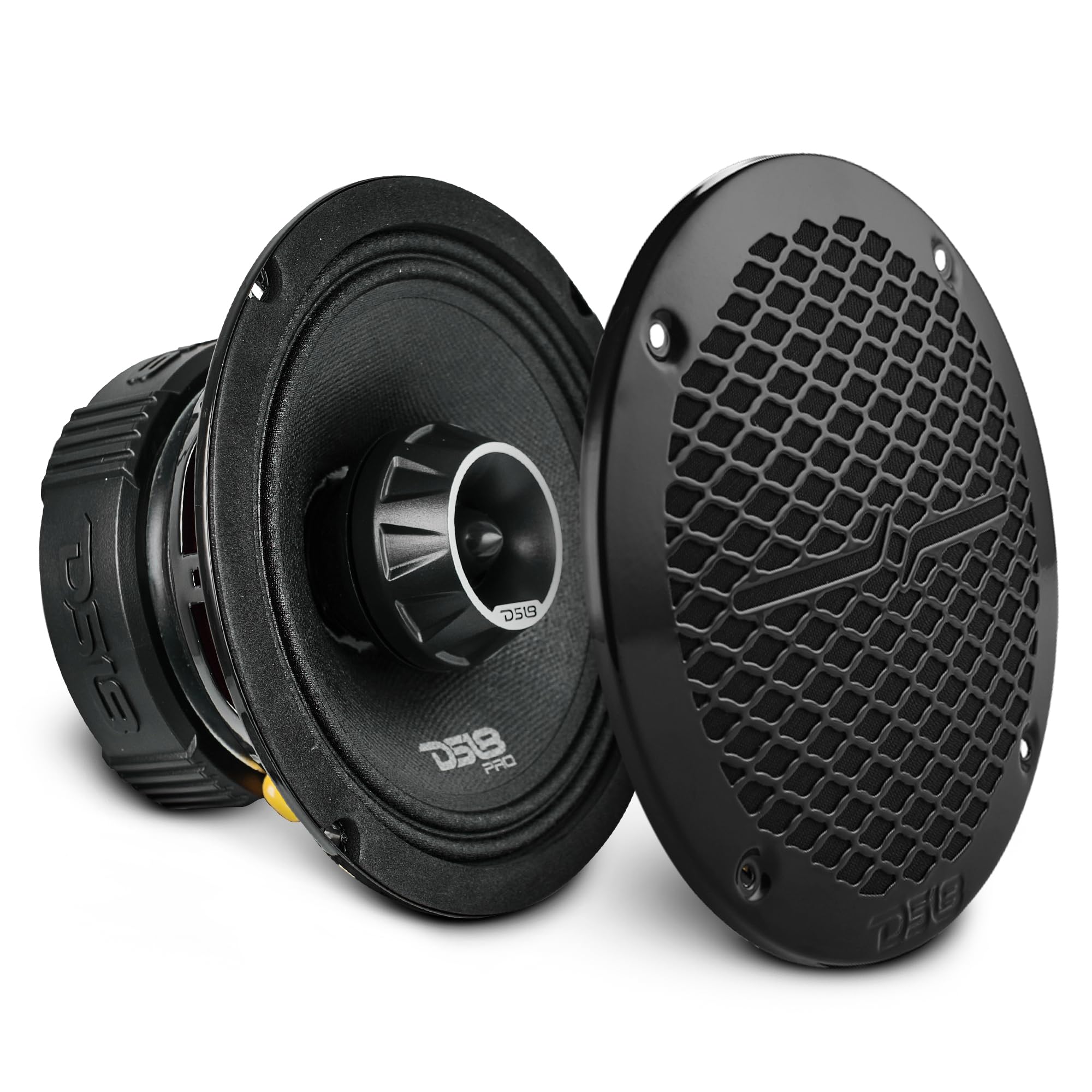
The loud, weather-ready bruiser that keeps vocals clear at highway speed
This is a 2-way speaker with a built-in bullet tweeter, so you get a midrange and high-frequency driver in one package — efficient and value-packed. The DS18 PRO-ZT6 handles a muscular 450W max and 225W RMS at 4 ohms, enough to carry a full range of audio without breaking a sweat. Inside, a 1-inch high-temperature Kapton voice coil manages heat, while a steel midrange basket and neodymium magnet build for durability.
Sound quality leads the way in owner feedback, and it earns specific praise for staying clear and audible at speeds over 50 mph. Owners also call out heavy-duty, durable build quality that holds up over time. The water-resistant design and included black metal mesh grill make it a fit for open-air setups like side-by-sides. Fit gets mixed notes, so verify your mounting location.
Loudness read: Buyers describe it as “very very loud” with tight low-mids — deep sub-bass is a subwoofer’s job.
Durability note: The rugged materials and water resistance suit outdoor and off-road use well.
6. HERTZ UNO Series K-165 Component System
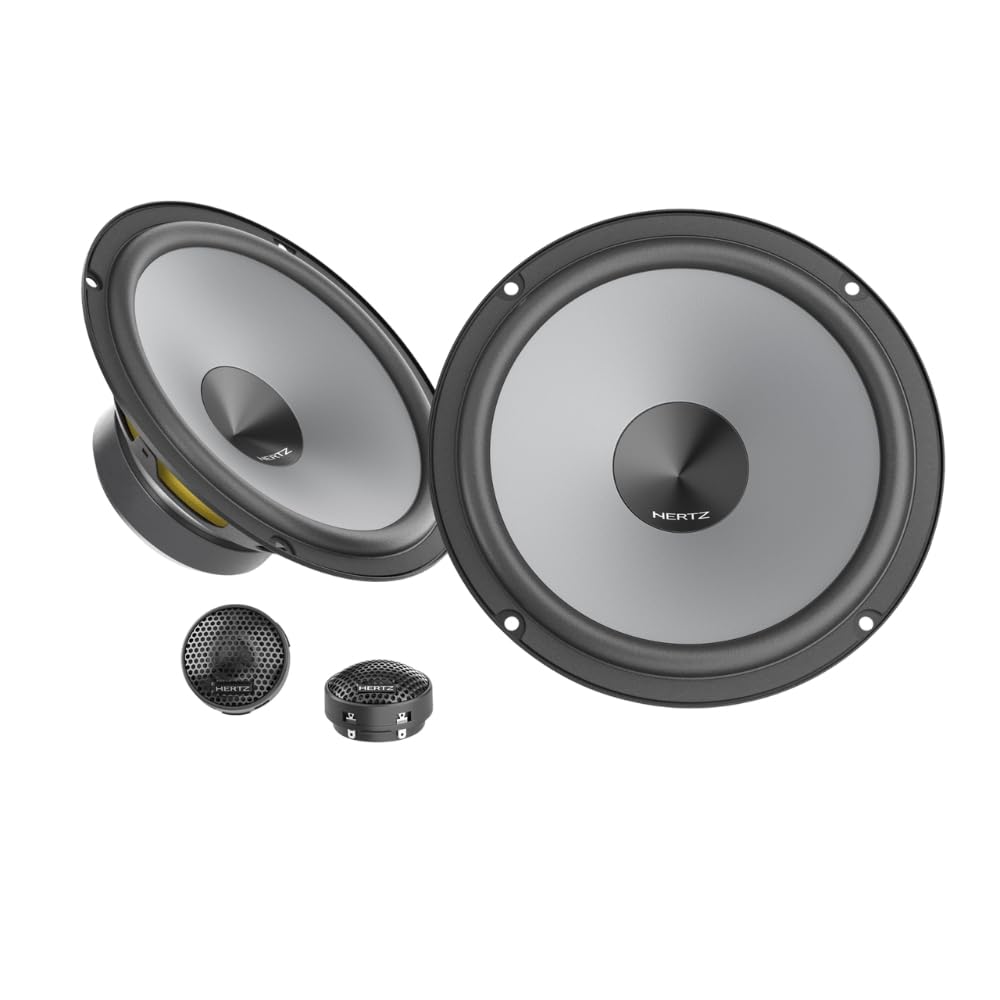
The Italian-tuned component set that rewards a careful ear
For the listener who wants detail over sheer volume, the HERTZ UNO K-165 is a refined upgrade. The component setup uses a water-repellent pressed-paper woofer cone with a ferrite magnet, paired with a PEI tweeter dome on a neodymium magnet for clean, natural highs. Owners consistently report this plays louder at any given wattage than the speakers it replaces, with excellent clarity.
The build quality earns heavy praise, and it shows up repeatedly as a worthy replacement for stock speakers. Reviewers describe the sound as “natural and clean.” One savvy owner notes the tweeters can run slightly bright on a factory head unit — an amplifier upgrade is the typical next step, so budget accordingly.
Clarity verdict: You get crisp highs without shrillness and clean, punchy mids that make vocals and guitars stand out.
Power note: These want real power to sound their best — a factory head unit alone may leave them underdriven.
7. Rockford Fosgate M0-65B Marine Coaxial Speakers

Built to survive the elements and still deliver serious sound
If your speakers live on a boat, golf cart, or off-road rig, this is the pair to consider. The M0-65B is purpose-built for outdoor environments, with weatherproofing technology designed to withstand water, salt, dust, and UV rays — the elements that destroy standard car speakers. The Element Ready design and corrosion-resistant, weatherproof construction make it a strong candidate for marine and power-sports use.
Owner feedback centers on the clear sound and the value for the price. On a 4-ohm system with a 65W RMS / 250W max power handling and a built-in 6dB/octave crossover, it delivers a solid low-end and midrange topped by a smooth LCP balanced dome tweeter. It’s been put to work in golf carts, DIY ice chest builds, and Polaris RZRs. Plan for a 5.38-inch mounting hole and 2.52-inch mounting depth.
Earthproof Design
- Weatherproofing handles water, salt, dust, and UV
- Backed by a full 2-year warranty
- Loud, clear performance in open-air builds
Check the Fit
- Fit gets the most negative feedback — pods often need adjustment
- Exact dimensions matter; verify hole size before cutting
Best for: Boats, side-by-sides, and golf carts where water and sun are constant threats.
Think twice if: You’re installing into factory pods expecting a perfect bolt-in — alignment is the recurring catch.
8. Pioneer P.R.O. Series TS-M651PRO Midrange

The high-SPL midrange built for decibel chasers
This Pioneer is a specialist tool for one job: producing serious sound pressure levels. Designed as the “Reference for Open Show” series, the TS-M651PRO uses a lightweight pulp cone to minimize distortion and deliver strong clarity. With a 94dB sensitivity rating, it turns low-power inputs into clear, powerful sound — ideal for pro-level builds that favor midrange punch.
Owners praise the sound quality above all, with one noting it stays clear even at 80 mph on the highway. The frequency response spans 50Hz to 18kHz, so you hear deep lows and crisp highs. It handles a sturdy 120 watts continuous / 500 watts max, meaning it can take serious volume without distorting. Feedback highlights great midrange sound, though hard bass requires a subwoofer — and some Chevy trucks need door panel trimming with this one.
Midrange mic-drop: Huge clarity and volume from a compact, lightweight 5.68-pound package.
Caveat: This is a midrange driver — plan a sub for lows and expect to trim panels on some vehicles.
9. JBL GTO629 Premium Co-Axial Speakers
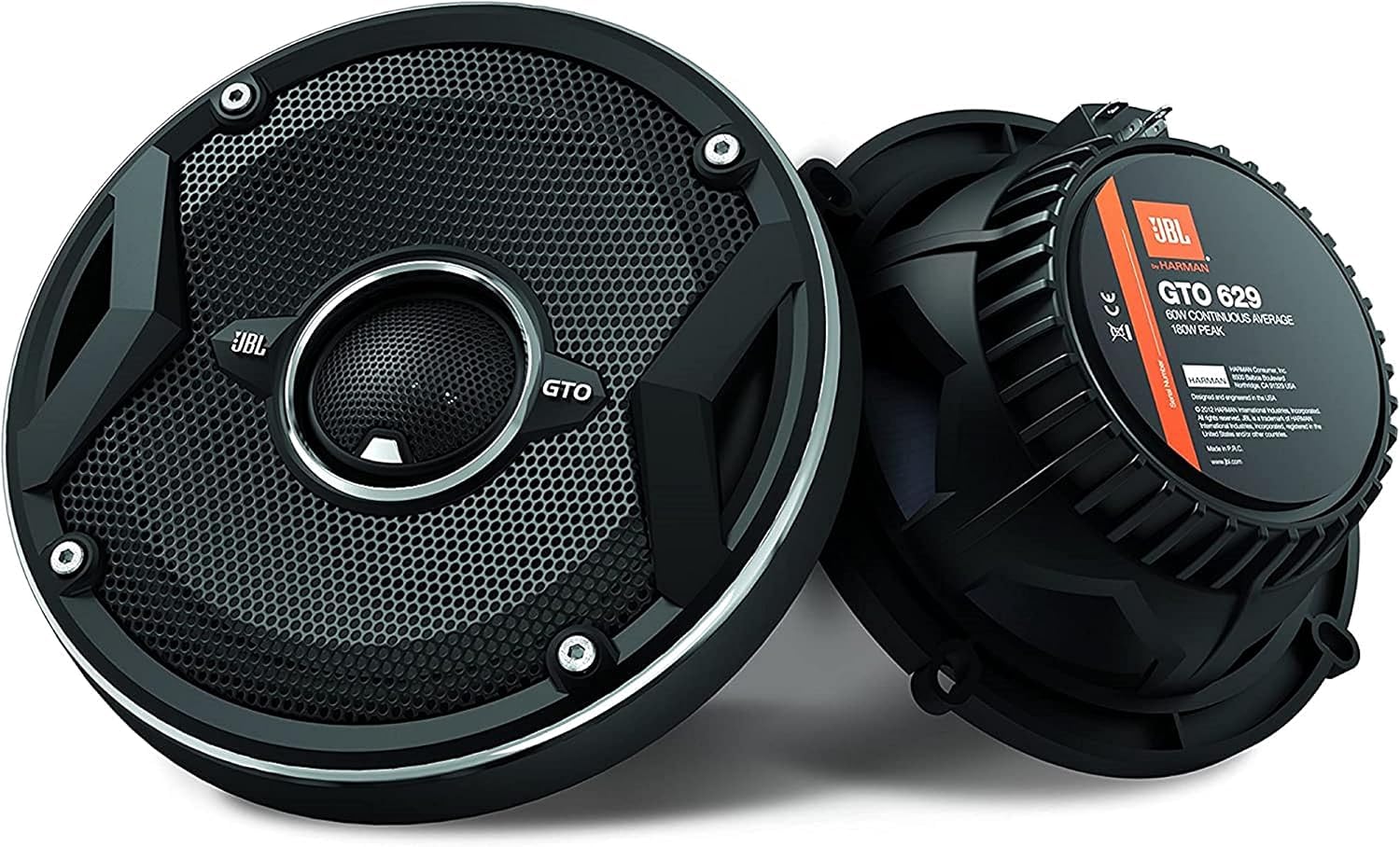
The factory replacement that adds real bass without needing a sub
JBL’s Plus One cone design is the headline here: the carbon-injected cone is larger than others in its size class, which lets it move more air and produce more bass from the same footprint. Combined with a low-impedance 3-ohm design, it compensates for the undersized wiring in many modern cars and squeezes more output from every watt your stereo delivers.
Sound quality earns top marks from owners, who call it a great upgrade over factory speakers with crisp output and strong mid-bass. The patented UniPivot tweeter (a pivoting high-frequency driver) lets you aim the highs at your ears, even when the speakers sit low in the doors. A dual-level tweeter volume adjustment helps tune the sound to your taste.
Bass-Friendly Design
- Larger cone area digs deeper for its size
- 3-ohm load boosts output from low-power head units
- Adjustable, aimable UniPivot tweeter
Consider This
- Fit receives mixed feedback — some cars need minor mods
- Durability is the recurring concern, with some failing around a year
Who it’s for: Commuters craving richer bass and clear highs from a stereo-driven setup without an amp.
Who it’s not for: Buyers in cars with tight mounting holes — and those expecting decade-long reliability.
Understanding the Specs
Power Handling (RMS vs Max)
Think of RMS as the workload your speaker handles continuously, like a runner’s steady pace. Max power is a sprint — fine in short bursts, but not for daily use. Match your amplifier’s RMS output to the speaker’s RMS rating; too little power can clip and damage the speaker, while matching gives clean, dynamic sound.
Impedance (Ohms)
Impedance is how much electrical resistance your speaker presents to the amplifier. A standard car speaker is 4 ohms, which pairs well with most aftermarket amps. A 3-ohm speaker like the JBL GTO629 draws more current, which can help weaker factory stereos play louder without distortion, but it’s not suitable for every amplifier.
FAQ
What is the difference between coaxial and component 6.5 speakers?
Will a 6.5-inch speaker fit in my car’s factory location?
Can I run these speakers off my factory stereo without an amplifier?
What does RMS power mean for my listening experience?
Do I need a subwoofer if I upgrade my 6.5 speakers?
How long do aftermarket 6.5 speakers typically last?
What is the ideal amplifier power for a 6.5-inch speaker?
What does sensitivity (dB) tell me about a speaker?
Final Thoughts: The Verdict
For most people, the 6 1/2 speakers winner is the ORION Cobalt CM654 because it delivers the highest owner-rated sound quality with serious power handling — 250W RMS and a 96.67 dB efficiency rating that turns modest wattage into real volume. If you want the simplest, most affordable factory upgrade, the Kenwood KFC-1666R drops into stock locations with zero modifications. And for outdoor or marine builds that face sun and spray, the Rockford Fosgate M0-65B is the pair to reach for.
How We Picked
We do not accept paid placement. Every pick is matched to a real buyer and a real use-case; we do not hands-on test units.
Sources & Methodology
Specifications: manufacturer listings and product documentation. Review insights: verified customer reviews, as of August 2026. Pricing: not shown on this page (it changes often); check the current price via the retailer link.
As an Amazon Associate, Gadgets Feed earns from qualifying purchases. This does not affect which products we feature.