
Our readers keep the lights on and my morning glass full of iced black tea. As an Amazon Associate, I earn from qualifying purchases.
You are wiring a 50-amp EV charger, a subpanel, or a big electric range, and the 6/3 AWG wire you pick decides if the job passes inspection and stays safe. Pick wire that is too thin, and it overheats. Pick the wrong jacket type, and it fails inside a drywall cavity. Here are five verified 6/3 NM-B copper cables compared head-to-head on conductor count, length, and real buyer feedback — so you match your circuit exactly without paying for extra feet you cannot use.
I am Min, the founder and writer at Gadgets Feed. This guide compares the manufacturers’ published specs and patterns across verified customer reviews. You get each pick’s real strengths and trade-offs, not marketing spin.
All five cables carry 240-volt loads at up to 55 amps through a 6-gauge, 3-conductor-with-ground bundle. The right choice depends on your exact run length, workspace, and budget. Let this comparison of the best 6/3 awg wire for residential indoor wiring separate the amps from the hype.
Quick Picks
- XMK 35ft 6/3 NM-B Wire with Ground — Best Overall
- XMK 25ft 6/3 NM-B Wire with Ground — Best Value
- Woods 63950032 50 ft. 6/3 Black Stranded CU SIMpull NM-B Wire — Top Performer
- Arizona Electrical Solutions 50 ft 6/3 NM-B Copper — Premium Pick
- Woods 63950021 25′ 6-3 NMW/G Wire — Compact Pick
How To Choose The Best 6/3 AWG Wire
6/3 NM-B cable (a nonmetallic-sheathed bundle often called Romex) has three insulated conductors and a bare ground wire. It handles up to 55 amps at 600 volts, so it is the standard for 240-volt circuits like EV chargers, subpanels, ovens, and generator hookups. Here is what to check before you buy.
Match the exact length to your run
Order 35 feet when you only need 25 feet, and you waste cash. Buy 25 feet when your run measures 30 feet, and you must splice — that adds resistance and a code headache. Measure from the breaker panel to the device location, add a few feet for bends and service loops, then pick the spool that fits. The difference between a 25-foot and a 35-foot coil is 40% more length — enough to cover a garage EV charger but not a whole-house subpanel.
Check conductor count for your outlet type
Standard 6/3 NM-B has four wires: three insulated conductors plus one bare ground. Some cables say “3 conductor” and leave the ground out of the count — so a cable that says 3 wires actually means 3 insulated wires plus 1 bare wire (4 total). If your receptacle (like a NEMA 14-50 for an EV or a range) needs a separate neutral and two hots, you require all three insulated conductors. Always check the total conductor count in the specs before you cut.
Quick Comparison
On smaller screens, swipe sideways to see the full table.
| Model | Best For | Length | Total Conductors | Ground Wire | Amazon |
|---|---|---|---|---|---|
| XMK 25ft 6/3 NM-B | Short-run branch circuits | 25.0 ft | 4 | 10 AWG | from $84.99Amazon |
| Woods 63950021 25ft | Generator interlock wiring | 25 ft | 3 | Bare copper | $249.83Amazon |
| XMK 35ft 6/3 NM-B | Medium-run EV charger | 35.0 ft | 4 | 10 AWG | $145.99Amazon |
| Arizona 50ft 6/3 NM-B | Residential subpanel feeder | 50 ft | 3 | Bare #10 copper | $248.00Amazon |
| Woods 63950032 50ft | Long full-circuit runs | 50 ft | 3 | Bare copper | $249.83Amazon |
In‑Depth Reviews
1. XMK 35ft 6/3 NM-B Wire with Ground
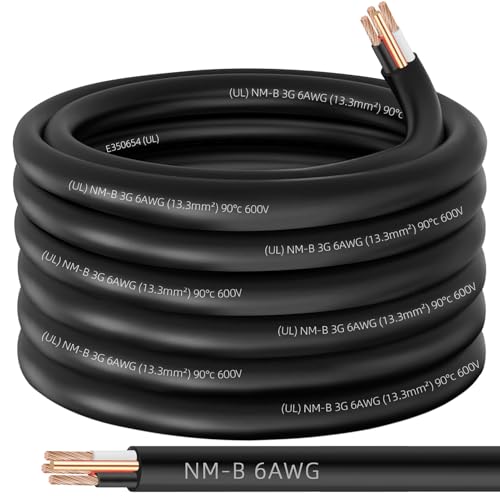
The 35-foot cable gives you 40% more length than a 25-footer — just right for an EV charger across a garage wall without a splice.
This XMK cable has four wires (three insulated conductors plus one 10 AWG ground wire) — exactly what a NEMA 14-50 outlet needs. At 35 feet you get a 40% more length over the 25-foot version, enough to reach from a supplementary panel across a garage without splicing. Buyers report it is “robust 6 gauge wire that installed easily enough for an EV charger running from a supplement panel to a NEMA 14-50 outlet,” noting the PVC jacket is stiff but manageable.
The 7-strand copper carries a 600-volt rating and is UL listed for dry indoor locations like basements and garages. Unlike the Woods 25-foot cable which uses only 3 total wires, the XMK gives you four separate conductors for circuits that need a dedicated neutral and two hots. The double-layer nylon-and-PVC insulation resists corrosion and oxidation, so you get safe power over the life of the installation.
The case for it: This is the ideal length for most residential 50-amp runs — long enough to avoid a splice, short enough to not pay for 15 extra feet you will coil up. The four-conductor setup works with standard 240V receptacles right out of the box.
The catch: Do not use this outside or in wet locations. Like all NM-B, it is rated for dry indoor environments only — if your run goes through a damp crawlspace or exterior wall, you need a different cable type.
Best for: Medium-length 50-amp circuits — EV chargers, subpanels, ovens, and generator hookups that need a separate neutral.
Skip if: Your run is under 30 feet (save money with the 25-foot version) or you need an outdoor-rated cable.
2. XMK 25ft 6/3 NM-B Wire with Ground
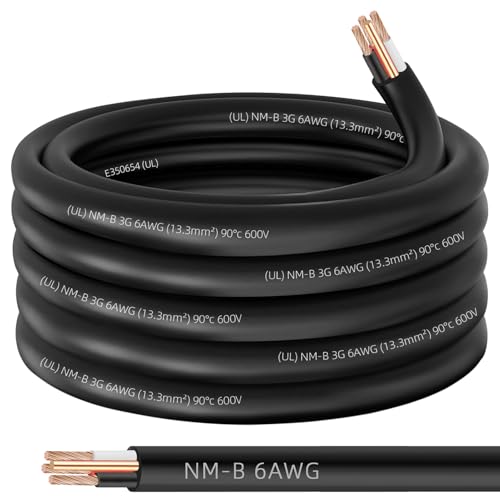
A cheaper 25-foot spool that still holds a full four-conductor setup — perfect when the outlet is next to the panel.
At 25 feet, this XMK cable is the entry-level pick for jobs where the outlet is right next to the panel — think a dryer or a small subpanel in the same room. It matches the 35-foot version in every spec except length: same 10 AWG ground wire, same 600-volt rating, same UL listing for dry indoor locations. One reviewer called it “excellent quality 6/3 wire with shielded jacket” and noted it was “73.68% cheaper than buying by foot at major chain stores.”
The biggest difference between this and the Woods 25-foot cable is conductor count: the XMK has four wires (3 insulated + 1 bare ground) while the Woods has only three total wires. That fourth conductor matters if you wire a device that needs a neutral and two hots, like a NEMA 14-50 EV outlet. The copper is 99.99% oxygen-free, which keeps resistance low for steady power delivery.
Why it’s great
- Full four-conductor bundle works with standard 240V receptacles that need a neutral
- 99.99% oxygen-free copper reduces resistance for safe power transmission
- Reviewers report it matches big-box store quality at a lower price
Good to know
- 25 feet is short — measure twice before you buy
- Stiff 6-gauge wire is not flexible enough for tight bends inside a panel
Best for: Short 50-amp branch circuits where the outlet is within 25 feet of the breaker panel — dryers, ovens, and small subpanels.
Skip if: Your run is longer than 25 feet (go with the 35-foot version) or you need a 3-wire cable for a straight 240V load without a neutral.
3. Woods 63950032 50 ft. 6/3 Black Stranded CU SIMpull NM-B Wire

50 feet of premium SIMpull-jacketed wire that feeds a subpanel across the whole house — with 19 strands for easier bending.
Woods wraps this 50-foot reel in its patented SIMpull jacket, which the maker claims makes pulling, stripping, and installing noticeably easier than standard PVC-coated cable. At 17.2 pounds, it is the heaviest cable here, but the 19-strand construction (vs 7 strands on the XMK cables) gives it more flexibility for snaking through joists and stud bays. A buyer who installed a 50-amp EV-rated receptacle noted the “ground had paper wrap, marked ‘Southwire’ and UL code” — confirming the same quality you get at big-box stores.
Unlike the XMK 35-foot cable which holds 4 conductors, the Woods has 3 total wires — two hots, one neutral, plus a bare ground. That works perfectly for a 240V generator interlock or a subpanel feeder where the neutral is bonded separately. The 600-volt rating and UL listing meet NEC requirements for indoor dry locations. With 50 feet on the spool, this is the best pick for a run from a main panel to a far-side garage or a basement subpanel.
The case for it: The SIMpull jacket and 19-strand copper make this the easiest 50-foot cable to work with in tight spaces. It is the same Southwire product you find at home centers, often at a lower delivered price.
The downside: Three total wires means no dedicated neutral conductor — verify your device or subpanel actually needs the fourth conductor before buying this over the XMK 35-foot cable.
Best for: Long 50-amp runs in residential walls and attics — generator interlock circuits, large subpanels, and 240V-only loads.
Skip if: Your receptacle requires a separate neutral wire (choose a cable with 4 conductors instead).
4. Arizona Electrical Solutions 50 ft 6/3 NM-B Copper
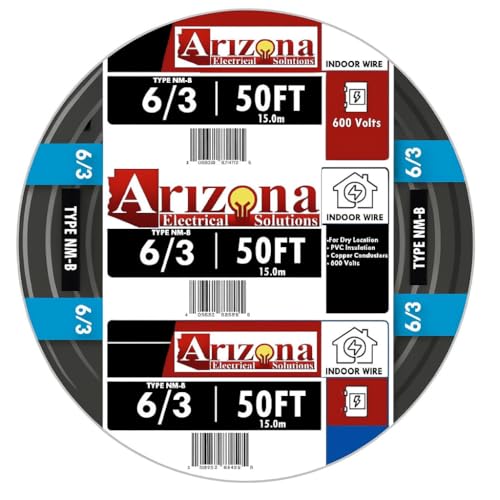
This 50-foot spool carries a 55-amp max current rating — the highest listed here — for serious subpanel work without derating.
Arizona Electrical Solutions builds this cable with a 55-amp maximum current rating (the highest listed on any cable here), making it a natural fit for a 50-amp breaker where you want full-rated capacity. A buyer who used it in a subpanel install reported “thick well-insulated conductors, easy to work with in tight conduit, solid copper ground wire, professional black jacket.” The cable meets ASTM B-3 and B-8 standards and is REACH and RoHS compliant.
The 50-foot length matches the Woods 63950032, but this cable uses only 3 conductors (no dedicated neutral path). Both cables weigh comparably, but the Arizona cable runs at a 55-amp max current versus the Woods 50-foot cable’s 55-amp limit — identical in practice for a 50-amp circuit. If you feed a subpanel that needs a neutral, you will want to confirm your setup matches the 3-wire configuration before ordering.
Why it’s great
- Rated for 55 amps maximum current — gives headroom on a 50-amp breaker
- ASTM B-3 and B-8 compliant copper for predictable performance
- Buyers praise the thick insulation and solid ground wire for easy installation
Good to know
- 3-wire configuration means no separate neutral — verify your circuit’s needs
- 50 feet is a lot of cable for short runs; measure carefully
Best for: Residential or light-commercial subpanel feeders that need the full 55-amp capacity over a long 50-foot distance.
Skip if: Your project calls for a dedicated neutral conductor (stick with a 4-conductor cable like the XMK 35-foot version).
5. Woods 63950021 25′ 6-3 NMW/G Wire

A short, affordable 3-wire coil — the cheapest UL-listed option for 50-amp generator interlock circuits.
This Woods cable is the most basic entry in the lineup: 3 total wires (two hots and a neutral, plus a bare ground) at 25 feet long. Owners mention it is “good quality 6/3 wire for 50A 240V generator interlock” and note it costs less than local home-center pricing. At 8.6 pounds it is the lightest cable here, so it handles easy for a single-wall run. The color-coded jacket uses black for 6 AWG identification, making it simple to confirm gauge at a glance.
Compared to the XMK 25-foot cable which has 4 conductors, the Woods has 33% fewer wires — meaning it works for straight 240V loads but not for outlets that need a separate neutral. The 3-wire setup is fine for a generator inlet box or a water heater, but if you wire a NEMA 14-50 EV charger you need the XMK’s fourth conductor. The cable is UL listed and made in America, adding a layer of confidence for code-compliance inspections.
The case for it: For simple 240V loads like generator interlocks, welders, or water heaters, this is the cheapest way to get a UL-listed 6/3 cable without paying for conductors you will not use.
The trade-off: Three conductors limit your wiring options — skip this if you need a neutral for a 120/240V receptacle or a subpanel.
Best for: Short 50-amp runs for 240V-only loads — generator interlock, water heater, or welder circuit in the same room as the panel.
Skip if: Your device needs a separate neutral wire (choose the XMK 25-foot cable with 4 conductors instead).
Understanding the Specs
Conductor Count (3 vs 4 Wires)
The “3” in 6/3 means three insulated conductors — typically black (hot 1), white (neutral), and red (hot 2). A bare copper ground wire is always included but not counted in that number. A cable that says “3 wires” actually has 3 insulated conductors plus the ground (4 total physical wires). Some manufacturers, like XMK, list the ground wire in their product specs, showing 4 wires total. Others, like Woods, count only the insulated conductors, showing 3 wires. Always check the spec line marked “Number Of Wires” to know exactly what you are getting — “3 wires” often means no separate neutral counted, while “4 wires” gives you a dedicated neutral path for 120/240V receptacles.
Strand Count and Flexibility
6 AWG wire is naturally stiff. Cables with more strands (19 vs 7) bend more easily around tight corners inside a wall cavity or panel. The Woods 50-foot cable uses 19-strand copper, while the XMK cables use 7-strand. More strands means you wrestle less during installation, but the wire costs slightly more to produce. For a straight pull through conduit or across a short attic, 7-strand works fine. For long, twisty runs inside stud walls, the extra flexibility of 19-strand saves your forearms.
FAQ
What does 6/3 NM-B wire mean exactly?
Can I use 6/3 NM-B wire outdoors?
What size breaker do I need for 6/3 wire?
Can 6/3 wire run inside conduit?
What is the difference between 6/2 and 6/3 wire?
How many feet of 6/3 wire do I need for an EV charger?
Is 6/3 NM-B wire heavy or hard to work with?
Can I use 6/3 wire for a 100-amp subpanel?
What does UL listed mean for 6/3 wire?
How do I strip 6/3 NM-B wire cleanly?
Final Thoughts: The Verdict
The best 6/3 awg wire for most people is the XMK 35ft 6/3 NM-B Wire with Ground — it balances a useful 35-foot length, a full four-conductor setup for standard 240V receptacles, and solid 99.99% oxygen-free copper at a mid-range price point. If you need a shorter run under 25 feet, grab the XMK 25-foot variant for the same four-conductor configuration at a lower entry cost. And for a long 50-foot subpanel feeder where SIMpull flexibility matters, the Woods 63950032 50 ft. cable slides through studs more easily than the XMK 50-foot options thanks to its 19-strand construction.
How We Picked
We do not accept paid placement, and we did not hands-on test every unit. Instead, we match each pick to a real buyer and use-case by comparing the manufacturers’ published specifications against the patterns in verified customer reviews — so you get each pick’s real strengths and trade-offs instead of marketing copy.
Sources & Methodology
Specifications: manufacturer listings and product documentation. Review insights: verified customer reviews, as of July 2026. Pricing: not shown on this page (it changes often); check the current price via the retailer link.
As an Amazon Associate, Gadgets Feed earns from qualifying purchases. This does not affect which products we feature.
Product prices and availability are accurate as of the date/time indicated and are subject to change. Any price and availability information displayed on Amazon at the time of purchase will apply to the purchase of this product. As an Amazon Associate I earn from qualifying purchases.
CERTAIN CONTENT THAT APPEARS ON THIS SITE COMES FROM AMAZON. THIS CONTENT IS PROVIDED "AS IS" AND IS SUBJECT TO CHANGE OR REMOVAL AT ANY TIME.
Amazon and the Amazon logo are trademarks of Amazon.com, Inc. or its affiliates.