
Our readers keep the lights on and my morning glass full of iced black tea. As an Amazon Associate, I earn from qualifying purchases.
Specs are compiled from manufacturer listings and verified buyer reviews and can change over time — please confirm the key details on the product page before buying.
Buying a 6/4 SOOW cord is really a fitment decision, not a shopping spree. You need a cable that is exactly 6 AWG (American Wire Gauge — a thickness scale where lower numbers mean fatter copper), exactly four conductors, and a jacket rated for oil and water. Get one of those wrong and the cord either will not carry your load or will not survive the job site. Three cables here meet that bar, and they split by run length: two at 10 ft, one at 75 ft.
I’m Min — the founder and writer behind Gadgets Feed. This guide is built by comparing the manufacturers’ published specifications and the patterns across verified customer reviews, so you get each pick’s real strengths and trade-offs instead of marketing spin.
You will see how length, stranding, and jacket thickness change what each cord can do for a generator, welder, or EV charger. What matters most is matching the cord to your run and your load, and that is exactly how the picks below are separated — this breakdown of the 6/4 soow cord shows which length and build actually suits your job.
Our Picks at a Glance
How To Choose The Best 6/4 SOOW Cord
Most people who buy the wrong cord buy it for one of two reasons. They assume every fat black cable is the same, or they assume the number on the jacket is decorative. Either mistake means a return shipment and a lost afternoon. Four specs decide whether a 6/4 SOOW cord works for your setup.
Confirm the gauge and the conductor count before anything else
The “6/4” in the name is a two-part instruction. The 6 is the gauge — the thickness of each copper conductor, where a lower number means a heavier conductor that carries more current. The 4 is the conductor count, meaning four separate current-carrying wires inside one jacket. A 6/4 cord is not the same product as a 6/3 cord, and no adapter fixes that difference. Check the listing text for both numbers and confirm the phrase “4 conductor” appears, not just “6 AWG.”
Decide your run length first, then pick the cord
Length decides which of these three cords you can even use. A 10-foot cord is a jumper between a generator and a transfer setup or a short run to a portable light. A 75-foot cord is a distribution line across a work site or a marina dock. Longer runs lose more voltage along the way, so buy the shortest cord that reaches your equipment rather than the longest one you can afford. The verified length gap here is stark: the 75-foot option runs 75 ft against 10 ft on the shortest pick, a 7.5x difference in reach.
Understand what the SOOW jacket buys you
SOOW is a rating, not a brand. It describes a cable built for service duty with an oil-resistant and water-resistant jacket, typically a PVC outer layer over insulated conductors. That jacket is what lets the cord sit on wet concrete, get dragged past hydraulic fluid, and still insulate properly. All three cables here carry that SOOW designation, so the jacket is not where they differ. Where they differ is stranding, jacket thickness, and length.
Weigh stranding and jacket thickness for flexibility
More, finer strands generally mean a cord that bends more easily and coils tighter. The 75-foot option lists 1176 strands across its conductors, while the shorter picks describe multi-strand construction without publishing a strand total. Jacket thickness matters too — a 1.5 mm overall PVC jacket over 1 mm conductor insulation is a published figure on the long cord. For cold-weather coiling, finer stranding and a thinner jacket bend more easily than a stiff, thick-jacketed cord.
Quick Comparison
| Model | Best For | Length | Gauge / Conductors | Voltage Rating | Amazon |
|---|---|---|---|---|---|
| 10ft 6/4 6 AWG Portable Power SOOW Cable★ Best Overall | Short generator and charger runs | 10 ft | 6 AWG / 4 | 600V | Amazon |
| IronBox Electric 6/4 SOOW Bulk Cable | Panel and data center work | 10 ft | 6 AWG / 4 | 600V | Amazon |
| Kimbluth 6/4 SOOW Wire 75FT | Long site and dock runs | 75 ft | 6 AWG / 4 | 600V | Amazon |
In-Depth Reviews
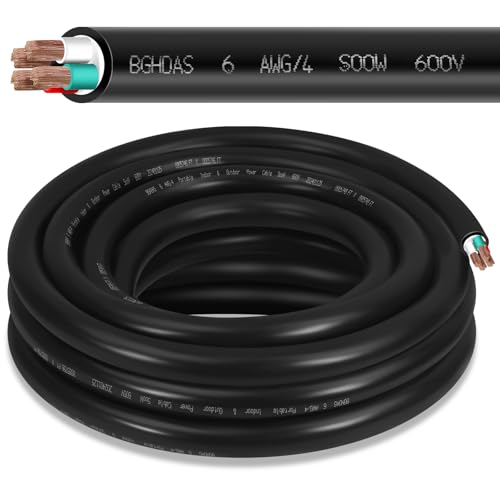
1. 10ft 6/4 6 AWG Portable Power SOOW Cable
Our pick — 4.5+★ from 300+ verified ratings; the strongest balance of quality and price.
A 10-foot service cord that does the short, heavy job without a coil of spare cable underfoot.
For a generator sitting beside a transfer switch, or a battery charger parked next to the vehicle, ten feet is the number that matters. This cable runs 10 ft of 6 AWG, 4-conductor SOOW wire at a 600V rating, with a 21.7 mm outside diameter that tells you it is a substantial cable you will feel in your hand. Four conductors means the four wires carrying current are inside that jacket — note that this is not a 4+1 type, so there is no separate ground wire bundled in. Plan your terminations around that.
The copper is oxygen-free, which the maker lists as giving better conductivity and corrosion resistance than non-OFC wire. In practical terms, that is about keeping the connection dependable when the cord lives outdoors and gets rained on. The jacket carries service, oil, and water resistance, so it tolerates the spills and weather of a driveway or a job trailer. And here is the strongest signal in its favor: value is what wins people over most often in the feedback, ahead of every other consideration. Buyers also single out how simple it is to strip — a real advantage when you are terminating four conductors by hand.
The trade-off you should think about before ordering is flexibility. The feedback splits hard on this: plenty of buyers describe the cord as super flexible, while others find it hard as a rock. If your install route has tight bends at each end, plan for a stiffer cable than the word “flexible” suggests. Set against the long 75-foot option, this cord gives up reach — 75 ft against 10 ft — in exchange for a short, manageable run.
What earns the top spot
- Four conductors at 6 AWG with a 600V rating, matched to the 6/4 SOOW spec exactly
- Oxygen-free copper for conductivity and corrosion resistance outdoors
- A service, oil, and water resistant jacket that suits driveway and trailer use
- Stripping the conductors is consistently described as simple
What to plan around
- Flexibility is genuinely mixed in the feedback — some find it stiff to bend
- No separate grounding wire included, so confirm your wiring setup first
- Ten feet limits you to short runs by design
Reach for this if: your generator, charger, or portable light sits within ten feet of the outlet or panel.
Hold off if: you need a coil that stays soft in cold weather — the flexibility reports are split enough to check your routing first.
2. IronBox Electric 6/4 SOOW Bulk Cable
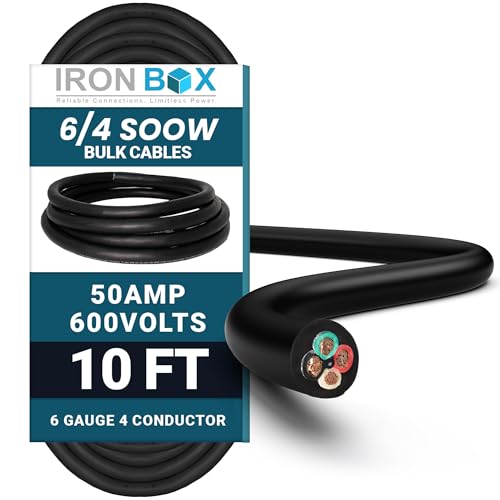
The one that publishes both numbers — 600V and 50A — before you ask.
Most 6/4 listings tell you the voltage and leave the amp rating to guesswork. This one states both: rated for 600V and 50A across a 6 gauge, 4-conductor build. For anyone wiring a circuit, feeding a data center rack, or hooking up a generator, that 50A figure is the spec that lets you check the cable against your breaker without hunting through forums. It comes as a 10 ft bulk length with four conductors in black, green, red, and white.
Construction is where this pick separates itself. The conductors are braided copper rather than a simple multi-strand bundle, which the maker describes as adding both durability and flexibility over time. The jacket is likewise built for water and oil exposure, so indoor and outdoor use both fall inside its stated range. In the feedback, build quality is the thing buyers praise most — it is the most-discussed point about this cable, well ahead of anything else about it. That tracks with a cable sold on the strength of its materials rather than its marketing copy.
Worth knowing: value draws split opinions here, and this is the pricier of the two short cords. If you are comparing it directly against the 10-foot pick above, the difference is breadth of published data and braided copper construction, not a different gauge or conductor count — both are 6 AWG, four conductors, 600V. Neither of them reaches the 75 ft of the long option. Value for money is genuinely mixed in the feedback, though many do call the price great, so judge it on whether the braided build and the 50A rating matter for your install.
Where it justifies itself: that 50A rating paired with 600V gives you a checkable ceiling before you commit the cable to a circuit, and braided copper is a step up in construction from a plain stranded bundle.
The honest catch: if your only requirement is a short 6/4 run and you do not need the published amp figure, the cheaper 10-foot cord covers the same gauge and conductor count.
Matches your job if: you are panel-side, rack-side, or data center-bound and want the amp rating printed in the listing.
Second-guess it if: the install is a simple ten-foot jumper — the braided build is nice but not load-bearing for that use.
3. Kimbluth 6/4 SOOW Wire 75FT
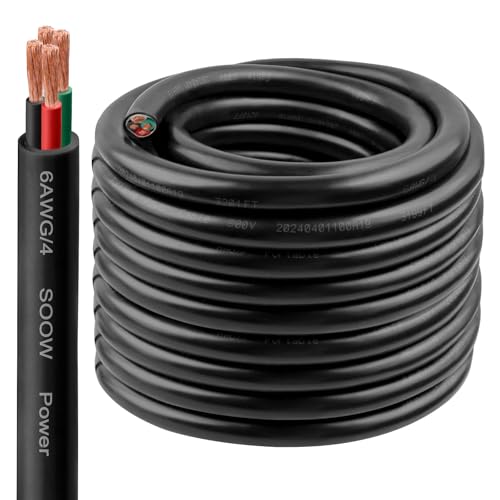
Seven and a half times the reach of the short picks, wound from 1176 fine copper strands.
At 75 ft, this cord becomes a distribution line rather than a jumper. This one stretches 75 ft of 6 AWG, 4-conductor SOOW cable across a work site, a dock, or from a generator to a distant panel — against the 10 ft on the other two picks, that is the whole reason it exists. It holds 600V like the rest, and the jacket is built to resist oil, water, and acid across a stated range of -40℃ to 90℃. That temperature spread is the detail that matters if the cable gets coiled in a truck bed overnight and then strung out in summer sun.
The conductor build is the standout spec here. Each of the four conductors is made from 294 finely stranded copper wires, which the maker totals at 1176 strands across the cable. Insulation is 1 mm of PVC per conductor, wrapped in a 1.5 mm overall PVC jacket. Finer stranding keeps a 75-foot, 6 AWG cable coilable instead of rigid, and the 1.5 mm jacket adds abrasion protection for a cord that gets dragged. Oxygen-free copper is used throughout for conductivity and corrosion resistance, the same reasoning you see across this category.
Two things to square away before you order. First, this is four current-carrying conductors only — there is no separate grounding wire and it is not a 4+1 type cable, so verify your setup calls for exactly that. Second, the published specs are the strongest of the three, but the review history is the thinnest; the build quality here is the story, not a long track record. If your run needs 75 feet, neither 10-foot pick reaches it.
The engineering highlights
- 75 ft of 6 AWG, 4-conductor SOOW at 600V — the only long option here
- 1176 finely stranded copper wires for a more workable long coil
- 1.5 mm overall PVC jacket over 1 mm conductor insulation
- Rated from -40℃ to 90℃ with oil, water, and acid resistance
Confirm before buying
- No separate grounding wire and not a 4+1 type — check your wiring plan
- The shortest review history of the three picks, so fewer voices behind it
- Seventy-five feet is more cable to coil and store than a short jumper
Built for: site, dock, and generator-to-panel runs where ten feet will not get you there.
Not the pick if: your equipment sits close by — you would be coiling 75 feet of cable for a jump of a few paces.
Understanding the Specs
Gauge and conductor count (the “6/4”)
The first number is the wire gauge — a thickness scale where a lower number means a heavier copper conductor that can carry more current. The second number is how many current-carrying conductors sit inside the jacket. A 6/4 cord has four. Read every listing for both figures, because a 6/3 cord looks nearly identical on a shelf and is a different product entirely. All three cables here are 6 AWG with four conductors, so this is not where they separate.
Voltage and amp ratings
Voltage tells you the electrical pressure the cable’s insulation is built to handle; all three here are rated for 600V. The amp rating is the current the cable can carry, and only the IronBox listing publishes one at 50A. If you are wiring into a circuit and need to confirm the cable against your breaker, that published amp figure saves you a research session. A cable rated for 600V at 50A is the kind of match you want to verify before cutting anything.
Stranding and flexibility
Stranding is how many thin copper wires are twisted together to make up each conductor. More, finer strands generally produce a cable that bends and coils more easily — the 75-foot pick lists 1176 strands, while the shorter two describe multi-strand construction without a published total. This is the spec that decides whether a long cord fights you when you roll it up in cold weather. If your route has tight bends at either end, stranding and jacket thickness are what you compare.
Jacket type: what SOOW covers
SOOW describes a service-duty cable with an oil-resistant and water-resistant jacket, usually a PVC outer layer over insulated conductors. In plain terms, the jacket is what lets the cable sit on wet ground or get splashed with hydraulic fluid and keep insulating properly. All three picks carry that rating. The 75-foot option adds published figures — 1 mm conductor insulation under a 1.5 mm overall jacket — which tells you how much protective material you are actually getting.
FAQ
Is a 6/4 SOOW cord the same as a 6/3 cord?
Do these 6/4 SOOW cables include a ground wire?
What does SOOW actually stand for in a cable jacket?
Can I run a generator on a 10-foot 6/4 SOOW cord?
Why does length matter so much when the gauge stays the same?
Is more copper stranding actually better for a long cable?
Can I use 6/4 SOOW cable indoors as well as outdoors?
What temperature range can this cable handle?
Why is the 75-foot cable built with finer stranding than the short ones?
Can I cut a 75-foot SOOW cable down to a shorter length?
Final Thoughts: The Verdict
The safest buy for most setups is the 10ft 6/4 6 AWG Portable Power SOOW Cable, because it nails the 6 AWG, four-conductor, 600V spec and earns its keep on short generator and charger runs — value is what wins people over most in its feedback. If you are wiring panel-side and want the 600V and 50A figures stated outright on braided copper, the IronBox Electric 6/4 SOOW Bulk Cable is the one to reach for. And when your equipment simply will not come within ten feet, the Kimbluth 6/4 SOOW Wire 75FT is the only cable here that covers the distance, with 1176 strands behind it.
How We Picked
We do not accept paid placement. Every pick is matched to a real buyer and a real use-case; we do not hands-on test units.
Sources & Methodology
Specifications: manufacturer listings and product documentation. Review insights: verified customer reviews, as of November 2026. Pricing: not shown on this page (it changes often); check the current price via the retailer link.
As an Amazon Associate, Gadgets Feed earns from qualifying purchases. This does not affect which products we feature.