
Most 6.5-inch speakers promise “deep bass” but deliver a thin, hollow thud that leaves your music sounding lifeless. The real challenge is finding a set that moves enough air to produce that chest-thumping pressure without distorting or blowing out at higher volumes.
I’m Min — the co-founder and writer behind Gadgets Feed. I’ve spent countless hours analyzing frequency response curves, motor structures, and real-world customer feedback to separate the speakers that just look loud from the ones that actually deliver authoritative low-end.
After digging into the specs on seven contenders ranging from entry-level upgrades to high-end component systems, this guide reveals the real-world performance data to help you choose the best 6.5 speakers for bass.
How To Choose The Best 6.5 Speakers For Bass
Selecting a 6.5-inch speaker that delivers real bass requires looking beyond the flashy peak wattage numbers printed on the box. You need to understand the mechanical limits of the woofer and how it interacts with your vehicle’s acoustic environment.
RMS Power Handling Is Non-Negotiable
Peak power is a marketing number that means almost nothing for real-world bass performance. The RMS rating tells you how much continuous power the voice coil can handle without thermal damage. A speaker with 70W RMS will deliver noticeably tighter, more controlled bass than one that claims 500W peak but only handles 30W RMS.
Cone Material and Surround Compliance
Polypropylene cones offer a good balance of stiffness and damping, producing clean midbass without breakup. Carbon fiber cones are stiffer, which can reduce distortion at high output levels but may sound harsher. The surround material is just as critical: butyl rubber surrounds remain compliant in extreme temperatures and allow longer, more linear cone excursion — the actual movement that creates bass pressure.
Component vs. Coaxial: The Bass Trade-Off
Component systems separate the woofer from the tweeter and include an external crossover. This design lets the woofer operate without interference from the tweeter, allowing cleaner midbass and lower distortion. Coaxial speakers cram both drivers into the same chassis, which physically limits the woofer’s cone area and excursion — the two factors most responsible for bass output.
Quick Comparison
On smaller screens, swipe sideways to see the full table.
| Model | Category | Best For | Key Spec | Amazon |
|---|---|---|---|---|
| Focal KIT 165AS | Component | Highest sensitivity & soundstage | 91.3 dB sensitivity | Amazon |
| Focal RSE-165 | Component | Balanced upgrade with good bass | 50W RMS / 100W peak | Amazon |
| KICKER 46CSS654 | Component | EVC deep bass technology | Heavy-duty motor with EVC | Amazon |
| ORION XTR65.SC | Component | High power handling value | 85W RMS / 340W peak | Amazon |
| ORION CB65C | Component | Budget component entry | 70W RMS / 280W peak | Amazon |
| WDiYA Carbon Fiber | Coaxial | Budget-friendly full range | 1000W peak / 4 ohms | Amazon |
| MB Quart FSB216 | Component | Low-cost basic upgrade | 40W RMS / 150W peak | Amazon |
In‑Depth Reviews
1. Focal KIT 165AS Access Series 6-1/2″ 2-Way Component System
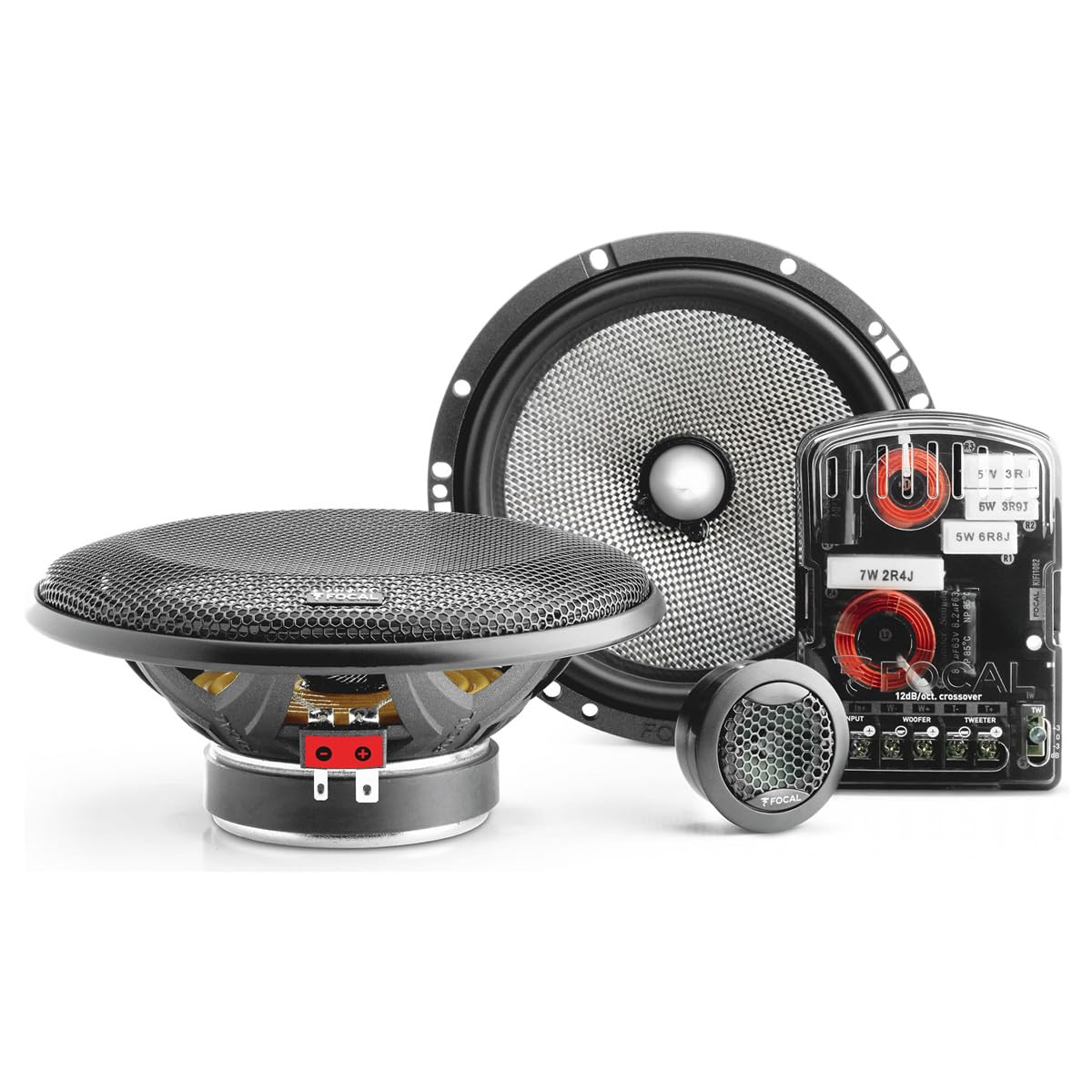
Focal’s KIT 165AS uses a polypropylene cone with a butyl rubber surround, delivering one of the highest sensitivity ratings in this comparison at 91.3 dB. That means you get clean, authoritative bass even from a modest head unit, without requiring a dedicated amplifier to wake them up. The 60 Hz low-end extension is genuinely felt, not just heard.
The external crossover network separates the woofer and tweeter frequencies at a 12 dB/octave slope, letting the 6.5-inch driver focus entirely on reproducing bass and midbass without competing with high-frequency energy. Owners consistently report a wide, immersive soundstage after installation.
The anodized aluminum inverted dome tweeter is polarizing — some listeners find it revealing and accurate, while a small minority describe it as bright. Adjustable tweeter level settings on the crossover help tame the treble if needed. Overall, this is the most refined bass delivery in the lineup.
Why it’s great
- 91.3 dB sensitivity means strong bass from low-power sources
- 60Hz low-end delivers real, tactile sub-bass
- Premium build with butyl rubber surround
Good to know
- Tweeter can sound bright for sensitive listeners
- Requires careful installation to avoid post bending
- Higher upfront cost compared to coaxial options
2. Focal RSE-165 Auditor Series 6.5″ 2-Way Component Speakers

The RSE-165 sits in Focal’s Auditor Series, offering a more approachable price than the KIT 165AS while retaining the same core polypropylene cone design. The 50W RMS rating is conservative but honest — these speakers produce confident midbass punch when paired with a dedicated amplifier, and they remain composed well past normal listening volumes.
The silk/aluminum tweeter is noticeably smoother than the pure aluminum dome in the Access series. Multiple user reports confirm that vocal clarity is exceptional without any harshness, even at prolonged listening sessions. The separated pre-wired crossover with a 12 dB/octave slope keeps the woofer clean in the critical 100-300 Hz region where kick drums and bass guitars live.
Installation feedback consistently praises the universal fit, though the terminal posts are very tight and can bend if you force large gauge wire. A subwoofer is recommended for the lowest octaves, but as a standalone midbass performer, the RSE-165 punches well above its class.
Why it’s great
- Silk/aluminum tweeter provides smooth, non-fatiguing highs
- Strong midbass output with good linear excursion
- Universal fit with straightforward installation
Good to know
- Tight terminal posts can bend easily
- Directions are minimal — rely on YouTube
- Requires subwoofer for deepest sub-bass extension
3. KICKER 46CSS654 CS-Series CSS65 6.5-Inch Component System

KICKER’s CS-Series uses Extended Voice Coil (EVC) technology to push the voice coil further into the magnetic gap, resulting in significantly more linear excursion for deeper bass reproduction at the same power level. The heavy-duty motor/magnet structure drives a polypropylene cone with a UV-treated poly-foam surround that resists thermal breakdown.
The 0.75-inch neodymium tweeter uses phase plugs to reduce distortion at the high end, but the real story is how clean the lows stay as volume increases. Multiple users running these off head unit power — without an external amplifier — report surprisingly tactile bass that transforms factory systems. The separate, flush, angled, and surface mounting options for the tweeter add installation flexibility.
The EVC design does create a taller mounting depth compared to standard speakers. Measure your door clearance before purchasing. Some listeners note that pairing with a subwoofer is still ideal for sub-50 Hz frequencies, but as a midbass driver, these KICKERs are class-leading.
Why it’s great
- EVC technology increases cone excursion for deeper bass
- UV-treated foam surround resists heat damage
- Works well even without a dedicated amplifier
Good to know
- Deeper mounting depth — check door clearance first
- Best paired with a subwoofer for extreme low end
- May require adapter rings for non-standard vehicles
4. ORION XTR65.SC 2-Way Coaxial Component System
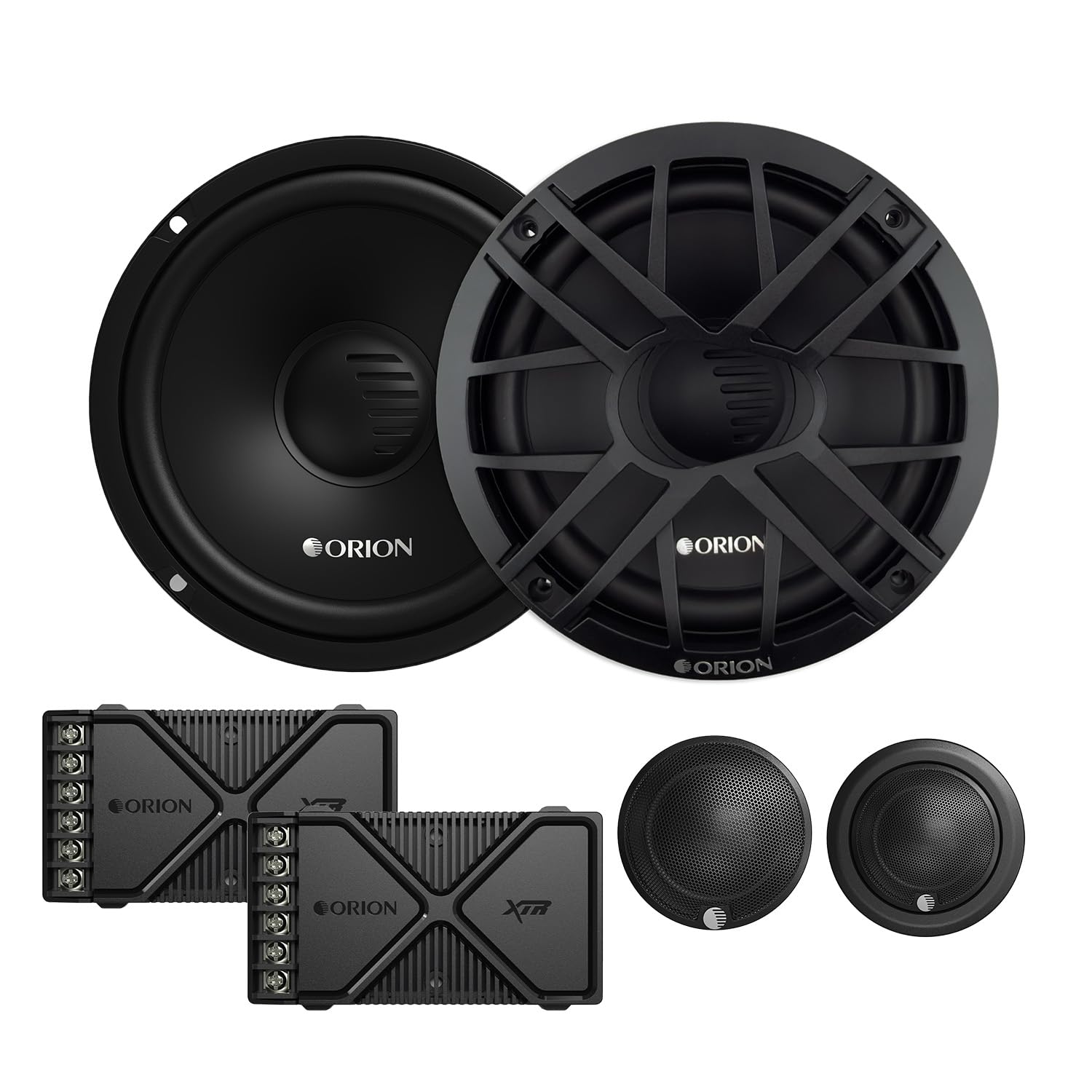
Orion’s XTR series represents a significant step up from their entry-level Cobalt line. The XTR65.SC handles 85W RMS with a 340W peak ceiling, giving you headroom for aggressive listening with a powerful amplifier. The butyl rubber surround and polypropylene cone combination provides excellent transient response — bass notes start and stop cleanly without lingering overhang.
The 1-inch silk dome tweeter in the separate component configuration produces smooth, extended highs that avoid the brightness of metal domes. Users running these with a Kenwood deck report good bass response even without an amp, though feeding them 85W RMS transforms the low-end authority significantly. The external passive crossover is clearly labeled for easy installation.
Some buyers note that the 75Hz low-end roll-off means these speakers don’t produce deep sub-bass on their own — they are designed for clean midbass punch. Pairing with a subwoofer crossing at 80 Hz creates a seamless system. The overall build quality and power handling make this the strongest value proposition for amplifier-driven setups.
Why it’s great
- 85W RMS offers excellent power handling for loud, clean bass
- Silk dome tweeter avoids harsh treble
- High build quality with butyl rubber surround
Good to know
- Subwoofer needed for sub-75 Hz frequencies
- Requires adapter plates for some vehicles
- Not the highest sensitivity — benefits from an amplifier
5. ORION Cobalt CB65C 2-Way Component System

The Cobalt CB65C is Orion’s entry-level component system, but it still outperforms many coaxial speakers in the same price range. With 70W RMS and 280W peak power, the polypropylene cone with butyl rubber surround generates notably more midbass presence than factory paper cone speakers. The 88 dB sensitivity is respectable for budget-focused drivers.
Installation is straightforward — the external crossover is pre-wired with spade terminals, and the tweeter can be surface or flush mounted. Users consistently report that these speakers transform the audio experience in vehicles like the Buick Lucerne and Dodge Dakota, delivering crystal-clear vocals with punchy midbass that stock speakers simply cannot reproduce.
The frequency response drops off below 70Hz, meaning these are not standalone subwoofer replacements. However, as a front-stage component set for listeners on a tight budget who plan to add a sub later, the CB65C offers the best entry point into component speaker performance for bass reproduction.
Why it’s great
- True component design with external crossover at entry-level price
- Clean midbass punch well above factory speakers
- Flexible tweeter mounting options
Good to know
- Requires 6.5 to 6.75 adapter rings for some vehicles
- Limited sub-70Hz output
- Plastic enclosure material feels less premium
6. WDiYA 6.5″ Carbon Fiber Coaxial Speakers (1000W Peak)
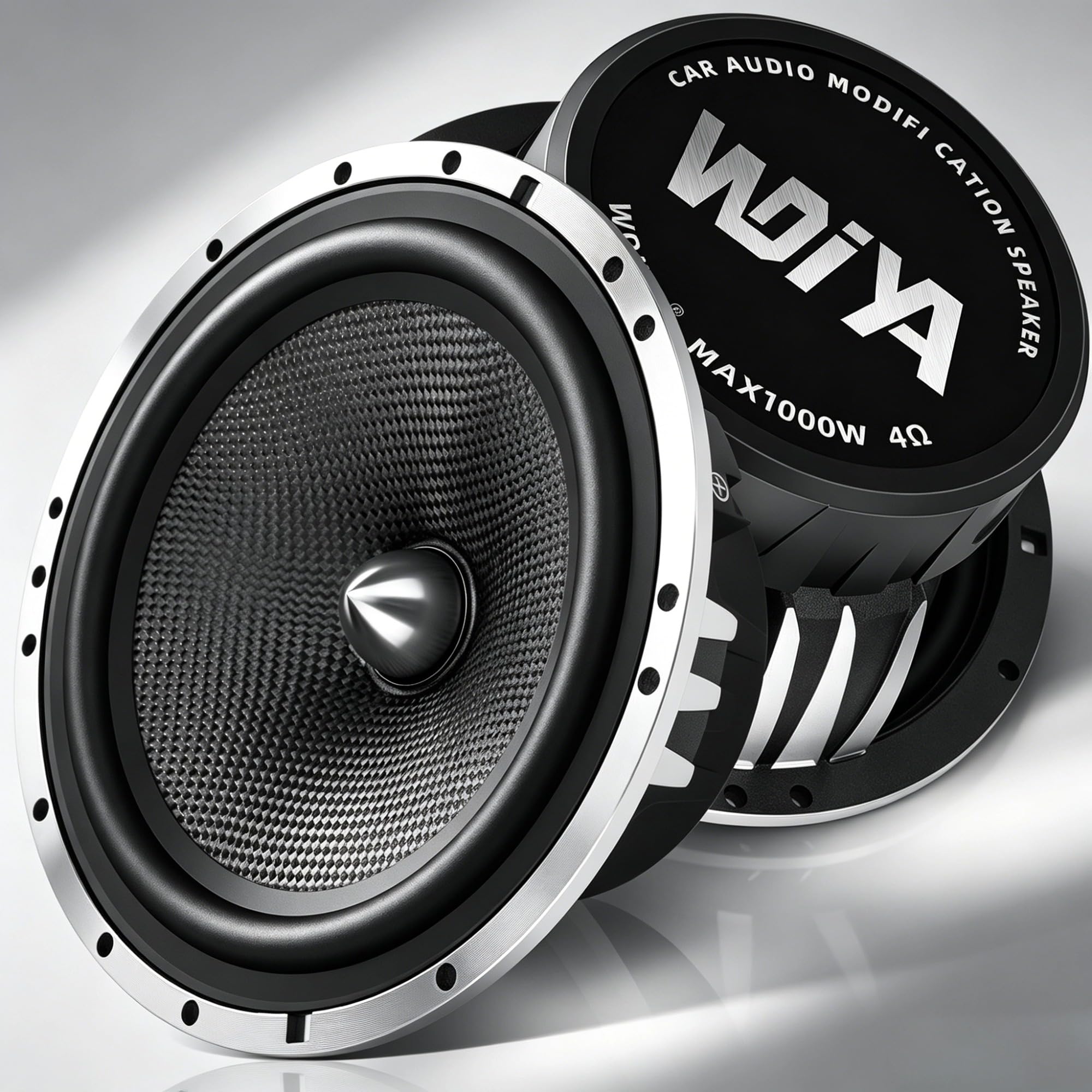
WDiYA’s 6.5-inch coaxial speakers use a carbon fiber cone with a high-temperature voice coil and an aluminum alloy basket for rigidity. The bullet-style phase plug in the center is designed to improve midrange clarity, though as a coaxial design, the tweeter and woofer share the same chassis, limiting the woofer’s effective cone area.
Users report that these speakers produce surprisingly clean sound when powered by a multi-channel amplifier. The carbon fiber cone resists distortion better than polypropylene at high excursion levels, but the 4-ohm impedance means they need ample current to reach their potential. Owner feedback from a Mazda 3 and Toyota Tundra confirms they perform well beyond their price point.
The critical limitation is physical fitment — multiple users note that the aluminum frame is approximately 0.25 inches too large for standard 6.5-inch mounting holes. You will almost certainly need to modify the mounting surface or use adapter rings. The advertised 1000W peak figure should be ignored; treat these as 30-40W RMS drivers for realistic expectations.
Why it’s great
- Carbon fiber cone resists distortion at high output
- Very affordable entry into improved bass response
- Solid aluminum basket construction
Good to know
- Frame is ~0.25″ too large for standard 6.5″ holes
- Peak power rating is highly inflated
- Limited sub-bass capability without a subwoofer
7. MB Quart FSB216 Formula Component Speaker System
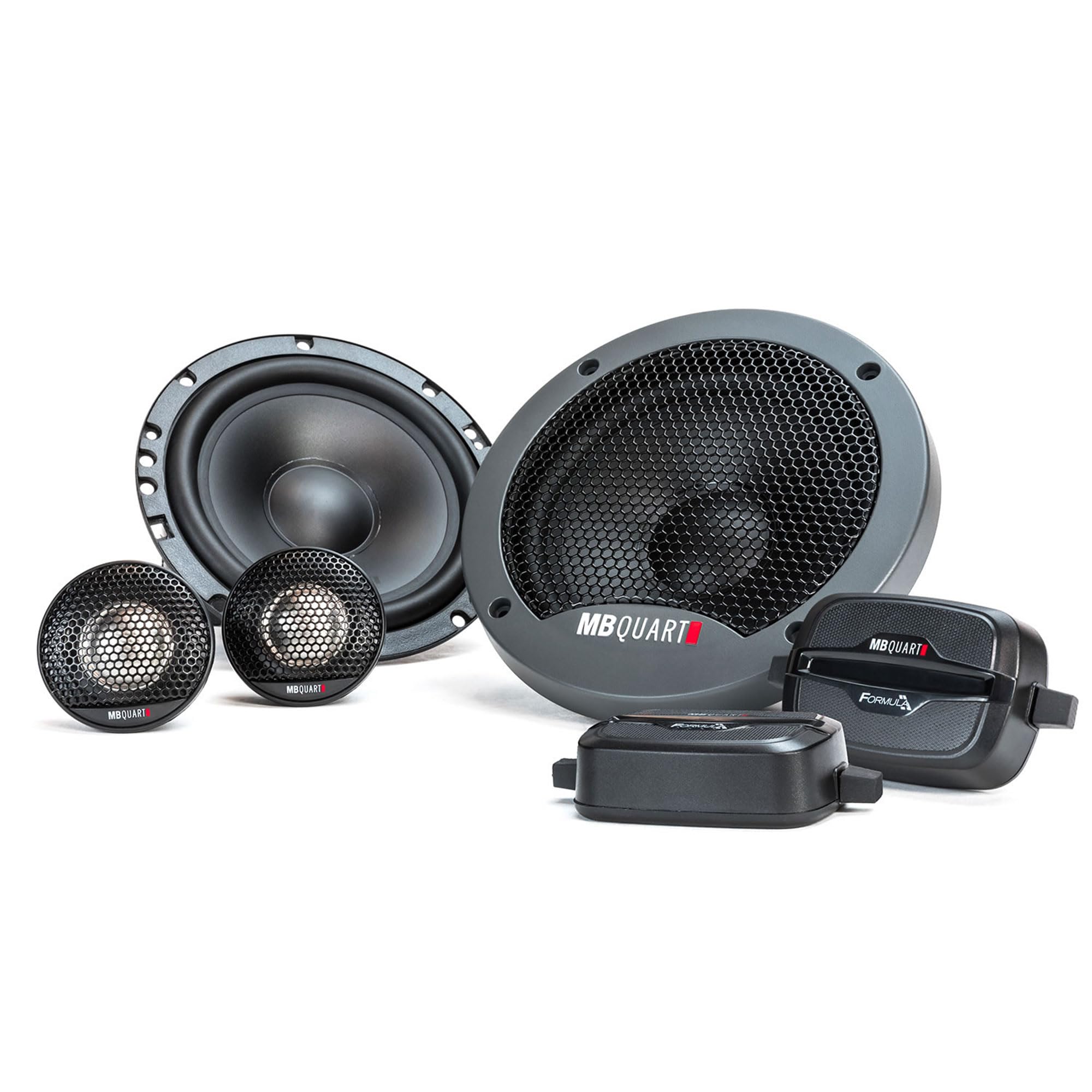
MB Quart’s Formula series offers a true component system with an external crossover at the lowest price point in this comparison. The polypropylene cone and 19mm titanium dome tweeter deliver clean, full-range sound that is immediately noticeable compared to factory paper cone speakers. The 40W RMS rating is conservative but reliable for daily listening.
Users with 60W RMS amplifiers report clear sound with surprising volume, though the speakers lack deep low-end extension. The titanium tweeter produces detailed highs that some listeners describe as crisp, while others find them slightly bright. The included external crossover uses spade terminals for tool-free installation.
The critical feedback from multiple buyers is that these speakers are not designed for sub-bass reproduction. They produce tight midbass but do not move enough air for true low-end authority. If your goal is a basic upgrade that outperforms stock speakers without breaking your budget, the MB Quart FSB216 works well — just pair it with a subwoofer for complete bass coverage.
Why it’s great
- True component design at the lowest price point
- Titanium dome tweeter provides detailed highs
- External crossover with spade terminals for easy install
Good to know
- Limited low-end — subwoofer strongly recommended
- Titanium tweeter can sound bright in some vehicles
- Plastic mounting hardware feels less durable
FAQ
Do 6.5-inch speakers produce real bass without a subwoofer?
Should I choose component or coaxial speakers for better bass?
What amplifier power do I need for good 6.5-inch bass?
Does polypropylene or carbon fiber cone give better bass?
Final Thoughts: The Verdict
For most users, the winner is the 6.5 speakers for bass Focal KIT 165AS because its 91.3 dB sensitivity delivers authoritative bass even from moderate power, combined with Focal’s proven driver engineering. If you want smooth highs without sacrificing midbass punch, grab the Focal RSE-165. And for amplifier-driven setups where budget matters most, nothing beats the power-to-price ratio of the ORION XTR65.SC.