
Our readers keep the lights on and my morning glass full of iced black tea. As an Amazon Associate, I earn from qualifying purchases.
Specs are compiled from manufacturer listings and verified buyer reviews and can change over time — please confirm the key details on the product page before buying.
You need a 6-inch duct fan that actually moves air through your specific ductwork, not just one with a big number on the box. A fan rated at 400 CFM (cubic feet per minute, the volume of air it moves) in open air can lose much of that power when pushing through a long, bendy duct. So the real question is static pressure (the fan’s ability to push against that resistance) and noise, not just raw power.
I’m Min — the founder and writer behind Gadgets Feed. This guide is built by comparing the manufacturers’ published specifications and the patterns across verified customer reviews, so you get each pick’s real strengths and trade-offs instead of marketing spin.
Whether you’re venting a grow tent, boosting a stuffy bedroom, or clearing workshop fumes, the right 6 duct fan balances CFM, noise, and control in a way that fits your specific setup.
Our Picks at a Glance


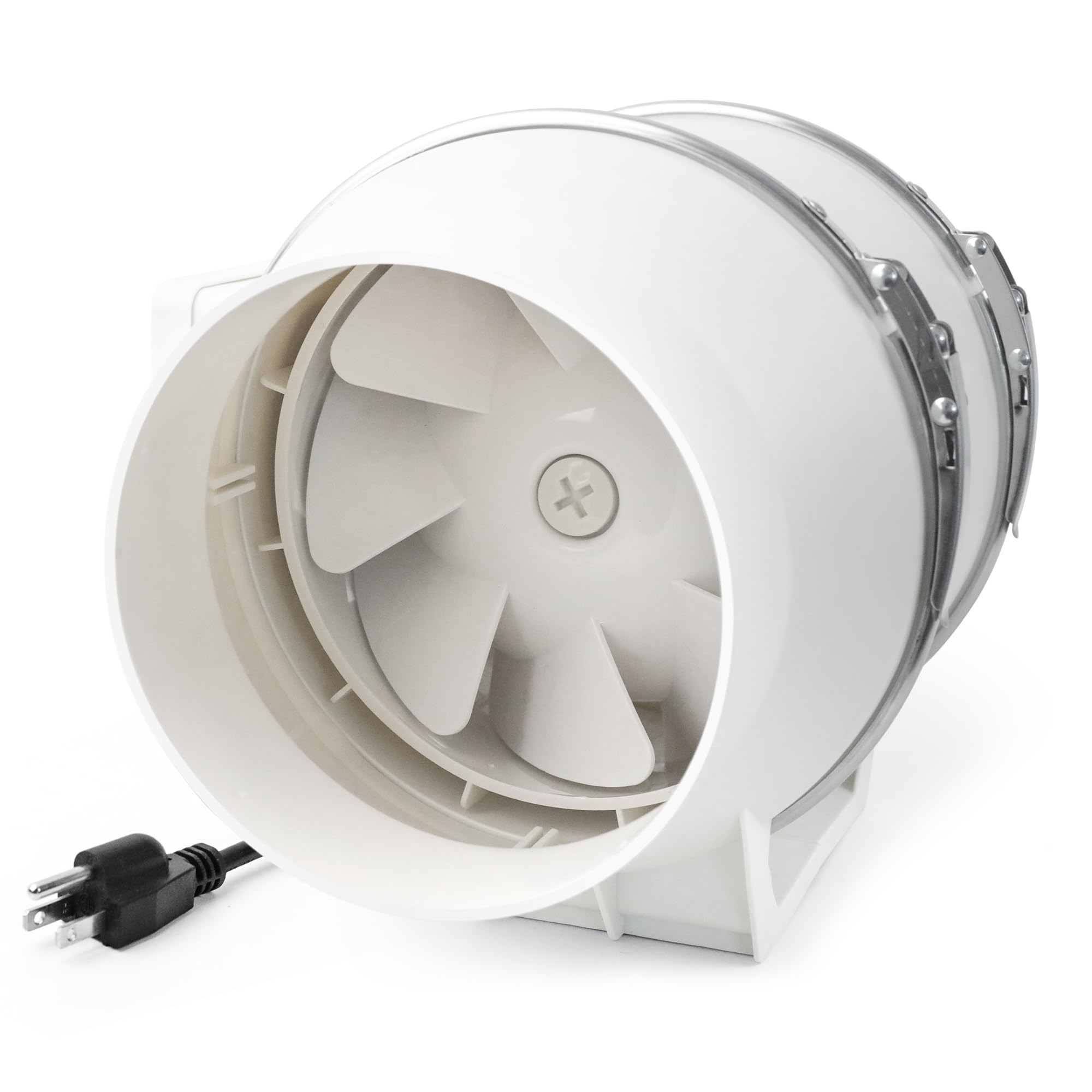
How To Choose The Best 6-Inch Duct Fan
Before you click buy, you need to think about the path your air has to travel, not just the size of the hole it leaves. A short, straight run to an outside wall is easy for any fan; a 25-foot flex duct with a few bends will choke a weak model and leave you with stale air.
Match CFM to Your Actual Run
Look for a fan rated well above the bare minimum for your space. If your grow tent or room needs 200 CFM of exchange, a fan rated around 400 CFM gives you headroom to run it at a lower, quieter speed and still move enough air through filters and bends.
Think About Noise Before You Mount It
Noise is measured in decibels (dBA), and the difference between 31 dB and 40 dB is significant in a bedroom or office. Bear in mind that some fans are quiet at low speed but roar at full tilt, so look for a model with a speed controller to dial in the quiet level you can live with.
EC Motors Are Worth the Upgrade
Electronically commutated (EC) motors are more energy-efficient than standard AC motors, run cooler, and typically offer finer speed control. If you plan to run the fan for many hours a day, an EC model pays off in lower electricity use and less heat dumped into the room.
Quick Comparison
| Model | Best For | Airflow (CFM) | Noise (dBA) | Motor Type | Amazon |
|---|---|---|---|---|---|
| AC Infinity CLOUDLINE A6★ Best Overall | Quiet, balanced performance | 352 CFM | 34 dBA | EC | Amazon |
| VEVOR Inline Duct FanBest Value | High airflow on a budget | 400 CFM | 34 dB | AC | Amazon |
| Voltset 6 Inch Duct FanRemote Control Pick | Value with remote control | 390 CFM | 40dB | AC | Amazon |
| VIVOSUN G6 AeroZesh | Smart app control and cycles | 388 CFM | 32dB | EC | Amazon |
| Toolazy 6 Inch Inline Fan | Strong static pressure | 405 CFM | 31dB | EC | Amazon |
| iPower Silent Inline Fan (2-Pack) | Multi-zone ventilation | 300 CFM | 31 dB | AC | Amazon |
| Hon&Guan Inline Duct Fan | Extreme airflow | 469 CFM | 55 dB | EC | Amazon |
| Spider Farmer 6 Inch Inline Fan | Auto climate control | 402 CFM | 32 dB | EC | Amazon |
| Tjernlund M-6 Metal Booster | HVAC duct boosting | 460 CFM | — | AC | Amazon |
In‑Depth Reviews
1. AC Infinity CLOUDLINE A6
Our pick — over 4.5★ from 700+ verified ratings; the strongest balance of quality and price.
A 352 CFM EC fan that stays whisper-quiet at 34 dBA, ideal for noise-sensitive spaces.
The AC Infinity CLOUDLINE A6 earns its spot because it stays genuinely quiet at 34 dBA (decibels, a sound level roughly like a quiet library) while still pushing 352 CFM through its 6-inch duct. Buyers report running it at mid or low speed for everyday use, so it rarely has to work hard enough to make itself noticed. One user described solving an upstairs AC problem by mounting it to rafters and letting it run all day.
What makes this model special is the mix of a mixed-flow design with an EC-powered motor. The EC motor sips energy and runs cool, while the 10-speed wired controller (the classic button-click style) gives you fine control over exactly how much air you move. It’s also ready to grow with you, since it’s compatible with all CLOUDLINE Series smart controllers if you later want app-based automation.
Reviewers sum it up: “Quiet, powerful airflow; used at mid/low.” People use it for everything from 4×4 grow tents with a 6-inch filter to CO2 laser exhaust systems, and the consistent thread is that it just works every time it’s switched on. The only real note is that it’s quiet, not silent — a few owners suggest HVAC-specific models if you’re doing precision ductwork where size gaps matter. This one suits growers and hobbyists who want dependable, low-noise airflow; skip it if you need absolute silence or exact duct-sealing tolerances.
What Wins People Over
- Surprisingly quiet operation — easily the most-praised trait
- Ten-speed controller for dialing in exactly the airflow you need
- Energy-efficient EC motor that runs cool under load
Reality Check
- Quiet but not completely silent at higher speeds
- Smart features require buying a separate controller
Grab it for: a balanced, do-everything fan for grow tents, odor control, or room-to-room air transfer where noise matters.
Think twice if: you need extreme CFM above the 352 CFM mark or want app control without an extra purchase.
2. VEVOR Inline Duct Fan 6-Inch
A 400 CFM AC workhorse that delivers high airflow at a budget price, with a simple speed knob.
This is a plain-spoken AC-motor workhorse that doesn’t try to be fancy — it just moves air, and lots of it, for a price that undercuts most of the competition.
Owners mention that “very powerful duct fan that can move a lot of air” — and they mean it. One owner built a box to dry fragile costume parts and found the variable speed knob made it easy to regulate the airflow. The included hang-up slings and rubber mats make installation quick, and you can mount it on a wall or hang it from a tent frame.
The honest trade-off is noise. At 34 dB it’s rated reasonably quiet, but the motor can whine and some owners find it noisier than expected at higher speeds. It’s most comfortable in a grow room, basement, or workshop where a bit of hum won’t bother anyone, rather than a bedroom or home office.
Bottom line: The VEVOR is a high-airflow value pick that pairs a 400 CFM punch with a simple speed knob, best suited to spaces where a little motor noise is acceptable.
Best fit: grow tents, hydroponics, and workshop exhaust where raw CFM matters more than whisper-quiet operation.
Not for: noise-sensitive rooms where you’d hear the motor whine at speed.
3. Voltset 6 Inch Duct Fan
A 390 CFM fan with a wall-penetrating remote, perfect for out-of-reach installations.
The Voltset 6-inch fan surprises people with how much control you get for the money. It pushes 390 CFM from a 2250 RPM (revolutions per minute, how fast the motor spins) motor, and unlike most fans in this class, it ships with a remote control. Owners note it works even through walls, a huge convenience if the fan is mounted in an attic or crawl space — so you can adjust speed without climbing up there.
It’s built for a long life with a copper-core motor that handles heat well, and the housing is reinforced for continuous operation. The quick-release clips mean you can pop the fan out for cleaning without tools, which matters when you’re dealing with dusty grow tents or greasy kitchen air. Its dimensions (11.85 x 9.1 x 8.3 inches) make it a touch bulkier than the AC Infinity, so check your mounting space.
Functionality is the most-praised aspect here — owners use it for 3D printer exhaust and laser ventilation, noting that it clears hot, stuffy air quickly. The noise level sits at 40dB, which is the loudest of the quiet bunch, but buyers consistently call it acceptable. Just be aware that a few owners feel the real-world airflow doesn’t match the top-end spec in long duct runs.
Standout Features
- Remote control that works through walls
- Copper-core motor built for continuous duty
- Tool-free quick-release clips for easy cleaning
Things to Weigh
- Slightly louder at 40dB than quieter EC rivals
- Real-world airflow can fall short in long, restricted runs
Reach for this if: you want remote control convenience for a fan mounted out of reach, like in a basement window or ceiling space.
Look elsewhere if: you need the absolute quietest operation or maximum static pressure.
4. VIVOSUN G6 AeroZesh Inline Fan
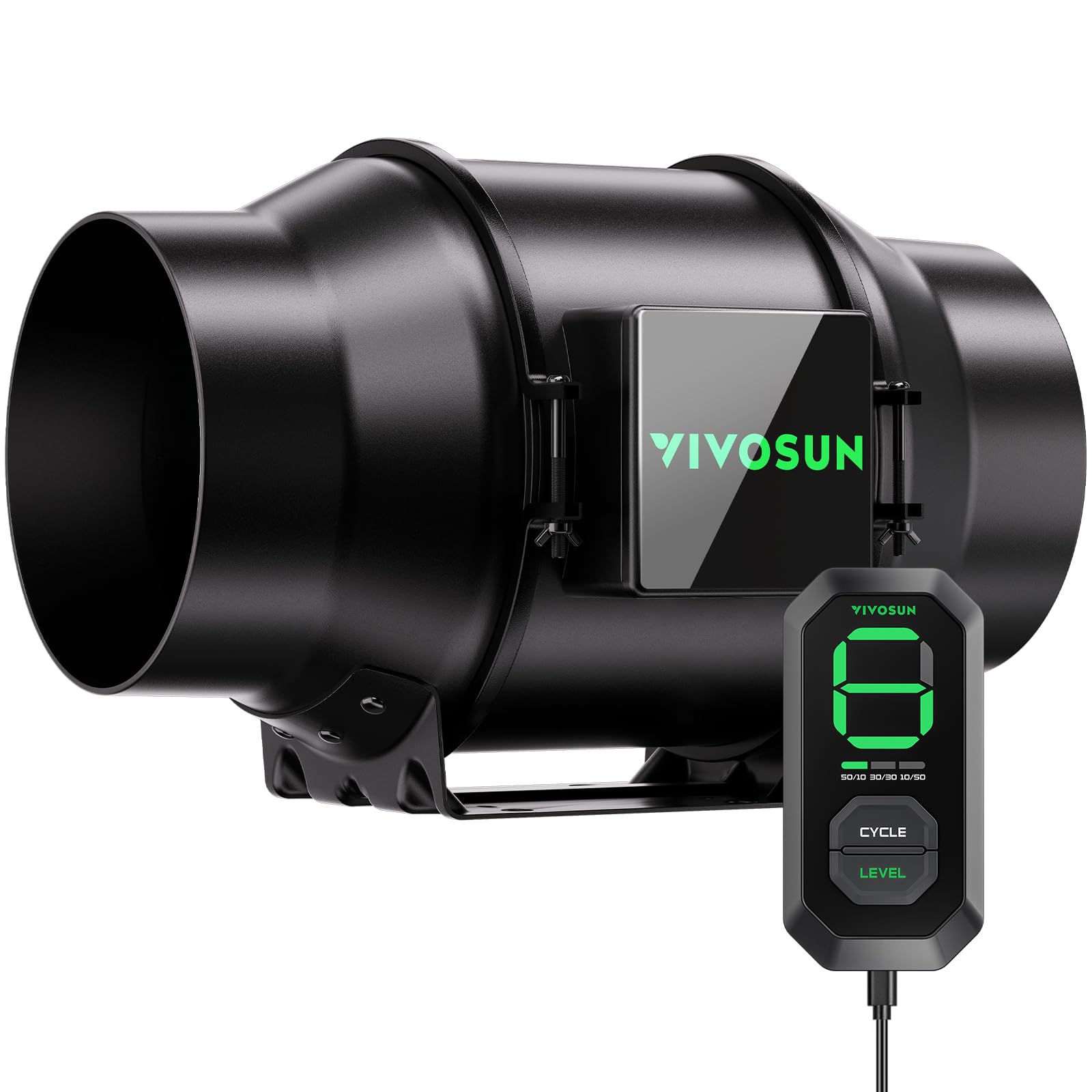
A 388 CFM EC fan with app control, memory settings, and cycle modes for smart ventilation.
The VIVOSUN G6 AeroZesh brings genuine smart-home thinking to duct ventilation. Its E12 controller gives you ten PWM-controlled speeds (PWM being a precise way to vary motor power), and crucially, it remembers your speed setting when you power it off and back on. There’s also a three-mode ON/OFF cycle that varies wind speed to save power during long grows.
The build quality is what owners praise most, describing it as a well-made unit that holds its own against more expensive brands. It’s powered by an EC motor with a mixed-flow design — the same architecture as the pricier AC Infinity — and it moves 388 CFM at just 32dB, which is genuinely quiet for this class. An included environmental probe lets the fan watch temperature changes and adjust speed automatically.
For 3D printing and laser venting, owners find it particularly effective — one runs it with an air quality monitor and keeps readings clean at moderate speed while using less electricity than older models. The noise picture is a touch split: very quiet for most, though a few find it loud on the highest settings. And while the app integration is a bonus via the GrowHub, the base kit works fine with just the wired E12 controller.
Smart buy for: growers or workshop users who want an energy-efficient EC fan with cycle modes, memory settings, and a path to full app automation later.
Pick it if: you value ten-speed precision and a quiet 32dB EC motor with a built-in temperature probe.
pass on it if: you need the raw top-end airflow of a 400+ CFM monster rather than adjustable efficiency.
5. Toolazy 6 Inch Inline Duct Fan
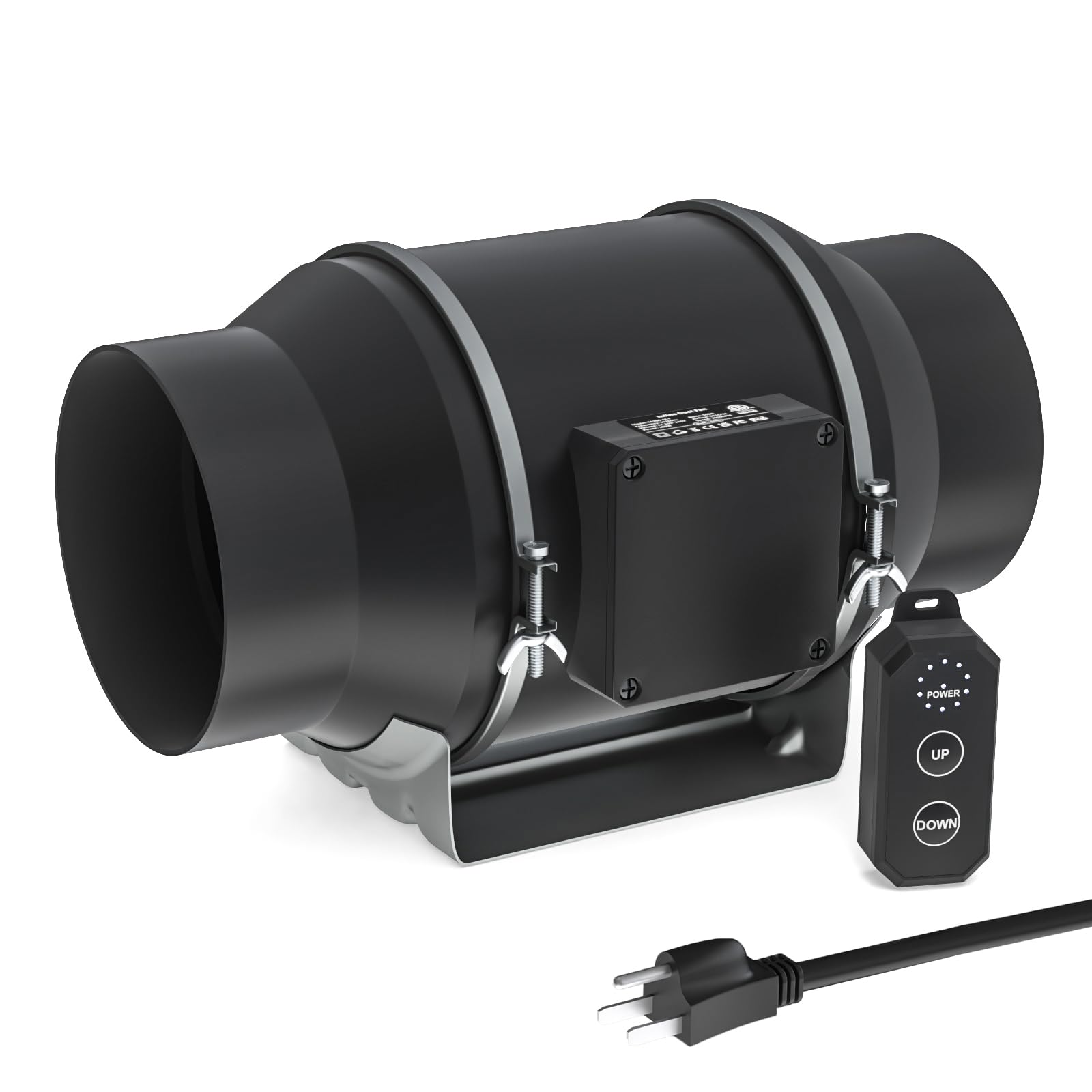
A 405 CFM EC fan with high static pressure, capable of pushing air through 10 meters of duct.
The Toolazy 6-inch fan is the specialist for long, restricted runs, and the proof is in the reviews — customers note it has enough static pressure to push air through a 10-meter flexible duct. That’s the kind of performance you need when your exhaust path isn’t a straight shot outside, and it comes from a brushless three-phase EC motor rated for over 40,000 hours of service.
It moves 405 CFM at just 60W of power, and the mixed-flow impeller design boost air per watt. The 10-speed PWM controller lets you go from whisper-quiet circulation to full-blast ventilation, and the fan remembers its speed setting when you cut and restore power. Owners using it for laser enclosures love that it pushes through MERV 14, HEPA, and activated carbon filters in sequence — a brutal test of static pressure that this fan passes.
The catch is that “kind of loud wide open” according to owners — one compares full speed to an airplane through the vents. But that’s the nature of a high-pressure fan doing heavy work; dial it back to mid speeds and it becomes a reasonable companion. The removable duct ends with locking tabs make cleaning simple.
Built For
- High static pressure through long or filtered ducts
- 40,000+ hour EC motor lifespan
- 10-speed PWM precision control
Watch Out For
- Loud at full speed — keep it on lower settings in living spaces
- No built-in smart controller in the box
Ideal for: laser enclosures, long duct runs, and setups with heavy filtering that choke weaker fans.
Not ideal for: open, short runs where you’d rarely need this much pushing power.
6. iPower Silent Inline Fan 6 Inch (2-Pack)

A 2-pack of 300 CFM fans, each quiet at 31 dB, for multi-zone ventilation on a budget.
The iPower 2-pack is the answer when you have two spaces that both need ventilation, because buying two fans together saves you real money. Each unit delivers 300 CFM at a quiet 31 dB, spinning at 2350 RPM, and the compact body takes up minimal space — owners have used them to ventilate under a house with four units running at once.
The design uses a deflector to concentrate airflow and cut turbulence, which is how it keeps sound down to 31 dB. It’s light and easy to connect thanks to flanges on both the intake and exhaust ends that pair with standard 6-inch ducting. One owner mounted a unit in an attic to move stagnant air, then repurposed the second for dust evacuation while mixing concrete — a sign of how versatile these are.
Performance gets the most praise, with owners finding them quiet and effective. The honest trade-off is that airflow and power get mixed feedback — some say it moves plenty of air while others find it less powerful than advertised. And the mounting system earns a few grumbles, with some owners finding it tricky to attach to certain ductwork. This is a fan for straightforward runs, not extreme static pressure.
Two-zone special: Owners like the twin-pack value for ventilating attics, crawl spaces, and grow rooms simultaneously, with quiet 31 dB operation being the high point.
Best for: covering two zones affordably with quiet, simple exhaust fans.
Not for: long runs or setups requiring high static pressure where a stronger single fan beats two weaker ones.
7. Hon&Guan Inline Duct Fan 469 CFM

A 469 CFM EC fan with the highest airflow here, rated for extreme temperatures.
If raw airflow is your only metric, the Hon&Guan wins outright — it pushes 469 CFM, beating the VEVOR’s 400 CFM by a clear 17% margin. That extra muscle comes from a fast-spinning EC motor (electronically commutated, a type that’s efficient and controllable) rated at 4300 RPM. It’s built for tough environments: the housing handles air temperatures from -4°F to 140°F, so it’s a legitimate choice for attic heat distribution or greenhouse duty where other fans might overheat.
The variable speed controller is the star for most owners. They describe spinning it down to a whisper at low speeds while having immense power on tap when needed — one owner runs it at just 6-7W to boost a 45-foot duct while using around 63W at max. That efficiency range is why EC motors matter: you pay for power but only use what you need. The removable duct ends with locking tabs also make reverse-direction installation and cleaning straightforward.
The deal-breaker for some will be noise. At 55 dB on full blast, this is not a quiet fan — owners compare full speed to a vacuum cleaner. But at low speed it’s “surprisingly quiet” per multiple reports. It’s designed for spaces where performance trumps silence: workshops, attics, and grow rooms where the door is closed. A few owners note fragile plastic tabs on the duct ends that need careful handling.
Where It Excels
- 469 CFM top airflow beats every other fan here
- EC motor sips as little as 6-7W at low speed
- Rated for extreme temperatures from -4°F to 140°F
Where It Struggles
- 55 dB at full speed is genuinely loud
- Plastic tabs on duct ends need gentle handling
Choose it for: max airflow in attics, long duct runs, or heat distribution where silence isn’t the priority.
Pass if: you need a fan for a bedroom or office where 55 dB would be intrusive.
8. Spider Farmer 6 Inch Inline Duct Fan
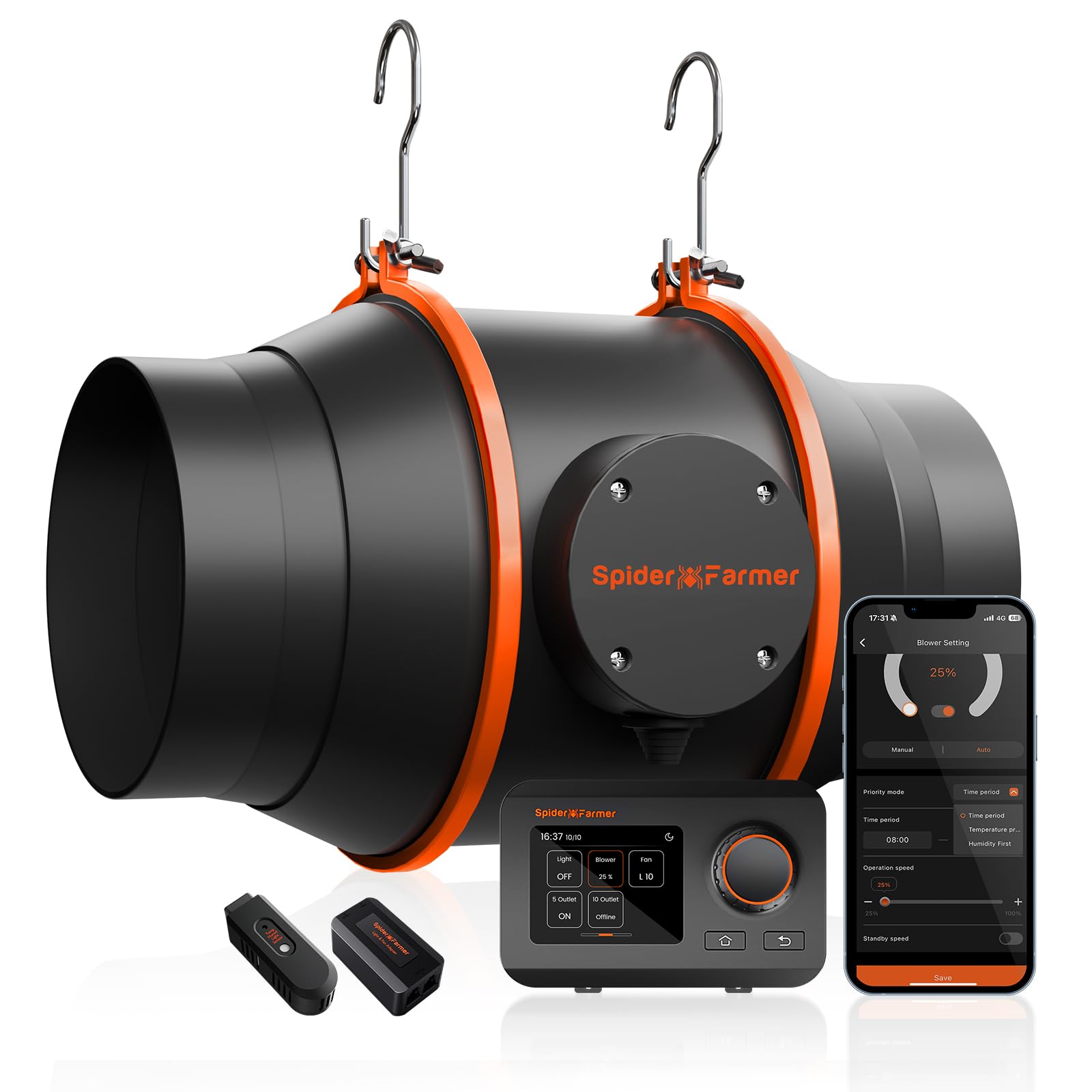
A 402 CFM EC fan with built-in temperature and humidity sensors for automatic climate control.
The Spider Farmer 6-inch fan is the set-and-forget option for growers who want climate automation without juggling separate sensors. It ships with temperature and humidity probes, and the controller can monitor both in real time, automatically adjusting fan speed and airflow to hold your target climate. Owners describe using presets for bloom, flower, and dry cycles — program it once and let it run.
Under the hood it’s a 62-watt EC motor pushing 402 CFM at 32 dB, and the lightweight ABS blades are claimed to increase airflow by 40% over traditional designs. The housing is IP42 rated, meaning it shrugs off dust and some liquid splashes, which matters in humid grow environments. Owners who upgraded from older fans call it “worth every penny,” noting the suction is so strong it sucks the sides of a grow tent inward.
Customer support is a recurring theme — several owners mention the company resolved issues quickly and even replaced a faulty unit past warranty. The trade-off is that the controller’s many modes can overwhelm at first; owners call the instructions confusing until you learn the system. There are also mixed reports on the humidity function, with some saying it doesn’t work flawlessly, so verify it handles your specific needs.
Automation first: Owners value the built-in temp and humidity monitoring with automatic speed adjustment — a real step up from manual fan control for serious growers.
Worth it if: you want automatic climate response and are willing to learn the controller’s modes.
Skip if: you prefer a dead-simple manual speed knob and don’t need sensor automation.
9. Tjernlund M-6 Metal Inline Duct Booster

A heavy-duty metal turbine engineered to fix real HVAC airflow problems.
The Tjernlund M-6 is different from every other fan here because it’s built for one specific job: boosting airflow inside an existing HVAC duct. It’s a metal-bodied inline booster rated at 460 CFM, and owners lean on it to solve the classic problem of weak airflow reaching upstairs bedrooms. One owner fixed a 4°F temperature imbalance across a family room fed by a long 50-foot flex duct — a job their previous 240 CFM fan couldn’t handle.
The most-discussed trait here, by a wide margin, is airflow — over 200 owners weigh in on it positively, calling it a heavy-duty, well-balanced turbine with virtually no mechanical noise and no wobble when running. The metal rotor feels substantial, and it handles continuous heat well, with one owner running it in a Las Vegas attic. Mounting brackets and hardware are included, and you can wire it to your HVAC system’s auxiliary output so it switches on and off with your air handler.
Noise is the genuine split decision: through insulated flex ducts it’s acceptable, but mounted close to a register it can be loud as the air rushes out. Owners suggest installing it far from living spaces. Note that the fan is speed-controllable, but the speed control device is not included — you’ll need to source one separately. Its dated design also shows in the mounting, which earns some negative feedback for being fiddly.
Purpose-Built Strength
- Metal construction that handles high heat and heavy duty
- 460 CFM of genuine duct-boosting power
- Low vibration with a well-balanced turbine
Installation Caveats
- Speed controller not included — buy separately
- Can be loud if mounted near a register
- Mounting hardware has a learning curve
Reach for it when: your central HVAC system has weak runs that need a real boost, and you want a metal fan built to last in hot spaces.
Look elsewhere if: you need a quiet, all-purpose vent fan for a tent or small room rather than an HVAC-specific booster.
Understanding the Specs
CFM and Static Pressure
CFM (cubic feet per minute) measures raw airflow volume, but it’s only half the story. Static pressure is how much resistance the fan can overcome — the push needed to force air through long ducts, bends, and filters. A fan with high CFM in open air can struggle through a restricted path, so match the fan’s pressure capability to your duct length and any filtration you add.
dBA and Motor Types
Noise is measured in dBA, a scale that reflects human hearing. Each 10 dB increase sounds roughly twice as loud, so 40 dB is noticeably louder than 30 dB. EC (electronically commutated) motors use a brushless design that’s more efficient, runs cooler, and offers smoother speed control than traditional AC motors — worth the premium if you run the fan for hours daily.
FAQ
What size duct fan do I need for a 4×4 grow tent?
Is a higher CFM rating always better?
Can I use a duct fan to boost my central HVAC airflow?
How quiet is 31 dB compared to 40 dB?
What is an EC motor and why does it cost more?
Do I need a speed controller?
Can these fans handle high temperatures in an attic?
How do I reduce the noise from my duct fan?
What’s the difference between an inline fan and a duct booster?
Will a 6-inch fan fit my standard ductwork?
Final Thoughts: The Verdict
For most buyers, the 6 duct fan winner is the AC Infinity CLOUDLINE A6 because it pairs quiet 34 dBA operation with balanced 352 CFM airflow and a flexible 10-speed controller. If you want maximum airflow for workshops or long runs, grab the Hon&Guan for its category-leading 469 CFM. And for growers who want hands-off climate control, the Spider Farmer is the one to reach for with its built-in temperature and humidity automation.
How We Picked
We do not accept paid placement. Every pick is matched to a real buyer and a real use-case; we do not hands-on test units.
Sources & Methodology
Specifications: manufacturer listings and product documentation. Review insights: verified customer reviews, as of September 2026. Pricing: not shown on this page (it changes often); check the current price via the retailer link.
As an Amazon Associate, Gadgets Feed earns from qualifying purchases. This does not affect which products we feature.