
Our readers keep the lights on and my morning glass full of iced black tea. As an Amazon Associate, I earn from qualifying purchases.
Specs are compiled from manufacturer listings and verified buyer reviews and can change over time — please confirm the key details on the product page before buying.
A 6-foot pry bar turns one person’s muscle into a machine. The real question isn’t if you need one — it’s which build and weight actually make your toughest job easier, from pulling a sunken boulder out of clay to scooting a 5000-pound safe across a workshop floor.
I’m Min — the founder and writer behind Gadgets Feed. This guide is built by comparing the manufacturers’ published specifications and the patterns across verified customer reviews, so you get each pick’s real strengths and trade-offs instead of marketing spin.
If you are a contractor prying off concrete forms or a gardener digging post holes, the best 6 ft pry bar for you depends on how you balance raw leverage weight against portability and the specific job you do most often.
Our Picks at a Glance

How To Choose The Best 6 Ft Pry Bar
Choosing a 6-foot pry bar depends on three main factors: the weight of the bar (which directly controls how much force it applies), the material it’s made from (which determines whether it bends or snaps against hard rock), and the specific tip or wheel design (which decides what kind of job it handles best). Here is what to look at before you buy.
Weight and leverage — the trade-off that matters most
A heavier bar generates more prying force with less effort from you. But it also has to be carried to the job site, lifted into position, and maneuvered around obstacles. A 42-pound bar gives you immense power but is hard to haul around all day. A 17-pound bar is easier to carry and swing, but you may have to work harder on really stuck objects. Match the weight to your most frequent task, not just the heaviest job you might do once.
Tip design — flat chisel vs pointed spike vs wheeled base
Bars with a flat chisel end are best for prying floorboards, ripping apart pallets, and breaking up compacted soil. Bars with a pointed spike end excel at digging through clay, cutting roots, and levering rocks. Wheeled lever bars, like the Vestil PLB/S-6, are a different category — they use a poly-on-steel wheel as a fulcrum (the pivot point) so you can roll heavy loads across a flat floor rather than pry them. Make sure the tip matches the task.
Quick Comparison
| Model | Best For | Weight | Load Capacity | Material | Amazon |
|---|---|---|---|---|---|
| Vestil PLB/S-6★ Best Overall | Moving heavy safes & machinery | 42 Pounds | 5000 lbs | Alloy Steel | Amazon |
| Leriton 72″ Digging Bar | Digging in clay & cutting roots | 17.1 Pounds | — | Carbon Steel | Amazon |
| Pinch Point 17700 Crowbar | General prying & demolition | 18 Pounds | — | Steel | Amazon |
In‑Depth Reviews
1. Vestil PLB/S-6 Prylever Bar
Our pick — over 4★ from 50+ verified ratings; the strongest balance of quality and price.
The rolling lever machine that handles a 5000-pound load like it is a stack of boxes.
You get rolling leverage instead of raw muscle here. The Vestil PLB/S-6 weighs 42 pounds, about 2.5 times more than the Leriton digging bar at 17.1 pounds, and that weight gives it a planted feel. It uses two poly-on-steel wheels as a rolling fulcrum (a rotating pivot point) so you can move extremely heavy objects across a floor without lifting them. The thick steel nose plate has a beveled edge designed to slide under loads easily, and the 6-foot handle gives you the mechanical advantage to raise a 5000-pound safe or machine with surprisingly little effort.
Buyers report the build is stout and heavy-duty. One owner mentioned that he added a wood block to allow for a higher lift when he needed to get wheeled dollies underneath. At 72.82 inches tall, the bar sits at a comfortable working height for most adults. Some units have arrived missing a cotter pin (a small locking pin for the wheel axle) or grommet, so inspect the wheel assembly on arrival — this is a concrete limitation, not a vague complaint.
The industrial-grade construction and alloy steel (a metal blend that is stronger than basic steel) make this a lifetime tool for serious shop or warehouse use. If you frequently reposition heavy equipment, machinery, or vaults, this bar saves your back better than any other option here.
Rolling Power
- 5000-pound rated load capacity — more than any other bar here
- Poly-on-steel wheels create a solid rolling fulcrum
- Stout alloy steel construction with beveled nose plate
Check the Hardware
- At 42 pounds, it is heavy to carry to different job sites
- Some units have arrived missing cotter pins or grommets
- Not designed for digging, chopping roots, or breaking rocky soil
Reach for this if: you move heavy safes, pallets, or machinery across flat surfaces and want rolling leverage instead of raw muscle.
Look elsewhere if: you need a bar for digging post holes, breaking rocks, or prying in tight spaces outdoors.
2. Leriton 72″ Chisel Digging Bar
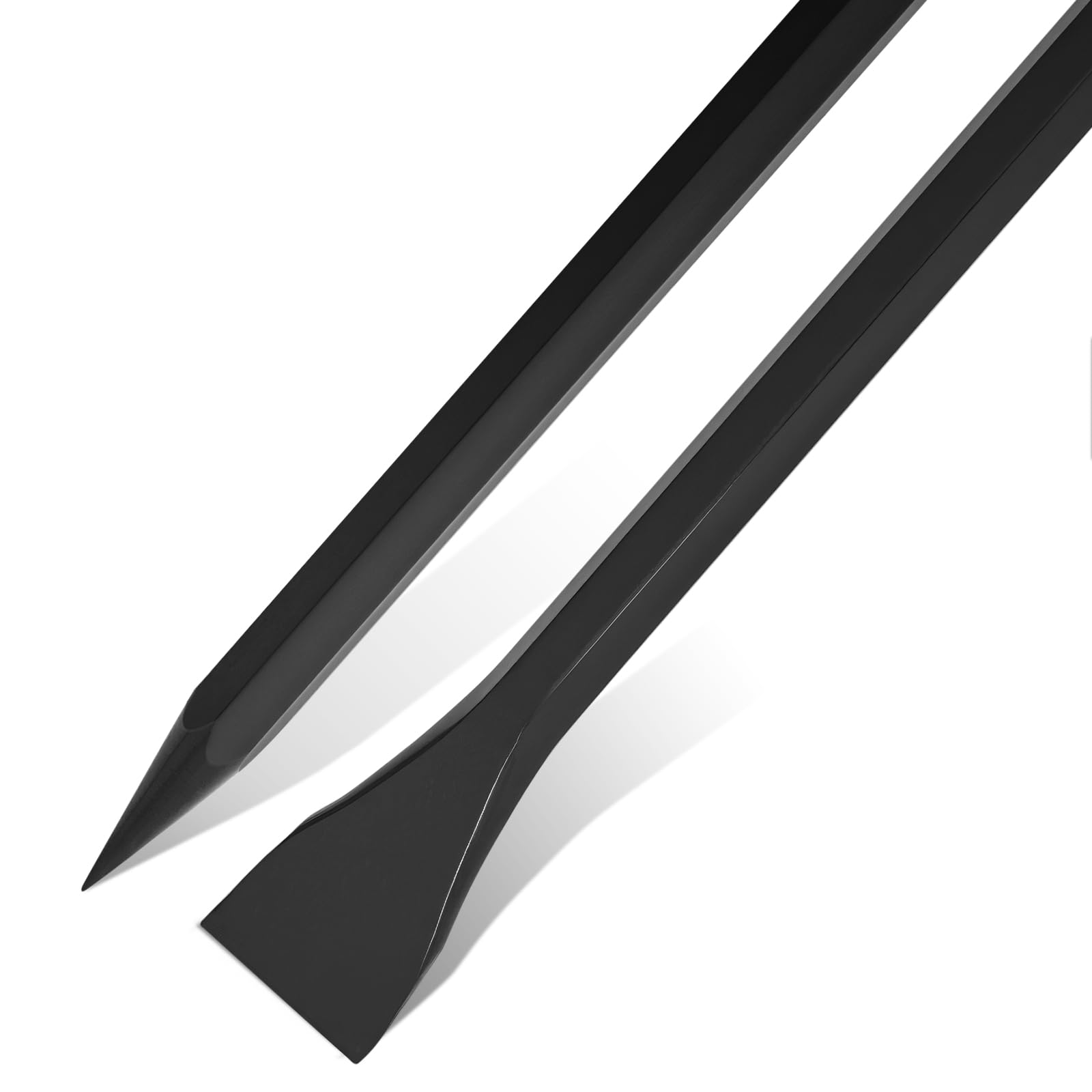
The digging machine that weighs 17.1 pounds and lives to chop roots and break clay.
This is the tool you grab when you need to dig a post hole through hard-packed clay and the shovel just bounces off. The Leriton 72″ Chisel Digging Bar is 72 inches long with a 25 mm hexagonal shank (a six-sided shaft that resists twisting), and it has two working ends. One end is a conical spike (a pointed taper) for breaking up soil. The other end is a sharpened flat chisel for cutting roots and prying rocks. The blade is 50 mm wide with a 60 mm conical sharpened tip. The entire bar is forged from heat-treated carbon steel (steel strengthened by heating and cooling, which helps it resist bending).
Buyers confirm it works well for digging in clay, breaking up soil, and cutting through roots. One reviewer noted it is “still an effort due to its weight” — a reminder that even 17.1 pounds demands muscle over a full day of digging. A few owners reported the bar bent or showed damage against limestone rock, so treat it as excellent for dirt and roots but not a rock-breaking tool. At 17.1 pounds, this is much easier to swing and carry than the 42-pound Vestil, making it the more practical choice for yard or garden work rather than a shop floor.
Compared to the Pinch Point crowbar below, the Leriton leads with its dual-purpose tip design and heat-treated carbon steel. It simply digs and pries better in soil. The 6-foot length gives you solid leverage without the weight penalty of a wheeled lever bar. For anyone who gardens, builds fences, or clears land, this is the most versatile pick in the lineup.
Two ends, one bar: the conical spike works like a mini post-hole digger, while the flat chisel end pries rocks and severs roots — you get two tools in one.
Know its limit: it is built for soil and roots, not for breaking big rocks. One owner rated it 3 stars because it bent against limestone.
Grab this for: digging fence-post holes, clearing roots, prying rocks from garden beds, and general yard work where portability matters.
Step back if: you need to move 5000-pound industrial loads or break hard rock all day.
3. Pinch Point 17700 Crowbar

A straightforward 18-pound steel pinch bar that gets the job done without the frills.
The Pinch Point 17700 is the most no-nonsense option here. It weighs 18 pounds and is a steel crowbar with a pinch point design (a notched end that grabs nails or boards) that gives you solid purchase on floorboards, framing lumber, and nailed-down materials. There are no wheels, no special tips, no heat-treatment claims — just a straight steel bar made for general prying and demolition. At roughly the same weight as the Leriton (18 pounds vs 17.1 pounds), it is equally portable but lacks the digging bar’s specialized chisel and spike ends.
Owners mention it works exactly as expected for its price tier. One owner said “it was exactly what I needed” for a car antenna job, showing this bar works well for small-scale automotive and home prying. Another reviewer flagged a 1-star caution — while the tool quality is fine, the return policy may not give a full refund. Compared to the Vestil PLB/S-6, the Pinch Point is 24 pounds lighter and far easier to toss into a truck bed, but it offers nothing close to the rolling leverage needed for a 5000-pound safe.
This bar is the entry-level workhorse for the homeowner or light contractor who needs a 6-foot steel bar for occasional prying, demolition, and general pulling. The honest trade-off: you get a simple, heavy steel bar at a low cost, but you cannot dig post holes or move heavy machinery with it.
The sensible pick: if your budget is tight and you only need a 6-foot steel bar for infrequent jobs like pulling nails, prying boards, or light demo around the house, this gets the job done.
Solid for: light demolition, prying wood and nails, occasional home maintenance, and small automotive work.
Not built for: digging post holes, heavy construction prying, or moving 5000-pound loads.
Understanding the Specs
Weight and leverage
The weight of a pry bar determines how much downward force you can apply before your own body weight runs out. A heavier bar (like the 42-pound Vestil) creates more prying power but is harder to carry. A lighter bar (like the 17.1-pound Leriton) is portable and swingable but may require extra effort on very heavy loads. Match the weight to how far you have to carry the bar and how stuck the objects usually are.
Material and tip design
Alloy steel (a blend with added elements for strength) is tougher and wears longer than basic steel, while heat-treated carbon steel (steel hardened through controlled heating and cooling) resists bending in rocky soil. The tip shape decides the job: a flat chisel end is for prying and ripping, a pointed spike is for digging and levering rocks, and a wheeled base is for rolling heavy loads across flat floors. Make sure the tip matches the surface you work on.
FAQ
What is the difference between a 6 ft pry bar and a digging bar?
Can I use a 6 ft pry bar to break concrete?
How much does a typical 6 ft pry bar weigh?
Will a 6 ft pry bar fit in my truck bed?
What steel is best for a 6 ft pry bar?
Can I lift a car with a 6 ft pry bar?
How do I maintain and store a 6 ft pry bar?
What is the best 6 ft pry bar for digging post holes?
Is a heavier 6 ft pry bar always better?
Final Thoughts: The Verdict
Across the board, the best 6 ft pry bar is the Leriton 72″ Chisel Digging Bar because it combines a manageable 17.1-pound weight with dual-purpose ends that dig, pry, and chop roots — the most versatile tool for yard work and construction. If you move heavy machinery across a shop floor, grab the Vestil PLB/S-6 for its 5000-pound rolling capacity. For light demolition on a budget, the Pinch Point 17700 Crowbar is an 18-pound steel bar that costs less than the others and gets simple prying jobs done.
How We Picked
We do not accept paid placement. Every pick is matched to a real buyer and a real use-case; we do not hands-on test units.
Sources & Methodology
Specifications: manufacturer listings and product documentation. Review insights: verified customer reviews, as of July 2026. Pricing: not shown on this page (it changes often); check the current price via the retailer link.
As an Amazon Associate, Gadgets Feed earns from qualifying purchases. This does not affect which products we feature.