
Your 6-string bass is a beast — an instrument that can handle everything from subsonic lows to chimey highs. But the wrong set of strings can turn that beast into a muddy, floppy mess. The core pain? Finding a set that delivers clear note separation across all six courses, balances tension from the low B to the high C, and doesn’t shred your fingertips after one rehearsal.
I’m Min — the co-founder and writer behind Gadgets Feed. I’ve spent countless hours analyzing the materials, gauges, and winding techniques that define the best 6 string bass strings, cross-referencing player feedback and technical specs to find the sets that truly perform.
Whether you need aggressive bite for metal, warm fundamentals for jazz, or balanced versatility for session work, this guide cuts through the noise to find the 6 string bass strings that deliver on every note.
How To Choose The Best 6 String Bass Strings
Selecting strings for a six-string bass demands more consideration than a standard four-string. You need to balance tension across a wider frequency range, match the wrap material to your genre, and decide between coated and uncoated for longevity. Here are the critical factors.
Wrap Wire Material: Stainless Steel vs. Nickel
Stainless steel strings, like the Rotosound RS66LF, produce a brighter, more aggressive tone with enhanced harmonic content. They cut through a dense mix better, but they can be rougher on frets and fingers. Nickel strings, such as the D’Addario EXL165-6, offer a warmer, smoother tone with reduced finger noise. Your choice dictates your sonic signature and playing comfort.
Core Construction: Hexagonal vs. Round Core
A hexagonal core, used by D’Addario’s XL series, locks the wrap wire in place, improving intonation and tuning stability. Round-core strings feel more flexible and can be easier on the hands, but they may not hold tune as precisely. The hex-core design is generally preferred for players who detune regularly, as it resists winding shifting.
Gauges and Tension Balance
A 6-string set’s gauges must provide consistent tension from the low B (often 130) to the high C (often 32). A mismatched set feels floppy on the low end and stiff on the high end. Look for sets with a regular-light or medium-light tension profile if you’re new to six-string; the Ernie Ball 32-130 set is a solid entry point. Premium sets like DR’s Lo-Rider offer a 30-125 range for players who want a tighter feel with less low-end flab.
Quick Comparison
On smaller screens, swipe sideways to see the full table.
| Model | Category | Best For | Key Spec | Amazon |
|---|---|---|---|---|
| Rotosound RS66LF Swing Bass 66 | Mid-Range | Aggressive rock & slap | Stainless steel, 45-105 | Amazon |
| Rotosound RS66LDN Nickel | Mid-Range | Warm, versatile tone | Nickel roundwound, 45-105 | Amazon |
| Ernie Ball 6-String Slinky | Mid-Range | Balanced entry-level set | Nickel wound, 32-130 | Amazon |
| D’Addario EXL165-6 Nickel | Mid-Range | Reliable all-around performance | Hex-core nickel, 32-135 | Amazon |
| D’Addario EPS170-6 ProSteels | Premium | Bright, cutting stainless tone | Stainless steel, 32-130 | Amazon |
| DR Strings Lo-Rider 30-125 | Premium | Balanced mids & tight lows | Hex-core stainless, 30-125 | Amazon |
| DR Dragon Skin+ Coated | Premium | Multi-scale & long life | Coated nickel, 30-125 | Amazon |
In‑Depth Reviews
1. Rotosound RS66LF Swing Bass 66 Stainless Steel

The Rotosound RS66LF is the benchmark for aggressive 6-string bass tone. Made from stainless steel with a bright, piano-like attack, they deliver a snarling, growling presence that cuts through any rock or metal mix. Players report they sound like “an angry German Shepherd playing a piano” — and that is a compliment. The 45-105 gauge set keeps tension high enough for drop tunings while maintaining clarity across all six strings.
Versatility is another strength. While they are naturally bright, rolling off the tone knob can tame them for warmer passages. They reward precise technique and punish sloppiness, making them a great practice tool. Their uncoated finish means they start to lose that initial zing after a few weeks, but the consistent midrange character remains usable for months.
Expect some finger fatigue — stainless steel roundwounds are rough on the hands. The rough texture also accelerates fret wear, so consider a setup with stainless steel frets if you plan to use these long-term. For players who want the classic Geddy Lee or Chris Squire bite, these are the strings.
Why it’s great
- Brutally bright, cutting tone perfect for rock and slap
- Versatile enough to be tamed with tone controls
- Competitive price for stainless steel set
Good to know
- Rough on frets and fingers over time
- Uncoated; brightness fades after weeks of play
2. DR Strings Lo-Rider Stainless Steel 30-125
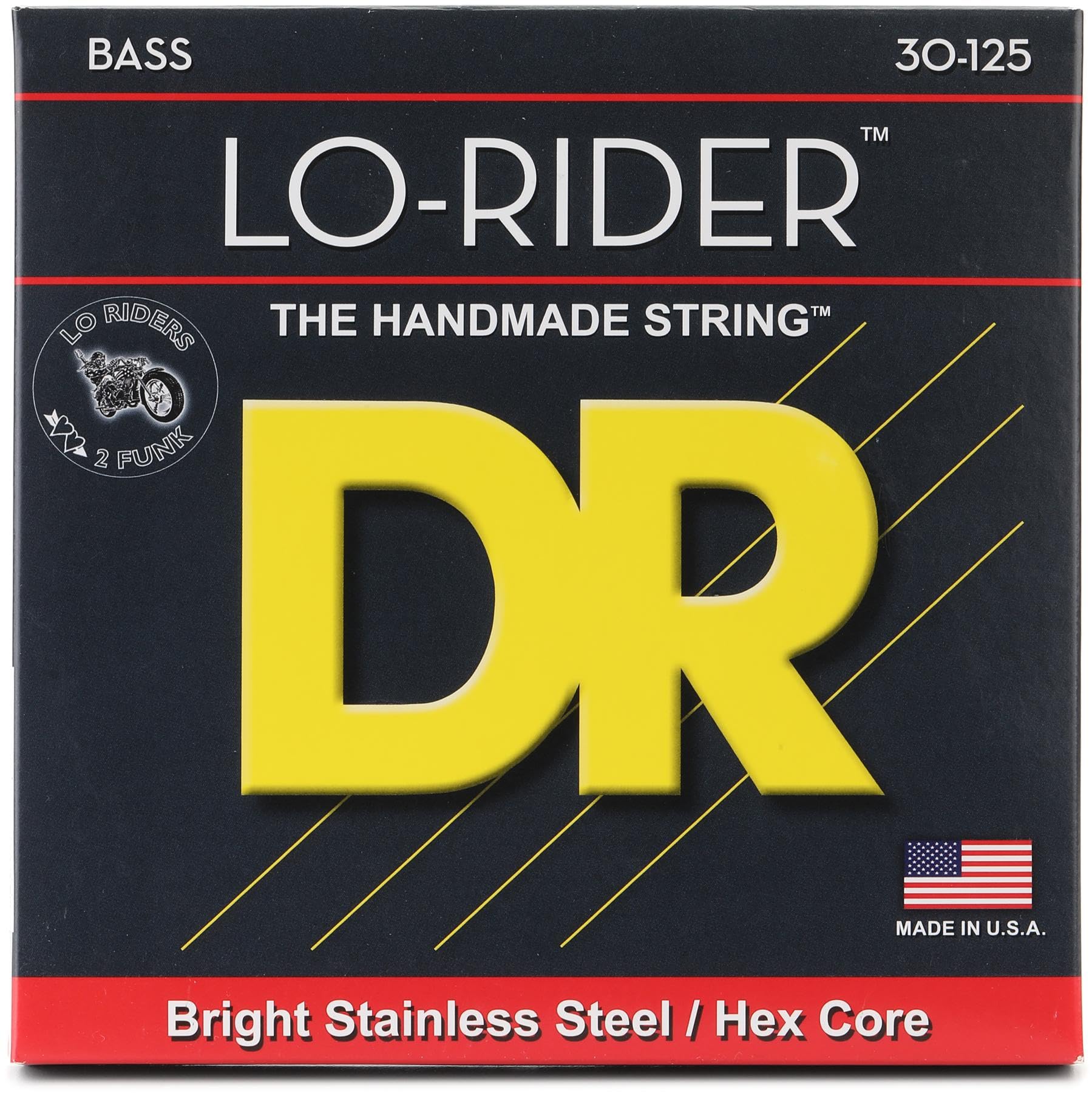
The DR Lo-Rider delivers everything a seasoned 6-string player needs: focused mids, tight lows, and a balanced string-to-string response. Built on a hexagonal core, these stainless steel strings feel stiffer than standard round-core designs, giving you more control during fast passages and complex chords. The 30-125 gauge set is lighter than most, reducing hand strain without sacrificing punch.
Tonal balance is the standout feature here. Players consistently note a more even frequency response compared to competitors like Rotosound, especially on Rickenbacker and long-scale basses. The higher mids help the instrument cut through a band mix without extra EQ. The slightly subdued top-end means less finger noise during slides, a common complaint with raw stainless steel strings.
Be aware of a dry, chalky residue fresh out of the package — it disappears after about 20 hours of play. The stainless steel surface still creates some friction, but it is smoother than the RS66LF. For players who want a modern, “full spectrum” voice with exceptional string-to-string balance, the Lo-Rider is a top contender.
Why it’s great
- Balanced, full-spectrum tone with excellent mids
- Hex-core design for great tuning stability
- Lighter gauge set reduces finger strain
Good to know
- Chalky residue on initial install
- Slightly higher price point than entry-level sets
3. DR Strings Dragon Skin+ Coated Multi-scale 30-125
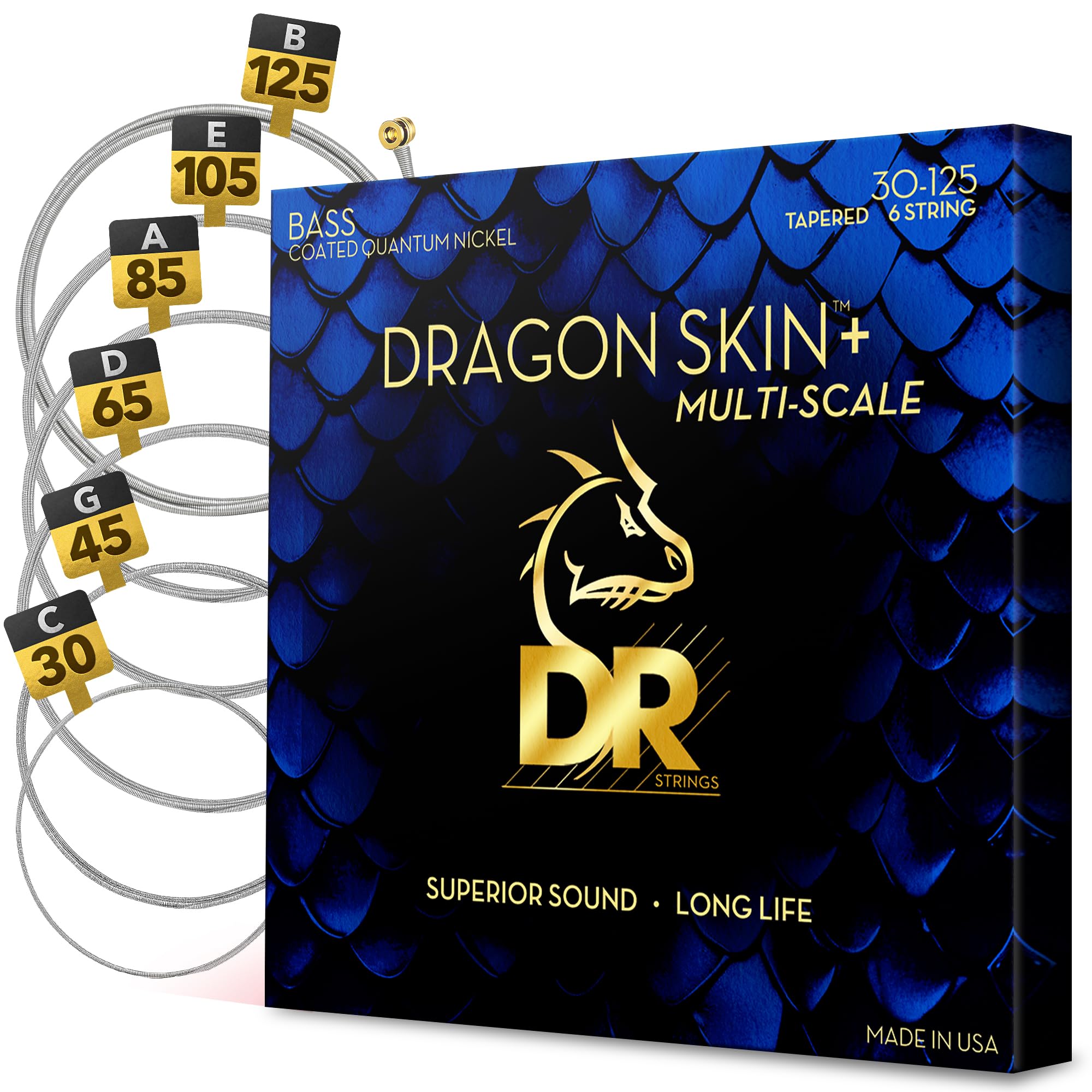
The Dragon Skin+ is purpose-built for multi-scale and fan-fret 6-string basses, where standard strings often struggle with intonation and tension. DR’s Accurate Core Technology customizes the string architecture to lock your lowest notes in tune, even when detuned. The Quantum Nickel wrap combines the brightness of steel with the warmth of nickel, producing a rich, high-output voice.
Coating is the headline feature. A micro-thin K3 layer is applied to the wrap wire before winding, which extends string life dramatically without the plasticky feel of aftermarket coatings. Players report these feel like uncoated roundwounds with smoother finger glide and reduced squeak. They are also easier on fret life compared to uncoated stainless steel.
The 30-125 medium gauge set offers a balanced tension that suits both fingerstyle and pick playing. Initial impressions from users are highly positive, though the longevity benefit takes time to verify. At a premium price, these are best for players who gig regularly, need extended string life, or own a multi-scale instrument.
Why it’s great
- Exceptional tuning stability for multi-scale basses
- Coating extends life without sacrificing natural feel
- High output with warm, balanced tone
Good to know
- Premium price — most expensive set in this guide
- Longevity improvement may not justify cost for casual players
4. D’Addario EPS170-6 XL ProSteels 32-130

D’Addario’s XL ProSteels are the brightest strings in their lineup, designed for players who want maximum high-frequency presence. The stainless steel wrap interacts aggressively with magnetic pickups, delivering enhanced output and a harmonically rich top end. The 32-130 gauge set provides a tight, punchy low B with enough tension for drop tunings.
Durability is a key advantage. These strings resist corrosion exceptionally well, making them a favorite among players with acidic skin chemistry. Reports of 20-year-long usage without switching brands are common in reviews. The hex-core construction ensures spot-on intonation, and the initial brightness holds up longer than uncoated nickel sets.
The trade-off is feel. The stainless steel surface has a slightly rough texture that can be noisy during slides. Some players find them less supple than nickel wound options. They are ideal for aggressive rock, metal, and any genre where cutting clarity in the mix is the priority.
Why it’s great
- Extremely bright and penetrating tone
- Excellent corrosion resistance for long life
- Hex-core maintains perfect intonation
Good to know
- Rough texture creates noise during slides
- Stiffer feel than nickel wound alternatives
5. D’Addario EXL165-6 XL Nickel 32-135

The EXL165-6 is the 6-string version of D’Addario’s legendary XL Nickel series, known worldwide for consistency and reliability. The 32-135 regular-light top/medium-bottom gauge set provides a balanced tension that works well for both pick and fingerstyle playing. Nickel-plated steel wrap gives a tight, bright tone with clear fundamentals and a punchy low end.
One of the biggest appeals here is the value. You get D’Addario’s proprietary hex-core construction, which locks the wrap wire for perfect intonation, at a price point that rivals many entry-level sets. Players often report these strings make even budget 6-string basses sound noticeably better, with smooth feel that is easy on the fingers.
The 135 gauge on the low B is slightly heavier than the standard 130, giving added tension for players who detune to drop A or lower. They are less bright than stainless steel counterparts, making them more suitable for jazz, funk, and classic rock where a balanced, less aggressive voice is preferred.
Why it’s great
- Excellent value with pro-level construction
- Hex-core ensures perfect intonation and tuning stability
- Smooth feel, easy on the fingers
Good to know
- Less bright than stainless steel options
- Heavier low B may feel too tight for some players
6. Ernie Ball 6-String Slinky Nickel Wound 32-130

Ernie Ball’s Slinky is a household name among guitarists, and their 6-string bass set is a solid, no-nonsense choice for players on a budget. The 32-130 gauge provides a regular-light tension profile that feels supple and easy to play, even for beginners on a 6-string instrument. The nickel-plated steel core delivers a balanced tone with good presence — bright enough to be heard, but not harsh.
These strings hold tune well right out of the pack and settle quickly. The 48-inch overall length with a taper beginning at 37.25 inches ensures they fit most long-scale 6-string basses without issues. They are a great entry point for players unsure about their tonal preferences, offering a “safe” balanced voice that works across genres.
The main trade-off is durability. Players report these lose their initial brightness faster than premium sets like D’Addario NYXL or DR strings. They are also not as stiff as hex-core designs, which may be a downside for aggressive pick players. For students, hobbyists, or anyone needing a reliable backup set, the Slinky is hard to beat at this price tier.
Why it’s great
- Supple feel, ideal for beginners on 6-string
- Balanced, versatile tone for multiple genres
- Proven brand reliability and consistency
Good to know
- Brightness fades faster than premium sets
- Less stiff feel may not suit aggressive players
7. Rotosound RS66LDN Nickel Bass Guitar Strings 45-105
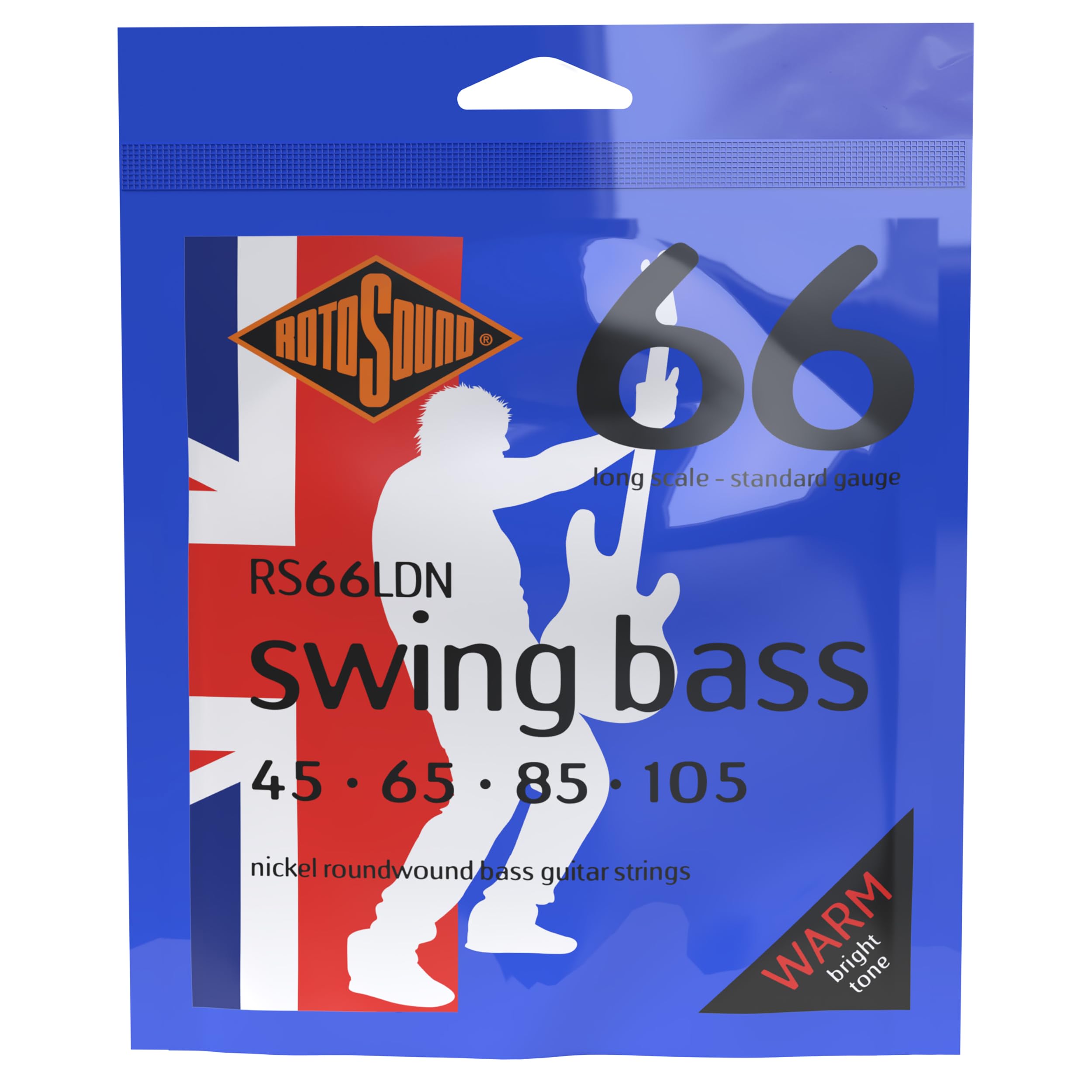
The RS66LDN takes everything great about the RS66LF and refines it with nickel wrap wire. The result is a roundwound string that retains the clear articulation and growl of Rotosound’s signature design, but with a warmer, smoother top end that reduces harshness. The 45-105 gauge set provides a comfortable medium tension suited for standard tunings and light drop adjustments.
Players consistently praise the tonal versatility. These strings work equally well for fingerstyle jazz, aggressive rock, and pop — a testament to their balanced frequency response. The nickel wrap is also less abrasive on frets, making them a smarter choice for players with vintage instruments or those who want to minimize fret dressing frequency.
Longevity is average for an uncoated nickel set, with most players reporting about six to eight weeks of peak performance before the brightness settles. They can feel slightly stiffer than the Ernie Ball Slinkys, but the increased tension gives better note definition, especially on the lower strings.
Why it’s great
- Warm, versatile tone suitable for multiple genres
- Nickel wrap is gentler on frets than stainless steel
- Clear note definition across all strings
Good to know
- Uncoated; peak brightness lasts 6-8 weeks
- Slightly stiffer than some budget alternatives
FAQ
Will these strings work on a standard 34-inch scale 6-string bass?
How often should I change my 6-string bass strings?
Final Thoughts: The Verdict
For most users, the best 6 string bass strings are the Rotosound RS66LF Swing Bass 66 because they offer the classic aggressive bite and piano-like clarity that defines modern rock and metal bass. If you want a warmer, more versatile voice with less fret wear, grab the Rotosound RS66LDN Nickel set. And for multi-scale players or those who need extended string life, nothing beats the DR Strings Dragon Skin+ Coated option.