
Our readers keep the lights on and my morning glass full of iced black tea. As an Amazon Associate, I earn from qualifying purchases.
Specs are compiled from manufacturer listings and verified buyer reviews and can change over time — please confirm the key details on the product page before buying.
The low B string is where most 6-string basses fall apart — flabby, buzzy, and useless for anything but a thud. But when a 6-string bass is built right, that extra range opens up everything: you can play a fat bass line, a chord, and a melody all in one pass without switching instruments. This guide focuses on the picks that actually nail that low end and stay comfortable to play, not just the cheapest options with six strings attached.
I’m Min — the founder and writer behind Gadgets Feed. This guide is built by comparing the manufacturers’ published specifications and the patterns across verified customer reviews, so you get each pick’s real strengths and trade-offs instead of marketing spin.
Whether you are a guitarist doubling on bass or a bassist expanding your range, finding the right 6 string bass means balancing scale length, pickup voicing, and neck feel against your budget.
Our Picks at a Glance


How To Choose The Best 6 String Bass
A 6-string bass adds a high C string on top of the standard four, giving you a wider range than a 5-string. Most players buy one to get the extended low B string (below the traditional E) plus the high C, which lets you play chords and melodies more fluidly. Here’s what actually matters when you’re comparing models.
Scale Length and the Low B String
The scale length — the distance from the nut to the bridge — is the single biggest factor in how your low B string sounds. A 34-inch scale is the standard, but a 35-inch scale adds more string tension, which keeps that low B tight and defined rather than flabby. If you play rock or metal with heavy dropped tunings, a 35-inch scale gives you a noticeably punchier low end.
Active vs Passive Electronics
Active electronics — powered by a battery — give you a built-in EQ to shape your tone right on the bass. That means you can boost bass or treble frequencies without relying on your amp. Passive pickups are simpler and sound warmer, but they usually require more tweaking at the amp. A 3-band active EQ is a huge advantage on a 6-string because it lets you tame the boomy low B and bring out the high C.
Neck Feel and String Spacing
Six strings mean a wider neck, and how that neck is shaped will make or break your comfort. A slim, contoured neck profile helps your hand move across those extra strings without cramping. String spacing also matters — tighter spacing is easier for guitarists switching over, while wider spacing suits bass purists. It’s worth knowing the nut width before you buy.
Fretted vs Fretless
Most 6-string basses are fretted, which makes intonation easier and is the obvious choice for beginners. Fretless models have a smooth fingerboard with no metal frets, letting you slide between notes for a smooth, vocal-like sound. They are far harder to play in tune and demand a skilled left hand, so treat a fretless 6-string as an advanced pick.
Quick Comparison
| Model | Best For | Body Wood | Electronics | Scale Length | Amazon |
|---|---|---|---|---|---|
| Ibanez GSR206BWNF★ Best Overall | Best Overall — value & playability | Mahogany | 2 Active Humbuckers | — | Amazon |
| Ibanez SR306EBPremium Pick | Premium Pick — slim neck & active EQ | Nyatoh | PowerSpan Humbuckers + 3-band EQ | 34″ | Amazon |
| Fender Affinity Jazz Bass VITop Performer | Top Performer — classic Fender tone | Poplar | Squier Single-coils | — | Amazon |
| ESP LTD B-206SM | Best for Pros — 35″ scale & craftsmanship | Ash + Spalted Maple | ESP SB-6 + Active EQ | 35″ | Amazon |
| Squier Classic Vibe Bass VI | Best for Hybrid Guitar/Bass Players | Poplar | 3 Single-coils + Switches | — | Amazon |
| TARIO YG120-F6 | Best Value — versatile active tone | Burl Poplar / Okoume | Belcat Active Pickups | 34″ | Amazon |
| IYV IBSY-600 | Budget Champion — neck-through sustain | Basswood | Active + Passive Pull | 35″ | Amazon |
| TARIO Fretless SE5-720-6 | Budget-Friendly — entry fretless | Basswood | 2 Soap Bar Pickups | — | Amazon |
In-Depth Reviews
1. Ibanez GSR206BWNF — Walnut Flat
Our pick — 4.5★ from 250+ verified ratings; the strongest balance of quality and price.
The Ibanez GSR206BWNF delivers rich active-humbucker tone and smooth playability at a budget-friendly price.
The defining quality here is build — buyers can’t stop talking about how solid the mahogany body and maple neck feel for the money. The Ibanez GSR206BWNF arrives in decent shape straight from the start, with owners saying it plays like an instrument that costs several times more — as one buyer put it, “I cannot believe the quality, craftmanship, and playability of this instrument, right from the start.” The Phat II active bass boost adds low-end power to your sound, which is exactly what you need to make that low B string feel authoritative.
Two active humbucking pickups give you plenty of output, and the jatoba fretboard keeps things smooth under your fingers. But buyers openly admit it’s not flawless: the strings buzz if you pick hard, the passive tone knob is weak, and the active control mainly boosts volume rather than sculpting tone. Tuning to BEADGC is a common choice here — the extended range lets you nail bass parts and convincing rhythm-guitar power chords in one instrument. It weighs 11.3 pounds, so it’s no featherweight, but players find it acceptable for both practice and professional gigs.
What you’re really getting is a case of expectation vs reality — most people prepare to compromise heavily at this price level, and instead find an instrument that needs only a quick bridge adjustment to play beautifully. A few owners mention a slight fret buzz on the lower strings since the factory bridge sits sorta low, but they also call it a thing of beauty once that’s fixed. If you’re a guitarist expanding into 6-string territory or a bassist who wants extended range without spending four figures, this is the one to start with.
Why It Wins People Over
- Quality is the most-praised aspect — 34 owners single out the build and playability
- Active humbuckers deliver a rich, full sound for a budget-friendly price
- Extended BEADGC tuning lets you play chords and bass lines on one instrument
Where It Compromises
- Fret buzz on lower strings at the factory bridge setting — a quick setup fixes it
- Passive tone is weak; the active knob mostly boosts volume
- Weighs 11.3 pounds, so it’s not the lightest gigging option
The crowd-pleaser pick: the GSR206BWNF suits first-time 6-string buyers who want a playable, great-sounding axe without paying boutique prices.
Think twice if: you demand pristine factory setup — you will likely spend ten minutes adjusting the bridge action first.
2. Ibanez SR306EB SR Standard — Weathered Black
The Ibanez SR306EB pairs a slender 8-pound nyatoh body with a tight, growling low B string.
This is the bass you pick up when you want a slender, fast neck — the SR306EB is built for players who value comfort during long sessions. Despite a 34-inch scale, buyers report the low B string stays tight and growling rather than flabby, which is a huge relief for a 6-string at this level. The nyatoh body keeps it at just 8 pounds, a full 3.3 pounds lighter than the GSR206BWNF above, and that difference is very real when you’re standing for a three-hour gig.
The PowerSpan humbucking pickups run through an active 3-band EQ with Power Tap, giving you deep, rumbling low tones that buyers specifically praise. Guitarists switching over find the slender neck easy to navigate, and the polished finish looks sharp in Weathered Black. The maple and rosewood neck paired with a jatoba fretboard keeps the action smooth across all six strings.
The honest trade-offs come down to details. Owners note the case is sold separately, which catches some off guard — budget for that if you plan to travel. There’s also occasional fret buzz on the low B when you dig in, and at least one buyer spotted a small cosmetic body crack near the volume knob. That said, the consensus from the reviews is that the active EQ makes tone dialing easy across multiple amps, and the instrument exceeded expectations for the money. It’s a serious tool for working players who want a modern, aggressive voice.
The pro’s choice: the SR306EB is a premium-feeling Ibanez with a versatile 3-band EQ and a neck that guitarists and bassists alike find easy to zip around on.
The honest catch: you will need to buy a case separately, and the low B can buzz if you play aggressively until the setup is dialed.
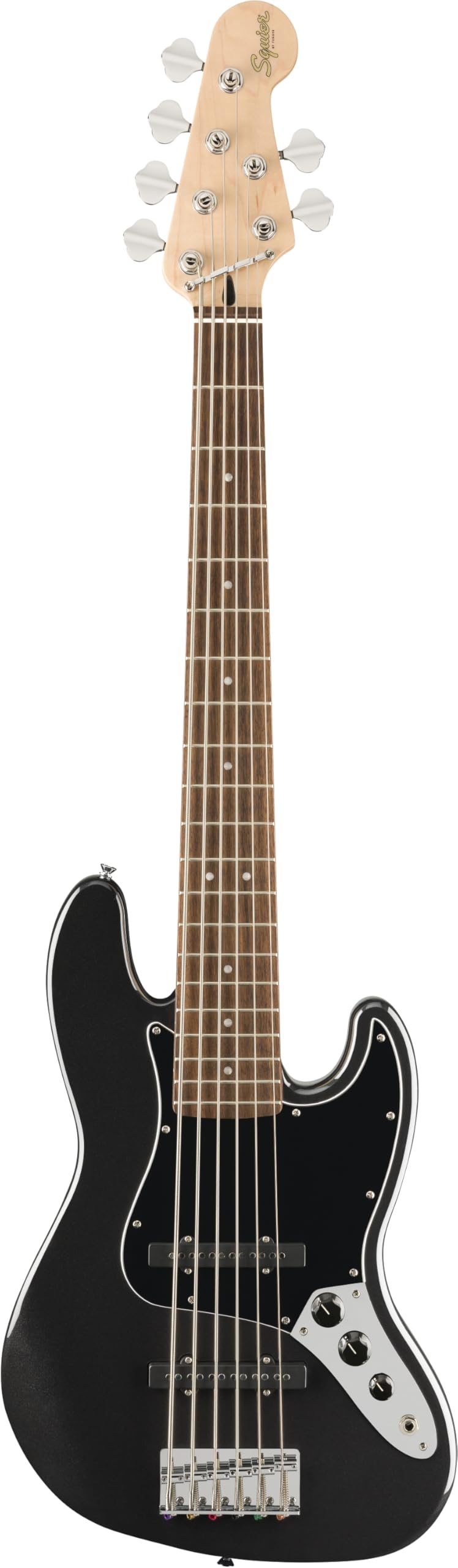
3. Fender Affinity Jazz Bass VI — Black Metallic
The Fender Affinity Jazz Bass VI offers a classic offset body and a slim, reinforced neck for easy playability.
Fender’s Affinity Jazz Bass VI brings the iconic Jazz Bass ergonomics to a 6-string layout, with a thin contoured offset body that sits comfortably whether you’re standing or seated. The graphite-reinforced slim “C”-shaped neck is the standout feature here — it keeps the neck stable and feels natural in a guitarist’s hand, which explains why so many buyers describe it as a lot of fun to play. At 10 pounds, it’s a reasonable middle ground between the heavyweight Ibanez and the featherweight SR306EB.
The Squier single-coil pickups deliver that classic Fender snap and clarity, and the lightweight sealed-gear tuning machines keep things in tune reliably. With a 6-saddle bridge and 17mm string spacing, it’s set up for comfortable fingerstyle or pick playing. Owners are genuinely happy with how it looks and sounds straight from the start, with one saying it arrived quickly and had zero complaints.
One important thing to note: this is a true 6-string bass tuned like a bass, not a Fender Bass VI — the marketing name can trip people up, and buyers who expected the octave-down guitar tuning were surprised. A few owners also mention the instrument needed a grounding fix, which is a minor electronics quirk rather than a dealbreaker. For the price, buyers call it a great bass that looks sharp in the Black Metallic finish and delivers the Fender feel you want without the custom-shop price tag.
Classic tones, modern range: the Affinity Jazz Bass VI gives you the legendary Fender voice and a slim, reinforced neck that suits guitarists doubling on bass.
Worth knowing: it’s a 6-string bass, not a Bass VI — check the tuning before you buy, and a few units need a small grounding tweak.
4. ESP LTD B-206SM Spalted Maple — Natural Satin

The ESP LTD B-206SM uses a 35-inch scale for a taut low B and a spalted maple top for standout looks.
The moment you look at the B-206SM, the spalted maple top grabs you — and the craftsmanship keeps your attention. ESP pairs an ash body with a spalted maple top and a 5-piece maple and rosewood neck, and players consistently describe the result as a gem of a bass. The 35-inch scale length is the defining spec here: it gives the low B string that extra tension that makes it taut and articulate, not flabby. A bolt-on neck with a Thin-U contour and 24 extra jumbo frets makes it a fast, modern player’s instrument.
The passive ESP Designed SB-6 pickups run through an active 3-band EQ, with controls for volume, balance, and the ABQ-3 EQ. Buyers describe the tone as snappy, articulate, and punchy, with warm and smooth highs — one owner notes it rivals instruments costing well over. It comes with a case included, which is a welcome addition at this price point. The satin finish enhances the raw connection to the wood, and owners feel the craftsmanship when they play it.
Compared to the Ibanez SR306EB, the ESP beats it on scale length — 35 inches vs 34 inches — giving you a noticeably tighter low string for modern genres. The trade-offs are minor: some players find the highs lack a bit of push compared to the mid and bass EQ, and one reviewer noted the newer version lacks the badge inlay of the older 2012 models even though it sounds great. At 12 pounds it’s the heaviest bass here, but players say it’s still very comfortable to play. If you want a premium instrument that feels worth more than you paid, this is the one.
What Makes It Special
- Craftsmanship is the most-praised aspect — buyers call it a gem and a real bargain
- 35-inch scale keeps the low B string tight, punchy, and articulate
- A case is included, and the spalted maple top is genuinely stunning
Considerations
- At 12 pounds it’s the heaviest pick on this list
- Highs can lack push next to the stronger mid and bass EQ bands
Grab it for: modern players and pros who need a taut low B string and want a beautifully crafted instrument that performs above its price class.
Reach elsewhere if: you want the lightest possible gigging bass — the 12-pound body is noticeable on long nights.
5. Squier Classic Vibe 6-String Bass VI — 3-Color Sunburst

The Squier Classic Vibe Bass VI is a vintage-voiced hybrid tuned an octave below a guitar, ideal for adventurous players.
The Squier Classic Vibe Bass VI is a different animal from every other bass on this list, and that’s exactly why players adore it. Modelled on the original 1961–1975 Fender Bass VI, it’s tuned an octave lower than a guitar, which means it plays like a guitar but sounds like a bass — a secret weapon for producers and adventurous players. The poplar body, vintage-style tremolo, and three individual pickup on/off switches set it apart as a versatile, quirky instrument that buyers call fun and unique.
The three single-coil pickups have a springy, defined, precise sound rather than a deep P-Bass thump, and the Jaguar-type high-pass filter lets you cut low frequencies for a thinner, clangier tone. Unlike the ESP LTD B-206SM’s raw monster low end, this is a subtler, more textural instrument. Buyers describe it as a guitar one octave lower, with a funky, thick sound that’s more fun than a baritone guitar for hours of playing.
The honesty here is that this is not a beginner instrument and not for players who want playable-out-of-the-box perfection. Owners consistently report the stock strings are too light — swapping to heavier gauges like.100 rounds or.095 flats is essentially mandatory to avoid the low E wiggling and buzzing. The vintage-style tuners can buckle under tension, with one buyer’s gear breaking immediately until Fender sent a free replacement. A few owners also flag bridge misalignment causing intonation issues on the low strings, needing an aftermarket bridge. Still, the review pages sum it up: it’s a stallion among donkeys — worth the trouble for its unique voice. Buyers recommend inspecting it on arrival and being ready to invest a little setup time.
For sound adventurers: the Classic Vibe Bass VI rewards players who love unique, vintage texture and don’t mind a project — the payoff is a tone nothing else here produces.
Not for beginners: factor in a string upgrade and likely tuner replacement; this is a hybrid guitar/bass that demands some tinkering.
6. TARIO YG120-F6 — Burl Poplar Top 6-String
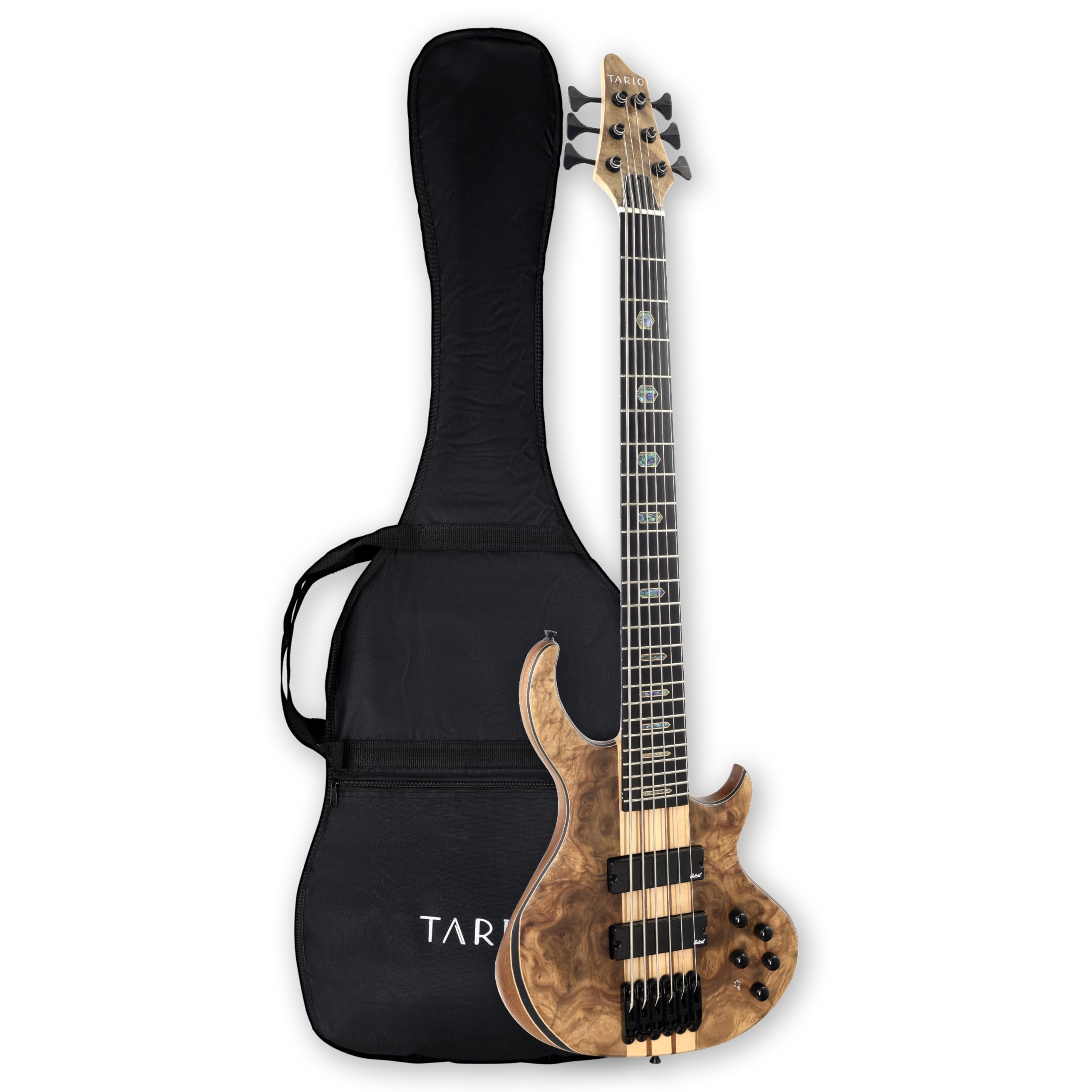
The TARIO YG120-F6 features a 34-inch neck-through build with burl poplar top and powerful active pickups.
The TARIO YG120-F6 packs features that usually cost far more: a burl poplar top over a Millettia Laurentii Okoume body, a maple fretboard, and 24 frets on a 34-inch scale. The Belcat BJ-80-7 active pickups — with dual-mode passive and active operation — give you a versatile, massive sound that buyers describe as a beast. With a 2 1/2-inch nut width and a through-body neck with individual bridge saddles, it’s built to play comfortably and stay in tune. It even comes with a padded gig bag included, which is a genuine value-add.
The overall length is 46 inches, making it a full-size instrument, and the satin neck feels slim and fast. Owners praise the versatile pickups, which offer coil-split and passive bypass options so you can switch between thick active tones and cleaner passive sounds. Many say the quality exceeds the price point and that it plays and sounds like an instrument at double the cost.
The honest catch is quality control. Some owners mention needing setup work — adjusting neck relief and action — and a few units arrive with minor issues like scratches, a popped-off nut, or a faulty input jack. One owner sums it up as a beautiful bass that plays great, but with QC that can be inconsistent, calling it comparable to mid/high-end instruments once the kinks are fixed. The darker fretboard than pictured also surprises a few people. If you’re comfortable doing a little setup yourself, this is the best-value path to a versatile active 6-string.
The value play: the YG120-F6 delivers neck-through construction, active/passive pickups, and a gig bag at a price that’s hard to argue with.
Know before buying: quality control varies — budget time for a setup and be ready to handle minor cosmetic or electronic quirks.
7. IYV IBSY-600 — Neck-through Sycamore Top 6-String
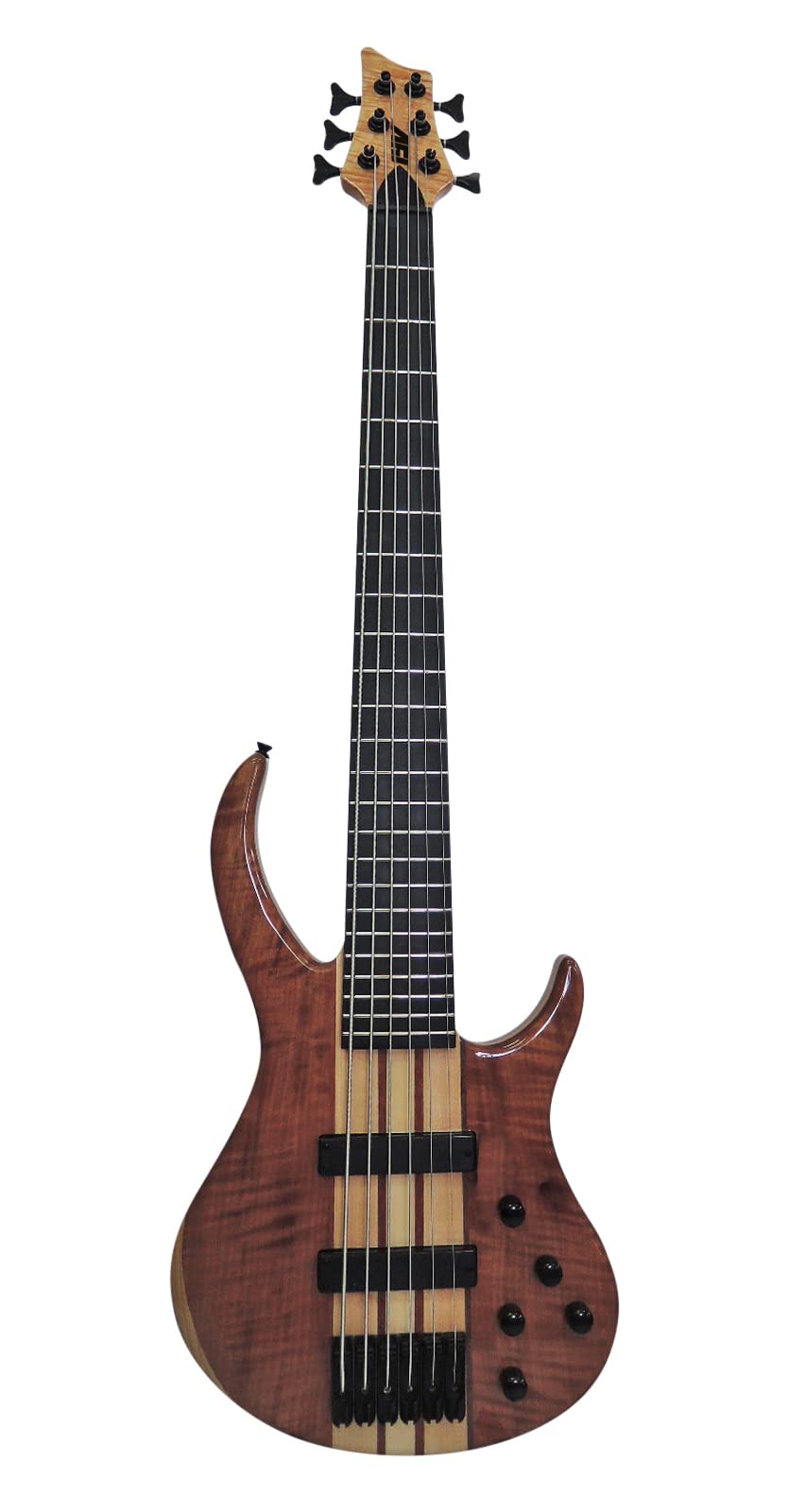
The IYV IBSY-600 offers a 35-inch neck-through design with exceptional sustain at a budget price.
The IYV IBSY-600 is the surprise of this list — a neck-through construction (where the neck runs the full length of the body) with a sycamore top and a 35-inch scale, at a budget-friendly price. That neck-through design is the reason buyers rave about the sustain, and the 35-inch scale keeps the low B string taut. A professional bassist of 45 years calls it his go-to bass, noting it exceeds its price class with a full sound, low action, and near-ready setup. That’s high praise from someone who has played for decades.
The basswood body keeps things comfortable, and the active electronics with a passive pull give you flexibility — buyers describe an 18-volt active system that’s loud, with a double truss rod and extremely low action on a dead-flat, thin neck. Compared to more expensive instruments, owners say the neck feels thin and fast, and the fretwork is exceptional for the money. It’s buy-it-yourself value: a beautiful finish that’s playable from the start, with a build and tone that feel expensive.
A 45-year pro sums it up: “Pro bassist 45 yrs: IYV ibsy-600 exceeds value; go-to bass, full sound, low action, near-ready setup; well-packed, quick delivery, no damage; highly recommended.” The honest caveats: it’s slightly heavy, though manageable, and quality control can be a gamble. Some units need fretwork and nut or saddle recuts, and one buyer described the stock strings as abhorrent industrial tension sandpaper strings that needed replacing. One instrument repair professional notes it’s essentially the same as a Harley Benton but cheaper and faster to get. Roll the dice with QC and you might win big — many do.
The steal: for neck-through sustain and a taut 35-inch low B at a budget price, nothing else here matches the IBSY-600’s value.
The gamble: quality control varies — most buyers are thrilled, but some units need fretwork and better strings out of the gate.
8. TARIO Fretless SE5-720-6 — Bolt-On Maple Neck

The TARIO Fretless SE5-720-6 is the most affordable entry into fretless 6-string playing with a solid build.
If you’ve ever wanted to try a fretless bass without a big investment, the TARIO SE5-720-6 is the entry point. It pairs a bolt-on maple neck with a composite ebony fingerboard over a basswood body — customers note the solid build and nice composite fingerboard. The die-cast black machine tuners, two strap hangers, and two volume and two tone controls round out a simple, functional package. It uses a 6.35mm jack and comes with soap bar pickups, giving it a clean, uncluttered layout.
The value-for-money angle is the biggest praise here — buyers describe it as the best bang for the buck, with one happy owner calling it the best way to spend the money, ever. It plays well from the start according to many, sounds great for a budget instrument, and feels like a much more expensive Ibanez, Schecter, or Yamaha to some. As one buyer put it: “Good cheap 5-string fretless; solid build, nice composite fingerboard.” It’s a great upgrade platform — several owners replaced the pickups and strings to make it sound even better.
This is the one product here that demands you read the fine print. Several aspects are honestly mixed: the weight gets flagged as heavy at around 11 pounds, the factory strings are cheap, and the pickups are quiet until upgraded. Buyers also note the setup is inconsistent — some say it arrives ready to play, while others describe buzzing strings, a flat fingerboard with high points, a high nut, and sharp edges needing DIY work. A few even mention the fingerboard’s black dye stains fingertips until the first string change. Treat this as a project bass for an adventurous player, not a flawless out-of-the-box instrument.
The adventurous pick: this fretless is for players who want to explore sliding, vocal-like tones on a 6-string without spending big.
Expect DIY: budget for better strings, possibly a pickup swap, and a solid setup — it’s a great platform, not a finished product.
Understanding the Specs
Scale Length
Scale length is the distance from the nut to the bridge saddles — it’s the single biggest factor in how a 6-string bass sounds. A 34-inch scale is the standard for most basses, but a 35-inch scale (like on the ESP LTD B-206SM and IYV IBSY-600) increases string tension. More tension means your low B string stays tight and defined instead of flabby and dull. If you play in dropped tunings or want a modern, punchy metal or rock tone, a 35-inch scale is worth prioritizing.
Active vs Passive Pickups
Active pickups run on a 9-volt or 18-volt battery and include an on-board preamp with EQ controls, letting you shape the tone right on the bass. Passive pickups are simpler and run on no battery, giving a warmer, more organic sound. On a 6-string, an active 3-band EQ is a huge advantage: it lets you tame the booming low B and boost the high C to cut through a mix. Many basses, like the ESP and IYV, offer both active and passive modes for flexibility.
FAQ
What is the difference between a 6-string bass and a Bass VI?
Is a 35-inch scale length better than 34 inches?
Will a 6-string bass be hard for a guitarist to play?
Do I need an expensive amp for a 6-string bass?
What strings should I put on a 6-string bass?
How much setup work will a budget 6-string bass need?
Is a fretless 6-string bass a good idea for a beginner?
What is the advantage of neck-through construction?
Final Thoughts: The Verdict
For most players, the 6 string bass winner is the Ibanez GSR206BWNF because it delivers rich active-humbucker tone and smooth playability at a friendly price. If you want a featherlight body and a versatile 3-band EQ, grab the Ibanez SR306EB. And for pros who need a taut 35-inch low B with serious craftsmanship, the ESP LTD B-206SM is the one to reach for.
How We Picked
We do not accept paid placement. Every pick is matched to a real buyer and a real use-case; we do not hands-on test units.
Sources & Methodology
Specifications: manufacturer listings and product documentation. Review insights: verified customer reviews, as of August 2026. Pricing: not shown on this page (it changes often); check the current price via the retailer link.
As an Amazon Associate, Gadgets Feed earns from qualifying purchases. This does not affect which products we feature.